
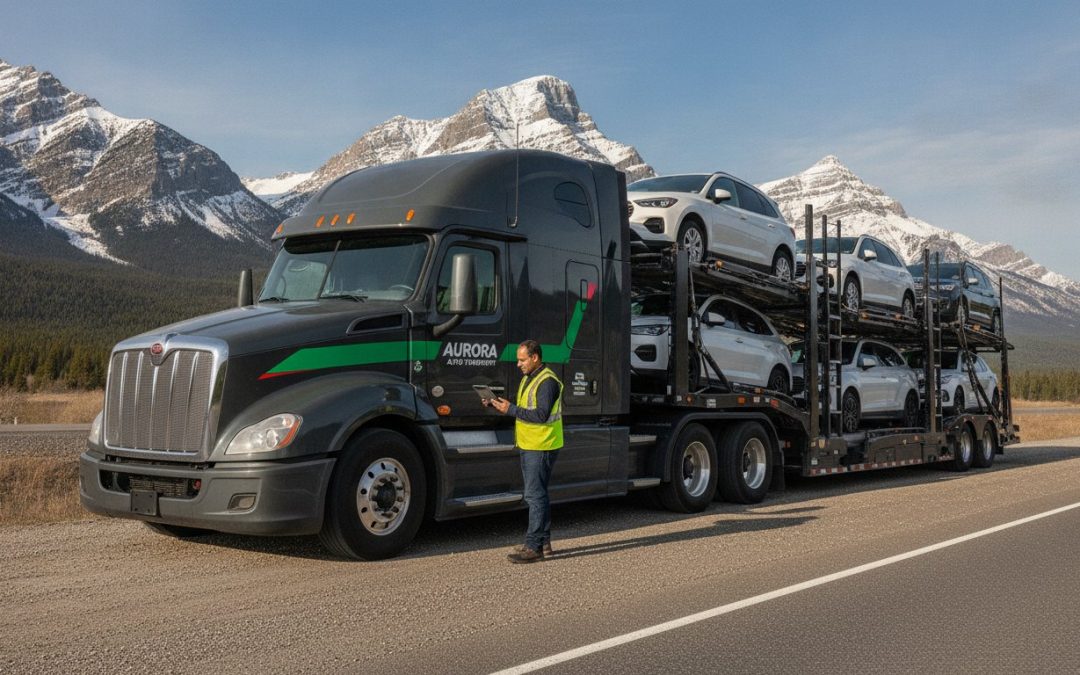
What if the lowest quote you received for moving your car is actually the most expensive mistake you’ll make this year? Handing over your keys to a stranger feels like a massive leap of faith. You aren’t just moving a piece of metal; you’re trusting someone with a significant investment. Finding reliable and safe vehicle transport services in Canada shouldn’t feel like a gamble against hidden fees or transit damage.
It’s completely normal to feel uneasy about the logistics of a national journey. You want to know your truck or SUV is protected and that the insurance coverage is verified. We understand that you need results, not excuses. This guide provides a clear path to a stress-relief solution. Follow this comprehensive safety checklist to ensure your vehicle is handled by professionals and arrives in the exact condition it left. We’ll cover everything from checking carrier credentials to understanding the 2026 insurance reforms, ensuring a damage-free delivery with minimal effort on your part.
Key Takeaways
- Learn how to distinguish between open and enclosed hauling to choose the right level of protection for your vehicle’s specific value.
- Discover the essential credentials you must verify to secure safe vehicle transport services and avoid the risks of unlicensed operators.
- Master the simple preparation steps, like high-resolution photo documentation, that safeguard your investment before the journey begins.
- Understand the critical role of the Bill of Lading and how a joint inspection ensures a transparent and damage-free delivery experience.
- Realize how professional dispatching acts as your ultimate safety net by handling rigorous carrier vetting and insurance verification on your behalf.
What Defines Safe Vehicle Transport Services in Canada?
Safety is not just a marketing buzzword. It is a rigorous, managed process that protects your investment. In the logistics industry, safe vehicle transport services rely on a specific combination of specialized equipment, verified insurance, and highly experienced drivers. These professionals understand the nuances of Canadian terrain and weather. They know exactly how to secure a load for the long haul. It is the difference between a stressful journey and total peace of mind.
National logistics in Canada require carriers to adhere to strict federal and provincial regulations. This includes following mandatory hours-of-service rules to prevent driver fatigue and conducting regular mechanical inspections to ensure roadworthiness. Professional services also prioritize the Bill of Lading (BOL) as a cornerstone of safe vehicle transport services. This document acts as your legal safety contract. It records every detail of your vehicle’s condition before and after transit. Never agree to a shipment without a clear, written BOL.
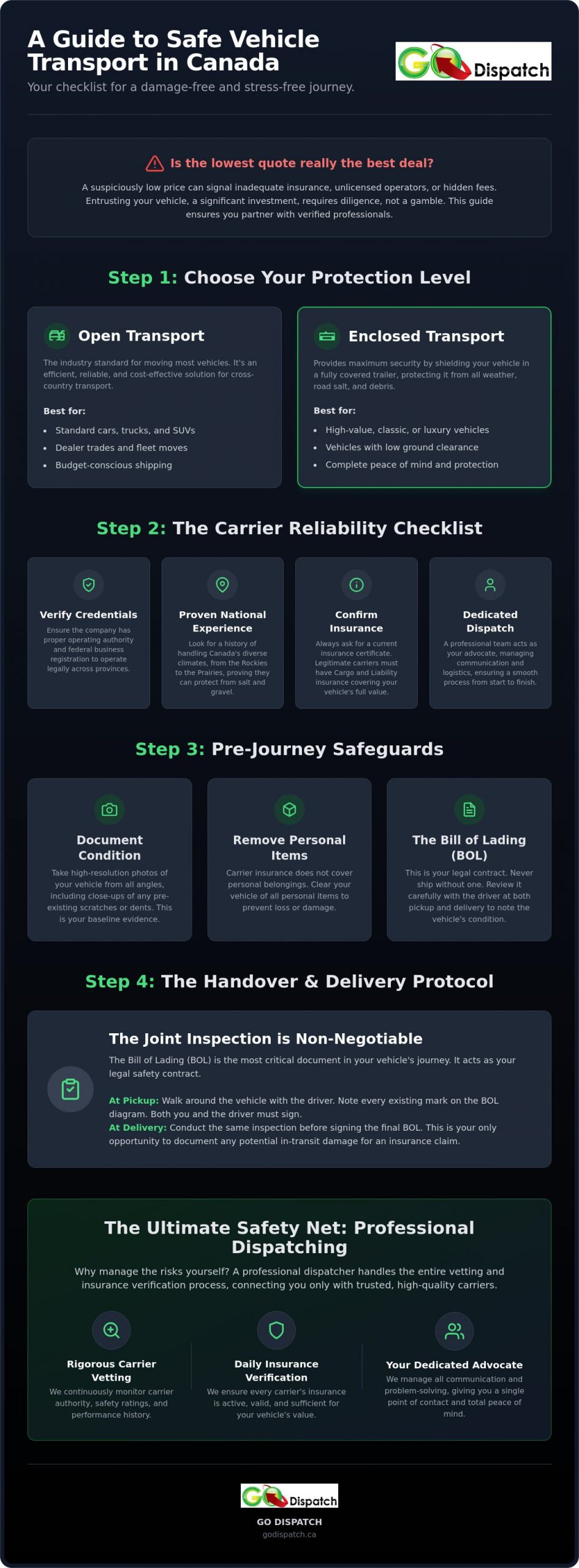
You must also consider the hauling method. Open transport is the standard for most cars, trucks, and SUVs. It is efficient and reliable. Enclosed transport provides an extra layer of security for high-value or classic vehicles. It shields them from road salt, gravel, and unpredictable weather. When you begin your search, understanding auto transport brokers can help you see how professional dispatchers coordinate with multiple carriers to maintain high safety standards across the country.
The Role of Specialized Equipment
Professional transport requires more than a simple trailer. It demands tools designed for precision. Hydraulic lift gates are essential for low-clearance vehicles. They allow for horizontal loading that prevents undercarriage damage. Once on the trailer, soft-tie strapping systems are used. These secure the vehicle by the wheels rather than the frame. This prevents unnecessary stress on the suspension during long hauls. Well-maintained multi-car carriers provide the stability needed for journeys between major urban centres, ensuring your vehicle remains secure from the Atlantic coast to the Pacific.
Insurance and Liability: The Safety Net
Insurance is your ultimate protection. Every legitimate carrier must carry Cargo Insurance. This coverage should match or exceed the full market value of your vehicle. It covers any damage that might occur while the vehicle is in transit. Liability insurance is equally important. It protects against third-party damage during the loading and unloading process. You should always ask to see a current insurance certificate before signing any contract. Professional dispatching teams verify these documents daily to ensure they are active and valid. Comprehensive coverage serves as the essential baseline for any legitimate transport agreement. It ensures that every potential risk is addressed before your vehicle ever leaves your sight.
Vetting Your Transport Partner: The Reliability Checklist
Vetting a logistics provider is about more than just looking at a website. It requires verifying the actual backbone of the operation. You should start by confirming the company’s operating authority and federal business registration. These aren’t just administrative hurdles. They are legal requirements that ensure you are working with a legitimate entity capable of providing safe vehicle transport services across provincial borders. A provider without these credentials puts your vehicle and your wallet at significant risk.
Look for a partner with a proven history of national service. Canada’s geography presents unique challenges that require local expertise. A company that primarily operates in the Greater Toronto Area might not have the experience to handle the mountain passes of the Rockies or the unpredictable winter conditions of the Prairies. Experience with diverse Canadian climates proves that a carrier understands how to protect your vehicle from road salt, gravel, and extreme temperature shifts. Reputable brokers also realize that hidden costs erode trust. They offer a transparent fee structure from the beginning. If a quote seems suspiciously low, it often indicates a lack of proper vetting or inadequate insurance coverage. Before committing to any provider, consult our guide to choosing a reliable vehicle transport brokerage to understand exactly what credentials and red flags to look for.
A professional service also maintains a dedicated dispatch team. These experts manage the complex communication between the client and the carrier. They act as your advocate, ensuring that every detail of the move is handled with precision. This level of oversight allows you to focus on your own business while the logistics professionals handle the heavy lifting behind the scenes.
Checking Carrier Credentials
Don’t just take a company’s word for their safety record. Ask for the carrier’s safety rating and their recent inspection history. This data is a core part of Canadian vehicle safety regulations that govern road transport. You must also ensure the carrier holds a valid licence for every province they will traverse. If you need to transport a truck, verify that the carrier specializes in heavy or oversized loads. Specialized equipment and knowledge prevent loading errors that could lead to structural damage.
Evaluating Communication and Support
Reliable partners provide a genuine human connection. They don’t hide behind automated booking systems or chatbots. Ask if you will have a single point of contact for your move. You need someone who understands your specific requirements and can provide immediate updates. Are they available via toll-free lines if you have a question while your vehicle is in transit? A proactive problem-solver will keep you informed every step of the way. If you want to simplify your next move, you can request a transparent quote from a team that prioritizes your peace of mind and the safety of your vehicle.
Preparing Your Vehicle for a Secure Journey
Preparation is your first line of defence. While a professional carrier handles the heavy lifting, your role in the process ensures that the condition of your car, truck, or SUV is accurately recorded and protected. You should start by thoroughly cleaning your vehicle inside and out. This isn’t about aesthetics. A clean exterior is the only way to allow for an accurate condition report. Dust and road grime can easily hide small chips or scratches. When the driver arrives, they need to see the paint clearly to document its state. This transparency is a fundamental part of safe vehicle transport services in Canada.
Documentation is your best insurance against uncertainty. Once the vehicle is clean, you must document its current state with high-resolution, time-stamped photos. Capture every angle in good lighting. These images serve as undeniable proof of your vehicle’s condition before it enters the logistics chain. This level of detail aligns with the rigorous Transport Canada safety standards that legitimate carriers strive to uphold. It creates a clear record that protects both you and the transport provider.
You must also remove all personal belongings and aftermarket accessories. Household items, loose GPS units, or custom dash cams are not covered by carrier cargo insurance. These items can shift during transit, causing interior damage or becoming lost. Removing them reduces the risk and ensures the carrier stays within legal weight limits. Ensuring your vehicle is empty and ready is a key step in securing safe vehicle transport services that deliver results without complications.
The Exterior Inspection Checklist
A methodical inspection prevents disputes at the destination. Photograph every panel, including the roof and the lower bumpers, which are often overlooked. Note any existing chips, scratches, or dents on the official inspection report provided by the driver. You should also retract or remove antennas and fold in side mirrors. These small actions reduce the vehicle’s profile and minimize the risk of snagging on specialized equipment during the loading process.
Mechanical and Interior Preparation
Your vehicle needs to be in a safe condition for the driver to move it onto the trailer. Ensure the battery is charged and the tires are properly inflated. You should keep the fuel tank at approximately one-quarter full. This provides enough fuel for loading and unloading while significantly reducing the overall weight of the shipment. Check for any fluid leaks; carriers may refuse vehicles that could drip oil or coolant onto other cars below. You must also disable car alarms or provide clear instructions on how to reset them. For a deeper dive into these steps, refer to our guide on how to prepare your car for professional transport to ensure nothing is missed before the handover.
The Handover and Delivery: Safety Protocols on the Ground
The handover is the moment of truth in any transport journey. It is the point where your preparation meets professional execution. You must be an active participant in this process to ensure total security. Execute a thorough joint inspection with the driver during both pickup and delivery. This isn’t a formality; it’s a protection. Walk around the vehicle slowly. Use the photos you took earlier to verify the current state. Reliable safe vehicle transport services encourage this level of detail. They want a clear record just as much as you do.
Before you hand over the keys, verify the driver’s identification. Check that the carrier markings on the truck match the information provided by your dispatch team. Professionalism starts with the equipment and ends with the person behind the wheel. If something feels off, stop the process and call your coordinator. A reputable partner provides immediate support to resolve any uncertainty. This proactive approach eliminates the fear of logistics and replaces it with confidence. You deserve a delivery that is as smooth as the initial booking.
Understanding the Bill of Lading
The Bill of Lading (BOL) is the foundation of a safe move. It acts as your receipt and your primary evidence for any insurance claims. If a mark or scratch isn’t on the paper, it didn’t exist before transport. You must ensure every existing detail is noted accurately. The BOL is the most critical document in car hauling. Don’t let a driver rush you through the signing process. Take your time to read the fine print and confirm that the condition report matches your observations. Your signature is a legal confirmation; make sure it is an informed one.
Safe Delivery Site Requirements
Success on the ground requires the right environment. Large carriers often measure up to 75 feet in length. They need significant room to manoeuvre and park safely. Identify a wide-open, level space for the delivery. If your residential street is too narrow, suggest a nearby parking lot or a commercial centre. This prevents accidental damage to your vehicle or the carrier’s equipment. Ensure the area is well-lit if the delivery is scheduled for the early morning or late evening. Visibility is your best tool for a final inspection. Finally, confirm that an authorized person is present at the destination to sign the final BOL. If you want to ensure every protocol is followed, book your next move with our expert team today.
Why Professional Dispatching is the Ultimate Safety Net
A direct carrier is limited by the physical size of their own fleet. If their trucks are at capacity or a driver is off-duty, your vehicle stays parked. Professional dispatching removes these logistical bottlenecks. We have access to a vast network of vetted carriers across the country. This ensures we find the perfect fit for your vehicle, whether you are moving a single car or an entire commercial fleet. We provide safe vehicle transport services by prioritizing your specific timeline and the quality of the equipment used.
We handle the rigorous labour of verifying insurance and safety ratings so you don’t have to. This is especially critical following the 2026 insurance reforms, which require a deeper understanding of coverage limits and consumer options. Direct carriers often lack the external layer of accountability that a dispatcher provides. We act as a proactive problem-solver that monitors every move from pickup to delivery. This oversight simplifies fleet vehicle transport by coordinating multiple moves across different routes simultaneously. You get a single point of contact while we manage the complex logistics and carrier communication behind the scenes.
The Vetting Power of a Dispatcher
Safety is a managed process that requires constant vigilance. We monitor carrier performance data in real-time to identify and exclude low-performing drivers before they ever touch your keys. Our team ensures that every carrier in our network maintains up-to-date cargo insurance and the necessary provincial licences. We realize that our reputation depends entirely on the safety and reliability of the carriers we choose for you. This rigorous vetting process serves as your primary defence against transit damage and unreliable service providers. We take pride in handling these complex tasks so you can focus on your core business. To understand the full scope of what separates a trustworthy logistics partner from the rest, review our 2026 buying guide for evaluating a reliable vehicle transport brokerage before making your final decision.
Streamlined Logistics for Peace of Mind
Efficiency and safety go hand in hand. One phone call connects you to a national network, which significantly reduces your administrative burden. We manage all the scheduling and rerouting required to avoid weather-related safety hazards. Whether it is an unexpected Atlantic storm or a prairie blizzard, we keep your vehicle moving through the safest possible corridors. This proactive management creates a sense of momentum and efficiency. You receive a damage-free delivery with minimal effort on your part. Ready for a stress-free move? Contact GO DISPATCH for a secure transport quote today.
Secure Your Vehicle’s Future Today
You now have the tools to manage your vehicle’s journey with confidence. Remember that thorough preparation and a detailed Bill of Lading are your strongest protections against uncertainty. Choosing safe vehicle transport services means looking for a partner who prioritizes rigorous vetting and transparent communication over a suspiciously low price. By following this checklist, you ensure your investment is handled with the care it deserves.
Since 2020, we’ve provided professional dispatching through a vetted network of national carriers. We specialize in the logistics for cars, trucks, SUVs, and vans, taking the heavy lifting off your shoulders. Our team handles the insurance verification and carrier monitoring so you can focus on your own business. Ready for a stress-free delivery? Get a Safe and Reliable Vehicle Transport Quote and experience the peace of mind that comes with expert handling. You’ve done the hard work of preparing; now let us handle the road ahead.
Frequently Asked Questions
Is my car insured while it is being transported across Canada?
Yes, your vehicle is covered by the carrier’s Cargo Insurance while it is in transit. All commercial carriers in Canada are required by law to maintain this coverage for the duration of the journey. Professional safe vehicle transport services verify these insurance certificates daily to ensure they are active and provide sufficient coverage for your vehicle’s full market value.
Can I leave personal items inside my vehicle during transport?
No, you should remove all personal belongings and household goods before the carrier arrives. Items left inside the cabin or trunk are not covered by cargo insurance and can cause interior damage if they shift during the move. Additionally, extra weight from personal items can lead to legal fines for the driver at provincial weigh stations.
What happens if my vehicle is damaged during the shipping process?
You must document any new damage on the Bill of Lading immediately upon delivery. Take clear photos of the affected area and compare them to the time-stamped images you took during pickup. Once the damage is noted on the signed inspection report, contact your dispatch team to begin the formal insurance claim process.
How do I verify if a vehicle transport company is legitimate?
Verify that the company has a valid federal business registration and the necessary provincial operating authority. Legitimate providers maintain a physical office address and provide a human connection through dedicated support lines. Avoid any service that refuses to provide proof of insurance or uses a confusing fee structure with hidden brokerage costs.
Do I need to be present for the pickup and delivery of my car?
Yes, you or an authorized representative must be present at both the pickup and delivery locations. Someone needs to perform a joint inspection with the driver to record the vehicle’s condition. Your signature on the Bill of Lading is required to confirm the handover and to ensure that the inspection report is accurate.
What is a Bill of Lading and why is it important for safety?
The Bill of Lading is a legal contract and receipt that documents the exact condition of your car, truck, or SUV. It is the most critical document for ensuring safe vehicle transport services because it acts as the primary evidence for any insurance claims. If a pre-existing scratch is not noted on this document, it didn’t exist in the eyes of the insurer.
Can you transport a vehicle that doesn’t run safely?
Yes, non-running vehicles can be moved if they still roll, steer, and brake. These shipments require specialized equipment like winches to load the vehicle onto the trailer safely. You must inform your dispatcher in advance if your vehicle is inoperable so they can coordinate with a carrier that has the correct tools for the job.
How much fuel should be in my car before it’s loaded onto the carrier?
Keep your fuel tank at approximately one-quarter full for the duration of the trip. This amount provides enough fuel for the driver to load and unload the vehicle while keeping the overall weight of the shipment low. Reducing the weight of the vehicle improves the stability of the carrier and helps maintain high safety standards during long-haul transport.