
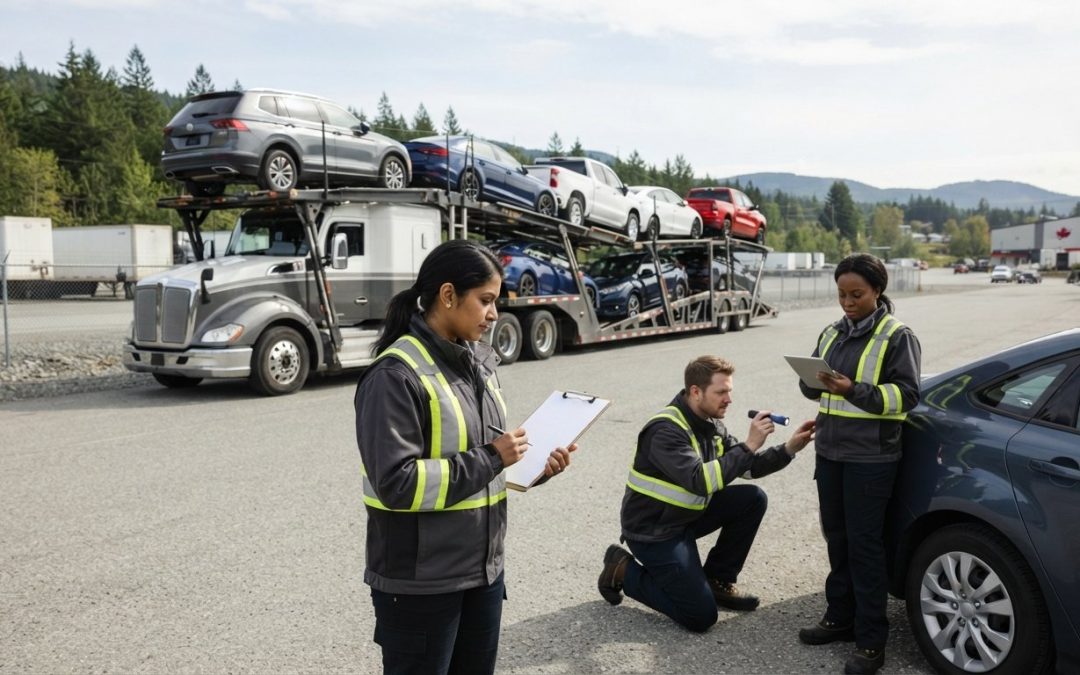
Did you know that 80% of vehicle damage occurs during loading and unloading rather than on the open highway? It’s a startling figure that highlights why the vehicle transport bill of lading matters more than the truck itself. You likely feel a sense of dread when handing over your keys, worrying that a hidden scratch or dent will go unnoticed until the driver is long gone. It’s a common fear, and the confusion of legal jargon in a standard contract doesn’t help. We’re here to simplify the process and provide you with total control.
This guide helps you master the most critical document in auto logistics to ensure your car, truck, or SUV arrives safely. You’ll learn why the BOL is your only legal shield and how to perform a professional-grade inspection. We’ll provide a clear checklist for the handoff and explain exactly how to protect yourself if you ever need to file a claim. By the end, you’ll realize that a little bit of diligence leads to total peace of mind and a seamless delivery experience.
Key Takeaways
- Understand how the vehicle transport bill of lading acts as your primary legal shield by functioning as a contract, receipt, and official condition report.
- Learn the proper techniques for a “circle check” inspection to ensure any existing or new damage is clearly documented in a well-lit environment.
- Identify the mandatory Canadian components required on your paperwork, from accurate VIN details to specific contact information for both the sender and receiver.
- Discover the critical window for noting discrepancies and the exact steps needed to preserve your right to a successful insurance claim.
- Realize how professional dispatching services reduce your daily administrative burden by connecting you with carriers who prioritize precise and reliable documentation.
What is a Vehicle Transport Bill of Lading?
The vehicle transport bill of lading is the most significant piece of paperwork you’ll handle during the shipping process. It’s far more than a simple receipt. In the Canadian logistics industry, this document acts as the primary tool for tracking your car, truck, or SUV from the moment it leaves your driveway until it reaches its final destination. Understanding how it works is essential for anyone managing vehicle delivery logistics in Canada.
A bill of lading is a legally binding contract between the shipper and the carrier. It outlines the specific terms of the haul and defines the carrier’s liability for the goods in their possession. Without a signed, accurate BOL, you have no legal proof that the carrier ever took custody of your vehicle or what condition it was in when they did. It’s the lifeblood of the move.
The Three Critical Roles of the BOL
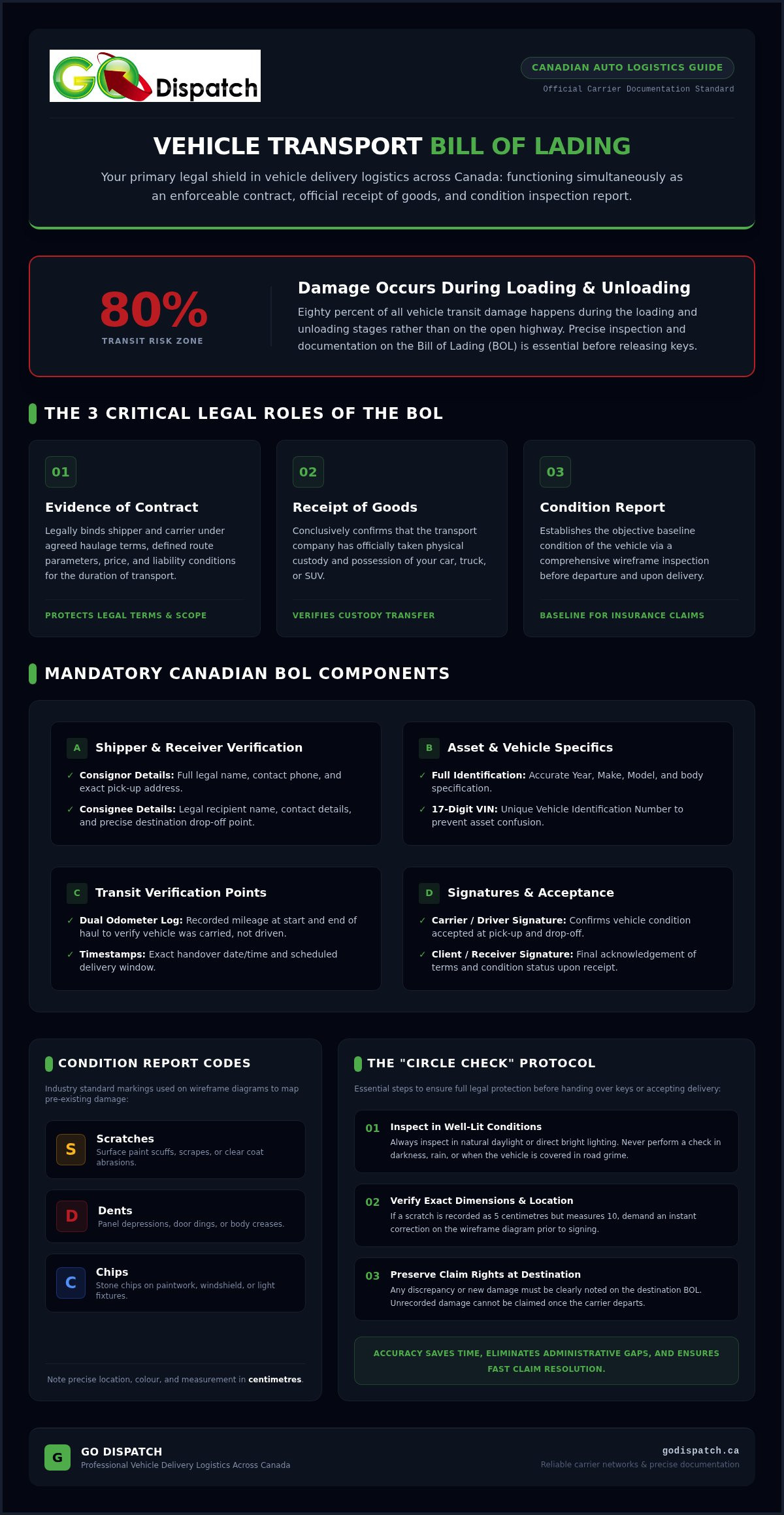
A standard vehicle transport bill of lading serves three distinct legal functions that protect your investment:
- Evidence of the Contract: It proves that an agreement exists between you and the carrier to move the vehicle for a specific price and under specific terms.
- Receipt of Goods: This confirms the transport company has officially taken possession of your vehicle. It’s your proof of transfer.
- Condition Report: This is the baseline for your shipment. It includes a detailed wireframe diagram where the driver marks every existing scratch, chip, or dent before loading.
Why Accuracy Matters for Dealerships and Individuals
Precision during the initial inspection isn’t just a formality. It’s your insurance policy. If you fail to notice a pre-existing crack in the windshield or a small door ding, you can’t claim it later. Conversely, if the carrier misses a scratch that you know wasn’t there, you’ll have a hard time proving they caused it without a clear BOL. We see this often in the industry. Accuracy saves time and money.
Discrepancies on this form often lead to denied insurance claims. This is why transparency is vital. A well-documented BOL ensures that the dispatch service, the carrier, and the client are all looking at the same facts. When everyone is on the same page, you’ll realize faster resolutions if a logistics issue arises. At GO DISPATCH, we ensure our carriers prioritize this documentation so you don’t have to worry about administrative gaps or hidden damage discovered too late.
Essential Components of a Canadian Bill of Lading
Every vehicle transport bill of lading must contain specific data points to remain legally valid and useful. It starts with the basics: full legal names and contact details for the consignor (the sender) and the consignee (the receiver). Precise addresses ensure the carrier knows exactly where to pick up and drop off the vehicle. Without these details, the document fails its most basic function as a receipt of goods.
Beyond names, the document must list the vehicle specifics. This includes the year, make, model, and the unique 17-digit Vehicle Identification Number (VIN). The VIN is critical because it prevents any confusion about which specific asset is being moved. You should also see the odometer reading recorded at both the start and end of the journey. This verifies that the vehicle was transported and not driven. Dates and times are equally important; the BOL records when the vehicle was handed over and when it is expected at the destination.
Finally, the document is only complete once it has signatures from both the driver and the person releasing or receiving the vehicle. These signatures acknowledge that the terms were understood and the condition report was accepted. If you want to skip the stress of managing these details yourself, partnering with a professional dispatch service ensures your carrier handles every piece of paperwork correctly.
Decoding the Condition Report
The condition report is a visual map of your vehicle. Drivers use a standardized wireframe diagram to mark pre-existing damage using industry codes. You will often see “S” for scratches, “D” for dents, and “C” for chips. These codes allow for a quick, objective assessment that both parties can understand at a glance.
When you review this section, pay attention to the specific location and colour of any imperfections mentioned. Ensure the driver’s notes match your own observations exactly. If a scratch is listed as 5 centimetres but looks like 10, ask for a correction. Accurate documentation prevents future disputes and ensures that any new damage is easily identifiable upon delivery.
Insurance and Liability Details
A valid BOL should reference the carrier’s insurance policy or their specific liability limits. This is a key part of carrier liability under a bill of lading. It defines who is responsible if something goes wrong during transit and establishes the legal baseline for any potential claims.
It is vital to distinguish between this document and a vehicle transport cost Canada quote. A quote is an estimate of price; the BOL is the legal record of the shipment. Make sure the carrier’s licence information is correctly recorded on the form. This ensures you have a paper trail to follow if an insurance claim becomes necessary later. Having this information organized from the start gives you the confidence that your shipment is protected by law.
How to Perform a Proper Vehicle Inspection
Performing a physical inspection is the most active role you’ll play in the shipping process. It’s the moment where the vehicle transport bill of lading transforms from a digital form into a physical record of your car’s condition. You must be thorough. A rushed inspection is often where the most costly mistakes happen. We recommend setting aside at least twenty minutes for this process to ensure nothing is missed.
Clean your vehicle thoroughly before the driver arrives. Dust and road salt hide small scratches. If a car is dirty, a driver may note “subject to inspection” on the BOL. This phrase is a red flag. It essentially voids your ability to claim damage later because the initial condition was never verified. A clean car allows for a transparent, honest assessment that protects both you and the carrier. Once the car is sparkling, perform your walkaround in a well-lit area during daylight hours.
The ‘Circle Check’ Methodology
Start at the front bumper and move clockwise around the entire vehicle. This systematic approach ensures you don’t miss a single panel. Examine the glass carefully. Small chips often grow into large cracks during car hauling because of the constant vibrations and temperature changes on the road. Check the interior too. Note any stains or electronic issues, such as a malfunctioning infotainment screen, to ensure the carrier is aware of the pre-existing state. Review the driver’s notations on the BOL as they work. If they mark a dent that you don’t see, speak up immediately.
Photo Documentation Best Practices
Take high-resolution photos of all four sides. Don’t forget the roof and the undercarriage. Capture a clear image of the odometer. This proves the vehicle wasn’t driven excessively while in the carrier’s care. Following FMCSA consumer protection guidelines, you should keep these records until the vehicle is safely in your hands. Use a timestamp app. It adds a layer of undeniable proof to your files. Focus your lens on the centre of any panel where you suspect a dent or scratch exists. Clear, well-lit photos are your best defence against denied claims. You must realize that your signature on the vehicle transport bill of lading confirms you agree with the driver’s assessment. Once that document is signed and the truck pulls away, it becomes the final word on your vehicle’s condition.
Using the Bill of Lading to File a Damage Claim
The moment of delivery is when your prior diligence pays off. You must inspect your vehicle immediately, while the driver is still present. This is not the time for a quick glance. The vehicle transport bill of lading is your final safeguard. Use it as your reference to compare the current state of the vehicle against its condition at pick-up. If you find new scratches, dents, or mechanical issues, they must be recorded right then and there. Timing is everything in logistics.
Never sign the BOL “clean” if you suspect new damage has occurred. A clean signature legally asserts that the vehicle was received in perfect order. Once you sign without notations, the carrier’s liability usually ends. If the driver is in a hurry, stay firm. Your priority is protecting your asset. If you discover an issue, contact your dispatch service or the carrier’s insurance company within 24 hours to start the formal process. Quick action helps you realize a faster resolution.
What to Do if Damage is Found
If you identify a discrepancy, describe the new damage clearly in the “Delivery” section of the BOL. Be specific about the location and type of damage. Use the same industry codes you used during the initial inspection. Ensure the driver acknowledges these new notations by adding their signature next to your comments. This prevents the carrier from claiming the notes were added after the fact. It creates a verified record that both parties accept.
Always keep a physical or digital copy of the final, signed vehicle transport bill of lading. Do not let the driver leave with the only copy. This document is your primary evidence for any future legal or insurance proceedings. It bridges the gap between the initial inspection and the final handoff. Without it, your claim has very little ground to stand on.
The Role of Insurance in the Claims Process
Your insurance claim relies heavily on the quality of your documentation. Submit the high-resolution photos you took at pick-up alongside the final BOL. This creates an undeniable timeline for the insurer. It proves the damage was not present at the origin and occurred while the vehicle was in the carrier’s custody. Clear evidence leads to a smoother approval process.
Navigating these situations can be complex, especially when dealing with different vehicle transport insurance requirements. A professional brokerage can help you organize your claim and ensure all evidence meets the insurer’s standards. They act as your advocate, reducing the administrative burden during a stressful time. If you want to ensure your next move is backed by professional support, contact GO DISPATCH to manage your transport needs.
Streamlining Your Logistics with Professional Dispatch
Managing the fine details of a vehicle transport bill of lading shouldn’t be your full-time job. While the document is your primary legal shield, the administrative burden of tracking it across multiple carriers can be overwhelming. GO DISPATCH acts as your proactive partner. We connect you with professional carriers who prioritize accurate documentation and transparent communication. We handle the logistical heavy lifting so you can focus on your core business goals.
Reliability is the foundation of our service. We vet every carrier in our network to ensure they meet strict national safety and insurance standards. This rigorous process reduces your risk before the truck even arrives. Whether you are moving a single SUV or a fleet of trucks, we manage the dispatching process to ensure safe, timely delivery. Experience a one-stop solution for dealership auto transport logistics that puts your peace of mind first.
Why a Dispatch Service Simplifies Paperwork
We act as a central point of contact for all your transport documents. Instead of chasing different drivers for copies of the BOL, you have a dedicated team managing the flow of information. Our team realizes the importance of timely updates. We ensure that every vehicle transport bill of lading is filled out correctly at both ends of the journey. This consistency is vital for your records and your peace of mind.
Managing multiple direct carriers often leads to errors. A missed signature or a vague damage notation can cost you thousands in denied claims. We reduce this risk by standardizing the expectations for every haul. Our experts help you organize your transport needs with minimal stress. We provide a streamlined process that ensures all paperwork is audit-ready and legally sound. It is about creating efficiency through expert oversight and human connection.
Peace of Mind for National Hauling
National hauling requires a high level of coordination. When a vehicle crosses provincial lines, the documentation must be flawless. Professional dispatching provides a critical layer of protection between you and the carrier. We advocate for your interests and ensure the BOL process is handled right every single time. We take pride in being the human support behind the logistics, offering help whenever you need it most.
Our service is designed to be a stress-relief solution for individuals and businesses alike. We provide the professional confidence you need to ship with certainty. You don’t have to navigate the complexities of transport contracts alone. We are here to guide you through every step, from the first quote to the final delivery signature. Contact GO DISPATCH today to simplify your vehicle transport!
Secure Your Shipment with Confidence
Mastering the vehicle transport bill of lading is the most effective way to protect your investment during a move. By performing a thorough circle check and ensuring every pre-existing mark is coded correctly, you create an undeniable baseline for your vehicle’s condition. Remember that your signature on the delivery receipt is the final word. Stay diligent and never sign for a clean delivery if you suspect new damage has occurred. These simple steps turn a complex logistical task into a secure, transparent process.
You don’t have to manage the administrative burden alone. GO Dispatch provides professional auto carrier dispatch and one-stop logistics management to handle the details for you. With our national Canadian coverage, we connect you with vetted carriers who prioritize safety and accurate documentation. We act as your proactive partner, allowing you to focus on your business while we manage the move behind the scenes. Streamline your vehicle transport with GO Dispatch today. Your peace of mind is our priority, and we are ready to ensure your next delivery is seamless and stress-free.
Frequently Asked Questions
Is a Bill of Lading the same as an invoice or a quote?
No, a vehicle transport bill of lading is distinct from an invoice or a quote. A quote provides a price estimate before the move, while an invoice is a request for payment after the service. The BOL is a binding legal contract and an official receipt of goods. It outlines the specific terms and the physical condition of the vehicle. You shouldn’t treat it as a mere financial summary of the transaction.
Can I use a digital Bill of Lading for my vehicle transport?
Yes, digital Bills of Lading are now the industry standard for most professional carriers. These electronic versions allow for high-resolution photo attachments, GPS location tagging, and instant time-stamping. They reduce the risk of lost paperwork and ensure that the condition report is transmitted immediately to the dispatch office. Digital signatures are just as legally binding as paper ones in Canada, providing a streamlined and secure way to manage your important transport documentation.
What happens if I sign a ‘clean’ Bill of Lading but find damage later?
If you sign a “clean” document, you are legally acknowledging that the vehicle arrived in the same condition it was picked up in. This makes it extremely difficult to file a successful insurance claim later. Carriers use the “clean” BOL as proof that they fulfilled their duty without incident. You must realize that your signature is the final word. Always perform a thorough inspection before signing to avoid waiving your rights to compensation for new damage.
Should the driver sign the Bill of Lading at both pick-up and delivery?
Yes, the driver must sign the vehicle transport bill of lading at both the origin and the destination. At pick-up, their signature confirms they have taken custody of the vehicle and agree with the initial condition report. At delivery, their signature confirms the hand-off is complete. This dual-signature process creates a clear chain of custody. It protects both you and the carrier by documenting exactly when and where the responsibility for the vehicle shifted.
What are the most common codes used on a vehicle condition report?
Carriers use standardized industry codes to note imperfections on the wireframe diagram. The most common codes include “S” for scratches, “D” for dents, and “C” for chips. You might also see “BR” for broken glass or “G” for gouges. These codes help provide an objective assessment of the vehicle’s state. Always ensure that the codes the driver uses match your own observations to ensure the baseline condition of the car is accurately represented.
Does the Bill of Lading include the carrier’s insurance information?
The BOL typically references the carrier’s liability limits rather than providing a full insurance policy breakdown. It often includes the carrier’s operating authority numbers and contact details. While it might not list every policy detail, it serves as the legal foundation for any claim you might file against their insurance. We vet our carriers to ensure they meet strict national standards, so you can be confident that the necessary coverage is in place for your shipment.
How long should I keep my copy of the Bill of Lading after delivery?
You should keep your copy of the BOL for at least one year after the delivery is complete. This period covers the typical timeframe for discovering hidden mechanical issues or filing late-stage insurance claims. If you are a dealership, keeping these records for longer may be necessary for tax and audit purposes. Digital copies are easy to store and organize, ensuring you have the evidence ready if any disputes arise regarding the vehicle’s condition or history.
Who is responsible for filling out the Bill of Lading?
The carrier or the driver is responsible for generating and filling out the document, but the shipper must verify every detail. You are responsible for reviewing the contact information, VIN, and condition report before adding your signature. If there are errors, you must insist on corrections before the vehicle is loaded. At GO Dispatch, we ensure our carriers use proper documentation to reduce your administrative burden and protect your interests throughout the entire logistics process.