

Calling individual truck drivers directly sounds like the quickest way to cut out the middleman, but it usually leads straight to dead ends, unreturned calls, and scheduling headaches. Coordinating vehicle shipping across vast national transit corridors on your own doesn’t just eat up valuable time; it exposes you to haulers with questionable availability or lapsed insurance policies. Understanding the practical benefits of using a vehicle transport broker changes the entire experience. Instead of gambling on independent carrier schedules, you gain immediate access to an established, pre-screened logistics network.
You deserve complete certainty that your car, truck, SUV, or fleet vehicle will arrive safely without draining your workday. Working with a dedicated vehicle transport broker simplifies auto logistics, protects your investment through rigorous commercial cargo verification, and saves you hours of tedious phone tag. Below, we break down how centralized dispatching turns fragmented carrier routes into dependable, streamlined transport solutions, giving you a single point of contact and total peace of mind from pickup to drop-off.
Key Takeaways
- Understand the primary benefits of using a vehicle transport broker to tap into an established national carrier network rather than chasing individual driver availability.
- Learn how proactive risk management and verification of commercial cargo insurance safeguard your vehicle before it ever leaves the curb.
- Discover how centralized dispatching leverages backhaul capacity across major transit corridors to keep shipments on schedule.
- Enjoy complete peace of mind with a single point of contact managing end-to-end carrier communication from pickup to delivery.
- Master the essential vetting criteria needed to choose a trusted logistics partner for your car, truck, SUV, or fleet vehicle.
What Is a Vehicle Transport Broker and How Does It Work?
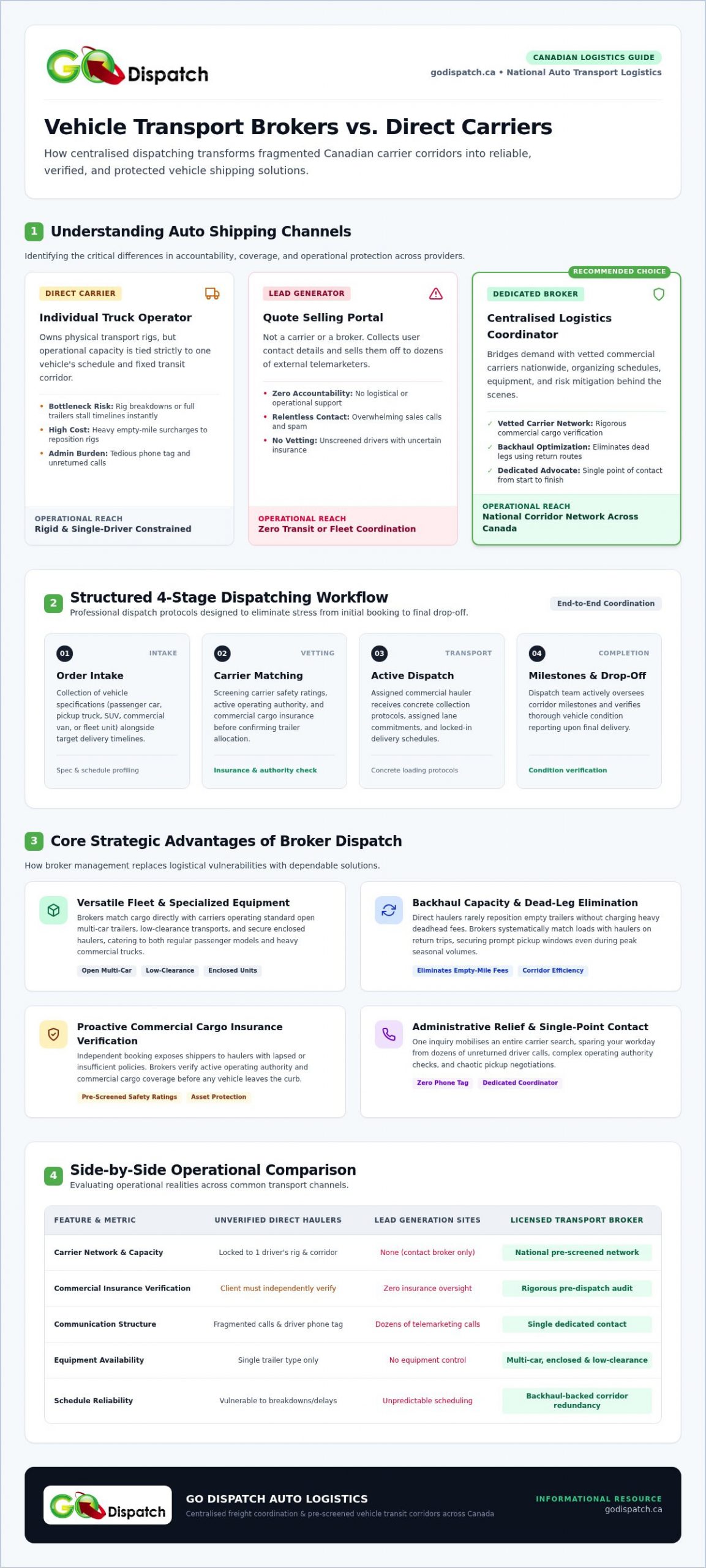
A vehicle transport broker serves as your central logistics coordinator, connecting your shipping requirements with vetted commercial carriers across Canada. Direct motor carriers operate physical auto-hauler rigs, but their capacity is tied to rigid schedules and narrow transit corridors. Brokers bridge that gap. By organizing schedules, sourcing optimal route capacity, and mitigating transit risks behind the scenes, brokers transform fragmented freight options into a reliable, single-point service. Understanding how this operational structure protects you highlights the primary benefits of using a vehicle transport broker over booking unverified independent drivers.
The Crucial Difference Between Carriers, Brokers, and Lead Generators
Many vehicle owners confuse brokers with lead generation websites or direct carriers. A direct carrier owns transport equipment, yet an individual driver rarely has open spots on your exact route when you need them. A lead generator simply collects your contact details and sells them to dozens of telemarketers, leaving you with relentless spam and zero operational support. In contrast, a licensed vehicle transport broker assumes full logistical accountability. They filter out substandard operators, verify legal credentials, and coordinate schedules across national shipping corridors so you never deal with chaotic driver communications.
How the Dispatching Workflow Operates from Inquiry to Delivery
Professional vehicle dispatching follows a structured, transparent process designed to eliminate stress from start to finish:
- Order intake: You provide vehicle specifications for your personal car, pickup truck, SUV, or commercial van alongside your target timelines.
- Carrier vetting and matching: The broker screens carrier safety ratings, active authority, and commercial cargo insurance before confirming trailer space.
- Active dispatch: A verified hauler receives concrete collection protocols and scheduled delivery commitments.
- Milestone coordination: Your dispatch team oversees transit milestones and ensures proper condition reporting at final delivery.
This hands-on coordination represents one of the core benefits of using a vehicle transport broker, ensuring you always have an experienced human advocate managing the road ahead.
Key Benefits of Using a Vehicle Transport Broker over Direct Carriers
Booking with a single trucking outfit limits your options to that driver’s current position and fixed route schedule. If their rig breaks down or their multi-car trailer fills up before reaching your vehicle, your delivery timeline stalls. This operational rigidity is where the primary benefits of using a vehicle transport broker stand out. Instead of locking your cargo to one truck, a broker taps into extensive capacity across multiple transport lines. For a deeper look into national shipping dynamics, review our strategic guide on vehicle delivery logistics in Canada.
Access to Expansive National Carrier Networks and Specialized Equipment
Vehicle shipping requires specific equipment matched to each vehicle class. Brokers maintain connections with haulers running standard open multi-car trailers, low-clearance options, and secure enclosed units. This wide operational reach matters whether you need standard passenger vehicle transport or specialized solutions to transport a truck across demanding corridors. Direct haulers rarely reposition empty trailers for an individual customer without billing heavy empty-mile surcharges. Brokers systematically eliminate these dead legs by matching shipments with carriers completing return trips (backhauls), securing prompt dispatch windows even during busy seasonal shipping spikes.
Time Efficiency and Streamlined Administrative Logistics
Managing vehicle transport manually consumes hours of valuable labour. Sourcing an independent hauler directly forces staff to call dozens of independent dispatchers, cross-reference operating authorities, and juggle conflicting pickup windows. Brokers remove this heavy administrative friction through several concrete mechanisms:
- Single-point management: One inquiry mobilizes an entire carrier search, replacing chaotic phone outreach.
- Centralised documentation: Electronic Bills of Lading, insurance certificates, and delivery confirmations remain organised in one centralised account.
- Commercial fleet coordination: Fleet managers and car dealerships secure predictable inventory staging without dispatch headaches.
Learn how dealership auto transport logistics reduces showroom turnaround delays. Consolidating your freight requirements through professional centralised coordination delivers measurable time savings and reliable results. When you are ready to eliminate transport friction, partnering with an experienced team like GO DISPATCH keeps your auto freight moving smoothly without the operational stress.
Carrier Vetting and Risk Management: How Brokers Protect Your Asset
Handing over vehicle keys to an unknown driver carries genuine financial risk. The freight sector faces persistent threats from unauthorized double-brokering schemes, fraudulent carrier identities, and falsified insurance certificates. When booking independently, shippers rarely have the tools or time to cross-reference carrier safety profiles against national safety registries. Professional intermediaries shield your cargo from these liabilities. Mitigating these operational hazards represents one of the most critical benefits of using a vehicle transport broker, ensuring only verified professionals take physical custody of your vehicle.
Rigorous Carrier Insurance and Safety Record Verification
Broker compliance teams never rely on a forwarded PDF certificate. Experienced dispatchers verify commercial cargo insurance coverage directly with insurance underwriters, confirming policy numbers, active effective dates, and proper motor truck cargo limits. They review carrier safety records, operating authorities, and equipment fitness before approving any dispatch assignment. Carriers with safety infractions, conditional status ratings, or unresolved damage histories are promptly blocked from dispatch queues. This continuous screening gives individuals and commercial fleet operators institutional-grade protection without requiring them to perform tedious compliance audits themselves.
Contingency Protection and Dispute Resolution Support
Unexpected road events can complicate long-distance transit. Highway closures, equipment breakdowns, and mechanical repairs occasionally threaten arrival windows. If a dispute arises over schedules or handling, a broker acts as your dedicated advocate rather than leaving you to argue with an individual driver on a remote highway:
- Digital condition documentation: Dispatch teams enforce structured pickup and delivery condition reports, utilizing electronic Bills of Lading with time-stamped photos to document existing wear and prevent false claims.
- Claims facilitation: If damage occurs in transit, the broker guides the process, liaising directly with commercial cargo insurers to resolve claims swiftly.
- Contingency coverage: Established brokerages maintain backup contingent cargo insurance, giving clients a secondary financial shield if a carrier insurer defaults or denies coverage.
Securing this level of multi-tiered risk mitigation highlights the practical benefits of using a vehicle transport broker, transforming an uncertain journey into a secure, protected delivery.
Evaluating Transport Costs: Understanding the Real Economic Value of a Broker
Focusing purely on the upfront dispatch fee misses the broader financial picture. When shippers attempt to book directly, carriers routinely bake deadhead miles into their rates to offset the expense of driving partially empty trailers. Brokers counter this expense through route optimization, matching your car, truck, or fleet order with haulers already servicing that specific corridor. Sourcing this backhaul capacity dramatically reduces transit waste while securing dependable carrier placement. To understand how distance, vehicle dimensions, and seasonal variables shape rates, consult our detailed analysis on vehicle transport cost in Canada.
How Brokers Leverage Route Efficiency to Reduce Shipping Waste
Carriers stay profitable by keeping their trailers full. When an independent operator drops off a load, running empty to the next terminal represents an unsustainable fuel drain. Brokers maintain continuous visibility over national route volumes, filling those empty trailer decks with matching vehicles. This coordination benefits both parties: the carrier avoids unprofitable deadhead miles, and the shipper receives a realistic, route-aligned schedule without paying for phantom travel. By consolidating multi-vehicle shipments and guiding clients toward flexible pickup windows, brokers maximize operational efficiency across every leg.
The Hidden Costs of Managing Carrier Bookings Alone
Attempting to handle auto logistics without professional representation introduces costly vulnerabilities that quickly erode perceived initial savings:
- Last-minute route cancellations: Independent carriers running their own books often abandon single-vehicle orders if a larger commercial contract appears, forcing shippers to scramble for emergency replacements.
- Unexpected release demands: Rogue operators have been known to demand unwarranted destination fees before releasing vehicles, an exploitative practice that reputable broker agreements strictly prohibit.
- Uncompensated asset damage: Drivers with lapsed cargo insurance leave owners paying out of pocket for transit repairs.
- Internal administrative drain: Diverting productive work hours to track haulers, negotiate rates, and verify paperwork represents a substantial hidden payroll expense.
Protecting your operating budget against these uncalculated pitfalls reinforces the long-term benefits of using a vehicle transport broker. You replace administrative chaos with reliable, transparent oversight. If you are ready to eliminate wasted logistics spend and streamline your operations, request a tailored dispatch consultation with GO Dispatch to get your vehicles moving efficiently.
How to Choose the Right Vehicle Transport Broker for Your Needs
Selecting the right logistics coordinator determines whether your vehicle moves smoothly or turns into an administrative headache. While automated web portals offer quick quotes, real operational success relies on proven dispatch experience and rigorous carrier screening. To unlock the full benefits of using a vehicle transport broker, you need a partner specializing in personal cars, pickup trucks, SUVs, and commercial vehicle fleets. Look for transparent terms without hidden booking fees, which quickly separate dependable dispatchers from predatory lead brokers.
Essential Questions to Ask Before Signing a Transport Agreement
Before committing your equipment, ask a few direct questions to ensure your logistics provider enforces strict operational standards:
- Underwriting validation: How does your team verify that motor truck cargo insurance and carrier safety profiles remain active with underwriters?
- Breakdown protocols: What specific contingency plan takes effect if a carrier rig breaks down in transit?
- Communication cadence: Will a dedicated dispatch coordinator provide scheduled milestone updates, or will you need to chase down driver locations on your own?
- Equipment capability: Can the brokerage arrange open multi-car haulers, enclosed trailers, or commercial-grade transport tailored to your vehicle’s exact weight and dimensions?
Why Dedicated Dispatch Support Outperforms Automated Platforms
Automated load boards look convenient until severe winter weather closes major national corridors or an engine fails along an isolated route. Standalone software platforms don’t have personnel to step in during emergencies, leaving you stranded with an immobile shipment. Experienced human dispatchers make all the difference. When unexpected route disruptions occur, a dedicated dispatcher proactively re-assigns equipment, resolves transit bottlenecks, and coordinates alternative schedules to keep delivery commitments intact.
Whether you manage ongoing commercial vehicle rotations or ship an individual car across the country, hands-on coordination delivers true peace of mind. Securing professional logistics support lets you reap the full benefits of using a vehicle transport broker while protecting your high-value assets. Get your vehicles moving safely by coordinating with the national dispatch specialists at GO DISPATCH.
Take the Uncertainty Out of National Vehicle Transport
Coordinating auto freight shouldn’t feel like an administrative marathon. Between direct-carrier route constraints, unpredictable schedules, and the genuine financial risks of unverified cargo coverage, managing vehicle shipping alone exposes you to unnecessary friction. Partnering with an experienced dispatch team unlocks the true benefits of using a vehicle transport broker: institutional-grade carrier vetting, continuous route optimization, and dedicated support overseeing every transit milestone from start to finish.
Whether you are arranging transport for personal cars, pickup trucks, SUVs, or multi-unit commercial fleets, centralized coordination delivers reliable results. You gain complete peace of mind knowing your cargo is backed by active commercial insurance verification and proactive route management across Canada. Simplify your vehicle shipping with professional dispatching at GO DISPATCH and get your vehicles moving safely today.
Frequently Asked Questions
Is it cheaper to use a vehicle transport broker or book directly with a carrier?
Working with a broker often proves more economical overall because brokers eliminate empty-mile surcharges by matching orders with active backhaul capacity. While direct haulers frequently mark up one-off shipments to cover empty trailer space on return trips, brokers access high-volume route schedules. Maximizing route efficiency and eliminating costly scheduling mistakes are substantial benefits of using a vehicle transport broker over booking individual carriers independently.
How does a vehicle transport broker verify carrier cargo insurance?
A reputable broker confirms commercial cargo policies directly with insurance underwriters rather than relying on paper certificates provided by drivers. They ensure active motor truck cargo policies, verify liability limits, and cross-reference commercial carrier operating authorities before assigning any vehicle. This thorough underwriting validation ensures your car, truck, or SUV remains fully protected throughout its transit across national corridors.
What happens if a carrier cancels the scheduled vehicle pickup?
Your broker immediately re-assigns the load to another vetted carrier within their national network to keep your delivery timeline intact. When you book directly with an independent driver, a cancellation leaves you stranded with zero immediate recourse. Having an active dispatch team step in to re-route freight without added administrative hassle highlights the practical benefits of using a vehicle transport broker.
Can a vehicle transport broker handle oversized trucks, SUVs, and commercial vans?
Yes, licensed brokers coordinate transport for a wide variety of vehicle types, including pickup trucks, commercial vans, SUVs, and standard passenger cars. Because brokers maintain relationships with haulers operating diverse trailer configurations, they source appropriate deck space, tie-downs, and weight ratings suited to larger dimensions. This specialized capacity ensures heavy or commercial units travel safely without equipment clearance concerns.
What is the difference between an auto transport broker and a lead generator?
A vehicle transport broker coordinates physical logistics from inquiry to final delivery, whereas a lead generator simply sells your contact details to third parties. Lead generation sites don’t verify carriers, dispatch loads, or offer customer advocacy during transit. Professional brokers manage end-to-end communication, enforce strict insurance standards, and take complete logistical accountability for your vehicle shipment.
How far in advance should I contact a transport broker to schedule shipping?
Contacting a broker one to two weeks prior to your preferred dispatch window provides optimal scheduling flexibility. This advance notice allows dispatchers to secure ideal trailer placement along active transit lanes and negotiate the most efficient routing. If you have urgent shipping requirements, experienced brokers can often accommodate tighter timelines by tapping into immediate carrier backhaul openings.
Will a transport broker provide door-to-door vehicle delivery service?
Yes, brokers regularly arrange door-to-door transport, matching you with haulers who collect and deliver vehicles as close to your specified addresses as safety permits. If municipal road regulations or overhead obstacles prevent multi-car trailers from accessing a residential cul-de-sac, the dispatcher arranges an accessible, nearby meeting location such as a commercial parking plaza for a seamless handoff.