
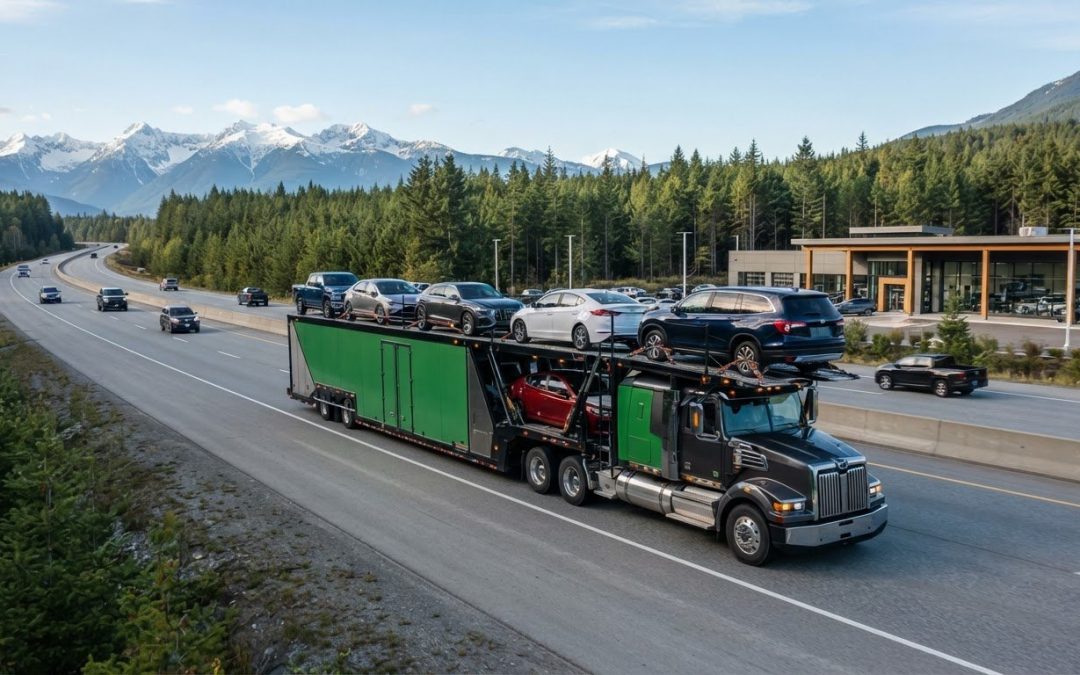
Sending lot staff on a long highway run feels like a simple way to save cash on a dealer trade, but it often drains your profits instead. Every sales manager knows the frustration of a buyer threatening to cancel an agreement because a vehicle pickup is delayed. Pulling internal personnel away from the sales floor leaves your showroom short-handed and exposes your business to unnecessary road liability. Managing smooth inter-dealership vehicle transfers shouldn’t force you to gamble with vehicle condition, accumulate unexpected mileage on new factory units, or spend hours chasing down unverified haulers.
You can protect your vehicle gross margins and keep inventory moving without taking on the logistical headaches yourself. In this guide, you will learn how to optimize inter-dealership vehicle transfers, safeguard inventory margins, and streamline dealer trade logistics across Canada. We will examine how centralizing carrier vetting, dispatch scheduling, and documentation with transport specialists shortens holding cycles and accelerates turnaround times nationwide.
Key Takeaways
- Strategic inter-dealership vehicle transfers allow retail stores to capture immediate customer demand, balance stock levels, and prevent aged lot inventory from eating into gross margins.
- Relying on commercial carrier hauling preserves zero-mileage factory integrity on new units and eliminates staff road liabilities, travel downtime, and unexpected stone-chip damage.
- Standardized documentation, structured condition reports, and clear vehicle release authorizations protect your dealership from disputed damage claims during inter-store handoffs.
- Centralizing transfer logistics with a dedicated dispatch broker streamlines carrier safety vetting, insurance verification, and nationwide scheduling through a single point of contact.
What Are Inter-Dealership Vehicle Transfers and Why Do They Matter?
Automotive retail moves fast. When a prospective buyer walks into a showroom demanding a specific trim, exterior finish, or interior package that isn’t on your lot, losing that sale isn’t an option. Inter-dealership vehicle transfers solve this challenge by establishing strategic business-to-business inventory movements between independent dealerships and franchise network locations. Rather than viewing stock as limited to a single physical lot, dealer groups treat collective regional and national holdings as a shared inventory pool.
National vehicle distribution networks rely on structured commercial logistics rather than informal arrangements. Dealership groups operate under complex franchise agreements and regional compliance standards. Understanding broader industry operational frameworks, such as standard car dealership regulations and dealer trade agreements, highlights why informal handoffs create legal and financial exposure. Professional inventory transfers keep retail units moving securely between business entities while safeguarding profitability.
Customer-Driven Dealer Trades vs. Wholesale Inventory Rebalancing
Inter-dealership moves generally fall into two operational categories:
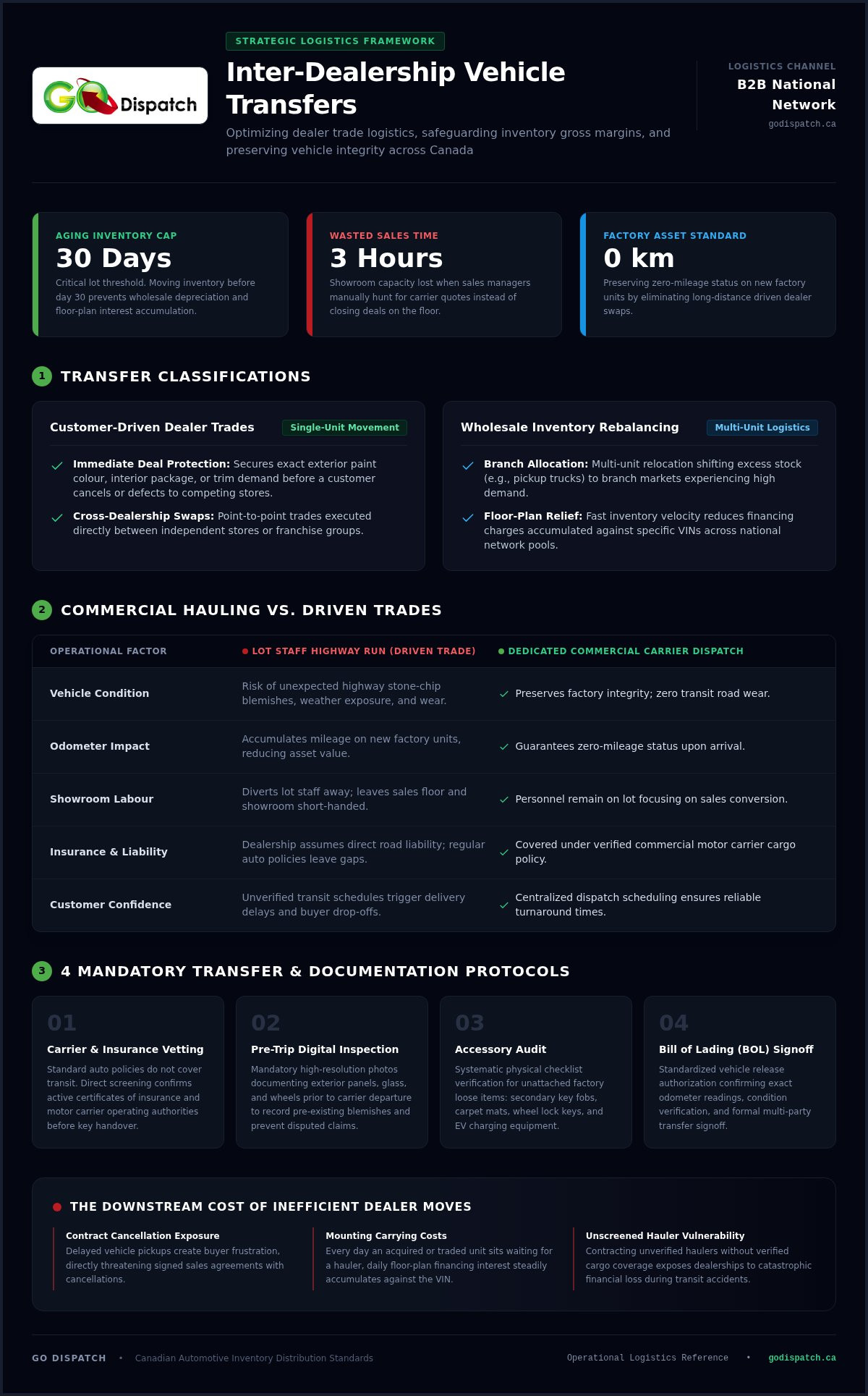
- Customer-Driven Dealer Trades: Single-unit swaps arranged to satisfy an immediate retail purchase agreement. Quickly securing an exact paint colour or technology package protects the deal from walking to a competing store.
- Wholesale Inventory Rebalancing: Multi-unit relocations between branch locations. Consolidating aging units or shifting excess pickup trucks to markets with active buyer demand prevents lot stagnation.
Moving units before they sit past a typical 30-day threshold preserves gross profit margins. Faster inventory velocity directly cuts floor-plan financing interest and protects vehicles from seasonal wholesale depreciation.
The True Cost of Inefficient Automotive Stock Relocation
Ad-hoc transport choices often create operational bottlenecks that compound daily overhead:
- Broken Agreements: Unverified transit schedules trigger delivery delays, causing impatient buyers to cancel purchases entirely.
- Mounting Carrying Costs: Every day a traded unit sits waiting for pickup, daily floor-plan interest continues accumulating against that VIN.
- Wasted Sales Capacity: When sales managers spend three hours on the phone chasing transport quotes, they aren’t closing deals on the showroom floor.
Securing reliable transport logistics eliminates these friction points. Your store secures the delivery, pleases the customer, and keeps frontline staff focused on sales volume.
The Logistics Behind Successful Inter-Store Vehicle Transfers
Executing smooth inter-store transfers requires strict operational coordination. While consumer guides outline how dealer trades work from a showroom angle, dealership managers know the real challenge begins once the trade agreement is signed. Relocating inventory between stores demands verified paperwork, pre-trip inspections, and comprehensive carrier validation. Following proven operational standards for vehicle delivery logistics in Canada ensures each transferred unit arrives safely without administrative hold-ups.
Before releasing keys to a third-party transporter, verifying active cargo insurance policies is mandatory. A standard auto policy does not protect inventory in transit. Qualified dispatchers screen motor carriers directly to confirm active certificates of insurance and valid operating authorities. This step shields both dealerships from catastrophic financial loss if an incident occurs on the road.
Inspection Protocols and Documentation Standards
Clear documentation protects both sending and receiving dealerships from contested damage claims. Every unit requires a thorough digital condition report before departure:
- Exterior and Interior Inspections: Capture high-resolution photos of all body panels, wheels, and glass to record pre-existing blemishes.
- Accessory Verification: Confirm loose factory items, including secondary key fobs, carpet mats, wheel lock keys, and EV charging cables.
- Bill of Lading Execution: Ensure the Bill of Lading (BOL) details exact odometer readings at pickup. Receiving staff must inspect the unit thoroughly before signing the delivery receipt.
Managing Tight Customer Delivery Timelines Across National Routes
Setting realistic delivery expectations keeps retail deals intact. Canadian transport corridors present unique challenges, from sudden winter storm delays to extensive highway distances between distribution hubs. Keeping sales reps informed with accurate scheduling prevents unrealistic promises to retail buyers.
Dedicated dispatch communication bridges this operational gap. Instead of leaving sales managers to track individual drivers across multiple provinces, working with one-stop transport dispatching gives your team proactive milestone updates from carrier pickup to final lot drop-off. Reliable inter-dealership vehicle transfers depend on this continuous visibility, protecting customer goodwill and keeping inventory turn rates high.
Professional Hauling vs. Driven Dealer Trades: An Operational Comparison
Many stores still rely on internal lot attendants or casual drivers to shuttle inventory between retail locations. It seems simple at first glance. However, putting trade units directly on the open highway creates hidden expenses that quickly erode gross margins. Evaluating commercial carrier transport against staff-driven swaps reveals stark differences in mileage accumulation, physical vehicle wear, staff allocation, and liability exposure. Reviewing dealership auto transport logistics helps managers weigh these operational trade-offs and build scalable capacity strategies.
Preserving Vehicle Value and Customer Trust with Zero-Mileage Delivery
Discerning buyers purchasing brand-new inventory expect factory-fresh quality. Handing over keys to a new vehicle with several hundred highway kilometres on the odometer instantly raises awkward questions and damages customer trust. Extra road distance also eats into manufacturer warranty parameters before the buyer even takes delivery.
Commercial multi-car and flatbed transport keeps tires off the asphalt. It eliminates the paint chipping, pitted windshields, and corrosive highway chemicals that devalue traded stock. Vehicles arrive clean, undamaged, and ready for immediate handover.
Mitigating Commercial Liability and Dealership Staffing Shortages
Staff-driven swaps drain your daily retail productivity. Pulling lot staff away leaves customer deliveries unwashed, intake bays backed up, and lot displays unorganized. If an employee encounters poor weather or an unexpected collision on the road, your store’s commercial garage policy absorbs the liability.
There is also the administrative drag of reconciling fuel receipts, meal allowances, and return transit bookings. Outsourcing inter-dealership vehicle transfers to vetted third-party carriers removes this operational headache entirely. Your staff stays focused on customer satisfaction while professional haulers coordinate equipment movement behind the scenes.
Best Practices to Streamline Your Dealership Trade Operations
Operating a high-volume trade desk requires repeatable systems. When stores exchange stock without clear guidelines, small administrative oversights quickly lead to inventory discrepancies, accounting delays, and strained dealer relations. Reviewing standard operational benchmarks for vehicle transport cost in Canada helps sales managers project shipping budgets accurately across retail and wholesale movements. Implementing structured protocols keeps your inventory pipeline predictable and your balance sheets aligned.
Establishing Clear Inter-Company Agreements and Protocols
Smooth transactions depend on clear inter-store communication. Dealership trade desks should establish formal agreements before releasing keys:
- Standardized Hold Times: Define strict expiration windows for vehicle holds to prevent units from sitting frozen during retail negotiations.
- Accessory and Monroney Parity: Ensure factory window stickers, owner manuals, charging cables, and secondary keys travel with the unit or are accounted for in the settlement.
- Inter-Provincial Compliance: Harmonize dealer transfer notices, tax documentation, and ownership releases to prevent administrative holds across provincial borders.
- Damage Escalation Guidelines: Agree on immediate reporting protocols if a carrier records pre-existing transit damage on the intake condition report.
Handling Complex Cargo: Pickup Trucks, Commercial Vans, and Large SUVs
Not every vehicle fits comfortably on a standard open hauler. Moving heavy-duty trucks, commercial passenger vans, and extended SUVs introduces significant dimensional challenges. Dual-rear-wheel pickups and high-roof work vans demand specialized trailer clearances, higher weight capacities, and carefully planned transport routing.
Understanding the specialized equipment required to transport a truck prevents carriers from arriving with inadequate trailer decks. Professional haulers must confirm payload ratings and ramp angles before dispatch to protect heavy undercarriages during loading. To eliminate the guesswork from multi-unit fleet moves and complex trade swaps, coordinate your inter-dealership vehicle transfers with GO DISPATCH today.
Why Partnering with a Dedicated Auto Dispatcher Transforms Dealership Logistics
Dealership managers wear too many hats. Scouring load boards or calling independent auto haulers for open trailer space pulls your best producers away from closing retail business. Dedicated transport dispatching transforms this workflow into an efficient background process. By partnering with an automotive dispatch brokerage, dealerships gain immediate access to reliable hauler capacity without the headaches of vetting individual trucking companies.
Vetted Carrier Networks and Comprehensive Compliance Oversight
Entrusting high-value retail inventory to unverified transport operators introduces severe operational exposure. A specialized dispatch partner mitigates this risk by rigorously qualifying carriers before assigning any vehicle load:
- Active Operating Authorities: Confirming each commercial hauler possesses valid transport licensing across provincial jurisdictions.
- Direct Policy Verification: Reviewing active commercial cargo insurance certificates to ensure adequate valuation coverage for high-trim models.
- Proactive Contingency Handling: Managing driver check-ins, highway detour rerouting, and delivery scheduling behind the scenes.
If an assigned hauler encounters mechanical delays or adverse weather conditions, your dispatch team resolves the bottleneck immediately, keeping your inventory moving without pulling your staff into the dispute.
Centralized Communication and Hassle-Free Vehicle Handoffs
Centralizing your inter-dealership vehicle transfers eliminates logistical chaos across store branches. Instead of balancing disjointed carrier invoices, multiple rate agreements, and inconsistent driver arrival windows, your trade desk works with a single, dependable point of contact.
Whether you need single-unit customer trades for cars, trucks, SUVs, and vans, or large multi-car lot transfers between store locations, professional dispatching scales seamlessly with your operational demands. Centralized accounting, standard billing, and dedicated logistics support give your administrative staff hours back every week.
Take the uncertainty out of your trade desk operations today. You can optimize your logistics with a single call to GO DISPATCH. When you partner with GO DISPATCH for reliable vehicle transfers, your team stops managing transport logistics and stays focused on customer delivery and lot profitability.
Take Control of Your Dealership Inventory Flow
Protecting vehicle margins starts with treating inventory movement as a strategic asset rather than an administrative burden. Relying on commercial transport for your inter-dealership vehicle transfers safeguards zero-mileage factory condition, eliminates liability risks from road hazards, and keeps your lot staff focused on high-value retail prep.
A dedicated Canadian auto transport dispatch brokerage provides complete logistics coordination for cars, trucks, SUVs, and commercial vans. Working with a vetted carrier network removes the friction of checking insurance policies, managing individual hauler contracts, and tracking drivers across long transit routes. You gain predictability, eliminate downtime, and keep incoming inventory ready for sale.
Ready to accelerate inventory turnaround and protect your trade profits? Streamline your dealership vehicle transfers with GO DISPATCH and build a faster, more dependable trade operation today.
Frequently Asked Questions
How do inter-dealership vehicle transfers differ from traditional consumer auto shipping?
Inter-dealership transfers focus strictly on business-to-business inventory velocity rather than residential relocation. Dealerships operate under tighter retail delivery windows, wholesale accounting deadlines, and floor-plan interest cycles. Shipments also require specialized commercial documentation, such as dealer trade agreements and factory invoice transfers. Working with commercial haulers ensures vehicles move between store compounds without adding consumer-facing residential drop-off complications.
Is it better to hire a car hauler or have staff drive a dealer trade?
Professional carrier hauling is almost always superior to having staff drive units on public highways. Driving vehicles racks up transit mileage on new factory warranties, risks road rash from loose gravel, and leaves your showroom short-staffed. Commercial carrier transport eliminates commercial liability on your garage policy, safeguards zero-mileage value for the retail buyer, and eliminates travel expense reimbursements for internal drivers.
What paperwork is required to complete an inter-dealership vehicle transfer in Canada?
Executing smooth inter-dealership vehicle transfers requires four primary documents. Both stores need a signed dealer trade agreement specifying vehicle identification numbers and vehicle allowances. Transporters require a detailed Bill of Lading and an electronic condition report documenting pre-pickup cosmetic condition. Finally, accounting offices must exchange ownership transfer notices and applicable provincial tax documentation to ensure legal compliance across jurisdictions.
How can dealerships protect brand-new inventory from transport damage during transfers?
Dealerships protect new stock by conducting rigorous intake inspections and choosing verified commercial carriers. Staff should document all panels, glass, and wheels with time-stamped digital photos before handover. Ensuring the carrier uses over-the-wheel soft tie-downs rather than axle chains avoids chassis alignment issues. Leaving factory protective wraps on painted surfaces and verifying carrier cargo coverage beforehand ensures inventory stays pristine from gate to gate.
What happens if a vehicle arrives with transit damage during an inter-store transfer?
When damage occurs, the receiving dealership must note all defects directly on the carrier’s Bill of Lading before signing for the delivery. Take clear, well-lit photos of the damage while the vehicle is still on or beside the transport trailer. Compare these findings against the pickup inspection report to establish carrier liability. Then, submit documentation immediately to your dispatch coordinator to open a formal cargo insurance claim.
Can commercial pickup trucks and high-roof vans be included in dealer trade transfers?
Yes, commercial vehicles like heavy-duty pickup trucks, high-roof cargo vans, and dual-rear-wheel models regularly move between dealerships. However, their excess height and heavier curb weights require specialized multi-car haulers or dedicated flatbed trailers. A professional dispatch service matches these dimensions with appropriately rated carrier equipment, ensuring trailer clearance limits and provincial bridge weight regulations are strictly respected throughout transit.
How does an auto transport dispatch service coordinate inter-dealership inventory transfers?
A dedicated dispatch broker acts as your central logistics partner for inter-dealership vehicle transfers. Rather than your team calling individual haulers, the dispatch service matches your vehicles with qualified third-party carriers across Canada. They verify carrier safety records and active cargo insurance policies, manage pickup schedules, track transit milestones, and consolidate billing through a single administrative channel, saving your dealership hours of operational coordination.