
In the Canadian auto transport industry, your Bill of Lading isn’t just paperwork; it’s your only legal reality. If a scratch or dent isn’t recorded on that document at delivery, as far as the law is concerned, the damage simply doesn’t exist. You’ve spent hard-earned money on your vehicle. Discovering a new dent upon arrival is a gut-punch that leaves most owners feeling ghosted by carriers and confused by complex fine print. We know the stress of protecting a high-value asset.
This guide explains exactly what to do if car is damaged during shipping to ensure you secure the insurance payout you deserve. You don’t have to handle the logistics alone. We’ll walk you through the immediate inspection steps, explain how carrier cargo insurance works in Canada, and help you restore your vehicle to its original condition. From understanding liability to finalizing your claim, we’ll simplify the process so you can focus on getting back on the road.
Key Takeaways
- Never let the driver leave before completing a thorough walk-around inspection. If damage isn’t noted on the Bill of Lading immediately, it becomes your financial responsibility.
- Understand why the Bill of Lading is your most critical legal document. It tracks the chain of custody and serves as the official record for any potential insurance claims.
- Learn exactly what to do if car is damaged during shipping to trigger the carrier’s cargo insurance. This keeps your personal auto policy untouched and ensures the liable party pays for repairs.
- Discover how a professional dispatch service protects you by vetting carriers for valid insurance coverage. You’ll gain peace of mind knowing your vehicle is in the hands of a verified professional.
- Prepare for a smooth delivery by cleaning your vehicle and taking detailed photos before pick-up. Matching these angles at delivery makes identifying and proving new damage simple and undeniable.
Immediate Action: What to Do When Your Vehicle Arrives
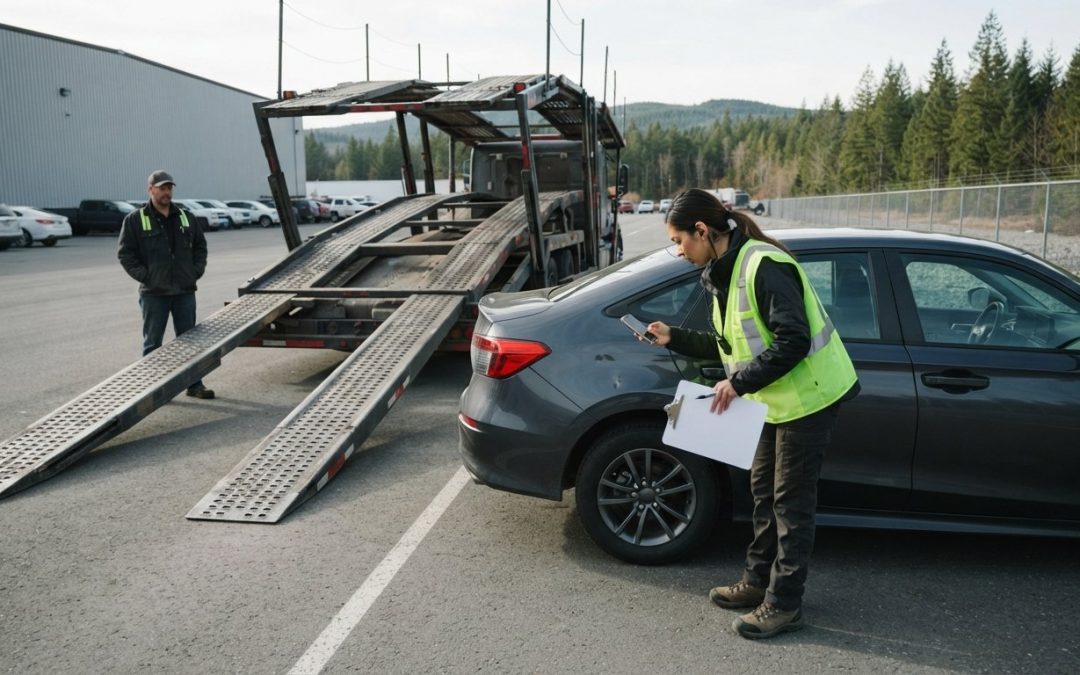
The moment your vehicle arrives is the most critical part of the entire transport process. You might feel a rush of relief seeing your car, but you must stay focused. Never let the driver leave before you finish a full walk-around inspection. This is your only window to identify issues and hold the carrier accountable. If you sign the paperwork and the driver pulls away, you have legally accepted the car in its current condition.
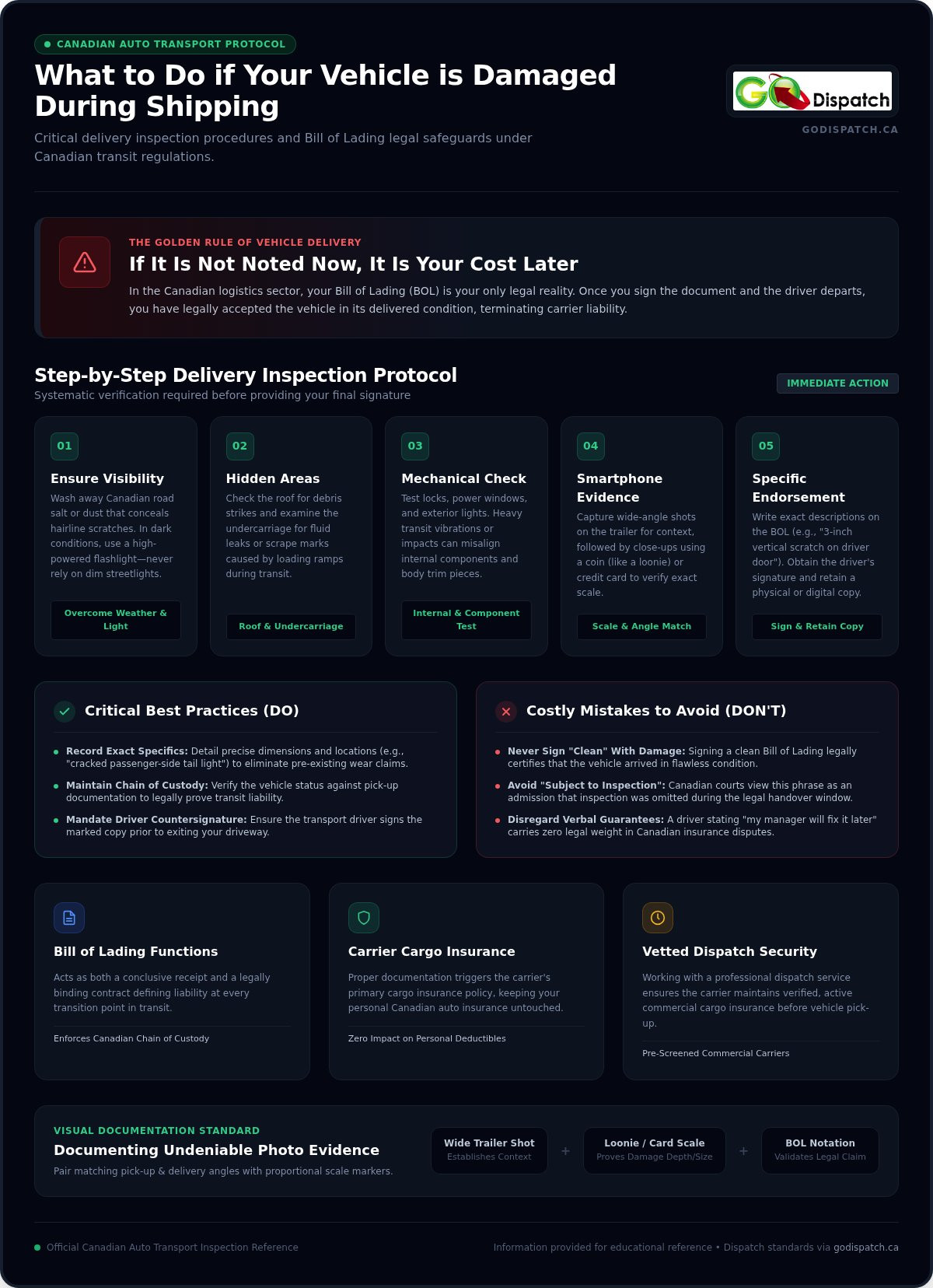
Follow the “Golden Rule” of vehicle delivery: if it is not noted now, it is your cost later. Every scratch, chip, or dent must be recorded on the bill of_lading before you provide a final signature. This document serves as the official record of the car’s state. Without a clear note on this paper, proving liability for transit damage becomes nearly impossible. Knowing what to do if car is damaged during shipping starts with this disciplined approach to paperwork.
Visibility is your best tool during this process. Ensure the car is clean; Canadian road salt or dust can easily hide hairline scratches or paint chips. If the delivery happens at night or in a poorly lit town centre, use a high-powered flashlight to inspect the panels. Never rely on dim streetlights. Some drivers may seem dismissive or claim they are on a tight schedule. Remain professional but firm. Your investment is at stake, and a reputable carrier expects a thorough inspection. If a driver refuses to wait, contact your dispatch service immediately.
The Step-by-Step Inspection Process
Begin with the areas most people ignore. Check the roof for debris strikes and look at the undercarriage for fluid leaks or scrape marks from loading ramps. Compare the vehicle’s current state against your original pick-up photos meticulously. Don’t just look at the exterior paint. Test the mechanical functions, such as the locks, windows, and lights. Even if the damage looks cosmetic, a heavy impact during transit can shift internal components or trim pieces.
Documenting Damage with Your Smartphone
When you are figuring out what to do if car is damaged during shipping, your phone is your best witness. Start with wide-angle shots that show the car’s position on the trailer to establish context. Move in for close-up photos of specific damage. Place a common object, like a loonie or a credit card, next to the dent to provide a sense of scale. Finally, write a single, clear sentence on the delivery document describing the exact location and nature of every issue you find. Clear evidence prevents disputes later.
The Bill of Lading: Your Primary Legal Defence
The Bill of Lading (BOL) is the most important document in your vehicle’s journey. It acts as both a receipt and a legally binding contract between you and the carrier. This document outlines the condition of your vehicle at the exact moment it changes hands. In the logistics industry, if it isn’t on the BOL, it didn’t happen. It serves as your primary shield against repair costs.
The BOL establishes the chain of custody. It proves where the vehicle was and who was responsible for it at every stage of transport. If you are wondering what to do if car is damaged during shipping, the answer starts with this piece of paper. Never sign a “clean” BOL if you see a new scratch. Signing a clean document means you’ve legally accepted the car as perfect. Once you sign, the carrier’s liability usually ends.
Many owners make the mistake of trusting a driver’s word. A driver might say, “Don’t worry, my manager will fix that later,” but verbal promises have zero legal weight in Canadian insurance disputes. You need written proof. Following Better Business Bureau vehicle shipping tips can help you stay protected. If you want to avoid these headaches from the start, choosing a professional service for one-stop transport dispatching ensures you work with carriers who respect these legal standards.
How to Properly Mark the Bill of Lading
Specificity is your best defence. Don’t just write “damaged door.” Write “3-inch vertical scratch on driver-side door” or “cracked passenger-side tail light.” This level of detail prevents the carrier from claiming the damage was pre-existing or minor wear. Ensure the driver signs the updated BOL and provides you with a physical or digital copy before they leave your driveway. Never sign “Subject to Inspection.” Canadian insurance courts often view this phrase as an admission that you failed to find damage during the legal handover window.
Digital vs. Paper Documentation
By 2026, electronic Bills of Lading (eBOLs) have become the industry standard across Canada. These digital versions are harder to lose and often include time-stamped metadata. When you take photos, ensure your camera settings preserve the date, time, and GPS location. This metadata links your visual evidence directly to the notes on your BOL. It provides an airtight case for the insurance adjuster. Always ask the carrier to email you the final signed eBOL immediately so you have a secure, digital paper trail.
Navigating the Insurance Claim Process in Canada
The carrier’s cargo insurance is your primary line of defence for transit damage. In Canada, every professional carrier must maintain valid cargo insurance to operate legally. This specific policy is designed to cover damage that occurs while the vehicle is in their care, custody, and control. You should avoid involving your personal auto insurance whenever possible. Using your own policy often leads to unnecessary premium increases and out-of-pocket deductibles. It is the carrier’s responsibility to pay for the repairs since the damage occurred under their watch.
When you are deciding what to do if car is damaged during shipping, you must move quickly. Most Canadian transport regulations require you to file a formal claim within a specific window. While federal law technically allows up to nine months for cargo claims, your specific contract likely has much tighter deadlines. Don’t wait for the carrier to call you. Secure repair estimates from certified shops immediately. Provide at least two detailed quotes that include labour rates in C$ and specific part numbers to justify your claim amount to the insurance provider.
A professional estimate does more than just list a price. It provides a technical breakdown that an insurance adjuster can easily verify. Ensure the shop notes that the damage is consistent with transport stress or impact. This third-party validation is often the difference between a quick payout and a long dispute. Keep all your communications with the carrier and the repair shop in writing to build a solid paper trail.
Contacting the Carrier’s Insurance Provider
Ask the carrier for their insurance certificate and policy number immediately after the damage is noted. An insurance adjuster will then evaluate your claim based on your Bill of Lading notes and the photos you provided. If a carrier refuses to provide their insurance information, don’t panic. Contact your dispatch service. A reputable broker ensures every carrier is fully insured before a single car is loaded. They can provide the necessary policy details to move your claim forward without delay.
Handling Concealed or Mechanical Damage
Sometimes damage isn’t visible during the initial walk-around at the delivery centre. You generally have a 24 to 48 hour window to report concealed damage or mechanical issues. Proving mechanical failure is more complex than a body scratch. You must show the failure resulted from improper transport labour rather than standard wear and tear. For more on managing these complexities, see our Vehicle delivery logistics in Canada: A 2026 Strategic Guide. Understanding these strict reporting timelines is essential for a successful insurance payout.
The Role of Your Dispatch Service vs. the Carrier
Navigating a damage claim is much easier when you have a professional partner in your corner. GO Dispatch acts as your facilitator, while the carrier remains the legally liable party. We don’t operate the trucks ourselves. Instead, we use our industry expertise to connect you with reliable, insured professionals who do. This distinction is vital for your insurance claim. The carrier has physical custody of your vehicle, and their cargo insurance policy is the primary source for repair funds.
Using a dispatching service provides an extra layer of leverage during a dispute. A carrier might feel they can ignore a single customer, but they realize they cannot ignore a dispatch partner that supplies them with consistent work. This is a critical part of what to do if car is damaged during shipping. You are not just one person fighting a logistics company. You are backed by a team that expects every carrier to stand by their contract. High-quality dealership auto transport logistics focus on these professional standards to prevent damage before the car even touches a trailer.
How GO Dispatch Supports Your Claim
We provide the carrier’s insurance documents and contact details immediately upon request. You won’t have to chase down a driver for their policy number. Our team acts as a mediator to ensure the carrier maintains open lines of communication with you. We only work with carriers who maintain high safety ratings across every province they serve. Our commitment to human support means you can speak to a real person about your concerns rather than being stuck in an automated phone tree.
Why Vetting Matters: The GO Dispatch Standard
Our vetting process is rigorous and ongoing. We verify carrier insurance and provincial compliance to ensure every truck in our network meets the latest Canadian standards. This reduces the risk of “fly-by-night” carriers who often cut corners on safety and insurance to offer the lowest price. If you are searching for what to do if car is damaged during shipping, the first step is often checking the carrier’s insurance status through your dispatcher. A cheap quote often comes from a carrier with a poor insurance history or inadequate cargo limits. Our one-stop dispatching service eliminates the guesswork by handling the background checks for you.
If you are ready for a transport experience built on reliability and vetted safety, contact GO Dispatch for a quote today.
Proactive Preparation: How to Simplify Future Transport
Success in a damage claim is often decided before the car is even loaded. A proactive approach makes the delivery inspection a stress-free formality rather than a high-stakes confrontation. Clean your vehicle thoroughly inside and out before the carrier arrives. Canadian road salt and grime can easily mask existing paint chips or hairline scratches. A clean car ensures the pick-up Bill of Lading is an accurate reflection of reality. If the vehicle is dirty, you risk a driver marking “pre-existing damage” on areas that are actually pristine.
Take detailed photos that mirror the exact angles you plan to check at delivery. This creates a clear “before and after” comparison that an insurance adjuster cannot ignore. Empty the cabin of all personal items. Carrier cargo insurance policies specifically exclude personal belongings, and loose items can shift during transit, causing internal damage that won’t be covered. Knowing what to do if car is damaged during shipping includes understanding that your preparation is your best evidence. Quality service often correlates with the vehicle transport cost in Canada; choosing the cheapest option often means sacrificing this level of professional oversight.
The Pre-Shipping Documentation Checklist
Create a digital folder for every transport job to keep your evidence organized. Your documentation should be exhaustive to prevent any “he-said, she-said” disputes with the carrier. Focus on these specific areas:
- Odometer and Dashboard: Take a clear photo of the mileage and ensure no warning lights are active.
- The Four-Corner Rule: Capture wide shots of all four corners and direct side profiles.
- Glass and Trim: Note any tiny chips in the windshield or loose trim pieces, as these are common points of dispute.
- Signed Pick-up BOL: Always keep a copy of the initial inspection report signed by the driver.
Choosing the Right Level of Protection
The type of equipment used for your transport significantly impacts the risk of damage. For high-value, exotic, or classic vehicles, enclosed hauling is the gold standard. It protects the car from road debris and harsh Canadian weather. Standard car hauling on an open trailer is efficient and cost-effective for daily drivers, though it exposes the vehicle to the elements. If you need to transport a truck, ensure the carrier uses specialized equipment designed for the extra weight and wider wheelbases. Matching the transport method to your vehicle’s value is the first step in preventing a claim altogether.
Secure Your Vehicle’s Journey Across Canada
Managing a damage claim doesn’t have to be a source of constant stress. Your primary legal defence is always the Bill of Lading; if you document every detail at delivery, you’ve already won half the battle. By preparing your vehicle thoroughly and understanding the carrier’s cargo insurance requirements, you protect your high-value asset from unnecessary repair costs. Knowing what to do if car is damaged during shipping is the first step toward a successful resolution and full vehicle restoration.
You deserve a transport partner that prioritizes safety and accountability. We handle the complex carrier vetting and insurance verification for every dispatch, giving you peace of mind from pick-up to delivery. Whether you need one-stop logistics for cars, trucks, or SUVs, our national network is ready to serve you. Streamline your next move with GO DISPATCH’s vetted carrier network and experience a simpler way to move your vehicle. Your car is an investment; let’s work together to keep it in original condition.
Frequently Asked Questions
What happens if I discover damage after the driver has already left?
You must act immediately. Most carriers provide a 24 to 48 hour window to report “concealed damage” that wasn’t visible during the initial walk-around. Document the issues with high-resolution photos and contact your dispatch service right away. Proving liability is much harder once the vehicle is in your possession, so always perform a meticulous inspection at the delivery centre before the driver departs.
Does the dispatch company pay for the damage or does the carrier?
The carrier is the legally liable party because they have physical custody of your vehicle during transit. GO Dispatch acts as the facilitator and ensures every carrier in our network maintains valid cargo insurance before any vehicle is loaded. The carrier’s insurance provider pays for the repairs. We support you by providing all necessary policy documents and contact details to streamline your claim process.
Can I refuse to pay the shipping fee if the car is damaged?
No, you should not refuse to pay the shipping fee. Most Canadian transport contracts require payment in full before an insurance claim can be processed. Refusing payment can result in a legal lien against your vehicle or a claim denial. The best approach is to pay the fee, clearly note the damage on the Bill of Lading, and pursue the insurance payout as a separate legal action.
How long do I have to file a damage claim in Canada?
While federal regulations allow up to nine months for cargo claims, your specific contract likely has much tighter deadlines. Most professional carriers require formal notice within 7 to 15 days of delivery. For concealed damage, this window often shrinks to just 24 to 48 hours. Review your paperwork immediately and submit your repair estimates as quickly as possible to avoid a time-based denial.
Will my personal car insurance go up if I file a claim against the carrier?
No, filing a claim against the carrier’s cargo insurance will not affect your personal auto policy or premiums. This is why it is essential to hold the carrier accountable for transit damage. By using their insurance, you avoid paying personal deductibles and keep your own insurance record clean. Your personal policy should only be a last resort if the carrier is uninsured or insolvent.
What is a ‘clean’ Bill of Lading and why is it dangerous?
A “clean” Bill of Lading is a delivery receipt signed with no damage noted. It is dangerous because it serves as a legal admission that the vehicle arrived in perfect condition. Once you sign a clean document, you waive your right to hold the carrier responsible for any visible scratches or dents found later. Always record every issue on the paper before providing your final signature.
What should I do if the carrier’s insurance company denies my claim?
If your claim is denied, request a written explanation for the decision immediately. You can appeal the denial by providing additional evidence, such as your time-stamped pick-up photos. This is why knowing what to do if car is damaged during shipping starts with thorough documentation. If the carrier remains uncooperative, contact your dispatch service to mediate or consider seeking legal advice for high-value repairs.
Is it worth paying extra for enclosed shipping to avoid damage?
Enclosed shipping is a wise investment for high-value, exotic, or classic vehicles. It provides a physical barrier against road debris, harsh Canadian weather, and salt. While open transport is safe for most daily drivers, enclosed hauling virtually eliminates the risk of cosmetic chips and scratches. If you are transportng a high-value asset, the extra cost is often much lower than the stress of a potential damage claim.