
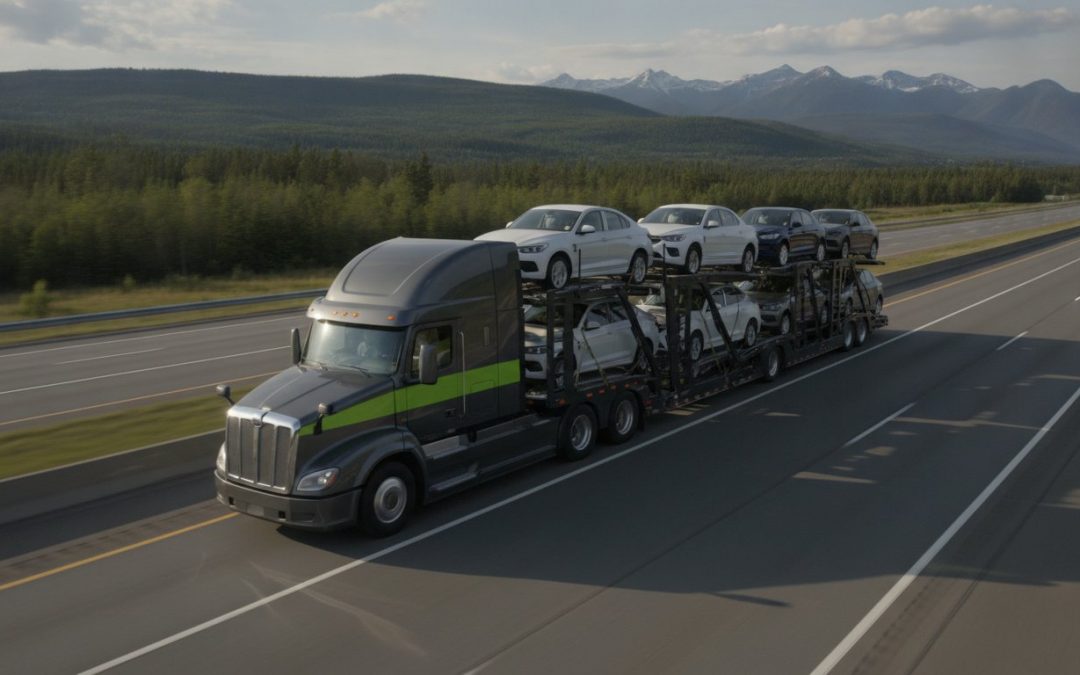
You have a buyer in the showroom ready to sign. The only problem is the specific trim they want is sitting on a lot three provinces away. You book a carrier, but they ghost you at the last minute. Now, your sale is in jeopardy. It’s a frustrating reality for many Canadian managers trying to coordinate dealer trade vehicle transport in 2026. You know that moving inventory shouldn’t feel like a high-stakes gamble with your dealership’s reputation.
We understand the pressure. Your focus belongs on closing deals, not chasing down drivers or filing damage claims. You need a logistics partner that acts as a proactive problem-solver. This article will help you master the logistics of inventory relocation with expert dispatching strategies that prioritize speed, safety, and national coverage. We’ll show you how professional carrier vetting and simplified paperwork can turn your transport headaches into predictable, streamlined results. From the West Coast to the Maritimes, it’s time to simplify your operations and reclaim your peace of mind.
Key Takeaways
- Understand why efficient dealer trade vehicle transport is essential for closing sales in 2026 and how to avoid costly logistics delays.
- Learn how professional dispatchers act as proactive problem-solvers by vetting carriers and handling all communication on your behalf.
- Evaluate the best transport methods for your inventory to balance cost-efficiency with the safety of new vehicle arrivals.
- Master a step-by-step relocation process that ensures accurate VIN reporting and flawless delivery at the receiving lot.
- Discover how a one-stop logistics facilitator can manage complex national moves and reduce your dealership’s daily workload.
The Critical Role of Dealer Trade Vehicle Transport in Modern Sales
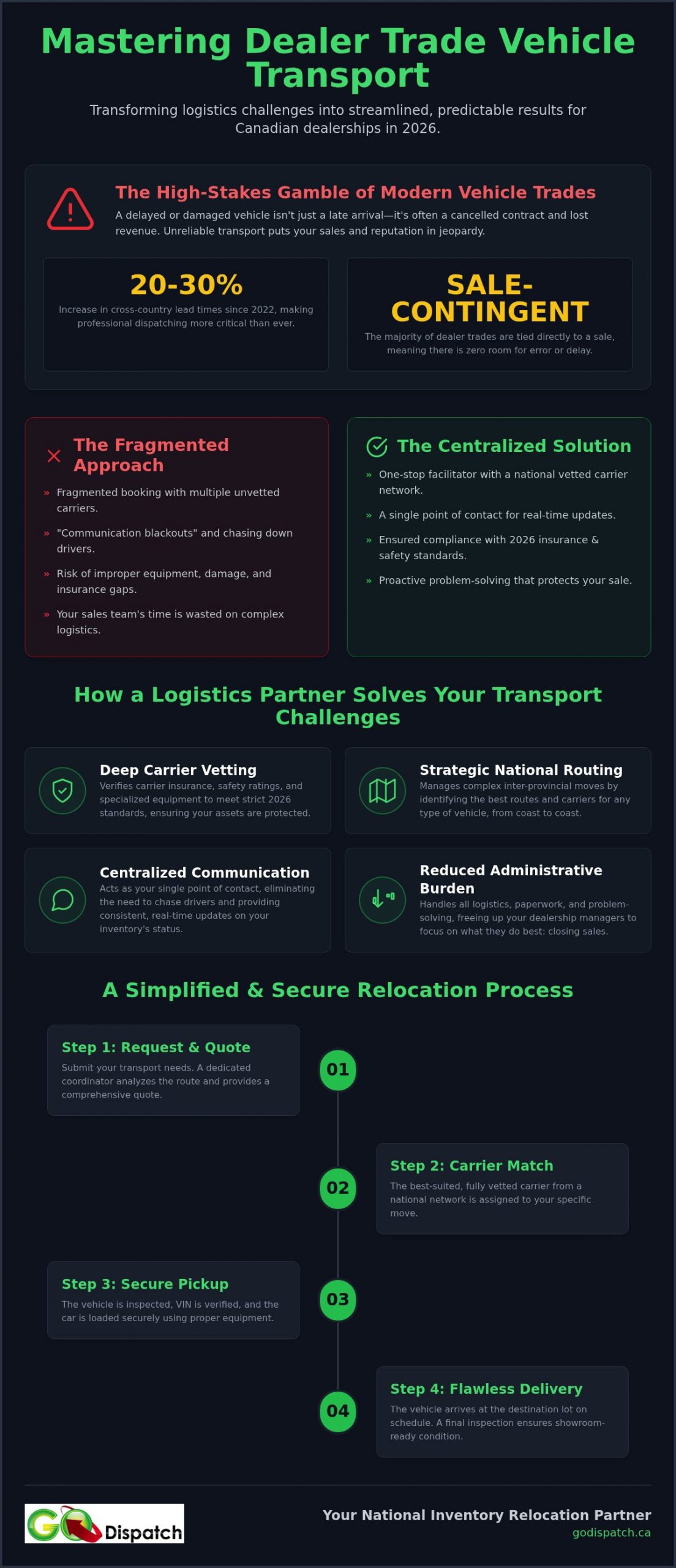
Dealer trades are the lifeblood of your showroom in 2026. Inventory management is no longer a local game; it’s a national one. If a buyer wants a specific trim or a rare colour, you find it. But finding the vehicle is only half the battle. The real work begins with dealer trade vehicle transport. These moves are almost always sale-contingent. This means a delay doesn’t just result in a late arrival. It often leads to a cancelled contract and lost revenue.
High-velocity logistics is now the industry standard. You can’t rely on “best effort” timelines when a customer’s loyalty is on the line. Working with a professional auto transport broker provides the specialized coordination needed for these high-stakes relocations. It allows your team to focus on the sale while experts handle the move. This proactive approach ensures that your dealer trade vehicle transport needs don’t become a bottleneck in your sales cycle.
Why Speed and Reliability Dictate Dealership Success
Modern buyers expect speed. If the delivery window for their new truck slips, the excitement fades. Industry data shows that cross-country lead times have increased by 20-30% since 2022. This makes professional dispatching more critical than ever. You need to know the vehicle will arrive in showroom condition. Scratches or dents during transit don’t just delay the sale; they effectively kill it. Reliability ensures the car on the lot matches the promise made in the showroom.
The Challenges of Inter-Provincial Inventory Moves
Moving a vehicle from a distribution centre in one province to a lot in another isn’t a simple task. It involves navigating different provincial regulations and varying carrier availability. Coordinating multi-vehicle trades across long distances is even more complex. A centralized logistics approach is always superior to fragmented local booking. It prevents the “communication blackout” that happens when you deal with multiple unvetted carriers.
- Managing insurance requirements that meet current 2026 standards.
- Finding carriers with the right capacity for SUVs, vans, or heavy trucks.
- Avoiding the risks of unvetted local drivers for long-distance hauls.
Using unreliable carriers for these moves is a gamble you don’t need to take. They often lack the proper communication tools to keep you updated in real time. A professional facilitator ensures every carrier is vetted for safety and reliability, turning a chaotic process into a predictable part of your business.
What is Professional Auto Carrier Dispatch?
Professional auto carrier dispatch is the strategic coordination between your dealership and a national network of vetted carriers. It’s more than just finding a driver. It’s about having a facilitator who understands that your dealer trade vehicle transport is time-sensitive. While a direct carrier is limited by their own fleet and current location, a one-stop dispatching service acts as a proactive problem-solver. They look at the big picture. They identify the best routes and the most reliable equipment for your specific inventory relocation needs.
Dispatchers act as a bridge. They manage the complex logistics that usually eat up a manager’s afternoon. Many industry leaders rely on professional Car Dealership Transport Services to maintain a competitive edge. A professional dispatcher handles the heavy lifting by sourcing carriers with high-capacity equipment and proven track records. This ensures your vehicles aren’t just moved; they’re managed through every kilometre of the journey.
The Vetting Process: Sourcing High-Quality Carriers
Not all drivers are created equal. A professional dispatcher performs deep-level vetting that most dealerships don’t have time to execute. This includes verifying carrier insurance and safety ratings to ensure they meet strict 2026 standards. As of January 2026, financial security requirements for brokers have tightened, making professional oversight even more valuable. It’s about finding experts in dealership auto transport logistics who treat your inventory with respect. You don’t want a general freight driver handling a new SUV. You want a specialist with the right ramps and specialized tie-down equipment for trucks and vans.
Centralized Communication and Peace of Mind
Dealing with drivers directly is often exhausting. They’re on the road, crossing time zones, and can be hard to reach. A dispatcher acts as your single point of contact. This reduces the administrative burden on your team. You won’t have to track multiple shipments or juggle different carrier contacts. You get real-time updates and human-centric support through a single channel. It’s a streamlined process that gives you back your day and ensures your dealer trade vehicle transport arrives as promised. If you’re ready to stop chasing drivers and start closing more sales, a professional dispatching partner can provide the relief you need.
Evaluating Transport Methods for Dealership Inventory
Choosing the right equipment for dealer trade vehicle transport is a balance of speed, safety, and budget. You don’t need a one-size-fits-all solution. You need the specific hauler that matches your inventory’s value and size. Distance and vehicle dimensions are the primary drivers of these decisions. Larger units like heavy-duty pickups or utility vans require specialized trailers with higher weight capacities and height clearances. Get the right tool for the job every single time.
Open Carrier vs. Enclosed: Choosing for Your Inventory
Open-carrier hauling is the industry standard for a reason. It’s the most cost-effective way to move standard dealership inventory across Canada. Most new cars and SUVs travel this way without issue. However, you must assess the protection versus cost ratio. Research indicates that enclosed transport can add 40% to 60% to the base shipping cost. This premium is usually reserved for luxury trades or exotic vehicles where total climate protection is non-negotiable. For the majority of your lot, open hauling provides the reliability you need at a price point that protects your margins.
Multi-Vehicle Logistics and Volume Efficiency
If you’re moving several units at once, volume efficiency becomes your greatest ally. Organizing multiple vehicles on a single carrier reduces the per-unit cost significantly. Professional dispatchers excel at “stacking” these loads. They find carriers with the capacity to handle your entire trade request in one trip. This approach doesn’t just save money. It ensures all vehicles arrive at the receiving lot simultaneously. This allows your service centre to organize intake inspections and PDI schedules more effectively. It turns a scattered process into a synchronized arrival.
Specialized requirements often apply when transporting a truck or larger utility vans. These vehicles take up more deck space on a trailer. In the Canadian market, where trucks and SUVs dominate sales, understanding these logistical nuances is vital. A professional facilitator ensures the carrier has the correct ramps and tie-downs for these heavier units. This level of detail prevents delays at the loading dock and keeps your dealer trade vehicle transport on a predictable timeline. You focus on the sale; let the experts handle the equipment.
Streamlining the Logistics: A Step-by-Step Guide for Dealers
Precision is the difference between a successful trade and a logistical nightmare. When you coordinate dealer trade vehicle transport, the details matter as much as the delivery date. It starts with the data. An incorrect VIN or a vague pick-up location can stall a carrier for hours. This causes a ripple effect that delays every other vehicle on the trailer. Start by verifying every piece of information before the request even hits the dispatcher’s desk.
Navigating inter-provincial moves requires specific documentation to ensure compliance with Canadian regulations. You can find a detailed breakdown of these requirements in our guide to vehicle delivery logistics in Canada. Having your paperwork organized prevents unnecessary stops at provincial scales and ensures a smooth hand-off between dealerships.
Booking and Dispatch Coordination
The process begins with clear communication. Provide exact coordinates for the pick-up and drop-off lots. Don’t just give the dealership name; specify the gated entrance or the service bay where the carrier should arrive. Once the request is live, the dispatcher selects a carrier based on your specific timeline and the vehicle’s dimensions. They act as the bridge, ensuring the driver knows exactly who to speak with upon arrival. This eliminates the “lot shuffle” where drivers wander the property looking for the right manager.
The Bill of Lading and Condition Reports
The Bill of Lading (BOL) is your most vital piece of protection. It is the official contract of carriage and the legal record of the vehicle’s state. Before the car is loaded, a thorough pre-transport inspection is mandatory. This allows both the driver and the lot manager to realize any existing minor wear, such as small stone chips or interior scuffs. Take clear photos of all four corners and the odometer. When the vehicle arrives at the destination dealership, a final inspection must occur before the BOL is signed. This signature confirms the vehicle was delivered in the same condition it left your lot.
Preparing your inventory for transport is a simple but essential task. Use this checklist to ensure every unit is ready for the road:
- Verify the VIN matches the trade paperwork exactly.
- Ensure the fuel level is at least one-quarter tank for loading and unloading.
- Remove all dealer plates, loose items, and non-factory accessories.
- Clean the exterior so the condition report can be accurate.
- Disable all toll-road transponders and alarm systems.
Efficiency doesn’t happen by accident. It is the result of a disciplined process and professional oversight. If you want to eliminate the guesswork from your next inventory move, book your next dealer trade through our dispatch team for a seamless experience.
The GO Dispatch Advantage for National Inventory Relocation
GO DISPATCH stands as the premier Canadian facilitator for complex inventory logistics. We manage the entire lifecycle of your dealer trade vehicle transport. From the moment you request a move to the final delivery on the lot, we act as your one-stop dispatching partner. This means you don’t have to juggle multiple vendors or worry about regional gaps in service. We handle every detail. You get a streamlined experience that keeps your inventory moving and your sales team closing.
Our network is built to handle diverse fleets. Whether you are relocating compact cars, heavy-duty trucks, or utility SUVs, we have the capacity to support you. We understand that a truck transport requires different equipment and planning than a standard sedan. We ensure the right hauler matches your specific needs every single time. Our human-centric approach ensures you never feel like just another number in a database. You have an expert partner who values your business as much as you do.
Reliability Through Expert Dispatching
Our network ensures consistent carrier availability across all ten provinces. We understand the unique challenges of the Canadian landscape. From winter weather delays to remote route planning, we have seen it all. We don’t just react to problems; we prevent them. Proactive problem-solving is our standard operating procedure. If a route becomes blocked or a driver faces a delay, we find a solution before it affects your customer’s delivery date. We work behind the scenes to keep your promises intact. This reliability is why dealerships across the country trust GO DISPATCH to manage their most valuable assets.
Simplifying Your Daily Workload
Dealership managers are busy enough without playing phone tag with drivers. Your time is best spent on the showroom floor or finalizing contracts. We take the logistical weight off your shoulders so you can focus on your core business. We handle the professional carrier vetting and insurance verification required to keep your inventory safe. This provides the peace of mind you need to operate at full capacity. We manage the tracking, the driver communication, and the administrative follow-up. It is a simple, efficient process designed to give you your day back. If you are ready to remove the stress from your logistics, simplify your dealer trades with GO DISPATCH today.
Mastering Your Inventory Logistics for a Competitive 2026
Success in the modern Canadian market depends on high-velocity logistics. You’ve seen how a professional dispatch network turns a chaotic dealer trade vehicle transport into a predictable success. By centralizing your communication and relying on expert vetting, you protect your dealership’s reputation and your bottom line. You no longer have to gamble on unvetted carriers or lose sales to avoidable transit delays.
Our one-stop transport dispatching service provides the national Canadian coverage you need for cars, trucks, SUVs, and vans. We handle the complex paperwork and carrier coordination so your team can stay focused on the showroom floor. It’s time to simplify your workload and experience the peace of mind that comes with reliable, human-centric support. We act as your proactive partner, solving problems before they reach your lot.
Get a Quote for Your Dealer Trade Transport
Your next successful trade is just a few clicks away. Let’s get your inventory moving safely and efficiently across Canada today.
Frequently Asked Questions
How long does a typical dealer trade vehicle transport take across Canada?
Transit times depend on the route and distance. A cross-country move typically takes between 7 and 14 days. Shorter inter-provincial trips often arrive within 1 to 3 days. These timelines have increased by 20% to 30% since 2022 due to industry-wide driver shortages. We work to find the most efficient route available to ensure your inventory reaches the showroom lot as quickly as possible.
What is the difference between an auto transport dispatcher and a direct carrier?
A dispatcher acts as a one-stop logistics manager while a direct carrier operates the physical trucks. Carriers are limited by their own fleet size and current location. In contrast, a professional dispatcher uses a national network to find the best equipment for your specific route. This approach provides more flexibility and reliability for dealer trade vehicle transport, as the dispatcher handles all carrier vetting and communication on your behalf.
Are dealer trade vehicles insured during transport?
Yes, all vehicles are covered by the carrier’s cargo insurance during transit. As a professional dispatching service, we verify that every carrier in our network maintains current insurance that meets strict 2026 standards. We also confirm their financial security status with federal regulators. This verification process ensures that your new inventory is protected against damage or loss from the moment it is loaded until the final inspection.
Can you coordinate the transport of multiple vehicles between dealerships at once?
We specialize in coordinating multi-vehicle trades to maximize efficiency and reduce costs. By stacking several units on a single multi-car hauler, we can move an entire inventory relocation request in one trip. This ensures that all vehicles arrive at the destination dealership simultaneously. It also simplifies the intake process for your service department, as they can perform inspections on all new arrivals during a single scheduled window.
What paperwork is required for a inter-provincial dealer trade?
The most critical document is the Bill of Lading (BOL), which acts as the official contract and condition report. You will also need accurate VIN information and dealership transfer documentation for inter-provincial moves. We manage the logistical side of this paperwork to ensure the carrier can pass through provincial scales without delays. Providing precise pick-up and drop-off coordinates helps us maintain compliance with all Canadian transport regulations.
Do I need to clean the vehicle before it is picked up for transport?
A clean exterior is essential for a proper pre-transport inspection. Dirt or grime can hide small scratches or stone chips, making it difficult to create an accurate condition report on the Bill of Lading. You don’t need a full detail, but a quick wash allows both the driver and the lot manager to realize any existing wear. This transparency protects your dealership if a damage claim needs to be filed later.
How are vehicle transport brokerage fees calculated?
Brokerage fees are calculated based on the complexity of the move rather than a flat rate. Factors include the total distance, the size of the vehicle, and the type of equipment required, such as open or enclosed hauling. Larger units like trucks and utility vans typically require more deck space, which influences the final cost. We provide transparent pricing that covers the entire logistics management process from sourcing to delivery.
What happens if a vehicle is damaged during a dealer trade transport?
If you notice damage upon delivery, you must note it immediately on the Bill of Lading before the driver leaves. Take clear photos of the affected area and compare them to the pre-transport condition report. Once the damage is documented, contact your dispatcher to initiate the claims process with the carrier’s insurance provider. We act as your advocate during dealer trade vehicle transport to ensure a fair and timely resolution for your dealership.