
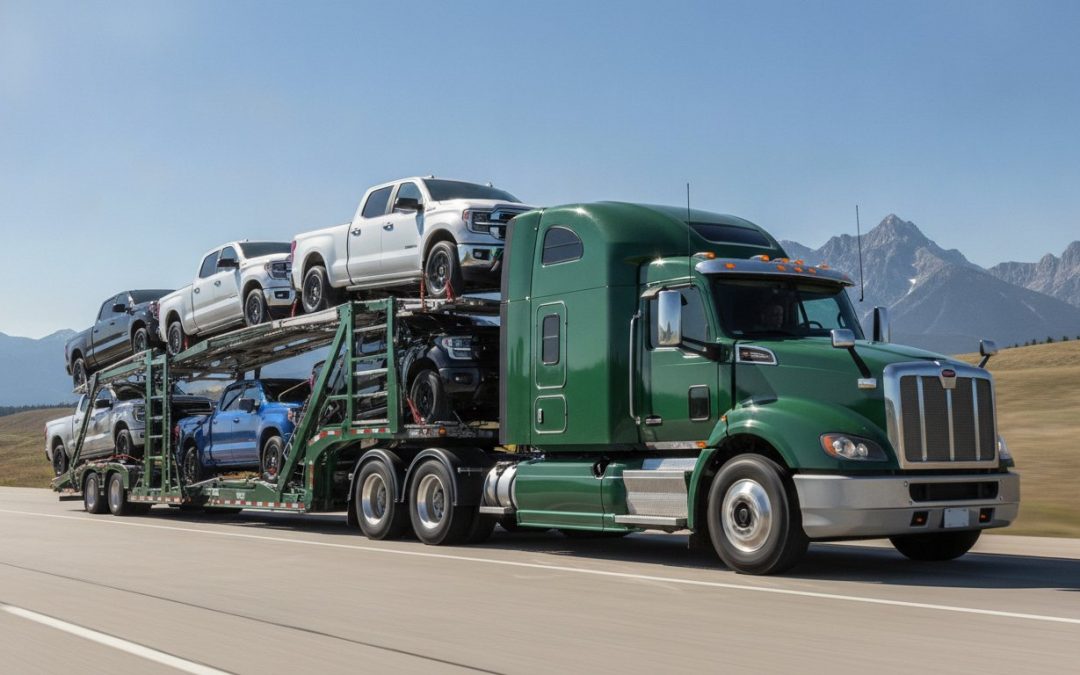
Fuel now accounts for up to 35% of total operating costs in the Canadian trucking industry; a reality that makes every kilometre count. You’ve likely noticed that moving a heavy-duty pickup isn’t the same as shipping a standard sedan. It requires more space, specialized equipment, and a deeper understanding of logistics. Determining the cost to transport a truck in Canada can feel like hitting a moving target when fuel surcharges fluctuate and oversized dimensions trigger extra fees. You need a price that makes sense and a carrier you can actually trust with your high-value assets.
We understand the stress of navigating unpredictable rates and insurance gaps. This 2026 guide provides a transparent look at the variables shaping today’s transport market. You’ll discover how weight, distance, and seasonal demand dictate your final quote. We also explore how professional dispatching removes the burden of carrier vetting; giving you a streamlined, hands-off experience. From understanding diesel price impacts to securing comprehensive coverage, we’re here to simplify your national hauling needs so you can focus on your core business.
Key Takeaways
- Understand how vehicle weight and dimensions directly influence the cost to transport a truck in Canada to budget accurately for 2026.
- Learn why “deck space” is the primary currency of the hauling industry and how GVWR impacts carrier availability.
- Identify when to choose cost-effective open-deck hauling versus the specialized protection of enclosed transport for larger vehicles.
- Use a professional pre-trip checklist and the Bill of Lading to protect your investment and avoid unexpected fees.
- Rely on professional dispatching to handle carrier vetting and scheduling, allowing you to focus on your core business operations.
Understanding the Variables of Truck Transportation Costs
Transporting a truck is a specialized logistics task. It requires heavy-duty equipment and specific trailers that standard auto haulers don’t always use. Because of this, the cost to transport a truck in Canada isn’t a simple mileage calculation. It’s a reflection of equipment scarcity and the physical space your vehicle occupies on a trailer. Larger trucks take up more “deck space,” which limits how many other vehicles a carrier can fit on a single load. This direct relationship between vehicle size and carrier availability is why truck rates differ significantly from standard car shipping. Professional dispatching serves as a vital tool here, helping you navigate these variables by connecting you with carriers that have the right capacity at the right time.
The Role of Distance and Route Logistics
Distance serves as the baseline for every quote. However, the complexity of transportation systems in Canada means that route accessibility is just as vital. National hauling routes typically follow major corridors where traffic is frequent and predictable. You might find that a longer route between two major hubs has a lower cost-per-kilometre than a shorter trip to a remote location. This happens because carriers easily find “backhaul” loads on busy routes, which keeps their trailers full and their prices competitive. Seasonal weather also plays a massive role in Canadian logistics. Harsh winter conditions can slow down schedules and increase operational risks for drivers, which often leads to seasonal rate adjustments to account for the extra time and safety measures required.
Fuel Surcharges and Economic Factors in 2026
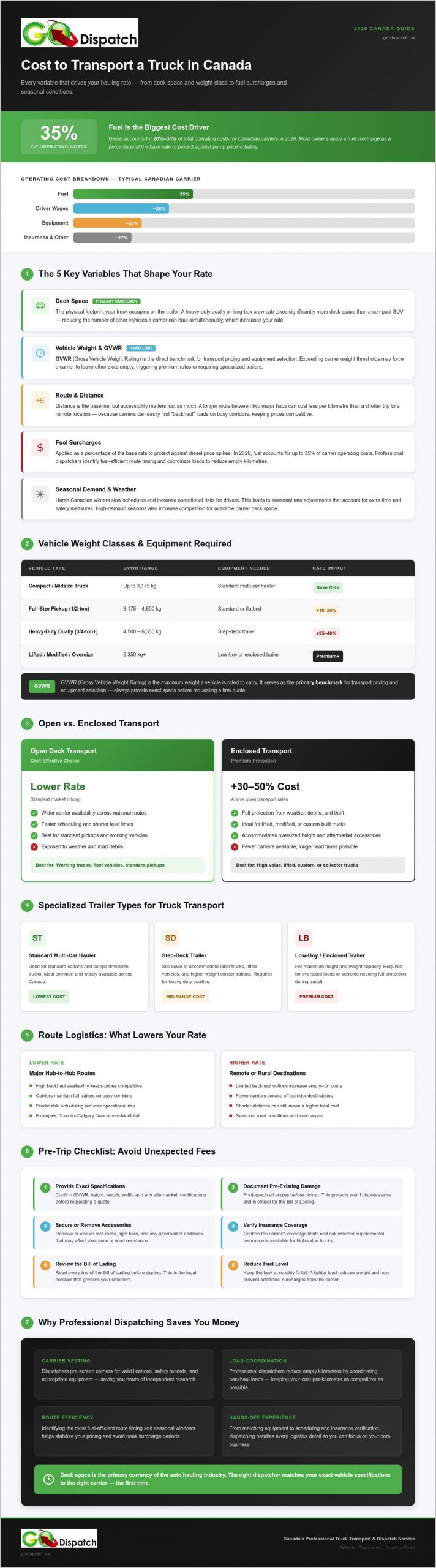
In 2026, fuel remains a volatile variable in the logistics industry. It currently accounts for 20% to 35% of total operating costs for Canadian carriers. Most companies apply a fuel surcharge as a percentage of the base rate to protect against sudden price spikes at the pump. This ensures that the cost to transport a truck in Canada remains fair for both the client and the carrier when diesel costs fluctuate. There is also a growing focus on carbon-conscious logistics and operational efficiency across the country. Professional dispatchers are experts at managing these economic factors. They identify the most fuel-efficient route timing and coordinate loads to reduce empty kilometres. This proactive approach helps stabilize your pricing while ensuring your vehicle moves on a schedule that prioritizes safety and reliability.
How Vehicle Size and Weight Impact Your Hauling Rate
In the auto hauling industry, deck space is the primary currency. A standard sedan occupies a predictable footprint, but trucks vary wildly in length, width, and mass. When you look at the cost to transport a truck in Canada, you aren’t just paying for the distance. You’re paying for the physical volume your vehicle consumes on a trailer. A heavy-duty dually or a long-box crew cab takes up significantly more room than a compact SUV. This reduces the number of other vehicles a carrier can transport simultaneously, which naturally increases the rate for that specific slot.
Weight is the other half of the equation. Carriers must adhere to strict provincial and federal weight limits for their equipment. According to trucking industry financial statistics, operating expenses are tightly tied to payload efficiency and fuel consumption. If a truck is exceptionally heavy, it might force a carrier to leave another spot empty to stay under legal weight thresholds. This is why a professional dispatch service requires exact specifications before providing a firm quote.
Weight Classes and Carrier Limitations
Carrier payload capacity is a hard limit that cannot be negotiated. Standard multi-car haulers are designed for a specific weight distribution. When a truck exceeds these norms, it often requires specialized equipment like step-deck or low-boy trailers. These trailers sit lower to the ground to accommodate taller loads and are built to handle higher weight concentrations. GVWR represents the maximum weight a vehicle is rated to carry, and it serves as the direct benchmark for transport pricing and equipment selection. Our experts at GO Dispatch can help you organize truck transport that matches your vehicle’s specific weight class with the right carrier.
Dimensions: Height, Width, and Modifications
Height clearances are a critical safety factor for every driver on the road. Lifted trucks, or those equipped with roof racks and light bars, may not fit on a standard double-decker trailer. These modifications often require the truck to be loaded on the bottom deck or a single-deck trailer, which limits carrier options. Width is equally important. Wide tires, flared fenders, or large brush guards can make a truck too wide for certain ramps or tracks. Providing accurate measurements for these modifications is essential. It prevents delays at the loading site and ensures the carrier arrives with the correct equipment to handle your specific width and height profile safely.
Choosing Between Open and Enclosed Truck Transport
Deciding on the right trailer type is a critical step in managing the cost to transport a truck in Canada. Most owners choose open-deck hauling because it offers the best balance of availability and price. However, specialized vehicles often require a higher level of protection. You must weigh the value of your truck against the specific risks of the road. Open trailers are the industry standard for a reason, but enclosed options provide a shield against the elements for those who need it most.
Open-Deck Hauling: The Industry Standard
Open transport is the workhorse of the national logistics industry. It’s efficient. It’s reliable. It’s the most common way to move pickups and utility vehicles across the country. Because these trailers are widely available, booking a spot is usually faster and more cost-effective. Carriers use rigorous safety protocols to secure these large vehicles. Heavy-duty straps and specialized tie-down points keep your truck immobile during transit. One major benefit is the ease of inspection. You can see every angle of your vehicle during pickup and delivery. This transparency ensures the Bill of Lading accurately reflects the truck’s condition at every stage of the journey.
Enclosed Transport for Specialized Trucks
Enclosed transport is a premium service. It’s relatively rare for large trucks. Many enclosed trailers are designed for low-profile cars and simply don’t have the ceiling height for a full-sized pickup. If you own a vintage show truck, a luxury model, or a high-performance vehicle, this extra protection is worth the investment. It shields your vehicle from road debris, dust, and harsh weather. Finding a carrier with the right equipment is a complex task. A professional dispatch service can help you source professional auto carriers that operate specialized enclosed trailers with the necessary clearances for larger dimensions.
To decide if the added cost is justified, consider your truck’s primary use. For a work truck or a daily driver, open transport is the logical choice. It provides safe, professional delivery without the premium price tag. If your truck is a high-value asset where the paint finish is a priority, enclosed hauling offers peace of mind. Remember that modifications like lift kits or oversized tires may physically prevent a truck from fitting inside an enclosed unit. Always confirm your dimensions early. This ensures your quote for the cost to transport a truck in Canada remains accurate and that the carrier arrives with the correct equipment for your specific needs.
Preparing Your Truck for National Transport: A Cost-Saving Checklist
Proper preparation is the most effective way to manage the cost to transport a truck in Canada while avoiding unexpected surcharges. Carriers operate on tight schedules and strict weight regulations. If your vehicle isn’t ready when the driver arrives, you risk delay fees or even a cancelled pickup. Taking a few proactive steps ensures a smooth handoff and protects your investment throughout its journey across the country. It’s about more than just logistics; it’s about giving yourself peace of mind before the trailer even pulls away.
Mechanical and Exterior Preparation
Start with a thorough wash. It’s not just about aesthetics; a clean truck allows for an accurate inspection of the bodywork. Check for fluid leaks before the carrier arrives. This is critical if your truck is slated for an upper deck position. Dripping oil or transmission fluid can damage vehicles loaded below, leading to liability issues you’ll want to avoid. You must also secure or remove all loose accessories. Items like aftermarket antennas, roof racks, and bed-mounted toolboxes can catch the wind or vibrate loose during transit. If they aren’t factory-installed and bolted down, take them off to prevent damage to your cab or other vehicles on the load.
Weight management is another area where you can assist the carrier. You should maintain exactly one-quarter tank of fuel for weight optimization and safety. This provides enough fuel for the driver to load and unload the vehicle without adding unnecessary mass that could push the trailer over legal limits. Finally, clear out the cab and the bed. Removing personal items isn’t just a suggestion; it’s a legal necessity for transport insurance compliance. Loose items inside the vehicle can shift and break windows or interior panels during long-haul transit. A clean, empty truck is a safe truck to ship.
Documentation and Insurance Verification
The Bill of Lading is your most important document. It serves as your receipt and a formal record of the truck’s condition. When the driver arrives, perform a joint inspection and be meticulous. Document every existing scratch, dent, or paint chip with high-resolution photos. This creates a clear “before” and “after” record for your files. You also need to confirm that your coverage aligns with current standards. It’s essential to verify vehicle transport insurance requirements before the carrier pulls into your driveway.
Ensure all keys and fobs are functional. The driver needs full access to the vehicle to load it safely and move it if necessary during the trip. If your truck has a specialized alarm system or a kill switch, provide clear instructions or disable it entirely for the duration of the journey. Ready to get started? You can book your truck transport today and let our professional dispatchers handle the rest of the logistics for you.
Streamlining Truck Transport with Professional Dispatch Services
Moving a heavy-duty vehicle across the country is a complex puzzle. You’ve already seen how dimensions, weight, and fuel surcharges influence the cost to transport a truck in Canada. Managing these variables yourself is a full-time job. GO Dispatch acts as your central hub for national logistics. We take the burden of carrier vetting and scheduling off your plate. This one-stop approach turns a logistical headache into a professional, managed process. Our primary goal is to provide peace of mind through a service that is both authoritative and accessible.
The Advantage of a National Carrier Network
Choosing a dispatch service gives you access to a massive network of verified carriers. Unlike companies that rely on a single fleet, we aren’t limited by where our own trucks happen to be. If you need a specialized trailer for a lifted truck, we find the carrier that has it ready. This flexibility is why dealership auto transport logistics rely so heavily on professional dispatching. It allows for rapid inventory moves and reliable scheduling that a single-fleet operation can’t match. Every third-party carrier in our network undergoes a rigorous vetting process. We check insurance, safety records, and reliability so you don’t have to.
Human Support in a Digital Logistics World
Logistics can feel cold and automated. At GO Dispatch, we believe in the power of human connection. You get a professional point of contact who understands your specific hauling needs. We handle all the behind-the-scenes coordination, from the initial booking to the final delivery at your destination. This proactive problem-solving allows you to focus on your core business while we manage the heavy lifting. We bridge the gap between complex industry data and simple, direct results. Our team ensures that your vehicle is prioritized and that every detail of the transit is handled with care.
When you’re ready to move, you need a partner that values your time and your assets. We streamline the entire process to ensure your vehicle arrives safely and on schedule. Don’t let the complexity of national hauling slow you down. Contact GO Dispatch today to organize your national truck move and experience the efficiency of a managed logistics solution.
Secure Your National Truck Move Today
Navigating the complex variables of weight, dimensions, and fuel surcharges doesn’t have to be a solo mission. You now have a clear understanding of how deck space and GVWR define the cost to transport a truck in Canada. By following a thorough preparation checklist and choosing the right trailer type, you protect your investment while avoiding unnecessary fees. The logistics industry moves fast, but a managed approach ensures your vehicle stays on schedule without the typical stress of vetting individual carriers yourself.
GO Dispatch provides expert specialized truck and SUV logistics through our professional auto carrier dispatch network. We offer comprehensive national coverage across Canada, handling every behind-the-scenes detail from booking to final delivery. Our team is ready to streamline your next move with reliable, safe, and efficient service that prioritizes your peace of mind. Get a Professional Quote for Your Truck Transport today and experience a simplified way to move your heavy-duty vehicles. Your next successful haul is just a few clicks away.
Frequently Asked Questions
How is the cost to transport a truck in Canada calculated?
The cost to transport a truck in Canada is calculated by combining a base mileage rate with current fuel surcharges and vehicle-specific requirements. Weight and physical dimensions are critical because they dictate the type of trailer needed for safe transport. Since fuel accounts for up to 35% of industry operating costs, these figures are closely tied to market trends. A dispatcher coordinates these factors to provide a transparent price that avoids hidden fees.
Does the size of my pickup truck affect the transport price?
Vehicle size directly impacts your hauling rate because deck space is the primary currency for auto carriers. Larger trucks consume more room on a trailer, which limits the total number of vehicles a carrier can move simultaneously. A heavy-duty dually or an extended-cab model requires a larger slot than a standard sedan or compact SUV. This reduction in trailer capacity is the main reason why larger vehicles command a higher transport price.
Is my truck insured while it is being transported by a carrier?
Your vehicle is protected by the carrier’s cargo insurance while it is in transit. At GO Dispatch, we use a rigorous vetting process to ensure all third-party carriers in our network maintain high-quality coverage for the assets they haul. You should always review the Bill of Lading and document your truck’s condition with photos before pickup. This creates a clear legal record that supports the insurance process and gives you total peace of mind.
Can I ship personal items inside my truck bed during transport?
You must remove all personal items from your truck before it is loaded for transport. Insurance policies for auto carriers do not cover household goods or loose items left inside the vehicle. These objects can shift during long-haul transit, leading to interior damage or broken glass that won’t be covered by a claim. Keeping the vehicle empty ensures it stays within its weight limits and remains compliant with national safety regulations for professional hauling.
What is the difference between a direct carrier and a dispatch service?
A direct carrier uses their own fleet, while a dispatch service like GO Dispatch coordinates a vast network of professional carriers. The advantage of a dispatcher is flexibility. We aren’t limited by the location of one truck; we find the best carrier for your specific needs from a vetted pool of experts. This one-stop service manages the vetting, scheduling, and logistics behind the scenes, allowing you to focus on your core business operations.
How long does it typically take to transport a truck across Canada?
Transporting a truck across the country usually takes between 7 and 14 days, depending on the route and seasonal conditions. Major transport corridors often have more frequent carrier traffic, which can lead to faster delivery times. Remote or rural locations may require more coordination to secure a spot on a passing trailer. Your dispatcher handles the scheduling and provides professional support to ensure your vehicle moves as efficiently as possible through the national network.
Do I need to be present for the pickup and delivery of my truck?
You or a trusted agent must be present for both pickup and delivery to sign the Bill of Lading. This document is your official receipt and records the physical state of your truck at the start and end of the journey. You’ll perform a joint inspection with the driver to note any existing scratches or dents. This step is vital for insurance purposes and ensures a transparent, professional handoff between you and the carrier.
What happens if my truck is oversized or has a lift kit?
Trucks with lift kits or oversized dimensions often require specialized equipment like step-deck trailers to accommodate their extra height and width. These vehicles cannot fit on standard multi-car haulers, which impacts carrier availability and the overall cost to transport a truck in Canada. You must provide accurate measurements for all aftermarket modifications before booking. This ensures the dispatcher can source a carrier with the correct trailer type to handle your vehicle safely and legally.