
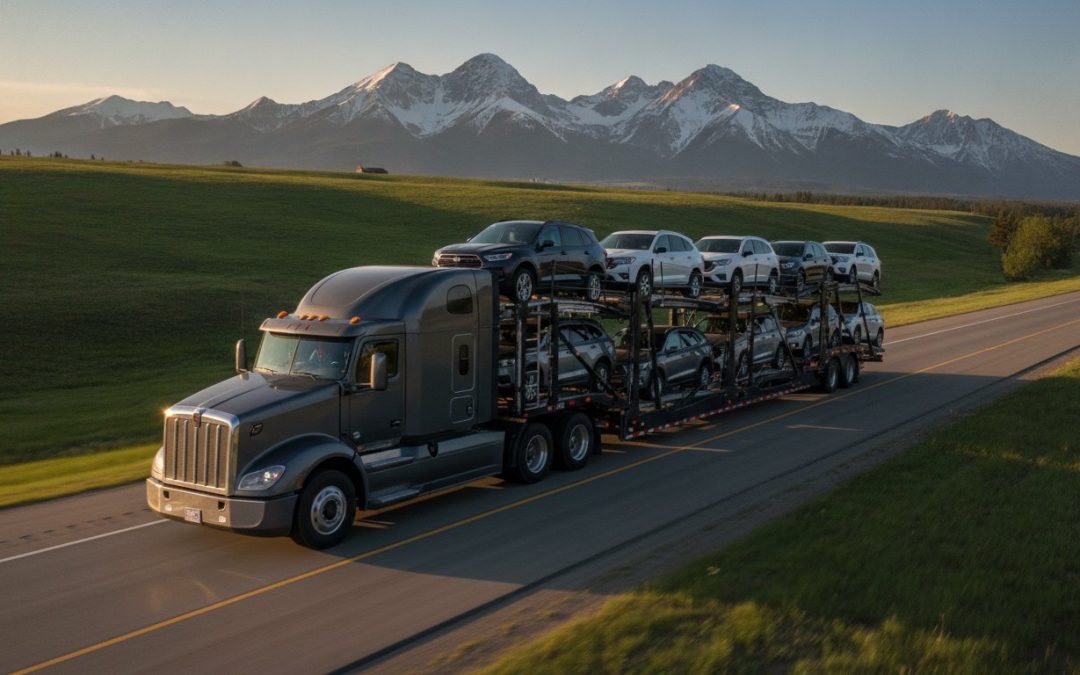
Is your logistics department actually just a pile of sticky notes and unanswered emails? Managing vehicle transport for Alberta businesses has become a complex, full-time job that you likely didn’t sign up for. You already know that coordinating national shipping is a massive drain on your daily resources. Between diesel prices hovering above $2.25 per litre and the new Class 1 driver experience records required as of June 2026, the administrative burden is heavier than it’s ever been. You need your cash flow to stay predictable, yet unreliable timelines and cargo insurance anxieties continue to disrupt your operations.
This 2026 guide reveals how to reclaim your time by streamlining your national vehicle logistics through professional dispatching. You will discover how a single point of contact can reduce overhead and ensure every carrier is fully vetted for safety and compliance. We will walk through the latest regulatory updates and essential registration requirements, alongside cost-saving shipping strategies, and the best ways to guarantee safe delivery across Canada. It’s time to stop chasing carriers and start focusing on your core business goals.
Key Takeaways
- Master the 2026 logistical hurdles and rising costs associated with vehicle transport for Alberta businesses.
- Shift the administrative load to a professional dispatch partner to access a vetted network of fully insured carriers across Canada.
- Compare open and enclosed transport options to ensure you choose the most cost-effective solution for your specific fleet requirements.
- Follow a professional preparation checklist to protect your assets and maintain accurate documentation through every stage of the journey.
- Reduce logistical overhead by consolidating your national shipping needs into one reliable, human-centric point of contact.
The Landscape of Commercial Vehicle Transport for Alberta Businesses
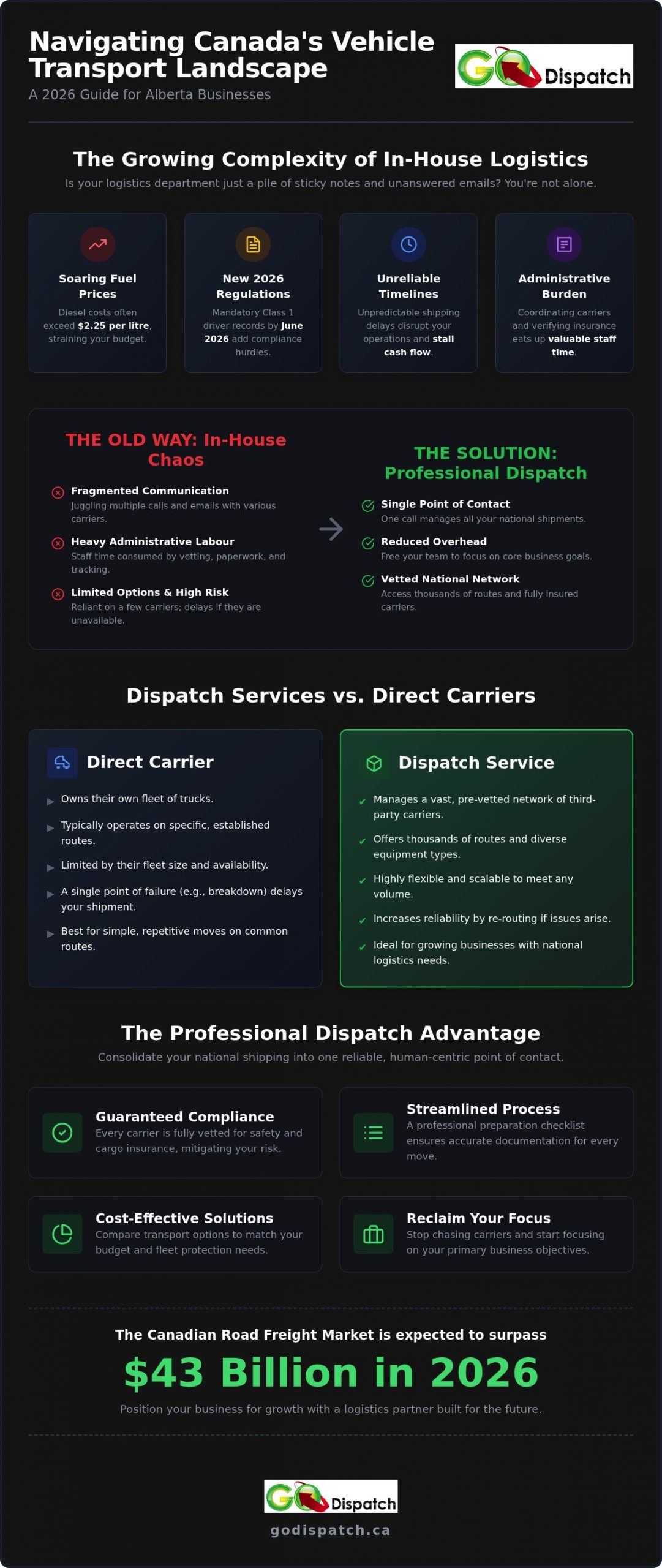
Alberta’s economy is moving faster than ever. As businesses expand their reach from the Rockies to the Maritimes, the demand for reliable vehicle transport for Alberta businesses has reached a record peak. In 2026, the Canadian road freight market is expected to surpass $43 billion, driven largely by the need for efficient asset relocation. Fleet managers are no longer just moving cars; they are managing high-value inventory in a market where diesel prices often exceed $2.25 per litre and driver shortages are a daily reality. You need a partner who understands that every minute a vehicle is in transit is a minute it isn’t generating revenue.
Common logistical hurdles often stall growth. Coordinating multiple carriers, verifying insurance, and tracking unpredictable delivery windows create a massive administrative burden. Many companies still rely on local towing services, but these often fail to meet commercial standards. A standard tow truck isn’t equipped for long-haul, multi-vehicle transport. It lacks the specific cargo insurance and national infrastructure required for business-grade logistics. This gap has led to a major shift toward centralized dispatching. By working with a professional Auto transport broker, Alberta companies gain better inventory control and a single point of contact for every move.
Identifying Your Business Transport Needs
Your logistics strategy depends entirely on your volume. A construction firm might need a one-off move for a heavy-duty truck to a remote site. Conversely, a retail operation requires recurring inventory relocation to keep showrooms full. High-volume shipping requires a more sophisticated approach to ensure cost-efficiency. Understanding the nuances of dealership auto transport logistics is now a competitive necessity. When you move 20 vehicles a month instead of one, even small delays in dispatching can lead to thousands of dollars in lost revenue. We help you realize these efficiencies by matching your volume with the right carrier capacity.
The Impact of National Logistics on Local Operations
Efficient shipping directly impacts your bottom line and customer satisfaction. For Alberta dealerships, reducing “time-to-lot” means cars are sold faster and cash flow remains fluid. If a vehicle sits in a transit hub for two weeks, it’s not making you money. Professional dispatching also helps mitigate the risks of provincial border crossing delays. While the Government of Alberta’s new Canadian Trucking Regulations Hub launched in April 2026 makes navigating interprovincial rules easier, it still requires expert oversight. Professional logistics ensures your fleet stays compliant and moves without friction across every provincial line, keeping your local operations running at full speed.
Evaluating Dispatch Services vs. Direct Carriers
Managing vehicle transport for Alberta businesses requires a choice between the narrow focus of a direct carrier and the broad reach of a dispatch service. An auto transport dispatch service functions as your dedicated logistics arm. It doesn’t own the trucks. Instead, it manages a massive network of vetted third-party carriers. Direct carriers are often limited by their own fleet size and specific routes. If their truck breaks down or they’re fully booked, your inventory sits still. A dispatcher solves this by offering a “middleman” advantage that actually increases reliability. You get access to thousands of routes and equipment types through one desk. This scalability is why growing companies often outgrow direct carrier relationships. They need the flexibility that only a broad network provides.
The Brokerage Advantage for Alberta Enterprises
Managing vehicle transport for Alberta businesses involves a mountain of paperwork. A single point of contact simplifies everything. Instead of calling ten different drivers to track ten different loads, you make one call. Utilizing professional auto carrier dispatch significantly reduces your administrative labour. You aren’t just paying for a move; you’re paying for the time your staff gets back. While brokerage fees are a factor, they usually translate into long-term savings by eliminating the cost of missed deadlines and logistical errors. If you’re ready to simplify your workflow, you can request a logistics assessment to see how a streamlined process fits your fleet.
Risk Management and Insurance Vetting
Safety isn’t just a buzzword. It’s a regulatory requirement. Dispatchers take on the heavy lifting of verifying that every carrier meets Alberta’s commercial vehicle standards and national safety ratings. We verify operating authorities and confirm that cargo insurance is active and sufficient. This proactive vetting protects your assets from the moment of pickup to final delivery. If an issue arises, a specialized dispatcher is better equipped to handle claims than a direct client. We know the industry standards. We have the leverage to ensure carriers take responsibility. You get peace of mind knowing your cargo is in the hands of professionals who have already passed the test.
Choosing the Right Transport Method for Your Fleet
Selecting the correct trailer configuration is the first step toward a successful delivery. For most vehicle transport for Alberta businesses, open carrier transport is the gold standard. It’s the most cost-effective way to move volume, whether you’re relocating a fleet of sedans or replenishing dealership inventory. However, cost isn’t the only factor. You must match the vehicle’s value and sensitivity to the right equipment. High-capacity trailers move more units at once, which reduces the price per vehicle and keeps your overhead low. It’s about finding the balance between speed, protection, and your bottom line.
Enclosed hauling offers a different set of benefits. While open carriers are safe, they expose assets to the elements. In Alberta, this means gravel, road salt, and unpredictable mountain weather. For high-value luxury inventory or sensitive commercial equipment, the extra investment in a hard-sided trailer provides total peace of mind. It’s a strategic choice. You’re protecting your investment from the first kilometre to the last. We help you evaluate your inventory to determine where the added protection is a necessity rather than a luxury. This proactive approach prevents costly detailing or repairs upon arrival.
Open vs. Enclosed: A Strategic Comparison
Deciding between these methods requires a look at the vehicle transport cost in Canada for each setup. Open transport is reliable and frequent, making it easier to book on short notice. Enclosed transport is more specialized and offers a higher level of security against theft and debris. Environmental factors are critical here. Shipping across the Prairies in mid-winter or through the BC mountains involves significant exposure. If your business handles high-end EVs or specialty vehicles, enclosed transport ensures they arrive in showroom condition regardless of the weather. It’s the simplest way to maintain the integrity of your brand’s inventory.
Specialized Requirements for Trucks and Vans
Moving commercial assets like utility vans and heavy-duty pickups presents unique challenges. You can’t just put a lifted work truck on a standard car carrier. There are specific nuances to transporting a truck across provincial lines, including height and weight restrictions. Oversized vehicles often require flatbed trailers or specialized low-profile haulers to clear highway overpasses safely. According to the Alberta Motor Transport Association, staying compliant with carrier safety bulletins is essential for any business operating a commercial fleet. We ensure the correct equipment is dispatched every time. This means you don’t face delays at the scales or provincial borders because of a mismatch between the load and the trailer.
Optimizing the Shipping Process: A Guide for Alberta Businesses
Efficiency in vehicle transport for Alberta businesses isn’t an accident; it’s the result of a repeatable system. You need a workflow that protects your assets and your time. A structured process moves your inventory faster and keeps your staff focused on selling rather than scheduling. By following a standardized sequence, you eliminate the guesswork that often leads to delays and administrative headaches.
- Document Condition: Start with a professional Bill of Lading. This is your legal contract and condition report. Take high-resolution photos and document every detail of the vehicle’s state before it’s loaded.
- Prepare Inventory: Check all fluid levels and ensure there are no leaks. Disable anti-theft alarms to prevent battery drain during transit. Remove all loose items, toll tags, and personal belongings from the cabin.
- Coordinate Windows: Align pickup and delivery windows with your team’s schedule. This prevents staff from being pulled away during peak sales hours or when the lot is short-staffed.
- Manage the Handoff: Standardize the handover process for your dealership or fleet staff. Ensure your team knows how to verify the carrier’s identity and properly sign off on the initial paperwork.
- Final Inspection: Perform a meticulous walk-around upon arrival. Confirm completion and note any discrepancies on the Bill of Lading immediately before the driver leaves the site.
Streamlining Communication with Your Dispatcher
Accurate data is the backbone of smooth logistics. You must provide exact vehicle dimensions and confirm if the vehicle is operational. If a truck has an aftermarket rack, a lift kit, or a wider wheelbase, the dispatcher must know to assign the correct trailer. Modern tracking tools now keep your internal teams informed without the need for constant phone calls. This visibility allows you to plan your lot space and sales targets with precision. Clear expectations regarding “must-have” delivery dates help your dispatcher prioritize your loads effectively within their carrier network.
Preparing for a Safe and Efficient Move
Create an internal checklist for every outgoing move to ensure consistency across your organization. When every staff member follows the same steps, the risk of transit friction vanishes. It’s also vital to understand how vehicle delivery logistics in Canada are evolving in 2026. Regulatory shifts mean that accurate documentation and compliance with provincial weight restrictions are no longer optional. They are mandatory for a seamless journey. If you’re ready to modernize your fleet management and improve your bottom line, you can consult with our logistics experts to build a custom shipping plan for your business.
The GO DISPATCH Advantage: National Reach, Professional Focus
GO DISPATCH brings a unique blend of local insight and national scale to every shipment. Based in Leduc, our team understands the specific pressures and seasonal challenges of the Alberta market. We serve as the dedicated logistics department for companies that don’t have one. By centralizing vehicle transport for Alberta businesses, we eliminate the need to juggle multiple carrier relationships. Whether you’re moving a single SUV or a fleet of utility vans, our one-stop dispatching solution handles the entire process behind the scenes. We don’t just move metal; we move your business forward.
Our commitment to professional focus means you never have to guess about the status of your inventory. We realize that trust is built on reliability and safety. That’s why we only partner with carriers who pass our rigorous vetting process. In a fast-paced industry, we act as your proactive problem-solver. If a route is blocked or a timeline shifts, we find the solution before it reaches your desk. You get the peace of mind that comes from working with a partner who takes pride in meticulous carrier selection and human-centric support.
Our Comprehensive Dispatching Process
Our process is built on high-capacity carrier vetting and constant market analysis. We don’t just find a truck; we find the right truck for your specific route and vehicle type. In 2026, navigating national carrier insurance minimums and safety ratings is more complex than ever. We manage this heavy lifting for you. Our team monitors provincial regulatory changes to ensure every car, truck, and van move remains fully compliant. This professional focus allows your staff to stop worrying about logistics and start focusing on sales targets. We manage the complex paperwork and carrier communication so you don’t have to.
Partnering for Long-Term Success
We believe in the value of a reliable facilitator in the national transport market. We offer customized logistics planning that scales with your business needs, whether you’re an Alberta dealership or a commercial fleet operator. Our goal is to build a long-term partnership based on tangible results and reduced overhead. Engaging our team is simple and direct. You can connect with our Leduc office to discuss your next national vehicle move and receive a tailored logistics strategy. We take pride in being a bold leader in our niche, providing a friendly and helpful guide through the complexities of the Canadian transport industry.
Streamline Your Fleet Logistics for 2026 and Beyond
The landscape of vehicle transport for Alberta businesses is shifting. Rising costs and tighter regulations make professional oversight a necessity. By centralizing your logistics through a dedicated dispatch partner, you eliminate the heavy administrative burden of managing individual carriers. You gain a single point of contact and a vetted network that ensures your cargo is fully insured. Whether you’re moving cars, trucks, or SUVs, the right strategy reduces overhead and protects your business cash flow. It’s about working smarter, not harder.
GO DISPATCH provides the comprehensive logistics management your team needs to stay focused on sales. We handle the expert vetting of all national auto carriers and provide dedicated human support for every shipment. You don’t have to navigate the complexities of national transit alone. Our Leduc-based team acts as your proactive problem-solver, allowing you to reclaim your time and peace of mind. It’s time to simplify your operations and secure your fleet’s future.
Get a Professional Transport Quote for Your Business and experience a more efficient way to move your inventory across Canada. We’re ready to help you reach your goals.
Frequently Asked Questions
How long does it typically take to ship a vehicle from Alberta to other provinces?
Transit times depend on your destination and current seasonal demand, but shipping from Alberta to British Columbia typically takes 2 to 4 days. Moving vehicles to Ontario or Quebec usually requires 7 to 10 days. These timelines can shift based on mountain weather conditions or highway construction. We provide specific, updated estimates for every route to help your team manage inventory flow with precision.
What are the current vehicle transport brokerage fees for Alberta businesses?
Brokerage fees are integrated into your total quote and reflect the complexity of the route and the volume of vehicles being moved. These fees cover the professional vetting of carriers, administrative management, and dedicated dispatch support. We focus on providing a transparent, all-inclusive price that accounts for the high level of oversight required. This ensures your commercial fleet moves without the hidden costs of logistical errors.
Is my vehicle covered by insurance while it is being transported by a third-party carrier?
Yes, every carrier in our network must maintain valid cargo insurance that meets or exceeds 2026 national standards. We verify these insurance certificates and operating authorities before any vehicle is loaded. This rigorous process ensures that vehicle transport for Alberta businesses remains a secure, low-risk operation. Your assets are protected from the moment of pickup through to the final sign-off at your delivery location.
Can GO DISPATCH handle oversized commercial trucks or utility vans?
We specialize in dispatching all vehicle types, including heavy-duty trucks and high-roof utility vans that require specific trailer configurations. Our network includes flatbed and specialized haulers capable of managing unique height and weight restrictions. We match your specific vehicle dimensions with a carrier that has the correct equipment for the job. This prevents delays at provincial borders and ensures your commercial assets arrive safely.
What is the difference between door-to-door and terminal-to-terminal shipping for businesses?
Door-to-door shipping involves picking up and delivering vehicles directly at your place of business, which is the standard for commercial fleets. Terminal-to-terminal shipping requires you to drop off and collect inventory at a central hub. Most Alberta businesses choose door-to-door service because it eliminates the need for extra staff to move vehicles to and from terminals. It simplifies your workflow and keeps your team focused on sales.
How do I prepare my fleet vehicles for national transport?
Preparation starts with a clean exterior to ensure an accurate condition report and disabling all anti-theft alarms. You should remove all loose items from the cabin and keep the fuel level at approximately a quarter tank. This reduces the total weight of the load while still allowing the carrier to drive the vehicle on and off the trailer. Standardizing this checklist across your fleet ensures every move is efficient.
What happens if a vehicle is damaged during the shipping process?
You must note any damage immediately on the Bill of Lading during the final inspection at delivery. Once the damage is documented, we act as your professional advocate to facilitate the insurance claim with the carrier. Because we only use vetted carriers with active, verified coverage, the claims process is straightforward. We help ensure your business is fairly compensated and the issue is resolved without unnecessary stress.
How does GO DISPATCH vet the carriers they use for my inventory?
Our vetting process involves a continuous review of carrier safety ratings, insurance validity, and provincial compliance records. We monitor performance data to ensure only the most reliable drivers handle vehicle transport for Alberta businesses. This meticulous selection process filters out unreliable operators before they ever touch your inventory. You get the benefit of a high-capacity network without the risk of unverified or uninsured third-party carriers.