
Handing over your car keys to a stranger shouldn’t feel like a leap of faith. For many Canadians, the logistics of moving a vehicle across provinces remains a major source of anxiety. You worry about hidden brokerage fees, shifting timelines, or the fear of transit damage. It’s a complex puzzle to solve on your own. If you’re asking, how does auto transport work in canada, you’re likely looking for more than just a price quote; you’re looking for certainty.
We agree that your vehicle is more than just a machine; it’s a vital part of your daily life. This 2026 logistics guide reveals the step-by-step reality of national vehicle hauling and explains how professional dispatching ensures a seamless delivery. We’ll walk through the entire journey from the initial booking and carrier vetting to the final roadside inspection. By the end of this guide, you’ll realize the transport timeline is manageable and gain the peace of mind that comes with professional oversight. Let’s simplify your move and get your vehicle where it needs to be.
Key Takeaways
- Learn exactly how does auto transport work in canada by understanding the vital link between clients, professional dispatchers, and vetted carriers.
- Discover how a one-stop dispatching service from GO DISPATCH acts as your logistics hub to simplify scheduling and eliminate hidden brokerage stress.
- Master the end-to-end shipping process from initial quote specifications to the final assigned professional delivery.
- Understand the specialized equipment and planning needed to move larger vehicles like SUVs, vans, and utility trucks across the country.
- Gain peace of mind by learning how the Bill of Lading and carrier insurance work together to protect your vehicle throughout the journey.
The Logistics Framework: What is Auto Transport in Canada?
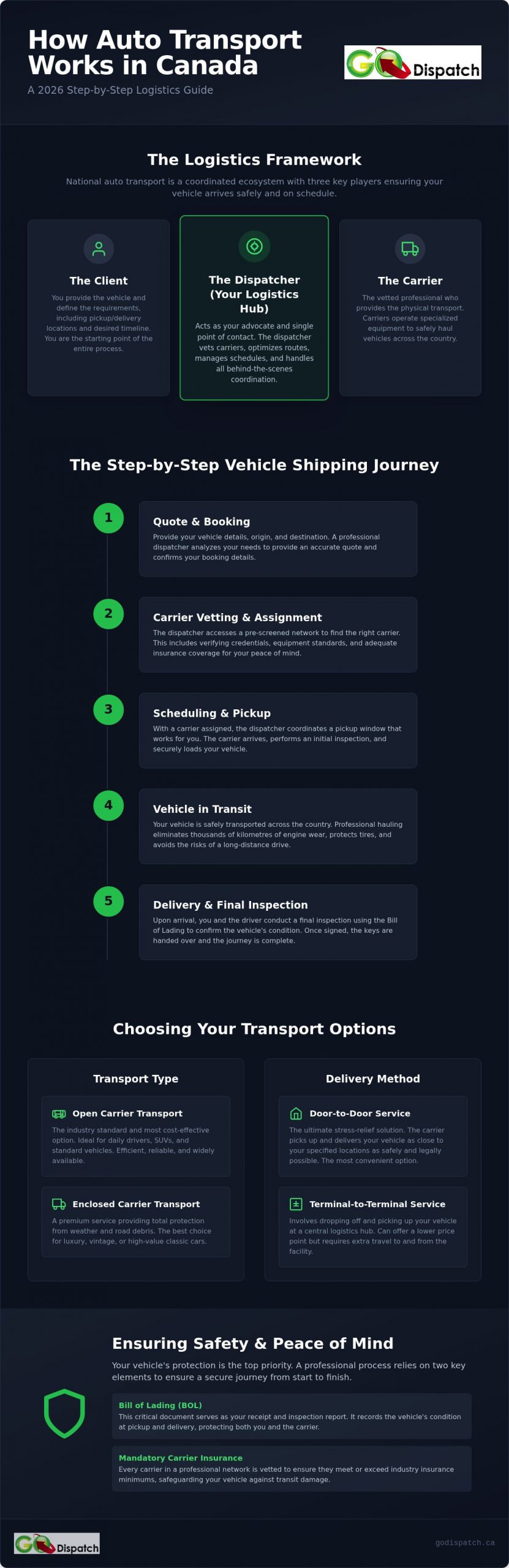
National auto transport is a coordinated logistics sequence designed to move vehicles across vast distances without the wear and tear of driving. It’s a professional service that replaces the stress of a cross-country road trip with a structured, reliable system. To understand how does auto transport work in canada, you must look at it as a three-tier ecosystem. This system includes the client, the dispatcher, and the carrier. Each plays a specific role in ensuring your vehicle arrives safely at its destination.
The client provides the vehicle and the requirements. The dispatcher acts as the vital logistics hub, vetting carriers and managing schedules to ensure efficiency. Finally, the carrier provides the physical transport. Professional hauling is consistently safer than driving yourself. It eliminates thousands of kilometres of engine wear, protects your tires, and keeps you off the road during unpredictable Canadian winters. Specialized equipment is the backbone of this process. A professional Car carrier trailer is engineered to secure multiple vehicle classes, from compact cars to heavy-duty trucks, using advanced tie-down systems that prevent shifting during transit.
Types of Transport: Open vs. Enclosed Hauling
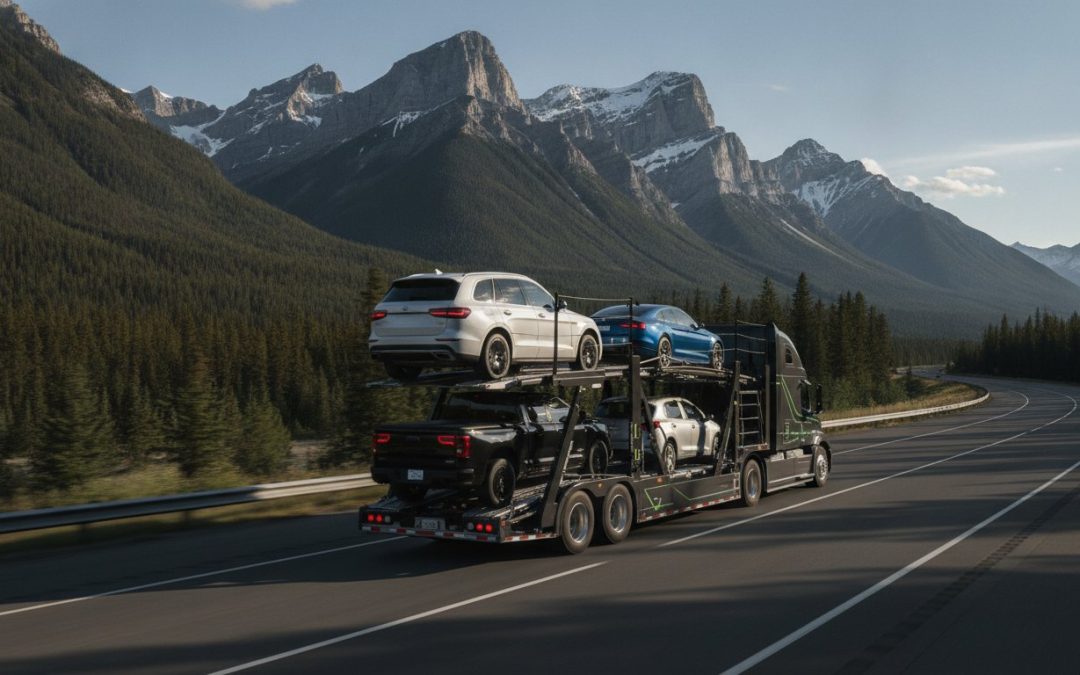
Most vehicles in Canada travel via open-carrier transport. This is the standard, cost-effective choice seen on highways every day. It’s efficient and reliable for daily drivers, SUVs, and vans. If you own a luxury, vintage, or high-value classic car, enclosed hauling offers a premium alternative. This method uses hard-sided trailers to provide total protection from road debris and weather. While open transport is the go-to for most budgets, enclosed shipping acts as a mobile vault for your most prized assets. Choosing the right method depends on your vehicle’s value and your specific safety needs.
Terminal-to-Terminal vs. Door-to-Door Delivery
The delivery method you choose dictates your level of convenience. Door-to-door service is the ultimate stress-relief solution. The carrier picks up and drops off the vehicle as close to your specified locations as safely possible. It saves you time and eliminates the need for extra travel to a storage centre. Terminal shipping involves dropping your vehicle at a central hub. This is often used for high-volume dealership moves where multiple units arrive at a single point. While terminals can sometimes offer a lower price point, the trade-off is the added logistics of getting yourself to and from the facility. For most individual clients, the direct nature of door-to-door delivery is the preferred path for a seamless experience.
The Vital Role of Professional Dispatching Services
Professional dispatching is the engine that keeps the Canadian automotive supply chain moving. While many assume that vehicle shipping is a simple transaction between a car owner and a truck driver, the reality is far more complex. A dispatcher acts as the central hub for national logistics, managing every detail from carrier insurance verification to route optimization. Understanding how does auto transport work in canada means recognizing that the dispatcher is your primary advocate. They bridge the gap between your specific needs and the carrier’s physical capacity. This one-stop service is especially vital for dealerships managing multi-vehicle moves across provinces. Instead of juggling dozens of phone calls, you have one reliable point of contact.
GO DISPATCH positions itself as your expert logistical partner by removing the burden of manual coordination. We take pride in handling the complex tasks behind the scenes so you can focus on your core business. The Canadian Vehicle Manufacturers’ Association highlights the critical nature of a seamless automotive supply chain, a standard we uphold through our rigorous carrier vetting. By centralizing communication, we eliminate the opaque vetting processes that often cause client stress. This approach ensures that every vehicle, whether it’s a single car or a fleet of utility vans, moves with precision. If you’re looking for a stress-relief solution for your transport needs, professional dispatching is the answer.
Simplified Carrier Selection and Vetting
Safety isn’t a happy accident; it’s the result of rigorous vetting. We verify carrier credentials, equipment standards, and insurance minimums before a single vehicle is loaded. This pre-screened network ensures your car or truck is in professional hands. You avoid the risks of unvetted operators and gain peace of mind knowing that every carrier meets strict 2026 industry safety standards. We handle the background checks so you don’t have to; it’s our job to ensure your vehicle is protected.
Streamlining the Scheduling Process
Canada spans six time zones and thousands of kilometres of diverse terrain. Managing the puzzle of national hauling routes is a key part of how does auto transport work in canada at a commercial scale. We synchronize pickup and delivery windows across the country, adapting to weather and traffic in real time. For a deeper look at these complex movements, check our guide on vehicle delivery logistics Canada. We turn chaos into a methodical, predictable timeline.
The Step-by-Step Vehicle Shipping Journey
A successful transport journey is a methodical sequence of controlled events. It begins with clear data and ends with your vehicle safely parked at its destination. Understanding how does auto transport work in canada helps you navigate the five key stages of this process. Each step is designed to eliminate uncertainty and protect your investment. From the initial quote to the final offloading, professional dispatchers manage the logistics so you don’t have to. This structured approach ensures that delivery timelines remain reliable and vehicle safety stays the top priority.
Getting an Accurate Transport Quote
The journey starts with a request for a quote based on your specific needs. Several factors influence the final price, including the total distance, the time of year, and the chosen transport method. For those moving larger units, providing exact dimensions for trucks and SUVs is essential. Carriers need these measurements to calculate deck space and weight limits on the trailer. Even a few centimetres of height can change the equipment required for the move. To better understand these variables, you can review our detailed guide on vehicle transport cost Canada. Accuracy at this stage prevents pricing surprises later.
Preparing Your Vehicle for Professional Hauling
Preparation is a shared responsibility that ensures a smooth pickup. You should remove all personal items from the interior, as carrier insurance typically does not cover loose belongings. We recommend keeping your fuel level at approximately a quarter-tank. This provides enough fuel for loading and unloading while reducing unnecessary weight on the trailer. Clean your vehicle before the carrier arrives to make the initial inspection easier. Take clear “before” photos from every angle for your own records. These photos act as a baseline for the vehicle’s condition before it enters the transit phase.
Once your order is dispatched, we assign a professional carrier from our vetted network. This begins the active logistics phase. During transit, we monitor the progress to ensure the carrier adheres to federal Commercial Driver Hours of Service Regulations. These rules mandate a maximum of 13 hours of driving time per day to keep everyone on the road safe. Real-time monitoring allows us to provide updates and manage any route adjustments caused by weather or road conditions. The journey concludes with the final delivery. You will perform a final condition verification with the driver to ensure the vehicle arrived exactly as it left. This five-step process turns a complex national move into a simple, professional experience.
Handling Specialized Vehicles: Trucks, SUVs, and Vans
Oversized units like utility vans and lifted trucks demand more than a standard trailer slot. When you evaluate how does auto transport work in canada for these vehicle classes, the focus shifts to physical dimensions and structural capacity. A standard car carrier has fixed height and weight limits. Adding a heavy-duty truck or a high-roof SUV requires a carrier with the right load-bearing equipment to prevent instability on the road. Precision in these measurements is the difference between a successful pickup and a rejected load at the roadside.
Professional dispatchers are essential for sourcing these niche carriers. We identify drivers with specialized heavy-duty ramps and reinforced decks capable of supporting increased mass. It’s about matching your vehicle’s specific footprint with a trailer that can handle the sheer weight of an industrial fleet vehicle or a full-sized SUV. Proper weight distribution is non-negotiable for highway safety and provincial regulatory compliance. This technical oversight ensures your vehicle travels securely without compromising the trailer’s integrity.
Logistics for Dealership Inventory and Fleets
Managing dealership stock levels requires a partner capable of handling high-volume dealer trades and fleet relocations. These moves often involve a mix of vehicle types that must be coordinated simultaneously to meet month-end targets. GO DISPATCH acts as a stress-relief solution by managing these multi-car relocations behind the scenes. We ensure your inventory moves quickly so your sales floor remains full and your capital isn’t tied up in transit. For more on high-capacity moves, see our guide on dealership auto transport logistics.
Transporting Heavy-Duty Trucks Nationally
Moving heavy trucks across Canada means navigating bridges and tunnels with strict height clearances. Each province has unique weight restrictions that carriers must follow to avoid significant fines and delays. We ensure your driver has a planned route that avoids low-clearance obstacles while using equipment specifically designed for heavy loads. This proactive approach prevents costly delays and protects your vehicle from overhead damage. If you’re moving a large work vehicle, read our guide on how to transport a truck.
Ready to move your specialized vehicle? Contact GO DISPATCH today for a reliable transport solution tailored to your needs.
Ensuring Safety: Inspections and Insurance
Safety is the bedrock of professional logistics. When you research how does auto transport work in canada, the technical details of trailers and routes are important, but legal protection is what provides true peace of mind. Every professional carrier operating in Canada is legally required to maintain carrier liability insurance. This is a mandatory requirement for them to operate in 2026. We take this a step further by verifying that these policies meet current industry standards before any vehicle is loaded. If an incident occurs during transit, you aren’t left to navigate the claims process alone. Our team acts as a proactive facilitator, coordinating between you and the carrier to ensure a fair and efficient resolution. This professional oversight turns a potential headache into a managed situation.
The Bill of Lading: Your Most Important Document
The Bill of Lading is your primary shield against disputes. It functions as a comprehensive condition report and a formal contract of carriage. During the pickup phase, you and the driver must perform a joint inspection to note any existing cosmetic issues, such as paint chips or small dents. Recording these details accurately is vital because this document serves as the definitive record of the vehicle’s state before transit. Both the client and the carrier must sign the document at both ends of the journey. This creates a clear “chain of custody” that provides legal protection for everyone involved. We recommend keeping a digital copy of the signed document alongside your “before” photos for complete security.
Final Delivery and Handover Protocol
The final handover is the moment of truth in the shipping journey. We advise our clients to perform the final walk-around in bright, natural light to ensure nothing is missed. You should verify the odometer reading and check the interior condition to ensure everything is exactly as it was at pickup. If you notice any discrepancies, they must be noted on the Bill of Lading before you provide your final signature. Finalizing the delivery with the professional carrier marks the end of a successful logistics cycle. By following this protocol, you ensure that the high standards maintained throughout the trip are reflected in the final result. It’s the final step in a process designed to deliver your vehicle safely and without surprises.
By understanding how does auto transport work in canada from a legal perspective, you can book with confidence. You’re not just moving a car; you’re engaging a structured system of inspections and insurance that prioritizes your vehicle’s safety. We handle the carrier vetting and paperwork so you can focus on your move. The result is a seamless, professional experience from the first signature to the last.
Secure Your Vehicle’s Future on the Road
Moving a vehicle across the country shouldn’t be a source of constant stress. You now have a clear understanding of the logistics framework that keeps your car or truck safe during transit. By recognizing the vital role of professional dispatching, you can skip the headaches of unvetted carriers and hidden fees. You’ve learned how the Bill of Lading acts as your legal shield and why specialized equipment is essential for handling larger SUVs and vans. Understanding exactly how does auto transport work in canada empowers you to make informed decisions for your next interprovincial move.
Since 2020, GO DISPATCH has provided authoritative logistics expertise to clients across the country. We maintain a high-capacity network that ensures national coverage for every vehicle class. Our team acts as your proactive problem-solver, managing the complex details behind the scenes so you don’t have to. We take pride in delivering peace of mind through every kilometre of the journey. Simplify your logistics today with GO DISPATCH; get a professional transport quote now! Your vehicle deserves a professional partner who prioritizes safety and efficiency above all else.
Frequently Asked Questions
How long does it take to ship a car across Canada?
Transit times vary based on the total distance and specific route. A cross-country move, such as Vancouver to Toronto, typically takes 10 to 14 days. Shorter interprovincial trips might take between 3 and 7 days. These windows depend on weather conditions and federal driver hours of service regulations. We prioritize realistic timelines over empty promises to ensure your schedule remains intact throughout the delivery process.
Is my vehicle insured while it is on the transport truck?
Yes, every professional carrier we dispatch is legally required to maintain carrier liability insurance. This coverage protects your vehicle against transit-related damage from the moment of loading until the final handover. We verify these insurance certificates to ensure they meet 2026 industry standards. This protection is fundamental to how does auto transport work in canada when you choose a professional dispatching service for your move.
Can I ship personal belongings inside my vehicle?
No, you should not leave personal items inside your vehicle during transport. Carrier insurance policies specifically exclude personal belongings, which means items like electronics or luggage are not protected. Additionally, extra weight can affect the trailer’s balance and provincial weight limit compliance. Keeping your vehicle empty ensures a safer transit and prevents potential damage to the interior or the items themselves during the journey.
What is the difference between an auto transport broker and a carrier?
A carrier owns the trailers and performs the physical hauling, while a dispatcher or broker manages the logistics. Dispatchers act as your single point of contact, vetting multiple carriers to find the best equipment and route for your needs. This one-stop service removes the burden of manual coordination. We handle the carrier vetting and scheduling so you can focus on your business without managing multiple drivers.
How do I pay for my auto transport service in Canada?
Payment is typically handled through secure electronic methods such as e-Transfer or credit card. Most professional services require a deposit at the time of booking to secure your spot on a trailer, with the balance due before or at delivery. We provide clear, transparent invoicing with no hidden brokerage fees. This straightforward payment process ensures there are no surprises when your vehicle arrives at its final destination.
Do I need to be present for the pickup and delivery?
Yes, you or a designated representative must be present at both pickup and delivery. This presence is necessary to perform the joint inspection and sign the Bill of Lading. This document is the legal record of your vehicle’s condition. If you cannot be there, you must appoint someone you trust to act on your behalf. Their signature confirms the handover and ensures the condition report is accurate for your protection.
What happens if my vehicle is damaged during transport?
If you notice damage during delivery, you must record it immediately on the Bill of Lading before the driver leaves the site. This documentation is the first step in the claims process. You should also take clear photos of the new damage for your records. As your dispatch partner, we assist you by coordinating with the carrier and their insurance provider. This support ensures the claim is resolved professionally.
Can you transport non-running or inoperable vehicles?
Yes, we can arrange transport for inoperable vehicles, provided they can still roll, steer, and brake. Shipping a non-running car requires specialized equipment, such as a winch, to load the vehicle onto the trailer safely. It’s important to specify the vehicle’s condition during the quoting phase. Understanding how does auto transport work in canada for inoperable units allows us to dispatch a carrier with the specific tools needed for success.