
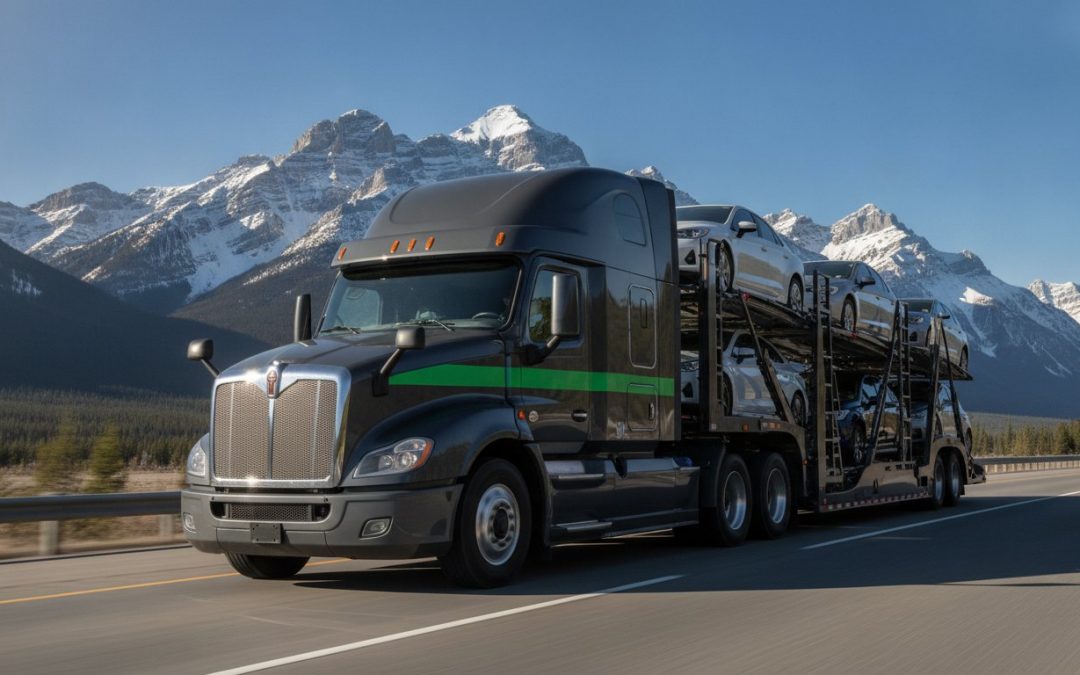
Moving a single truck or a full fleet from Ontario to British Columbia shouldn’t feel like a logistical nightmare, yet cross province vehicle hauling often becomes a source of endless stress for Canadian businesses. You know the frustration of chasing down uncommunicative drivers or questioning if a carrier’s cargo insurance actually meets the required $100,000 to $250,000 standard. It’s difficult to keep your operations moving when you’re stuck managing multiple points of contact for a single relocation.
We understand that your time is better spent growing your business than vetting paperwork and worrying about unpredictable transit times. You deserve a logistics process that offers total peace of mind and a single, reliable point of contact. This 2026 guide will show you how to simplify national transport through professional dispatching. You’ll learn how to secure verified, insured carriers and organize predictable scheduling for your inventory, ensuring every vehicle arrives safely and on time.
Key Takeaways
- Learn the critical differences between local towing and long-haul national logistics to ensure your assets are handled by specialized professionals.
- Discover how vehicle dimensions and route accessibility directly influence scheduling and transport efficiency between major Canadian hubs.
- Master the complexities of cross province vehicle hauling by leveraging a dispatch network that provides access to multiple vetted carriers instead of a single fleet.
- Follow a professional preparation checklist, including high-resolution documentation and thorough cleaning, to guarantee a seamless inspection process.
- Understand the value of a human-centric dispatch partner who manages every detail of the relocation so you can focus on your core operations.
Understanding the Scope of Cross Province Vehicle Hauling
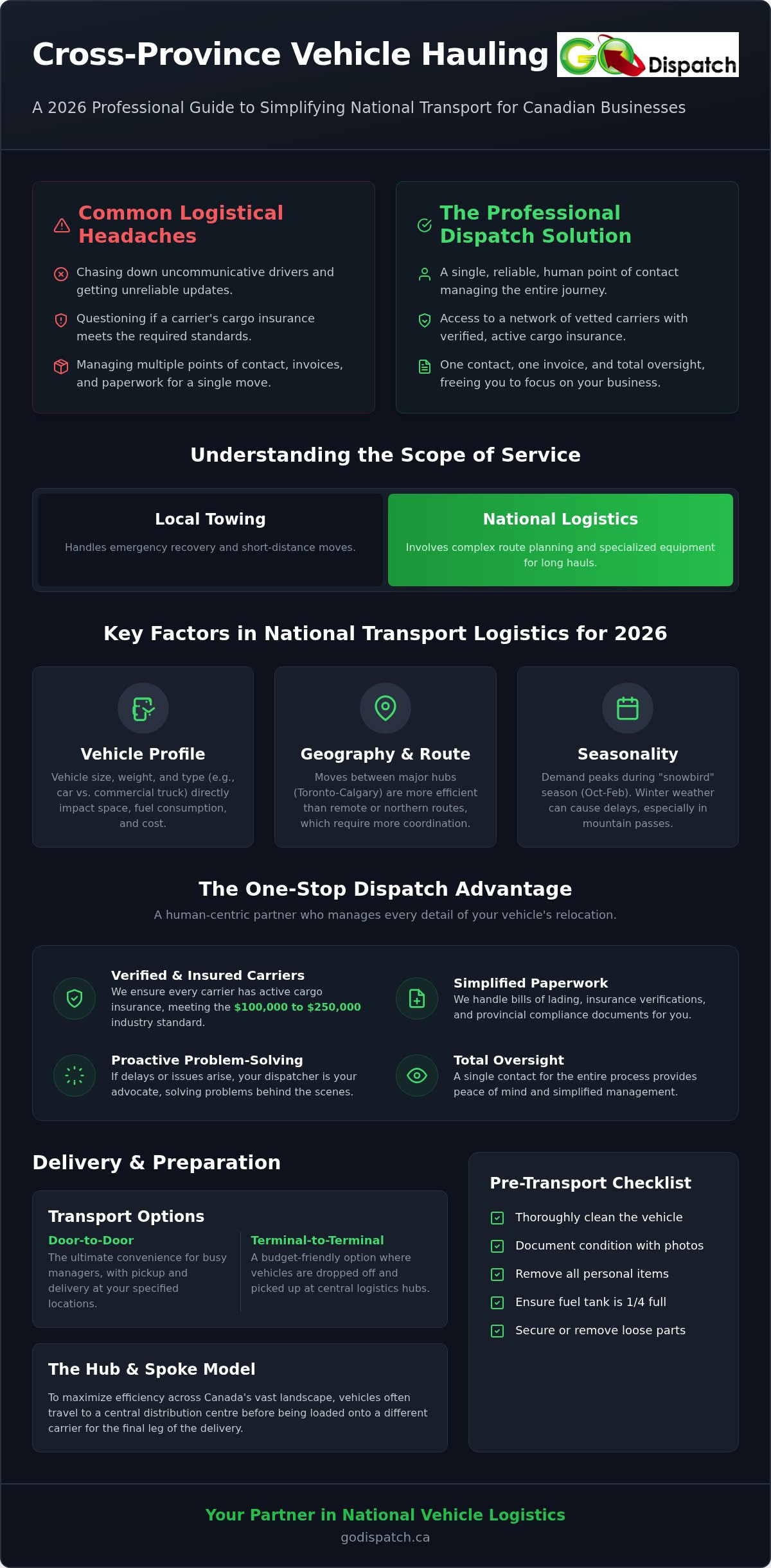
Cross province vehicle hauling is the professional relocation of assets across Canadian borders. It’s not a simple tow. It’s a coordinated effort. Local towing handles emergency recovery over short distances, but national logistics requires complex route planning and specialized equipment for long hauls. Businesses realize that moving a fleet from Calgary to Halifax needs more than just a driver. It needs a strategy that prioritizes safety and efficiency at every stage.
Choosing a professional dispatch service for cross province vehicle hauling means you aren’t just hiring a driver. You’re hiring a central coordinator. This expert manages the entire move, acting as the primary point of contact for every leg of the journey. Understanding Auto Transport Brokers helps you see why this layer of oversight is vital for peace of mind. It ensures that every carrier is vetted for active cargo insurance and safety ratings. You don’t have to spend hours on the phone checking credentials. The dispatcher does that for you, ensuring your vehicles are in safe hands.
The Logistics of National Vehicle Delivery
Most national moves utilize a hub and spoke model. Vehicles often travel to a central distribution centre before being loaded onto a different carrier for final delivery. This method maximizes efficiency across the vast Canadian landscape. You have two main choices: terminal-to-terminal or door-to-door service. Terminal shipping is often more budget-friendly, while door-to-door offers the ultimate convenience for busy managers. Mastering vehicle delivery logistics in Canada in 2026 requires a strategy that balances these options based on your specific inventory needs and deadlines.
Why One-Stop Dispatching is the Modern Standard
The one-stop philosophy simplifies your workload. You get one contact, one invoice, and total oversight. Managing the paperwork for multiple carriers is a full-time job that most business owners don’t want. A professional dispatcher handles the bills of lading, insurance verifications, and provincial compliance documents for you. They act as your advocate. If a delay occurs or a carrier has an issue, your dispatcher solves the problem behind the scenes. This human-centric approach ensures you aren’t fighting with a bot. You’re talking to a professional who understands the urgency of your move. It’s a stress-relief solution that lets you focus on your core business while we handle the heavy lifting.
Key Factors Influencing National Transport Logistics in 2026
Cross province vehicle hauling involves many variables that shift throughout the year. Your vehicle’s physical profile is the first major factor. A compact car takes up less space and adds less weight than a full-size SUV. This matters because carriers must balance their total load to stay within safety limits. Heavier vehicles increase fuel consumption, which is a significant concern with diesel prices sitting at C$2.229 per litre in August 2026. These economic realities directly influence hauling rates and carrier availability across the country.
Geography also plays a massive role in your logistics plan. Moving vehicles between major Canadian hubs like Toronto and Calgary is generally straightforward due to high traffic volume. Remote or northern routes require more coordination and often result in longer transit times. Carriers must also adhere to strict Federal Motor Carrier Regulations. These rules govern hours of service and safety certificates. They ensure that long-haul drivers remain sharp and vehicles remain compliant on national highways. Safety is never optional.
Seasonality creates predictable shifts in capacity. Demand peaks during the “snowbird” season from October to February. Many Canadians move their vehicles to warmer climates, which reduces available space for commercial moves. Winter weather also introduces unpredictability. Snow and ice can shut down major mountain passes, causing delays that are outside of a driver’s control. If you need a reliable estimate despite these variables, you can request a professional dispatch quote to lock in your spot.
Vehicle Type and Hauling Requirements
Different vehicles require different strategies. We specialize in truck transport, which often requires specialized trailers due to the height and weight of modern pickups. Managing oversized commercial vans or utility vehicles involves extra planning for route clearances. If a vehicle is non-running or has been heavily modified, specialized winching equipment is necessary for safe loading. We ensure the carrier assigned to your move has the exact tools required for your specific asset.
Dealership Inventory and Fleet Relocation
High-volume moves require a higher level of coordination. We understand the unique pressures of dealership auto transport logistics. Dealer trades and fleet relocations demand tighter scheduling and reliable delivery windows. You can’t afford to have inventory sitting in a terminal for weeks. We manage volume coordination for multi-vehicle moves, ensuring that your entire shipment arrives as planned. This organized approach minimizes downtime and keeps your sales floor or job site fully equipped.
Dispatch Services vs. Direct Carriers: Finding the Best Fit
When you organize cross province vehicle hauling, you face a critical choice between a direct carrier and a dispatch service. A direct carrier owns the trucks and employs the drivers. This might seem straightforward, but it creates a significant limitation. You are tied to that specific fleet’s schedule and routes. If their trucks are full or their schedule doesn’t align with your needs, your inventory sits idle. You are at the mercy of one company’s capacity.
A dispatch service offers a distinct advantage. We act as your dedicated logistics partner with access to a vast national network of vetted carriers. This model provides the flexibility that modern businesses require. If one carrier’s route is delayed, we source another. We handle the rigorous vetting process for you. This includes verifying safety fitness certificates and ensuring every carrier maintains cargo insurance between $100,000 and $250,000. By following established Automotive Logistics Standards, we ensure your assets move according to the highest industry benchmarks.
Some managers hesitate at the mention of brokerage fees. It’s better to view these as an investment in professional oversight and peace of mind. You aren’t just paying for a booking. You’re paying for a professional advocate who manages the entire cross province vehicle hauling process. We verify safety ratings and insurance coverage before any vehicle is loaded. This proactive management prevents the costly delays and liability issues that often plague unmanaged moves.
Vetting the Right Partner
Reliability is the most important factor when choosing a partner. Look for a team that prioritizes human connection over automated bots. A major red flag in this industry is the low-ball quote. These often come from providers who lack the infrastructure to support you when things go wrong. A centralized dispatch office provides better communication than a driver behind the wheel. You get real-time updates from an expert who is focused entirely on your logistics, not the road ahead.
The Economics of the Move
Professional dispatchers negotiate rates on your behalf. We understand the market fluctuations and use our volume to secure competitive pricing that single businesses rarely access alone. For a detailed breakdown of current pricing factors, consult our vehicle transport cost Canada guide. Outsourcing your logistics is a strategic move. It eliminates the need for in-house staff to manage provincial paperwork and carrier relations. You save time. You reduce overhead. You ensure your vehicles move efficiently across the country.
Professional Checklist for Seamless Inter-Provincial Transport
Success in cross province vehicle hauling depends on thorough preparation. You can’t leave the details to chance. A structured approach ensures that your assets are protected and your schedule remains intact. Follow these four essential steps to prepare for a national move.
- Step 1: Document condition. Take high-resolution photos of the vehicle from every angle. Include the interior, odometer, and any existing blemishes. These digital records are your best defence if a dispute arises.
- Step 2: Clear the cabin. Remove all personal items. Professional carriers are not licensed to transport household goods; items left inside are not covered by cargo insurance. A clean vehicle also makes the initial inspection faster and more accurate.
- Step 3: Verify the paperwork. Review the Bill of Lading before the driver leaves. This is your official contract. Ensure all existing damage is noted clearly.
- Step 4: Confirm schedules. Stay in touch with your dispatch coordinator. They will provide the most accurate pickup and delivery windows based on real-time route data.
Documentation and the Bill of Lading
The Bill of Lading is the most important document in your logistics file. It serves as a receipt, a contract, and a condition report. When the carrier arrives, you must walk around the vehicle together. Mark every stone chip, scratch, or dent on the report. If the vehicle is dirty, the driver may mark “unable to inspect,” which puts you at risk. We act as your professional advocate during this process. If a claim is necessary, your dispatcher uses this documentation to mediate with the carrier and resolve the issue quickly.
Insurance and Liability
Understanding liability is critical for any business move. Every licensed carrier in Canada must carry cargo insurance. Standard coverage typically ranges from $100,000 to $250,000 per vehicle. You should always ask for a copy of the carrier’s insurance certificate before the vehicle is loaded. Your own commercial or personal policy might not cover the vehicle while it’s in the care of a professional hauler. We vet these policies for you, ensuring that the carrier’s limits align with the value of your inventory. This layer of brokerage oversight provides the security you need for a worry-free relocation. Get your cross-province move started with a custom transport plan today.
Streamlining Your Logistics with GO Dispatch
GO Dispatch simplifies the complexities of cross province vehicle hauling. We act as your proactive problem-solver. You don’t have to navigate the logistics industry alone. We manage the entire process from carrier selection to final delivery. Our team specializes in one-stop transport dispatching for cars, trucks, SUVs, and vans. We serve every province with the same commitment to reliability and safety. You get the benefits of a national network with the personal touch of a dedicated partner.
You talk to an expert when you work with us. You don’t talk to a bot. This human connection is the foundation of our service. We take pride in handling the behind-the-scenes tasks so you can focus on your core business. If a driver faces a delay in a remote mountain pass, we are the ones who find the solution. You won’t be left wondering where your assets are. We provide the authoritative oversight needed for a successful move. Our car hauling services are designed to remove the daily burdens from your desk. You realize the benefit of professional management from the first phone call.
A Managed Solution for Every Vehicle
Busy business owners need efficiency. Dealership managers often face the stress of tight delivery windows for inventory trades. Every day a vehicle sits idle is a day of lost revenue. We reduce that workload by managing the carrier network for you. We source professional carriers who meet our high standards for insurance and safety. This managed approach ensures your vehicles don’t sit in terminals. They move. You get total oversight without the headache of managing multiple contacts for one move. It’s a streamlined process that prioritizes your peace of mind and your bottom line. We handle the trucks, SUVs, and vans so your sales team can stay focused on the floor.
Get Your Hauling Quote Today
Securing your 2026 hauling rates is simple. The logistics industry moves quickly. Fuel prices and seasonal demand shift daily. With diesel prices at C$2.229 per litre and high “snowbird” demand, waiting can impact both cost and availability. Don’t wait for capacity to disappear. Requesting a transport dispatch is a straightforward process that puts you in control. We provide a clear path for engagement. We identify your needs. We offer a comprehensive solution. You get results. The process requires minimal effort from your side. Let us handle the complexities of cross province vehicle hauling so you can focus on growing your business. Contact us today to organize your next move with confidence.
Master Your National Logistics Today
Successful cross province vehicle hauling requires more than just a truck and a driver. It demands a strategic approach that prioritizes safety, insurance verification, and clear communication. You now have the tools to navigate the complexities of moving vehicles across Canada without the usual stress. By choosing expert logistics management over DIY carrier hunting, you ensure that every move is backed by professional oversight and human-led customer support.
Our team provides professional dispatching for all vehicle types, from passenger cars to commercial trucks and vans. We take pride in being the facilitator that allows you to focus on your core business goals. Don’t let unpredictable transit times or vetting paperwork slow down your operations. Contact GO Dispatch to coordinate your national vehicle hauling today and realize the efficiency of a truly managed logistics solution. Let’s get your assets moving with the reliability you deserve.
Frequently Asked Questions
How long does cross province vehicle hauling typically take?
Cross province vehicle hauling typically takes between 7 and 14 days for major routes like Toronto to Vancouver. Regional moves between neighbouring provinces are often completed in 3 to 5 days. These timelines depend on carrier availability, route accessibility, and seasonal weather patterns. We provide realistic windows based on current 2026 logistics data to help you plan your inventory relocation effectively.
What are car transport brokerage fees and what do they cover?
Dispatch fees cover the comprehensive management of your transport logistics. This investment provides you with a vetted carrier network, insurance verification, and a dedicated human contact. We handle the paperwork and coordination that would otherwise consume your time. It is a service designed to provide total peace of mind by ensuring every detail of the move is handled professionally from start to finish.
Can I ship personal items inside my vehicle during transport?
You cannot ship personal items inside your vehicle during national transport. Carriers are strictly licensed for vehicle hauling and do not have the permits required for household goods. Items left in the cabin are not covered by cargo insurance and can lead to fines at provincial weigh stations. It is best to remove all belongings and ensure the vehicle is clean for the mandatory initial inspection.
Is my vehicle insured while it is being hauled across provinces?
Every vehicle is covered by the carrier’s cargo insurance while in transit. In Canada, licensed carriers must maintain coverage that usually ranges from $100,000 to $250,000 per asset. We confirm these insurance limits and safety certificates before any booking is finalized. This verification process ensures that your investment is protected against damage or loss during the cross province vehicle hauling process across national borders.
How is the cost of cross-province vehicle hauling calculated in 2026?
Hauling costs are calculated based on distance, vehicle size, and current market conditions. In August 2026, diesel prices of C$2.229 per litre and seasonal demand peaks significantly impact rates. Heavier vehicles like SUVs require more fuel and trailer space, which increases the total cost. We analyze these variables to provide you with a fair and accurate quote for your specific commercial or personal relocation needs.
What is the difference between open and enclosed vehicle hauling?
Open hauling uses a standard trailer where vehicles are exposed to the elements and road debris. Enclosed hauling uses a fully covered trailer to provide maximum protection for luxury or classic vehicles. While open transport is the most common choice, enclosed service offers extra security for a higher fee. Most premium enclosed options cost between 30% and 60% more than standard open transport in the current market.
How do I track my vehicle while it is in transit?
You track your vehicle through a single point of contact at our dispatch office. We handle all direct communication with the carrier and provide you with timely updates on the progress of your move. This human-led approach is much more reliable than automated systems that often provide outdated or vague information. You get the peace of mind that comes from knowing an expert is watching your shipment.
Do I need to be present for the pickup and delivery of the vehicle?
You or a designated representative must be present at both the pickup and delivery locations. This is essential for conducting a thorough joint inspection and signing the Bill of Lading. This document acts as your official contract and condition report. Being present allows you to verify any existing marks with the driver, which prevents disputes and ensures a smooth claims process if any issues occur.