
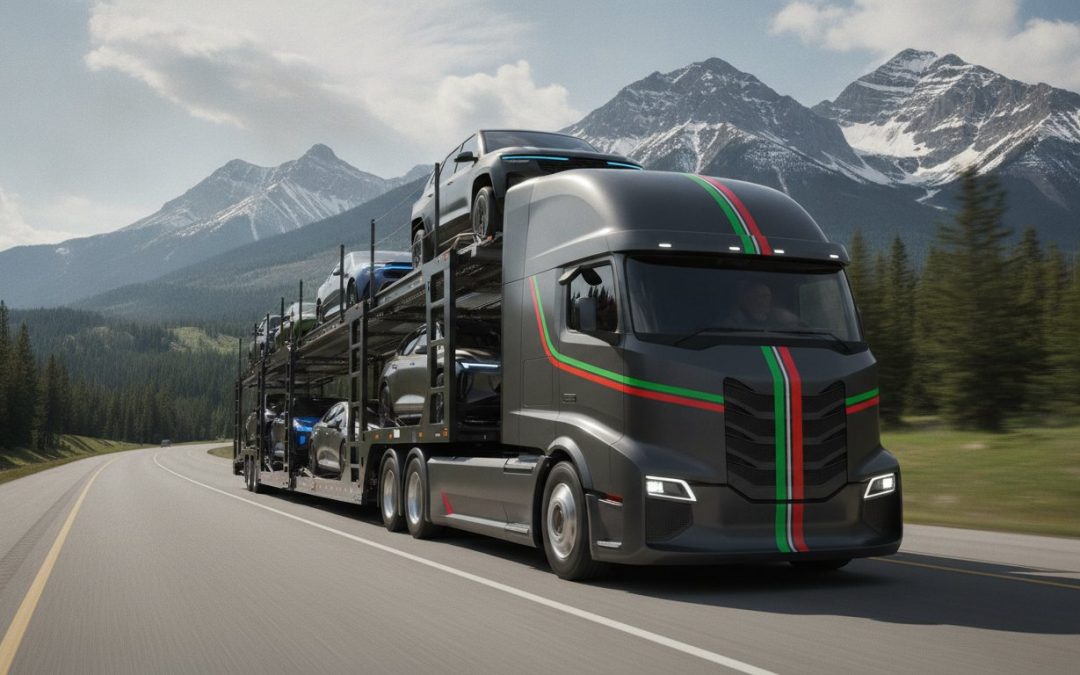
Managing a single car shipment is a chore, but coordinating a fleet of cars, trucks, and SUVs across four time zones is a full-time logistical nightmare. You likely already realize that the old way of hunting through load boards and juggling ten different carriers just doesn’t scale. The high costs of individual shipping and the constant anxiety over damage risks can quickly overwhelm even the most organized fleet manager. You need a way to simplify the chaos. This 2026 guide teaches you how to master multi vehicle transport across Canada with professional precision and total visibility.
We agree that your time is better spent on your core business rather than chasing down tracking updates or verifying carrier insurance. We promise to show you how to move multiple units efficiently while keeping your vehicles safe and your schedule on track. You will learn the latest national logistics standards, how to navigate 2026 insurance requirements, and why a one-stop dispatching approach is the ultimate stress-relief solution for your complex transport needs.
Key Takeaways
- Learn how consolidated shipping creates economies of scale to reduce your per-unit costs significantly.
- Discover the differences between standard open haulers and enclosed trailers to choose the right multi vehicle transport method for your fleet.
- Master a step-by-step audit process to organize VINs and vehicle conditions for a seamless national pickup.
- Understand how to verify carrier safety ratings and the critical differences between standard insurance and supplemental coverage.
- Realize how professional dispatching services remove the burden of carrier vetting and complex logistics management.
Understanding Multi-Vehicle Transport: Efficiency for Your Fleet or Inventory
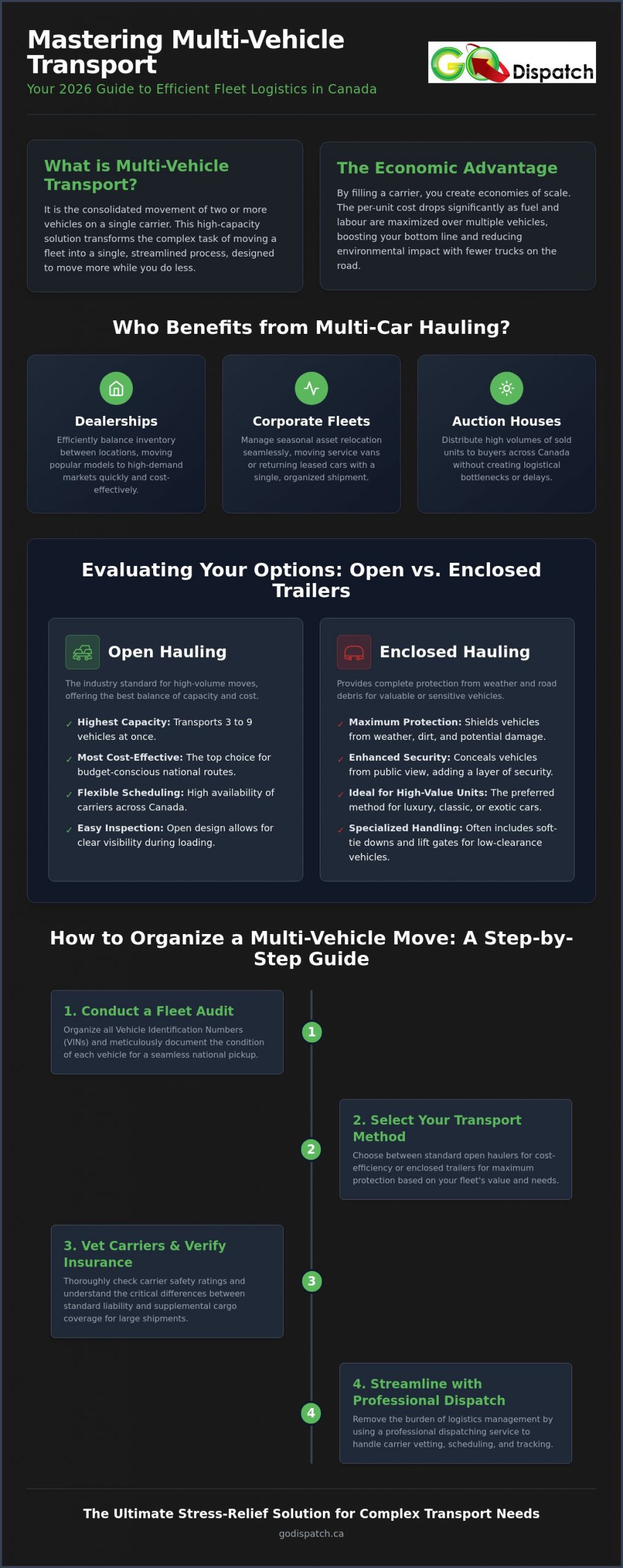
Multi-vehicle transport describes the consolidated movement of two or more units on a single carrier. It is a high-capacity solution designed for those who need to move volume without the headache of managing separate shipments. This approach serves as a core component of vehicle delivery logistics in Canada for 2026. By grouping units together, you transform a complex task into a streamlined process. It’s about moving more while doing less.
Bulk shipping creates immediate economies of scale. When you fill a carrier, the per-unit cost drops. This happens because the carrier maximizes their fuel and labour over multiple vehicles rather than just one. It’s a win for your budget and a win for the environment. Fewer trucks on Canadian highways means less congestion and lower carbon emissions. It’s a responsible way to grow your business while protecting our national infrastructure. Efficiency doesn’t just save money; it builds a better future for our roads.
Who Benefits from Multi-Car Hauling?
Dealerships often use this service to balance inventory between locations. If an SUV is selling well in Calgary but sitting in Toronto, a multi vehicle transport move solves the problem fast. Corporate fleet managers also rely on this for seasonal asset relocation. Whether you’re moving service vans for a summer project or returning leased cars, consolidation keeps your operations fluid. Auction houses utilize these services to distribute sold units to buyers across the country. This ensures that high-volume sales don’t lead to logistical bottlenecks.
The Economic Advantage of Consolidation
Carriers price multi-unit loads differently than single-car hauls. A full trailer is a guaranteed payday for a driver. This allows for more competitive rates. You also slash your administrative overhead. Instead of tracking ten different contracts and ten different drivers, you manage one. This simplicity reduces errors. It saves your team hours of tedious paperwork. You focus on your business while the logistics happen in the background.
High-capacity trailers also impact your delivery timelines. Depending on whether you choose open vs. enclosed multi-car trailers, you can move up to nine vehicles at once. This capacity ensures that your entire inventory arrives together. You get units on the lot or in the field without waiting for stragglers. It’s about speed, safety, and a healthier bottom line for your organization.
Evaluating Your Options: Open vs. Enclosed Multi-Car Trailers
Choosing the right equipment is the first step in a successful move. You have two primary paths: open or enclosed. Most multi vehicle transport operations rely on open car haulers. These trailers typically carry between three and nine units at once. They are the workhorses of the industry. They offer the highest capacity and the most flexible scheduling. This makes them the go-to choice for high-volume moves across the country.
Vehicle size changes the game entirely. A trailer that holds nine compact cars might only fit five full-sized SUVs. When you mix different types, like sedans and trucks, the configuration becomes a logistical puzzle. This is especially true for van transport. Utility and passenger vans often require more vertical clearance. A professional dispatcher understands these spatial limits. They ensure your load is matched to a carrier that can actually handle the dimensions without risking a height clearance issue.
Safety is always the priority. Proper securement prevents shifts that could cause damage during transit. Understanding government standards for Vetting Carriers and Managing Insurance helps you recognize a quality operation. It’s about more than just a truck; it’s about the expertise behind the straps and chains. You want a carrier that treats your inventory with the respect it deserves.
When to Choose Open Multi-Car Hauling
Open hauling is the gold standard for dealership inventory and standard fleet vehicles. It is the most cost-effective choice for long-haul national routes. Because these trailers are common, finding a carrier is fast. The open design also allows for easy inspection during the loading process. You can see every vehicle clearly. This transparency ensures any pre-existing conditions are noted immediately, which simplifies the entire process for your team.
The Role of Enclosed Transport for Bulk Moves
Enclosed trailers offer a higher level of security for sensitive inventory. They protect high-value assets from unpredictable Canadian weather and road debris. While they have a lower capacity per trailer, they are essential for luxury or classic fleets. This is the ideal choice for premium dealership trades or executive relocations where perfection is the only option. You pay for peace of mind, knowing your vehicles stay pristine from pickup to delivery. If you’re unsure which trailer fits your current inventory, consulting with a logistics expert can clarify your options quickly.
How to Organize a Multi-Vehicle Move: A Step-by-Step Logistics Guide
Success in bulk logistics depends on preparation. You aren’t just moving one car; you’re managing a mobile inventory. This requires a disciplined approach to ensure every unit arrives on time and in the right condition. A methodical plan reduces the risk of errors and keeps your budget in check. Follow these steps to keep your move on track.
- Step 1: Conduct a detailed inventory audit. Record every VIN. Note the exact condition of each vehicle. This data is your primary defence against transit disputes.
- Step 2: Determine your timeline. Define your pickup and delivery windows. Flexible windows often provide better access to high-capacity carriers and more competitive scheduling.
- Step 3: Source a carrier with specific capacity. You need a partner that can handle your exact load size. Matching your fleet to the right multi vehicle transport equipment prevents wasted space and unnecessary costs.
- Step 4: Prepare all units for transport. Ensure vehicles are clean and ready to load. Delays at the pickup site can ripple through the entire national schedule.
- Step 5: Establish a communication protocol. Set clear expectations for updates. You should know the location of your units at every stage of the journey without having to chase down the driver.
Inventory Preparation for Bulk Loads
Operable vehicles are essential for efficient loading. If a unit doesn’t start, it slows down the entire process for the carrier. Check your batteries and fuel levels before the truck arrives. Remove all personal items and loose accessories from every unit. These items can shift during transit and cause internal damage. Always document the “before” state of every vehicle. Take high-resolution photos of all panels and interiors. This documentation serves as a critical reference point when reviewing the Bill of Lading (BOL) upon delivery. It is the most important legal document in the process.
Coordinating Pickup and Delivery Locations
Confirm that your sites can accommodate large trailers. A multi-car hauler can be up to 75 feet long. It needs significant space to manoeuvre and park safely. If your primary site has restricted access, arrange a nearby meeting point like a large commercial parking lot. You must also have authorized personnel ready at both ends. They need to sign off on the condition reports. This ensures accountability throughout the national logistics chain. Handling these details early removes the stress of last-minute adjustments and keeps your multi vehicle transport move moving forward.
Vetting Carriers and Managing Insurance for Large Shipments
When you move one car, a mishap is a problem. When you move nine, it’s a catastrophe. Vetting safety ratings is non-negotiable for multi vehicle transport. You need to know the carrier has a history of secure loads and safe miles. High-capacity trailers require specialized handling. A driver’s record should reflect expertise in loading and unloading multiple units without incident. This is about protecting your bottom line and your reputation.
Many managers try to save money by hunting for drivers themselves. However, the dispatch service vs load board for auto transport debate usually ends with one winner for bulk moves. Load boards often lack the rigorous vetting required for high-value fleet shipments. A professional dispatch service handles the deep background checks for you. They ensure the carrier is not only active but also compliant with all 2026 safety standards. It provides a level of security that a random load board simply cannot match.
Insurance Requirements for High-Volume Hauling
Standard carrier insurance often has a cap. You must verify that the total cargo limit covers the aggregate value of all vehicles in a multi vehicle transport load. If you ship nine luxury SUVs, a standard policy might not be enough. You might need gap coverage to protect the full value. A professional dispatcher maintains up-to-date insurance certificates for every carrier in their network. This oversight removes the burden from your shoulders. If a multi-unit incident occurs, having a clear paper trail makes the claims process much smoother. It ensures you aren’t left holding the bill for a carrier’s oversight.
The Bill of Lading: Your Most Important Document
Every vehicle needs its own individual inspection report. Do not accept a single document for the entire load. Each car, truck, or van has its own VIN and its own pre-existing condition. Modern Canadian logistics often use electronic BOLs. These are faster and easier to store. Regardless of the format, you must mark any new damages at the time of delivery. If you sign a clean BOL and find a scratch later, your claim is likely dead. Inspect every unit thoroughly before the driver leaves. This is your primary legal protection.
Protecting your assets requires more than just a truck. It requires a system of checks and balances that keeps carriers accountable. Don’t leave your fleet’s safety to chance. You can contact our logistics team today to secure a vetted carrier for your next national move.
Streamlining Your National Logistics with GO DISPATCH
Coordination is the difference between a successful delivery and a logistical failure. You need a partner that understands the high stakes of moving an entire fleet across the country. GO DISPATCH serves as your one-stop facilitator for complex national moves. We remove the heavy burden of carrier vetting from your daily workload. You don’t need to spend hours on load boards or manually verifying insurance certificates. We handle those details with professional precision. Our goal is to provide a stress-relief solution that keeps your business moving forward without the usual headaches.
Managing a mixed load of cars, trucks, SUVs, and vans requires a high-capacity partner. We coordinate these different vehicle types into a single, efficient effort. Whether you’re moving a few dealership trades or an entire corporate fleet, we have the resources to scale with your needs. You focus on your customers and your operations. We focus on the road. It’s a simple cause-and-effect relationship: we manage the logistics, and you reclaim your time. Reliability isn’t just a promise; it’s our standard operating procedure.
The Advantage of Professional Carrier Sourcing
Finding the right driver for a multi vehicle transport load is about more than just finding an empty trailer. It requires matching your specific inventory to the correct equipment. We provide access to a vetted network of professional auto carriers across Canada. Our team knows which carriers specialize in high-capacity open haulers and which are better suited for sensitive enclosed moves. We also act as your proactive problem-solver. If a winter storm hits the Rockies or a scheduling conflict arises, we manage the adjustments. You stay informed without having to manage the crisis yourself. It’s a streamlined process designed for speed and ease of use.
Your Partner in National Vehicle Relocation
The Canadian transport market has unique challenges, from vast distances to varying provincial regulations. GO DISPATCH offers dedicated support that understands these nuances intimately. Our solutions are fully scalable. We can handle a single multi vehicle transport move between local dealerships or manage a massive fleet turnover for a national corporation. We maintain a strict commitment to transparency and safety. Every move is backed by our expertise in one-stop transport dispatching. You get timely delivery and the peace of mind that comes from working with a bold leader in the logistics niche. Let us handle the complexity while you focus on what you do best.
Master Your National Logistics Today
Moving a fleet across Canada is a significant undertaking that requires more than just a truck. It requires a strategy. You now know how to leverage consolidation to reduce costs and why meticulous documentation remains your best legal protection. By prioritizing professional vetting and choosing the right equipment, you transform a complex chore into a predictable business process. Reliable multi vehicle transport is within your reach when you move away from manual coordination and embrace professional dispatching.
Let GO DISPATCH handle the heavy lifting so you can focus on growing your business. Get a Professional Multi-Vehicle Transport Quote from GO DISPATCH today. We offer one-stop transport dispatching for cars, trucks, and vans with full national coverage across all Canadian provinces. Our team ensures the professional vetting of all auto carriers to maintain the highest safety standards for your inventory. You deserve the peace of mind that comes with expert logistical support.
Your next move starts here. We look forward to helping you reach your destination with confidence and ease.
Frequently Asked Questions
Can I ship different types of vehicles on the same multi-car trailer?
Yes, you can mix different vehicle types on a single trailer. Most modern carriers accommodate a combination of cars, trucks, and SUVs provided the dimensions fit within height and weight limits. This versatility is a hallmark of efficient multi vehicle transport planning. It allows dealerships and fleets to move diverse inventory in a single coordinated effort without needing separate carriers for each model.
How much does multi-vehicle transport cost compared to single-car shipping?
Shipping multiple units is generally more cost-effective per vehicle than shipping a single car. You realize savings because the carrier spreads fixed costs like fuel and labour across more units. This creates a lower per-unit rate for you. It is a strategic move for businesses looking to maximize their logistics budget while maintaining high service standards across their entire inventory.
Is my insurance coverage higher when shipping multiple vehicles at once?
Your coverage isn’t automatically higher; instead, you must ensure the carrier’s cargo limit covers the total value of the entire load. If you are shipping several high-value units, the standard liability might fall short. We recommend verifying the aggregate value against the carrier’s insurance certificate to ensure every unit is fully protected. A professional dispatcher can help you verify these limits before the truck arrives.
How long does it typically take to deliver a full load of vehicles across Canada?
Delivery timelines across Canada vary based on the total distance and route complexity. A 500-mile journey typically takes 1 to 3 days, while a coast-to-coast trip can take 7 to 10 days. These estimates account for federal Hours-of-Service regulations that drivers must follow to ensure safe transit for your vehicles. Weather conditions and seasonal demand can also influence these windows.
What happens if one vehicle in a multi-unit shipment is damaged?
If damage occurs to one unit, you must note it immediately on that vehicle’s specific Bill of Lading. Each vehicle has its own inspection report. You then file a claim against the carrier’s cargo insurance for that specific VIN. Having clear “before” photos and an accurate delivery report makes this process straightforward and fast. It ensures the other vehicles in your shipment aren’t delayed by the claim.
Do I need to be present for the pickup and delivery of all vehicles?
You or an authorized representative must be present at both pickup and delivery. This ensures that someone can walk around each vehicle with the driver to confirm its condition. Signing the Bill of Lading is a legal requirement. It protects you by documenting exactly what was received and when. If you have a large fleet, ensure your team is ready to handle the inspection for all units simultaneously.
Is it better to use a dispatch service or a load board for multi-vehicle moves?
A dispatch service is the superior choice for multi vehicle transport because it provides a higher level of vetting. Load boards often lack the rigorous background checks needed for high-capacity moves. A professional dispatcher manages the entire process, from finding the right equipment to verifying insurance. This reduces your daily workload and ensures your fleet is in the hands of a professional carrier.
What are the space requirements for a multi-car hauler to load and unload?
Multi-car haulers require significant space for manoeuvring, often up to 75 feet in length. You need a flat, wide area with no low-hanging branches or power lines. If your primary site is restricted, arranging a meeting at a nearby commercial lot or a wide industrial road ensures the driver can load and unload safely. Proper space prevents accidental damage during the ramp-loading process.