
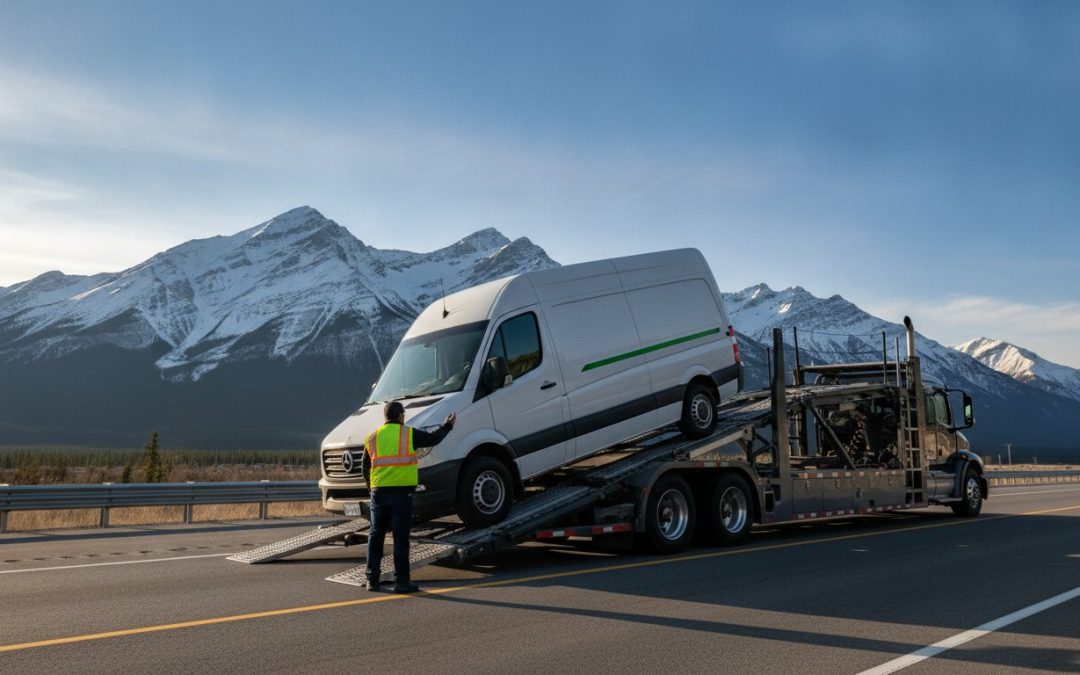
Most standard car carriers simply aren’t built to handle the height or weight of a modern high-roof utility van. If you’ve spent hours calling carriers only to be told your vehicle is too tall or too heavy, you know that specialized van transport requires more than just a trailer. It’s a logistical puzzle where dimensions dictate the strategy. Hidden fees often lurk behind every corner, making a simple move feel like a major headache.
We understand that shipping a passenger or utility van across Canada is a significant task that demands precision. You need to know your equipment is safe, fully insured, and handled by experts who realize that a longer wheelbase changes the entire transport plan. This guide will help you master these logistics with professional confidence. We’ll explore the specific equipment needed for oversized loads, explain the cost variables for different van sizes, and show you how a one-stop dispatching solution provides the peace of mind you deserve. You’ll gain the insights needed to ensure a smooth transit, letting you focus on your core business while the logistics are handled behind the scenes.
Key Takeaways
- Learn how oversized dimensions change your logistical strategy and why professional van transport requires specialized carrier equipment.
- Identify how high-roof heights and extended wheelbases directly influence vehicle carrier selection and loading requirements.
- Understand the key variables behind shipping costs, including the reasons for standard oversized vehicle surcharges in the Canadian market.
- Prepare your van for transit using a simple documentation process that ensures your vehicle is fully protected and insured.
- Discover how a one-stop dispatching solution simplifies the search for reliable, high-capacity carriers across Canada.
Understanding Van Transport: Logistics for Oversized Vehicles
Professional van transport is the specialized hauling of cargo, passenger, or utility vans as the primary freight. It is not a courier service or a moving company for household goods. This service is designed for businesses, dealerships, and fleet managers who need to move heavy, oversized vehicles across provincial lines. Whether for a dealer trade or a fleet replenishment across diverse Canadian locations, the logistics are complex. Most van moves are commercial in nature. They require a level of coordination that standard vehicle shipping simply cannot provide.
Standard sedans are predictable. They fit into tight spaces. Vans do not. The sheer height and weight of a modern utility van demand a different strategy. Most high-roof models won’t fit on a standard multi-car carrier. This is why national coordination is vital. You need a partner who understands the specific height clearances of Canadian overpasses and the weight restrictions of different provincial highways. Moving a van from one end of the country to the other involves more than just driving. It involves a deep understanding of equipment compatibility.
Why Standard Car Hauling Doesn’t Always Apply
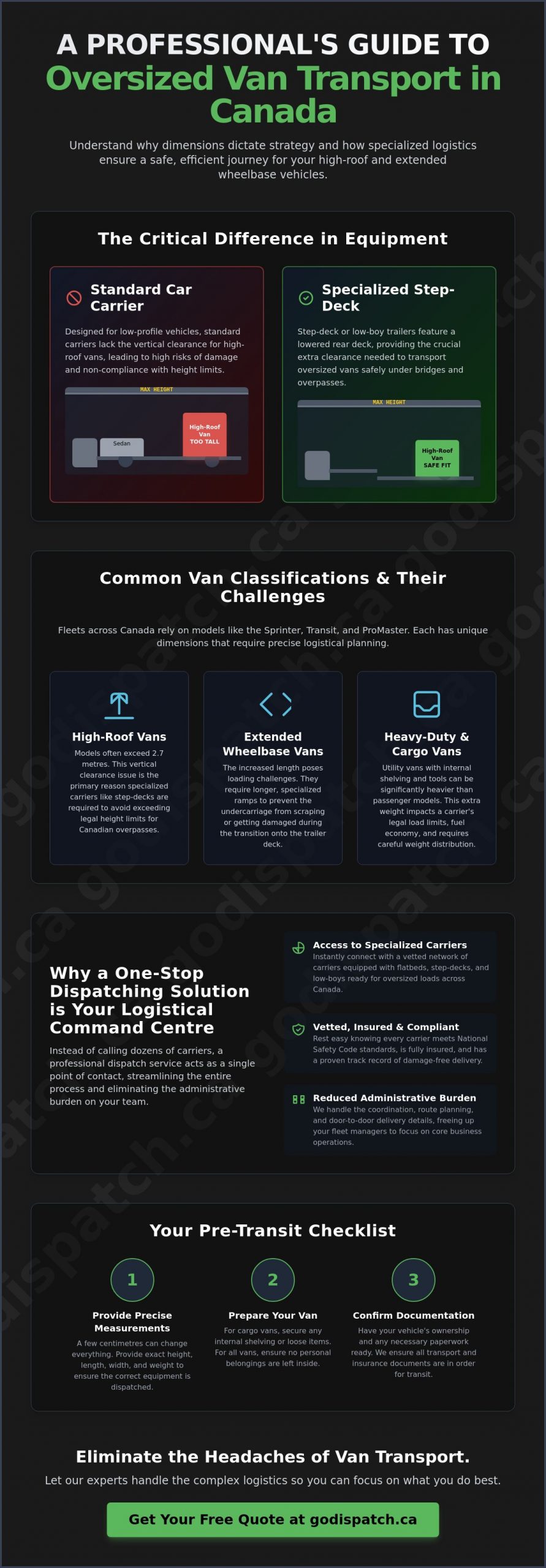
Physical constraints are the primary hurdle. A typical car carrier trailer is designed for low-profile vehicles. When you try to load a high-roof Sprinter or a Ford Transit, you realize quickly that the fixed decks don’t offer enough clearance. If a carrier tries to force a fit, the risk of roof damage is high. Weight is the second major factor. A heavy-duty utility van equipped with internal shelving and tools can weigh significantly more than a standard SUV. This extra weight affects the carrier’s fuel economy and legal load limits. You need specialized dispatching to find a carrier with the right trailer and the right capacity to handle these unique dimensions safely.
The Role of a Professional Dispatch Service
GO DISPATCH acts as your logistical command centre. Instead of calling dozens of individual owner-operators, you use a single point of contact. This one-stop solution simplifies the search for specialized equipment like flatbeds or step-deck trailers. We manage the door-to-door delivery details across all of Canada. This reduces the massive administrative burden on fleet managers and dealership staff. You get a reliable expert who vets the carriers and ensures the vehicle is handled correctly. It’s about efficiency. It’s about getting your van where it needs to be without the daily stress of tracking it yourself. We handle the background work so you can focus on your core operations.
Common Van Classifications and Equipment Requirements
Success in van transport starts with knowing exactly what you are moving. Mercedes-Benz Sprinters, Ford Transits, and RAM Promasters are the backbones of Canadian fleets. However, these vehicles are rarely “standard.” They come in various lengths and heights that dictate which trailer can legally and safely carry them. You must provide precise measurements for height, width, and length before any booking occurs. A few centimetres can be the difference between a routine haul and a logistical nightmare.
Carriers across Canada must follow strict National Safety Code standards to ensure vehicle maintenance and load security. This regulatory framework ensures that the equipment used to move your assets is up to the task. Whether using a flatbed or a specialized low-boy, the goal is always a damage-free delivery. If you are managing a diverse fleet, consulting with a professional dispatcher ensures you never match a high-roof van with an incompatible trailer.
Shipping High-Roof and Extended Wheelbase Vans
Vertical clearance is the primary hurdle for specialized van transport. A high-roof Sprinter often stands over 2.7 metres tall. When placed on a standard car carrier, it will likely exceed legal height limits for Canadian overpasses. Step-deck trailers are the solution here. They feature a lowered rear deck that provides the necessary clearance to pass under bridges safely. Extended wheelbase vans also present loading challenges. They require longer, specialized ramps to prevent the undercarriage from scraping during the transition onto the trailer.
Cargo vs. Passenger Van Logistics
The internal configuration of a van changes its transport profile. Passenger vans are essentially “glass boxes” on wheels. They require strategic placement on the trailer to minimize the risk of window damage from road debris. Cargo and utility vans present a different challenge: weight distribution. Vans equipped with heavy internal shelving, tool racks, or onboard generators have a shifted centre of gravity. These vehicles require specific securement points and heavy-duty straps to prevent shifting during transit. A professional dispatcher will always ask about internal modifications to ensure the carrier is prepared for the extra weight.
Calculating the Cost of National Van Transport
Pricing for van transport across Canada is never a flat rate. It is a dynamic calculation based on distance, dimensions, and current market conditions. We believe in transparency. You need to know exactly why a quote looks the way it does. Most high-roof models trigger an oversized vehicle surcharge. This typically ranges from C$150 to C$400. This fee exists because large vans occupy the space of two standard cars on a trailer. They limit the carrier’s capacity. When a van takes up more “real estate” on the deck, the price reflects that lost space.
Canadian weather also plays a massive role in hauling rates. Winter moves are often more expensive than summer ones. Snow, ice, and reduced daylight hours increase transit times across the Rockies or the Canadian Shield. Carriers must move slower to ensure safety. This reduces their overall efficiency. Summer moves are generally more predictable and cost-effective. Choosing a dispatch service over direct sourcing saves you significant administrative time. We find the right equipment at the best available rate. You avoid the stress of vetting individual owner-operators yourself. Fleet managers and dealerships who want to understand the full picture of their options can benefit from reviewing a detailed comparison of dispatch service vs load board for auto transport before committing to a sourcing strategy.
Dimension-Based Pricing Factors
The physical footprint of your vehicle is the biggest cost driver. A Mercedes-Benz Sprinter costs more to ship than a Ford F-150. It is taller. It is often longer. This footprint determines how many other vehicles can fit on the same load. If your van is inoperable, expect an additional fee. Non-running vehicles usually incur a C$150 charge for winch services. Carriers need specialized gear to load and unload a van that cannot move under its own power. Always disclose the vehicle’s condition upfront to avoid surprise charges at the curb. If you also need to move other vehicles in your fleet, understanding how to get an accurate SUV shipping quote in Canada can help you budget comprehensively for multi-vehicle moves.
Hidden Costs to Watch For
Fuel surcharges are a standard part of the Canadian logistics industry. These rates fluctuate based on national averages. They are a necessary cost of doing business in a massive country. Location also matters. A move between major hubs like Toronto and Calgary is straightforward. However, remote pickup or delivery locations in rural areas will add to the total. It takes more time and fuel for a carrier to divert from main highways. Finally, never overlook the cost of insurance. A professional dispatching solution ensures your vehicle is fully covered during every kilometre of the journey. We prioritize your peace of mind by only working with carriers who maintain high-limit cargo insurance.
Preparing Your Van for Professional Hauling
Proper preparation is the foundation of a stress-free move. You’ve already handled the logistics and understood the costs. Now, it’s time to focus on the vehicle itself. A clean van is essential. Road grime hides scratches and dents. Wash the exterior thoroughly before the carrier arrives. This ensures a clear and accurate damage inspection. Once it’s clean, document everything. Take high-resolution photos from every angle. Focus on the roof, the bumpers, and the side panels. These photos are your best protection. They provide undeniable proof of the vehicle’s state before van transport begins.
Mechanical health matters, even when the van is on a trailer. Check your fluid levels and battery health. A dead battery at the delivery point causes unnecessary delays. Ensure the fuel tank is at approximately one-quarter. This provides enough fuel for loading and unloading while keeping the total weight manageable. Remove all loose items from the cabin. Toll transponders, GPS units, and personal belongings should be stored elsewhere. If you want a professional team to handle these details for you, start your transport request today to ensure a seamless experience.
The Inspection and Bill of Lading Process
The Bill of Lading (BOL) is your most important document. It serves as both a receipt and a contract. When the driver arrives, conduct a joint inspection. Point out any existing marks. Ensure the driver notes them on the BOL. You both must sign this document at pickup and delivery. Clear documentation is your best insurance policy. It eliminates disputes and provides peace of mind. Never rush this process. Take the time to be thorough. It’s the only way to guarantee a smooth handover at the destination.
Securing Commercial and Utility Vans
Commercial vans often have unique attachments. Remove ladder racks, specialized antennas, or magnetic signs before transit. These items can catch the wind or vibrate loose during van transport. If the van isn’t empty, secure all internal cargo. Shelving units must be bolted down. Tools should be locked in chests. Loose items inside a van can shift during transit, causing interior damage or affecting the vehicle’s balance. Finally, disable all alarm systems. Vibrations from the road can trigger them, leading to a drained battery by the time the van reaches its destination.
Why Choose a One-Stop Dispatching Solution?
Managing van transport is a full-time job. You shouldn’t have to do it yourself. A one-stop dispatching solution eliminates the need for endless phone calls and negotiation. We act as your primary logistical hub. We find the carrier so you don’t have to. It is about saving your time. It is about leveraging an established network of vetted auto carriers across Canada. We handle the complex tasks behind the scenes. This allows you to focus on your actual business operations. GO DISPATCH is the stress-relief solution for Canadian businesses. We turn a complicated cross-country move into a simple, reliable process. You get professional results without the administrative burden.
The “One-Stop” advantage means accountability. When you work with a dedicated dispatcher, you aren’t just another number in a database. You are a partner. We understand the Canadian market. We know the routes from St. John’s to Victoria. We identify the best equipment for your specific van dimensions. This expertise prevents delays. It stops hidden fees from appearing on your final invoice. Efficiency is our priority. Your peace of mind is the outcome. We take pride in being the proactive problem-solvers you need in a fast-paced industry.
Vetting Carriers for Safety and Compliance
Safety is never negotiable. We verify carrier insurance and safety ratings before every booking. Professional dispatching provides immediate peace of mind. You know your van is in the hands of an experienced hauler who understands oversized loads. We check for valid operating authorities and up-to-date cargo insurance limits. This vetting process protects your high-value assets. It ensures every carrier follows Canadian safety regulations. You don’t have to worry about the reliability of the driver. We have already done that work for you. Reliability is built into our network.
Streamlining Communication and Scheduling
Communication should be effortless. You get one single point of contact for your entire move. There is no need to track down individual drivers across different provinces. We provide centralized updates from the moment of pickup to the final delivery. This is vital for multi-vehicle moves. Dealerships and fleet managers often need to coordinate several vans at once. We manage those complex schedules to ensure everything arrives on time and in order. It is a streamlined approach designed for speed and clarity. Simplify your logistics with GO DISPATCH today and experience a better way to move your fleet.
Streamline Your Fleet Logistics Today
Successful van transport requires more than just a trailer. It demands precise measurements and thorough preparation. You now understand how dimensions drive carrier selection and why specialized equipment is essential for high-roof models. By following a clear documentation process, you protect your assets and ensure a smooth handover at every destination. Logistics shouldn’t be a daily burden for your team. We’re here to handle the heavy lifting behind the scenes so you don’t have to.
Our one-stop transport dispatching service offers expert coordination for cars, trucks, SUVs, and vans. We utilize a nationwide network of professional auto carriers to find the perfect fit for your specific needs. We vet every driver for safety and insurance compliance so you can focus on your core operations. This streamlined approach provides the reliability and efficiency your business deserves. Take the first step toward a stress-free move and see how simple national hauling can be. We’re ready to get your fleet on the road.
Get a Quote for Professional Van Transport
Frequently Asked Questions
How much does it cost to ship a van across Canada?
Shipping costs are determined by the vehicle’s dimensions and the total distance travelled. Larger models like high-roof Sprinters often incur an oversized surcharge between C$150 and C$400 because they take up more space on the trailer. Other factors include current fuel surcharges and whether the pickup location is in a major hub or a remote rural area. We recommend requesting a custom quote to account for your specific wheelbase and height requirements.
Can you ship a high-roof Sprinter van on a standard car carrier?
No, most high-roof Sprinter vans cannot be shipped on a standard multi-car carrier because they exceed legal height clearances for bridges and overpasses. These vehicles require specialized equipment like step-deck trailers or flatbeds to ensure safe passage. Attempting to use a standard carrier often leads to roof damage or legal fines for the driver. Professional dispatchers always match your specific van to the correct trailer type to ensure a safe journey.
Is my van insured while it is being transported by a third-party carrier?
Yes, your vehicle is fully protected by the carrier’s cargo insurance during every stage of the journey. A professional dispatch service verifies these insurance limits and safety ratings before any booking is finalized. This ensures that your high-value assets are covered against transit-related damage while in the hands of a third-party hauler. You will receive a copy of the inspection report and the signed Bill of Lading for your records.
How long does it take to move a van between provinces?
Transit typically takes between 7 and 14 days depending on the specific route and current weather conditions. Transport between major centres like Vancouver and Toronto is usually faster than moves involving remote northern locations. Your dispatcher will provide a more accurate timeline based on your specific pickup and delivery points. We prioritize efficient scheduling to minimize your downtime and get your vehicle back into service as quickly as possible.
Do I need to empty the van before it is picked up for transport?
Yes, you should remove all personal belongings and loose internal items before the carrier arrives. This prevents damage to the interior and ensures the vehicle stays within its legal weight limits. While some built-in shelving is acceptable, the van should be as empty as possible to allow for a thorough inspection and safe transit. Secure any remaining equipment or toolboxes to prevent them from shifting during the trip across the country.
What is the difference between an auto transport broker and a carrier?
A dispatcher finds the best equipment for your move while a carrier performs the actual driving. Using a one-stop dispatching solution gives you access to a larger network of vetted carriers without having to call each one yourself. This saves you significant time and ensures you get a fair market rate. We handle the logistics and communication so you only have to deal with one point of contact from start to finish.
Can you ship a van that is not currently running?
Yes, inoperable van transport is possible, but it requires a carrier equipped with a winch to load the vehicle. This service usually incurs an additional fee of approximately C$150 to cover the extra equipment and labour. You must disclose that the van is inoperable at the time of booking. This ensures we send a driver with the specialized gear needed to handle a non-running vehicle safely without causing further mechanical issues.
How do I prepare my utility van for professional hauling?
Prepare your vehicle by washing the exterior so the driver can perform an accurate damage inspection. Document the vehicle’s condition with high-resolution photos and ensure the fuel tank is at about one-quarter. Finally, disable any alarm systems and check that the battery is healthy to prevent delays during loading. Proper preparation is the best way to ensure a smooth and successful van transport experience for your business fleet anywhere in Canada.