
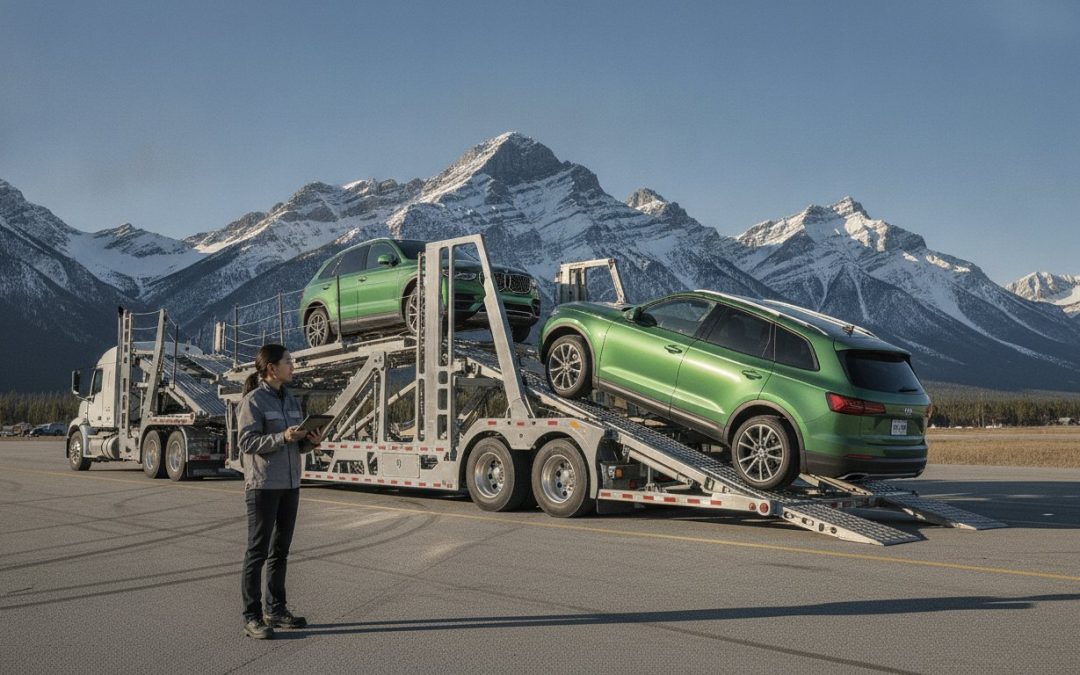
Is the cheapest shipping quote actually the most expensive mistake you’ll make this year? When you’re planning a long-distance move or shipping a new SUV across provincial lines, the initial price tag often hides the real risks. Many Canadians feel a surge of anxiety the moment they hand over their keys; they worry about hidden surcharges or whether their vehicle is truly protected. You might be asking yourself, what does an auto transport broker do to earn their fee? It’s a fair question in a market where transparency can sometimes feel rare.
We understand that your vehicle is more than just metal; it’s a significant investment that requires expert handling. This 2026 guide is designed to replace your confusion with total confidence. We’ll show you exactly how brokerage fees protect your car and ensure a seamless national move without those dreaded post-booking surcharges. You’ll get a clear breakdown of what these costs cover, from professional carrier vetting to navigating the latest Transport Canada insurance requirements. By the end of this article, you’ll know how to secure a stress-free shipping experience that prioritizes safety and reliability over cut-rate shortcuts.
Key Takeaways
- Understand exactly what does an auto transport broker do to secure your vehicle, from vetting professional carriers to coordinating complex cross-province logistics.
- Learn how vehicle dimensions and national distance impact your final quote, ensuring you pay a fair rate for the trailer space your car or SUV occupies.
- Discover how brokerage fees provide peace of mind by verifying carrier insurance and National Safety Code compliance before transport begins.
- Identify the red flags of low-ball quotes that often lead to no-shows or hidden surcharges, protecting your budget and your timeline.
- Explore how one-stop dispatching streamlines the shipping process, offering a reliable solution for complex moves across Canada.
What Are Car Transport Brokerage Fees and Why Do They Exist?
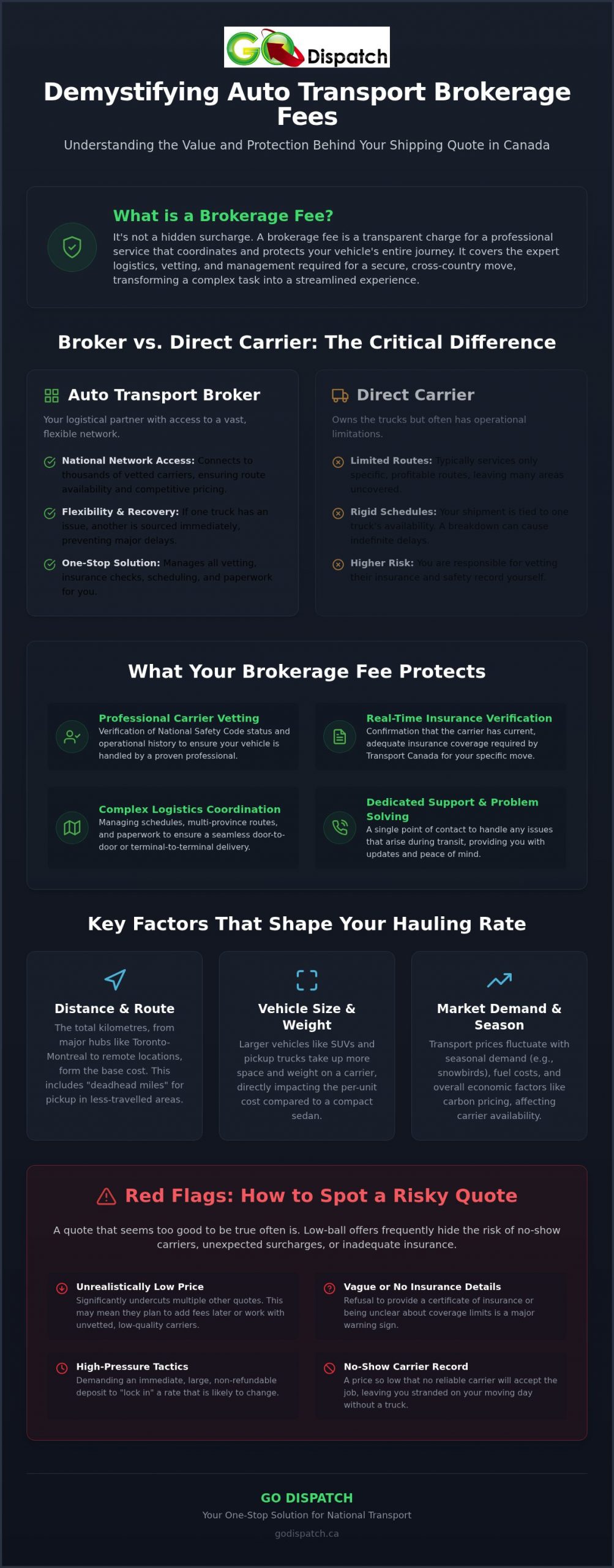
Car transport brokerage fees are the professional service charges that keep your vehicle move on track. They aren’t a hidden tax or an unnecessary surcharge. Instead, they represent the cost of expert logistics coordination. When you ask, what does an auto transport broker do, the answer is simple: they act as your logistical shield. They bridge the gap between your specific needs and the vast, often fragmented world of Canadian trucking. The fee covers the administrative labour of sourcing, scheduling, and verifying every detail of your shipment.
In Canada, the brokerage model is the industry standard for national hauling. Our geography is massive. Moving a car from Halifax to Vancouver requires more than just a truck; it requires a coordinated plan. Brokerage fees ensure that someone is dedicated to monitoring your vehicle’s progress, managing paperwork, and solving problems before they reach you. You’re paying for a streamlined process and the peace of mind that comes with it.
The Difference Between a Broker and a Direct Carrier
Direct carriers own the physical trucks and trailers. While they’re essential, they often have limited routes and rigid schedules. If a carrier’s only truck on the Toronto-to-Montreal route breaks down, your car sits in a lot. Brokers provide access to a national network of thousands of vetted carriers. This flexibility means your move isn’t tied to one driver’s mechanical luck. If one truck isn’t available, a broker finds another that is. This network-based approach prevents delays and keeps the Canadian supply chain moving efficiently.
The Evolution of Professional Dispatching in 2026
Digital logistics have transformed the industry, but the role of the modern broker has only become more vital. In 2026, it’s not just about finding a trailer; it’s about one-stop dispatching. High-capacity partners now handle everything from dealership inventory management to individual cross-province moves. While automated load boards exist, they lack the human touch required for high-value assets. Professional dispatchers verify a carrier’s National Safety Code status and insurance coverage in real-time. This manual vetting process is what truly defines what does an auto transport broker do in the modern era. It ensures your car, truck, or SUV is handled by a professional, not just whoever bid the lowest on a digital board.
Ultimately, these fees protect your investment. They turn a complex, high-risk chore into a simple, professional transaction. By handling the background checks and scheduling, brokers allow you to focus on your move while they focus on the road.
Calculating the Real Cost: Factors That Shape National Hauling Rates
Distance is the foundation of every quote. Shipping a vehicle from Halifax to Vancouver involves over 5,000 kilometres of road. This isn’t just about fuel; it’s about driver hours and wear on the equipment. Brokers also account for “deadhead miles.” These are the empty kilometres a carrier travels to reach your vehicle. If you’re in a remote town, these miles can increase the base rate significantly. A professional coordinator manages these variables to ensure the price you’re quoted is the price you pay.
This complexity is why people ask, what does an auto transport broker do to manage costs? They aggregate demand across the country to minimize empty trailer space. For those moving vehicles across the border, they also ensure compliance with Canadian vehicle import regulations. This prevents costly delays at the gate and ensures your paperwork is in order before the truck even arrives.
Vehicle Size, Weight, and Trailer Logistics
Physical dimensions dictate trailer capacity. A standard car carrier has limited slots. A large SUV or a heavy-duty pickup truck occupies more physical space and consumes more of the carrier’s weight allowance. This is why a truck costs more to ship than a compact sedan. Understanding these nuances helps you grasp the vehicle transport cost in Canada. Dealerships often leverage multi-vehicle shipments to lower the per-unit price. This strategy is something individual movers can sometimes tap into through a broker’s extensive network.
Market Trends and Economic Factors in 2026
In 2026, economic variables like carbon pricing and fuel surcharges play a larger role than ever. Fuel surcharges are now a standard part of the logistics landscape, fluctuating alongside national averages. A professional broker monitors these shifts daily. They ensure your quote reflects the current reality of the Canadian market. This protects you from sudden price hikes after you’ve booked your shipment.
Seasonal shifts also move the needle. During the snowbird rush, demand for specific routes peaks. This can squeeze trailer availability and raise margins. Winter shipping brings its own challenges. Carriers often charge a premium for the specialized equipment and extra time needed to navigate icy mountain passes or prairie blizzards safely. If you want to avoid these seasonal spikes, planning your move with a professional dispatcher can help you find the most cost-effective window for your transport.
The Invisible Value: Why Vetting and Insurance Justify the Fee
Skipping the broker to use a free load board might look like a way to save a few hundred dollars. In reality, it’s a high-stakes gamble with your vehicle. These boards are often unmonitored, leaving you vulnerable to “ghost carriers” who lack legal authority or physical equipment. When you ask what does an auto transport broker do, the primary answer is risk mitigation. They perform the heavy lifting of verifying every carrier’s Motor Carrier (MC) number and National Safety Code status. This vetting process ensures that the person driving your car across the country is a legitimate professional, not a fly-by-night operation.
A broker’s fee covers the administrative cost of this due diligence. You’re paying for a filtered network where every driver has already been screened for reliability and safety. Without this layer of protection, you’re responsible for investigating the carrier’s history, verifying their operating authority, and cross-referencing their safety records. Most individuals and even busy dealership managers simply don’t have the time or the tools to do this effectively.
Carrier Vetting: More Than Just a Background Check
Professional brokers don’t just check if a driver has a truck. They dive into Transport Canada data to review safety ratings and past performance. This level of scrutiny aligns with the best practices promoted by the Transportation Association of Canada. A broker ensures the carrier has the specific equipment required for your car hauling needs, whether that’s an open trailer for a daily driver or enclosed transport for a luxury SUV. They filter out carriers with poor safety records, protecting your investment before the vehicle is even loaded.
Insurance and Liability Management
Cargo insurance is a complex field. Every carrier is required to have it, but the limits vary wildly. If you’re shipping a high-value truck or a brand-new van, you need to know the insurance limit actually covers the vehicle’s replacement value. A broker verifies these limits and keeps current certificates on file. They also maintain their own liability coverage as an added layer of protection, ensuring there are no gaps in coverage during cross-province hauling.
The real value appears if a damage claim occurs. Dealing with a carrier’s insurance company can be a bureaucratic nightmare for an individual. A broker acts as your intermediary. They understand the claims process, know exactly what documentation is needed, and push for a resolution on your behalf. This management is a vital part of what does an auto transport broker do to ensure your experience remains stress-free. You aren’t just paying for a connection; you’re paying for a professional advocate who stands between you and potential loss.
Spotting the Red Flags: How to Evaluate a Car Transport Quote
A low price tag is the most common trap in the Canadian logistics industry. While saving money is important, a quote that sits significantly below the market average is usually a bait-and-switch tactic. Predatory brokers use these low numbers to secure a deposit, knowing full well that no reputable carrier will accept the job at that rate. This leads to your vehicle sitting in a driveway for weeks while the broker waits for a desperate driver. Understanding what does an auto transport broker do involves recognizing their role in providing realistic, executable pricing that actually gets your car on a trailer.
Reliability is the currency of professional transport. In 2026, the cost of fuel, insurance, and labour is standardized across the country. If one quote is C$500 cheaper than five others, that money is being cut from somewhere. Usually, it’s cut from the carrier’s pay, which means your vehicle is the last one picked up and the first one bumped if a better-paying job appears. You need a partner who prioritizes certain delivery over a theoretical discount.
The Dangers of the Bait and Switch Quote
Some brokers operate by “fishing” for customers. They quote a price they know is impossible to fulfill just to get you to sign a contract. Often, these contracts include non-refundable administrative fees. Once they have your money, the urgency disappears. If they can’t find a driver to take the low-paying load, they’ll eventually come back to you demanding more money to “expedite” the shipment. This creates massive stress during a move and can throw your entire schedule into chaos. A professional dispatcher avoids these games by quoting the real market rate from the start.
Transparency in Fee Structures
A professional quote should be clear and all-encompassing. You shouldn’t have to hunt for hidden costs like GST, fuel surcharges, or insurance premiums. When you evaluate what does an auto transport broker do for you, look for a breakdown that shows they’ve considered every variable. This transparency is the foundation of successful vehicle delivery logistics in Canada. A quote should include:
- The base hauling rate for the specific provincial route.
- Current 2026 fuel surcharges based on national averages.
- Full cargo insurance coverage for the total value of your vehicle.
- All applicable taxes and provincial tolls.
Don’t settle for vague estimates or verbal promises. Insist on a written breakdown that guarantees no hidden surcharges after the car is loaded. If you want to ensure your vehicle is handled by experts who value transparency, request a professional quote from GO DISPATCH today and experience the difference that human-led coordination makes.
Professional Dispatching: Your One-Stop Solution for National Transport
GO DISPATCH acts as the primary facilitator for your national logistics needs. We coordinate the entire journey so you don’t have to. When people ask, what does an auto transport broker do, the most accurate answer is that they provide a comprehensive stress-relief service. We manage the complexity of car, truck, SUV, and van transport across every Canadian province. This one-stop approach removes the burden of scheduling from your daily workload. You get professional results with minimal effort. Our team handles the background vetting, the insurance checks, and the scheduling logistics that usually cause delays.
Streamlining Logistics for Dealerships and Businesses
Inventory management shouldn’t take time away from closing deals. Outsourced dispatching allows your sales team to focus on customers instead of tracking trailers. We handle multi-vehicle relocations with a single point of contact for your entire fleet. This is the core of dealership auto transport logistics. By coordinating recurring moves, we optimize your supply chain and reduce idle time on the lot. Whether you’re moving five vans or fifty cars, our system ensures your inventory arrives ready for the showroom floor. We provide the high-capacity support needed to keep your business moving at the speed of the 2026 market.
The GO DISPATCH Advantage: Reliability and Peace of Mind
Our network is built on trust and professional vetting. We don’t just find a truck; we find the right truck. This human-centric approach is the true definition of what does an auto transport broker do in a modern, digital world. It sets us apart from automated load boards that often ignore the nuances of high-value transport. You’ll always have a dedicated contact who understands your specific requirements. We prioritize safety and transparency in every provincial move. Our vetted carrier network is the backbone of our service, providing the reliability you need for cars, trucks, and SUVs.
We understand that your time is valuable. Our booking process is designed for speed and simplicity:
- Provide your vehicle details and desired route.
- Receive a transparent, all-inclusive quote.
- Relax while we coordinate a vetted carrier.
- Track your vehicle’s progress through a dedicated contact.
We take pride in being a proactive problem-solver for our clients. This allows you to focus on your core business while we manage the behind-the-scenes logistics. Don’t leave your vehicle investment to chance with unvetted drivers or automated systems. Book your national vehicle transport with GO DISPATCH today! and experience a truly stress-free shipping experience.
Secure Your Vehicle’s Future Across Canada
Choosing the right partner for your vehicle move shouldn’t be a guessing game. You now understand that brokerage fees aren’t just an extra cost; they’re an investment in safety and reliability. By filtering out low-ball quotes and verifying insurance limits, a professional service ensures your car, truck, or SUV remains protected from coast to coast. When you consider what does an auto transport broker do, remember it’s about providing a one-stop dispatching solution that removes the logistical weight from your shoulders.
GO DISPATCH is ready to handle your next move with professional carrier vetting and national coverage across all Canadian provinces. We specialize in coordinating seamless transport for cars, trucks, and SUVs while maintaining the human connection that automated systems lack. It’s time to trade moving anxiety for total peace of mind. You deserve a partner that handles the complex details behind the scenes so you can focus on your transition.
Get a transparent vehicle transport quote from GO DISPATCH today! We look forward to making your next national move your easiest one yet.
Frequently Asked Questions
How much is a typical car transport brokerage fee in Canada in 2026?
Understanding what does an auto transport broker do is key to recognizing why these fees vary across Canada. Instead of a fixed price, the fee reflects the complexity of the logistics, including the labour required for carrier vetting and scheduling. It’s an investment in professional oversight that ensures your car or SUV is handled by a carrier with a verified safety record and active cargo insurance. This fee covers the coordination work that prevents costly delays.
Are brokerage fees refundable if I cancel my vehicle transport?
Refund policies depend on the specific terms of your agreement and the timing of the cancellation. Usually, the portion of the fee allocated to the carrier is refundable if the cancellation occurs before the vehicle is picked up. However, the administrative portion of the fee, which covers the initial vetting and booking work, is often non-refundable. Always review your contract carefully before signing to understand the cancellation window and any associated costs for your specific move.
Why is a broker quote often more reliable than a direct carrier quote?
A broker quote is often more reliable because it isn’t tied to a single truck’s mechanical health or schedule. If you book with a direct carrier and their only truck on your route breaks down, your transport stops. Because brokers maintain a national network of thousands of vetted professionals, they can quickly pivot to a replacement driver. This flexibility ensures your vehicle stays on schedule even when unexpected logistical challenges or mechanical issues arise on the road.
What happens if the carrier damages my vehicle during national transport?
If damage occurs, the broker serves as your primary advocate and intermediary throughout the claims process. They verify the carrier’s cargo insurance limits before the move to ensure there’s sufficient coverage for your vehicle’s value. If you notice damage during delivery, you must document it on the Bill of Lading immediately. Your broker will then help you gather the necessary paperwork and coordinate with the carrier’s insurance provider to reach a professional and timely resolution.
Do I pay the brokerage fee separately or is it included in the total quote?
Most professional quotes are presented as an all-in price that includes the brokerage fee, carrier pay, fuel surcharges, and taxes. This approach prevents the confusion of hidden costs appearing later in the process. Some brokers may provide a breakdown of these costs for transparency, but the total amount you pay usually covers everything from the initial vetting to the final delivery. Always ask for a written confirmation that the quote is all-inclusive before you book.
Can a broker help me ship a vehicle from a dealership to another province?
Brokers are highly effective at coordinating transport from a dealership to another province. This is a core part of what does an auto transport broker do for both individual buyers and commercial businesses. They manage the specific paperwork required for cross-province moves and ensure the carrier has the correct equipment for your new vehicle. This one-stop solution allows you to finalize your purchase while the logistics experts handle the physical delivery to your door.
How do I know if a car transport broker is legitimate and licensed in Canada?
You can verify a broker’s legitimacy by checking their business registration and their history of National Safety Code compliance. Legitimate brokers will be transparent about their vetting process and will readily provide information about the carriers they use. Look for established companies with a physical presence in Canada and a track record of handling high-value assets like trucks and SUVs. Avoid any company that refuses to provide a written contract or clear insurance details upfront.
Why did my car transport quote change after I received the initial estimate?
Quotes can change if the initial information provided, such as vehicle dimensions or pickup location, was inaccurate. In 2026, fluctuations in national fuel surcharges or carbon pricing can also impact the final rate. If you add weight to the vehicle by packing it with personal items, the carrier may increase the fee due to strict weight limits. To keep your quote stable, provide precise details about your car or truck and confirm your pickup location is accessible.