
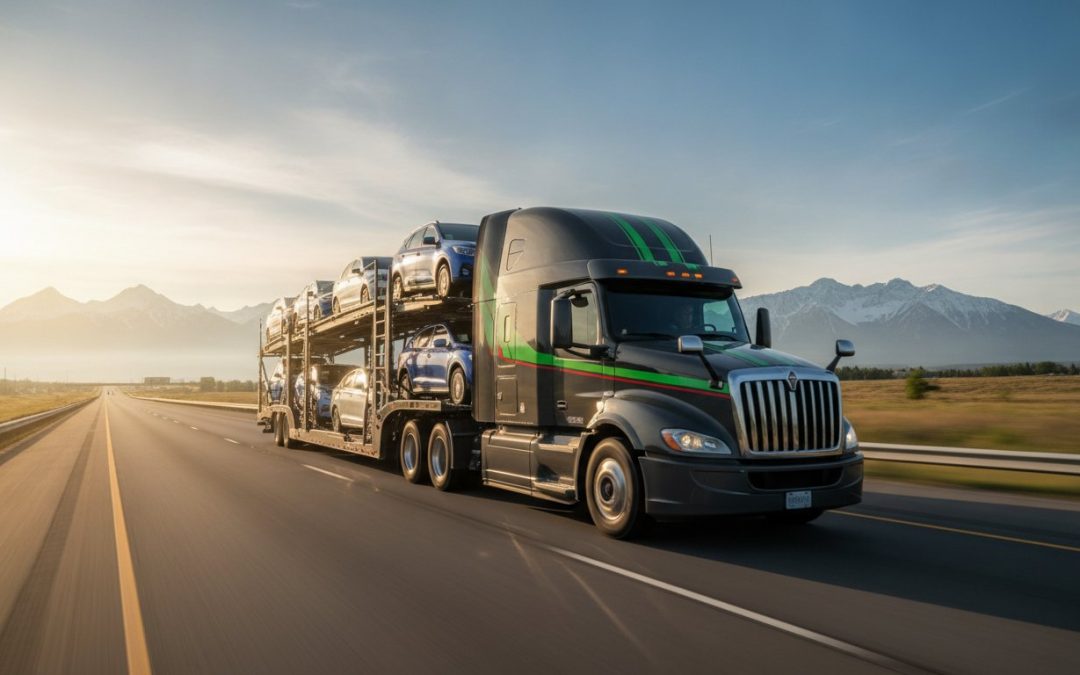
What if your next dealer trade didn’t involve three hours of phone tag and a week of wondering where your inventory went? It’s a reality most sales managers face when they need to transport cars between dealerships to close a high-value deal. You realize that every day a vehicle sits in transit is a day it isn’t on the lot earning commission. The administrative burden of vetting carriers and chasing updates can quickly drain your team’s energy; it’s a bottleneck that nobody has time for in a fast-paced market.
We understand that logistics should support your sales, not slow them down. We’re here to help you master the complexities of dealer trade logistics and discover how professional dispatching streamlines your inventory turnover. This guide provides a clear path to faster delivery timelines and a reduced workload for your sales staff. You will learn how to verify carrier safety and protect your bottom line from in-transit damage risks. We’ll show you how to organize your national transport strategy to ensure your lot stays full and your customers stay happy.
Key Takeaways
- Recognize how strategic inventory relocation prevents depreciation and keeps your sales floor fresh for every customer.
- Compare open and enclosed hauling methods to safely transport cars between dealerships while maximizing your logistics budget.
- Simplify your operations with a one-stop dispatching model that replaces the burden of managing dozens of individual carriers.
- Learn a clear, two-step process for organizing multi-vehicle moves that protects vehicle condition and meets tight sales deadlines.
- Discover how human-centric logistics support can turn your transport department into a powerful tool for faster inventory turnover.
Why Efficient Dealer Trade Transport is Critical for Inventory Turnover
Dealer trades represent far more than a simple swap of keys between locations. They are the strategic relocation of inventory to match specific local demand. When a customer in Calgary wants a specific trim level sitting on a lot in Toronto, the ability to move that asset quickly determines whether you close the deal or lose the lead. Successful managers realize that their lot is part of a larger national network. You need a fluid system to transport cars between dealerships to ensure the right product is always in front of the right buyer. This mobility allows you to satisfy niche requests without overstocking your own lot.
Efficiency in this process isn’t just a convenience; it’s a financial necessity. Every day a vehicle remains in transit or sits on the wrong lot, its value drops. Professional logistics providers utilize various car hauling methods to ensure these assets move safely and swiftly across provincial lines. This speed keeps your inventory turnover high and your carrying costs low. It also ensures that your sales staff can focus on closing deals rather than tracking trucks. Relieving this administrative burden means your team can spend more time on the showroom floor.
The Cost of Stagnant Inventory
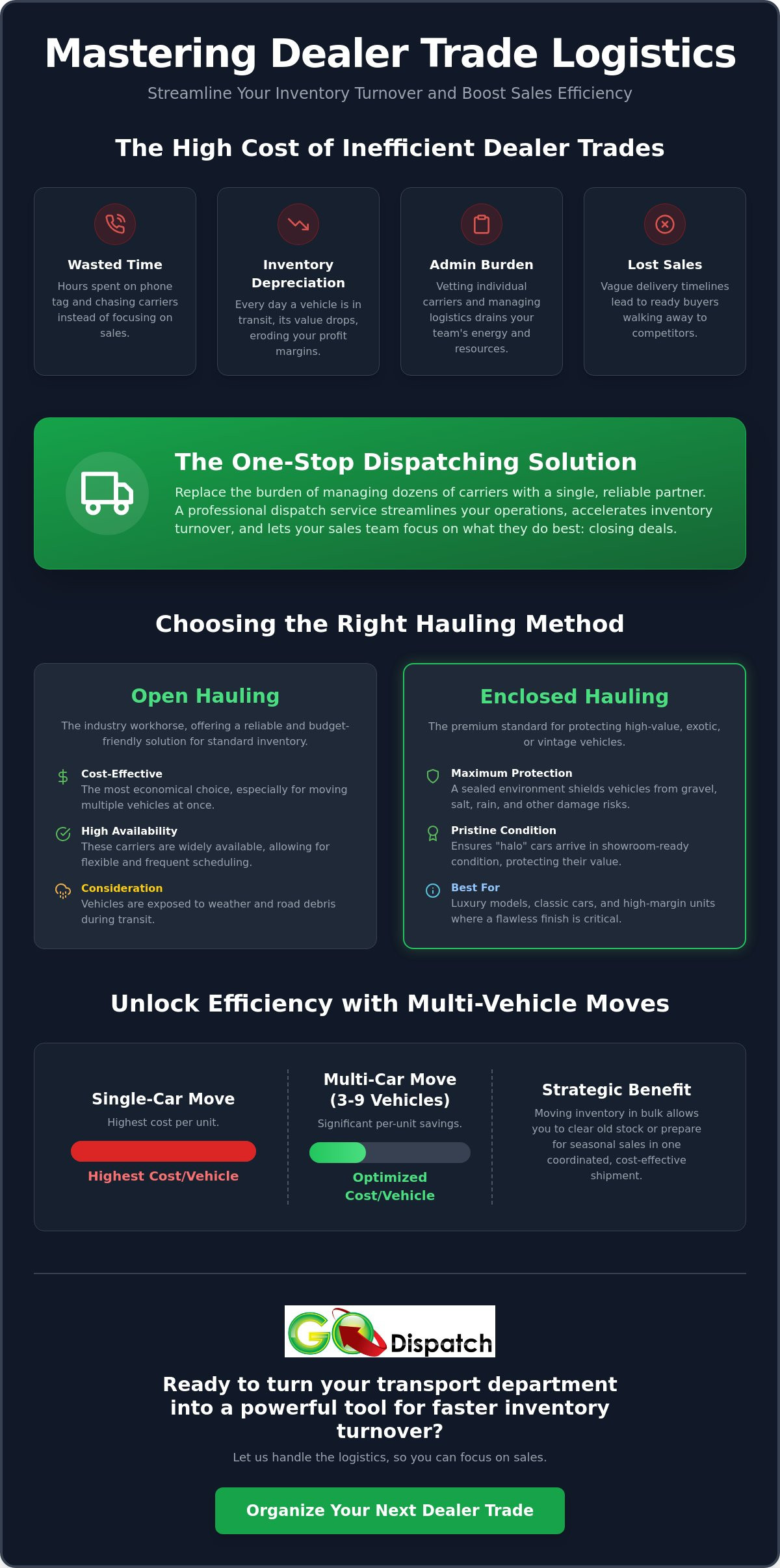
Vehicles lose value every single day they aren’t sold. This depreciation is a silent killer of dealership profits. When a high-demand SUV sits in a rural centre while urban buyers are clamouring for it, you’re losing money twice. You lose the immediate sale, and you pay the opportunity cost of a wasted lot space. If a ready buyer walks because your delivery timeline is too vague, that’s a failure of logistics. Consider these factors that impact your bottom line:
- Daily Depreciation: Newer models lose value faster when they aren’t moving.
- Lot Space Optimization: Stagnant cars prevent you from displaying faster-selling units.
- Interest Costs: Floor plan interest adds up while vehicles sit idle.
Dealer trade transport is the backbone of modern automotive retail.
Meeting Customer Expectations in 2026
Online vehicle sourcing has changed the game. By 2026, buyers expect to find their perfect car anywhere in Canada and have it delivered to their local dealership in record time. Speed of delivery is now a primary competitive differentiator. If you can’t get the car there quickly, your competitors will. Reliable transport protects your brand reputation by fulfilling the promises your sales team makes. It builds immediate trust when a customer sees their new vehicle arrive on time and in pristine condition. You’re not just moving a car; you’re delivering a customer experience that defines your dealership’s reliability. This high-standard service is only possible when you have a dependable way to transport cars between dealerships across the country.
Comparing Vehicle Hauling Methods for Dealership Transfers
Choosing the right way to transport cars between dealerships is a balance of budget and protection. You want your inventory to arrive in retail-ready condition without overspending on transport fees. Efficiency matters. Safety is non-negotiable. Most dealerships rely on two primary methods to move their stock across the country. Selecting the right one depends on the value of the vehicle and the urgency of the sale. Professional dispatching helps you navigate these choices by matching your specific load with the most appropriate carrier type.
Open vs. Enclosed Hauling for Dealer Stock
Open hauling is the industry workhorse. It is the most cost-effective choice for standard fleet inventory and used stock. These carriers are reliable and widely available. However, they expose vehicles to the elements. In Canada, road debris and winter weather can be harsh on a car’s exterior. If you are moving high-value, exotic, or vintage units, enclosed hauling is the standard. It provides a sealed environment that protects against gravel, salt, and rain. You pay more for this service, but it ensures your “halo” cars arrive in showroom condition. The cost-to-safety ratio makes sense when the vehicle’s margin depends on a flawless finish. For a thorough breakdown of how these methods compare in real-world conditions, our guide to car hauling in Canada provides a professional comparison of every major transport option available to dealerships.
Multi-Vehicle Transport Efficiency
Moving inventory in bulk is the smartest way to protect your margins. Shipping 3 to 9 vehicles at once significantly reduces your per-unit costs compared to single-car moves. It allows you to clear out older stock or stock up for a seasonal sale in one go. Scheduling these large-scale moves requires precision. You need to coordinate pickup windows that don’t disrupt your daily lot operations. For a deeper look at the logistical landscape, read our guide to auto transport in Canada. This helps you understand how to align your bulk moves with national transport lanes and seasonal demand shifts.
Safety standards are the foundation of any reliable transport plan. Professional carriers must adhere to strict guidelines, such as those established by the Federal Motor Carrier Safety Administration for commercial vehicle operations. Following these regulations ensures that every driver is qualified and every trailer is secure. To maximize your team’s productivity, look for door-to-door service. This model eliminates the need for dealership staff to drop off or pick up vehicles at remote terminals. The carrier handles the heavy lifting right at your gate. It is a simple way to simplify your dealership logistics and keep your sales staff focused on the showroom floor.
The Strategic Benefits of Using an Auto Transport Dispatch Service
Managing a network of individual carriers is a full-time job your sales team doesn’t need. When you choose to transport cars between dealerships using a dispatch service, you move from a reactive state to a strategic one. Instead of juggling twenty phone numbers for twenty different routes, you have one point of contact. This “One-Stop” model provides immediate access to a massive fleet of vetted professionals without the overhead of managing them yourself. One call. Total coverage. It’s a scalable solution that grows with your monthly sales volume. Whether you’re moving a single unit or an entire fleet, the process remains the same. Dealerships managing larger inventories across multiple locations will find that a structured approach to fleet vehicle transport in Canada is essential for maintaining consistent coverage and cost-effective multi-vehicle rates.
Direct carrier relationships often fail when a specific driver is booked or a truck breaks down. A dispatch service eliminates this single-point-of-failure risk. If one carrier isn’t available, the dispatcher simply moves the load to another verified partner. This flexibility is one of the key strategic benefits of modern automotive logistics. You gain the reach of a national network while maintaining the simplicity of a single relationship. It’s about removing the friction from your daily operations so you can focus on the showroom floor.
Carrier Vetting and Compliance
Vetting is where the real value lies. Every carrier must have valid insurance and active operating authorities. Checking these documents manually for every load is a massive administrative drain on your staff. Dispatchers handle this behind the scenes. They monitor safety ratings and insurance renewals to protect your assets from high-liability risks. This proactive approach gives you peace of mind. You know that every truck entering your logistics centre meets the highest safety standards in the industry. It’s a layer of protection that direct booking rarely provides, ensuring your inventory is in safe hands from pickup to delivery.
Streamlining Communication and Tracking
Communication shouldn’t be a game of telephone. Professional dispatchers provide a single channel for all your national moves. You get real-time updates without having to chase down drivers on their cell phones. This transparency allows your sales staff to give accurate delivery estimates to customers, which builds immediate trust. For dealerships in Western Canada, utilizing a specialized car hauling dispatch Alberta service ensures that regional expertise is applied to every haul. It turns a complex logistical puzzle into a streamlined, predictable process. You stay informed while your team stays productive. You realize the benefits of a professional partner when your lot stays full and your paperwork stays organized.
How to Organize Seamless Multi-Vehicle Dealership Moves
Moving multiple units at once requires a disciplined approach. You aren’t just moving metal; you’re moving capital. To transport cars between dealerships effectively, you need a checklist that minimizes errors and maximizes speed. Start with a comprehensive inventory audit. Document the exact condition of every vehicle before the carrier arrives. This clarity prevents disputes later. Once your audit is complete, choose a transport timeline based on sales urgency. High-priority trades might require dedicated trailers, while standard stock can wait for a multi-car carrier to optimize costs.
Coordination is the next critical step. Your lot managers at both the pickup and delivery points must be in sync. Clear the necessary space for large car carriers to manoeuvre safely. When the truck arrives, the driver will present a Bill of Lading (BOL). This is the primary legal document for the journey. After the vehicles reach their destination, finalize the delivery by verifying the condition against the original BOL and processing the brokerage fees. A structured process ensures nothing is left to chance.
Preparing Vehicles for National Transport
Preparation is about risk management. Ensure all vehicles have approximately a quarter tank of fuel. This provides enough for loading and unloading while keeping the total weight of the trailer manageable. Secure any loose parts like roof racks or aftermarket antennas. If a vehicle has an active alarm system, disable it to prevent battery drain during the long haul across provincial lines. Always wash the vehicles before the carrier arrives. A clean vehicle is easier to inspect for transit damage.
Managing the Bill of Lading
The Bill of Lading serves as your receipt and your contract. It’s the most important piece of paper in the entire transaction. Your staff must be trained to conduct a thorough “walk-around” inspection at both ends of the trip. If they notice any discrepancies, they must note them clearly on the BOL before signing. This protects your dealership’s insurance interests. For a detailed look at how these documents function within broader logistics, refer to our car hauling services Alberta guide. It provides deeper insight into managing national hauling documentation.
A proactive approach to documentation saves hours of administrative headaches. It allows you to resolve issues quickly and keep your inventory moving toward the showroom floor. Ready to simplify your next bulk move? Book your multi-vehicle transport today and let our experts handle the details.
Reliable Inventory Relocation with GO DISPATCH
GO DISPATCH stands as the high-capacity facilitator your dealership needs to thrive. We understand the pressure of moving inventory across vast distances. When you need to transport cars between dealerships, you require a partner that acts as an extension of your own team. We don’t just move vehicles; we solve logistical puzzles that would otherwise stall your sales growth. Our human-centric approach means you aren’t just another account number. You get actual support from experts who know the Canadian landscape inside and out. We handle the stress. You handle the sales.
We handle everything in your fleet. Cars, trucks, SUVs, and vans move through our network with ease. Whether it’s a single high-trim pickup or a dozen economy sedans, the level of care remains consistent. We’ve built a system that prioritizes safety and speed above all else. Our One-Stop Transport Dispatching model ensures you have comprehensive coverage without the need for multiple contacts. You realize the value of this partnership when your lot stays stocked and your administrative burden disappears. It is simple, effective, and built for the speed of modern retail.
A Partner in Your Dealership’s Growth
Your sales managers should be selling, not chasing carriers. GO DISPATCH reduces the administrative labour that often bogs down dealership operations. We specialize in Canadian routes, navigating the unique challenges of our geography and weather. We take pride in being a proactive problem-solver. By managing the complexities behind the scenes, we allow you to focus on your core business. It’s a relationship built on immediate trust and long-term reliability. We act as your eyes and ears on the road, ensuring every move aligns with your inventory goals. This partnership allows your logistics centre to function at peak efficiency without increasing your internal headcount.
Getting Started with Your Next Move
Initiating a national move is simple and direct. You can reach us via phone, our toll-free line, or email to get the process started. To provide a fast and accurate dispatch quote, we simply need the pickup and delivery locations, the vehicle details, and your preferred timeline. We provide the clarity you need to make informed decisions. We don’t believe in long-winded processes or cold, corporate interactions. You get a direct path to a solution every time you call. Your inventory is safe, your timelines are respected, and your peace of mind is guaranteed. We are the guide you need to transport cars between dealerships with absolute confidence. One call is all it takes to put your inventory in motion.
Master Your Inventory Mobility
You now have the tools to transform your logistics from a back-office bottleneck into a powerful strategic advantage. By prioritizing efficient hauling methods and rigorous documentation, you protect your dealership’s margins and reputation. The decision to transport cars between dealerships should never drain your team’s energy; it should be the engine that drives your inventory turnover. You realize that professional dispatching removes the administrative weight of carrier vetting while ensuring your assets move safely across provincial lines.
We are ready to act as your reliable partner in this growth. Our one-stop dispatching handles all vehicle types with expert insurance verification and a national reach that spans every Canadian province. We take pride in handling the complex details behind the scenes so you can focus on closing your next deal. Simplify your inventory logistics with GO DISPATCH and experience the peace of mind that comes with dependable service. Your lot stays full, your staff stays productive, and your business stays ahead of the competition. Let’s get your inventory moving today.
Frequently Asked Questions
How long does it take to transport cars between dealerships across Canada?
Delivery timelines depend largely on the total distance and the specific route density. Regional moves within a province typically take between one and three days from the time of pickup. Cross-country shipments between major hubs like Toronto and Vancouver usually require seven to fourteen days. Factors such as seasonal weather conditions and remote delivery locations can also influence the final schedule.
What is the average cost for dealership car transport brokerage fees?
Fees for brokerage and dispatching services vary based on the volume of inventory and the complexity of the route. Most providers calculate these costs as a percentage of the total transport fee or as a flat administrative rate per vehicle. Factors like the type of carrier used and the urgency of the delivery will also impact the final quote. Dispatchers provide transparent pricing that includes carrier vetting and logistical coordination.
Do dispatch services provide insurance for vehicles in transit?
The primary insurance coverage is provided by the individual carrier hauling the load. A professional dispatch service acts as a secondary layer of protection by verifying that every carrier maintains active and sufficient cargo insurance. This vetting process ensures that your assets are protected under the carrier’s policy from the moment they are loaded until they reach their final destination.
Can you transport inoperable vehicles between dealership lots?
Yes, you can transport inoperable vehicles, but they require specialized equipment for loading and unloading. Carriers must use trucks equipped with winches or specialized ramps to move non-running units safely. It is critical to disclose the vehicle’s condition upfront so the dispatcher can secure a carrier with the proper tools. This service often carries a premium due to the extra labour and equipment involved.
What is the difference between a direct carrier and a transport dispatcher?
A direct carrier owns the physical trucks and employs the drivers who move your inventory. A transport dispatcher manages a vast network of these carriers to provide national coverage and flexible scheduling. Using a dispatcher allows you to transport cars between dealerships without being limited to a single company’s equipment or route availability. It offers a more scalable solution for dealerships with fluctuating inventory needs.
Is enclosed transport necessary for all new dealership inventory?
Enclosed transport is not required for standard inventory and is typically reserved for high-value or exotic units. Most new dealership stock moves safely on open multi-car carriers, which is the industry standard for efficiency. However, if you are relocating a “halo” car or a vintage unit that requires absolute protection from road debris and weather, enclosed hauling is the recommended choice. It provides a sealed environment for pristine delivery.
How many vehicles can be moved in a single multi-car shipment?
Standard multi-car trailers can typically move between three and nine vehicles in a single shipment. The exact number depends on the size and weight of the units, as trucks must remain within legal weight limits for Canadian highways. Moving larger loads is the most effective way to reduce your per-unit transport costs. It allows you to relocate significant portions of your inventory in one coordinated move.
What happens if a vehicle is damaged during a dealership transfer?
Any damage must be noted immediately on the Bill of Lading (BOL) during the delivery inspection. You should take clear, high-resolution photos of the discrepancies before the driver leaves the lot. Once the damage is documented on the BOL, you can initiate a claim through the carrier’s insurance provider. Having a professional dispatcher simplifies this process, as they can help facilitate communication between your dealership and the carrier’s insurance representative.