

Most vehicle shipping damage doesn’t actually happen on the open road; it starts in your driveway during the hours before the truck arrives. You’ve likely spent weeks worrying about potential scratches or wondering if those personal items left in the backseat will lead to unexpected C$200 surcharges. It’s stressful to hand over your keys when insurance terms feel like a maze and hidden fees haunt your search history. We understand that your car, truck, or SUV is a major investment that deserves total protection.
This comprehensive vehicle shipping preparation checklist 2026 is designed to replace that anxiety with professional confidence. You’ll learn exactly how to document your vehicle’s condition, secure loose parts, and navigate the logistics of a cross-province move without the usual headaches. We’re covering everything from 2026 battery safety standards for EVs to the final paperwork required for a seamless hand-off. By the time you finish this guide, you’ll be ready for a smooth, damage-free transport experience across Canada.
Key Takeaways
- Protect your insurance eligibility by following professional cleaning and inspection standards before the transport truck arrives.
- Use our vehicle shipping preparation checklist 2026 to ensure every exterior detail and mechanical requirement is addressed for a damage-free journey.
- Avoid unexpected fees and regulatory delays by removing all personal belongings and securing your ownership documentation in advance.
- Learn how to manage modern vehicle technology, including deactivating power-hungry monitoring systems and factory alarms to preserve your battery life.
- Master the Bill of Lading (BOL) process during the final walkthrough to guarantee a professional and legally sound hand-off to your driver.
Why Proper Vehicle Shipping Preparation Matters in 2026
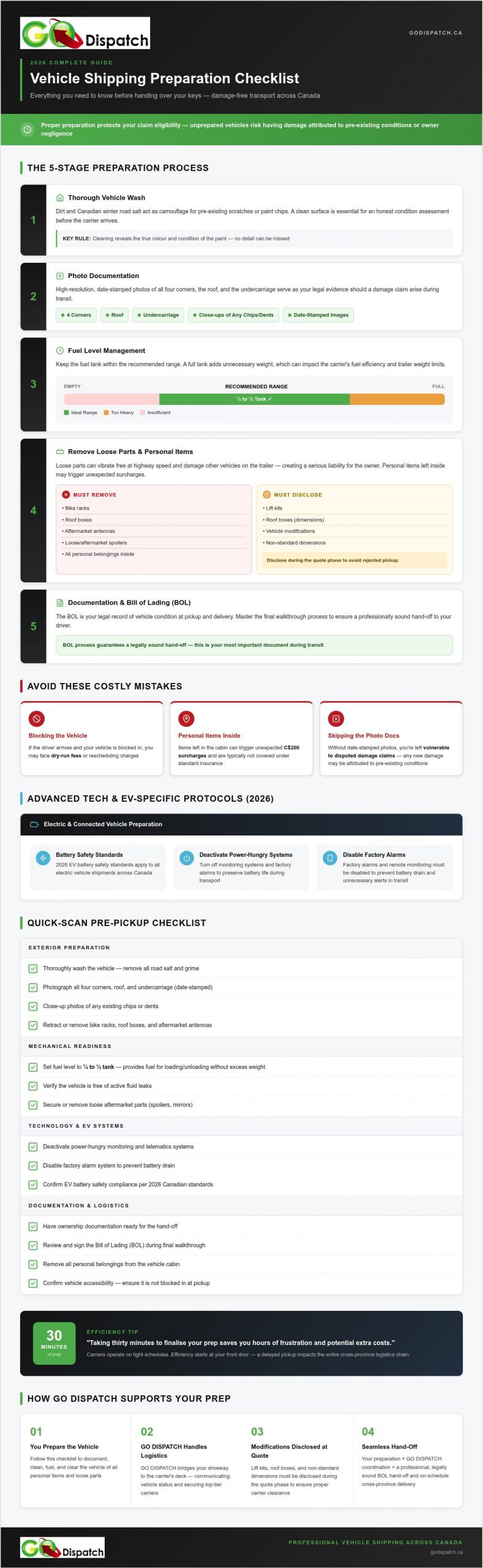
Preparation is the foundation of every successful cross-province move. When you follow a strict vehicle shipping preparation checklist 2026, you aren’t just doing the carrier a favour; you’re protecting your own investment. Thorough preparation ensures your vehicle is ready for the rigours of the road and confirms your insurance claim eligibility. If a vehicle isn’t properly prepped, any damage that occurs might be attributed to pre-existing conditions or owner negligence. High-quality preparation allows the logistics chain to move faster and keeps your car, truck, or SUV safe from pickup to delivery.
Avoiding Damage Claims and Loading Delays
A clean car is your best defence against disputes. Carriers perform a detailed inspection at pickup, and layers of Canadian winter salt or road grime can hide small chips or dents. If the driver can’t see the surface, they can’t document its true state. This leaves you vulnerable if new damage occurs during transit. Additionally, you must secure or remove all loose parts like aftermarket spoilers, bike racks, or loose mirrors. These items can vibrate loose and damage other vehicles on the trailer, creating a liability nightmare for the owner. It’s about safety for your vehicle and every other car sharing the deck.
Loading delays carry a real cost. Carriers operate on tight schedules to keep transport efficient across the country. If a driver arrives and your vehicle is “not ready” because it’s blocked in or full of personal items, you may face dry-run fees or rescheduling charges. Taking thirty minutes to finalize your prep saves you hours of frustration and potential extra costs later. Efficiency starts at your front door.
The Role of Dispatch in Your Prep Journey
While you handle the physical car, GO DISPATCH handles the logistical heavy lifting. We act as your primary point of contact, communicating your vehicle’s exact status to the professional hauler. This coordination is why transparency about vehicle modifications is so critical. If your truck has a lift kit or your SUV has a roof box, we need to know during the quote phase. This ensures the carrier has the right clearance on their trailer and avoids a rejected pickup.
Think of your dispatcher as a specialized resource for vehicle delivery logistics Canada. We bridge the gap between your driveway and the carrier’s deck. When you use a vehicle shipping preparation checklist 2026, you provide us with the data we need to secure top-tier carriers who prioritize safety. Your preparation allows us to prep the logistics, ensuring a seamless hand-off that keeps your move on schedule and your vehicle secure.
The 2026 Exterior and Mechanical Preparation Checklist
Physical preparation transforms your car from a liability into a ready-to-move asset. This vehicle shipping preparation checklist 2026 starts with a simple but essential step: a thorough wash. Cleaning your vehicle isn’t about aesthetics. It’s about visibility. Dirt and road salt act as camouflage for pre-existing scratches or paint chips. You need a clear surface to conduct an honest assessment before the carrier arrives. Cleaning your vehicle reveals the true colour and condition of the paint, ensuring no detail is missed. If you need help understanding how these steps impact your specific move, request a professional shipping quote to see how we manage these logistics.
Cleaning and Damage Inspection Protocols
Once the car is clean, start your documentation. Use your smartphone to take high-resolution photos of all four corners. Don’t forget the roof and the undercarriage. These images must be clear and date-stamped to serve as your evidence should a claim arise. If you notice a chip or dent, take a close-up photo. Professional carriers appreciate this transparency. It builds trust and speeds up the loading process. You must also remove or retract non-permanent features. Bike racks, roof boxes, and aftermarket antennas should be stored safely inside your home. These items are often excluded from standard insurance coverage and can cause damage to other vehicles if they vibrate loose on the highway.
Fluid Levels and Fuel Requirements
Mechanical readiness is just as vital as a clean exterior. Check your fuel gauge. You should keep the tank between 1/4 and 1/2 full. This provides enough fuel for the driver to load and unload the vehicle while keeping the overall weight manageable. A full tank adds unnecessary weight to the trailer, which can impact the carrier’s fuel efficiency and weight limits. While specific vehicle import safety standards govern cross-border moves, these safety principles are standard for any professional Canadian hauler.
Verify that your vehicle is free of active leaks. Oil, coolant, or brake fluid dripping from your car can damage the paint of vehicles loaded below yours on a multi-car trailer. If your car has a known leak, you must disclose this to your dispatcher before pickup. Ensure the battery is healthy and fully charged. The driver needs to start the vehicle multiple times during the loading and unloading process. Finally, check your tire pressure. Properly inflated tires ensure the vehicle stays securely strapped to the deck. A vehicle that won’t start or has flat tires requires specialized equipment, which can lead to significant delays and added costs.
Documentation and Personal Item Removal
Handing over your vehicle is a legal transaction that requires precise documentation. This stage of the vehicle shipping preparation checklist 2026 focuses on administrative clarity and risk reduction. You must ensure the driver has everything they need to legally move your asset across provincial lines. Simultaneously, you need to protect yourself from “phantom” toll charges and the loss of personal property. Taking twenty minutes to clear your car now prevents hours of frustration later.
Essential Paperwork for Cross-Province Hauling
Start by organizing your vehicle registration and valid proof of insurance. The carrier needs these documents to verify ownership and comply with Transport Canada vehicle regulations during transit. You should also have a valid photo ID ready at the pickup location to confirm your identity to the driver. Before the truck arrives, take a moment to review the vehicle transport insurance requirements to understand the scope of the carrier’s liability. Having these papers in order prevents last-minute delays and ensures a professional hand-off. It’s about creating a clear paper trail for your peace of mind.
Clearing Out Personal Belongings and Accessories
It is a common mistake to treat a car like a moving box. However, household items are strictly prohibited in vehicles during national transport. This isn’t just a carrier preference; it’s a matter of safety and weight compliance. Items left inside can shift during transit, causing interior damage that won’t be covered by insurance. Additionally, carrier insurance typically only covers the vehicle itself, not its contents. If your laptop or golf clubs are stolen or damaged, you will likely have no recourse for recovery. A clean interior ensures the driver can safely operate the vehicle during loading.
Clear out the glovebox and centre console entirely. Remove aftermarket electronics like GPS units, dash cams, and radar detectors. These items are high-value targets for theft and can become dangerous projectiles if a sudden stop occurs. Finally, don’t forget your automated toll tags and parking passes. If you leave a transponder on the windshield, it may be triggered by toll gantries while the vehicle is on the trailer. This leads to frustrating charges that are difficult to dispute later. A completely empty car is a safe car. Double-check under the seats for forgotten valuables before you lock the doors for the final time.
Advanced Tech and EV-Specific Shipping Protocols
Modern vehicle transport involves more than just mechanical checks. As we move through 2026, cars have become sophisticated computers on wheels. This segment of your vehicle shipping preparation checklist 2026 focuses on the advanced tech that can complicate a move if left unmanaged. Smart systems designed to protect your vehicle on the street can often work against you during a cross-province haul. Proper digital preparation ensures your battery remains healthy and the carrier can manage the vehicle safely at every terminal.
Managing Smart Systems and Alarm Deactivation
Deactivate your factory car alarms before the transport truck arrives. The constant vibrations and swaying of a trailer on the highway will trigger most motion sensors. This leads to a drained battery at the destination and unnecessary noise for the driver. You must also disable power-hungry features like “Sentry Mode” or other active smart monitoring systems. These active smart systems can interfere with a carrier’s loading process by automatically engaging electronic brakes or anti-roll features while the driver is trying to secure the vehicle on the deck.
If your vehicle uses proximity keys or “Phone as Key” technology, you should disable these features for the duration of the move. When a smart vehicle is loaded near the front of a trailer, it may “wake up” every time the driver approaches the cab with their own devices. This creates a constant power draw that can leave you with a dead battery upon delivery. Clear instructions for “Transport Mode” should be provided to the driver. This mode usually suspends air suspensions and electronic locks, making the loading process much smoother for everyone involved.
Electric Vehicle (EV) Battery and Charging Standards
Electric vehicles require specific battery management to meet 2026 safety standards. Aim for a State of Charge (SoC) between 45% and 55% at the time of pickup. Shipping an EV at 100% charge is often restricted by safety regulations due to the increased risk of thermal events. Conversely, shipping with a nearly depleted battery is dangerous. Cold Canadian temperatures can cause a low battery to “brick” or lose its ability to hold a charge if the transit takes several days. A balanced SoC protects the battery’s long-term health while providing enough power for loading and unloading.
Always inform your dispatcher if your vehicle requires specialized charging at a terminal during a multi-stage move. We coordinate the logistics to ensure your EV is handled by carriers who understand these specific requirements. Contact GO DISPATCH today to discuss your specific EV transport needs and ensure your high-tech vehicle is fully prepared for its journey. We handle the logistical prep while you focus on the digital settings.
Executing a Seamless Pickup with GO DISPATCH
The pickup day is the culmination of your hard work. Your vehicle shipping preparation checklist 2026 ensures you are ready for the driver’s arrival. This isn’t just about handing over keys; it’s about a professional transfer of responsibility. Your dispatcher remains your primary point of contact during this critical window. We ensure the transition from your driveway to the carrier’s deck is fast, efficient, and fully documented. This final step confirms that your vehicle is legally and physically ready for its journey across Canada.
Working with Your Dedicated Dispatcher
We provide you with a specific pickup window and the driver’s contact information well in advance. If your final preparation reveals a sudden mechanical issue, don’t panic. Contact us immediately. We act as your professional advocate, coordinating with the carrier to adjust the schedule or find a solution that keeps your move on track. Understanding car transport brokerage fees helps you realize that our service includes this proactive problem-solving. At GO DISPATCH, we manage the behind-the-scenes logistics so you can focus on your own move.
Final Inspection and the Bill of Lading
When the driver arrives, perform a final walkthrough together. This is the moment to review the driver’s condition report. Ensure every existing mark, scratch, or dent you documented earlier is clearly noted on the Bill of Lading (BOL). This document is your primary legal protection. It serves as both a contract and a receipt for your vehicle. Never sign a blank or incomplete BOL. If the driver notes something you disagree with, discuss it immediately before the vehicle is loaded.
Once the inspection is complete and the document is signed, keep a physical and digital copy. Take a high-resolution photo of the signed BOL with your phone. This ensures you have the record even if the paper copy is misplaced during your own travels. Maintaining contact with your dispatcher during the transit period provides peace of mind. We monitor the progress of your car, truck, or SUV as it moves between provinces. Your thorough preparation ensures a seamless hand-off, allowing you to hand over the keys with total confidence.
Ready for Your Cross-Province Move
Shipping your vehicle shouldn’t be a source of stress. By following this vehicle shipping preparation checklist 2026, you’ve taken the most important steps to protect your investment. You’ve learned how to document your car’s condition, manage advanced EV tech, and prepare the necessary paperwork for a legal, seamless hand-off. These small actions prevent loading delays and safeguard your insurance eligibility across the country.
Now that your car is ready, let us handle the logistical heavy lifting. GO Dispatch provides national Canadian coverage and expert dispatching for cars, trucks, and SUVs. We are logistics specialists for dealership inventory and individual moves alike. Our team acts as your dedicated advocate, connecting you with top-tier carriers who prioritize safety. We take the complexity out of the process so you can focus on your own schedule.
Get a Professional Auto Transport Quote from GO Dispatch today to start your move with confidence. You’ve done the work to prep your vehicle; we’ll do the work to move it. Safe travels.
Frequently Asked Questions
Do I need to have a full tank of gas before shipping my car?
No, you should aim for approximately 1/4 to 1/2 tank of fuel. A full tank adds significant weight to the transport trailer, which can impact the carrier’s weight limits and fuel efficiency. Keeping the level at 1/4 provides enough fuel for the driver to safely load and unload the vehicle at various terminals. This balance ensures your car is ready to drive upon delivery without creating unnecessary logistical weight challenges.
Can I leave my winter tires inside the vehicle during transport?
Generally, you should not leave extra tires or heavy parts inside the cabin or trunk. Most professional carriers prohibit household items and spare parts due to strict weight regulations and safety concerns. Loose tires can shift during transit, causing damage to your interior upholstery or windows. If you must transport a second set of tires, you need to disclose this to your dispatcher during the quoting process to avoid a rejected pickup.
What happens if my car does not start on the day of pickup?
You must notify your dispatcher immediately if your vehicle becomes inoperable. Non-running vehicles require specialized equipment, such as winches or forklifts, to be safely loaded onto a trailer. If the driver arrives and finds the car won’t start without prior notice, they may charge a dry-run fee or cancel the pickup entirely. Transparency ensures we can coordinate the right carrier with the correct equipment to handle your specific mechanical situation.
Does the car transport company insurance cover my personal items?
No, the carrier’s insurance policy typically only covers the vehicle itself and not any contents left inside. This is a critical point in the vehicle shipping preparation checklist 2026 because personal items are shipped at the owner’s risk. Most policies specifically exclude electronics, tools, and household goods from coverage. To protect your belongings and avoid potential theft or damage, you should remove all personal property before the transport truck arrives.
How far in advance should I start the vehicle shipping preparation checklist?
You should start working through your vehicle shipping preparation checklist 2026 at least 7 to 10 days before your scheduled pickup. This timeline allows you to wash the exterior, perform a mechanical check, and document the vehicle’s condition with high-resolution photos. Starting early also gives you time to organize your registration and insurance paperwork. Rushing these steps on the day of pickup often leads to missed details and unnecessary stress during the hand-off.
Are there special requirements for shipping a lifted truck or modified SUV?
Yes, you must provide the exact height, width, and length of any modified vehicle to your dispatcher. Lifted trucks and SUVs with aftermarket roof racks or oversized tires often require specialized trailers with higher clearance. If these modifications aren’t disclosed during the initial quote, the assigned carrier may not have the physical space to load your vehicle. Accurate measurements ensure we secure a hauler capable of transporting your modified vehicle safely across provincial lines.
What is a Bill of Lading and why is it important for preparation?
The Bill of Lading (BOL) is the legal contract and condition report between you and the transport company. It is the most important document in the preparation process because it records the vehicle’s state at the moment of pickup. You and the driver will walk around the car to note any existing scratches or dents. This document protects your interests by providing a clear baseline if you need to file an insurance claim after delivery.
Should I wash my car before the transport driver arrives?
Yes, a clean car is essential for a successful initial inspection. Layers of road salt, mud, or dust can easily hide small paint chips and scratches. If the vehicle is dirty, the driver will often note “vehicle dirty” on the Bill of Lading, which can make it very difficult to prove that new damage occurred during transit. A quick wash ensures that the surface is clear and all pre-existing conditions are accurately documented.