
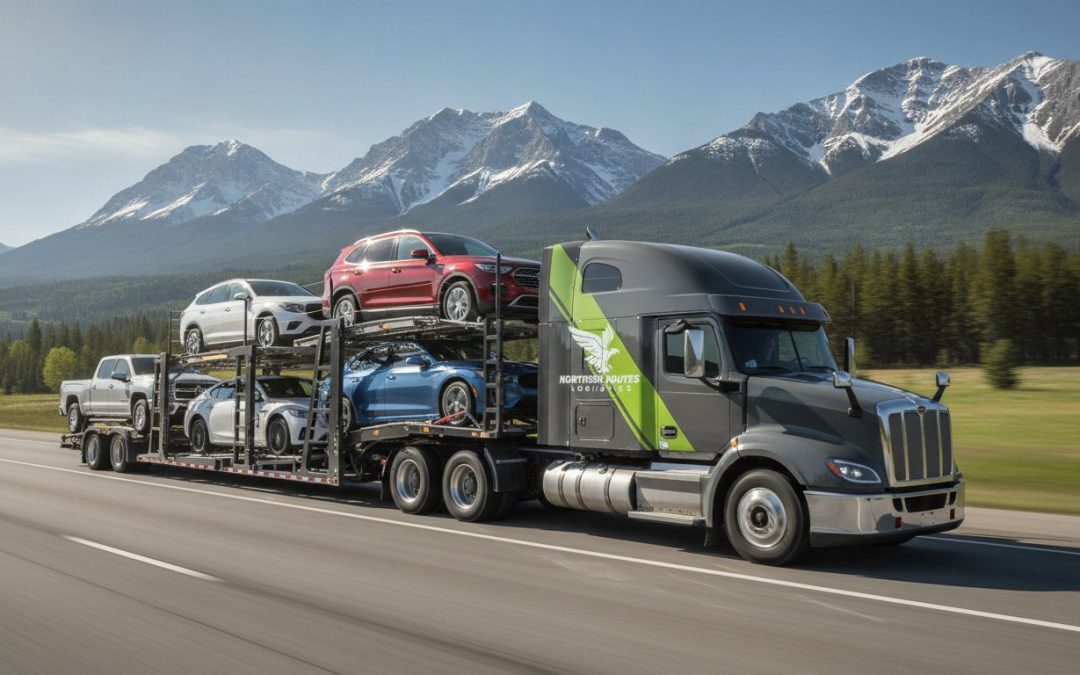
The most expensive part of hiring vehicle transportation services isn’t the fuel; it’s the cost of a broken promise. You’ve likely heard the stories of carriers who stop answering the phone or surprise you with hidden fees at the delivery point. It’s a heavy burden to manage when you’re already balancing a busy schedule. You deserve a logistics partner that values your time and your vehicle as much as you do.
Professional hauling should eliminate your stress, not add to it. This 2026 logistics guide helps you realize a faster, safer way to move your car, truck, or SUV across Canada. You’ll discover how a one-stop dispatching service streamlines national transport while ensuring every carrier is verified and fully insured. We’ll walk you through the latest industry standards and show you how to secure clear communication from pickup to drop-off. It’s time to trade shipping anxiety for a predictable, professional experience that puts you first.
Key Takeaways
- Learn how professional vehicle transportation services act as a one-stop dispatching hub to coordinate national hauling for cars, trucks, and SUVs.
- Distinguish between open-air transport for standard efficiency and enclosed hauling to protect high-value or exotic vehicles.
- Understand the critical role of a professional dispatcher in vetting carriers and managing the human element of logistics to reduce your daily burden.
- Master the vehicle preparation process, from documenting condition to navigating the essential details of a Bill of Lading.
- Gain insights into the 2026 Canadian logistics landscape to ensure you receive accurate quotes and timely delivery across the country.
What are Professional Vehicle Transportation Services?
Professional vehicle transportation services are the logistical backbone of the Canadian automotive market. This service is much more than a simple tow across town. It’s a specialized system designed to move cars, trucks, SUVs, and vans across thousands of kilometres of varied terrain. Whether you’re relocating for a new job or shipping a fleet of commercial vans, professional hauling ensures your assets move with precision. You aren’t just paying for a spot on a trailer. You’re investing in a coordinated strategy that protects your vehicle from the moment it leaves your driveway.
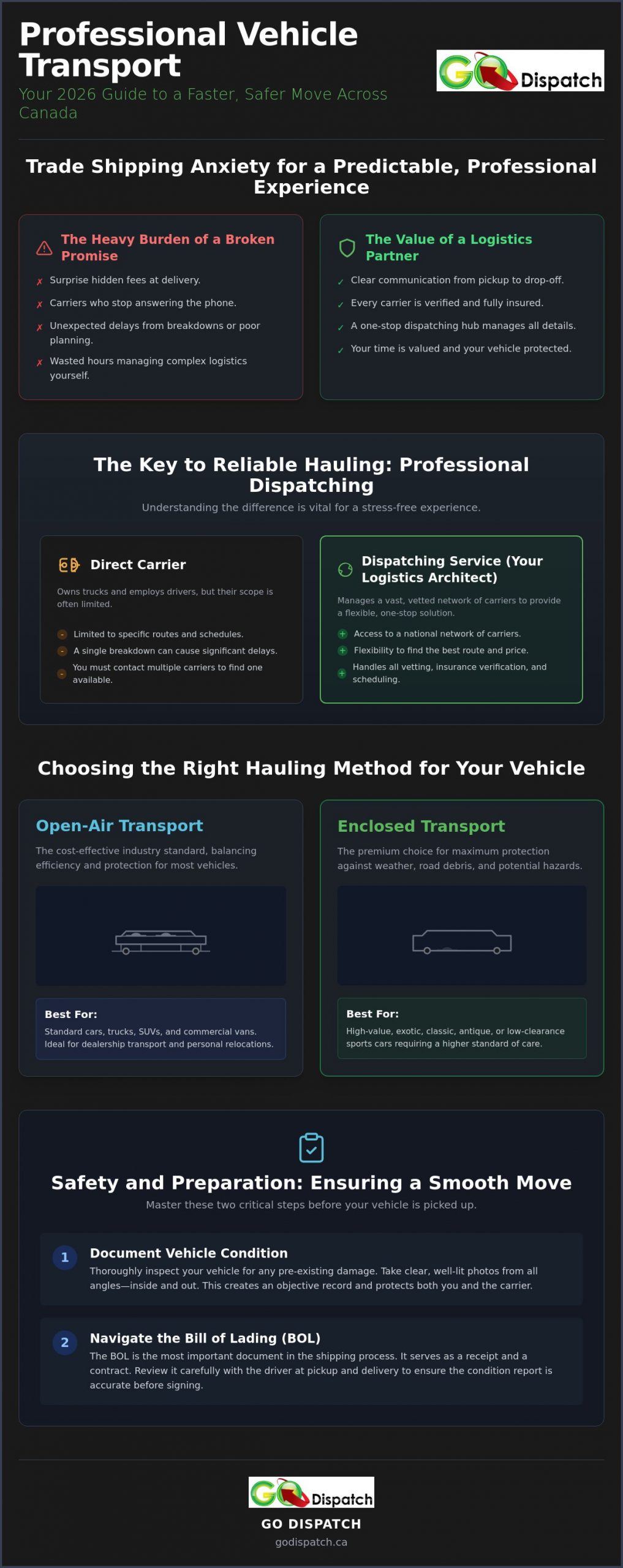
In Canada, the distinction between a direct carrier and a dispatching service is vital. A direct carrier owns the physical trucks and employs the drivers. While they are essential, their scope is often limited to specific routes. If a truck breaks down or a route is blocked, your schedule suffers. A professional dispatching service, acting as an Auto transport broker, offers a much broader solution. They manage a vast network of verified carriers. They provide the flexibility to find the best route. They ensure you have the right equipment for your specific vehicle type.
The Role of a Dispatching Service
Think of a dispatcher as your personal logistics architect. They act as the central hub for your entire transport experience. Instead of you spending hours calling different carriers to check availability, a dispatcher does the heavy lifting. They provide a one-stop solution that simplifies national logistics. They vet every driver. They verify insurance minimums. They handle the complex scheduling required for long-haul moves. By outsourcing these tasks, you save valuable time. You focus on your core business while the experts manage the behind-the-scenes details. It’s a simple way to reduce your daily burden.
National Reach and Logistics
Moving a vehicle from the Maritimes to British Columbia involves more than just driving. It requires a deep understanding of provincial regulations, seasonal weather patterns, and fuel costs. National vehicle transportation services coordinate these moves across every province with a focus on efficiency. They use high-capacity networks to ensure your car or truck doesn’t sit in a terminal for weeks. This coordinated effort leads to timely arrivals and clear communication. It’s about providing a reliable result through a proven, human-centric approach to logistics. Your vehicle arrives on time. Your schedule stays intact. Your stress disappears.
Choosing the Right Hauling Method for Your Vehicle
Selecting the right hauling method is a balance between your budget and the level of protection your vehicle requires. Most vehicle transportation services offer two primary options: open-air and enclosed transport. Each serves a specific purpose. Your choice depends on the vehicle’s value, its vulnerability to weather, and your personal peace of mind. For a daily driver, efficiency is often the priority. For a classic restoration, safety is the only metric that matters.
The cost-to-protection ratio is the most important factor to weigh. Open transport offers the best value for standard moves. Enclosed transport provides a premium shield for rare or expensive assets. You should evaluate your vehicle’s specific needs before booking. A heavy-duty work truck has different requirements than a low-clearance sports car. Making the right choice early ensures a smooth, predictable experience with no surprises at the delivery point.
Open Car Hauling: The Industry Standard
Open transport is the backbone of the automotive industry. It’s the method dealerships use most frequently because it’s cost-effective and highly available. These multi-car trailers can carry up to ten vehicles at once. This high capacity translates to faster scheduling and lower costs for you. While the vehicle is exposed to the elements, professional carriers use strategic loading patterns to minimize risk. It’s a practical, reliable choice for standard cars and trucks moving across the country. If you need to move a standard commuter vehicle, you can request a quote for open transport to see how affordable national hauling can be.
Road exposure is a common concern for first-time shippers. However, the risk of damage on an open trailer is statistically similar to driving the vehicle yourself on the highway. Modern trailers are designed with specialized tie-down systems that keep the vehicle stationary. This prevents shifting during transit. For most Canadians, the savings of open transport far outweigh the minor risk of road dust or rain.
Enclosed Transport for Specialized Needs
High-value assets require a higher standard of care. Enclosed hauling provides a sealed environment that protects your vehicle from road debris, hail, and extreme Canadian winters. This is the preferred method for luxury SUVs, exotic sports cars, and vintage collectibles. The trailers are often equipped with hydraulic lift gates. These gates allow for level loading, which is essential for vehicles with low ground clearance. You aren’t just paying for a box; you’re paying for specialized equipment and drivers trained in handling delicate cargo.
When moving vehicles across borders or long distances, compliance is just as important as the trailer type. You should always review the Transport Canada vehicle import regulations if your move involves bringing a specialized vehicle into the country. Understanding these rules ensures your high-value transport isn’t delayed at the border. Enclosed transport offers the ultimate peace of mind. It ensures your vehicle arrives in the exact same condition it was in when it left your sight. It’s a premium investment in your vehicle’s longevity and value.
Why Professional Dispatching is the Key to Reliable Hauling
Finding a truck is easy, but managing a successful move is complex. Many people turn to unvetted marketplace apps to save a few dollars, but this often leads to poor communication, missed windows, and zero accountability. Reliability in vehicle transportation services depends on active management. A professional dispatcher acts as your single point of contact. They handle the difficult conversations and logistical hurdles so you don’t have to. You get the peace of mind that comes from knowing a human expert is overseeing your vehicle’s journey from start to finish.
Operating a national fleet requires strict adherence to federal laws. Every professional carrier must comply with the Motor Vehicle Transport Act, which governs safety standards for interprovincial transport. A professional dispatch service verifies these safety fitness certificates before a single car is loaded onto a trailer. This managed brokerage fee isn’t just an extra cost; it is an investment in your vehicle’s safety and your own business continuity. It ensures that every driver in the network meets the high standards required for national hauling.
Vetting and Carrier Selection
The process of sourcing a reliable carrier is rigorous and methodical. We don’t just pick the first available driver. We analyze performance history and safety records to ensure only the best handle your assets. This vetting process includes verifying insurance minimums and checking equipment quality. We match the specific requirements of your vehicle, whether it’s a standard sedan or a heavy-duty truck, with a carrier that has the right trailer and experience. This precision prevents delays and ensures a safe arrival every time.
Inventory Relocation for Dealerships
For automotive businesses, timing is everything. Efficient dealership auto transport logistics allow you to move inventory between locations to meet specific sales targets. You shouldn’t have to worry about how a car gets to a buyer three provinces away. Professional dispatching provides scalable solutions for multi-vehicle needs. Whether you are moving a single SUV or a full load of vans, the process remains streamlined and predictable. This allows your team to focus on selling while we handle the national logistics chain.
Safety and Preparation: Ensuring a Smooth Move
Safety in transit begins long before the carrier arrives at your door. It’s a structured process that protects your investment and ensures a smooth handover. Professional vehicle transportation services rely on a crucial document called the Bill of Lading. This isn’t just a receipt. It’s a legally binding contract and a detailed condition report. It records every existing scratch or dent. This document is your primary protection if a claim arises. A professional dispatcher helps you organize the logistics of this paperwork. They ensure every detail is accurate. They close the gaps that lead to disputes.
Insurance Requirements for Vehicle Transport
A carrier’s insurance policy is your safety net. You should always look for comprehensive cargo insurance that covers the full value of your vehicle. However, verifying these limits can be a complex task for an individual. This is where a dispatcher provides essential value. We verify the carrier’s coverage limits before they are ever assigned to your move. We check for active policies. We confirm that the insurance meets 2026 industry standards for national hauling. This proactive vetting protects your car, truck, or SUV during its journey across Canada. You can book your transport with confidence knowing your asset is fully protected by a verified carrier.
Preparing the Vehicle Internally and Externally
Preparation is a shared responsibility. You must remove all personal items from the interior. Most carriers are not licensed to transport household goods inside a vehicle. Secure any loose parts like bike racks or custom spoilers. We recommend keeping the fuel level at approximately one quarter tank. This reduces weight while allowing the driver to move the vehicle on and off the trailer safely.
Clean your vehicle before the pickup date. A clean car makes the pre-transport inspection much more effective. You should document the vehicle’s condition with high-resolution photos from every angle. Include the roof and the lower bumpers. These photos serve as a digital timestamp of the car’s state. When the carrier arrives, compare your photos to the Bill of Lading. This simple step creates a transparent record. It ensures total clarity for everyone involved. It turns a complex logistical task into a simple, manageable routine. You realize peace of mind through preparation.
Navigating National Vehicle Logistics in 2026
2026 has redefined the standards for national hauling across the country. The evolution of vehicle delivery logistics in Canada has brought a new level of precision to the industry. You now benefit from better coordination and more transparent tracking than ever before. Requesting an accurate quote is the first step in this modern process. You simply provide the vehicle details and the route. We provide a solution that fits your timeline. It’s a straightforward approach designed to eliminate guesswork and get your car or truck moving quickly.
Setting realistic expectations for transit times is vital for a stress-free experience. Canada is vast. A move from Toronto to Calgary involves thousands of kilometres of highway and varying weather patterns. Professional vehicle transportation services manage these variables to keep your delivery on schedule. When the carrier arrives at the destination, the offloading process is quick and professional. You’ll perform a final walk-around inspection. You’ll sign the Bill of Lading to confirm the safe arrival. This final step completes the logistics chain with total clarity.
Understanding the Cost Factors
Several variables influence the final vehicle transport cost in Canada. Distance is a primary factor, but vehicle size and the current season also play significant roles. A large van or heavy truck requires more space and fuel than a compact car. Shipping during peak seasons can also impact availability and pricing. You must balance your need for speed with your total budget. While a low price is tempting, the cheapest option rarely provides the safety and insurance coverage you deserve. Quality logistics is an investment in the protection of your asset.
Getting Started with GO DISPATCH
Our one-stop dispatching service is built to simplify your workload. We act as your proactive problem-solver. We handle the carrier vetting. We manage the complex scheduling. We ensure every detail is covered behind the scenes. This allows you to focus on your own life or business while we handle the heavy lifting. Booking your next move is as easy as a quick phone call or an email. We’ll help you finalize your transport schedule for maximum efficiency and total peace of mind. Your vehicle is a major investment. We treat it like one. Let us show you how professional vehicle transportation services make national hauling a simple, predictable reality.
Master Your National Move with Confidence
Navigating the Canadian landscape requires more than just a truck. It requires a coordinated strategy that prioritizes safety and clear communication. You now understand how professional dispatching bridges the gap between unvetted carriers and a reliable, one-stop experience. From choosing between open and enclosed hauling to mastering the Bill of Lading, every step you take builds a more predictable outcome for your car, truck, or SUV.
The future of vehicle transportation services in 2026 is about efficiency and human-centric support. You don’t have to manage the complexities of provincial regulations or carrier vetting on your own. By choosing a partner with a verified national carrier network, you’ll realize the benefits of a reduced workload and ensure your vehicle arrives exactly as expected. It’s time to trade shipping anxiety for professional results and one-stop logistics management.
Streamline your logistics today with GO DISPATCH and experience the ease of expert dispatching for cars, trucks, and SUVs. We take pride in handling the behind-the-scenes details so you can focus on your own priorities. Let’s get your vehicle on the road safely.
Frequently Asked Questions
What is the difference between a car transport broker and a carrier?
A dispatcher or broker acts as the logistical architect who sources and manages the carrier on your behalf. The carrier is the entity that physically owns the trucks and performs the hauling. Using a dispatcher provides a one-stop solution and access to a wider network of verified drivers. It ensures your move isn’t limited by a single company’s specific route availability.
How long does it typically take to transport a vehicle across Canada?
Transit times vary based on the total distance and the specific route requirements. A cross-country move from Halifax to Vancouver typically takes between 10 to 14 days. Shorter interprovincial moves might take 3 to 7 days. These timelines allow for safe driving speeds and mandatory rest periods for drivers under Canadian road safety regulations.
Is my vehicle insured while it is on the trailer?
Yes, every vehicle is insured while it is on the trailer. Professional vehicle transportation services verify that carriers maintain high-limit cargo insurance policies. This coverage protects your asset against transit-related damage from the moment of pickup until the final delivery. We verify these insurance certificates as part of our rigorous vetting process to ensure total peace of mind.
Can I ship personal items inside my car during transport?
You should not ship personal items inside your car during transport. Most carriers are not licensed to transport household goods; doing so can lead to delays or fines at provincial weigh stations. Items left inside aren’t covered by the carrier’s cargo insurance and can shift during transit, which potentially causes interior damage to your vehicle.
What happens if my vehicle is damaged during the hauling process?
If you notice damage upon delivery, you must document it immediately on the Bill of Lading. Take clear photos of the new damage before the driver leaves the site. Contact your dispatcher right away to begin the claims process. Having a professional dispatcher simplifies this experience; they act as your advocate to ensure the carrier’s insurance handles the repair costs efficiently.
Do you offer door-to-door vehicle transportation services?
We coordinate door-to-door service whenever the pickup and delivery locations are accessible by a large transport trailer. If your street has narrow corners or low-hanging trees, the driver will arrange a meeting at a nearby open parking lot. This ensures the safety of your vehicle and the equipment. It’s a standard practice that maintains efficiency for national hauling across Canada.
How are vehicle transportation fees calculated in 2026?
Fees are calculated based on four primary factors: total distance, vehicle size, the season, and the type of trailer used. Larger vehicles like SUVs or heavy trucks take up more space and increase fuel consumption. Seasonal demand and weather conditions also impact the current market rate. A professional dispatcher provides a transparent quote that includes all these variables with no hidden fees.
Can you coordinate the transport of multiple vehicles at once?
Yes, we can easily coordinate the transport of multiple vehicles at once for individuals or businesses. Whether you are moving a fleet of dealership SUVs or two family cars, our network of vehicle transportation services can handle the volume. We match your needs with high-capacity multi-car trailers to ensure all your vehicles arrive together on a predictable, organized schedule.