
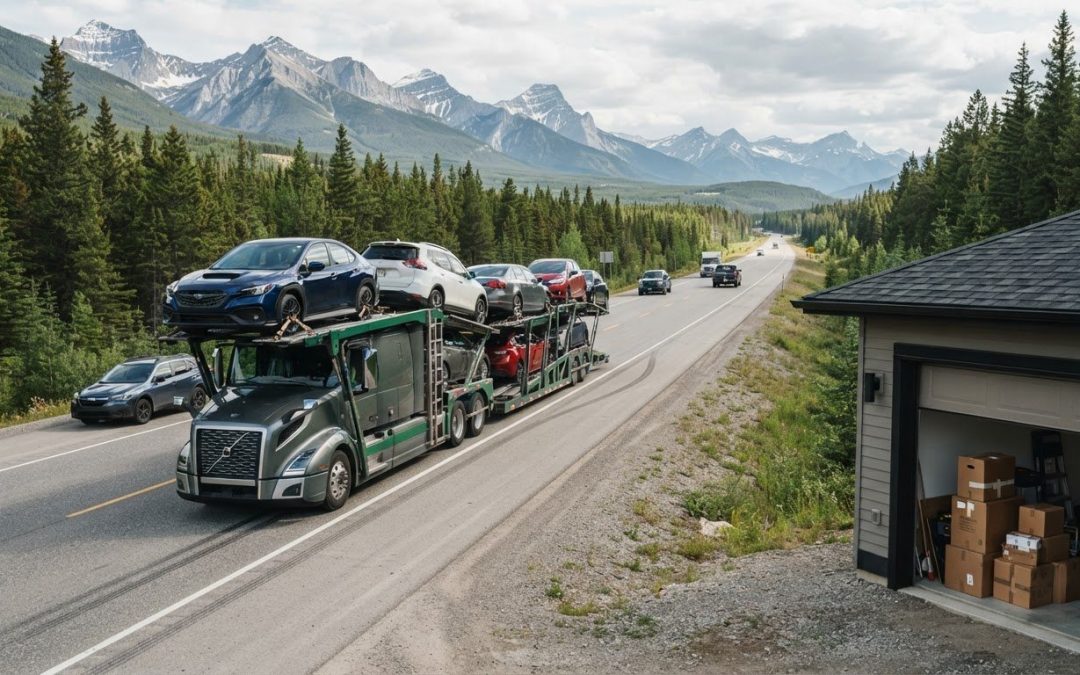
Driving your car yourself may seem like the simplest option, but a long-distance move can turn it into a second trip to plan. If you’re weighing shipping my car for a long-distance move against driving it, the right choice depends on your schedule, route and how much travel you want to add to moving week.
It’s normal to worry about fitting vehicle pickup and delivery around your move dates, or knowing what to confirm before you book. Planning ahead can help you choose an option that suits your move and avoid preventable surprises.
This guide compares driving with carrier transport, then covers what to confirm before booking: your vehicle’s condition, pickup and delivery arrangements, timing, and the questions to ask a carrier or dispatch service. A dispatch service can coordinate with third-party carriers and manage transport logistics and scheduling. Confirm route availability, timing expectations and insurance details for your specific move before making plans.
Key Takeaways
- Compare driving, open-carrier transport and enclosed-carrier transport against your schedule, route and priorities.
- When considering shipping my car for a long-distance move, weigh the transport choice alongside your moving dates.
- Confirm pickup and delivery windows instead of assuming they’ll align exactly with your plans.
- Prepare vehicle details and documents, and follow the carrier’s instructions for the car and any belongings.
- Before arranging transport through a dispatch service, clarify who the carrier is and confirm route fit, scheduling and insurance details.
Shipping My Car for a Long-Distance Move: Is It the Right Fit?
Coordinating a car with a long-distance move adds dates, decisions and handoffs to manage. Driving gives you direct control over the trip, while arranging vehicle transport can keep the drive off your moving-week schedule. Neither option is automatically best. Consider your route, arrival plans and whether you have time to make the trip.
Arranged vehicle transport may suit you if driving the distance would take more time and effort than you can fit into your plans. Use that as a starting point, then compare the practical trade-offs for your circumstances.
When driving the car may make sense
Driving can work well if your schedule is flexible, you want the car with you during the journey and you can plan for overnight stops. Consider the time on the road, how rested you’ll need to be when you arrive, and whether your move-in or work dates leave room for the trip.
Think about who will drive and whether you need another vehicle at either end. If you want a second driver, confirm they’re available. Compare your expected fuel, lodging and vehicle-wear costs with a transport arrangement rather than relying on a generic estimate.
When arranging vehicle transport may fit better
Transport may be worth considering if you can’t make the drive, don’t want to spend moving week on the road, or need to focus on other responsibilities. Moving the car separately lets you plan your own travel and moving-day commitments without driving the vehicle to your destination.
Transport still requires coordination. Pickup and delivery dates may not match your household move dates, so ask about the available window for your route before planning around the car’s arrival. Carrier availability and timing need to be confirmed. A dispatch service can coordinate with a third-party carrier and manage scheduling, but it doesn’t haul the vehicle itself. For an overview of open or enclosed carriers, see how the trailers used to move vehicles differ.
When shipping my car for a long-distance move, first check what your schedule can accommodate. Then compare the time and effort of driving with the coordination involved in transport. The better fit is the option that works with your route, availability and moving dates.
How to Choose a Car-Shipping Option for a Long-Distance Move
Use your move dates, your vehicle’s needs and the work you’re prepared to manage as comparison points. Driving lets you choose the route and stops, but you’ll need to plan and complete the trip. Carrier transport separates your car’s journey from yours, while adding pickup and delivery arrangements to coordinate.
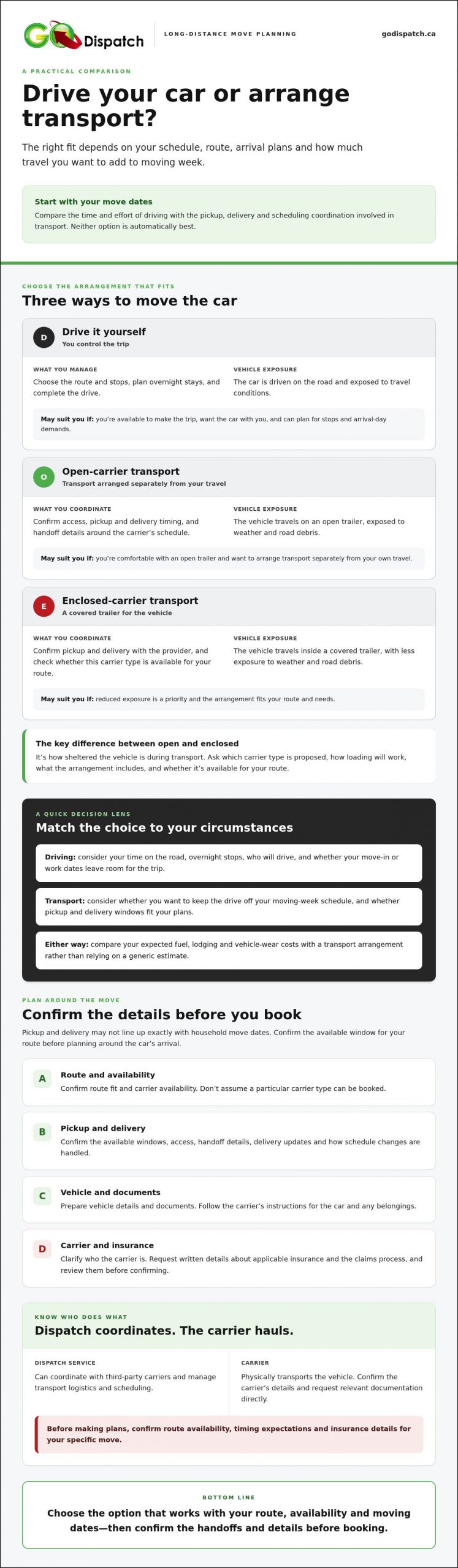
| Option | Control | Planning effort | Vehicle exposure | May suit you if… |
|---|---|---|---|---|
| Drive it yourself | You choose the route and stops. | You organize the trip and any overnight stays. | The car is driven on the road and exposed to travel conditions. | You’re available to make the trip and want the car with you. |
| Open-carrier transport | You arrange the handoff and coordinate around the carrier’s schedule. | You confirm access, timing and handoff details. | The vehicle travels on an open trailer, exposed to weather and road debris. | You’re comfortable with an open trailer and want to arrange transport separately from your own travel. |
| Enclosed-carrier transport | You coordinate pickup and delivery with the provider. | You confirm the arrangement and whether this carrier type is available. | The vehicle travels inside a covered trailer, with less exposure to weather and road debris. | Reduced exposure is a priority and the arrangement fits your route and needs. |
Open or enclosed transport: what should you compare?
The main practical difference is how sheltered the vehicle is during transport. An open trailer leaves it exposed to the elements, while an enclosed trailer provides a covered space. Neither is automatically the right choice for every vehicle or move. Ask which carrier type is proposed, how loading will work and what the arrangement includes. Confirm availability for your route instead of assuming a particular option can be booked.
Questions to ask before choosing a transport arrangement
Clarify who coordinates the booking and who physically transports the vehicle. A dispatch partner arranges transport with a carrier; the carrier hauls the car. Ask how pickup windows, delivery updates and schedule changes are handled. Request written details about the carrier’s applicable insurance and claims process, and review them before confirming.
For Canadian transport, verify the carrier’s details and request relevant documentation directly. GO DISPATCH coordinates vehicle transport with third-party carriers rather than operating its own carrier fleet. If you’re considering shipping my car for a long-distance move, review vehicle transport arrangements and confirm whether the service fits your route and needs.
Plan the Long-Distance Car Shipment Around Your Moving Dates
Start arranging transport once your move dates and the car’s availability are reasonably clear. This gives you time to check whether the route and schedule work together before you make plans around a particular pickup or arrival day.
Build a transport timeline that allows for coordination
Ask the provider how far ahead to request transport for your route. Don’t assume there’s a standard lead time or fixed delivery date. Share your origin and destination, vehicle details, preferred dates and how flexible you can be. The provider can use that information to check availability and explain timing expectations for your specific arrangement.
Use this sequence to keep the plan on track:
- Confirm your move dates and when the car will be ready.
- Request transport availability and ask about pickup and delivery windows.
- Compare the proposed windows with your travel and arrival plans before confirming.
- Allow for possible schedule changes and decide who could help with a handoff if you’re unavailable.
A confirmed delivery window gives you a practical basis for planning who will receive the car and when. Ask how updates will be shared and what to do if timing changes. Avoid relying on an unconfirmed date.
Coordinate the handoff and receiving arrangements
Confirm who will release the vehicle at pickup and who will receive it at the destination. If you’ll be travelling or occupied with the move, arrange for someone you trust to be available and give them the relevant contact details. Check with the provider that both handoff locations are accessible for the carrier.
Keep the agreed process and timing in your booking records. Make sure everyone involved knows what to expect and whom to contact if access, availability or timing changes. Clear handoff arrangements connect vehicle delivery to your move plan without assuming the car will arrive on a particular day.
Prepare Your Car and Documents Before the Carrier Arrives
Preparing in advance makes the handoff clearer and helps you keep important details together. Before shipping my car for a long-distance move, confirm the carrier’s instructions rather than relying on a general checklist. Requirements for vehicle condition, fuel level, keys and personal belongings can vary by arrangement.
What to confirm about vehicle condition and contents
Ask the carrier what condition the vehicle must be in, what fuel level they expect and whether personal belongings may remain inside. Follow the instructions you receive in writing. Don’t assume a common practice applies to your booking, especially if the vehicle has a mechanical issue that could affect loading.
- Remove or secure personal items as directed by the carrier.
- Take clear photos of the vehicle before handoff, including existing marks or damage.
- Keep the photos with your booking records and any vehicle-condition documents.
- At pickup, review the vehicle with the carrier and record its condition using the handoff process provided.
These records give you a reference if you need to discuss the vehicle’s condition later. Keep copies of relevant transport documents and messages confirming the arrangements.
Documents and handoff details to have ready
Before pickup, ask what identification, authorization or vehicle documents the carrier needs and who should have them available. Requirements may differ, so confirm instead of assuming you’ll need a particular document. Share accurate vehicle details and disclose known issues that could affect access, loading or transport.
Use this checklist to prepare:
- Confirm the vehicle details on the booking match the car being shipped.
- Gather the documents and identification the carrier specifically requests.
- Make sure the person releasing the car knows the agreed handoff plan.
- Save the booking confirmation, written instructions, contact details and condition photos together.
For a more detailed walkthrough, read how to prepare your car for professional transport. GO DISPATCH coordinates vehicle transport with third-party carriers. Learn about GO DISPATCH vehicle transport coordination and confirm whether the service fits your needs.
Arrange Long-Distance Car Shipping With a Dispatch Partner
A dispatch partner can reduce the coordination work involved in arranging vehicle transport. It connects you with a third-party carrier and helps manage carrier selection, logistics and delivery scheduling. The distinction matters: the carrier physically transports your vehicle, while the dispatch service coordinates the arrangement.
What a dispatch service coordinates
A dispatch service can help match your transport needs with a carrier and organize pickup and delivery details. GO DISPATCH coordinates third-party carriers for cars, trucks, SUVs and vans across Canada. It doesn’t operate the carrier or haul the vehicle itself. For broader context on planning transport handoffs, consider the steps involved in vehicle delivery logistics in Canada.
Before proceeding, ask who your point of contact will be, who is responsible for physical transport and how updates will be shared. Confirm which carrier has been assigned and request written information about applicable insurance documentation and the process for raising a concern or claim. Review the details for your specific booking instead of assuming they’re the same for every route.
Your next steps for requesting transport
Prepare the information a provider needs to assess whether the arrangement fits your move:
- Origin and destination, with any access considerations at either end.
- Vehicle make, model, size and operating condition.
- Your preferred pickup and delivery dates, plus any flexibility.
- Questions about route availability, expected timing, insurance documents and communication during transport.
Share those details, confirm service fit and availability, then review the proposed carrier and arrangements before scheduling. Ask how pickup and delivery windows are handled and what happens if dates need to change. Keep the confirmed details with your move records so everyone involved can refer to the same plan.
If you’re considering shipping my car for a long-distance move, a dispatch partner may help bring carrier selection and scheduling into one coordinated conversation. The right fit depends on your route and requirements, so confirm those before booking.
To discuss the details, contact GO DISPATCH about vehicle transport and confirm whether the service is available for your needs.
Make Your Vehicle Transport Plan With Confidence
The best way to move your car is the one that fits your route, schedule and capacity. Driving gives you control over the journey, while carrier transport separates the vehicle trip from your own. Either way, confirm pickup and delivery windows, clarify the carrier’s requirements and keep the agreed details in writing.
If shipping my car for a long-distance move is part of your plan, a dispatch partner can help coordinate the arrangements. GO DISPATCH works with third-party auto carriers, managing carrier selection, transport logistics and delivery scheduling. The carrier, not GO DISPATCH, physically transports the vehicle. Confirm route availability, timing expectations and applicable insurance details for your booking.
Ready to discuss your plans? Contact GO DISPATCH to discuss your vehicle transport plans and confirm whether the service fits your needs. With clear expectations and a plan that works alongside your move, you can approach the next steps with greater confidence.
Frequently Asked Questions
How do I ship my car when moving long distance in Canada?
Start by comparing driving with carrier transport, then confirm which option fits your route and move dates. If you arrange transport, share the vehicle details, origin, destination and preferred dates with a provider. Ask who will coordinate the booking and which third-party carrier will physically move the car. Confirm pickup and delivery windows, required documents, carrier instructions and applicable insurance details before agreeing to the arrangement.
Is it better to drive my car or ship it during a long-distance move?
Neither option is best for every move. Driving gives you control over the route and stops, but you’ll need time, a driver and plans for overnight travel if needed. Transport can help if you can’t or don’t want to make the drive, but it requires coordinating pickup and delivery separately. Compare your expected travel costs and availability, then consider how each option fits your move schedule.
How far in advance should I arrange long-distance car shipping?
Ask the transport provider how far ahead to request a booking for your route. There isn’t one lead time that applies to every move, since availability and scheduling depend on the specific arrangement. Contact a provider once your move dates and the car’s availability are reasonably clear. Share your preferred dates and flexibility, and leave room for changes rather than planning around an unconfirmed pickup or delivery day.
Can I pack personal belongings in a car I am shipping?
Don’t assume you can leave personal belongings in the vehicle. Carriers transport vehicles, and rules about items inside can vary by carrier and arrangement. Ask for the carrier’s written instructions before packing or handing over the car. Confirm whether anything may remain inside and how to handle items that must be removed. Following the specific instructions can help prevent confusion at pickup and avoid issues during transport.
What documents do I need to ship my car across Canada?
Ask the carrier what documents and identification are required for your booking. You may be asked for government-issued identification, vehicle registration or proof of insurance, but requirements can vary, so confirm rather than relying on a general checklist. Also clarify whether someone other than the vehicle owner can release or receive the car and whether authorization is needed. Keep requested documents and booking details accessible at handoff.
Is my car insured while it is being transported?
Confirm the applicable insurance directly with the carrier before transport. Ask for written details about coverage, limits, exclusions and how to report damage or make a claim. Don’t assume your personal auto insurance and the carrier’s coverage work the same way, or that a dispatch service provides the carrier’s insurance. Photograph the vehicle before pickup, review its condition at handoff and keep the records with your booking documents.
What happens if my car delivery date changes during a move?
Contact your transport provider as soon as you learn the delivery timing may change. Ask how schedule updates are communicated, whether the delivery window can be adjusted and who should be available to receive the car. Keep a backup plan, such as an authorized person who can meet the carrier if you’re travelling. Record revised arrangements in writing, and avoid relying on an estimated date as a confirmed appointment.