
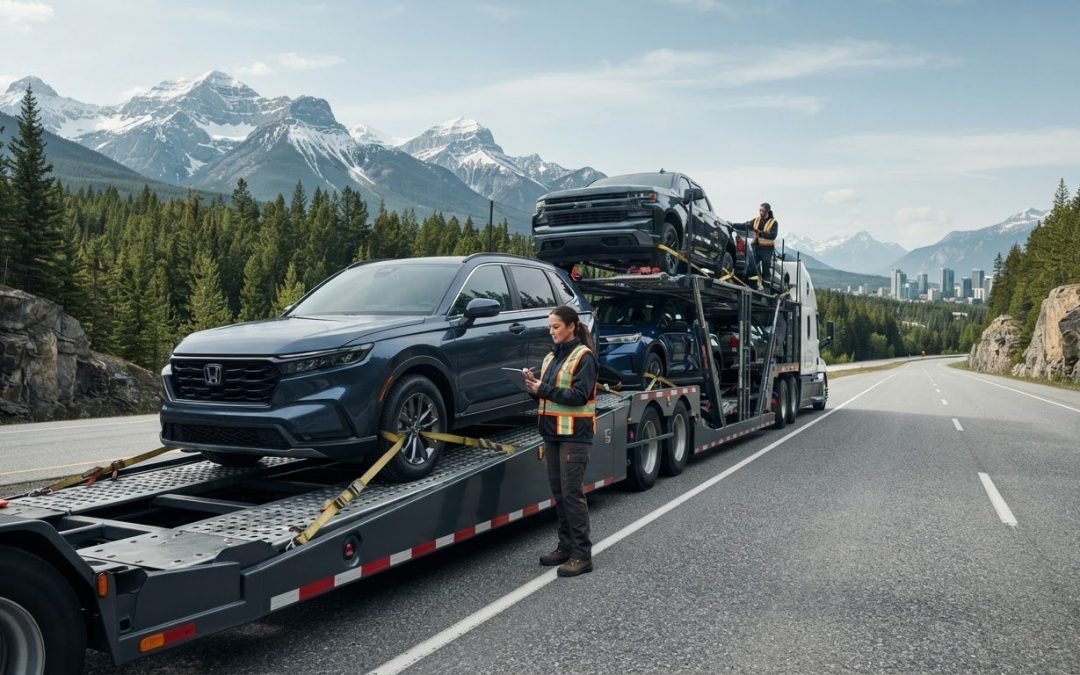
You finally found the perfect SUV three provinces away and clicked buy. The excitement is real. But then the logistics set in. Shipping a car bought online in Canada shouldn’t feel like a high-stakes gamble. You probably worry about transport damage or confusing provincial rules. It is exhausting to coordinate between a seller and a carrier while hoping for the best. You deserve a process that works for you, not against you.
We are here to simplify your life. This guide provides the exact roadmap you need to master the transport process safely and efficiently. You will learn how to navigate the 2026 logistics landscape, understand transparent pricing, and coordinate with vetted carriers for a damage-free delivery. We show you how to handle the behind-the-scenes details so you can focus on the road ahead. By the end of this article, you will have the confidence to manage your vehicle’s journey with minimal effort, ensuring your new car arrives exactly as promised.
Key Takeaways
- Understand why national transport requires specialized equipment and professional coordination compared to simple local towing.
- Discover how a one-stop dispatch service provides more flexibility and better backup plans than a direct carrier.
- Master the cost-to-protection ratio of open versus enclosed hauling to choose the right method for your specific vehicle.
- Follow a clear step-by-step process for shipping a car bought online in Canada to ensure a smooth transition from the seller to your door.
- Learn how professional dispatching services handle the heavy lifting of scheduling and carrier vetting so you don’t have to.
The Logistics of Shipping a Car Bought Online in Canada
Shipping a car bought online in Canada refers to the professional relocation of vehicles purchased through platforms like AutoTrader, Kijiji, or dealerships located thousands of kilometres away. In the 2026 Canadian market, out-of-province purchasing has become a standard practice for buyers seeking specific models or better pricing. This process is far more complex than a simple local tow. National transport requires specialized equipment, precise route planning, and a deep understanding of provincial regulations. You aren’t just moving a car; you’re managing a high-value asset across vast distances.
Professional dispatching serves as the central hub for these moves. It acts as the bridge between the buyer, the seller, and the carrier. Instead of you vetting individual drivers or worrying about logbooks, a dispatch service handles the coordination. This ensures that your vehicle is placed on the right trailer at the right time. It’s a stress-relief solution that lets you focus on your purchase while experts handle the behind-the-scenes logistics.
Why Online Buyers Need Professional Hauling
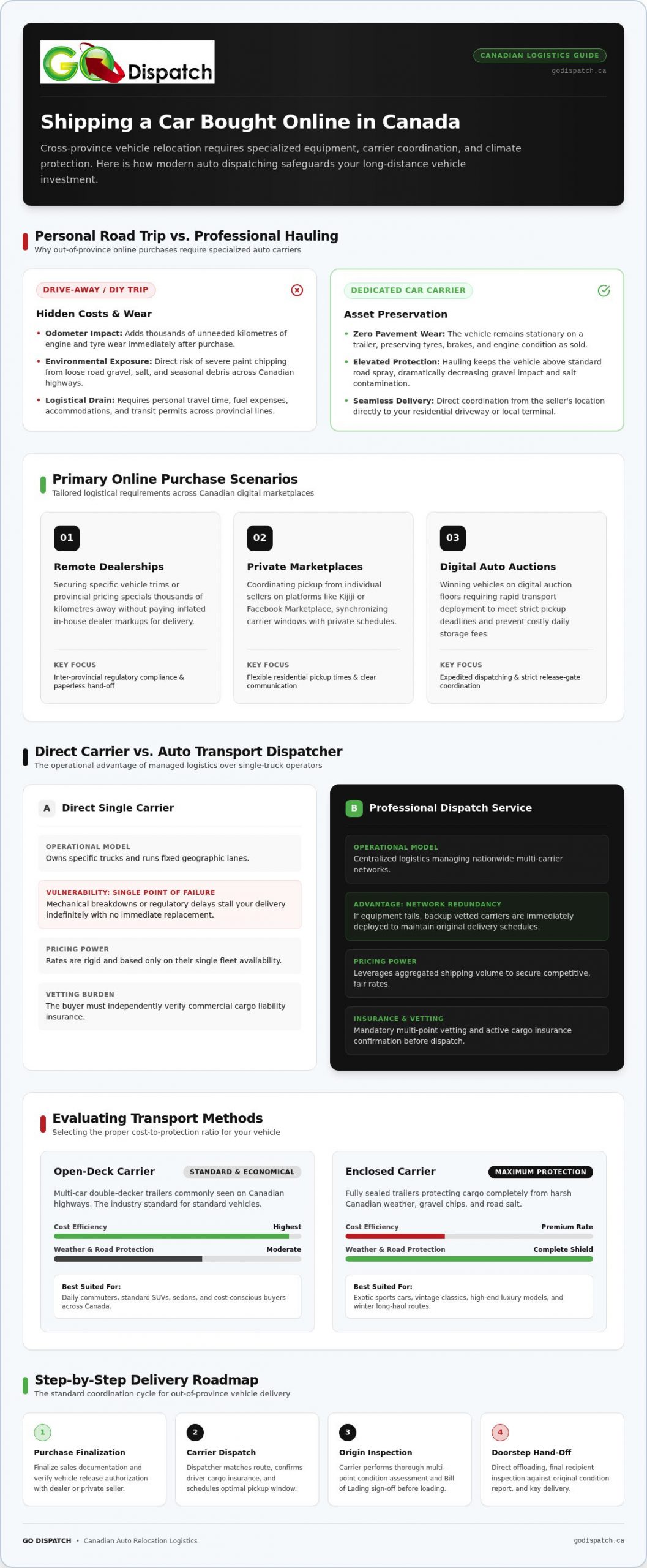
Driving the vehicle home yourself might seem like an adventure, but it often leads to hidden costs. Drive-away services or personal road trips add thousands of kilometres of wear and tear to your new investment. Professional transport keeps your vehicle off the pavement entirely. By using a Open vs. Enclosed Car Hauling trailer, you ensure the engine and tyres remain in the exact condition promised by the seller.
Canada’s climate presents unique challenges for long-distance moves. Road salt, gravel, and seasonal debris can cause significant damage to a vehicle’s exterior during a cross-country trek. Professional hauling provides a layer of safety that personal driving cannot match. It protects your car from the elements and road hazards, ensuring it arrives at your door clean and damage-free. It’s the most efficient way to protect your new asset from the moment it leaves the seller’s lot.
Common Scenarios for Online Vehicle Shipping
Whether you are a collector or a daily commuter, shipping a car bought online in Canada usually falls into one of three categories. Each scenario requires a specific logistical approach to ensure a smooth hand-off.
- Remote Dealerships: You found the perfect SUV trim in another province and need it delivered to your driveway without the dealer’s high markups.
- Private Marketplace Sales: Buying from a seller on Kijiji or Facebook Marketplace requires a coordinated pickup that respects the seller’s time and your schedule.
- Online Auctions: Winning a vehicle on a digital auction platform often comes with strict pickup deadlines. Professional dispatchers ensure the vehicle is moved before storage fees begin to mount.
Choosing Between a Direct Carrier and an Auto Transport Brokerage
Understanding the difference between a direct carrier and a transport dispatcher is critical when planning the logistics for your new vehicle. A direct carrier owns the physical trucks and operates specific routes. A dispatcher, or broker, acts as a logistics manager. Some open-bidding marketplaces leave the vetting to inexperienced buyers, blurring the line between specialized car haulers and general couriers. This creates unnecessary risk for your investment.
Choosing a dispatcher provides a distinct “One-Stop” advantage. If a direct carrier’s truck breaks down or faces a provincial regulatory delay, your vehicle stalls indefinitely. A professional dispatcher eliminates this single point of failure by accessing a vast national network. If a disruption occurs, a backup carrier is deployed immediately. This network access allows dispatchers to realize better scheduling timelines, keeping your delivery on track.
A common misconception is that logistics managers always add unnecessary costs. In reality, professional dispatchers leverage high shipping volumes to secure competitive rates that individual buyers cannot get on their own. They save you hours of research and protect you from hidden fees. For those seeking reliable coverage, utilizing professional dispatch services ensures a seamless transition from the seller to your driveway.
The Benefits of Using a Dispatch Service
Relying on an expert coordinator simplifies the entire process of shipping a car bought online in Canada. Instead of searching for hours, you gain instant access to a national network of thoroughly vetted carriers. Safety is a top priority. A professional logistics partner performs rigorous insurance verification on your behalf, confirming the carrier’s cargo liability coverage before your vehicle is loaded. You also enjoy the simplicity of a single point of contact. You never have to chase down individual drivers or manage complex scheduling across time zones.
What to Look for in a Reliable Brokerage
Reliability comes down to transparency and industry-specific expertise. Look for a company that offers clear fee structures and open communication from day one. They must have proven experience handling diverse vehicle sizes, including specialized SUV and van transport. Avoid platforms that treat your car like general freight. Trustworthy operators rely on established consumer protection resources and industry standards to guide their operations, ensuring a dedicated commitment to professional logistics.
Evaluating Transport Methods: Open vs. Enclosed Car Hauling
Once you’ve selected a logistics partner, you must decide how your vehicle travels. Shipping a car bought online in Canada offers two primary methods: open-air and enclosed transport. Each serves a specific purpose based on your budget and the vehicle’s value. Canadian winters add a layer of complexity to this choice. Road salt and gravel are constant threats during national moves. You need to weigh the cost-to-protection ratio carefully to ensure your new purchase arrives in pristine condition.
The choice often comes down to the replacement value of the vehicle and your personal tolerance for risk. Standard vehicles usually travel on open trailers without issue. However, specialized cars require a different level of care. When shipping a car bought online in Canada, the transport method you choose impacts both the final price and the physical safety of the vehicle. Understanding the equipment used helps you make an informed decision for your specific situation.
Open-Air Transport: The Standard Choice
Open-air transport is the backbone of the industry. Multi-car carriers organize loads efficiently to keep costs down for the consumer. This method is the preferred choice for most daily drivers, SUVs, and vans. It provides a reliable way to move a vehicle across provinces without a premium price tag. Carriers maximize their capacity by stacking vehicles, which directly benefits your bottom line. It is the most common way to move vehicles nationwide.
Manage your expectations regarding the exterior. Road dust and weather are part of the journey on an open trailer. Most buyers find this acceptable for standard vehicles because the cost savings are significant. It’s a functional solution that prioritizes speed and affordability. The high frequency of these trailers means you can often secure a pickup date much faster than with specialized equipment. It is the workhorse of the Canadian logistics industry.
Enclosed Hauling: Maximum Protection
Enclosed hauling offers a fully shielded environment for your vehicle. This is the premium choice for classic cars, luxury EVs, and high-end sports cars. If you’ve invested in a high-value asset, spending more on protection is a logical decision. It eliminates the risk of damage from road debris and harsh Canadian weather. Your vehicle is protected from every angle during the long haul across the country, regardless of the season.
Peace of mind is the primary benefit here. Your car stays clean and dry inside a hard-sided trailer. This method is essential during peak winter months when road salt is most prevalent on Canadian highways. It ensures that your new investment remains showroom-ready upon delivery. While it costs more, the added security often outweighs the price for specialized vehicles. You are paying for a dedicated, high-security environment that guarantees the vehicle’s condition remains unchanged from pickup to drop-off.
Step-by-Step Guide: How to Coordinate Your Vehicle Delivery
Coordinating the logistics for a vehicle purchase requires a methodical approach. It is not just about finding a truck. It is about ensuring every legal and physical detail is handled correctly across provincial borders. Shipping a car bought online in Canada becomes a streamlined experience when you follow a clear roadmap. You deserve a process that removes the guesswork and protects your investment from the moment the sale is finalized.
Step 1: Finalize the sale and verify the vehicle history. Before you book transport, ensure the title is clear. Perform a VIN check to confirm the vehicle’s history and current status. Step 2: Request a quote and consult with a professional auto carrier dispatch. An expert dispatcher will help you realize a realistic timeline and provide a quote that includes all provincial fees. Step 3: Prepare the vehicle for pickup. Clean the car thoroughly so the driver can see any existing marks. Remove all personal items and keep the fuel level at approximately one quarter tank to reduce weight and comply with safety standards. Step 4: The Inspection and Bill of Lading process. Conduct a detailed walk-around with the driver at the origin point. Step 5: Tracking the move. Stay in contact with your coordinator to monitor the vehicle’s progress across the country.
The Importance of the Bill of Lading
The Bill of Lading is your primary legal protection during the entire transport process. It acts as both a receipt and a condition report. When the carrier takes possession, you or the seller must document every existing scratch or dent. This creates a clear baseline for the vehicle’s condition. Ensure the seller and the carrier both sign off on this report before the trailer leaves. If you notice new damage upon delivery, this document is the only way to prove liability. It is a non-negotiable part of professional shipping a car bought online in Canada.
Insurance and Liability: What You Must Know
Carrier cargo insurance is mandatory for inter-provincial moves, but not all policies are equal. You must verify that the carrier has active and sufficient coverage for your vehicle’s specific value. Your personal auto insurance policy often does not cover the car while it is on a commercial trailer. Working with a dispatcher helps you realize a safer vetting process. They confirm the carrier’s insurance status behind the scenes, ensuring your asset is protected against unforeseen incidents. For a secure and vetted transport experience, book your professional vehicle delivery today.
Streamlining the Process with Professional Dispatch Services
Managing the heavy lifting of logistics requires more than just a truck. It requires a comprehensive strategy. Shipping a car bought online in Canada involves navigating different provincial regulations and varying carrier schedules across thousands of kilometres. A professional dispatcher acts as your dedicated representative. They handle the complex scheduling of national moves so you can focus on your daily life. You should always prioritize reliability over the absolute lowest price. A cut-rate bid from a bidding platform often leads to unexpected delays or poor communication. To plan your budget effectively, consult our detailed guide on vehicle transport cost in Canada. This ensures you have a realistic expectation of market rates for 2026.
One-Stop Dispatching for National Peace of Mind
GO DISPATCH connects you with the right carriers for cars, trucks, and SUVs. We specialize in national hauling coordination for anyone shipping a car bought online in Canada. This one-stop approach provides professional logistics management for dealerships and private buyers alike. You save time and energy by outsourcing the carrier search to experts who understand the industry. We vet the drivers. We verify the insurance. We manage the paperwork. This human-centric approach stands in stark contrast to automated bidding platforms that leave you to solve logistical problems on your own. Our goal is to provide a stress-relief solution that guarantees peace of mind throughout the journey.
Outsourcing your logistics means you don’t have to spend hours on the phone with multiple companies. We maintain a high-capacity network of professional auto carriers who are ready to move. This level of coverage ensures that your vehicle is not left waiting at a seller’s location for weeks. We provide the speed and ease of use that modern buyers expect. Our team acts as a proactive problem-solver, handling the behind-the-scenes coordination so you don’t have to worry about the details.
Final Checklist for a Successful Move
Before the carrier arrives, run through a final checklist to ensure everything is ready. Confirm your pickup and delivery windows with both the seller and your coordinator. Ensure there is clear access for large transport trailers at both ends of the move. Residential streets are often too tight for a multi-car carrier. You might need to meet the driver at a nearby plaza or a large parking lot to facilitate a safe loading process. If you are purchasing from a lot, finalize the dealership auto transport logistics early. This prevents the vehicle from sitting on the lot longer than necessary. A successful move depends on clear communication and physical preparation.
Take the Wheel of Your National Delivery
Mastering the logistics of a remote vehicle purchase ensures your new investment arrives safely and on time. You now understand the critical difference between a simple haul and a coordinated professional move. By selecting the right transport method and documenting the condition with a Bill of Lading, you eliminate the risks that often plague inexperienced buyers. Shipping a car bought online in Canada doesn’t have to be a source of anxiety. It is a manageable process when you have the right experts in your corner to handle the details.
Our team provides a comprehensive national dispatching network to handle the heavy lifting for you. We offer expert coordination for cars, trucks, and SUVs; every move is backed by our professional vetting of all auto carriers. You can stop worrying about the “what-ifs” and start looking forward to your first drive. Get a Professional Quote for Your Online Vehicle Move and experience a streamlined delivery today. Your new car is waiting. Let’s get it home safely and efficiently.
Frequently Asked Questions
Is it safe to ship a car I haven’t seen in person?
Yes, it is safe as long as you use professional verification and transport services. You should always perform a VIN check and request a third-party inspection before shipping a car bought online in Canada. Professional carriers provide a detailed condition report at pickup. This ensures you have a legal record of the vehicle’s state. Using a vetted dispatch service adds a layer of safety by ensuring the driver is qualified.
How much does it cost to ship a car between provinces in Canada?
Shipping costs vary based on distance, vehicle size, and the transport method you choose. Factors like seasonal demand and fuel surcharges also impact the final price. Enclosed transport typically carries a premium compared to standard open trailers. A professional dispatcher provides a transparent quote that covers all logistics fees without hidden charges. This allows you to plan your budget with confidence while ensuring your vehicle receives professional care during transit.
How long does it take to ship a vehicle across the country?
Most cross-country shipments take an average of 10 to 14 days to complete. Shorter routes between neighbouring provinces often take significantly less time. These timelines depend on weather conditions, road construction, and the carrier’s specific route schedule. A dispatch service manages these variables to ensure the most efficient delivery possible. You will receive updates throughout the process so you can prepare for the vehicle’s arrival at your door without any guesswork.
Does the car transport company need my original registration?
No, you do not need to provide the original registration for domestic transport within Canada. A copy of the registration or the bill of sale is usually sufficient to prove ownership. The driver needs these documents to comply with provincial transport regulations during transit. Keep your original documents safe and only provide photocopies to the carrier. This protects your sensitive information while allowing the logistics process to proceed without any legal delays.
Can I put personal belongings inside the car during transport?
You should avoid leaving personal items inside the vehicle during transport. Carrier cargo insurance only covers the vehicle itself, not the contents inside. Excess weight from personal belongings can also lead to provincial weight limit violations for the carrier. Most transport companies allow a spare tyre and a jack, but all other items should be removed. This ensures the safety of your belongings and keeps the transport process moving efficiently.
What happens if my car is damaged during the shipping process?
You must document any damage immediately on the Bill of Lading at the time of delivery. This document is your primary legal protection. Compare the vehicle’s current state to the condition report created at pickup. If new damage is found, take photos and notify your dispatch coordinator right away. They will guide you through the insurance claim process with the carrier’s cargo liability provider to ensure you receive proper compensation for repairs.
Do I need special insurance when shipping a car bought online?
You don’t typically need a separate policy, as licensed inter-provincial carriers are required to carry cargo liability insurance. This coverage protects your vehicle while it is in their possession. However, you should always verify that the carrier’s insurance is active and sufficient for your vehicle’s value. A professional dispatch service performs this vetting for you. This ensures that shipping a car bought online in Canada remains a secure and worry-free experience for every buyer.
What is the difference between a car broker and a direct carrier?
A direct carrier owns the trucks and handles the physical transport on specific routes. A dispatcher acts as a logistics manager who connects you with a vetted network of carriers. Dispatchers provide more flexibility and better backup plans if a truck faces a delay. They handle the carrier selection and insurance verification so you don’t have to. This one-stop approach simplifies the process and ensures your vehicle is moved by a qualified driver.