

Driving your car south may seem like the simplest plan, but it can add long hours on the road, winter wear and tight timing to your seasonal move. If you’re comparing seasonal car shipping for snowbirds canada with driving, the right choice depends on your route, travel dates and how you want to manage the handoff.
It’s natural to want your vehicle ready when you arrive, with a clear plan for getting it back in spring. Shipping can reduce the driving you do, but pickup and delivery windows, cross-border paperwork and responsibility for each step need to be confirmed before you book.
This guide compares the main ways to move your vehicle, explains how to plan the southbound and return trips, and outlines what to ask a transport provider about scheduling, documentation, insurance and delivery arrangements. You’ll also learn how dispatch coordination can help organize carrier selection and timing, while keeping route availability and cross-border responsibilities clear. Planning both legs in advance can make the seasonal move easier to manage.
Key Takeaways
- Compare shipping, driving and driveaway service based on your route, travel dates and preferred level of control.
- Plan both legs of seasonal car shipping for snowbirds canada by confirming your route, timing and return arrangements early.
- Assess transport options by what each quote includes, the pickup process, delivery updates and service terms.
- Use a practical vehicle and paperwork checklist, and document the car’s condition before handoff.
- Understand who coordinates the carrier and scheduling, and confirm route availability and responsibilities before committing.
Seasonal car shipping for snowbirds in Canada: which option fits your trip?
Seasonal travel takes coordination: your travel dates, access to a vehicle at your destination and the return journey all need to line up. A Snowbird typically moves from a colder climate to a warmer destination for winter, but the best way to move a vehicle depends on your trip. This guide to seasonal car shipping for snowbirds canada compares the main options, so you can weigh convenience against control.
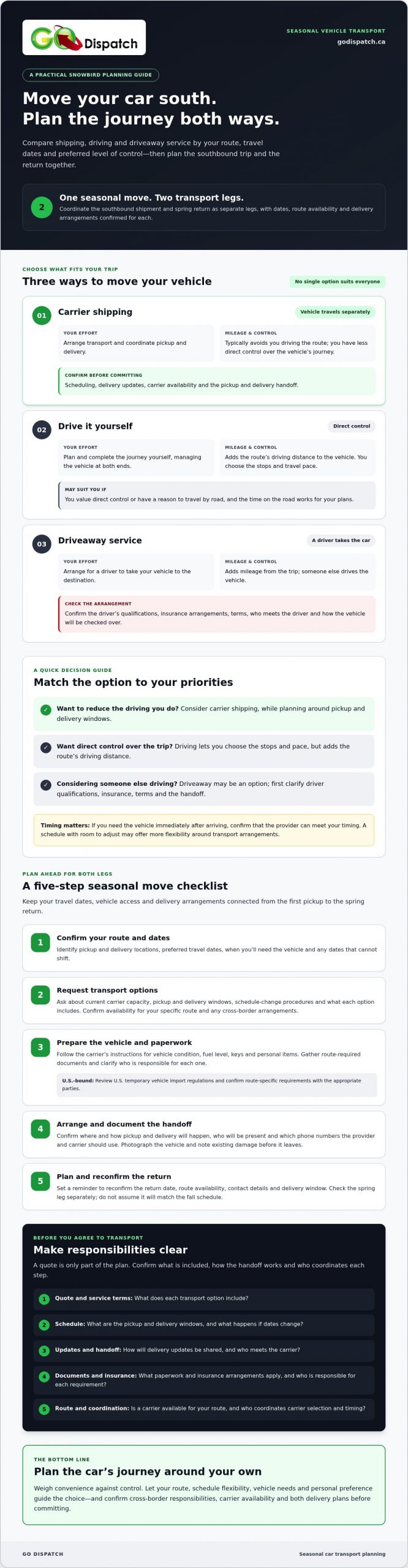
Shipping separates the vehicle’s journey from your own. Driving gives you direct control, but requires more time on the road and adds mileage. A driveaway service is a separate arrangement in which a driver takes your vehicle to the destination. Before choosing it, confirm the driver’s qualifications, insurance arrangements, terms and handoff process.
Shipping, driving, or driveaway: what changes for the owner?
| Option | Effort | Vehicle mileage | Control | Handoff |
|---|---|---|---|---|
| Carrier shipping | Arrange transport and coordinate pickup and delivery. | Typically avoids the owner driving the route. | Less direct control over the vehicle’s journey; confirm scheduling and updates. | Agree on pickup and delivery arrangements with the provider. |
| Driving | Plan and complete the journey yourself. | Adds the route’s driving distance to the vehicle. | You choose the stops and travel pace. | No carrier handoff, but you need to manage the vehicle at both ends. |
| Driveaway | Arrange for a driver to take the vehicle. | Adds mileage from the trip. | Someone else drives, so confirm the arrangement and terms. | Agree on who meets the driver and how the vehicle is checked over. |
When does professional seasonal vehicle transport make sense?
Carrier transport may suit a long route, a tight travel schedule, accessibility needs or anyone who wants to avoid an extended drive. It can also separate your travel plans from the vehicle’s journey. The trade-off is that you’ll need to plan around pickup and delivery scheduling instead of having the car with you throughout the trip.
Consider how soon you need the vehicle after arriving. If you need it immediately, confirm whether the provider can meet your timing before making other plans. If your schedule has room to adjust, you may have more flexibility around transport arrangements. Driving or driveaway may be a better fit if you value direct control or have a reason to travel by road.
There’s no universal winner. Let your route, schedule flexibility, vehicle needs and personal preference guide the decision. Confirm carrier availability and any cross-border arrangements for your specific route before committing. For broader context on vehicle transport, see this national car hauling guide.
Plan seasonal car shipping for your winter destination
A seasonal move has two transport legs, not one. Plan the southbound shipment and the return together so your travel dates, vehicle access and delivery arrangements don’t become separate last-minute puzzles. For seasonal car shipping for snowbirds canada, start with a clear route and a flexible plan for both ends of the trip.
Build a plan for both journeys
- Confirm your route and dates. Identify your pickup and delivery locations, preferred travel dates and when you’ll need the vehicle. Note any dates that can’t shift.
- Request transport options. Ask providers about current carrier capacity, pickup and delivery windows, schedule-change procedures and what each option includes. Confirm availability for your specific route, including any cross-border arrangements.
- Prepare the vehicle. Follow the carrier’s instructions for vehicle condition, fuel level, keys and personal items. Gather the documents required for your route and clarify who is responsible for each one. For a U.S. destination, review the U.S. temporary vehicle import regulations and confirm route-specific requirements with the appropriate parties.
- Arrange the handoff. Confirm where and how pickup and delivery will happen, who will be present, and which phone numbers the provider and carrier should use. Photograph the vehicle and note existing damage before it leaves.
- Plan the return. Set a reminder to reconfirm the return date, route availability, contact details and delivery window. Don’t assume the spring leg will match the fall schedule; check it separately.
When should you request a transport plan?
Enquire once your destination and travel dates are reasonably clear. Peak-season availability can vary, so ask about current schedules rather than relying on assumptions or a fixed booking deadline. Check how wide pickup windows may be, how schedule changes are handled and what updates you’ll receive. If your travel dates can’t move, keep a backup plan in case transport timing changes.
What should you confirm before handoff?
Get the pickup and delivery process in writing, including the agreed locations, contact person and expected communication. Ask what fuel level, keys, vehicle condition and personal-item rules apply. Keep a record of the vehicle’s condition, and make sure you know who to contact if arrangements change. Confirm which documents you must provide and which responsibilities, if any, belong to the transport provider.
GO DISPATCH coordinates carrier selection, dispatch and delivery scheduling for vehicle transport. If you’re considering dispatch support, ask GO DISPATCH about transport coordination and confirm whether your specific route, timing and cross-border arrangements can be accommodated.
How to compare seasonal car shipping providers and transport options
A useful comparison starts with the service plan, not the headline quote. For seasonal car shipping for snowbirds canada, check that each provider is quoting for the same route, vehicle and pickup and delivery arrangements. Then compare what’s included, which responsibilities stay with you, and how the provider will keep you informed.
Which questions should you ask before choosing a provider?
Find out how the transport is arranged and who your point of contact will be. A dispatch or brokerage company coordinates logistics and selects a suitable third-party carrier; it doesn’t necessarily operate the carrier itself. Ask who dispatches the carrier, who provides schedule updates and who you should contact if plans change.
- Carrier coordination: Who selects and dispatches the carrier, and how will you be told who is handling transport?
- Pickup and delivery: Where will the handoff happen, what condition checks are recorded, and how are pickup or delivery changes communicated?
- Documentation: Which vehicle and transport documents are needed, and who is responsible for providing or completing each one?
- Service terms: What do cancellation, changes, delays and other responsibilities look like? Request the answers in writing.
What should a transport quote and service plan clarify?
Check the route, vehicle details, pickup and delivery process, communication expectations and applicable service terms. Ask what could affect the schedule and how delays will be shared. Compare quotes line by line: one may describe different handoff arrangements or service inclusions than another, so a lower headline amount alone may not show which option better fits your trip.
For a cross-border move, don’t assume a provider serves your route or handles every document. Confirm route availability and clarify documentation duties directly with the provider. Check official guidance as well, such as the U.S. Customs and Border Protection information on U.S. temporary vehicle import regulations. Requirements can depend on your circumstances, so verify what applies to your vehicle and journey.
Use the same checklist for both seasonal legs, but request confirmation for each route and set of dates. That makes it easier to spot gaps before you agree to service. For broader context on factors that can affect transport costs, see the vehicle transport cost guide. Focus on what each quote covers, not an estimate that may not reflect your specific shipment.
How to prepare your vehicle and paperwork for a seasonal move
A smooth handoff starts with clear instructions and a record of the vehicle’s condition. For seasonal car shipping for snowbirds canada, separate routine vehicle preparation from border or customs paperwork. Your carrier’s instructions and the requirements for your specific route take priority over any general checklist.
What should you do before the carrier collects your car?
- Remove personal belongings. Don’t leave items in the vehicle unless the provider has explicitly confirmed an exception and explained the terms.
- Document the vehicle’s condition. Take dated photos from several angles, including close-ups of existing damage. Note those details on the handoff record and keep a copy of the paperwork.
- Follow the carrier’s preparation instructions. Confirm what’s required for keys, fuel level, alarms and vehicle operability. Don’t assume the same procedure applies to every carrier or route.
- Confirm the handoff details. Know who will meet the carrier, where the vehicle will be collected, and how you’ll receive updates if arrangements change.
Keep your photos and handoff documents together until the vehicle has been delivered and checked. For more context on coordinating vehicle pickup and delivery, see this vehicle delivery logistics guide.
Which cross-border documents or rules should you verify?
There isn’t one paperwork list that applies to every vehicle and transport arrangement. Ask the provider which documents apply to your specific vehicle and route, what you need to supply, and whether any steps are your responsibility. Then check current information from relevant Canadian and U.S. government agencies. Treat general online checklists as a starting point, not legal advice or proof that your paperwork is complete.
Keep border requirements distinct from carrier paperwork. A transport provider may explain what it needs to arrange the shipment, but that doesn’t automatically confirm every government requirement for temporarily taking a vehicle across the border. Verify those requirements for your own circumstances before handoff, and keep copies of the documents you’re responsible for.
Need help coordinating vehicle transport? Contact GO DISPATCH to discuss your transport needs and confirm whether your route and timing can be accommodated.
Arrange snowbird car shipping with clear responsibilities and next steps
The right transport plan is the one that fits your vehicle, route and seasonal schedule, with responsibilities clear before you commit. Compare shipping with your other travel options, confirm both the outbound and return legs, and get the service details in writing. That’s the practical foundation for seasonal car shipping for snowbirds canada.
What happens when a dispatch company coordinates your move?
A dispatch company can coordinate carrier selection and delivery scheduling, helping organize the logistics between you and the transport provider. The vehicle is transported by a third-party carrier, not by GO DISPATCH. That distinction matters: confirm who performs the transport, who manages the schedule, and who you contact with questions or changes. Don’t assume a particular carrier, route, delivery date, tracking feature or cross-border service is available until it’s confirmed for your shipment.
GO DISPATCH coordinates and dispatches third-party carriers for vehicle transport. This coordination can help organize the logistics you would otherwise manage yourself, but the specific route and service terms still need to be verified before booking.
What should you confirm before you book?
Ask the provider to confirm the details for each seasonal leg, rather than treating the return shipment as automatic. Make sure the written plan matches your vehicle and expectations. Check:
- Vehicle and route: Confirm the vehicle details and exact pickup and delivery locations for the outbound and return shipments.
- Dates and timing: Review preferred dates, pickup and delivery windows, and any schedule flexibility. Ask how changes or delays will be communicated.
- Cross-border scope: If a leg crosses the Canada and U.S. border, verify that the provider can coordinate that specific route and clarify who is responsible for each document or requirement.
- Handoff and contacts: Agree on who will be present at pickup and delivery, the condition-check process, and your main point of contact.
- Service terms: Read the written terms, including what’s included, cancellation or change procedures, and each party’s responsibilities.
Before confirming, compare the plan against your travel arrangements and keep copies of the agreed details. If a return date is still uncertain, ask how and when to reconfirm that leg. Clear answers now make it easier to spot gaps before your vehicle is scheduled.
Have a vehicle transport plan in mind? Discuss your vehicle transport requirements with GO DISPATCH and confirm whether your route, dates and service needs can be accommodated.
Set up your seasonal move with confidence
The best plan balances your travel dates, vehicle needs and preferred level of control. Compare shipping with driving or driveaway service, then confirm both the outbound and return arrangements. A practical approach to seasonal car shipping for snowbirds canada also means checking what each quote includes, documenting the vehicle’s condition and confirming who handles each part of the handoff and paperwork.
Before you commit, verify route availability, scheduling expectations, cross-border scope and service terms directly with the provider. GO DISPATCH coordinates carrier selection, dispatch and delivery scheduling to help organize the transport process. The company serves customers nationally across Canada, but specific route and cross-border availability should be confirmed for your plans.
Ready to discuss your vehicle and seasonal travel dates? Discuss your vehicle transport requirements with GO DISPATCH. With clear responsibilities and a plan for both legs, you can focus on preparing for the season ahead.
Frequently Asked Questions
How far in advance should snowbirds arrange car shipping in Canada?
Enquire once your route and travel dates are reasonably clear, particularly if you can’t shift your schedule. There’s no universal booking deadline: availability depends on the route, season and carrier capacity. Ask the provider about current pickup windows, delivery expectations and schedule flexibility. Discuss the return shipment at the same time, and confirm how date changes are handled before you commit.
Is it better to ship a car or drive it south for the winter?
There’s no single better option; it depends on distance, available time, driving preference, vehicle use and schedule flexibility. Shipping separates the car’s journey from yours, while driving gives you direct access and control along the way. For seasonal car shipping for snowbirds canada, compare the effort, added mileage, timing and written service terms for your trip. Don’t assume one choice is always cheaper or safer.
Can I ship my car from Canada to the United States for the winter?
It may be possible, but cross-border transport depends on the route and provider availability. Confirm that the provider can coordinate your specific journey, and ask which party arranges the carrier and what border or paperwork requirements may apply. Check current official guidance for your vehicle and travel situation before making plans. Don’t assume every transport provider serves every route between Canada and the U.S.
What paperwork do I need to ship my car across the Canada and U.S. border?
The paperwork depends on factors such as the vehicle, route, ownership and transport arrangement, so a general checklist can’t guarantee that you’ve met every requirement. Ask the provider what information and transport documents are needed, then verify applicable requirements with relevant Canadian and U.S. authorities. Keep your vehicle records and transport paperwork accessible. This is general guidance, not legal advice.
How does a car transport dispatch service work?
A dispatch or brokerage service coordinates transport logistics and arranges a third-party carrier; it doesn’t transport the vehicle itself. Ask who selects and dispatches the carrier, manages scheduling, provides updates and handles plan changes. GO DISPATCH coordinates third-party carriers and delivery scheduling. Before proceeding, confirm the service scope, terms and availability for your specific route, including any cross-border arrangements.
What should I remove from my car before it is shipped?
Follow the assigned carrier’s instructions, and remove personal belongings unless the provider has confirmed an exception in writing. Before handoff, photograph the vehicle and record any existing damage. Ask what to do about keys, alarms, fuel level and vehicle operability, since preparation requirements can vary. Use the provider’s documented instructions for your shipment rather than assuming one set of rules applies to every move.
What happens if my car delivery date changes?
Transport schedules can change, so ask in advance how the provider communicates updates, revised delivery windows and other changes to the plan. Confirm your main contact and preferred communication method before pickup. Keep your travel arrangements flexible if possible, especially if you need the vehicle soon after arrival. Check the written service terms for applicable options; don’t assume a particular remedy or delivery date is guaranteed.