

What if the biggest risk in car shipping isn’t a late delivery, but not knowing who’s responsible for your vehicle? The red flags to watch for in car shipping often appear before pickup: a quote that changes without explanation, vague carrier details, unclear payment terms or pressure to commit quickly. Before booking, it’s reasonable to want a clear picture of who will transport your vehicle and what happens if plans change.
This guide explains how to assess warning signs before you agree to transport or hand over your keys. You’ll learn what to compare in quotes and payment terms, which carrier details and shipment records to review, and how to document your vehicle’s condition at handoff. You’ll also see how dispatch coordination can bring carrier selection, transport logistics and delivery scheduling into one managed process. With consistent details in writing, you can make a more informed decision and follow accountability from booking through delivery.
Key Takeaways
- Unclear responsibility, changing details, vague paperwork or unexplained payment requests are reasons to pause before booking.
- Compare booking terms carefully. A deposit, a payment schedule and full payment before pickup are different arrangements, so understand what each requires.
- Know the difference between a broker and a carrier, and check that carrier and shipment details are consistent in the paperwork.
- If you notice red flags to watch for in car shipping, document the concern, request written clarification and reassess before moving ahead.
- Dispatch coordination can bring carrier selection, transport logistics and delivery scheduling into one managed process.
Red flags to watch for in car shipping before you book
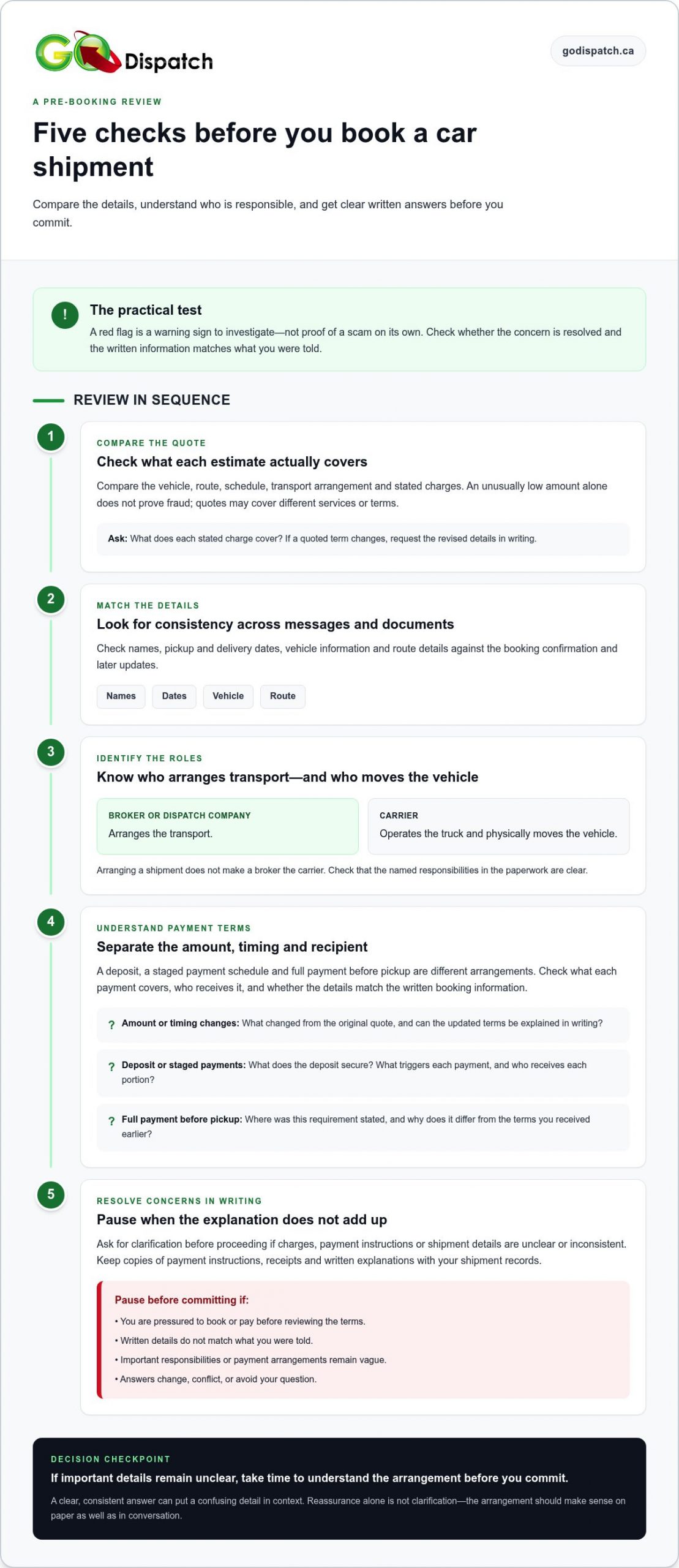
Pause if you can’t tell who is arranging the transport, what the agreed terms cover or who will answer questions about the shipment. A car-shipping red flag is a warning sign to investigate, not proof on its own that someone is running a scam. The practical test is whether you can clarify the issue and get a consistent explanation in writing.
Start with this quick scan:
- Pressure to book or pay before you’ve reviewed the terms.
- Names, dates, vehicle details or route information that don’t match.
- Paperwork that leaves key responsibilities or arrangements vague.
- Payment demands that aren’t explained or don’t match the written terms.
One discrepancy may have an ordinary explanation. Consider the pattern and context: Does the answer resolve the concern? Does the written information match what you were told? If important details remain unclear, or the explanation changes each time you ask, take that seriously. Pausing gives you time to understand the arrangement before you commit.
When a car shipping quote sounds too good to be true
An unusually low quote deserves clarification, but the amount alone doesn’t prove fraud. The quotes may cover different services or terms. Compare the vehicle, route, schedule and stated charges in each estimate. Check whether the transport arrangement is described in the same way, and ask what any unclear charge covers. If a quoted term changes later without a clear explanation, pause and request the revised details in writing before proceeding.
Pressure, evasive answers and inconsistent details
Be cautious if you’re pushed to decide immediately, discouraged from reviewing paperwork or told written confirmation isn’t necessary. Urgency can make it harder to spot missing details. Check that names, pickup and delivery dates, vehicle information and route details agree across messages and documents. One delayed reply may be routine; repeated unanswered questions or conflicting answers make it harder to know what you’re agreeing to.
Focus on whether the concern gets resolved. A clear, consistent answer can put a confusing detail in context. If the response avoids your question, adds new contradictions or pressures you to commit anyway, reassurance alone isn’t clarification. The arrangement should make sense on paper as well as in conversation.
Car shipping payment and booking terms: warning signs to understand
A payment request makes sense only in the context of the terms you were given. A deposit, a staged payment schedule and a request for the full amount before pickup are different arrangements. Assess the timing, what the payment covers, who receives it and whether those details appear consistently in the written booking information.
Use this quick check to turn a concern into a practical question:
- The amount or timing changes: What changed from the original quote, and can the updated terms be explained in writing?
- A deposit is requested: What does it secure, and how will it be accounted for in the payment schedule?
- Payment is split into stages: What triggers each payment, and who receives each portion?
- Full payment is requested before pickup: Where was this requirement stated, and why does it differ from the terms you received earlier?
- You’re asked to pay immediately: Can you review the complete arrangement before sending money?
These questions aren’t universal payment rules. They help you check whether the arrangement is understandable and consistent. Keep copies of payment instructions and written explanations with your shipment records. If a payment method, recipient or deadline changes, compare the new instructions with the booking terms before acting. For shipments involving U.S. motor carriers, the FMCSA regulations for car shipping are a reference for federal motor-carrier regulations; the rules that apply depend on the shipment and jurisdiction.
How to read a car shipping quote for inconsistencies
Compare the quote with the booking confirmation and any later updates. Check the vehicle description, pickup and delivery locations, timing, transport arrangement and stated charges. A price difference doesn’t automatically mean something is wrong. The important question is whether the change has a clear explanation and updated terms. Look for details that are missing, such as what a payment covers or when it’s due. Unexplained changes can lead to misunderstandings.
Payment requests that deserve a pause
Payment terms can vary, so check whether the request matches what was explained and recorded. A deposit, staged schedule or full pre-pickup payment should be described clearly, not introduced as a surprise under pressure. Save the instructions, receipts and messages that explain the request. If the written terms conflict with the payment demand, pause and seek a written explanation before proceeding.
Clear coordination can help keep booking information, carrier arrangements and delivery scheduling organized. For businesses managing vehicle moves, one-stop transport dispatching brings carrier selection and shipment logistics into one coordinated process.
Carrier details, insurance and paperwork: where accountability can break down
A vehicle shipment may involve a coordinating party and a separate carrier. The broker or dispatch company arranges transport; the carrier operates the truck and physically moves the vehicle. Arranging a shipment doesn’t make a broker the carrier. If the paperwork blurs those roles, or the named party responsible for transport changes without explanation, it can be difficult to know who is handling each stage or where to direct a question.
Missing details weaken the record of what was agreed and who was expected to do what. Red flags to watch for in car shipping include an absent carrier identity, conflicting contact information or shipment terms that don’t match the booking. These gaps aren’t proof of wrongdoing, but they make accountability harder to follow. Consistent records connect the coordinating party, carrier, vehicle, route, timing and agreed responsibilities, helping show who arranged, transported and received the vehicle at each stage.
When carrier identity or responsibility is unclear
Before pickup, the documents should distinguish the party coordinating the shipment from the carrier transporting it. If the named carrier or the contact managing arrangements changes, look for a clear explanation and updated written details. Changes can happen during coordination, but an unexplained switch leaves uncertainty about who is responsible for the next handoff. This overview of car broker and carrier roles can help clarify the difference.
Missing or vague shipment records
Written booking terms should identify the agreed shipment details, while a vehicle condition record helps document its state at handoff. A Bill of Lading is a transport document associated with the shipment; its details can help record the vehicle and the transfer between parties. Review the information for gaps or mismatches, and keep a copy of each dated version you receive.
- Booking terms: Keep the agreed vehicle, route, timing and transport details.
- Carrier information: Keep the carrier’s name and relevant contact details provided for the shipment.
- Condition record: Preserve the pickup and delivery condition documentation, including any noted changes.
- Messages: Save dated updates that explain a change in responsibility, timing or shipment details.
Read the insurance information just as carefully. Understand what the written terms say about coverage and responsibility during transport, and note which party or parties they name. Don’t rely on a general verbal assurance to fill in missing terms. If the documents don’t explain how responsibility is handled, or the explanation conflicts with the paperwork, treat that as an accountability gap to resolve before the vehicle changes hands.
Keep the records together from booking through delivery. A complete, consistent file makes handoffs easier to understand and gives you a clear reference if you need to review shipment details later.
What to do when you spot a car shipping red flag
A concern doesn’t always mean the shipment is unsafe or fraudulent. It does mean you should slow down and establish the facts. Red flags to watch for in car shipping can arise at different stages, so respond based on whether you’ve booked, handed over the vehicle or noticed a possible active scam.
Use this sequence to keep your next steps clear:
- Pause. Don’t rush into a payment, commitment or handoff while an important detail is unresolved.
- Document the concern. Save the quote, booking terms, messages, payment instructions and relevant dates. Note exactly what doesn’t match.
- Request clarification in writing. Describe the discrepancy and ask for a direct explanation you can keep with the shipment records.
- Reassess. Compare the explanation with the agreed details. Decide whether the concern is resolved or whether to hold off on the next step.
Before booking: slow down and preserve the details
Save each version of the quote, booking terms, messages and payment instructions in a dated record. List specific gaps, such as a route that differs between documents or a charge that hasn’t been explained. Request a clear written explanation before proceeding. If a request or communication seems suspicious, don’t share additional sensitive information while you assess it.
Price differences can reflect different shipment components, so compare what each quote describes rather than focusing on the total alone. The Canadian vehicle transport cost guide can help you understand which components to compare. A changed quote isn’t proof of a scam, but a change without a clear explanation is a reason to reassess.
After pickup: document changes and condition concerns
Once the vehicle is in transit, keep a dated record of new messages, changes to delivery information and any concern about the vehicle’s condition. Organize details by shipment stage, such as booking, pickup and delivery, so the sequence is easy to follow. Keep condition records and shipment documents with the related communications.
Next steps depend on what happened. If a delivery detail changes, record who provided the update and what was said. If you notice damage or another condition concern, document what you observe and retain relevant records. Avoid guessing at the cause; stick to clear descriptions and dates. A written record helps keep communication focused, but it doesn’t guarantee a particular outcome.
If you suspect an active scam or face an immediate safety concern, contact the appropriate authorities. If you’ve sent payment and believe the transaction may be fraudulent, contact your payment provider promptly and share the records they request. Don’t rely on a verbal assurance when the written details remain unresolved.
For businesses that want shipment logistics and delivery scheduling coordinated in one process, explore one-stop transport dispatching with GO DISPATCH. GO DISPATCH coordinates transport by connecting clients with auto carriers.
How GO DISPATCH coordinates car shipping with fewer moving parts
Spotting the red flags to watch for in car shipping is one part of a sound transport plan. Business shipments also need clear coordination between the people arranging the move and the carrier transporting the vehicle. GO DISPATCH coordinates transport logistics and dispatches third-party auto carriers. The carrier performs the physical transport; GO DISPATCH manages the arrangement, including carrier selection and delivery scheduling.
One-stop coordination brings key logistics into a managed process. Instead of treating carrier selection, shipment details and delivery timing as disconnected tasks, businesses can work through one coordinated arrangement. This gives the team a central process for organizing moves involving cars, trucks, SUVs and vans, while keeping the roles distinct. The dispatcher doesn’t operate the truck or replace the carrier’s role.
What dispatch coordination handles
Coordination can cover carrier selection, transport logistics and delivery scheduling. Each supports a different stage: selecting a carrier for the arranged shipment, organizing the move’s details and scheduling delivery. For dealerships planning inventory moves, dealership auto transport logistics offers relevant context on how dispatch fits into vehicle movement.
Clear coordination also gives a business an organized point of reference for shipment arrangements. The carrier remains responsible for physically transporting the vehicle, while GO DISPATCH connects clients with carriers and coordinates the logistics. Knowing who arranges a shipment and who carries it helps keep responsibilities clear throughout the process.
A practical next step for Canadian businesses
Before making an enquiry, prepare a concise shipment brief. Include the vehicle type, pickup and delivery locations, preferred timing and any requirements that affect the move. If you’re coordinating several vehicles, note how many and whether their routes or schedules differ. A clear summary gives the coordination process a useful starting point and helps distinguish the needs of each vehicle.
- Vehicle: Car, truck, SUV or van, with relevant identifying details.
- Route: Pickup and delivery locations.
- Timing: Preferred pickup and delivery schedule.
- Requirements: Shipment details the coordinator should account for.
GO DISPATCH serves businesses nationally across Canada, coordinating vehicle transport and delivery scheduling. If your team is planning a move, bring those details together and discuss vehicle transport coordination. It’s a practical next step toward organizing the shipment with fewer moving parts.
Make your next vehicle move easier to manage
Let the red flags to watch for in car shipping guide the questions you ask before your next vehicle move. A clear plan starts with knowing what information your team needs, who should receive updates and how shipment details will be kept together. That preparation can make the process easier to manage, especially when several vehicles or delivery dates are involved.
For Canadian businesses, GO DISPATCH coordinates vehicle transport. Share the basics of your upcoming move, including vehicle types, routes and timing, to start a practical conversation about the logistics.
Discuss your vehicle transport needs with GO DISPATCH when you’re ready to plan the next step. Prepare your shipment details and connect with GO DISPATCH to coordinate the move.
Frequently Asked Questions
Is an unusually low car shipping quote always a scam?
No. A low quote can reflect differences in the proposed arrangement, so treat it as a prompt to understand the details, not proof of fraud. Confirm that the vehicle information and route are accurate, and check whether the quote describes the same transport arrangement as another estimate. If an amount or term changes later, keep the original and compare it with the revised explanation before deciding.
Can a car shipping broker arrange transport with a third-party carrier?
Yes. A broker can arrange for an independent carrier to transport a vehicle. The broker coordinates the shipment, while the carrier operates the truck and handles the physical move. For example, the person booking the transport may not be the driver who arrives for pickup. Keep the roles clear in your records so you know which party arranged the service and which carrier is handling the vehicle.
What should a car shipping agreement clearly explain?
It should make the arrangement understandable: identify the vehicle and route, describe the expected pickup and delivery timing, state the payment terms and name the parties involved. It should also explain how agreed changes will be communicated and what the written terms say about insurance and responsibility. Before accepting, check that the details fit your shipment, including the correct vehicle model and destination, rather than relying on a generic booking summary.
How can I document my vehicle’s condition before car shipping?
Take clear, dated photos of the vehicle from each side, then photograph existing scratches, dents, cracked glass or other notable marks up close. Include the interior and odometer if relevant to your records. Take the images in good light and keep the original files with the pickup paperwork. Note visible damage in the condition record, and make sure your documentation reflects the vehicle as it appeared at handoff.
What should I do if the carrier or delivery details change after booking?
Keep the earlier booking information, record the new details and request the reason for the change in writing. Compare the updated carrier identity, contact information, route or delivery timing with your records. If the vehicle has already been picked up, note when the update arrived and who provided it. Don’t treat an update as confirmation until the revised information is clear and consistent with the shipment arrangement.
Does car shipping insurance cover every type of vehicle damage?
No, coverage depends on the applicable insurance terms and shouldn’t be assumed to include every type of damage or circumstance. Review the written documents for the stated coverage, limits, exclusions and process for reporting a concern. Compare those terms with your vehicle condition record and shipment paperwork. If the wording is unclear, request a written explanation from the party that provided the insurance information before relying on it.
Is it a red flag if a car shipping company asks for payment before pickup?
Not necessarily. Payment timing can vary, so the key is whether the amount, recipient and due date match the terms you were given. A demand for full payment before pickup deserves careful scrutiny, especially if it appears suddenly or comes with pressure to pay immediately. Keep the payment instructions and any explanation. Don’t proceed until you understand how the request fits the written arrangement.