
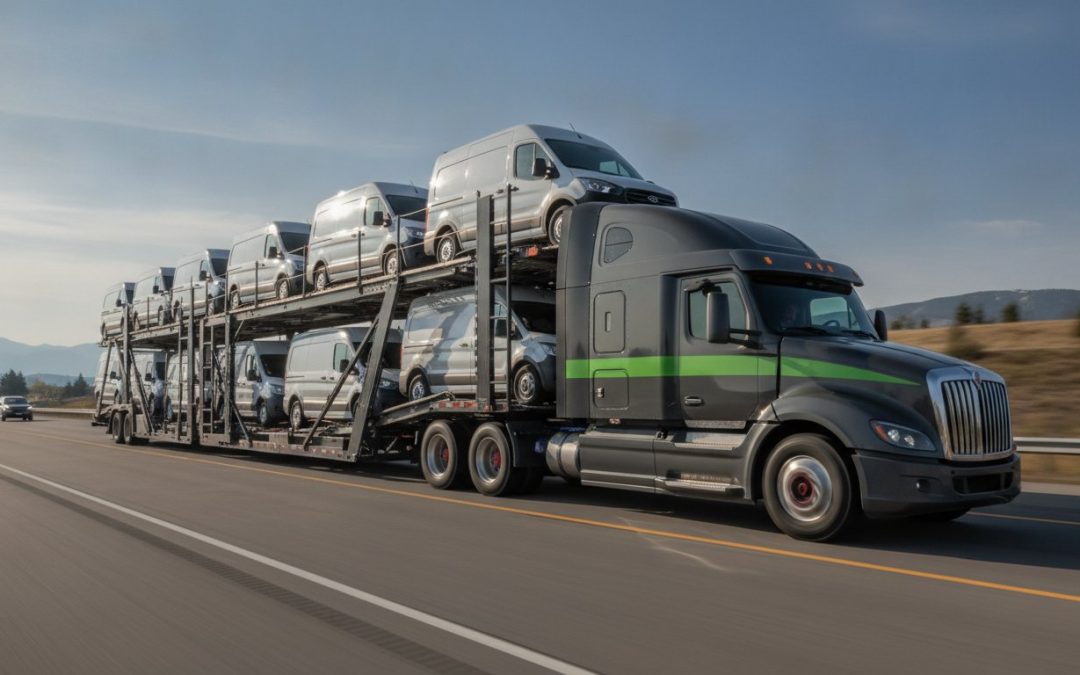
Would you really spend four days behind the wheel just to move a single asset across the provinces? For many fleet managers, the DIY approach to van transport is a hidden profit killer. Between soaring fuel prices and the high cost of labour, the traditional drive it yourself model is broken. You need your equipment on the job site; you don’t need it sitting in a highway rest area. We understand that your vans are critical business tools that require specialized care and precise timing.
This guide provides a clear path to a stress-relief solution for your shipping needs. You’ll discover how professional dispatch solutions manage the complexities of 2026 ELD mandates and carrier insurance verification. We’ll show you how to navigate the extra $190 to $250 cost premium typically associated with larger vehicles while ensuring your cargo or passenger van arrives safely. From understanding new safety requirements for restraint systems to securing timely delivery, you’re about to learn how to simplify your national logistics once and for all.
Key Takeaways
- Realize the true cost of DIY driving by comparing fuel and labour against professional logistics solutions.
- Learn how to navigate specific height and weight constraints for high-roof models to ensure your van transport is handled by a compatible carrier.
- Determine whether cost-effective open trailers or protective enclosed carriers are the right fit for your cargo or passenger assets.
- Prepare your vehicle for a smooth journey by securing internal tools and conducting a documented pre-shipment inspection.
- Simplify your operations with a one-stop dispatching service that manages carrier selection and scheduling for you.
What is Professional Van Transport in Canada?
Professional van transport refers to the specialized logistical process of hauling a van as cargo on a dedicated carrier. Unlike standard passenger transport, this service treats the vehicle itself as the primary freight. It’s designed for businesses that need to move cargo, passenger, or utility vans across provinces without adding unnecessary mileage. It isn’t just about getting a vehicle from point A to point B; it’s about protecting a critical business asset while optimizing your operational budget. You need your fleet ready for work, not stuck on a multi-day cross-country trek.
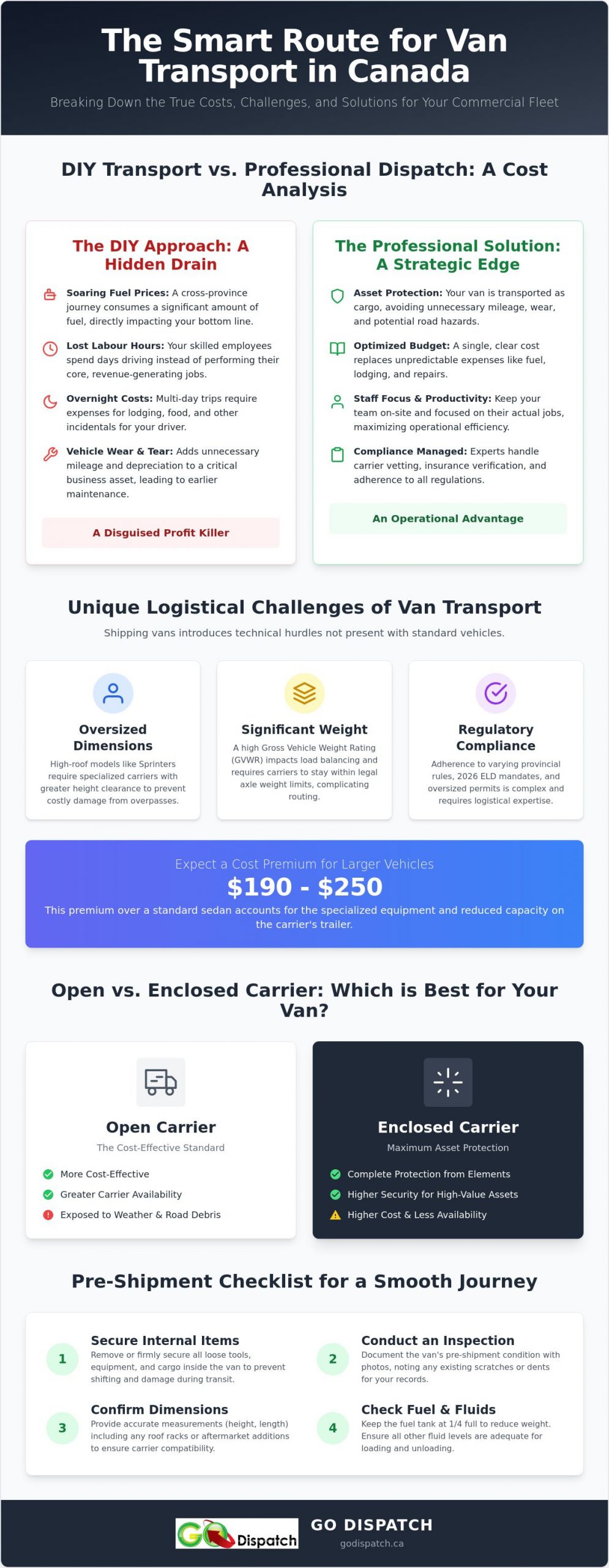
Choosing to drive a van across Canada yourself might seem cheaper at first glance. The reality is often the opposite. When you factor in the high cost of fuel, overnight stays, and the labour hours lost from your team, the DIY approach becomes a massive drain on resources. Additionally, shipping a larger vehicle like a van typically carries a cost premium of $190 to $250 compared to a standard sedan. Professional logistics providers account for these variables, offering a streamlined solution that prevents vehicle wear and tear and keeps your staff focused on their actual jobs. We handle the heavy lifting so you don’t have to.
The Distinction Between Freight and Vehicle Hauling
Searching for “van transport” online can be confusing. Many results point toward LTL (Less Than Truckload) freight companies that move boxes inside a van. We focus on moving the actual vehicle. Identifying the right service is essential for owners of high-roof Sprinters or Ford Transits. These oversized vehicles require specific Open or enclosed carriers that can accommodate extra height and weight. Standard car haulers often lack the clearance needed for these utility models, making specialized expertise a necessity rather than an option for your fleet.
Why National Dispatching is the Smart Choice
A one-stop dispatching service like GO Dispatch simplifies the entire vetting process. We don’t just find a truck; we find the right truck for your specific model. This includes verifying that carriers are fully compliant with the latest 2026 ELD mandates and hold the necessary insurance for commercial hauling. Fleet managers and dealership owners realize immediate time savings by offloading the logistics to experts. You get a single point of contact and a verified carrier network. It’s a professional approach that ensures safety, compliance, and timely delivery across the country without the typical administrative headache.
Logistical Challenges of Shipping Vans Nationally
Shipping a standard vehicle is relatively simple, but van transport introduces a unique set of technical hurdles. One of the primary Logistical Challenges of Shipping Vans involves navigating height clearances. High-roof models like the Mercedes-Benz Sprinter or Ford Transit often exceed the vertical limits of standard multi-car carriers. If a carrier attempts to load a high-roof van onto a traditional trailer, they risk hitting overpasses or damaging the vehicle’s roof on the upper deck. These risks aren’t just theoretical; they’re expensive mistakes that can sideline your fleet for weeks.
Weight is another critical factor that many owners overlook. The Gross Vehicle Weight Rating (GVWR) of a commercial van is significantly higher than a sedan or SUV. This extra mass affects how a carrier balances their load to stay within legal axle weight limits. Route planning also becomes more complex during the Canadian winter. Heavy vans require experienced drivers who understand how to navigate mountain passes or restricted routes where snow and ice make weight distribution even more critical. Avoiding low bridges and seasonally restricted roads is a full-time job for a logistics professional.
Managing Oversized Vehicle Dimensions
Accuracy is everything. You must measure your van from bumper to bumper and from the ground to the highest point, including any roof racks, ladder systems, or beacons. Standard trailers often have fixed deck heights that simply cannot accommodate a commercial unit. This is why we often utilize specialized flatbeds or low-boy trailers. These trailers sit closer to the ground, providing the necessary clearance for tall vehicles to pass under bridges safely. This level of precision is why professional van transport is vastly superior to generic towing services. If you aren’t sure which equipment you need, our team can help you select the right carrier for your specific dimensions.
Cross-Province Regulatory Compliance
Moving a large van across Canada isn’t just about the drive; it’s about the paperwork. Different provinces have varying rules regarding weight scales and oversized permits. A professional dispatcher ensures that your chosen carrier complies with the National Safety Code and provincial regulations. For a deeper look at how these rules fit into a broader plan, check out our guide on vehicle delivery logistics canada. We manage these details behind the scenes so your business stays compliant without you needing to learn the intricacies of provincial transport law.
Open vs. Enclosed Carriers: Which is Best for Your Van?
Deciding how to move your vehicle involves balancing your budget against your need for protection. For most van transport needs in Canada, the choice comes down to two primary methods: open or enclosed trailers. Both options must comply with Transport Canada commercial vehicle regulations, ensuring that your asset is moved safely and legally across provincial borders. However, the physical experience for your vehicle differs significantly depending on the equipment used. We help you weigh the risk of road debris against the cost of a premium carrier to find the right fit for your fleet.
The Case for Open Hauling
Open transport is the workhorse of the logistics industry. It’s the most common and cost-effective method for shipping utility vans. In fact, approximately 95% of all vehicles are moved via open carriers. For a standard cross-country shipment, you can expect to pay between $1,400 and $1,900 CAD. This method is the standard for commercial fleets and dealership inventory moves because it offers the fastest scheduling. Since open trailers are more common, a dispatch service can usually source a carrier for your route much quicker than for specialized equipment. It’s an efficient solution for long-distance hauls across the Canadian Shield where speed and cost are your primary drivers.
When to Consider Enclosed Shipping
Some assets require a higher level of care. Enclosed shipping typically costs 30% to 60% more than open transport. For a cross-country move, this often pushes the price into the $2,100 to $2,800 CAD range. While the cost is higher, the protection is absolute. You should consider this option if your van has specialized vinyl wraps, expensive decals, or sensitive internal equipment that cannot be exposed to the elements. During the winter months, enclosed trailers shield your vehicle from the corrosive road salt and harsh gravel used on Canadian highways. It’s important to realize that enclosed trailers for high-roof models are harder to find. Their limited availability means you may need to book further in advance to secure a spot for an oversized unit.
Ultimately, your choice depends on the vehicle’s role in your business. If you’re moving a standard work van, open transport provides the reliability you need at a practical price point. If you’re transporting a customized passenger van or a mobile showroom, the added security of an enclosed carrier offers total peace of mind. We simplify this decision by connecting you with vetted carriers that specialize in whichever method you choose.
How to Prepare Your Van for Professional Transport
Preparing for van transport isn’t just a suggestion; it’s a critical step in protecting your business investment. A little effort before the carrier arrives prevents disputes and ensures a seamless delivery. Start by conducting a thorough pre-shipment inspection. Wash the exterior so every minor scratch or dent is clearly visible. Take high-resolution, dated photos from every angle, including the roof and undercarriage. These photos serve as your baseline evidence if you ever need to file a claim. We want your experience to be as stress-free as possible, and documented proof is the best way to achieve that.
Inside the vehicle, you must be equally diligent. Remove all personal items and loose electronics. If your van is equipped with internal shelving or specialized tool racks, ensure they are bolted down securely. Loose items can shift during transit, causing internal damage or affecting the vehicle’s balance on the trailer. A clean, empty van is a safe van to transport. This simple step reduces liability and ensures your equipment arrives exactly as it left.
Safety and Liability Checkpoints
Before the driver arrives, check your mechanical vitals. Ensure the tires are properly inflated and the battery is in good condition. The carrier needs to start and move the vehicle during the loading process. You should also disable all aftermarket alarms to prevent the battery from draining if they are triggered by the motion of the trailer. Keep your fuel level at approximately one-quarter tank. This provides enough fuel for loading and unloading while minimizing the total weight and safety risk on the carrier.
Documentation and Insurance Verification
Your most important document is the Bill of Lading. This isn’t just a receipt; it’s a legal record of the van’s condition at the time of pickup. When the driver arrives, walk through the inspection with them and ensure every existing mark is noted on this form. You should also confirm the carrier’s insurance coverage through your dispatching partner before the trip begins. This ensures you are fully protected under current 2026 commercial requirements. For more information on how these logistics affect your overall budget, see our guide on vehicle transport cost canada.
Professional dispatching takes the guesswork out of these requirements. We vet every carrier to ensure they meet modern insurance standards and follow strict safety protocols. If you’re ready to move your fleet, request a professional transport quote today and let us handle the details behind the scenes.
Streamlining Van Logistics with GO Dispatch
Managing van transport doesn’t have to be a secondary job for your fleet manager. Choosing a brokerage model over a single direct carrier gives you immediate access to a massive, vetted network. A single carrier is limited by their own fleet’s schedule and location. If their only low-boy trailer is in Halifax, they can’t help you in Vancouver. We solve this by coordinating with a wide array of third-party carriers across the country. This flexibility ensures we find the right equipment for your specific high-roof or heavy-duty model without the typical wait times.
Our commitment is simple: we connect you with the right auto carrier for your specific van every time. We take pride in handling the complex tasks of scheduling and logistics behind the scenes. This allows you to maintain your focus on daily operations rather than chasing down driver updates. From single utility vans to entire commercial fleets, our national reach ensures safe delivery from coast to coast. We act as your reliable expert, ensuring every detail is managed with professional confidence.
The GO Dispatch Advantage for Businesses
Our expertise in car hauling services alberta and national routes allows us to act as your proactive problem-solver. You get one point of contact for every shipment. This simplicity is a major stress-relief solution for businesses handling multi-vehicle moves. We manage the carrier selection, verify 2026 insurance requirements, and track the progress of your assets. You focus on your core business while we handle the logistical heavy lifting behind the scenes. It’s a streamlined process designed for maximum efficiency.
Getting Started with Your Van Shipment
To get started, simply provide us with the precise dimensions of your vehicle. As we discussed earlier, accurate height and weight measurements are vital for a fast and precise quote. We recommend booking early, especially during peak seasons or when specialized trailers are required for oversized units. Early engagement allows us to secure the best rates and ensure your critical business assets arrive exactly when you need them. Don’t let the complexities of van transport slow your business down. Reach out to GO Dispatch today and let us handle the heavy lifting of your logistics.
Take the Stress Out of Your National Van Logistics
Moving a commercial fleet across the country shouldn’t be a source of constant worry. You now understand how to navigate the specific height and weight hurdles of high-roof models and how to choose between cost-effective open trailers or protective enclosed carriers. By preparing your vehicle properly and verifying 2026 insurance requirements, you ensure your business assets remain safe and your operations stay on schedule. Professional van transport is about more than just a truck; it’s about a reliable partnership that protects your bottom line.
GO Dispatch provides the specialized van hauling expertise and national logistics coverage you need to move with confidence. We offer a one-stop dispatching solution for all vehicle types, allowing you to offload the administrative burden and focus on your core business goals. Our team is ready to handle every detail of your next move with the speed and care your fleet deserves. Contact GO DISPATCH today for a professional van transport quote and experience a more efficient way to move your assets across Canada. Your next delivery is just a click away.
Frequently Asked Questions
How much does it cost to ship a van across Canada?
Costs depend on the distance, the vehicle’s size, and the chosen transport method. For a cross-country route, open transport typically ranges from $1,400 to $1,900, while enclosed options can cost between $2,100 and $2,800. Larger commercial vans usually incur a premium of $190 to $250 over standard sedan rates. Factors like seasonal demand and remote delivery locations will also influence your final quote.
Can I ship a high-roof Sprinter van on a standard car carrier?
No, standard multi-car carriers usually don’t have the vertical clearance required for high-roof models. These oversized vehicles need specialized flatbeds or low-boy trailers that sit closer to the ground to clear overpasses safely. We ensure your van transport is matched with a carrier that has the specific equipment needed for your vehicle’s height and weight requirements.
Does van transport insurance cover the tools and inventory inside my van?
No, carrier insurance only covers the vehicle itself as cargo. Professional tools, internal shelving, and inventory are not covered under standard transport policies. It’s best to remove all expensive equipment and loose items before the carrier arrives. This prevents internal damage during transit and ensures you stay compliant with the carrier’s liability terms and weight restrictions.
How long does it typically take to transport a van between provinces?
Transit times vary based on the specific route and current weather conditions. For major long-haul corridors like Toronto to Vancouver, you should expect a timeline of 7 to 10 days. Shorter inter-provincial moves often take between 3 to 5 days. We provide clear estimates during the booking process so you can plan your business operations around the arrival of your asset.
Do I need to be present for the pickup and delivery of my van?
Yes, you or a designated representative must be on-site for both pickup and delivery. This is necessary to conduct a joint inspection with the driver and sign the Bill of Lading. You’ll need to verify the vehicle’s condition and document any existing marks. Having a person present ensures the legal handover is completed correctly and protects you in the event of a claim.
What happens if my van is damaged during professional transport?
You must note any new damage on the Bill of Lading immediately at the time of delivery. Take high-resolution, dated photos and contact your dispatching partner right away to begin the claim process. Because we verify carrier insurance beforehand, you’ll have a clear path to a resolution. The Bill of Lading is your primary evidence, so a detailed inspection at delivery is vital.
Can a dispatch service help with multi-van fleet relocations?
Yes, a dispatch service is the most efficient way to manage fleet moves. We coordinate multiple carriers simultaneously to ensure your entire inventory moves according to your schedule. This centralized approach provides you with one point of contact for the whole project. It’s a scalable solution that reduces the administrative burden on fleet managers while ensuring consistent safety standards across the board.
What is the difference between a vehicle broker and a direct carrier?
A direct carrier owns the trucks, while a dispatcher or broker manages a network of many vetted carriers. The brokerage model offers more flexibility because we aren’t restricted by a single fleet’s location or schedule. We act as your logistical advocate, finding the most suitable carrier for your specific van transport needs while managing all the vetting, insurance verification, and scheduling details for you.