
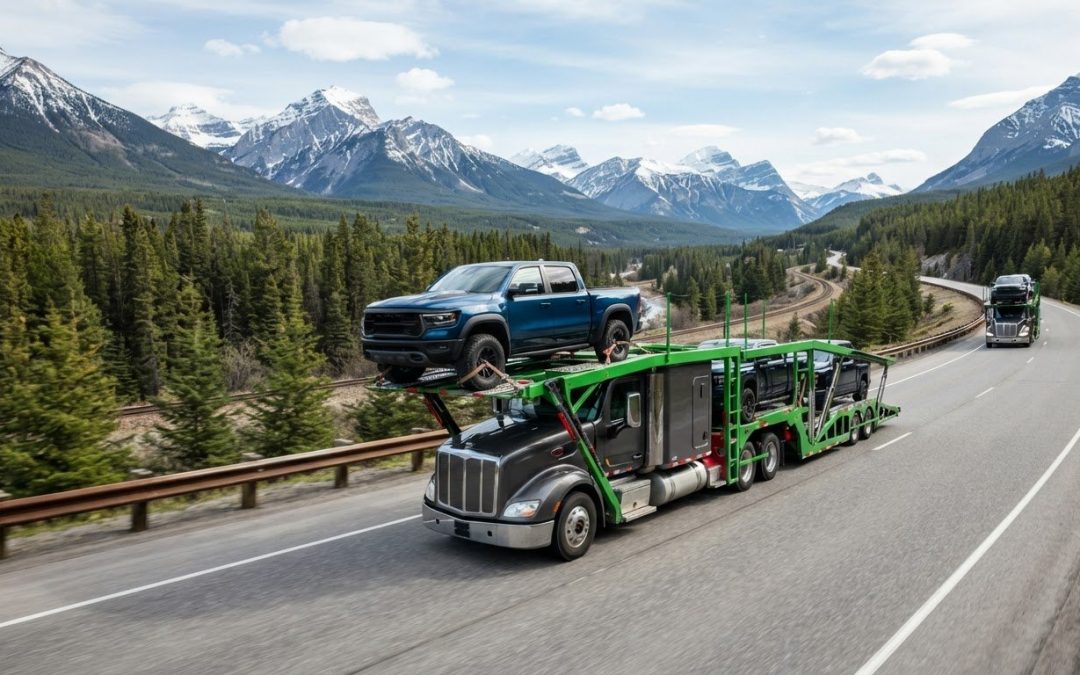
A pickup’s size and setup can shape the shipping plan before it moves. If you’re searching for pickup truck shipping Canada options, start by considering the vehicle’s dimensions and configuration, whether it runs, the route, and how pickup and delivery will be coordinated.
There are several arrangements to weigh, including open or enclosed transport, rail, and driving the truck yourself. This guide explains the main options and the vehicle and route details that help organize a move. You’ll also find practical considerations for planning timing and arranging a clear handoff.
GO Dispatch coordinates with third-party auto carriers, manages carrier selection, and organizes delivery scheduling. Whether you’re transporting one truck or coordinating business inventory, sharing accurate shipment details helps keep the process organized.
Key Takeaways
- Pickup truck shipping Canada planning starts with accurate vehicle details, including dimensions, weight, condition, and accessories that could affect carrier matching.
- Compare open and enclosed transport based on the pickup, route, access needs, and the level of protection that suits the shipment.
- Build flexibility into collection and delivery windows, and plan access and handoff details in advance to keep scheduling organized.
- Professional transport can help businesses, dealerships, fleets, and individual owners move pickups without driving them across the country.
- GO Dispatch coordinates third-party auto carriers and delivery scheduling, giving you one point of contact for transport logistics.
Pickup Truck Shipping in Canada: When Professional Transport Makes Sense
Pickup truck shipping is the coordinated transport of a vehicle from a collection point to a destination. The plan accounts for the route, the pickup’s details, and how and when it needs to be handed over. For pickup truck shipping across Canada, coordination can help businesses, dealerships, fleet operators, and individual owners move a vehicle without arranging a long drive themselves.
Driving may suit a short move when the schedule is flexible. Over longer distances, however, travel can take a staff member away from other work and leave the pickup unavailable while it is on the road. Professional transport can be a practical option for inventory transfers, fleet repositioning, or handoffs where the collection or delivery point is difficult to coordinate.
When does shipping a pickup make more sense than driving it?
Consider the work involved in the journey, not just the distance. A business moving several pickups between locations, for example, can coordinate their collection and delivery as part of an inventory transfer rather than assigning staff to drive each vehicle. This helps organize handoffs and reduces employee travel time, while the pickups remain unavailable for work during transit.
For individual owners, driving a long distance may also be inconvenient when travel plans, work, or the vehicle’s destination don’t line up. The right arrangement depends on the route, vehicle, and required delivery timing.
What is included in pickup truck shipping coordination?
Pickup truck shipping is the organized movement of a pickup between an agreed collection point and destination. Coordination includes gathering shipment details, matching the vehicle with a carrier, scheduling, and arranging delivery around the vehicle and route. A dispatch coordinator arranges transport with a carrier. The third-party carrier physically moves the pickup. GO Dispatch coordinates professional third-party auto carriers rather than operating its own carrier fleet.
Useful planning details include the pickup’s condition and configuration, collection and delivery locations, access constraints, and handoff requirements. These details help guide carrier matching and scheduling. Road transport equipment can vary. Car carrier trailers include open and enclosed types, which provide different transport setups.
With one dispatch contact coordinating carrier selection and delivery scheduling, businesses can keep shipment communication together instead of managing each logistics step separately. The route, vehicle details, and delivery requirements all inform the plan, so sharing accurate information at the outset helps keep coordination organized.
How Pickup Size and Configuration Affect Shipping Across Canada
Not every pickup fits the same transport setup. A standard configuration may have different loading requirements from a heavy-duty model with a longer body, raised suspension, or added equipment. Length, height, width, and weight can all affect which third-party carrier can accommodate the vehicle. Accurate details help dispatch match the pickup with suitable carrier capacity and plan collection and delivery.
Which pickup details should be ready before arranging transport?
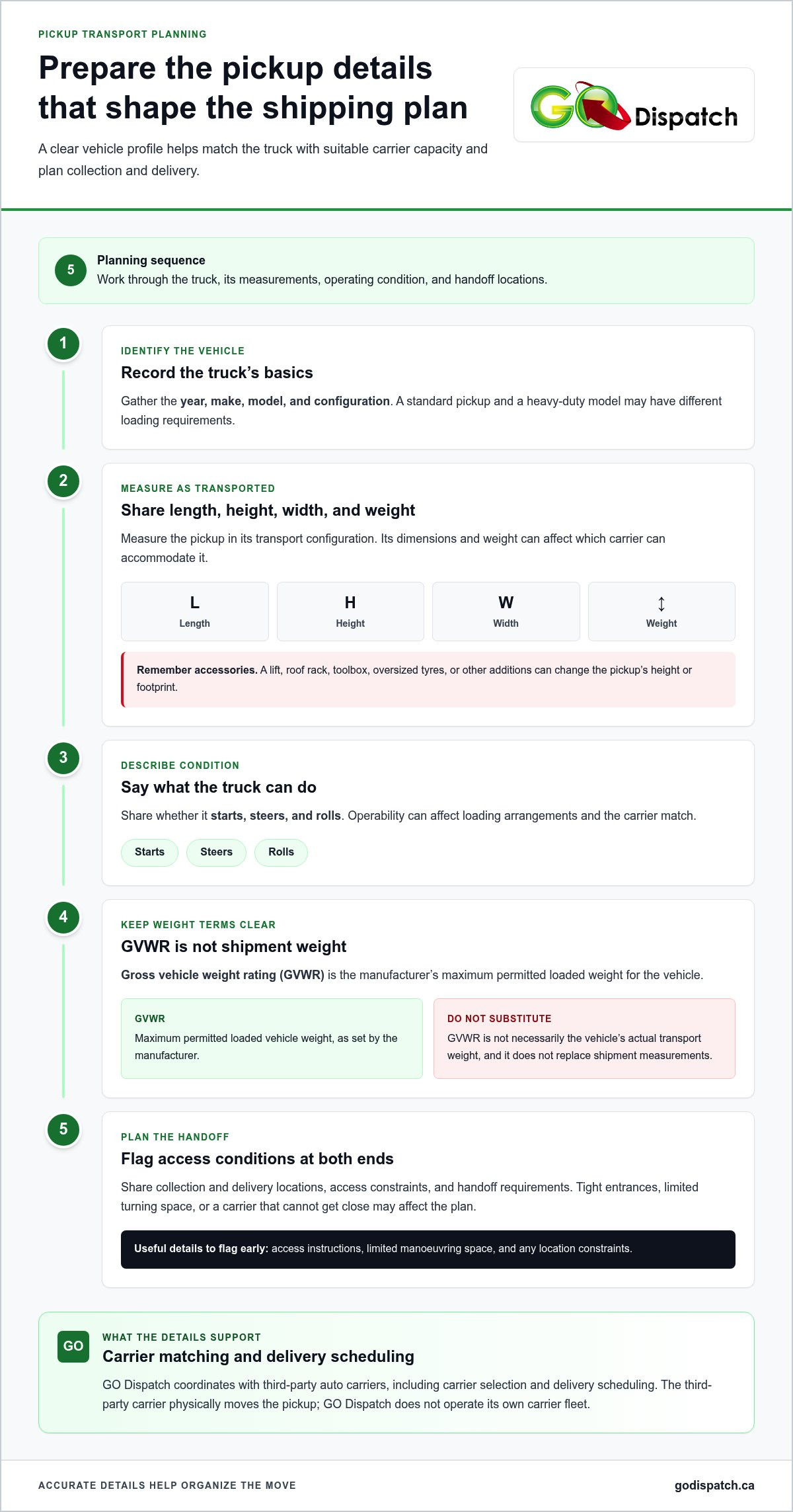
Gather the year, make, model, configuration, dimensions, and running condition. Measure the pickup as it will be transported, including installed accessories. A lift, roof rack, toolbox, oversized tyres, or other additions can change its height or footprint. Also share whether it starts, steers, and rolls, as operability can affect loading arrangements.
It can also help to know the vehicle’s gross vehicle weight rating (GVWR). This is the manufacturer’s maximum permitted loaded weight for the vehicle, not necessarily its actual weight for shipment. Don’t use GVWR as a substitute for the vehicle’s transport weight or measurements. For questions about a vehicle’s compliance, see Transport Canada’s information on Canadian vehicle safety standards.
How do heavy-duty pickups change the logistics plan?
A heavy-duty pickup can have a larger footprint or added height, particularly when modified or fitted with accessories. That may narrow the range of suitable carrier options. Dispatchers use accurate measurements and vehicle details to match the shipment with carrier capacity. For more on the broader planning process, see this guide to how to transport a truck across Canada.
Collection and delivery access matter, too. Tight entrances, limited turning space, or a location where a carrier can’t get close may affect the handoff plan. Flag these conditions early, along with any access instructions, so scheduling and coordination can account for the pickup’s needs.
Planning pickup truck shipping Canada-wide starts with describing the vehicle as it actually is, rather than relying on a generic model description. GO Dispatch coordinates third-party auto carriers and transport logistics, including carrier matching and delivery scheduling, through one dispatch contact. Explore pickup truck transport coordination for a more organized move.
Pickup Truck Shipping Options: Match the Transport Setup to the Shipment
The right transport setup depends on the pickup, route, access at each end, and what matters most for the shipment. Open and enclosed transport differ in how much exposure they provide. Neither is automatically suitable for every truck. Carrier matching should account for the vehicle’s size and configuration as well as the shipment’s needs.
Open or enclosed transport: what should pickup shippers weigh?
| Transport setup | Exposure and protection | Considerations for pickups |
|---|---|---|
| Open | The vehicle travels on an open carrier and is exposed to outdoor conditions during transit. | May suit a pickup whose owner or business accepts that exposure, provided the truck fits the carrier and route plan. |
| Enclosed | The vehicle travels inside an enclosed carrier, with more shielding from outdoor conditions. | Could suit a shipment where added protection is a priority, but the pickup’s dimensions and configuration still need to match the carrier. |
Vehicle value, modifications, accessories, and delivery requirements can all influence the choice. A raised pickup or one with a rack may need different carrier capacity than a standard configuration. Share accurate dimensions and explain any specific protection needs so dispatch can consider a suitable arrangement. For a breakdown of the factors that shape transport costs, see the Canada vehicle transport cost guide.
Single pickup or multiple vehicles: how does the plan differ?
A single-pickup move centres on one vehicle’s collection and delivery details. A dealership or fleet shipment adds coordination. Vehicles may need to be sequenced for collection, access arranged for loading, and delivery details organized across the group. Multiple vehicles don’t necessarily travel on the same carrier. Dispatch coordination accounts for shipment requirements and carrier capacity.
For example, a dealership moving several pickups can prepare a vehicle list and organize access and handoff instructions in advance. This gives dispatch a clearer view of the shipment and helps keep scheduling communication together. Businesses planning these moves can also explore dealership auto transport logistics.
For pickup truck shipping Canada-wide, match the transport setup to the actual vehicle and route rather than relying on a general rule. If the shipment crosses the border into Canada, import procedures are a separate planning consideration. Consult the Canada Border Services Agency’s Importing Vehicles into Canada memorandum. GO Dispatch coordinates third-party auto carriers and delivery scheduling through one-stop dispatching. Learn more about vehicle transport coordination.
Planning a Canada-Wide Pickup Shipment: Details That Keep Dispatch Moving
A clear plan starts with accurate shipment information and ends with an organized handoff. For pickup truck shipping Canada-wide, long routes, seasonal conditions, and route complexity can all affect coordination. Keep collection and delivery windows realistic, with some flexibility rather than plans built around an exact arrival time.
A useful sequence is:
- Share vehicle and route details. Provide the pickup’s information, collection and delivery postal codes, preferred dates, and any access restrictions.
- Coordinate carrier matching. Dispatch uses the shipment details to coordinate with a third-party carrier suited to the vehicle and route.
- Schedule the handoff. Confirm who will release and receive the pickup, how they can be reached, and any site instructions.
- Stay informed. Keep communication open with your dispatch contact for transport and delivery scheduling updates.
What route and handoff information helps organize a shipment?
Postal codes help define the collection and delivery points. Add preferred dates or workable date ranges, site hours or access limits, and details that could affect a carrier’s ability to reach the pickup. A restricted entrance or limited loading space, for example, is worth flagging early.
Clear contacts matter at both ends. Identify the person who can release the truck and the person who will receive it, and make sure their contact details are current. If either person becomes unavailable, share an alternate contact or an updated handoff plan. This helps prevent avoidable coordination delays, especially when a long route depends on several arrangements working together.
How should businesses coordinate multiple pickup deliveries?
For several vehicles, group the shipment information in one organized list. Include each pickup’s identifying details, destination postal code, preferred delivery window, and receiving contact. If locations have different access instructions, record them beside the relevant vehicle rather than relying on a general note.
Plan delivery sequencing around site access and receiving capacity. A team expecting multiple pickups can arrange who will accept each vehicle and when, while allowing some flexibility for changing road or seasonal conditions. GO Dispatch coordinates third-party auto carriers and delivery scheduling, giving businesses one dispatch contact for the logistics. To organize vehicle details and route requirements, coordinate your pickup shipment with GO Dispatch.
How GO Dispatch Coordinates Pickup Truck Shipping in Canada
Moving a pickup takes more than finding space on a carrier. The shipment also needs clear vehicle information, carrier matching, coordinated timing, and an organized delivery handoff. GO Dispatch coordinates pickup truck shipping Canada-wide, helping dealerships, fleets, and businesses manage vehicle movements through one dispatch contact.
What does a dispatch partner handle for a pickup shipment?
GO Dispatch coordinates professional third-party auto carriers. It does not operate the carrier fleet. The dispatch role is to manage transport logistics, coordinate carrier selection around the shipment, and organize delivery scheduling. The carrier is responsible for physically transporting the pickup.
For a business moving inventory, one-stop dispatching can bring shipment communication into one place instead of leaving staff to coordinate transport steps separately. A dealership planning vehicle transfers or a fleet arranging pickup movements can share its requirements with GO Dispatch, which coordinates logistics and scheduling with the carrier. This gives the business a practical point of contact for the process without implying a guaranteed schedule or outcome.
What information helps GO Dispatch coordinate your shipment?
Start with the details that describe the pickup and the move. Useful information includes:
- Vehicle details: make, model, configuration, and whether the pickup runs.
- Route details: collection and delivery locations, including postal codes.
- Timing: preferred collection and delivery dates or workable windows.
- Access and handoff: site restrictions, loading considerations, and the contacts responsible for releasing and receiving the vehicle.
For multiple pickups, organize the details by vehicle and destination. Note different access requirements or receiving contacts alongside the relevant shipment. This gives dispatch a clearer picture of the movement and helps coordinate carrier matching and delivery scheduling around the business’s requirements.
You don’t need to manage every transport detail alone. GO Dispatch works with you to coordinate the process, keep shipment information organized, and align carrier arrangements with the pickup and route requirements. Clear details at the start make it easier to coordinate the next steps.
Ready to organize a pickup move? Get started with GO Dispatch for one-stop transport dispatching across Canada.
Plan Your Pickup Move with Confidence
A smoother pickup shipment starts with the right information. Vehicle size, configuration, route, and handoff needs all help shape the transport plan. Comparing open and enclosed setups against your pickup and shipment requirements can also help clarify which option fits.
For pickup truck shipping Canada-wide, GO Dispatch coordinates professional third-party auto carriers and manages transport logistics, including carrier selection and delivery scheduling. One-stop dispatch support gives businesses, dealerships, and fleet teams a single point of contact as they organize pickup movements.
Share your vehicle details, collection and delivery locations, preferred timing, and access requirements to get the process moving. Coordinate your pickup truck shipment with GO Dispatch and plan the next move with clearer information. Contact GO Dispatch to coordinate your pickup shipment across Canada.
Frequently Asked Questions
Can I ship a pickup truck anywhere in Canada?
GO Dispatch coordinates pickup truck transport across Canada by matching shipments with third-party auto carriers. The plan depends on the pickup’s dimensions and condition, the route, and collection and delivery access. Share both postal codes and any site limitations early, especially if a location has restricted entry or limited handoff space. These details help organize carrier matching and delivery coordination for your route.
How is a pickup truck shipped across Canada?
A pickup can be moved by a professional vehicle carrier matched to its size, configuration, condition, route, and shipment needs. Open and enclosed road transport offer different levels of exposure and protection, and neither suits every truck. GO Dispatch coordinates third-party auto carriers and manages logistics and delivery scheduling. You provide the vehicle and handoff details, while the carrier physically transports the pickup. Access at both ends also informs the plan.
Does a heavy-duty pickup need a different transport setup?
It may. A heavy-duty pickup, particularly one with a longer body, raised suspension, oversized tyres, or installed accessories, can have a larger footprint or greater height than a standard configuration. Those differences may affect which carrier can accommodate it. Provide accurate measurements and describe modifications so dispatch can consider suitable carrier capacity. The vehicle’s label or model name alone may not show its full transport dimensions.
Can a non-running pickup truck be shipped?
A non-running pickup may be transportable, but its condition needs to be disclosed during planning. Tell the dispatcher whether it starts, steers, and rolls, and describe any other condition that could affect loading or movement. That information helps coordinate carrier matching and handoff requirements. Don’t assume a standard transport arrangement will suit an inoperable vehicle. Its loading needs and access at collection and delivery points matter.
What details are needed to arrange pickup truck shipping?
Prepare the pickup’s year, make, model, configuration, dimensions, installed accessories, and running condition. Also provide collection and delivery locations or postal codes, preferred timing, and access requirements at both sites. For a business shipment with multiple pickups, organize these details by vehicle and destination, including the relevant receiving contact. Clear information helps GO Dispatch coordinate carrier selection, logistics, and delivery scheduling around your shipment needs.
How much does pickup truck shipping in Canada depend on route and vehicle details?
There’s no single amount that applies to every shipment. The route and distance, pickup dimensions and weight, configuration, running condition, transport setup, season, and access at collection and delivery can all affect the shipment plan and its cost. Sharing accurate details helps GO Dispatch coordinate the transport requirements for your move. A general estimate may not reflect a modified truck or a route with specific access needs.
What does an auto transport dispatch service do for pickup shipping?
An auto transport dispatch service coordinates shipment logistics by matching a pickup with a third-party auto carrier and managing delivery scheduling. GO Dispatch arranges carrier transport. It doesn’t operate the carrier fleet or physically move the truck. One-stop dispatch support gives businesses, dealerships, and fleet teams a single contact for coordinating transport details, reducing the number of separate arrangements clients need to manage themselves.