
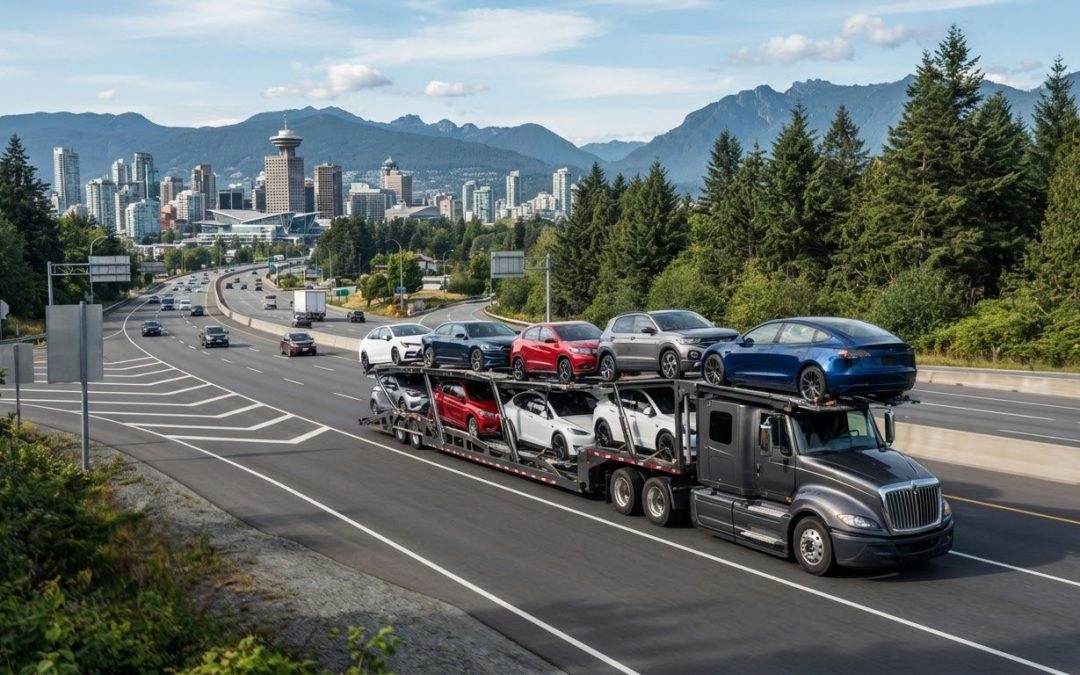
You can move multiple company cars together when they share a ready date, origin and destination. Moving multiple company cars in one coordinated shipment can simplify scheduling, while the number a carrier can take depends on the vehicle types and route.
It’s natural to want one clear plan for a fleet move, especially when several vehicles need to be available at the other end. The key is matching the shipment to the transport setup and timing, not treating every car as a separate trip.
This article explains how combined transport works, what affects shipping costs and what to prepare before pickup. It also covers carrier capacity and commercial requirements, helping you plan a move across Canada with fewer surprises.
Key Takeaways
- Compare transport options by route, vehicle type, timing and protection needs, since each can affect the shipping cost.
- Prepare each vehicle for pickup by removing personal items, keeping fuel low and documenting its condition with dated photos.
- Align vehicles’ ready dates, origins and destinations to make shipment consolidation more practical and potentially lower the per-vehicle rate.
- Plan fleet moves around carrier capacity and delivery windows, which may vary with the route and transport setup.
- Review the transport insurance terms and exclusions; hiring a licensed auto transport company means you don’t need a Commercial Driver’s Licence to transport the vehicles yourself.
How do you base the cost of moving a vehicle?
Shipping between Canadian cities or provinces may take a few days to a week. Route distance, timing, vehicle type and carrier setup all shape the cost and delivery window.
Transport options and cost questions
Clarify what the transport quote includes and how the arrangement fits your fleet. Ask whether the carrier uses open or enclosed transport, how many vehicles can travel together, and whether pricing is per vehicle or for the full shipment. Also ask whether open-air transport involves bidding through a directory. The price depends on the case and is provided after a quote request. Distance, origin, destination, timing and vehicle type affect the cost.
Distance is only one cost factor. A vehicle on a regular carrier route may involve different logistics from one picked up or delivered at a less accessible location. Origin and destination, time of year and booking notice can also affect costs. For an accurate comparison, provide the same details for every vehicle: type, pickup location, destination and ready date. This helps distinguish a true multi-vehicle quote from separate transport arrangements.
Trailer access and transport types
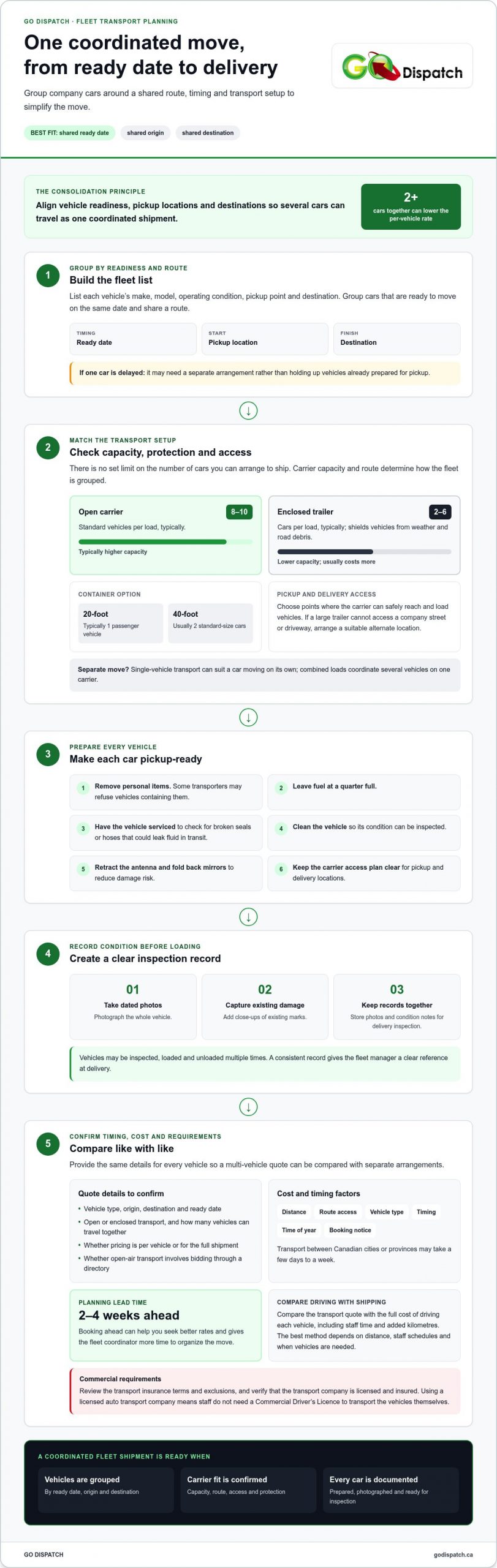
Trailer access means choosing pickup and delivery points where a transport carrier can safely reach and load vehicles. If a large trailer can’t park on a company street or household driveway, arrange an alternate location with suitable access. Open carriers typically haul 8-10 standard vehicles per load; enclosed trailers typically hold 2-6 cars. Enclosed transport shields vehicles from weather and road debris, but usually costs more. Single-vehicle transport can suit a car moving separately, while combined loads coordinate several vehicles on one carrier.
Prepare each vehicle before pickup. Remove personal items, since some transporters may refuse vehicles containing them, and leave the fuel tank a quarter full. Have the vehicle serviced beforehand to check for broken seals or hoses that could leak fluid in transit. Clean it so its condition can be inspected, then photograph existing marks. For a luxury vehicle, these records provide a clear reference for the delivery inspection.
Moving several company cars together can simplify a long-distance relocation when staff need vehicles at the new location. It can also avoid the added distance and wear of having employees drive each car. Open carriers can accommodate groups of standard vehicles, while enclosed carriers have lower capacity. Match the vehicle count and types to the carrier arrangement, then plan pickup access and delivery timing around the company’s move.
Can I Relocate Multiple Cars at Once?
Yes. There’s no set limit on the number of cars you can arrange to ship, but carrier capacity and route determine how the fleet is grouped. For a business moving multiple company cars, a coordinated shipment can reduce separate arrangements and make vehicle arrivals easier to manage.
Savings from shipping multiple cars
Booking 2 or more cars together lowers the per-vehicle rate compared with individual orders. To make consolidation practical, align the vehicles’ ready dates, pickup locations and destinations. If one car isn’t available on time, it may need a separate arrangement rather than delaying the rest. Booking transport 2-4 weeks ahead can help you seek better rates and gives the fleet coordinator more time to organize the move.
Shipping costs compared with driving
Compare the transport quote with the full cost of driving each vehicle, including staff time and added kilometres. The best method depends on distance, staff schedules and when vehicles need to be ready at the destination.
Reducing shipping damage risk
Document each car before loading. Take dated photos of the whole vehicle and close-ups of existing damage. Retract the antenna and fold back the mirrors to reduce the risk of damage during shipping. Since vehicles may be inspected, loaded and unloaded multiple times, keep each car’s photos and condition notes together. This gives the fleet manager a clear record to compare during the delivery inspection.
Choosing an auto shipping company
Choose a transport plan that fits the fleet’s vehicle types, route and schedule. Review the proposed method, costs and insurance coverage, and verify that the transport company is licensed and insured. Using a licensed auto transport company means your staff don’t need a Commercial Driver’s Licence to move multiple vehicles. Provide clear pickup and delivery details so the carrier plan matches the relocation schedule.
A shipping container can suit a smaller group, but capacity is limited. A standard 20-foot container typically holds one passenger vehicle, while a standard 40-foot container usually accommodates two standard-size cars. Match the container to the vehicle sizes and full transport plan, rather than assuming one unit will fit the fleet.
For coordinated transport planning, multi-vehicle transport coordination can help bring vehicle details, timing and carrier arrangements together.
Consolidating shipments to save cost and time
Consolidation groups multiple vehicles into one coordinated shipment instead of arranging unrelated moves. It works best when the vehicles share a ready date, origin and destination. For a company relocating cars between branches, aligning these details can simplify dispatch and keep the fleet’s arrival plan together.
Start by grouping vehicles according to route and readiness. A car still needed at the original site shouldn’t delay vehicles already prepared for pickup. Make a fleet list with each vehicle’s make, model, operating condition, pickup point and destination. This gives the transport coordinator an accurate view of which cars can move together.
Schedules can determine how the fleet is grouped. If several vehicles are ready on the same date but one is delayed, arrange separate groups rather than holding up the entire fleet. A shared destination can still support coordinated transport, while different delivery addresses may require distinct arrangements. Match each group to its actual route and availability.
Keep belongings separate from the vehicle shipment. Some transporters may refuse cars containing personal items, so remove them before pickup. Company equipment should travel under an appropriate cargo plan, rather than being assumed secure inside a vehicle. Separating belongings also makes it easier to record what is being transported and avoid confusion during handover.
Plan pickup and delivery around branch operations. Identify who can release each vehicle, where the carrier can access it, and who will receive it at the destination. If a trailer can’t safely reach a street or workplace entrance, arrange an alternate meeting point before dispatch. Clear location details can prevent a vehicle from being left out of the planned group.
Consolidation doesn’t remove the need to document vehicle condition. Before loading, clean each car and photograph existing marks, including close-ups of damage. Keep the records with the vehicle list so they’re easy to match at delivery. Enclosed transport protects vehicles from weather and road debris, but condition records still help clarify each car’s state.
Set expectations for arrival. Delivery may be arranged within a time window rather than for a specific hour. Give each receiving location a contact person and a clear handover plan. For example, a branch manager can confirm which vehicles arrived and record any condition concerns against the correct fleet entry. This final step helps close out the shipment when several cars arrive together.
What are the options for moving a fleet of company vehicles across Canada?
Across Canada, a fleet can move by auto carrier, rail, flat-deck tow truck or a company-arranged drive. The right method depends on route length, vehicle count, timing and how much coordination employees can manage.
Auto carrier: Open carriers suit standard vehicles and longer routes. Some carriers fit only 2 to 3 cars, so a large fleet may need several loads or coordinated pickups. Enclosed carriers protect vehicles from weather and road debris, but generally cost more than open transport. Choose the setup according to vehicle value, route conditions and the company’s delivery plan.
Rail: Rail can be a lower-cost option than other vehicle-shipping methods. It may suit a long-distance move where the rail route and vehicle handling arrangements align with the company’s origin and destination. Plan for the full journey, including collection and final delivery, rather than treating rail transit as door-to-door transport. A cross-country vehicle shipment and container transit may take 4-10 days.
Flat-deck tow truck: This can work for a short-haul move of less than a day’s journey, such as a single vehicle or a transfer between nearby sites. For long-distance moves, flat-deck transport can be prohibitively expensive, making it a poor fit for moving a fleet across Canada.
Driving or rental truck: Employees can drive company vehicles to the destination, or the business can arrange a one-way rental truck. Driving gives staff access to the vehicles on arrival, but can take several days across Canada and adds distance to each car. Consider staff availability, travel coordination and when each vehicle is needed at the new site.
Timing differs by route and method. Vehicle transport between provinces may take a few days to a week, while cross-country shipment windows can be 7-14 days or more. Container transit may take 4-10 days. Build these windows into the relocation schedule, especially if vehicles must be ready for work immediately after arrival.
Commercial driving requirements also affect the decision. Businesses using a licensed auto transport company don’t need a Commercial Driver’s Licence to transport multiple vehicles themselves. By contrast, moving cars with a truck and trailer may involve licensing, registration or permit requirements, depending on combined vehicle weight. Check the applicable requirements before assigning employees to drive a loaded combination.
For a fleet move, compare each option against the route, vehicle count and required arrival timing. Carrier transport can reduce employee driving, while rail or short-haul flat-deck service may suit specific routes. A clear schedule, vehicle list and destination plan help match the method to the move.
What insurance coverage is required when transporting company cars in Canada
Before shipping a fleet, identify what insurance protects each vehicle in transit. Transport providers typically carry insurance for vehicles being transported, but the policy terms determine what is covered. Don’t assume the company’s regular auto policy applies unchanged during shipping. Review coverage for each vehicle and the transport arrangement before signing.
Start with the carrier’s policy details. Confirm which vehicles and stages of transport are covered, including loading, transit and unloading. Read the exclusions, limits and damage-reporting process. A policy may treat vehicle types or circumstances differently, so compare its terms with the fleet list. For example, confirm that a high-value company car is included in the described shipment coverage.
Then compare that protection with the company’s own vehicle insurance. Some vehicle policies may not cover a car while it’s being shipped, so contact the insurer about the specific transport period. Ask how existing coverage coordinates with the carrier’s policy and whether a separate policy is needed. Keep the response with the shipment records instead of relying on assumptions about standard coverage.
Pay attention to exclusions. Read the shipment policy before signing and ask for clarification about any wording that could affect a claim. Check whether the policy addresses pre-existing damage, the vehicle’s condition at pickup and how to report a claim. Take dated photos of each car before transport, including close-ups of existing marks, and keep inspection documents for comparison at delivery.
Company equipment and other valuables inside a vehicle need separate consideration. Transport coverage for the car doesn’t automatically cover belongings inside it. If the company plans to leave items in a vehicle, review whether its existing insurance covers them during shipment. Remove personal items before pickup, since some transporters may refuse cars containing them. Arrange separate cargo coverage for valuable equipment.
If an employee or hired driver moves a vehicle instead, verify that the driver is covered under the company’s vehicle insurance. This differs from carrier transport, so don’t treat the carrier’s in-transit policy as protection for a car driven independently. Record who is responsible for each vehicle and which insurance applies during each leg of the move.
Organize the policy documents, vehicle list, inspection photos and insurer responses together. That gives the fleet manager a clear record if a vehicle arrives with damage or a coverage question arises. To coordinate company car transport and its carrier arrangements, plan your vehicle shipment.
GO DISPATCH: Car Transport
GO DISPATCH helps businesses arrange vehicle moves through its One-Stop Transport Dispatching service, connecting each shipment with suitable auto carriers. Turn to GO DISPATCH when coordinating several company cars becomes a major task, or when the fleet includes trucks, SUVs or vans alongside cars.
Share the vehicle types, origins, destinations and timing for the move. GO DISPATCH coordinates Car Transport, Truck Transport, and SUV and Van Transport, bringing the logistics into one organized plan while you focus on your business.
To discuss transport for your company vehicles, contact GO DISPATCH.
Set your fleet move in motion
A smooth fleet relocation starts with a clear plan for what each vehicle needs. Before arranging the move, connect vehicle assignments with business priorities and the people responsible for pickup and handover. This gives your team a shared reference and keeps transport decisions aligned with operations.
For moving multiple company cars, the next step is to turn that plan into coordinated transport. GO DISPATCH offers Car Transport, Truck Transport, and SUV and Van Transport, helping businesses arrange different vehicle types through one point of coordination. This can help when a fleet includes cars alongside work trucks or vans and the move needs to fit the company’s schedule.
Bring your fleet details together and choose a clear starting point. Contact GO DISPATCH about your fleet to discuss your vehicle transport needs. With a practical plan in place, your team can focus on the work waiting at the destination.
Frequently Asked Questions
How Many Cars Can I Ship At The Same Time?
You can arrange transport for any number of cars, though they may travel in several carrier loads. Long-distance auto-carrier trailers can haul six to ten vehicles, depending on the route and vehicle types. For example, a fleet with cars and larger SUVs may need a different load plan from the same number of standard sedans. Provide a complete vehicle list so the carrier can plan capacity.
How Many Cars Can I Transport?
There’s no overall limit on the number of cars you can arrange to transport. The practical limit for one shipment depends on carrier capacity, vehicle sizes and routing. If the fleet exceeds one load, divide it into coordinated groups. Keep each group’s origin, destination and ready date organized so the transport plan reflects which cars can move together.
How many cars fit on a car carrier?
An open carrier typically hauls 8-10 standard vehicles per load, while an enclosed trailer typically holds 2-6 cars. Some configurations can carry up to 11 to 12 cars, depending on vehicle type and route. These figures describe different equipment and operating conditions, not a single universal capacity. Larger vehicles take up more space, so a mixed fleet can change how many fit.
How much does it cost to transport multiple company cars in Canada?
The cost depends on the shipment’s origin, destination, distance, time of year, booking notice, vehicle types and transport method. A fleet quote should account for the full group and route, rather than simply multiplying a single-car estimate without considering carrier capacity. For an accurate comparison, provide the same vehicle and schedule details for every option. The price depends on the case and is provided after a quote request.
How do open and enclosed car transport compare for company vehicles?
Open transport carries vehicles exposed to weather and road debris, while enclosed transport shields them from both. Enclosed service typically costs more and accommodates fewer cars per trailer. A company might choose open transport for standard fleet vehicles and reserve enclosed transport for cars needing added protection. Consider the vehicles’ condition, use and protection priorities, along with route and scheduling needs, when choosing.
How do I get quotes to ship multiple company cars, and what discounts are available?
To request comparable quotes, provide the vehicle count, types, origin, destination, ready date and preferred transport method. Include any access restrictions at pickup or delivery, since these can affect carrier arrangements. Booking two or more cars together lowers the per-unit rate compared with individual orders. Arranging transport 2-4 weeks ahead can help you seek better rates and coordinate the fleet’s schedule.
How should company cars be prepared for transport?
Before pickup, disable alarms or security systems, fully charge each battery and top up its fluids. Keep fuel between one-eighth and one-quarter of a tank, and remove personal items that could complicate transport. Monitor vehicles for two weeks beforehand to spot leaks or other problems. For a fleet, assign someone to follow the same preparation checklist for every car and record any exceptions before loading.
What provincial rules or permits apply to transporting multiple company cars in Canada?
Requirements depend on how the vehicles are moved. A business using a licensed auto transport company doesn’t need a Commercial Driver’s Licence to transport multiple vehicles itself. If employees use a truck and trailer, licensing, registration or permits may depend on combined vehicle weight and the applicable jurisdiction. Before dispatch, identify the truck and trailer combination, then determine which provincial requirements apply to that setup.