
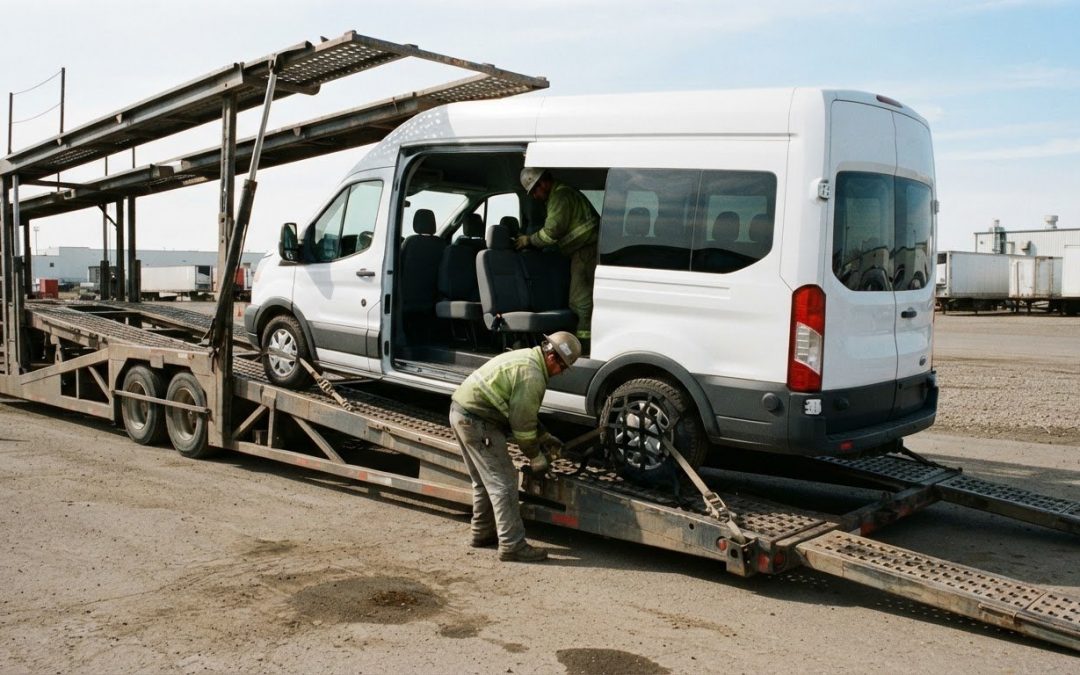
The right van size starts with its actual seating capacity, not just its model name. Minivans commonly seat 7-9 passengers, while passenger vans are available in 7-, 9-, 12- and 15-passenger configurations. For minivan and passenger van shipping, capacity is a useful starting point, but the vehicle’s dimensions and weight also matter when planning transport.
It’s easy to assume that counting seats settles the size question. It doesn’t: seating layouts, cargo space and vehicle specifications vary, even among vans with similar passenger capacities. Canadian tax classifications also consider seating capacity and business use, which are separate from choosing a transport arrangement.
This guide explains how passenger capacity relates to vehicle size, what insurance, licensing and permits mean for shipping, and which practical details help shape transport arrangements. You’ll learn what information to provide when planning a move, without getting lost in vehicle jargon.
Key Takeaways
- Use the van’s full seating configuration as a starting point, then factor in its dimensions and weight to plan transport.
- Separate Canadian tax classification from shipping decisions: seating capacity and business use affect tax treatment, not the vehicle’s physical size.
- Compare open and enclosed transport by weighing vehicle protection needs against practical details such as dimensions and route.
- Choose door-to-door or terminal shipping based on pickup and delivery access, and use one-stop dispatching to coordinate van transport.
Insurance, licensing and permits
Insurance is financial protection for losses covered by a policy. For van transport, the policy terms determine what protection applies during loading, transit and delivery. A 7-passenger minivan and an extended cargo van may have different dimensions and cargo space, so provide accurate vehicle details. Include its length, height, condition and any modifications. An added lift or ramp can affect the vehicle’s measurements.
Licensing is authorization to perform a regulated activity. The driver transporting a van and the person driving it on public roads have different roles. Passenger capacity alone doesn’t establish which licence applies; the vehicle configuration and the rules for the specific activity matter. Keep the transport arrangement separate from any licence needed to drive the van after delivery.
A permit is official approval for a defined activity. For transport planning, the van’s height, length and route are useful details because they help identify applicable requirements. Cargo vans and passenger vans can have different layouts, even when their exterior dimensions appear similar. If the van is included in a transport plan with trucks, record its measurements separately.
Canadian tax classification is separate from transport insurance, licensing and permits. According to the Canada Revenue Agency’s vehicle definition chart, a van seating 1 to 3 people, including the driver, is a motor vehicle when used more than 50% for transporting goods or equipment to earn income. The condition applies in the year the van is bought or leased. If it doesn’t meet that business-use condition, the chart classifies it as a passenger vehicle.
For vans seating 4 to 9 people, including the driver, the Canada Revenue Agency’s chart uses a different threshold. It classifies the van as a motor vehicle when used 90% or more to transport goods, equipment or passengers to earn income in the purchase or lease year. Otherwise, it is classified as a passenger vehicle. These tax distinctions don’t determine transport requirements, but they show why seating capacity and use must be described accurately in Canada.
What factors affect minivan and passenger van shipping prices and delivery times?
A route is the path between pickup and delivery points. Distance, road access and routing all shape the transport plan. A direct trip between major centres differs from one involving remote locations or difficult access. Pickup and delivery locations can also affect scheduling because the vehicle must be safely loaded and unloaded at both ends.
Vehicle dimensions are its length, width and height. These measurements help determine suitable transport equipment and loading arrangements. An extended-body or high-roof passenger van may need different planning from a compact minivan. Provide the vehicle’s actual configuration, including modifications, rather than relying on its model name alone.
Vehicle weight is part of the load the transport equipment must accommodate. Passenger capacity can contribute to weight: fifteen passengers in a van can weigh over one ton in total. Share the vehicle’s weight when available, and say whether it will carry cargo. Added cargo affects the load and should be considered separately from the empty vehicle.
Operability describes whether a vehicle can move under its own power and be loaded normally. A running minivan may be handled differently from one that won’t start or has damaged wheels. Clearly note any issue when arranging transport. This information affects loading arrangements and can influence the time needed at pickup and delivery.
Delivery time is the schedule shaped by route, access, vehicle condition and transport coordination. Seasonal road conditions and route changes can also affect travel. Allow the plan to account for the vehicle’s dimensions and pickup constraints, rather than judging timing by distance alone. Minivan and passenger van shipping prices depend on the route, dimensions, weight, operability and transport arrangements; the price depends on the case and is provided after a quote request.
For a more coordinated plan, van transport planning can bring route, vehicle and timing details together.
Delivery timing depends on the route, access, vehicle condition and transport coordination. A direct trip between major centres may take a different amount of time from one involving remote locations, difficult access or seasonal road conditions.
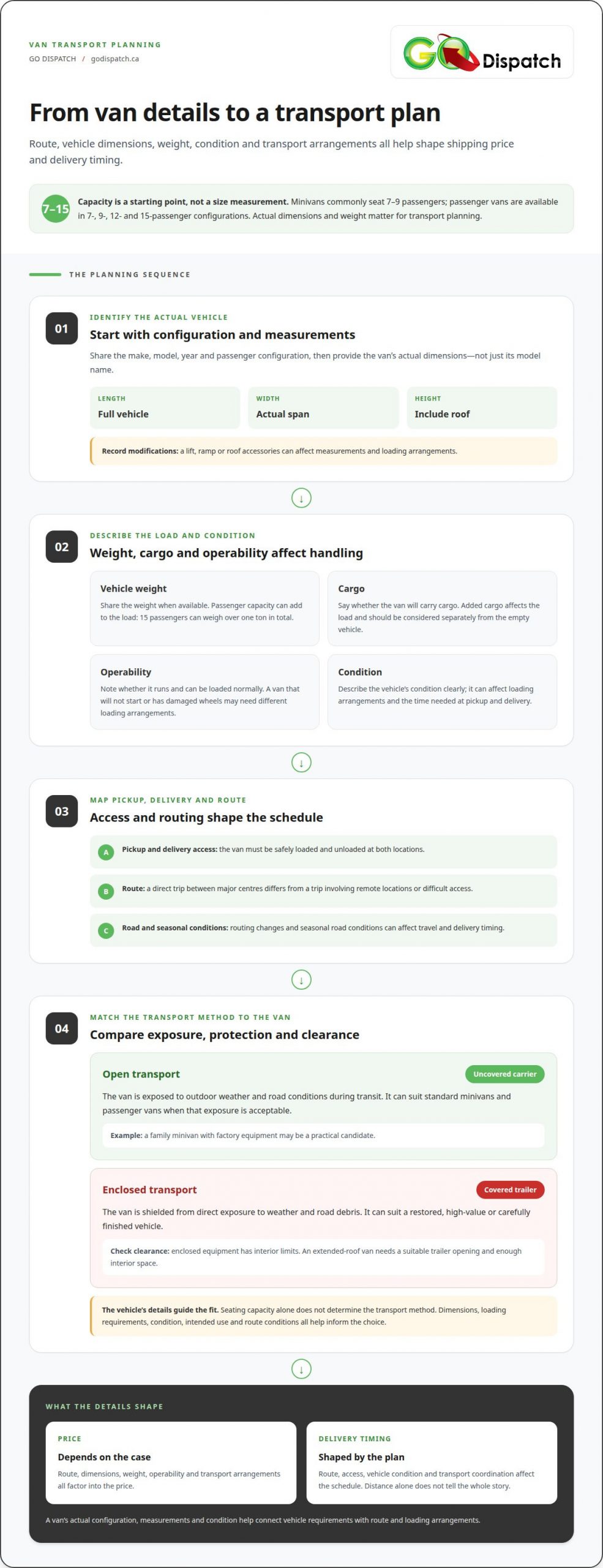
Comparing Open and Enclosed Van Transport in Canada
Open transport carries a van on an uncovered vehicle carrier, exposing it to outdoor weather and road conditions during transit. It can suit standard minivans and passenger vans when exposure is acceptable. For example, a family minivan with factory equipment may be a practical candidate. Seating capacity alone doesn’t determine the transport method; the carrier must suit the van’s actual dimensions and loading requirements.
Enclosed transport carries a van inside a covered trailer, shielding it from direct exposure to weather and road debris. It can suit a restored van, a high-value vehicle or one with a carefully finished exterior. Enclosed equipment has interior clearance limits, so height, width and length matter. An extended-roof passenger van, for example, needs a suitable trailer opening and enough interior space.
Vehicle condition and intended use help guide the choice. A daily-use minivan with ordinary wear may not need the same exterior protection as a show vehicle. A mobility-converted van may have a ramp or lift that affects its dimensions. Record those additions and any roof accessories before planning loading. Canada’s changing weather can also inform the decision, especially on routes exposed to rain, snow or road spray.
Use these steps to compare methods for a specific van:
- Identify the van’s make, model, year and passenger configuration.
- Measure its full length, width and height, including installed accessories.
- Describe exterior condition and any modifications, such as a lift or roof equipment.
- Match those details to the available carrier’s loading method and clearance.
Open and enclosed transport differ mainly in exposure and equipment setup, not passenger count. A 7-passenger minivan and a 15-passenger van may each require a different fit assessment. Choose based on the vehicle’s protection needs, dimensions and condition. Accurate measurements help determine whether the selected carrier can accommodate the van safely and appropriately.
Door-to-Door vs Terminal Shipping for Passenger Vans
Door-to-door shipping means arranging pickup and delivery near the addresses you provide. A passenger van can use this option when a carrier can safely reach both locations. Narrow residential streets, low-clearance entrances or limited turning space may prevent a transport truck from stopping at the exact address. A nearby accessible meeting point can make the handoff more practical while keeping pickup close to home or work.
Terminal shipping means delivering or collecting the vehicle at a designated transport facility. It can suit a van when a home or business address has restricted truck access. For example, a tight driveway or shared parking area may not leave enough room for safe loading. A terminal provides a defined handoff location, though you’ll need to arrange travel to or from the facility.
Terminal pickup isn’t automatically required for passenger vans. The right choice depends on access at both ends, the route and the vehicle’s condition. An extended van needs enough room for a safe approach and loading; a non-running van also needs a workable loading location. Provide the pickup and delivery addresses, dimensions and operability details when arranging transport.
Use these practical steps to compare the options:
- Describe access at each address, including narrow roads, steep driveways or overhead obstructions.
- Consider whether a transport truck can enter, turn and stop safely at both locations.
- Choose a nearby meeting point if a residential street cannot accommodate the carrier.
- Consider terminal handoff when a designated facility better fits the route or access needs.
Door-to-door service can reduce extra travel to a handoff point, while terminal shipping provides a defined pickup or delivery location. Neither option changes the need to plan around the van’s actual size. For a 7-passenger minivan or a larger passenger van, access still matters, while the vehicle’s overall length and height shape the loading plan.
Arrange passenger van transport with pickup and delivery access in mind.
GO DISPATCH
GO DISPATCH coordinates minivan and passenger van transport through its SUV and Van Transport and One-Stop Transport Dispatching services. Turn to GO DISPATCH when you need help organizing a vehicle move and want the logistics managed in one place. Details such as the van’s seating configuration, dimensions, condition, route and preferred handoff help inform transport planning. Sharing accurate information helps match the vehicle with suitable transport arrangements and keeps key requirements visible throughout coordination.
Whether you’re arranging transport for a family minivan or a larger passenger van, GO DISPATCH manages the logistics and connects you with auto carriers. Contact GO DISPATCH to discuss your van transport needs.
Prepare for a Smooth Next Step
Planning minivan and passenger van shipping works best as a coordinated decision, not just a seat-count calculation. Use the vehicle’s details and your transport preferences to build a clear plan. A well-prepared request keeps the focus on a suitable transport arrangement rather than assumptions based on the model name alone.
GO DISPATCH offers Car Transport, Truck Transport, and SUV and Van Transport. Its One-Stop Transport Dispatching service coordinates the logistics of your vehicle move. Contact GO DISPATCH to get help organizing your transport plan.
Contact GO DISPATCH to discuss shipping. A clear plan can help you move forward with confidence.
Frequently Asked Questions
So how do you pick the right size?
Start with how many people the van needs to carry, then use its exact configuration to plan transport. Two vans with the same passenger capacity can have different body styles or equipment. Roof accessories, for example, can affect clearance needs, and a mobility-converted van may differ from its original configuration. Provide the vehicle’s year, make, model and modifications when arranging the move.
What are the Canadian rules for shipping a van between provinces?
Plan an interprovincial shipment around the vehicle, route and handoff rather than assuming passenger capacity alone sets the requirements. Transporting a van by carrier is different from driving it across a provincial boundary. For example, a non-running vehicle needs a plan that accounts for loading. Provide the origin, destination, condition and intended use so the arrangement fits the move.
What paperwork and vehicle preparation are required before shipping a van in Canada?
Prepare the vehicle and shipment details before pickup to make the handoff straightforward. Have the vehicle identification and booking information ready, and arrange authorization if someone else will release or receive the van. Remove personal belongings and loose items from the cabin, secure removable accessories, and take dated photos of the exterior before transport. These steps create a useful record of the vehicle’s condition and shipment arrangements.
What insurance coverage applies when a minivan or passenger van is shipped?
Coverage depends on the applicable policy wording and the circumstances of the shipment. Read the transport documents for the covered period, exclusions, deductible and claims process. Keep pre-shipment photos and note existing damage to help document the van’s condition. Don’t assume your personal auto policy and transport coverage protect the vehicle in the same way; each policy has its own terms.