
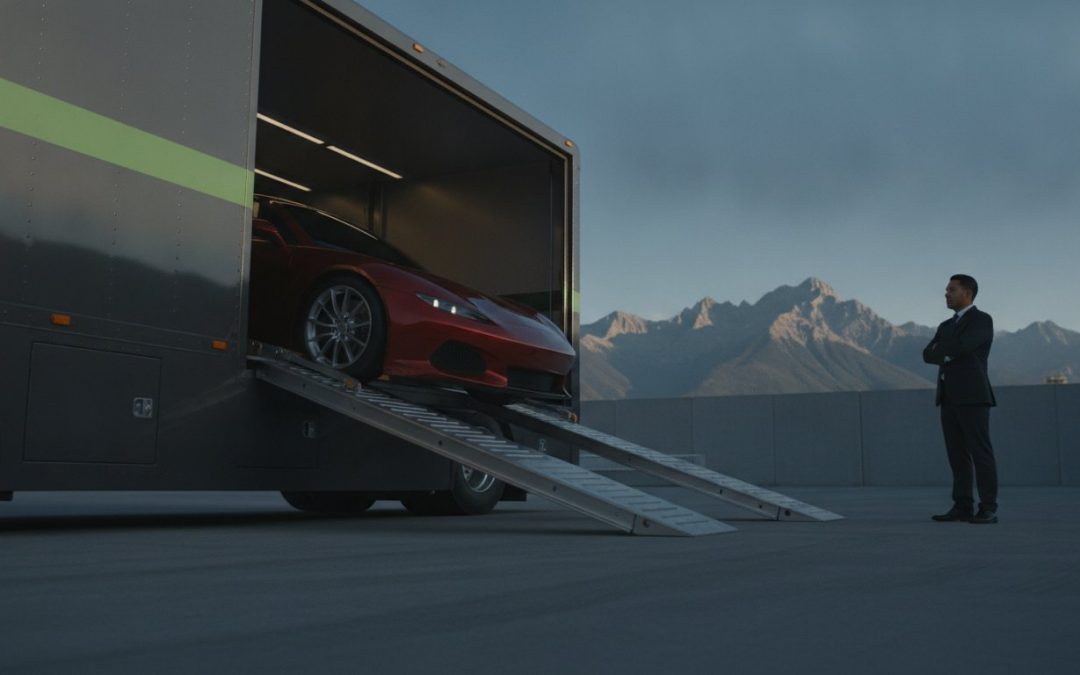
A single rock chip on your C$250,000 investment isn’t just a blemish. It is a permanent mark on its resale value and your peace of mind. You likely agree that moving a high-value asset across Canada requires more than a standard tow job. Between winter salt and unpredictable road debris, the risk is constant. Choosing luxury vehicle enclosed transport is the only way to ensure your car arrives in showroom condition. Yet, finding a carrier you can actually trust often feels like a gamble.
This guide promises to give you total peace of mind by showing you exactly how to secure white-glove service. We’ve mapped out a clear framework for vetting carriers and navigating the complexities of national logistics in 2026. You will learn how to verify insurance coverage for vehicles worth C$100,000 or more. You will discover what specialized equipment is necessary for low-clearance models. We’ve simplified the process so you can focus on your business while your vehicle travels in a secure, climate-controlled environment. You will gain the clarity needed for a seamless door-to-door delivery that protects your investment at every turn.
Key Takeaways
- Protect your investment from harsh Canadian road salt and gravel by choosing a fully sheltered transport environment.
- Compare hard-sided and soft-sided trailers to find the best structural shield for your specific high-value asset.
- Understand why luxury vehicle enclosed transport carries a premium price and how to calculate accurate costs for 2026.
- Verify carrier insurance limits and specialized equipment standards using our comprehensive 5-point vetting checklist.
- Simplify your logistics by leveraging professional dispatching to access the most reliable carriers across the country.
Why Luxury Vehicle Enclosed Transport is a Non-Negotiable in Canada
Shipping a high-end vehicle across Canada isn’t just about moving it from point A to point B. It is about preserving a masterpiece. Standard open transport exposes your asset to the elements, while enclosed transport provides a fully sheltered environment specifically designed for high-value cars, trucks, and SUVs. When you choose luxury vehicle enclosed transport, you aren’t just buying a ride. You’re investing in a mobile vault that protects your vehicle from the moment it leaves your sight.
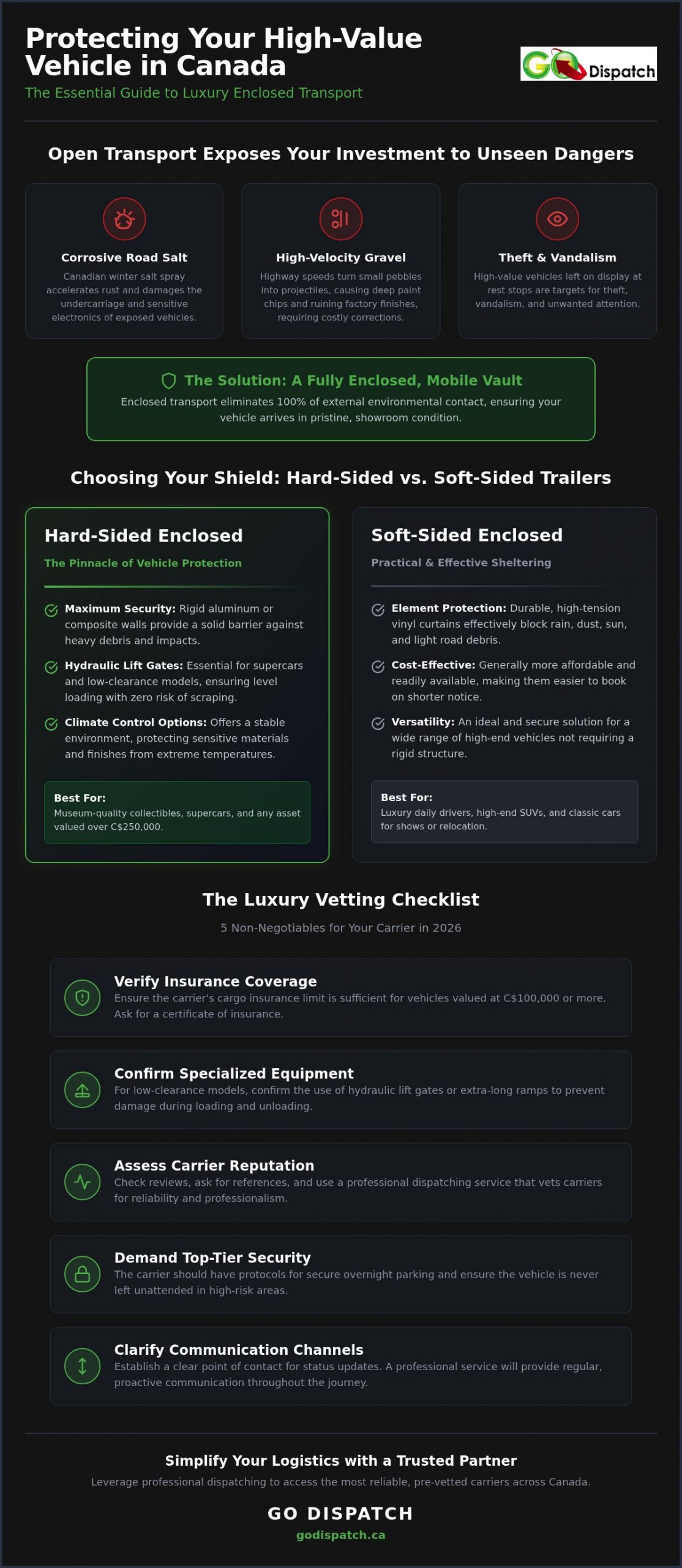
The Canadian landscape presents brutal challenges for any vehicle on the road. Road salt used during our long winters can wreak havoc on an exposed undercarriage in just a few hours. Gravel on highway stretches acts like a sandblaster against custom finishes and carbon fibre components. For vehicles with low ground clearance, the steep ramps of open trailers are a recipe for front-splitter disaster. Using specialized enclosed car carrier trailers eliminates these variables entirely. It ensures the ROI of your purchase remains intact by avoiding C$5,000 paint correction bills or expensive detailing services upon arrival.
The Environmental Threat to High-Value Paintwork
Highway speeds turn small pebbles into high-velocity projectiles. On an open trailer, your vehicle’s front fascia takes the brunt of this impact, leading to deep chips that ruin a factory finish. Winter adds another layer of danger. Corrosive brines and salt sprays used on Canadian highways can penetrate every crevice of an exposed vehicle, accelerating rust and damaging sensitive electronics. Enclosed transport eliminates 100% of external environmental contact during the journey. Your car stays as clean and pristine as it was the moment it left your garage.
Security and Privacy: The Hidden Benefits of Enclosed Hauling
Privacy is a luxury in itself. High-profile acquisitions or rare collectibles shouldn’t be on display for the general public during a cross-country move. Enclosed trailers keep your vehicle out of sight at rest stops and hotels, significantly reducing the risk of targeted theft or casual vandalism. This level of discretion is vital for dealership managers and private collectors alike. It provides a level of psychological peace of mind that open hauling simply cannot match. You can rest easy knowing your asset is hidden, secured, and protected from prying eyes throughout the entire trip.
Hard-Sided vs. Soft-Sided Enclosed Trailers: Choosing Your Shield
Not all enclosed trailers are created equal. When booking luxury vehicle enclosed transport, you must decide between hard-sided and soft-sided equipment. This choice defines the level of physical protection your vehicle receives during its journey across the country. Every professional carrier in this space must comply with the Canadian Motor Vehicle Transport Act, but the equipment they use can vary wildly. Realizing which trailer type matches your vehicle’s fragility is the first step toward a successful relocation.
The decision usually comes down to a balance of availability, cost, and the specific needs of the car. While both options keep your vehicle out of the wind and rain, the structural differences are significant. One offers a flexible barrier, while the other provides a rigid fortress. Choosing the wrong one could leave your vehicle vulnerable or result in unnecessary expenses. You want to match the “shield” to the value of the asset being moved.
Hard-Sided Enclosed Trailers: Ultimate Protection
Hard-sided trailers represent the pinnacle of vehicle logistics. These units feature rigid walls made of aluminum or composite materials that provide a solid barrier against heavy road debris and minor impacts. They are essentially a garage on wheels. Most of these trailers come equipped with hydraulic lift gates. This is a critical feature for supercars or vintage racers with extremely low ground clearance. The lift gate allows the vehicle to stay perfectly level during loading, which prevents any scraping on the front splitter or chassis. It is the mandatory choice for museum-quality pieces and assets valued over C$250,000.
Soft-Sided Enclosed Trailers: Practical Sheltering
Soft-sided trailers use durable, high-tension vinyl curtains to protect your vehicle from the elements. They are excellent at blocking out dust, rain, and sun. Because these trailers are more common in Canada, they are often easier to book on short notice and can be more affordable than their hard-sided counterparts. They are an ideal solution for luxury daily drivers, high-end SUVs, and premium trucks. While the vinyl walls don’t offer the same impact resistance as metal, they provide a fully sheltered environment that far exceeds the safety of an open carrier. If you need help deciding which trailer is right for your specific model, you can reach out to a professional dispatcher to explore current availability.
Calculating the Real Cost of Luxury Vehicle Relocation
Budgeting for a high-value move requires a clear understanding of why certain services command a premium. You aren’t just paying for a spot on a trailer. You are paying for a specialized logistics ecosystem. On average, choosing luxury vehicle enclosed transport costs 40% to 60% more than standard open hauling. This price difference reflects the significant operational costs involved in maintaining a fleet that can safely handle multi-million dollar loads across the Canadian wilderness.
Several variables influence your final quote. Vehicle dimensions and weight play a massive role. A full-sized luxury SUV takes up more physical space and consumes more fuel than a compact supercar. National logistics routes also dictate pricing. Moving a vehicle between major hubs is often more cost-effective than a delivery to a remote location. Professional dispatching adds value here by sourcing competitive rates from a vetted network. It ensures you don’t overpay for the service while maintaining the highest safety standards.
Factors That Drive Enclosed Transport Premiums
The premium you pay covers specific technical advantages that standard carriers simply cannot offer. These include:
- Lower Capacity: Enclosed trailers typically carry only three to six vehicles. Open racks often carry ten or more. This limited space means each vehicle must cover a larger portion of the trip’s overhead.
- Specialized Equipment: Maintaining hydraulic lift gates and nylon “soft-tie” systems is expensive. These tools ensure your chassis is never stressed and your ground clearance is never compromised.
- Insurance Overhead: Carriers must maintain massive cargo insurance limits to cover high-value loads. This protection is a non-negotiable part of the service cost.
Avoiding the “Cheap Carrier” Trap
A low bid might look attractive on paper, but it often signals a compromise in quality. The lowest price in the market usually points to inadequate insurance or outdated equipment. Choosing an unvetted carrier for a luxury asset can lead to long-term costs that far exceed the initial savings. If a deal seems too good to be true, it probably is. You can find more details on current market rates in our guide to vehicle transport cost canada. Prioritizing safety over a few hundred dollars ensures your vehicle arrives in the same condition it left.
The Luxury Vetting Checklist: 5 Non-Negotiables for Your Carrier
Vetting a carrier is the most critical step in the relocation process. You don’t want to leave a C$150,000 asset to chance. A proper luxury vehicle enclosed transport provider must meet five non-negotiable standards before you hand over the keys. These criteria ensure your vehicle is handled by experts rather than general freight haulers. Professional dispatchers perform this due diligence on your behalf to filter out sub-par operators.
- Cargo Insurance Limits: The policy must cover the full replacement value of your specific vehicle, not just a generic amount.
- Soft-Tie Systems: Carriers must use nylon straps rather than metal chains to avoid scratching the wheels or stressing the chassis.
- Verified Driver Experience: The operator should have a documented history of handling high-end exotics and vintage models.
- GPS Tracking: Real-time updates provide the transparency you need for a stress-free experience.
- Enclosed Integrity: The trailer must be fully sealed against dust and moisture to maintain showroom condition.
A professional dispatcher acts as your shield during this process. They verify every carrier’s safety rating and insurance status before a single mile is driven. This proactive approach allows you to book a vetted carrier with total confidence.
Deep Dive into Insurance Requirements
Many owners confuse liability insurance with cargo insurance. Liability covers damage the truck might cause to other property, while cargo insurance covers your vehicle specifically. For high-value moves, you must ensure the carrier’s cargo limit exceeds your car’s market value. Always request a Certificate of Insurance (COI) and check the “Cargo” line specifically. A professional dispatcher verifies these documents before every load to ensure no coverage gaps exist. If your vehicle is worth C$500,000, a standard C$100,000 policy is a massive risk you cannot afford to take.
Mechanical Requirements for Low-Clearance Vehicles
Sports cars and supercars require specialized loading equipment. Hydraulic lift gates are vastly superior to traditional ramps because they keep the vehicle perfectly level. This prevents the front splitter or underbody from scraping during the transition into the trailer. Once inside, the carrier should use over-the-tire tie-downs. These systems secure the car by its rubber rather than pulling on the frame, which protects your sensitive suspension components. These technical details are why many businesses rely on professional dealership auto transport logistics to manage their inventory movements safely.
Why Professional Dispatching is the Key to Luxury Transport Success
Managing a cross-country move for a high-value asset is a full-time job. You shouldn’t have to spend hours vetting carriers or tracking down insurance certificates. A one-stop transport dispatching service acts as your professional buffer. It bridges the gap between your high standards and the complex reality of national logistics. When you book luxury vehicle enclosed transport through an expert, you aren’t just hiring a truck. You’re hiring a team that takes ownership of the entire process from start to finish.
GO Dispatch filters through hundreds of carriers to find the top 5% of enclosed operators in Canada. We look for more than just a clean driving record. We verify specialized equipment, financial stability, and a proven history of white-glove service. This rigorous vetting process ensures your vehicle is never treated like standard freight. If a delay occurs or a route needs to change due to weather, you have a professional advocate working behind the scenes. We manage the logistics so you can stay focused on your own core business.
The Expert Sourcing Process
Finding the right carrier requires more than a simple search. We maintain a national network of vetted enclosed carriers that meet our strict safety protocols. Every vehicle is different. A vintage Porsche has different requirements than a modern luxury SUV. We match your specific vehicle type to a carrier with the exact equipment needed for a safe journey. We also realize the best routes for speed and safety across Canada. This means avoiding high-traffic zones or areas with active road construction that could pose a risk to your asset.
Simplifying the Client Experience
Our process is built on human connection and simple communication. From your initial enquiry to the final delivery, we provide a streamlined, human-centric experience. We handle the paperwork, the scheduling, and the carrier coordination. This significantly reduces the administrative burden for dealership managers and private collectors alike. You receive regular updates without having to chase them down. It is the ultimate stress-relief solution for anyone moving a high-value car, truck, or van. Ready to secure your vehicle? Contact GO Dispatch for expert logistics coordination and experience a seamless door-to-door delivery.
Secure Your Automotive Investment Today
Your vehicle is more than just a machine. It’s a significant asset that deserves the highest level of protection available in 2026. By now, you understand that luxury vehicle enclosed transport is the only way to shield your car from the harsh realities of Canadian roads. You know how to distinguish between trailer types and why verifying insurance limits is a non-negotiable step. These details make the difference between a stressful move and a successful delivery.
We take the weight off your shoulders by managing the entire coordination process. Our team leverages a vetted national carrier network and specialized enclosed transport coordination to ensure your vehicle arrives in showroom condition. You get dedicated human support for every shipment; you’re never left wondering about the status of your car. It’s time to stop worrying about logistics and start focusing on your core business.
Get a Professional Quote for Your Luxury Vehicle Transport and enjoy the peace of mind that comes with expert logistics. We are ready to help you move your car, truck, or SUV safely across the country. Your vehicle’s journey should be as premium as the car itself.
Frequently Asked Questions
How much more does enclosed transport cost than open transport in Canada?
Enclosed transport typically costs between 30% and 60% more than open hauling. This premium covers specialized equipment like hydraulic lift gates and the significantly lower trailer capacity. While open carriers might fit ten cars, enclosed trailers usually hold only three to six vehicles. This ensures your asset receives more individual attention and total protection from Canadian road salt and debris. The investment prevents expensive detailing or paint correction costs upon arrival.
Can I ship personal items inside my luxury vehicle during transport?
You shouldn’t ship personal items inside your vehicle during transit. Most carriers aren’t licensed or insured to transport household goods or personal belongings. Loose items can also shift during the journey and cause interior damage to your luxury vehicle enclosed transport load. We recommend keeping the cabin completely empty. This ensures the carrier’s cargo insurance remains valid and protects your vehicle’s interior from unnecessary wear or impact during the move.
What happens if my luxury car is damaged during enclosed shipping?
If you notice damage upon delivery, you must document it immediately on the Bill of Lading before the driver leaves. Take high-resolution photos of the affected area and compare them to the pre-shipment inspection report. As your dispatcher, we act as your advocate during the claims process. We help coordinate with the carrier’s insurance provider to ensure repairs are handled professionally. Thorough documentation at both pickup and delivery is essential for a successful claim.
How long does national enclosed vehicle transport typically take?
National enclosed transport typically takes between 5 and 10 days depending on the total distance. Canadian trucking regulations limit driving hours to 13 hours per day to ensure safety, which impacts the overall timeline. Weather conditions and route complexities can also influence delivery dates. We prioritize safe delivery over speed to protect your investment. You will receive regular updates throughout the journey so you can plan for the arrival of your vehicle with confidence.
Do enclosed carriers offer door-to-door delivery for residential areas?
Most enclosed carriers offer door-to-door delivery, provided the residential area is accessible for a large transport truck. Some narrow streets or low-hanging trees may prevent the trailer from reaching your exact driveway. In these cases, the driver will coordinate a meeting at a nearby parking lot or wide street. We manage these logistics on your behalf to ensure the final hand-off is as convenient and safe as possible for your car, truck, or SUV.
Is my vehicle insured for its full market value during the move?
Every carrier in our network must maintain cargo insurance, but limits vary between operators. It’s vital to verify that the carrier’s policy covers the current market value of your specific asset. For vehicles worth C$100,000 or more, we perform extra due diligence to ensure no coverage gaps exist. We check the Certificate of Insurance before every load. This verification process provides the peace of mind that your investment is fully protected against unforeseen events.
What is the difference between a direct carrier and an auto transport dispatcher?
A direct carrier owns the trucks and performs the physical hauling, while a dispatcher like GO Dispatch coordinates the entire logistics process. We act as your single point of contact and professional advocate. Instead of you searching for a reliable truck, we filter through a national network to find the best-equipped carrier for your needs. We handle the vetting, insurance verification, and scheduling, which simplifies the experience and reduces your administrative workload significantly.
How should I prepare my luxury vehicle for enclosed transport?
Preparing your vehicle involves a few simple but critical steps. Start by washing the car thoroughly so any existing marks are visible during the initial inspection. Remove all personal belongings and keep the fuel tank at approximately one-quarter full. You should also disable any alarm systems to prevent battery drain during transit. Finally, document any fluid leaks and share these details with the dispatch team so the carrier can plan the loading order to protect other vehicles.