
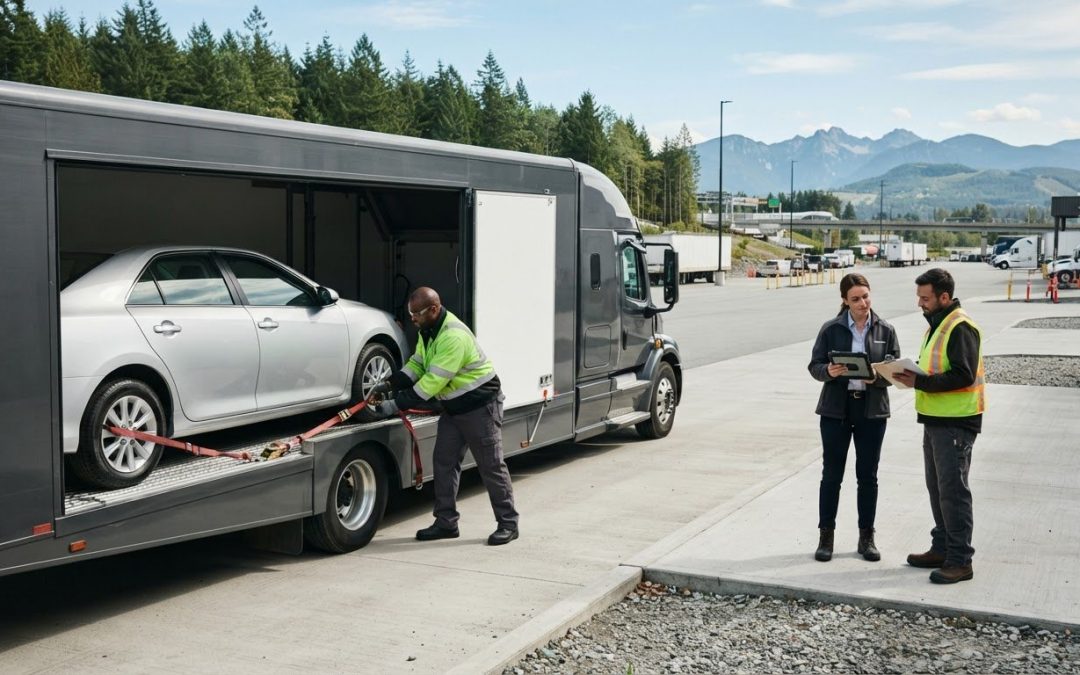
What if a tight pickup deadline didn’t have to leave you guessing? Last-minute car shipping services can be possible, but urgency may narrow scheduling options. If you’re concerned about delays or unclear carrier arrangements, start by gathering the details dispatch needs to coordinate your move.
Short-notice timing depends on your route, vehicle, pickup flexibility and carrier schedules. GO DISPATCH manages the logistics and delivery scheduling, while a professional third-party carrier transports your vehicle. A clear plan makes the process easier to follow, but pickup and delivery times depend on the arrangements made for your shipment.
This 2026 guide explains what affects short-notice coordination, which details to have ready and how to set practical expectations. You’ll also learn how clear communication can keep carrier coordination organized when your timeline is tight.
Key Takeaways
- Last-minute car shipping services are short-notice arrangements, not a promise of same-day pickup.
- Route, carrier schedules, vehicle details and pickup flexibility all shape coordination.
- A flexible pickup window gives dispatch more dates to consider, but doesn’t guarantee a faster move.
- Have your vehicle details, route, timing, condition and contact information ready to help get arrangements started.
- GO DISPATCH coordinates third-party carriers and manages the logistics, giving you a clear point of contact for the shipment.
Need last-minute car shipping services? Set realistic expectations first
A fixed pickup deadline can make every delay feel costly. If you need last-minute car shipping services, act promptly, but treat your request as the start of coordination, not a confirmed pickup. A dispatch request starts the search for a carrier; the pickup plan depends on the carrier schedule arranged for your shipment. This distinction helps you plan around confirmed information instead of assuming a vehicle can be collected immediately.
Short-notice planning involves more than finding an available truck. Dispatch needs to coordinate shipment details, carrier schedules, the route and timing. This is part of logistics, the planning and coordination behind moving goods. GO Dispatch manages transport logistics and delivery scheduling while a professional third-party carrier transports the vehicle.
What counts as short-notice car shipping?
There isn’t one fixed number of days that makes every shipment “last-minute.” Urgency depends on the pickup date you need and the circumstances of the route. A request for an upcoming date may be more challenging to coordinate on one route than another, depending on carrier schedules.
Be clear about your deadline, and distinguish a requested date from an arranged pickup. Sharing an urgent date tells dispatch what you need, but doesn’t confirm a carrier or schedule. Avoid making travel, sale or handover plans on the assumption that pickup is secured until the schedule is communicated.
Why can a last-minute request be harder to coordinate?
Carrier schedules and route availability shape the arrangements that can be considered. A carrier may need to align your pickup with its route and other scheduled transport. Vehicle size and condition also matter when dispatch reviews the request. Accurate details help dispatch coordinate with a suitable third-party carrier.
Flexibility can help. Offering a pickup window instead of one exact time gives dispatch more dates to consider. It doesn’t guarantee an earlier pickup, but it makes your options clearer. If your deadline cannot shift, say so upfront so coordination reflects the real constraint.
- Route: Share the pickup and delivery locations so the shipment can be planned accurately.
- Vehicle: Identify whether it’s a car, truck, SUV or van, and describe its condition.
- Timing: Give your preferred pickup date and explain how much flexibility you have.
- Contact: Provide reliable contact details for shipment coordination and schedule updates.
Clear information won’t guarantee a particular pickup time, but it can reduce avoidable follow-up. The goal is to move quickly while keeping expectations grounded in the carrier schedule, not just the urgency of the request.
How last-minute car shipping coordination works from request to carrier
For a time-sensitive move, a clear request gives dispatch a practical starting point. GO DISPATCH coordinates professional third-party carriers and manages shipment logistics and delivery scheduling. The carrier transports the vehicle; GO DISPATCH does not operate the transport vehicle. Dispatch organizes the move, while the carrier handles the physical transport.
What details should you provide when requesting urgent transport?
Share the full picture upfront. Include the vehicle’s year, make and model, whether it runs, pickup and delivery locations, your earliest workable pickup date and the best contact person. Note handoff requirements, such as whether someone must meet the carrier or access at either location is limited. Accurate details help dispatch understand the request and avoid unnecessary follow-up.
For last-minute car shipping services, small omissions can slow coordination. If the vehicle doesn’t run, say so. If your date is a firm deadline, distinguish it from a preference. Flag practical constraints at either location that could affect loading or handoff. Complete information gives dispatch a realistic picture of the move, though it doesn’t guarantee a schedule.
What happens after a dispatch request is submitted?
Once dispatch has the shipment details, it can coordinate a suitable third-party carrier and work through the transport logistics. The steps are straightforward, though timing depends on the shipment and carrier scheduling.
- Share the shipment details. Provide the vehicle, route, timing, condition and contact information.
- Clarify the request. Resolve missing details or constraints that could affect carrier coordination.
- Coordinate the carrier. Dispatch uses the information to organize carrier selection and delivery scheduling.
- Receive schedule information. As arrangements progress, dispatch communicates relevant updates so you can plan the handoff.
A dispatch request is not the same as a confirmed carrier schedule. The carrier and timing depend on the arrangements made for that shipment, so don’t treat an enquiry as confirmation of pickup or delivery. Keep your contact details current and respond promptly if dispatch needs clarification. That helps keep coordination moving without creating expectations the schedule can’t support.
GO DISPATCH is the coordination point between your shipment request and a professional third-party carrier. To get started, share your vehicle and route details through GO DISPATCH transport coordination, along with your timing and any handoff requirements.
Compare your options: fixed pickup dates, flexible windows, and transport needs
A tight deadline can make it tempting to focus on one exact pickup date. Instead, separate your schedule needs from your transport preferences. First identify when the vehicle can be picked up, then describe the vehicle and any handling considerations. This gives dispatch a clearer picture without implying that a particular option will be available or faster.
Use this comparison to decide what to communicate in your request:
| Pickup arrangement | What it means for planning |
|---|---|
| Fixed pickup date | You need pickup on a specific date. State whether it is a firm requirement or your preferred date so dispatch understands the constraint. |
| Flexible pickup window | You can accept pickup across a range of dates. Share the earliest and latest workable dates to give dispatch a clear window for coordination. |
When is a flexible pickup window useful?
A date range gives dispatch more scheduling options than a single fixed day. If you can hand over the vehicle on several days, list the dates that work instead of simply saying you’re “flexible.” Identify your earliest possible pickup and the last date you can accommodate. Flexibility can support coordination, but it doesn’t guarantee a carrier, a faster move or a confirmed schedule.
If your pickup date can’t shift, say so plainly. This keeps planning focused on your actual requirement. For more context on how shipment planning and coordination fit together, see this vehicle delivery logistics guide.
Which transport details should you decide early?
Timing is only one part of the request. Identify the vehicle’s size and condition, including whether it’s operable, and share any special handling needs. If you have a transport preference, include it in your initial request. These details help dispatch understand the job and coordinate the logistics with a third-party carrier.
Keep the decisions distinct. A firm date describes your scheduling requirement; vehicle details and transport preferences describe the shipment. A preference isn’t a confirmed arrangement, and a change to the details may mean the plan needs to be revisited. Be specific about what’s essential and what you can adjust. That makes the trade-offs easier to discuss without assuming a particular transport method or schedule can be arranged.
For last-minute car shipping services, a clear request balances urgency with workable options. Share your date constraints accurately, explain the vehicle’s needs and keep preferences separate from must-haves. This gives dispatch useful information to coordinate the move while keeping expectations grounded in the schedule that can be arranged.
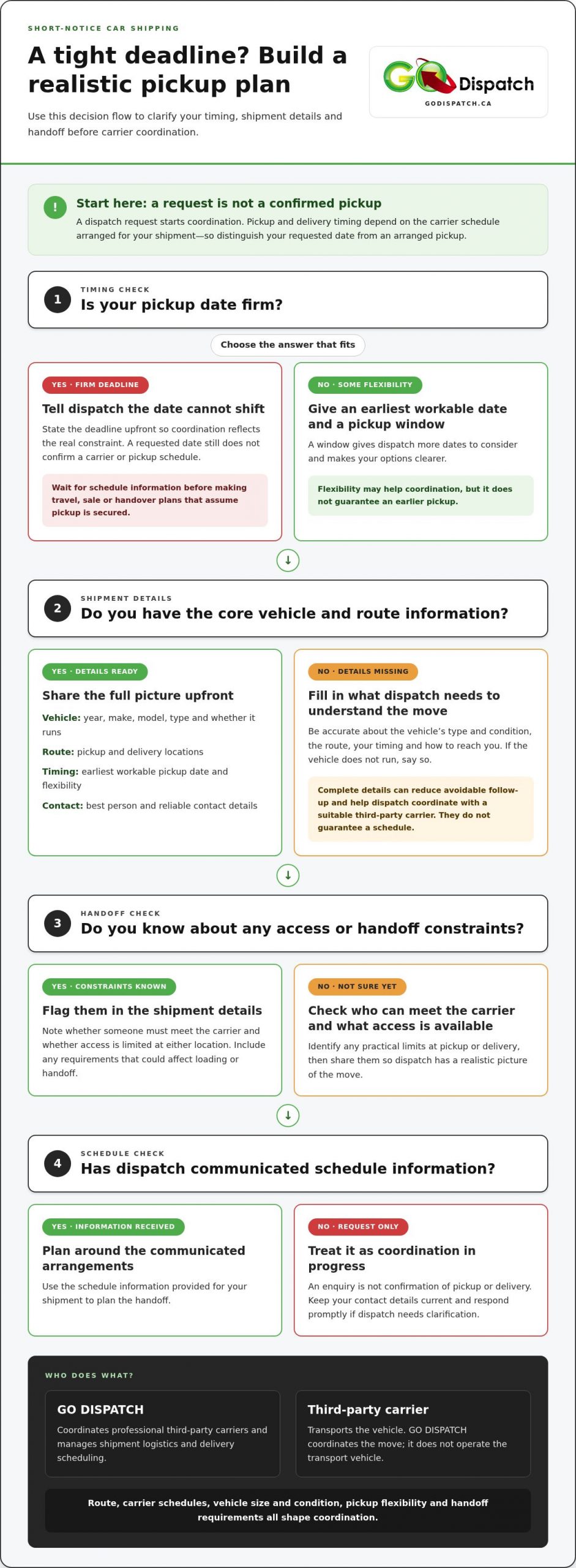
Prepare for a last-minute car shipment with this focused checklist
A short-notice shipment is easier to coordinate when key details are ready before you submit a request. Use this checklist to organize the vehicle, handoff and schedule information. Preparation can reduce avoidable questions, but it can’t guarantee a carrier or a particular pickup time.
Get the vehicle and handoff details ready
Describe the vehicle accurately, including its condition and whether it can be driven. Decide who will release it at pickup and who can receive it at delivery. Note access restrictions or a specific handoff procedure at either location. Clear instructions help dispatch account for practical considerations while coordinating the move.
- Vehicle condition: Record whether it runs and note condition or handling details relevant to transport.
- Handoff contacts: Identify a person for pickup and delivery, and make sure each can be reached.
- Location access: Note restrictions, limited access or other details that could affect loading or delivery coordination.
- Vehicle preparation: Remove personal belongings and make the vehicle accessible for the planned handoff. If it has an alarm, prepare to prevent it from interfering with transport.
Keep the schedule and communication clear
Work out your earliest practical pickup date and acceptable alternatives before sharing the request. If you have a firm deadline, distinguish it from a preferred date. Choose one main contact who can respond during coordination, and tell anyone involved in handing over or receiving the vehicle who that is. This helps keep updates from getting lost between people.
- Set your window: Write down the earliest date you can manage and the latest date you can accept.
- Confirm availability: Make sure the pickup and delivery contacts know the request is being coordinated and can respond to schedule questions.
- Track updates: Keep agreed schedule details and changes together, such as in one email thread or shared note.
- Share changes promptly: If your availability or access instructions change, pass on the updated information as soon as possible.
These steps give dispatch a complete, accurate request to work from. They don’t replace carrier scheduling, but they can make communication clearer and help everyone understand the handoff plan. When planning a Canadian vehicle shipment, also think through the route, vehicle condition, access at both locations and the dates you can accept.
Ready to organize a time-sensitive vehicle move? Share your vehicle shipment details with GO Dispatch to begin coordinating the transport logistics.
Arrange last-minute car shipping with GO Dispatch
A short-notice vehicle move needs clear communication and coordinated next steps. GO Dispatch provides one point of coordination for carrier selection, transport logistics and delivery scheduling. A professional third-party carrier performs the vehicle transport. Share your shipment details with dispatch so the carrier schedule can be coordinated around the request. Treat pickup and delivery timing as confirmed only once the arrangements have been communicated.
What GO Dispatch coordinates for your vehicle move
GO Dispatch coordinates transport for cars, trucks, SUVs and vans. The team manages logistics and delivery scheduling with third-party carriers to keep the moving parts organized. Dispatch handles coordination, while the carrier operates the transport vehicle. This makes clear who is organizing the shipment and who is physically transporting it, without confusing an initial request with a confirmed pickup or delivery time.
How to start a time-sensitive transport request
Share the information dispatch needs to understand the shipment and its constraints. Include the vehicle’s year, make and model, whether it’s operable, the pickup and delivery locations, your preferred timing and how much flexibility you have. Add the name and contact details of the person coordinating the handoff, along with access instructions for either location.
Before sending the request, make sure the details are complete and consistent. If a date is a firm deadline rather than a preference, say so. If someone else will release or receive the vehicle, provide their contact information and confirm they know about the planned handoff. Clear details can reduce avoidable follow-up and help GO Dispatch manage the request efficiently, though they don’t guarantee a particular carrier or schedule.
- Vehicle: Year, make, model, size and operability.
- Route: Pickup and delivery locations, plus any access considerations.
- Timing: Earliest workable pickup date, preferred dates and any firm deadline.
- Handoff: Contact person for pickup and delivery, and relevant instructions.
Once the request is underway, keep your designated contact reachable and note schedule updates in one place. If your timing, vehicle condition or handoff arrangements change, share the update promptly so coordination reflects the current plan. This gives everyone a clear reference as dispatch works through carrier coordination and delivery scheduling.
If you need last-minute car shipping services, start by sharing the route, vehicle, timing, condition and handoff details. GO Dispatch manages the coordination while a professional third-party carrier transports the vehicle. Contact GO Dispatch about a vehicle shipment to get your request moving.
Take the next step with a clear shipment plan
A tight deadline can feel more manageable when your next move is clear. Decide what timing you can realistically accept, gather the shipment details and keep your handoff contact informed. That gives coordination a practical starting point without assuming a pickup date before a carrier schedule is arranged.
GO Dispatch manages transport logistics and coordinates third-party carriers for cars, trucks, SUVs and vans. Share what you know, and explain which details are firm and which may change. Clear communication helps keep the request organized as arrangements progress.
When you’re ready, contact GO Dispatch to coordinate your vehicle shipment and discuss your need for last-minute car shipping services. A focused request gives dispatch the information needed to start coordinating the move.
Frequently Asked Questions
Can I arrange car shipping at the last minute?
Yes, you can submit a short-notice request, but a request isn’t a confirmed booking or a promise of immediate pickup. Last-minute car shipping services depend on the shipment details and carrier scheduling. If your plans involve a sale, relocation or vehicle handover, share the deadline early and explain what can shift. This gives dispatch a useful starting point while keeping your plans grounded in the schedule arranged for the shipment.
How quickly can a carrier pick up a car after I book?
There’s no single pickup timeframe that applies to every shipment. The route, carrier schedule and vehicle details all influence coordination, so don’t assume pickup will happen on the day you make your request. If you’re arranging access to a property or coordinating with a dealership, let everyone involved know that timing depends on the carrier schedule. Make firm plans once the schedule has been communicated.
Can I change my pickup date after arranging car transport?
You can communicate a date change, but it may affect the existing arrangements. Tell dispatch as soon as you know your availability has changed, and be specific about the new date or acceptable range. For example, explain whether you need an earlier pickup or can accept a later day. The updated request may require further carrier coordination, so don’t assume the original schedule still applies.
What information do I need to request last-minute car shipping?
Have the vehicle’s year, make, model and running condition ready, along with pickup and delivery locations and your preferred timing. Include the names and contact details of the people managing the handoff, especially if they’re different from you. Mention access instructions, such as a restricted entrance or a location where the carrier needs directions. Complete details help dispatch understand the shipment and limit follow-up questions.
Does flexible pickup timing help with urgent vehicle shipping?
It gives dispatch more dates to consider while coordinating the move, but doesn’t guarantee a carrier or faster pickup. Be precise about what flexibility means for you. If you can accept pickup within a certain period, share the earliest and latest dates that genuinely work. Don’t offer a wider window than you can manage, since the handoff still needs to fit your availability.
Can a transport broker arrange shipping for a non-running car?
A non-running vehicle can be included in a transport request, but its condition must be clear from the start. Tell dispatch whether it starts, rolls and steers, and mention anything that could affect loading or handling. Those details help inform carrier coordination. Transport arrangements depend on whether a third-party carrier can accommodate the vehicle’s condition, so describe it accurately.
How do I avoid unexpected changes when booking car shipping?
Reduce avoidable surprises by giving accurate vehicle and location details, distinguishing firm deadlines from preferred dates, and sharing changes promptly. Keep schedule updates in one place so everyone involved in pickup or delivery has the same information. If a handoff contact or access arrangement changes, tell dispatch rather than relying on an earlier plan. Clear, current communication helps keep coordination aligned, though schedules still depend on carrier arrangements.
Need to arrange a time-sensitive vehicle shipment? Contact GO Dispatch with your route, vehicle details and pickup window to start coordinating transport logistics with a professional third-party carrier.