
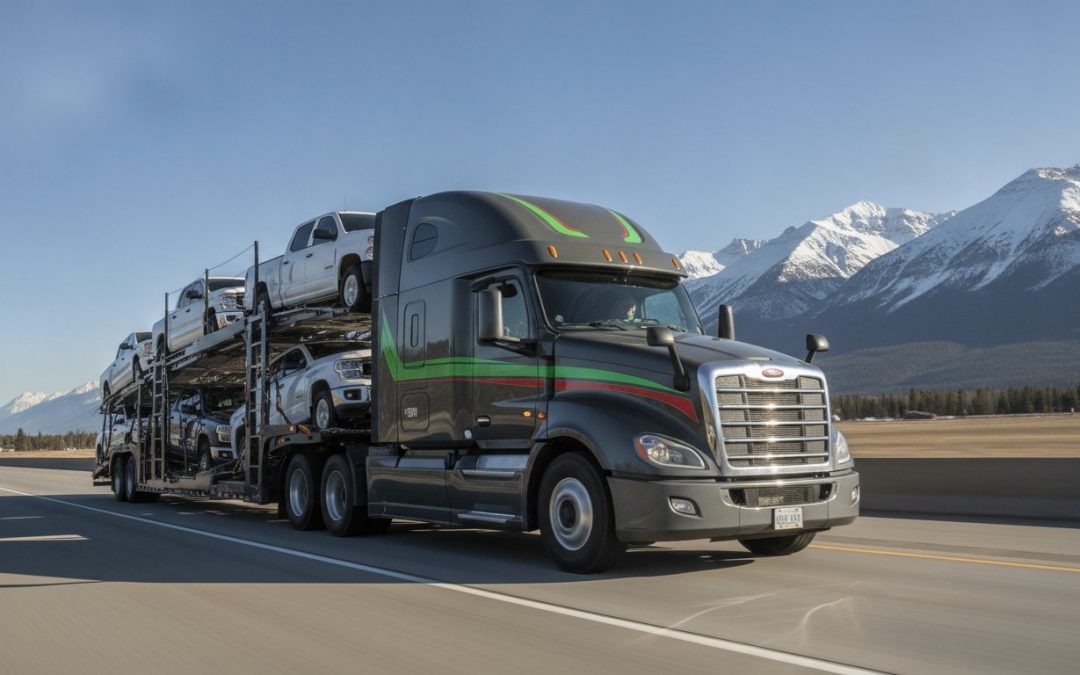
Moving a heavy-duty vehicle across 5,000 kilometres of Canadian highway isn’t just a drive; it’s a high-stakes logistics operation where a single centimetre of height clearance can stall your entire schedule. You already know that trying to transport a truck on your own often leads to astronomical costs, complex scheduling headaches, and the constant worry of transit damage. It’s a heavy burden to manage when you’re already busy running a business or coordinating a major move.
We’re here to take that weight off your shoulders. This guide reveals the essential logistics, equipment requirements, and professional dispatching secrets used to move any truck safely across the country. You’ll gain a clear understanding of the 2026 regulatory landscape, including updated Hours of Service rules and mandatory ELD certifications. We’ll also walk you through how to choose the right specialized hauling equipment to ensure a damage-free delivery. By the end, you’ll have a streamlined roadmap for a professional, expert-managed process that protects your investment and your peace of mind.
Key Takeaways
- Realize why hauling heavy-duty vehicles requires a more specialized logistical approach than standard car shipping.
- Learn how Gross Vehicle Weight Rating (GVWR) and modifications like lift kits directly impact the equipment needed to transport a truck.
- Compare open and enclosed hauling methods to find the right balance between cost-efficiency and maximum protection.
- Follow a simple preparation checklist to ensure your vehicle is ready for a professional condition report and a damage-free delivery.
- See how professional dispatching handles the complex scheduling and carrier sourcing so you can focus on your own business.
What Does It Mean to Transport a Truck Nationally?
To transport a truck across Canada means moving more than just a vehicle; you’re moving a significant asset that requires specific infrastructure. This process isn’t the same as shipping a compact sedan. Professional truck transport involves coordinating specialized carriers designed to handle the massive weight and footprint of pickups, SUVs, and commercial units. It fits into the broader freight transport overview, where specialized equipment meets precise scheduling to cross thousands of kilometres safely. When you choose professional hauling, you’re opting for a high-capacity solution that respects the mechanical integrity of your vehicle.
Professional hauling preserves your vehicle’s value and your own time. You eliminate thousands of kilometres of wear-and-tear on the engine, transmission, and tires. You also avoid the logistical nightmare of driving across the Rockies or through the Canadian Shield yourself. It’s an efficiency play. You stay focused on your work or your family while experts manage the heavy lifting. This approach ensures your truck arrives in the same condition it left, without the hidden costs of a cross-country road trip like fuel, hotels, and potential mechanical breakdowns.
Truck vs. Car Transport: The Critical Differences
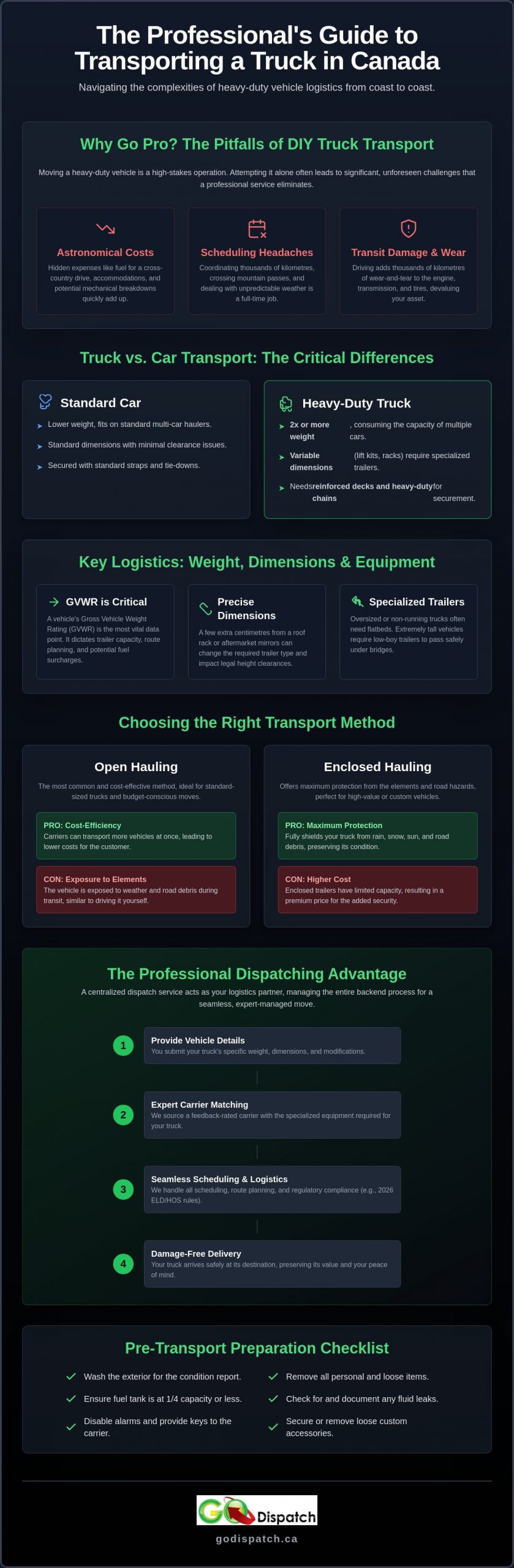
Weight is the first major hurdle in truck logistics. A heavy-duty truck can weigh twice as much as a standard car. This significantly affects trailer capacity and often triggers fuel surcharges due to the extra strain on the hauling rig. Dimensions matter just as much as weight. If you have a lifted truck or a utility van, standard height clearances no longer apply. Carriers must use reinforced decks and specific tie-down points to secure these larger frames. A standard car hauler often lacks the physical space or the weight rating to carry multiple trucks at once, making specialized carrier sourcing essential.
The Value of Professional Dispatching in 2026
By 2026, the logistics industry has become more complex, with stricter safety mandates and tighter scheduling windows. Centralized dispatching services have become the gold standard for navigating these changes. We act as your proactive partner, managing the entire backend process. A one-stop dispatching service simplifies your life by sourcing feedback-rated carriers who specialize in heavy-duty moves. Human support remains the core of a successful transport a truck request. While technology tracks the route, our team ensures your specific truck dimensions are matched with the right trailer. This personal touch prevents loading delays and ensures a seamless move from coast to coast.
Technical Logistics: Weight, Dimensions, and Equipment
When you prepare to transport a truck, the logistics shift from simple car shipping to complex freight management. Unlike compact cars, trucks vary wildly in their physical footprint. A standard half-ton pickup requires different handling than a one-ton dually or a modified off-road rig. Accurate measurements are your best tool for a smooth experience. Even a few extra centimetres in height from a roof rack or width from aftermarket mirrors can change which trailer is legally allowed to carry your vehicle under federal trucking regulations. Providing precise data ensures the carrier arrives with the right equipment the first time.
Weight Classes and Trailer Capacity
A vehicle’s Gross Vehicle Weight Rating (GVWR) is the most critical data point for any carrier. Light-duty pickups often fit on standard multi-car haulers, but heavy-duty models consume the weight capacity of two or three smaller cars. This limits how many units a driver can carry at once. Proper weight distribution is vital for the safety and stability of the transport trailer, especially when crossing the windy prairies or steep mountain passes. GVWR directly influences the carrier’s route planning and fuel costs because heavier loads require more power and strictly regulated travel paths.
Specialized Equipment for Truck Hauling
Choosing the right trailer ensures your truck moves without a scratch. Most standard moves use open trailers, but oversized or non-running trucks often require flatbeds for easier loading. For extremely tall commercial vehicles or those with significant lift kits, low-boy trailers provide the necessary clearance to pass safely under bridges and overpasses. These trailers sit closer to the ground, offering a stable centre of gravity for top-heavy loads. Securing these heavier vehicle frames also requires specialized grade-70 chains or heavy-duty straps that standard car haulers may not carry.
Getting these technical details right from the start prevents surprise fees and loading day delays. If you are unsure about your vehicle’s specific requirements, our team can help you organize the logistics to match your truck with the perfect carrier. We focus on the technical details so you can stay focused on your business. Taking the time to realize the impact of your truck’s dimensions now will save significant stress once the vehicle is in transit.
Choosing the Right Transport Method: Open vs. Enclosed
Deciding how to shield your vehicle during a 4,000-kilometre trek is a major logistical milestone. Most owners choose open-air trailers to transport a truck because they offer the best balance of cost and availability. These trailers are the workhorses of the Canadian logistics network. They move thousands of vehicles daily across the Trans-Canada Highway with high reliability. However, Canada’s geography presents unique environmental challenges that you must consider. From the salt-heavy slush of a Prairies winter to the gravel-strewn roads of Northern Ontario, your vehicle will face the elements. Organizations like the Canadian Trucking Alliance help set the safety standards that keep these open-air operations efficient and dependable through every season.
Your choice depends on your truck’s purpose and your budget. A daily driver or a commercial work truck is perfectly suited for open transport. It’s the same way these vehicles are delivered to dealerships from the factory. If you own a specialty vehicle, a custom show truck, or a high-value asset with a sensitive paint job, you might lean toward enclosed options. Balancing protection with your timeline is key. Open trailers are more common, which usually means faster pickup dates and more flexible scheduling options for your national move.
Open-Air Hauling: The Industry Standard
Open trailers are the industry standard for a reason. They are highly efficient. They allow for faster scheduling because the vast majority of carriers operate this type of equipment. You should expect your truck to arrive with some road dust or rain spots, much like it would collect during a day of normal highway driving. This method is the most cost-effective way to transport a truck across vast distances. It remains the top choice for owners who want a dependable, professional move without the premium price tag of a specialized enclosed unit.
Enclosed Transport for Specialty Vehicles
Enclosed transport offers the highest level of protection available. It completely shields your vehicle from road debris, hail, and harsh UV rays. This is the ideal choice for trucks with custom wraps or sensitive equipment. You must realize, however, that enclosed trailers have strict physical limits. Most enclosed units are built for lower-profile vehicles. If your truck features a significant lift kit, oversized mirrors, or wide tires, it may exceed the interior clearance of an enclosed trailer. Always double-check your dimensions before requesting this premium service to ensure the carrier can safely accommodate your vehicle’s frame.
Ultimately, a successful move relies on matching the method to the vehicle’s needs. We help you navigate these choices by analyzing current weather patterns and carrier availability. Our goal is to provide a stress-free experience that gets your truck to its destination safely and on time. Whether you choose the efficiency of open-air hauling or the maximum security of an enclosed trailer, we ensure the process is managed by feedback-rated professionals who understand the specific demands of Canadian long-haul transport.
Preparing Your Truck for National Transport: A Step-by-Step Checklist
A successful move starts long before the carrier arrives at your door. Proper preparation ensures that when you transport a truck, the process remains transparent and the vehicle stays protected. It’s a proactive way to reduce your own workload and build immediate trust with your driver. Follow this methodical checklist to streamline your experience and eliminate common logistical delays.
- Clean the exterior: A thorough wash is essential. It allows you and the driver to conduct an accurate condition report without dirt hiding existing scratches or dents.
- Document with photos: Take high-quality, timestamped photos from every angle. Focus on the roof, the truck bed, and the lower panels. These act as your primary evidence of the vehicle’s pre-transit state.
- Clear the truck bed: Remove all personal items, loose tools, and debris. Loose objects can shift during transit, causing damage to your rear window or the vehicle’s bodywork.
- Perform a mechanical check: Ensure tire pressure is correct and the battery is firmly secured. Check for fluid leaks, as carriers often refuse to load a vehicle that could drip onto others.
- Manage fuel levels: Keep the tank at approximately one-quarter full. This provides enough fuel for loading and unloading while significantly reducing the overall weight of the shipment.
Securing the Exterior and Accessories
Trucks often feature bulky accessories that require extra attention. Retract or remove all antennas to prevent them from snapping in the wind. Fold in your large side mirrors to create a narrower profile for the trailer deck. If your vehicle has a tonneau cover or a toolbox, ensure they are locked and completely secure. If they can’t be locked, remove them entirely. Always note any aftermarket modifications, such as winches or brush guards, during your initial booking. This helps the carrier realize if they need to adjust their loading plan to accommodate your truck’s unique dimensions.
Insurance and Documentation Requirements
Your peace of mind depends on clear documentation. The Bill of Lading (BOL) is the most important document in the industry. It serves as your receipt and a formal record of the vehicle’s condition at both pickup and delivery. Never sign a BOL without reviewing it thoroughly. You must also verify that the carrier has valid coverage for heavy-duty vehicles. You can learn more about vehicle transport insurance requirements to understand how your asset is protected during its journey. Taking these steps protects your investment and ensures a professional, expert-led delivery.
If you’re ready to move your vehicle, you can request a truck transport quote today. Our team manages the complex scheduling behind the scenes so you can stay focused on your own business.
Professional Dispatching: The Key to a Seamless Truck Move
A successful logistics plan requires more than just a trailer and a driver. It requires a dedicated partner who understands the friction points of national hauling. When you transport a truck, you aren’t just hiring a middleman. You’re engaging a logistical facilitator who manages the complex web of carrier sourcing, insurance verification, and route optimization. We act as your single point of contact. This eliminates the stress of calling multiple drivers or managing fragmented schedules. We focus on the background details so you can stay focused on your core business or your next big move.
Expert dispatching bridges the gap between your specific needs and the specialized capabilities of national carriers. We don’t just find a trailer; we find the right trailer. This means matching your truck’s weight and dimensions with a carrier who has a proven safety record and the correct tie-down equipment for heavy-duty frames. You must realize that not every car hauler is equipped for the physical demands of a one-ton pickup or a utility van. By centralizing these tasks, we provide a level of oversight that individual owners simply can’t replicate on their own. It’s a professional approach that ensures accountability at every stage of the journey.
Streamlining the Sourcing Process
We vet every carrier in our network for more than just a valid license. We look for feedback-rated professionals who have specific experience in heavy vehicle moves. This rigorous vetting process protects your investment and ensures your driver understands the nuances of loading oversized units. You can discover how professional car hauling dispatch improves efficiency for both individual owners and large-scale commercial clients. Having one expert manage the search results in faster pickup times and more reliable delivery windows across every province.
Managing Logistics from Booking to Delivery
The work doesn’t stop once a carrier is assigned. We handle the communication hurdles and paperwork that often stall national moves. This includes coordinating pickup windows that fit your schedule and ensuring the Bill of Lading is processed correctly at both ends. If weather shifts or road closures occur, we manage the adjustments in real-time. Our goal is to provide a seamless, stress-free experience from the first phone call to the final offload. Ready to move? Get a quote for your truck transport needs today and let us handle the heavy lifting for you.
Master Your National Truck Logistics
You now have the roadmap to move your vehicle without the typical headaches of long-haul shipping. We’ve covered why accurate dimensions and weight ratings are the foundation of any successful quote. You also understand how to prepare your vehicle for a professional condition report and why choosing between open or enclosed trailers depends on your specific protection needs. Moving a heavy asset across the country is a significant task; however, it doesn’t have to be your burden.
When you choose to transport a truck with a professional partner, you’re investing in safety and efficiency. We provide professional one-stop dispatching that connects you with feedback-rated national carriers who specialize in trucks and SUVs. Our team manages the specialized logistics behind the scenes so you can focus on your own priorities. We take pride in being the expert facilitator for your move, ensuring every detail is handled with care.
Simplify your truck transport today with GO DISPATCH
Your vehicle is in expert hands. Let’s get your truck to its destination safely and on time.
Frequently Asked Questions
Can I leave items in the bed of my truck during transport?
No, you should remove all personal items and loose accessories from the truck bed before the carrier arrives. Carriers are not licensed to move household goods, and loose items can shift during transit. This movement risks damaging your rear window or the vehicle’s bodywork and can even create safety hazards for other drivers on the road.
How much does it cost to transport a truck across Canada in 2026?
The cost to transport a truck depends on several variables, including the total distance, the vehicle’s weight, and the chosen transport method. Heavier trucks consume more trailer capacity and fuel, which naturally influences the final rate. We provide custom logistics plans to ensure your vehicle is matched with the most cost-effective and safe carrier for your specific route.
Will my oversized or lifted truck fit on a standard car hauler?
Standard car haulers have strict height and width limits that often exclude lifted trucks or those with wide aftermarket tires. For these vehicles, we source specialized equipment like low-boy or flatbed trailers that provide the necessary clearance. Providing accurate dimensions during the booking phase ensures the carrier arrives with the correct equipment to handle your truck’s unique frame.
How long does it typically take to ship a truck nationally?
National transit times generally range from 7 to 21 days depending on the distance between your pickup and delivery points. Cross-country moves from British Columbia to the Atlantic provinces take longer than regional shipments within Ontario or the Prairies. Factors such as seasonal weather conditions and mandatory driver rest periods also play a role in the final delivery schedule.
What is the difference between a direct carrier and a dispatch service like GO DISPATCH?
A direct carrier owns the physical trucks, while a dispatch service manages the entire logistical process as your one-stop partner. We vet multiple carriers for safety records and feedback ratings to find the best fit for your needs. This approach saves you the stress of sourcing and coordinating with individual drivers while ensuring professional oversight of the entire move.
Is my truck insured while it is being transported by a professional carrier?
Yes, every professional carrier in our network is required to maintain valid cargo insurance to protect your vehicle during transit. We verify these insurance certificates as part of our rigorous vetting process. This coverage provides essential peace of mind and financial protection against unforeseen damage while your truck is moving across the country.
Do I need to be present for the pickup and delivery of my truck?
You or a designated representative must be present at both the pickup and delivery locations. This is necessary to perform a joint inspection with the driver and sign the Bill of Lading. This document serves as your official record of the vehicle’s condition and is the most important piece of paperwork for any potential insurance claims.
Can you transport a truck that is not currently in running condition?
We can transport a truck that does not run, provided it still rolls, steers, and brakes. Shipping a non-running vehicle requires specialized equipment, such as a winch or a flatbed trailer, to load and unload it safely. Please notify us of the vehicle’s mechanical status during the quote process so we can assign a carrier with the proper tools.