
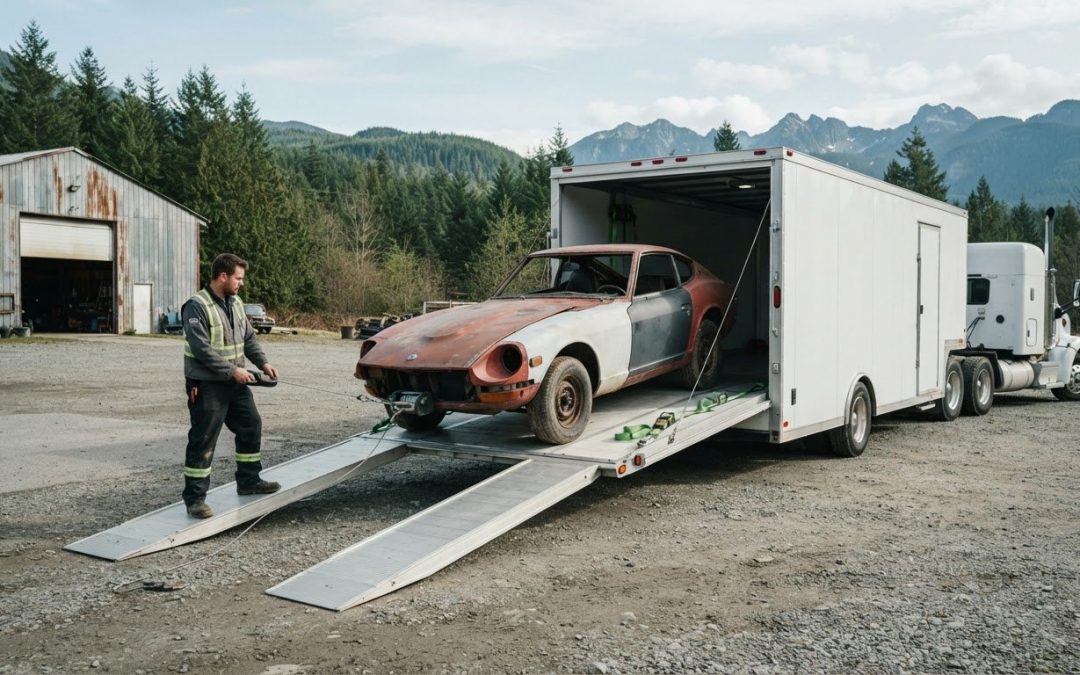
A project car’s transport plan should start with its condition, not just the distance it needs to travel. If it won’t start, steer or brake normally, figuring out how to transport a project car takes more than arranging a pickup. The carrier needs an accurate picture of the vehicle before the move is planned.
Missing parts, modifications or a difficult pickup location can affect loading. Make coordination easier by describing what works, what doesn’t, whether there are fluid leaks, and whether loose parts can be removed before transport.
This guide covers how to choose a transport approach based on the car’s condition, prepare useful vehicle and pickup information, and organize a clear handover and delivery plan. You’ll also learn how dispatch coordination brings carrier selection and delivery scheduling together, reducing the administration involved in moving a project car across Canada.
Key Takeaways
- To plan how to transport a project car, record what’s complete, what’s modified, and whether it can roll, steer and brake.
- Compare carrier transport, towing and driving based on the car’s readiness and the work you can take on.
- Gather vehicle dimensions, pickup and delivery details, and access constraints to shape a practical transport plan.
- Use a pickup checklist and photos to document the vehicle’s condition and support a clear handover at delivery.
- GO DISPATCH coordinates carrier selection and delivery scheduling, bringing the moving details together.
How to transport a project car: start with its condition
Before choosing a transport method, make a simple checklist: whether the car starts, rolls, steers and brakes; what parts are missing or loose; its dimensions and modifications; and any access constraints at pickup and delivery. This gives the carrier coordination process a useful starting point and helps you compare hauling, towing and driving based on the vehicle’s actual needs.
How project car transport differs from moving a road-ready vehicle
A road-ready car can often be described by its make, model, dimensions and route. A project car needs a fuller condition report. It may be unfinished, unable to move under its own power, or changed from its original configuration. These details affect how loading and handover are planned.
Project-car transport is the planned movement of a vehicle whose operating condition or completeness may affect how it can be loaded, secured and delivered. The label “project car” is only a starting point. A modified car that starts, steers and brakes may need a different plan from a partly assembled vehicle that cannot roll.
What counts as a project car for transport planning?
It could be an unfinished build, a non-running car, a partially assembled vehicle, or a modified car with changes to its height, shape or components. The owner’s goal might be restoration, a performance build, or simply moving the vehicle between properties. For transport planning, the practical questions are: what is present, and what can the car do during loading and unloading?
Project status alone doesn’t show whether a vehicle can be loaded. A car awaiting an engine may still roll and steer; another with its wheels removed may not. Share the vehicle’s actual state so the transport plan reflects the work required, rather than assumptions based on the word “project.”
Why the car’s actual condition changes the plan
Starting, steering, braking and rolling are separate considerations. A car that won’t start may still roll onto loading equipment. If it can’t steer or brake, loading and positioning require different planning. A non-running vehicle may need equipment such as a winch, but equipment and loading methods depend on the carrier and vehicle setup.
Be specific about modifications and dimensions. Low ground clearance can affect how a vehicle approaches loading equipment. Wider-than-standard bodywork, altered wheels or protruding parts can also change access and space requirements. Disclose these details early, along with anything that could shift or detach.
Loose components deserve particular attention. An unattached bumper, trim piece or box of parts isn’t the same as a securely installed component. Identify what is on the vehicle and what will travel separately. Don’t assume loose parts can be carried inside the car or handled as part of the vehicle move. Clarifying this before pickup helps prevent confusion.
- Describe whether the car starts, rolls, steers and brakes.
- Point out missing parts, modifications, low clearance and unusual dimensions.
- Identify loose components and any known fluid leaks.
This information is for transport planning, not a mechanical inspection. A carrier arrangement doesn’t establish that a vehicle is safe to drive or mechanically sound. Transport coordination doesn’t repair or restore the car. The aim is to describe its current condition accurately so loading, carrier selection and delivery scheduling can be organized around the vehicle as it is.
That’s the practical answer to how to transport a project car: plan for its real condition, not the name attached to the build. Accurate details help identify constraints before pickup and set clear expectations for the handover.
How to plan project car transport around its condition
A useful transport plan starts with facts about the vehicle, then connects those facts to the route and pickup arrangements. Work through the details in order. If something is unknown, say so rather than guessing. Accurate information helps a transport coordinator organize a suitable carrier for the car’s condition and logistics.
Record the details a transport coordinator needs
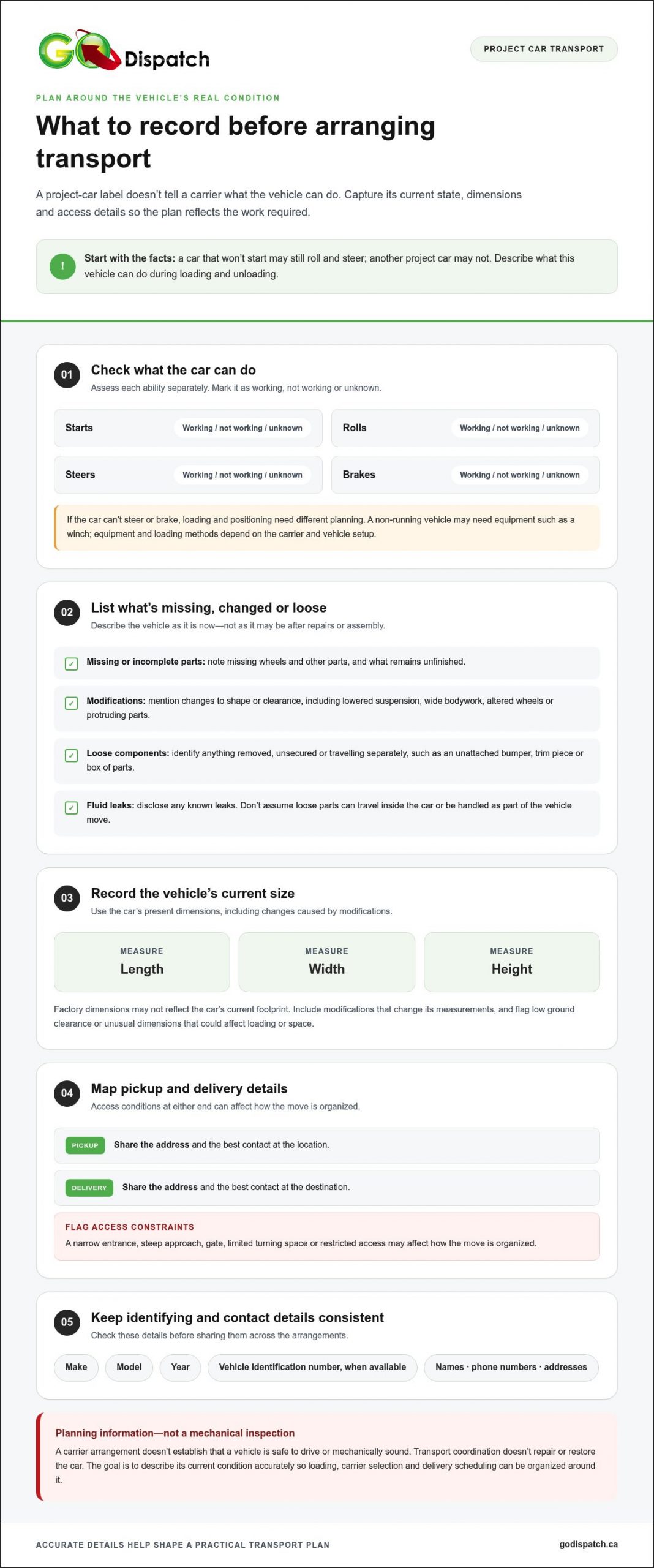
Describe the car as it is now, not as it will be after repairs or assembly. Note what works, what is incomplete and what may affect loading or access. Keep the vehicle description, identification details, pickup and delivery information, and contact details consistent across the arrangements.
- Assess condition and completeness. State whether the car starts, rolls, steers and brakes. Mark each as working, not working or unknown. Note missing wheels or other parts, and mention any known fluid leaks.
- List modifications and loose components. Include changes that affect shape or clearance, such as lowered suspension, wide bodywork or protruding parts. Identify components that are removed, unsecured or travelling separately.
- Record vehicle dimensions. Provide the vehicle’s length, width and height as accurately as possible. Include modifications that change those measurements, since factory dimensions may not reflect the car’s current footprint.
- Map pickup and delivery access. Share the pickup and delivery addresses, the best contact at each location, and known constraints. A narrow entrance, steep approach, gate, limited turning space or restricted access can affect how the move is organized.
- Use consistent vehicle and contact information. Provide identifying details, such as the vehicle identification number when available, along with the make, model and year. Check names, phone numbers and addresses before sharing them.
Accurate condition details help a transport coordinator match the vehicle’s loading needs with a suitable carrier and organize the move around its real constraints. This is especially useful when a car can’t move under its own power or has dimensions that differ from a standard road-ready vehicle.
Match the transport plan to the vehicle
Arrangements depend on the car’s condition, dimensions, pickup and delivery access, and route logistics. A vehicle that rolls and steers may have different loading needs from one that cannot move. Open and enclosed hauling are options to consider based on the vehicle and transport plan, not assumptions about what every modified car requires.
For a broader overview of vehicle hauling across Canada, the national car hauling services guide explains transport considerations in more detail. Forbes also offers a guide to shipping a car covering general transport choices and preparation. Apply that advice with the project vehicle’s specific condition in mind.
If you’d like help coordinating the logistics, GO DISPATCH’s vehicle transport coordination brings carrier selection and delivery scheduling together, reducing the number of separate details you need to manage.
Transporting a project car: compare hauling, towing, and driving
The right way to move a project car depends on whether it can operate reliably, how far it needs to travel, and how much work you want to manage yourself. A car that starts and drives may still be a poor fit for a long trip if its brakes, steering or other systems are unreliable. Compare the practical demands before choosing.
| Method | Practical fit | Preparation | Coordination needs |
|---|---|---|---|
| Professional carrier transport | Useful for longer moves or vehicles that aren’t road-ready. | Provide the car’s condition, dimensions, modifications and loading needs. | Arrange carrier selection, pickup and delivery details. |
| Towing | May suit a shorter move when the car can be safely loaded onto suitable towing equipment. | Plan for the towing vehicle or service, equipment and access at both ends. | Coordinate loading, route and drop-off logistics. |
| Driving | Only practical when the car is complete, road-ready and dependable for the planned journey. | Assess readiness and prepare the vehicle for the trip. | Plan the route and manage the drive yourself. |
When professional vehicle hauling may make sense
Carrier transport can be a practical option for a long-distance move, a non-road-ready car, or an owner who can’t make the trip. GO DISPATCH coordinates third-party carriers for vehicle moves; it doesn’t transport vehicles with its own fleet. This coordination brings carrier selection and delivery scheduling together. Broader planning considerations are covered in this vehicle delivery logistics guide.
Open or enclosed hauling are options to weigh against the vehicle and move. The choice doesn’t replace a clear condition report. When deciding how to transport a project car, match the method to the car’s actual readiness and the practical demands of its route.
When towing or driving may be impractical
Driving can seem straightforward, but it isn’t sensible if the car is unsafe, incomplete or unreliable. A vehicle that starts may still have steering or braking issues, while a partly assembled build may not be ready for normal road use. Consider the journey itself, not just whether the engine runs.
Towing also takes planning. A trailer or other towing setup adds equipment, loading, access and drop-off considerations. A tight driveway or limited room to position equipment may complicate the plan. Neither towing nor driving is automatically the best choice; the vehicle’s condition and the route should guide the decision.
For a move that calls for carrier coordination, GO DISPATCH’s vehicle transport coordination can help organize carrier selection and delivery scheduling around the information you provide.
Prepare a project car for pickup and delivery
A clear handover starts before the vehicle is loaded. Record its current condition, note anything that needs special handling, and agree on who will be present at each end. These steps are especially useful for unfinished builds, where modifications and loose components can make the vehicle’s state harder to describe at a glance.
Document condition and secure removable parts
Photograph the car from multiple angles before pickup. Capture existing damage, unfinished areas, modifications, and loose or removed components. At delivery, take another set of photos from comparable angles. A consistent visual record helps both sides review the vehicle’s condition at handover and identify any differences to discuss.
- Record the starting condition. Note visible damage, incomplete bodywork and installed modifications. Keep the notes with the photos so the details are easy to refer to at pickup and delivery.
- Deal with loose parts. Remove or secure unattached items where practical. Make a separate list of parts travelling apart from the car, and record how they’re being handled under the transport arrangements.
- Clarify vehicle contents. Record the fuel level and any contents in the car according to the agreed carrier arrangements. Don’t assume tools, spares or project parts can remain inside.
Share unusual handling needs before the move is scheduled, not for the first time at pickup. For example, explain if a low front end needs careful access, if the car can’t roll, or if a modified section extends beyond the vehicle’s usual dimensions. Describe the constraint plainly and include a photo if it helps show the issue. This gives the transport coordinator useful context for organizing the move.
Make pickup and delivery straightforward
Confirm access instructions, the responsible contact and the handover plan for both locations. Explain where the vehicle is positioned and note obstacles such as a narrow entrance or limited room to manoeuvre. If someone else will meet the carrier, share their contact details and make sure they know the agreed condition notes and loose-part arrangements.
- Have the condition notes and before-pickup photos ready to review.
- Point out modifications, existing damage and parts travelling separately.
- At delivery, compare the vehicle with the original record and take new photos before completing the handover.
Use the handover to review the car’s visible condition with the carrier representative at pickup and delivery. Keep the discussion factual: identify what was already present and note anything that appears different. If the project car can’t roll or has a specific access constraint, make that detail prominent so it isn’t lost among general vehicle notes.
Good preparation turns “how to transport a project car” into a set of clear, manageable details. For help coordinating carrier selection and delivery scheduling around those details, coordinate your project car transport with GO Dispatch.
Coordinate project car transport with GO DISPATCH
Arranging a project-car move can mean keeping track of vehicle details, pickup access, carrier arrangements and delivery timing. GO DISPATCH brings those logistics together by coordinating carrier selection and delivery scheduling for vehicle moves. It works with third-party carriers and does not operate its own carrier fleet. A complete, candid condition report gives the coordination process a clear starting point.
What to have ready when arranging a move
Gather the essentials before discussing the move. You don’t need to describe the build’s entire history; focus on details that affect transport and handover. If a vehicle detail is unknown, state that plainly. Clear information keeps planning grounded in the car’s current condition rather than assumptions about how it may perform.
- Route and timing: Provide the origin and destination, preferred timing, and relevant access instructions at each location.
- Vehicle details: Share the make, model, year, dimensions and accurate identification information.
- Operating condition: State whether it starts, rolls, steers and brakes. Note any known issue or unknown.
- Modifications and parts: Describe changes that affect size or clearance, and identify removed or loose parts that need to be included in planning.
- Contacts: Name the people responsible for pickup and delivery, with reliable contact details.
Keep these details in one place. A concise summary helps avoid sending different versions of the vehicle description to people involved in arranging the move. Include practical access constraints, such as a narrow entrance or a vehicle that cannot roll, so they’re considered alongside the route and vehicle information.
How dispatch coordination can reduce the workload
With one-stop dispatch coordination, GO DISPATCH connects clients with third-party auto carriers and coordinates carrier selection and delivery scheduling. This gives you a central point for organizing key transport arrangements instead of managing each detail in isolation. The carrier performs the vehicle transport; GO DISPATCH coordinates the arrangements around the move.
Organized details help everyone involved understand what the vehicle requires. They also provide a shared reference for timing, access and handover responsibilities. No condition report can remove every uncertainty, but a precise one can reduce avoidable back-and-forth and make it easier to discuss the project car’s specific needs.
If you’re working out how to transport a project car, start with the route and an honest condition summary. Then bring together your preferred timing, contact names, access notes and information about removed parts. This preparation makes coordination more straightforward, whether the vehicle is a complete modified car or an unfinished build.
Discuss project-car transport coordination with GO DISPATCH and share the vehicle and route details to begin organizing the move.
Set your project car move in motion
A vehicle move is one part of a larger build plan. Think ahead to what needs to happen once the car arrives: who will receive it, where it will be placed, and whether the next stage of the project can begin there. Making those decisions early gives the move a clear purpose and helps avoid last-minute uncertainty on delivery day.
If you’re still deciding how to transport a project car, use the information you’ve gathered to start a focused conversation about the move. GO Dispatch provides Canadian auto transport dispatch coordination, with carrier selection and delivery scheduling organized through one service. Bring your route, preferred timing and vehicle details to the discussion, then focus on preparing for the next stage of the build.
Discuss your project car transport with GO Dispatch and take the next step toward getting your car where the work can continue. A clear plan can make the move feel manageable and keep your attention on the project ahead.
Frequently Asked Questions
Can you transport a project car that does not run?
Yes, a car that doesn’t run may be transportable, but the loading plan depends on what it can still do. A car that won’t start but rolls is different from one with locked wheels or no wheels. Explain the exact issue when arranging the move, including whether it can steer or brake. This helps the coordinator organize the transport requirements rather than treating every non-running car the same.
How do you transport a project car with missing or loose parts?
Identify missing parts and loose components before arranging the move. For example, note whether a bumper is removed, trim is unsecured, or wheels are stored separately. Keep loose items together and make a separate list of what will travel apart from the car. Don’t assume parts can be placed inside the vehicle or carried with it. Include their handling in the transport plan so the handover is clear.
Should I remove personal belongings from a project car before transport?
Yes, remove personal belongings and unnecessary items before pickup. Tools, spare parts, paperwork and items left in the cabin or boot can shift during handling and create confusion about what belongs with the vehicle. If something must remain, record it and include it in the agreed arrangements rather than relying on an assumption. Keep important documents and valuables with you, not inside the car.
Is open or enclosed transport better for a project car?
Neither option is automatically right for every project car. Open transport leaves the vehicle exposed to weather and road debris, while enclosed transport provides a covered environment. Consider the car’s condition, value, finish and route when weighing the options. A freshly painted build or a vehicle with vulnerable unfinished surfaces may lead you to consider more protection. Share its dimensions and modifications when planning, too.
What information do I need to arrange project car transport?
To plan how to transport a project car, prepare the pickup and delivery addresses, preferred timing, vehicle make and model, dimensions, and a contact at each end. Add a practical operating summary: does it start, roll, steer and brake? Include modifications, removed parts, fluid leaks and access limitations such as a narrow entrance. If a detail is unknown, say so. Accurate information helps shape the transport arrangements.
How should I document a project car before transport?
Take clear photos before pickup, including each side, the front and rear, the interior, and close-ups of existing damage or unfinished areas. Save them with a dated note describing the vehicle’s visible condition and any parts travelling separately. Take a new set at delivery from similar angles. This gives you a useful before-and-after record for the handover, especially if the car has distinctive modifications or incomplete bodywork.