
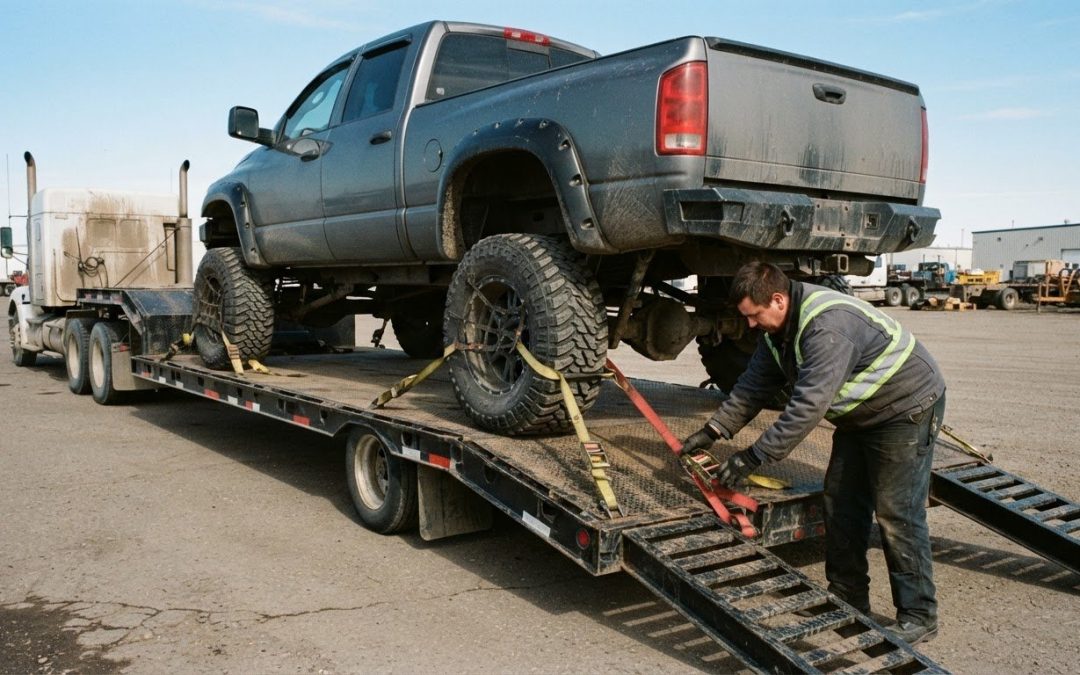
A modified vehicle isn’t automatically too difficult to transport. Shipping a modified or oversized vehicle is possible, but its dimensions, ground clearance, and condition affect loading and route planning. Share details about modifications before scheduling so the transport plan can account for them.
Careful planning matters: aftermarket parts, low clearance, or a vehicle that won’t run can change how it is loaded and moved. Spare parts need attention, too, since carrier policies vary on what can travel inside a vehicle.
This guide explains how to assess fit and operating condition, what to share about accessories and spare parts, and which factors can affect oversized transport costs. You’ll also learn why route access and loading needs matter, so you can provide clear, useful details for the transport plan.
Key Takeaways
- Share the vehicle’s dimensions, weight, and pickup and delivery access details early to support transport planning.
- Describe modifications and operating condition, including low clearance, loose accessories, and whether the vehicle runs, rolls, and steers.
- Plan spare parts and accessories separately, since carrier policies differ on what may travel inside the vehicle.
- Expect oversized transport costs to depend on route, vehicle size, and any special loading or transport arrangements required.
Is it possible to ship a modified or oversized vehicle?
Yes. Transport can be arranged when the vehicle’s dimensions, condition, and route access are planned before loading. Use these steps to provide the details that shape the shipment.
-
Record Dimensions, Weight, and Access
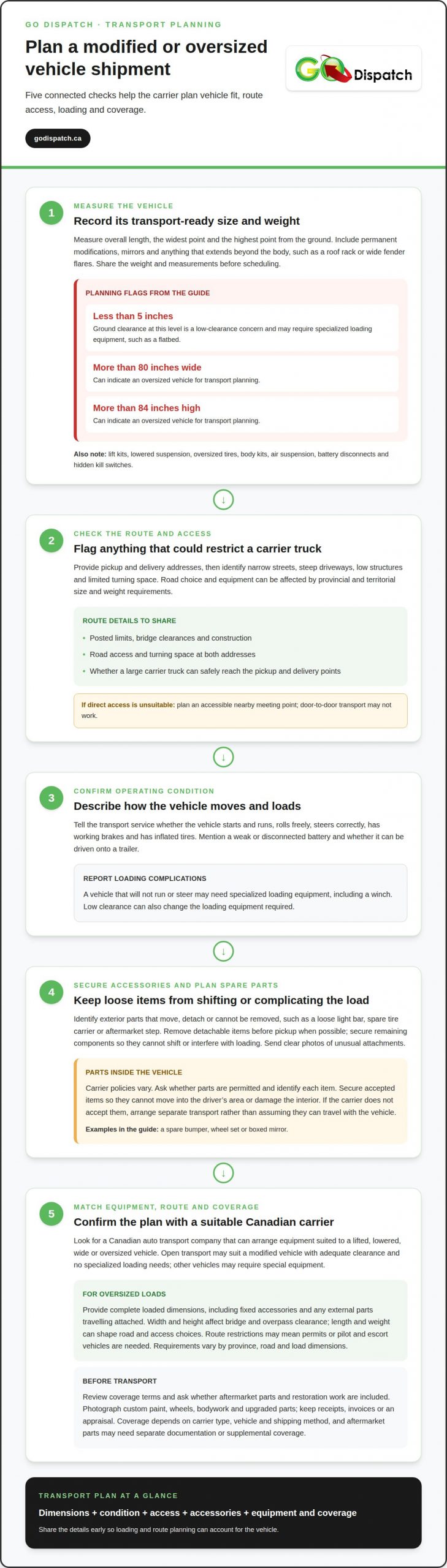
Measure the vehicle at its widest and highest points, including modifications such as a roof rack or wide fender flares. Record its full length and weight, then share those details before scheduling. Include low ground clearance and any parts that extend beyond the body. For example, a lowered vehicle may need different loading equipment than a standard-height car.
-
Check Routes and Access Restrictions
Provide the pickup and delivery addresses, then flag narrow streets, steep driveways, low structures, and limited turning space. Provincial and territorial size and weight requirements can affect which roads and equipment suit an oversized shipment. The route must account for posted limits, bridge clearances, construction, and road access. Door-to-door transport may not work if a large carrier truck cannot safely reach either address, so plan an accessible nearby meeting point.
-
Secure or Remove Loose Accessories
Identify exterior accessories that move, detach, or cannot be removed, such as a loose light bar, spare tire carrier, or aftermarket step. Remove detachable items before pickup when possible. Secure the remaining components so they don’t shift during transport or interfere with loading. Send clear photos of unusual attachments so the driver knows what extends from the vehicle before arrival.
-
Choose a Carrier and Confirm Coverage
Look for Canadian auto transport companies that can arrange carriers and equipment suited to lifted, lowered, wide, or oversized vehicles. Open transport may suit a modified vehicle with adequate clearance and no specialized loading needs; other vehicles may require special equipment. Before the shipment, review the coverage terms and ask whether aftermarket parts and restoration work are included. Keep photos, receipts, invoices, or an appraisal to document upgrades.
Assessing modifications, dimensions, and operating condition
Give the transport service a clear picture of the vehicle before pickup. Its modifications and operating condition help determine loading equipment and reduce avoidable delays.
-
Assess Modifications and Attachments
List each change that affects the vehicle’s height, width, length, or loading, including lift kits, lowered suspension, oversized tires, and body kits. Note air suspension, battery disconnects, or hidden kill switches because these can affect how the vehicle is handled. Less than 5 inches of ground clearance is a low-clearance concern that may require specialized loading equipment, such as a flatbed.
-
Measure the Modified Vehicle
Measure the vehicle in its transport-ready state, including permanent aftermarket parts. Record its overall length, widest point, and highest point from the ground; include mirrors or attachments that extend beyond the body. More than 80 inches wide or 84 inches high can indicate an oversized vehicle for transport planning. Send the measurements with photos so the carrier can assess fit before scheduling.
-
Check Operating Condition and Loose Components
Report whether the vehicle starts and runs, rolls freely, steers correctly, and has working brakes and inflated tires. Mention a weak or disconnected battery, and whether the vehicle can be driven onto a trailer. Identify loose exterior components that can’t be removed, such as an unsecured spoiler or aftermarket accessory. A vehicle that won’t run or steer may need specialized loading equipment, including a winch.
-
Prepare and Document the Vehicle
Photograph the vehicle before pickup, capturing custom paint, wheels, bodywork, and restored or aftermarket parts. Save receipts, invoices, or an appraisal for significant upgrades or restoration work. These records document condition and value if questions arise. Coverage terms depend on carrier type, vehicle, and shipping method; aftermarket parts may need separate documentation or supplemental coverage. Include these details in your vehicle transport planning.
Can I leave spare parts or accessories inside my vehicle during transport?
Carrier policies vary on spare parts and personal items inside a vehicle. For oversized loads, route dimensions and escort needs also affect transport planning. Use these steps to separate cargo decisions from permit and pilot-vehicle arrangements.
- Ask whether the carrier permits parts inside the vehicle, then identify each item. A spare bumper, wheel set, or boxed mirror can take up space and shift during transport. Secure parts so they won’t move into the driver’s area or damage the interior. If the carrier doesn’t accept them, arrange separate transport rather than assuming they can travel with the vehicle.
- Provide the complete loaded dimensions before planning the route. Measure the vehicle with any fixed accessories, then include external parts if they’ll travel attached. Width and height affect clearance at bridges and overpasses; length and weight can shape road and access choices. A load that needs more room may require advance route planning and pilot or escort vehicles.
- Confirm permit and escort requirements for the actual Canadian route. Oversized-load rules and permit conditions can vary by province, road, and load dimensions. A pilot car may guide the load, while an escort vehicle can help manage route movement. The required approach depends on the route and its restrictions. Don’t apply a rule from a U.S. state to a Canadian shipment.
- Include permit and escort arrangements in the schedule and quote. Fees depend on the route, permit requirements, load dimensions, and whether pilot or escort vehicles are required. U.S. industry estimates, such as permit charges per state or escort rates per mile, don’t establish Canadian pricing. Share dimensions and pickup and delivery locations early so the transport plan can account for clearances and access safely.
What Does Oversized Vehicle Shipping Cost?
The cost depends on the route, vehicle dimensions, condition, and transport method. Special loading or other accommodations can affect the quote.
-
Review Shipping Cost Factors
List the details that shape the shipment before requesting a quote: pickup and delivery locations, vehicle dimensions, weight, and operating condition. A lifted truck, lowered car, and oversized van can each require different loading arrangements. A vehicle that needs specialized equipment may cost more to transport than one that loads onto a standard trailer. The price depends on the shipment and is provided after a quote request.
-
Assess Potential Cost Impacts
Describe any feature that changes the vehicle’s fit or loading needs, such as low ground clearance, unusual height, or a wide body kit. These details help determine whether the transport method and trailer suit the vehicle. Route access matters, too: a narrow pickup street or restricted delivery area may require different arrangements. Enclosed transport can protect a vehicle from weather and road debris, while the transport method affects the plan.
-
Account for Risks and Extra Fees
Provide accurate dimensions and condition details to reduce the risk of a loading mismatch or scheduling disruption. If the vehicle cannot run, steer, or roll freely, say so before arrangements are made; loading may require specialized equipment. Additional costs can arise from accommodations needed for the vehicle and route. Include removable accessories and any parts travelling with the vehicle, since they can affect fit and handling.
Ready to plan transport for a modified or oversized vehicle? Request a vehicle transport quote with its dimensions, condition, and route details.
GO DISPATCH
GO DISPATCH’s ONE-STOP TRANSPORT DISPATCHING SERVICE connects customers with the right auto carrier and manages the logistics. For a modified or oversized vehicle, the transport plan can account for details such as dimensions, operating condition, loading needs, and route access.
Share those details when arranging car, truck, SUV, or van transport. Include any spare parts or accessories travelling with the vehicle, along with pickup and delivery locations. Clear information helps shape a practical plan for the shipment and its handling.
If you’re preparing a modified or oversized vehicle for transport, contact GO DISPATCH to discuss your shipment.
Move from preparation to a clear plan
The next step is to connect your transport arrangements with what happens after delivery. Consider who will receive the vehicle, where it will be unloaded, and whether it needs to be ready for a particular project or event. Planning the handoff helps make the shipment useful beyond pickup day.
For shipping a modified or oversized vehicle, treat the transport plan as part of the vehicle’s arrival, not a separate task. Decide what a successful delivery looks like for you, then keep that goal in view as you arrange the move. A clear priority makes the next conversation more focused and helps you move ahead with confidence.
When you’re ready to discuss your shipment, contact GO DISPATCH about your transport plan. Take the next step at your pace, with your delivery needs in mind.
Frequently Asked Questions
Do oversized loads require permits?
Sometimes. Permit requirements depend on the load’s dimensions and the route, so an oversized vehicle may need approval for some road segments but not others. For a Canadian shipment crossing provincial boundaries, the planned route matters as much as the vehicle. Include permit planning in the schedule, along with route restrictions or escort arrangements that could affect the move.
How do I document the value of my aftermarket parts for shipping?
Create a record for each high-value component before pickup. Take clear photos showing the part installed, plus close-ups that reveal its condition and identifying details. Keep purchase invoices, installation records, and any professional valuation together in one file. For a custom wheel set, for example, include images of all wheels and the related purchase or appraisal documents. Ask how this information relates to applicable coverage.
How far in advance should I schedule shipping for a modified or restored vehicle?
Arrange transport as soon as your route and likely pickup date are known. Early planning gives more room to coordinate carrier availability, enclosed transport, or specialized loading equipment. If the vehicle needs to arrive for a restoration handoff or scheduled event, include the delivery date in the plan early. Route restrictions or permit arrangements can also affect scheduling.
How long does it take to plan and execute an oversized shipment?
Timing depends on both the planning work and the trip itself. Route distance, access, load dimensions, equipment needs, and any permit or escort arrangements all affect the schedule. A shipment that needs specialized loading or a route assessment takes more coordination than a vehicle that fits standard equipment. Share complete details early so planning can begin before pickup arrangements are finalized.
What happens if a custom component is damaged during transport?
At delivery, inspect custom parts against your pre-pickup photos before signing the Bill of Lading. If you find new damage, record it on the document, photograph the affected area, and notify the transport company promptly. Keep the images and any related purchase or appraisal records together. Clear documentation helps describe the component’s condition and the damage you observed at delivery.
What is considered oversize freight?
Oversize freight is a load whose dimensions or weight exceed the limits for the transport equipment or route being used. For a vehicle, this can involve its overall width, height, length, or weight, including fixed modifications. A lifted truck or a vehicle with a wide body kit may need a different transport setup than a standard vehicle, depending on its measurements and route.