

A cross-country car shipment takes days, not hours. If you’re wondering how long it takes to ship a car in Canada, the route is a key factor: Edmonton to Toronto can take up to 6 days, while Vancouver to Toronto can take up to 10 days. These estimates cover transit, but drop-off and pickup scheduling can also affect your overall timeline.
It’s natural to want a clear delivery date, especially when you’re coordinating a move or need your vehicle at a new address. Distance matters, but daily mileage, route planning, weather and pickup timing also shape the schedule. This guide explains how to estimate how long it takes to ship a car in Canada, what can cause delays and how to plan drop-off and pickup with fewer surprises.
Key Takeaways
- Plan for the full drop-off-to-pickup window, not just the time the vehicle spends travelling.
- Build in room for weather, seasonal demand and extra stops, which can stretch delivery timing.
- Book a few weeks ahead when possible, and allow an extra 1-5 days if you need a specific pickup date.
- Use carriers’ typical daily mileage as a starting point, then account for route and stop schedules.
Total shipping time from terminal drop-off to pickup
For a useful timeline, separate the vehicle’s travel time from the full drop-off-to-pickup window. The route, transport method and handoff points all affect the estimate.
Cross-Country Distance and Delivery Times
Canada stretches 9,306 km from coast to coast, so cross-country vehicles travel very different distances depending on their route. Edmonton to Toronto can take up to 6 days, while Vancouver to Toronto can take up to 10 days. These examples show why a shorter route usually has a shorter transit estimate, but geography alone doesn’t set the pickup date.
For shipments to Alaska or Hawaii, allow 2-4 weeks, depending on ferry schedules and logistics. These destinations involve a different transport route from a standard Canadian terminal-to-terminal shipment.
Estimate Start and Average Time Calculations
For this comparison, shipping time starts when the vehicle is dropped off at the origin terminal and ends when it is ready for pickup at the destination terminal. Booking lead time before drop-off is separate, so include it when planning the total time from arranging transport to collecting the vehicle.
Average shipping times describe typical transit for a route, not the exact time every shipment takes. To compare estimates, use the same start and end points, then consider distance and route. An estimate that ends at a terminal, for example, doesn’t include the time needed to collect the vehicle once it’s available.
Open and Enclosed Transport Timing
Open car transport typically takes 2-4 days on average. Enclosed transport usually adds 1-2 days compared with open transport. So, when comparing these methods, factor in the added transit time for enclosed transport rather than treating both estimates as equal.
Ask what each estimate includes: terminal drop-off, transit and readiness for pickup. That keeps comparisons consistent.
Remote and Northern Route Timing
Remote and northern Canadian locations don’t have one standard delivery window. Road access, route connections, transfers and seasonal conditions affect how vehicles reach their destination. Consider both the origin and destination, especially if either terminal is far from a major transport corridor.
International car shipping to Canada also involves customs clearance. An end-to-end estimate needs to account for travel to the Canadian destination and clearance before pickup. For a practical comparison, separate transit time from border processing and the final terminal handoff.
Factors that can delay a shipment
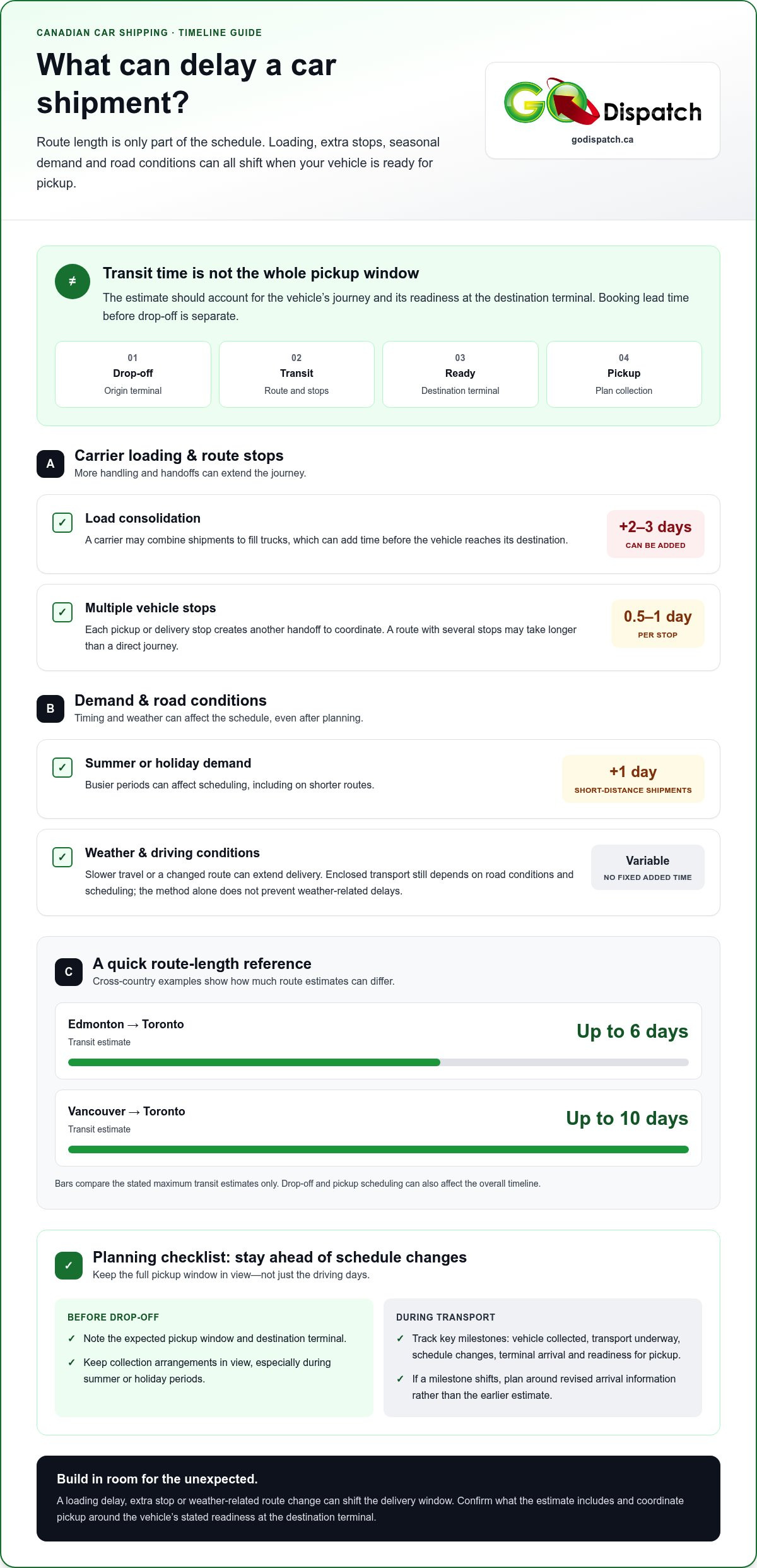
The route is only one part of a vehicle’s delivery schedule. Carrier loading, stops, seasonal demand and road conditions can all shift arrival time. A delay before departure, for example, can push back the entire delivery window even if the driving portion follows its planned route. Factor these considerations into your plans for terminal pickup or other arrangements.
Load consolidation is one source of added time. When carriers combine shipments to fill trucks, a car shipment may take an additional 2-3 days. Multi-car loads can also add 0.5 to 1 day per stop. Each stop gives the carrier another pickup or delivery to coordinate, so a route with several vehicle handoffs may take longer than a direct journey.
Timing matters, too. Summer or holiday demand can delay short-distance car shipments by a day. Weather can extend a route when driving conditions slow travel or require a change of plan. Enclosed transport still depends on route conditions and scheduling, so the method alone doesn’t prevent weather-related delays.
Shipment updates are most useful when they explain a change, rather than simply repeat the original estimate. Follow clear milestones: vehicle collected, transport underway, any schedule change, arrival at the destination terminal and readiness for pickup. These updates help you coordinate collection without assuming they follow a fixed daily schedule. If a milestone shifts, adjust your plans based on the revised arrival information, not the earlier date.
Before drop-off, note the expected pickup window and key shipment milestones. Keep the destination terminal and collection arrangements in view, especially during summer or holiday periods. That way, a loading delay, extra stop or weather-related route change is part of your plan, not a last-minute surprise.
Booking and scheduling tips
Start planning before your preferred drop-off date. Car shipping companies generally prefer customers to book a few weeks in advance, allowing time for route planning and carrier arrangements. For a mid-range shipment, plan a week ahead. Waiting until the last moment can leave fewer scheduling options, particularly when your dates are fixed.
Set out your timeline before arranging transport. Separate the date you want to hand over the vehicle from the date you need it ready for pickup. If you need a specific pickup date, allow 1-5 extra days. That buffer gives your plans room for scheduling shifts between booking, collection and arrival.
Use these steps to make your booking details clear:
- Write down the origin and destination, including the terminal locations.
- Choose your preferred drop-off and pickup dates, then note any flexibility.
- Share the full timing window with the carrier, rather than focusing only on the travel days.
- Keep the shipment details and agreed schedule together so you can refer to them when planning collection.
For urgent moves, expedited car shipping often allows pickup within 24-48 hours. This refers to pickup timing, not the complete journey across the country. Keep the distinction clear when comparing an expedited pickup with a delivery estimate. A quick vehicle collection doesn’t mean the destination terminal will be ready for pickup just as quickly.
Build your personal plans around the whole sequence. For example, if you’re relocating between provinces, coordinate vehicle drop-off with your travel date and leave room before you need the car at the destination. A fixed appointment or move-in day makes the 1-5-day buffer especially useful. Flexible dates can make it easier to fit the shipment into a carrier’s schedule. Share your priorities at booking, then use the stated pickup window to plan travel and collection.
Estimating travel time by daily mileage
Daily mileage offers a useful first calculation for a Canadian vehicle route. Carriers typically cover 400-500 miles per day. Divide the route’s driving distance by that daily range to estimate how many driving days the journey may require. Use the actual route distance, not a straight-line measurement between two cities, because highways and route connections shape the distance travelled.
For example, a route distance of 1,000 miles divided by 400-500 miles per day gives a rough estimate of about two to three driving days. That calculation estimates time on the road, not the full time between drop-off and pickup. Loading, delivery stops and scheduled handoffs can add time beyond the mileage calculation.
Use this simple process to make your estimate more useful:
- Identify the route’s road distance between origin and destination.
- Divide that distance by 500 miles for the faster end of the daily range.
- Divide it by 400 miles for the slower end.
- Treat the result as driving days, then account separately for scheduled stops and terminal handoffs.
Routes across Canada can vary in road distance, even when two destinations look close on a map. A route with direct highway connections may require less driving than one with detours or multiple connections. Compare the planned route distance with the carrier’s daily mileage estimate instead of applying one national travel time to every shipment.
Use the calculation as a planning tool, not a pickup appointment. If the estimate gives a range of driving days, plan around the longer end when arranging arrival-day travel or vehicle collection. Keep route distance, daily mileage and terminal pickup timing separate. This makes it easier to see which part of the schedule affects your plans.
GO DISPATCH: Car Transport
GO DISPATCH coordinates car transport by matching your shipment with an appropriate auto carrier and managing the logistics. This can help when you’re arranging a move, buying or selling a vehicle across provinces, or coordinating delivery around a specific schedule. Share your route, preferred dates and pickup details so the transport plan can account for the timing factors covered above.
GO DISPATCH also handles truck, SUV and van transport through its one-stop transport dispatching service. The right fit depends on the vehicle and the shipment you need to arrange. For help planning your vehicle transport, contact GO DISPATCH.
Plan your next move with confidence
Understanding how long it takes to ship a car in Canada is only the starting point. Turn the estimate into a workable plan: note the origin and destination, choose preferred drop-off and pickup dates, and consider how much flexibility you have. Clear details help coordinate transport around a move, vehicle purchase or other important commitment.
Before arranging your shipment, bring those details together so the route and timing can be discussed in context. GO DISPATCH can help coordinate car transport and manage the logistics involved in arranging your vehicle’s journey. If you’re ready to plan the next step, contact GO DISPATCH about car shipping. With your key details at hand, you can move forward with a clearer plan.
Frequently Asked Questions
How long does it take to ship a car in Canada?
Domestic car shipping usually takes several days, while longer cross-country routes can take more. To estimate how long it takes to ship a car in Canada, first check whether the timeline starts at terminal drop-off or includes the wait for pickup. For a move, plan separately for the vehicle’s arrival and the time needed to collect it. Transit days aren’t the whole door-to-door schedule.
How long does car shipping take within Canada by distance and route?
Distance gives a starting point, but the route and number of connections shape the overall transit time. Shipments under 300 miles often take 1-2 days; routes from 300 to 1,200 miles often take 2-5 days; and routes over 1,200 miles often take 4-9 days. Use the road route between the actual locations, not a straight-line map measurement, to compare estimates.
How long does it take to ship a car between major Canadian cities?
Major-city routes can still vary considerably: Edmonton to Toronto can take up to 6 days, while Vancouver to Toronto can take up to 10 days. These examples are reference points, not a universal schedule for every city pair. Check the origin and destination terminals, since a vehicle’s final trip from the terminal to its pickup location is separate.
What affects car shipping transit time in Canada?
Route distance, carrier schedules, additional stops, seasonal demand and weather can all affect transit. For example, combining shipments to fill a truck may add 2-3 days, while multiple vehicle stops can lengthen a route. When reviewing a revised estimate, ask which milestone changed, such as loading, departure or terminal arrival. That helps you adjust collection plans to the affected part of the journey.
How do weather and winter road conditions affect car shipping times in Canada?
Winter conditions can slow travel when snow, ice or poor visibility affect roads, or when a carrier needs to change its route. The impact depends on where the weather occurs along the journey, not just at the destination. If a winter storm affects your route, keep travel and pickup plans flexible until the vehicle’s arrival timing is updated.
What steps are involved in booking and preparing a car for shipping in Canada?
Share the vehicle’s origin, destination and preferred dates, then confirm terminal handoff and pickup arrangements. Provide accurate vehicle details so the shipment can be planned appropriately. Before drop-off, follow the carrier’s instructions for preparing the vehicle. Keep your booking details together, including the route and agreed schedule, for reference when arranging collection.