

Can you rely on a guaranteed pickup date for car shipping if the booking doesn’t spell out what “guaranteed” means? A requested date and a firm pickup commitment aren’t the same, and that difference matters when a missed collection could disrupt a move, work schedule or business operation.
It’s reasonable to want a clear date. Distance, weather, road conditions and carrier schedules can all affect timing across Canada. The key is understanding exactly what the commitment covers, including the pickup window and what happens if plans change.
This guide explains what a pickup-date guarantee may mean, how it differs from an estimated pickup window, and which details to establish before booking. It also covers factors that can affect timing and how dispatch coordination helps manage carrier matching and scheduling. Clear expectations make it easier to plan around your vehicle’s transport.
Key Takeaways
- Separate a requested pickup date from an estimate, scheduled date and firm commitment so you know what timing has actually been agreed to.
- Understand how route length, carrier availability, shipment details and Canadian weather can influence pickup scheduling.
- When comparing a guaranteed pickup date for car shipping, focus on the written terms, conditions, communication and delay handling, not the label alone.
- Share complete vehicle and route details, confirm the vehicle is ready, and leave a practical buffer around appointments that depend on pickup.
- GO DISPATCH coordinates third-party carriers and transport schedules to match shipment needs with carrier options.
Guaranteed Pickup Date for Car Shipping: What Does It Actually Mean?
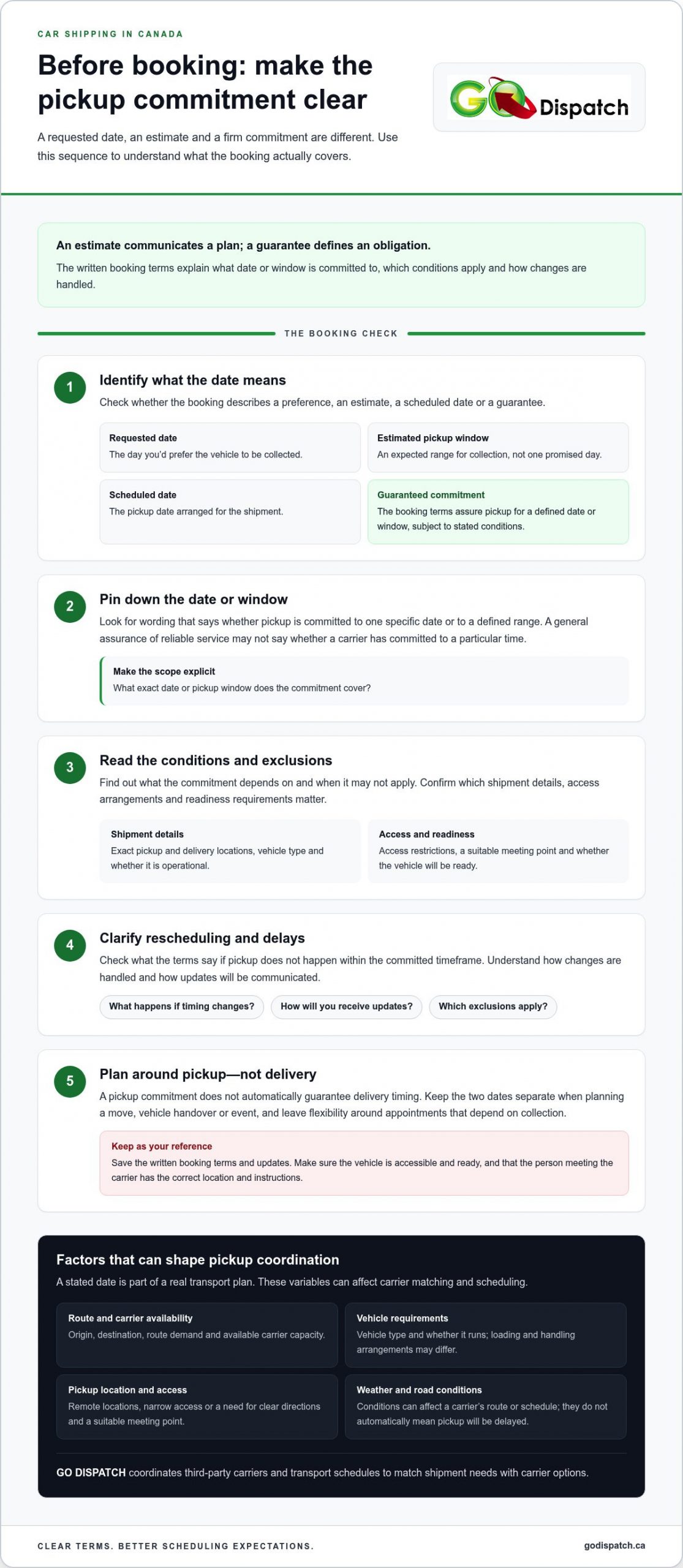
The word “guaranteed” can sound like a fixed appointment. In vehicle transport, a pickup-date guarantee is a stated commitment whose scope depends on the booking terms. Those terms should specify the date or window covered and any conditions that apply. Without that detail, a requested date or general assurance of reliable service may not tell you whether a carrier has committed to collecting your vehicle by a specific time.
An estimate communicates a plan; a guarantee defines an obligation. The practical difference is the commitment written into the booking. Clear wording helps you coordinate a move, vehicle sale or business delivery without treating a preferred date as a firm arrangement.
Pickup date, pickup window, and delivery date are different
These terms refer to different points in the transport plan. A requested date is the day you’d prefer the vehicle to be collected. An estimated pickup window gives an expected range for collection, rather than promising one exact day. A scheduled date is the pickup date arranged for the shipment. A guaranteed commitment means the booking terms state that pickup is assured for a defined date or window, subject to any stated conditions.
The delivery date refers to when the vehicle is expected to arrive at its destination. A commitment about pickup doesn’t automatically guarantee delivery timing. For example, a booking might commit to collecting your car within a specified window while giving a separate delivery estimate. Plan around those dates separately, especially if you’re arranging a handover or need the vehicle for a particular event.
What a written pickup commitment should make clear
Read the booking terms for the details that turn a broad promise into a clear commitment. The written wording should identify:
- The date or window: Is pickup promised on one specific date or within a defined range?
- The conditions: What shipment details, access arrangements or readiness requirements does the commitment depend on?
- Exclusions: Are there circumstances in which the stated commitment doesn’t apply?
- Rescheduling and delays: How are changes handled, and what do the terms say if pickup doesn’t happen within the committed timeframe?
These points matter because “preferred pickup” may describe a request, not a firm commitment. A scheduled date can also be useful for planning without being guaranteed. Don’t fill gaps in the wording with assumptions. Keep the booking terms and written updates together as your reference when coordinating vehicle access or aligning pickup with other plans.
A precise commitment sets expectations for both sides. It helps you understand what timing has been agreed to, what could affect it and how a change will be communicated. That clarity is the starting point for planning transport with fewer scheduling surprises.
What Can Affect a Guaranteed Car Shipping Pickup Date in Canada?
A pickup commitment is part of a real transport plan. The route, carrier schedule, vehicle details and pickup location can all affect how that plan is coordinated. A stated date doesn’t remove these practical variables, so it helps to understand which information and circumstances shape the timing.
Pickup timing depends on the route, carrier scheduling and shipment readiness. Clear details help the dispatch process match a vehicle shipment with suitable carrier options and set expectations for pickup.
Route, carrier availability, and vehicle details
Pickup options depend partly on the route and carrier availability. A carrier’s schedule needs to align with the origin, destination and other transport arrangements. Route length is only one factor. Demand for a particular route and the timing of available carrier capacity can also shape when collection can be coordinated.
The vehicle matters, too. Cars, trucks, SUVs and vans may have different transport requirements. Identify a vehicle that doesn’t run, since loading and handling arrangements can differ.
Share complete shipment details from the start. Include the exact pickup and delivery locations, vehicle type, whether it’s operational, and any access restrictions at either end. For example, a large vehicle or narrow access point may affect where a carrier can safely meet you. A general area alone may leave important planning questions unanswered.
Remote pickup points may need extra coordination. The carrier may need clear directions, a suitable meeting location or arrangements with someone who can release the vehicle. If access or readiness details change after booking, the transport plan may need updating. Accurate information gives the dispatch team a stronger basis for coordinating carrier options and timing.
Canadian weather and schedule disruptions
Weather and road conditions are planning variables across Canada. They can affect a carrier’s route or schedule, but they don’t automatically mean a pickup will be delayed. Conditions can change, so updates between the people coordinating the shipment and the vehicle contact help keep the plan current.
Build flexibility into plans that rely on collection, particularly if another appointment depends on the vehicle being picked up first. Don’t treat a pickup date as a delivery date, and keep a way to receive schedule updates. The booking’s written terms remain the reference for what the pickup commitment covers and how changes are handled.
Before confirming arrangements, make sure the vehicle will be accessible and ready, and that the person meeting the carrier has the correct location and instructions. If a sale, move or business handover is involved, share those timing constraints early so they can inform coordination rather than assuming they will fit the carrier schedule.
For help coordinating vehicle details, carrier options and scheduling, GO DISPATCH’s auto transport coordination brings the moving parts together. Clear information at booking helps keep expectations grounded in the shipment’s actual needs.
How to Compare Car Shipping Pickup Guarantees Before Booking
Use the written booking terms as your comparison point, not the word “guaranteed” on its own. Look for the exact pickup commitment, its conditions, how schedule updates are shared, and what the terms say if pickup needs to change. Comparing these details helps you assess whether the timing fits your plans and what to expect if circumstances shift.
Note the details side by side for each option. Differences are easier to spot this way than by relying on a headline or quick verbal summary.
| What to compare | What to look for in writing |
|---|---|
| Date type | Does the commitment cover one specific pickup date or a defined window? Is it a request, estimate, scheduled date or stated guarantee? |
| Conditions | What vehicle, location, access or readiness details does the commitment depend on? Are any circumstances excluded? |
| Communication | How will schedule confirmations or changes be shared, and who is the point of contact for updates? |
| Delay handling | What do the terms say about rescheduling, a missed commitment or next steps if the planned pickup can’t proceed? |
Questions the booking terms should answer
Before booking, check whether the timing is a specific date or a defined pickup window. Read the conditions and exclusions, then find out how updates are communicated if the schedule changes. Finally, look for written rescheduling and delay terms. If a key point is vague, treat it as unresolved rather than filling the gap with an assumption.
The guaranteed pickup date for car shipping is useful for planning only if you understand what the written commitment covers. A firm date with clearly stated conditions may support a different plan than a broad window with no defined process for changes. Keep the booking details and later written updates together so everyone involved is working from the same information.
Clear communication matters beyond pickup. For a personal move, you may need to arrange vehicle access around travel or a property handover. For a business, vehicle readiness may connect to inventory records, a customer delivery or another scheduled handoff. Sharing those dependencies early helps the people coordinating the shipment plan around real requirements. Updates then make it easier to adjust if arrangements change.
Match the commitment to your planning needs
Decide how much timing flexibility your situation allows. If a customer handoff or travel plan depends on pickup, a general estimate may not provide enough certainty for the next step. Don’t assume a lower quote or faster estimate means a firmer date. Compare the actual commitment and its conditions. For broader budgeting context alongside timing, review this Canadian vehicle transport cost guide.
For business shipments, assign someone to confirm vehicle readiness and receive schedule updates. For personal transport, coordinate access with anyone responsible for releasing the vehicle. These steps reduce avoidable confusion and make it easier to respond if the plan changes.
How to Plan Around Your Car Shipping Pickup Date
A smoother pickup starts before the carrier arrives. Gather accurate shipment details, prepare the vehicle and handover, then leave room to adapt if your schedule changes. This approach helps keep personal moves and business vehicle shipments organized without relying on an assumed pickup time.
Prepare details that support accurate scheduling
Before arranging transport, note the vehicle type, whether it runs, the exact origin and destination, and your preferred pickup timing. Confirm where a carrier can approach and whether access restrictions, such as a narrow entrance or limited space, could affect the handover. Make sure the vehicle and the person responsible for releasing it will be ready for the agreed schedule.
- Share complete shipment information. Provide accurate vehicle details, locations and timing preferences. Flag special handling needs or access limitations early so they can inform transport coordination.
- Confirm the pickup arrangements. Make sure you know where the handover will take place and who will meet the carrier. If someone else is releasing the vehicle, give them the relevant schedule and instructions.
- Prepare the vehicle. Have it accessible and ready for the planned collection. If its condition or operability changes, share that update promptly because it may affect coordination.
- Identify dependent plans. List any travel, property handover, sale or customer appointment that relies on pickup. Note which plans can move and which need advance notice.
- Keep a practical buffer. Avoid scheduling a critical appointment immediately around an estimated pickup. Leave flexibility where possible, since an estimate is a planning reference rather than a promise of an exact arrival time.
- Coordinate updates through one contact. Choose someone who can receive schedule information and respond if details change. Share changes to vehicle readiness, pickup access or contact information as soon as you know about them.
Build a backup plan for date-sensitive transport
Think through what you’ll do if pickup timing shifts. For a personal move, that might mean arranging who can provide access if your travel plans change. For a business, it could mean adjusting a customer handoff or keeping the vehicle available until collection is coordinated. Keep the backup simple and make sure everyone involved knows who will share updates.
If your arrangements depend on a guaranteed pickup date for car shipping, use the written booking terms as your planning reference and keep your own commitments flexible where possible. A clear point of contact and prompt updates help prevent small changes, such as a new access instruction, from becoming avoidable confusion.
GO DISPATCH coordinates third-party carriers and manages transport logistics and scheduling for vehicle shipments. Coordinate your vehicle transport with GO DISPATCH.
How GO DISPATCH Coordinates Car Shipping Pickup Schedules
Pickup scheduling involves more than finding an open space on a carrier’s route. GO DISPATCH coordinates third-party carriers and manages transport logistics and scheduling for cars, trucks, SUVs and vans. This dispatch role brings shipment details, carrier options and timing into one process, so customers have less coordination to manage on their own.
Good information makes the process more effective. A vehicle’s condition, the route, pickup access and your preferred timing all help shape which carrier options may suit the shipment. Clear details make it easier to coordinate a plan around actual transport needs rather than assumptions.
From shipment details to carrier coordination
GO DISPATCH uses vehicle, route and timing information to coordinate transport with third-party carriers. For example, the vehicle type and whether it runs can affect what needs to be communicated for transport planning. Accurate pickup and delivery locations also clarify route requirements and access considerations. GO DISPATCH coordinates the logistics; the carrier performs the vehicle transport.
To get the coordination process moving, provide the shipment details together:
- Vehicle: Share the type of vehicle and whether it’s operational.
- Route: Provide the pickup and delivery locations, plus any access instructions that could affect the handover.
- Timing: State your preferred pickup timing and identify any important scheduling constraints.
- Contact: Name the person who can coordinate vehicle access and receive updates.
Complete information can reduce follow-up and help the dispatch process match your transport needs with carrier options. If something changes, such as the vehicle’s readiness, pickup access or your contact details, share the update promptly so coordination reflects the latest information.
A clear next step for date-sensitive shipments
If your plans depend on a guaranteed pickup date for car shipping, keep the timing language precise. The applicable pickup date or window, and any conditions that apply, are governed by the specific booking terms. Dispatch coordination helps organize the shipment, but it doesn’t create an unstated date commitment. Use the written terms as your reference, and share your preferred timing early so it can inform scheduling.
Whether you’re arranging transport for one vehicle or coordinating several, a clear point of contact and complete shipment details can make the process easier to manage. GO DISPATCH brings carrier coordination and transport scheduling together, helping organise a vehicle shipment.
Have a route, vehicle and preferred pickup timing in mind? Discuss your vehicle transport with GO DISPATCH.
Make Your Pickup Plan Work for You
Before you commit, decide how much timing certainty your plans require. Is there a date you must meet, or can you work within a pickup window? Knowing the difference helps you focus on the booking terms that matter and avoid building other commitments around an assumption. If the schedule is tight, identify your non-negotiable dates and include them in the transport plan.
A guaranteed pickup date for car shipping is useful only when its written terms match your needs. Gather your vehicle and route details, along with the timing that matters most. A clear starting point makes the next conversation more productive and keeps expectations grounded.
GO Dispatch coordinates transport logistics and carrier scheduling for your shipment. Discuss your vehicle transport with GO Dispatch and take the next step with a clearer plan.
Frequently Asked Questions
Is a guaranteed pickup date for car shipping truly guaranteed?
It’s a firm commitment only to the extent defined in the booking terms. Check whether the wording names a specific date or a pickup window, and note any conditions or exclusions. For example, the commitment may depend on the vehicle being ready and accessible. If the terms describe the date as an estimate or preferred timing, don’t treat it as a guaranteed pickup.
Can I choose a specific pickup date when shipping a car in Canada?
You can share a preferred date and ask for it to guide scheduling, but a preference isn’t automatically a confirmed commitment. Carrier options and route coordination affect what can be arranged. If you need a particular day because of a sale or property handover, state that early and use the booking’s written terms to understand whether the date is scheduled, estimated or guaranteed.
How far in advance should I book car shipping to get my preferred pickup date?
There isn’t one lead time that suits every route and shipment, so avoid relying on a universal booking rule. Start planning as soon as your route and likely vehicle-ready date are known. This gives time to share the details and coordinate carrier options. If your plans are still changing, provide the best current information and pass along updates as soon as dates become clearer.
What happens if the carrier misses the guaranteed pickup date?
Use the booking terms to determine what the commitment says should happen next. Notify the dispatch contact, share any relevant schedule information and ask for an update on the revised plan. The terms may address rescheduling or other next steps, so keep a copy available. Don’t assume a particular remedy or payment applies unless it’s stated in the agreement.
Does a guaranteed pickup date also guarantee when my car will be delivered?
No, a pickup commitment doesn’t automatically set a guaranteed delivery date. Pickup is when the vehicle is collected; delivery is when it reaches the destination. Delivery timing may be provided separately as an estimate or commitment. If you’re planning a handover at the destination, treat it as a separate scheduling point and rely on the delivery terms rather than inferring timing from pickup.
Can weather delay a scheduled car shipping pickup in Canada?
Yes, weather or road conditions can affect a carrier’s schedule, although they don’t necessarily cause a delay every time. If conditions change around your planned pickup, follow updates from the people coordinating the shipment and keep your vehicle accessible if arrangements remain in place. For date-sensitive plans, leave flexibility where possible instead of making another appointment depend on an exact arrival time.
What information helps coordinate a car shipping pickup date?
Share the vehicle’s type and operating condition, pickup and delivery locations, preferred timing and any access restrictions. Include the name and contact details of the person who can release the vehicle. For example, if a representative will meet the carrier while you’re away, provide their details early. Accurate information helps the dispatch process account for practical needs and reduces avoidable follow-up.