
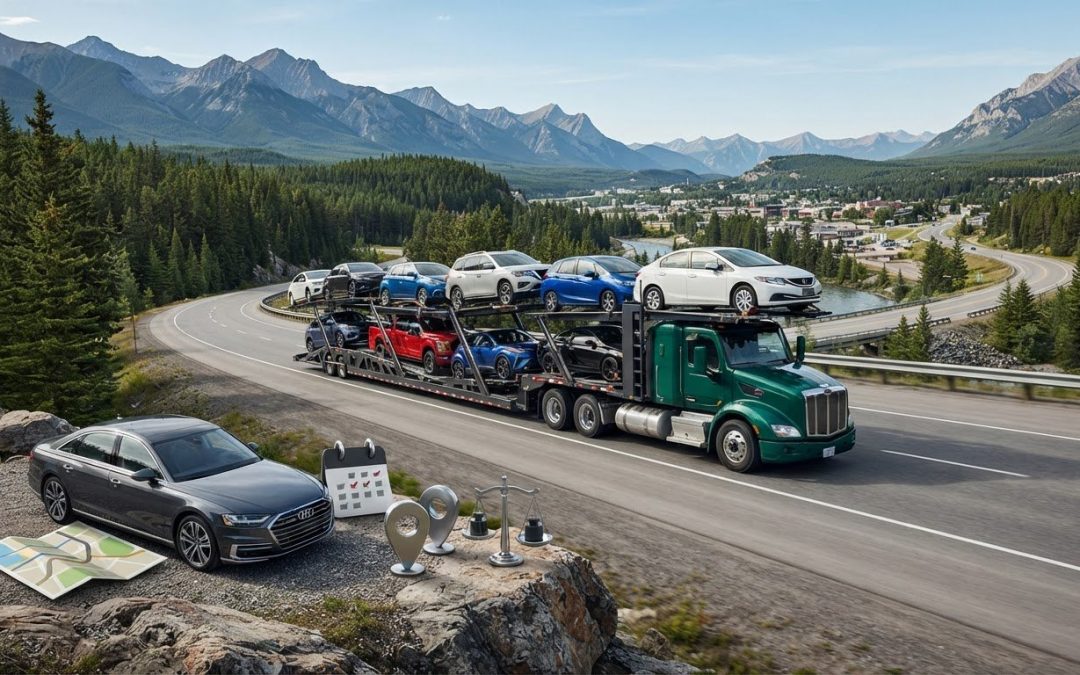
What if two car-shipping quotes differ even when the pickup and delivery points look nearly identical? The factors affecting car shipping costs go beyond distance. Vehicle size and condition, transport method, route demand and timing can all affect the options available and the quote.
If you’ve found it hard to explain why prices vary, you’re not alone. Unclear quote terms can make it difficult to spot possible extra charges or decide whether a particular service suits your needs. Some shipment details are within your control; others depend on carrier availability and transport conditions during planning.
This guide explains what can shape a car shipping quote in Canada, what information to prepare before requesting one, and how to compare options. Use it to assess the full service and its terms, not just the quoted amount.
Key Takeaways
- The factors affecting car shipping costs include details you can provide or choose, as well as transport conditions that may change during planning.
- Distance matters, but route demand, carrier availability and pickup or delivery access can also affect scheduling.
- Accurate vehicle details, including its running condition, make quote comparisons more meaningful.
- Prepare pickup and delivery details, preferred dates and service expectations before requesting quotes.
- Dispatch coordination can help businesses manage carrier selection, logistics and delivery scheduling without operating the carrier vehicle.
What factors affect car shipping costs in Canada?
A car shipping quote is based on a particular shipment, not just a route. The factors affecting car shipping costs can include the pickup and delivery points, vehicle, transport method and requested timing. Treat a quote as an estimate for the described service, then check what it covers before comparing it with another offer.
Some details are yours to provide or choose. You can describe the vehicle accurately, select a service type that fits your needs and share flexible dates if your schedule allows. Other conditions, such as carrier availability and scheduling, may shift while transport is being arranged. That’s one reason quotes can differ even when journeys appear similar.
Before comparing estimates, check what each includes and excludes, and ask whether specific circumstances could lead to additional charges. Get unclear terms explained in writing. Don’t assume that two quotes cover the same service just because they describe the same route.
Which shipment details shape the starting quote?
Pickup and delivery points help a provider assess the route and the arrangements needed at each end. Vehicle type and condition help clarify the transport requirements. The service type describes how you want the vehicle moved, and your preferred dates indicate the scheduling window. Providers assess how these details fit together, rather than relying on one factor alone.
Be specific when requesting an estimate. If the vehicle doesn’t run, or access at either location could affect pickup or delivery, mention it up front. Missing or inaccurate information can make quotes difficult to compare and may mean the shipment plan needs to be reviewed.
Why can quotes differ for similar car shipments?
Similar routes don’t guarantee identical schedules. Providers may be assessing carrier availability at different times or working with different delivery windows. Quotes may also cover different services, so a lower amount isn’t necessarily a like-for-like option.
Compare quotes using the same pickup and delivery details, vehicle description, timing and service expectations. Ask what’s included and which situations could lead to additional charges. If a provider coordinates transport through third-party carriers, understanding the car shipping broker model can clarify the difference between arranging a shipment and operating the carrier vehicle.
For more background on Canadian pricing considerations, see this Canadian vehicle transport cost guide.
How do distance, route demand, and timing affect car shipping costs?
Distance matters because a longer trip involves more travel and scheduling. It doesn’t explain every quote, though. Route demand, carrier availability, pickup and delivery access, and requested dates can all affect which transport options are practical. Distance describes how far the vehicle must travel; route availability describes how readily a suitable carrier and schedule can be arranged. They are separate considerations.
Seasonal conditions and demand can shift during the year across Canada, while weather may affect travel and scheduling. The effect on a particular quote depends on the route and timing, so ask how current conditions affect the options being offered. For a broader overview of how car shipping costs are calculated, compare route and service type alongside distance.
Does a longer route always mean a higher shipping quote?
A longer route is one input, not a standalone pricing formula. Routes can have different carrier schedules and levels of demand, which may affect available options. One longer trip may have workable scheduling choices, while another route may be harder to coordinate at the requested time. Distance alone can’t explain why two quotes differ.
Share the exact pickup and delivery points, and mention access constraints that could affect loading or delivery. Then compare options with the same route and service expectations. This helps you assess whether a quote difference reflects the shipment details or a different available schedule.
How can flexible dates affect transport planning?
A wider pickup window gives dispatchers more room to coordinate a shipment with carrier schedules. Fixed dates can narrow the options that fit, particularly if pickup or delivery access also needs to be arranged. Flexibility doesn’t guarantee a lower quote, but it gives the planning process more possible dates to consider.
If you can adjust your preferred dates, provide a range rather than a single day. If your timing can’t move, state that clearly before comparing quotes so each estimate reflects the same requirement. For more scheduling context, read this vehicle delivery logistics guide.
For businesses coordinating vehicle moves, a dispatch partner can help organize carrier selection, logistics and delivery scheduling. Explore GO DISPATCH’s transport dispatching to learn how those planning steps can be coordinated.
How do vehicle size, condition, and transport method change a quote?
Vehicle details affect the practical work involved in arranging transport. A standard passenger car takes up a different amount of trailer space than a large SUV, van or truck. Larger dimensions can affect how a vehicle fits alongside others and what loading arrangements are needed. Not every carrier can accommodate every vehicle, so confirm suitability before comparing quotes.
These are important factors affecting car shipping costs, but the quote also depends on the service being arranged. An estimate based on a basic vehicle description may need to be reviewed if the make, model, dimensions or condition are inaccurate. Provide those details up front, including whether the vehicle starts, steers and rolls as expected.
Why do vehicle dimensions and condition matter?
Vehicle size helps a provider assess trailer space and loading requirements. A modified vehicle, oversized model or vehicle with limited ground clearance may need extra consideration. If the vehicle doesn’t run, it may require different loading arrangements or equipment. Not every carrier can handle every non-running or oversized vehicle, so disclose these details and confirm what can be accommodated.
Be precise. Share the make and model, dimensions if available, and any condition issues that could affect loading. Accurate information helps prevent a mismatch between the shipment described in a quote and the vehicle that needs to be moved.
When should you compare open and enclosed transport?
Open transport moves vehicles on an open trailer, where they’re exposed to outdoor conditions during transit. Enclosed transport uses a covered trailer, offering more protection from exposure. The options involve different transport setups, so the right fit depends on the vehicle and your priorities, not just the quoted amount.
For a standard vehicle, open transport may suit your needs. For a high-value, classic or otherwise sensitive vehicle, weigh the added protection of enclosed transport against its availability and cost. Neither option is automatically best for every shipment. Ask which method the quote covers and what protection or service details are included.
The lowest quote may not match your needs if it assumes a different vehicle condition, loading setup or transport method. Compare like with like, then weigh the service details against your priorities. If the shipment involves importing a vehicle into Canada, the transport quote may not cover import-related requirements. Consult the Canada Border Services Agency regulations for official information about importing vehicles.
What details should you prepare to compare car shipping quotes?
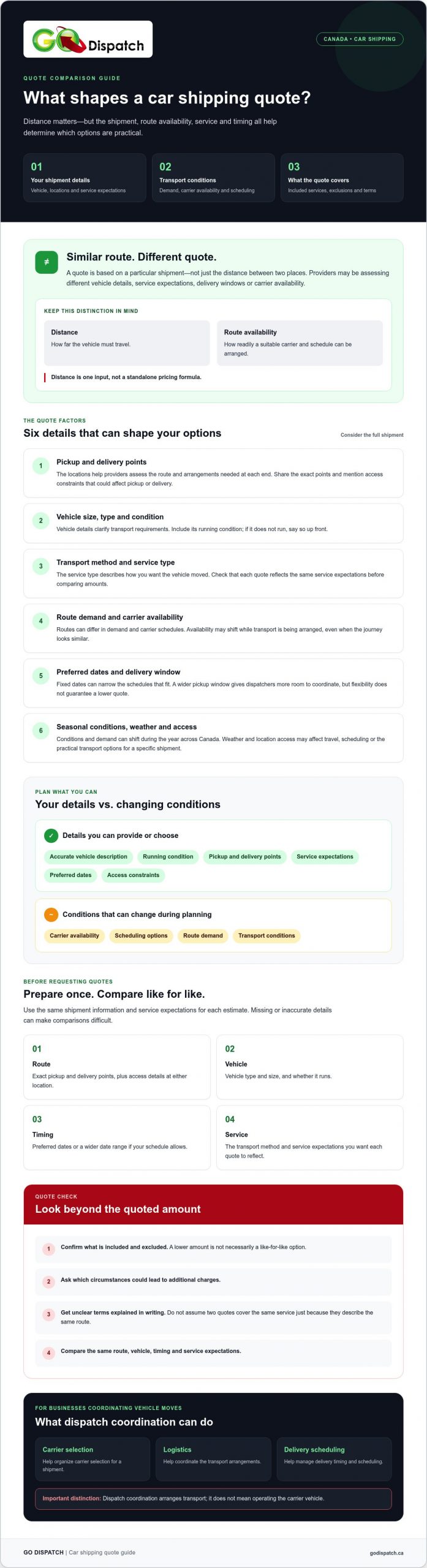
A consistent set of shipment details makes quotes easier to compare and reduces the chance an estimate is based on assumptions. Gather the information below before making enquiries. The factors affecting car shipping costs include details you can clarify in advance, even though a complete request can’t guarantee a particular price or schedule.
Which information helps a provider assess your shipment?
Use this checklist to prepare your request:
- Vehicle: Note whether it’s a car, truck, SUV or van. Include the make, model and any relevant dimensions or modifications.
- Condition: State whether it runs, steers and rolls. Describe any issues that could affect loading or transport.
- Pickup and delivery: Provide the locations and practical access instructions, including restrictions that could affect where the vehicle can be loaded or unloaded. Share necessary details directly with the provider, not in a public post.
- Timing: Give your preferred pickup and delivery dates, and explain whether either date can shift. A wider window may give dispatchers more scheduling options, but it doesn’t guarantee a lower quote.
- Service expectations: Specify the transport method you’re considering and any requirements that matter for your vehicle or shipment. Ask the provider to confirm whether the requested option is available.
What should you check when comparing quotes?
Line up the same route, vehicle details, service type and timing across each offer. Then ask what the quote includes and excludes, whether additional charges may apply, and what could cause the estimate or shipment plan to change. If one offer assumes a different vehicle condition or service, it isn’t a direct comparison. Ask for clarification before deciding instead of relying on the total alone.
For dealership shipments, compare how each option handles carrier coordination and delivery scheduling. GO DISPATCH provides one-stop transport dispatching for Canadian business customers, coordinating third-party carriers rather than operating the carrier vehicle. Learn more about dealership auto transport logistics to see how dispatch coordination fits into vehicle movement planning.
Have your shipment details ready? Review GO DISPATCH’s transport dispatching service.
How can dispatch coordination make car shipping easier to plan?
Arranging vehicle transport involves more than finding a truck. Shipment requirements need to be matched with suitable carrier options, then logistics and delivery scheduling need to be coordinated. A dispatch service organizes these steps. The carrier, not the dispatcher, operates the vehicle transporting the shipment.
What does an auto transport dispatch service coordinate?
Dispatch coordination starts with the shipment requirements: vehicle type and condition, pickup and delivery details, and preferred timing. A dispatcher uses this information to assess suitable third-party carrier options and coordinate logistics and scheduling. Communication helps keep the parties informed as the shipment is arranged. Availability and timing can vary, so coordination doesn’t guarantee a specific carrier, price or delivery date.
GO DISPATCH coordinates third-party carriers for cars, trucks, SUVs and vans. It manages carrier selection, logistics and delivery scheduling for Canadian business customers, without operating the carrier vehicles directly. Knowing who coordinates the shipment and who performs the transport helps clarify responsibilities when you review an option.
When might a business benefit from one-stop coordination?
Dealerships and businesses managing fleets may need to organize multiple vehicle moves or recurring shipments. Handling carrier sourcing and scheduling separately for each move can add to daily logistics work. A single coordination contact can bring those tasks together, while the business remains responsible for providing accurate shipment requirements and confirming the agreed service details.
Dispatching doesn’t remove the cost considerations discussed in this guide. The vehicle, route, timing and requested service still matter. Clear coordination can make the planning process easier to manage, especially when a business is arranging several shipments and needs a consistent point of contact.
Before reaching out, gather the vehicle details, pickup and delivery information, preferred dates and service expectations. Those details give a dispatch provider a practical starting point for discussing carrier options and scheduling. The GO DISPATCH team can help Canadian businesses coordinate vehicle shipments.
Plan your next vehicle shipment with confidence
The factors affecting car shipping costs include shipment details you can prepare and transport conditions that may shift during planning. Accurate information about the vehicle, route, condition and timing helps providers assess the job. Comparing quotes with the same service expectations, and checking what each includes or excludes, gives you a clearer basis for choosing.
For businesses arranging vehicle moves, dispatch coordination can help organize carrier selection, logistics and delivery scheduling. GO DISPATCH is a Canadian auto transport dispatch company that coordinates third-party carriers. Its one-stop coordination covers cars, trucks, SUVs and vans, without operating the carrier vehicles directly.
Have your shipment details ready? Contact GO DISPATCH to discuss coordinating your vehicle shipment. Clear requirements and a like-for-like quote comparison can help you make an informed plan.
Frequently Asked Questions
How much does it cost to ship a car in Canada?
There isn’t one standard price for shipping a car in Canada. A quote depends on the route, vehicle details, transport method, timing and other planning conditions. For a useful estimate, provide accurate pickup and delivery locations, the vehicle’s make and model, its condition and your preferred dates. Ask what’s included, what’s excluded and whether any circumstances could change the quote.
What is the biggest factor affecting car shipping costs?
Distance is an important consideration, but it isn’t always the biggest factor on its own. Route demand, carrier schedules, vehicle size and condition, transport method and requested timing can also shape the available options. The factors affecting car shipping costs work together, so the main influence can differ between shipments. Compare quotes based on the same route, vehicle details, service expectations and timing before deciding what fits your needs.
Does the size of my car affect the shipping quote?
Yes. A vehicle’s size can affect how much trailer space it needs and the arrangements required for loading. A standard passenger car and a larger SUV, truck or van may therefore be assessed differently. Provide the make and model, and share dimensions or modifications if relevant. Confirm that a carrier can accommodate an oversized vehicle. Accurate details help the provider assess the shipment and make quote comparisons more useful.
Can flexible pickup dates affect my car shipping quote?
Flexible dates can give dispatchers more scheduling options, since a wider pickup window may fit more carrier schedules. That doesn’t guarantee a lower quote or a particular delivery date. If your dates are fixed, state that clearly when requesting estimates. If you have room to adjust, share your preferred range and ask how it affects the available options. Compare quotes using the same timing requirements so you’re weighing similar services.
Does open or enclosed transport affect car shipping costs?
Yes. Open transport carries vehicles on an open trailer, while enclosed transport uses a covered trailer and offers more protection from outdoor exposure. These options involve different transport setups and may be quoted differently. Consider the vehicle’s needs and your priorities, then confirm which method each estimate covers. Enclosed transport may suit a vehicle where added protection is a priority, but it isn’t automatically the right choice for every shipment.
Why do car shipping quotes change after I request one?
A quote may need to be reviewed if shipment details change or were incomplete, such as the vehicle’s condition, pickup access, destination or requested dates. Carrier availability and scheduling conditions may also shift during planning. Before accepting an estimate, ask how long its terms apply, what assumptions it’s based on, and what could change the amount or plan. If anything changes, share the updated details promptly and request clarification in writing.
Does a non-running car cost more to ship?
It may. A non-running vehicle can require different loading arrangements or equipment, so disclose its condition before requesting a quote. Explain whether it starts, steers and rolls, and mention any known issues that could affect loading. Don’t assume every carrier can accommodate an inoperable vehicle. Ask the provider to confirm that the transport option fits the vehicle and whether the estimate accounts for its condition.