
Shipping a vehicle across the vast Canadian landscape often feels like a gamble against unpredictable elements. You might worry about corrosive road salt in Northern Ontario or loose gravel on the Coquihalla chipping your car’s finish. It is a stressful decision to make when you are balancing vehicle protection against a strict moving budget.
We understand that your vehicle is a significant investment. You want it to arrive in showroom condition without overpaying for unnecessary extras. Deciding between enclosed vs open car transport canada involves more than just looking at a quote; it requires a clear strategy based on your vehicle’s value and the season of your move. You deserve a transport process that is simple, transparent, and reliable.
This guide will help you discover the critical differences between open and enclosed hauling so you can choose the safest, most cost-effective method for your cross-country journey. We will break down the logic behind the price gap and explain how to shield your car from harsh road conditions. By the end, you will have the confidence to book your transport with ease and total peace of mind.
Key Takeaways
- Evaluate the trade-offs of enclosed vs open car transport canada to determine whether standard efficiency or maximum protection fits your vehicle’s specific needs.
- Learn why open transport remains the industry standard for cost-effective, reliable hauling across major Canadian routes.
- Understand how enclosed hauling provides a critical barrier against road salt, gravel, and harsh winter elements for luxury or high-value vehicles.
- Use a simple value-based formula to decide if the added security of a fully covered trailer is worth the investment for your car or truck.
- Discover how professional dispatching services eliminate the stress of vetting carriers and coordinating complex logistics on your own.
Understanding Your Options: Open and Enclosed Transport Defined
Moving a vehicle across the Canadian provinces requires a solid understanding of logistical hardware. The primary choice you face is between open-air trailers and fully shielded containers. This decision on enclosed vs open car transport canada determines how your car interacts with the road, the weather, and other vehicles during transit. While both methods move your vehicle from point A to point B, the experience and level of protection differ significantly. It’s a choice between standard efficiency and total isolation.
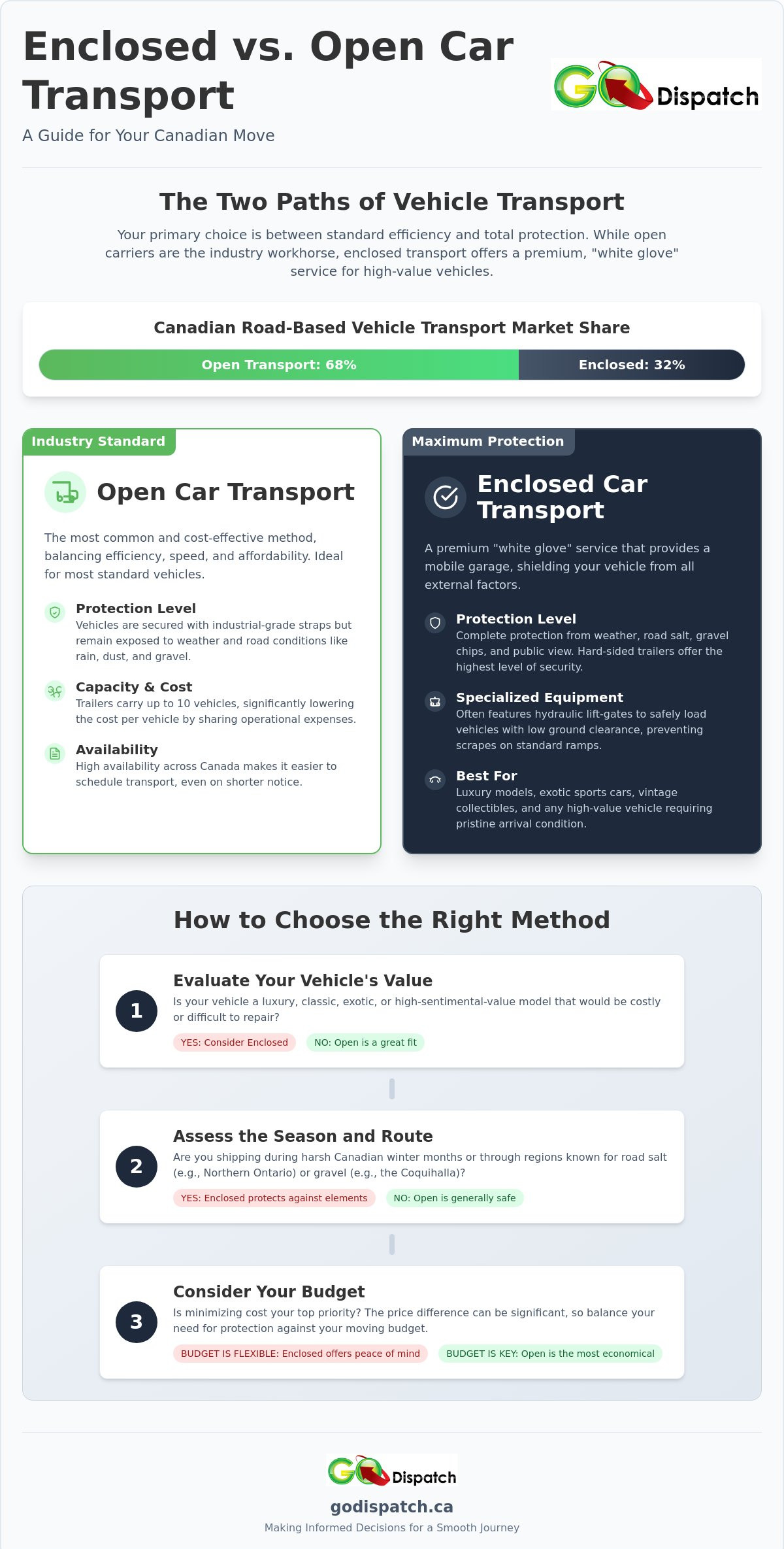
The core difference is environmental exposure. Open transport leaves the vehicle visible and open to the air. Enclosed transport creates a mobile garage that seals the vehicle away from the outside world. Both open and enclosed car carriers are vital for keeping Canada’s automotive market moving. In fact, open-air carriers handle over 68% of road-based vehicle transport in the industry. The remaining 32% of demand is met by enclosed carriers, primarily serving the luxury and premium markets.
What is Open Car Transport?
You have likely seen these on the 401 or the Trans-Canada Highway. They are large, multi-level trailers that can carry up to ten vehicles at once. This is the primary choice for manufacturers and dealerships because it maximizes space and fuel efficiency. It is a high-capacity system. By moving more cars per trip, carriers can lower the cost for each individual customer. It is practical and reliable. It remains the standard for most daily drivers because it offers the best balance of speed and price.
What is Enclosed Car Transport?
This method uses a specialized, covered trailer to provide a higher tier of service. Some carriers use soft-sided vinyl curtains, but hard-sided trailers are the gold standard for maximum protection. These units often feature hydraulic lift-gates. These gates keep the vehicle perfectly level during loading and unloading. This is essential for performance cars with low ground clearance that might scrape on a standard ramp. It is a “white glove” service. Your car stays clean, dry, and hidden from public view throughout the entire journey. It is the preferred choice for vintage collectibles, exotics, and high-end luxury models that require a little extra care.
Choosing between these two methods isn’t just about luxury; it’s about matching the right equipment to your specific vehicle and timeline. Whether you need the massive reach of an open fleet or the private security of an enclosed unit, understanding these definitions is your first step toward a successful move.
Open Car Transport: The Standard for National Vehicle Hauling
Open car transport is the workhorse of the Canadian automotive industry. It is the most visible method on our highways for a reason. These multi-vehicle trailers move the majority of cars, trucks, and SUVs across the country with remarkable efficiency. When comparing enclosed vs open car transport canada, most owners choose the open option because it combines high availability with professional safety standards. It is the go-to solution for daily drivers, dealership transfers, and corporate fleet relocations. It simply works.
Professional carriers utilize specialized safety protocols to keep your vehicle secure during long hauls. They don’t just park the car; they anchor it using industrial-grade soft-wheel straps. These straps secure the vehicle by the tires rather than the chassis. This prevents unnecessary tension on the suspension and eliminates the risk of metal-on-metal contact. This resource explains the key differences in how vehicles are loaded and secured across different trailer configurations. Understanding the logistics of enclosed vs open car transport canada helps you realize why open trailers are so prevalent. Because open carriers represent over 68% of the market, they are often much easier to schedule on short notice.
The Cost Advantages of Open Hauling
The primary driver for choosing open transport is the significant saving on overhead. By sharing trailer space with up to nine other vehicles, you effectively split the operational costs of the journey. This high-capacity approach directly reduces the vehicle transport cost canada for every customer on the manifest. Open transport remains the most budget-friendly choice for national moves because it maximizes fuel efficiency and route density across major corridors.
Managing the Risks of Exposure
It’s natural to feel a bit of anxiety about leaving your car exposed to the elements. You should expect some road dust, rain, or even snow during a cross-country trip. However, structural damage or significant impact is incredibly rare in the modern logistics industry. Every professional carrier we dispatch carries standard liability and cargo insurance to protect your investment. We take the stress out of the process by vetting every driver. We ensure they maintain high safety ratings and meet strict insurance standards before they ever touch your keys.
Choosing the right method depends on your specific needs and the value of your vehicle. If you are looking for reliable car transport coordination that fits a standard budget, open hauling is usually the answer. It provides a proven, secure way to get your vehicle home without unnecessary costs.
Enclosed Car Transport: Maximum Protection Against Canadian Elements
While many people view enclosed hauling as a luxury reserved for exotics, in Canada, it is often a practical necessity. The debate over enclosed vs open car transport canada frequently ignores the sheer brutality of our regional climates. An enclosed trailer acts as a mobile vault. It provides a total physical barrier against the freezing rain of the Maritimes and the dust storms of the Prairies. This level of isolation is about preserving the long-term integrity of your vehicle, regardless of its badge or price tag.
Choosing an enclosed carrier means your vehicle arrives in the exact same condition it left. There is no need for a deep detail or paint correction upon arrival. It is a premium service that prioritizes privacy and security, keeping high-value inventory out of public sight during rest stops and overnight stays. For those moving a vehicle during the peak of our harsh weather cycles, the added protection is a proactive step toward stress-free logistics.
Why Canadian Seasons Matter for Your Choice
Canadian winters are notoriously hard on automotive finishes. The corrosive road salt used across Ontario and Quebec can wreak havoc on an exposed undercarriage during a week-long haul. Even after the snow melts, the “gravel season” begins. Spring thaws leave national highways littered with debris that can lead to permanent rock chips and windshield cracks. This resource outlines the pros and cons of both methods, highlighting why total coverage is a strategic choice during peak weather shifts. Enclosed transport is a seasonal strategy for owners who realize that avoiding a single paint repair can often justify the higher service tier.
Specialized Handling for Unique Vehicles
Protection extends beyond the trailer walls to the equipment used for loading. Standard open haulers use long ramps, which create steep angles. These angles can be disastrous for vehicles with low ground clearance, custom spoilers, or aftermarket body kits. Enclosed carriers typically utilize hydraulic lift-gates. These gates keep the car perfectly horizontal while moving it from the ground to the trailer deck. It completely eliminates the risk of scraping the front lip or damaging the exhaust system.
Security is also heightened through the use of soft-tie down systems. Instead of using metal hooks that can scratch the chassis, professional enclosed carriers use high-strength nylon straps. These secure the vehicle by the wheels, ensuring there is no metal-on-metal contact throughout the journey. This level of care provides the ultimate peace of mind for classic car collectors and dealership showroom units that must arrive in flawless condition. When you analyze enclosed vs open car transport canada, these technical details often become the deciding factor for anyone with a modified or high-value vehicle.
The Decision Matrix: Choosing the Best Method for Your Vehicle
Deciding on enclosed vs open car transport canada isn’t just about the price tag. It is a strategic choice based on your vehicle’s physical profile and your personal risk tolerance. You need to weigh the tangible value of your car against the logistical realities of moving it across thousands of kilometres. A simple way to decide is the 1-2% rule. If the premium for enclosed hauling is less than 1 or 2 percent of your vehicle’s total market value, the added protection is usually a sound investment. It provides a level of security that pays for itself in peace of mind.
Your timeline also plays a major role in this selection. Open transport is the industry standard. This means there are more trucks on the road and more frequent departures from major hubs like Toronto, Calgary, and Vancouver. If you are in a rush, open hauling is your best bet. Enclosed spots are more limited and may require a few extra days to coordinate. Distance is the final factor. As your journey stretches over 3,000 kilometres, the vehicle delivery logistics canada demands become more complex. Longer trips naturally increase environmental exposure, often making a covered trailer the smarter long-haul play.
Hauling Larger Vehicles: Trucks, SUVs, and Vans
Most standard trucks and large SUVs are actually better suited for open transport. Enclosed trailers have strict height and width restrictions that often cannot accommodate a lifted pickup or a high-roof van. It is a matter of physical clearance. Unless you have a custom build, a classic restoration, or a high-value specialty EV truck, open hauling is the most practical choice. It provides the necessary space without the risk of roof damage during the loading process. It is the efficient way to move high-volume inventory or family vehicles across the provinces.
Evaluating Your Budget vs. Your Risk Tolerance
The “Daily Driver” rule is simple. If you drive the car to work every day and park it in a public lot, open transport is the most logical choice. It is reliable and cost-effective. However, for dealership inventory or high-end showroom units, the ROI of enclosed transport is found in the lack of prep work needed upon arrival. You save time and money on detailing because the car arrives ready for the floor. You must realize the best value by matching the method to the specific season and the vehicle’s purpose.
Ready to simplify your move? Let us handle the details and coordinate your vehicle transport with a vetted carrier today.
Streamlining Your Logistics: How Professional Dispatching Simplifies the Choice
Choosing between enclosed vs open car transport canada is only half the battle. Once you decide on the method, you still need to find a carrier that is reliable, insured, and available on your specific route. This is where professional dispatching becomes your greatest asset. We act as a one-stop shop for national transport coordination. Instead of spending hours calling individual trucking companies, you get access to a vetted network through a single point of contact. We take the logistical weight off your shoulders so you can focus on the rest of your move.
Our expertise lies in matching your specific vehicle type to the right trailer capacity. Whether you are shipping a standard SUV or a low-clearance performance car, we ensure the equipment matches the need. We don’t just find a driver; we find the right driver. Every carrier in our network undergoes strict vetting to ensure they meet the highest safety and insurance standards in the industry. You get the peace of mind that comes with human-centric support and direct communication from the moment you book until the vehicle is safely delivered.
Why Use a Dispatch Service Like GO Dispatch?
Vetting individual auto carriers is a time-consuming task that requires a deep understanding of cargo insurance and operating authorities. We eliminate that stress entirely. Our team manages a national network of both open and enclosed hauling professionals across every province. We coordinate the entire logistics chain, handling the scheduling and carrier communication on your behalf. This streamlined approach saves you time and effort while ensuring your vehicle is handled by experts who understand the nuances of enclosed vs open car transport canada. We handle the complex tasks behind the scenes so you don’t have to.
Ready to Move? Your Next Steps
Getting started is simple and direct. To receive an accurate quote, you only need to provide the year, make, and model of your vehicle along with your desired timeframe. Preparation is key for a smooth experience. Before the carrier arrives, ensure your vehicle is clean for the initial inspection and remove all personal belongings to comply with weight regulations. This helps avoid delays and ensures a professional handover at both ends of the journey.
Our promise is to provide reliable, efficient, and professional service every time. We take pride in being the proactive problem-solvers who simplify your transport needs. By choosing a professional dispatch service, you gain a partner dedicated to your vehicle’s safety and your own peace of mind. We are ready to help you organize your cross-country haul with the confidence and care your vehicle deserves.
Secure Your Vehicle’s Journey Today
Choosing the right method for your vehicle’s cross-country move is a strategic decision that balances your budget with your need for protection. Most daily drivers find that open hauling provides the perfect mix of efficiency and reliability for standard routes. However, when you face the reality of harsh Canadian winters or need to move a high-value classic, the isolation of a covered trailer becomes an essential investment. Deciding between enclosed vs open car transport canada ultimately depends on your vehicle’s specific value, the current season, and your required timeline.
You don’t have to manage these complex logistics alone. Professional auto carrier dispatch services eliminate the stress of vetting drivers and verifying insurance standards. We specialize in national vehicle hauling across Canada, providing reliable logistics for cars, trucks, and SUVs. Our team acts as your one-stop shop, matching your vehicle to the perfect carrier while offering direct human support every step of the way.
Get a professional quote for your national vehicle transport today and enjoy the peace of mind that comes with expert coordination. Your vehicle is ready for its next destination, and we are here to ensure it arrives in showroom condition.
Frequently Asked Questions
How much more does enclosed car transport cost in Canada?
Enclosed transport is a premium service that costs more than open hauling because the trailers carry fewer vehicles and require specialized equipment. The price gap reflects the added security and the “white glove” nature of the service. You are paying for total isolation from the road and weather. We help you evaluate enclosed vs open car transport canada to determine if the added protection is a smart investment for your specific vehicle.
Is open car transport safe during the Canadian winter?
Open transport is safe for winter moves, but your vehicle will interact with the elements. Professional carriers use secure anchoring systems that remain effective in freezing temperatures. However, you should expect your car to arrive with a layer of road salt or grime from the highway. If you want to avoid corrosive salt contact entirely, enclosed hauling is the better seasonal strategy for your car or truck during the winter months.
Can I ship my SUV or pickup truck in an enclosed trailer?
You can ship an SUV or pickup truck in an enclosed trailer provided it meets specific height and width restrictions. Most standard enclosed trailers have lower ceilings than open-air haulers, which can make it difficult for lifted trucks or high-roof vans to fit. If your vehicle has aftermarket modifications, it’s essential to provide exact dimensions during the booking process. We match your vehicle’s profile to the right trailer type to ensure a safe fit.
What is the typical delivery time for open vs. enclosed transport?
Open transport usually offers faster scheduling and delivery times because there are significantly more open carriers on the road. With over 68% of the market using open-air trailers, finding a spot on a major route is often quicker. Enclosed transport may require a longer lead time to coordinate a specialized carrier. Regardless of the method, high-traffic corridors like Toronto to Vancouver offer the most frequent departures for all vehicle types.
Does enclosed transport include better insurance coverage?
Every professional carrier must maintain standard cargo insurance, but the specific policy limits often differ between trailer types. Enclosed carriers frequently carry higher coverage limits to account for the high-value luxury and exotic vehicles they transport. It’s important to verify the carrier’s insurance certificate before your move. We vet every driver in our network to ensure their coverage meets strict industry standards for your peace of mind and total protection.
How do I prepare my car for open-air transport?
Preparing for open-air transport starts with a thorough cleaning to make the pre-trip inspection easier. You must remove all personal belongings to comply with weight regulations and avoid liability issues. Ensure your fuel tank is about a quarter full and check for any fluid leaks that could drip onto other vehicles. This simple checklist ensures a streamlined handover and helps the driver secure your vehicle quickly and safely before the journey begins.
What happens if my vehicle is damaged during open transport?
If you notice damage upon delivery, you must document it immediately on the Bill of Lading before the driver leaves. This document is the official record of the vehicle’s condition and is essential for any insurance claim. Take clear photos of the affected area at the delivery site. We support you through the process by ensuring you are connected with professional carriers who take accountability and maintain high safety ratings across the country.
Are all enclosed trailers the same, or are there different types?
Enclosed trailers are not all the same; they generally fall into hard-sided or soft-sided categories. Hard-sided trailers offer the most protection against impact and weather, while soft-sided trailers use heavy-duty vinyl curtains to shield the interior. Many premium enclosed units also feature hydraulic lift-gates. These gates are superior to standard ramps for low-clearance vehicles because they keep the car perfectly level during the loading and unloading process.