
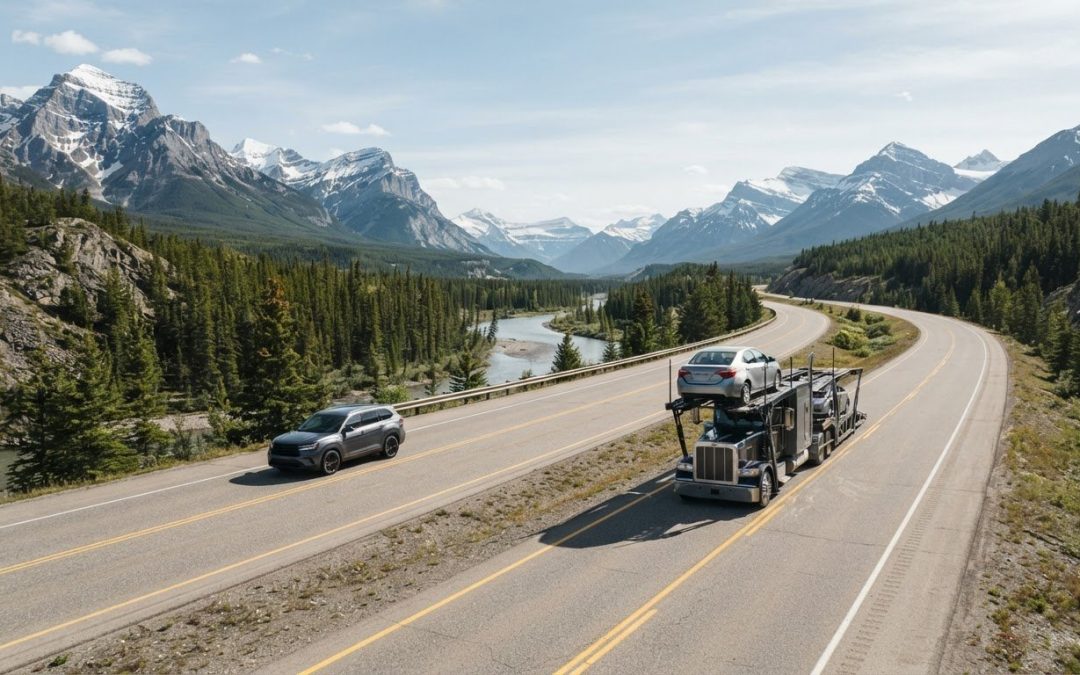
The cheaper choice isn’t always the one with the lower upfront cost. Driving vs shipping a car across Canada has no single cheapest answer: driving adds fuel, accommodation and vehicle wear, while shipping costs depend on the route, vehicle size and transport method. A Toronto-to-Vancouver drive takes about 43 hours and adds approximately 4,400 km to the odometer.
It’s easy to focus on the shipping quote or fuel bill, but a fair comparison includes more. Your time on the road, overnight stays and how long you’ll be without your car after shipping all affect which option makes sense.
This guide compares estimated shipping costs on Canadian routes, explains what affects a transport quote and outlines how road and rail schedules can leave a gap before your vehicle arrives. Use the practical decision guide to weigh costs, travel time and convenience for your move.
Key Takeaways
- Compare the full cost of driving, including fuel, accommodation and vehicle wear, with the transport option that fits your route.
- Route length, vehicle size, season and transport method all affect shipping costs; open transport generally costs less than enclosed transport.
- Plan for time without your vehicle: road and rail schedules differ, and your car may arrive a few days before or after you do.
- Terminal-to-terminal rail shipping can cost less than door-to-door delivery, so weigh the savings against the extra pickup and drop-off logistics.
Shipping schedules and temporary loss of vehicle access
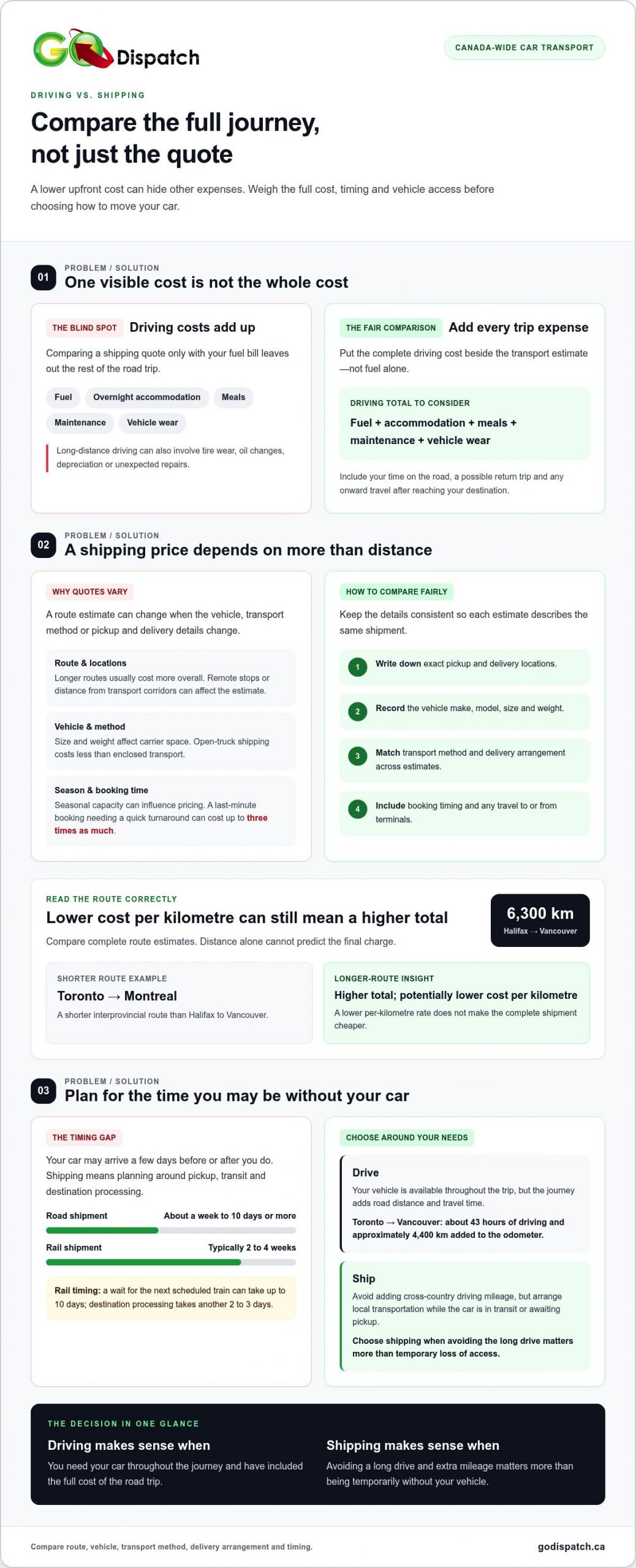
Shipping means planning around a pickup window, transit time and destination processing. A road shipment may take about a week to 10 days or more. Rail shipping typically takes 2 to 4 weeks from drop-off until the vehicle is ready for pickup. On most rail corridors, waiting for the next scheduled train can take up to 10 days. After arrival, destination processing takes another 2 to 3 days.
Route matters. Rail transport from Toronto to Vancouver typically takes 3 to 4 weeks; Toronto to Calgary takes 2 to 3 weeks. An Edmonton-to-Toronto vehicle shipment can take as many as six days, while Vancouver to Toronto can take 10 or more days. Your car may arrive a few days before or after you do, so arrange local transportation and avoid relying on an exact arrival-day match.
Driving gives you the vehicle at the destination, but adds distance and travel time. Toronto to Vancouver takes approximately 43 hours of driving and adds about 4,400 km to the odometer. Across Canada, driving can take 4 to 10 days, depending on the route and weather. Shipping avoids adding that road mileage and lets you travel separately.
Vehicle size affects carrier capacity. Multi-car carriers can haul four or more cars, and a two-tiered transport truck can carry as many as 9 standard-sized vehicles. If moving multiple vehicles, shipping them together may lower the cost per vehicle. Before booking, review the insurance coverage and read the shipping documentation. Keep the paperwork available for pickup and delivery.
| Option | Typical schedule | Vehicle mileage | Access |
|---|---|---|---|
| Drive | Toronto to Vancouver: about 43 hours | Adds about 4,400 km | Available throughout the trip |
| Road transport | About a week to 10 days or more | No cross-country driving added | Unavailable during transit |
| Rail transport | Typically 2 to 4 weeks, plus processing | No cross-country driving added | Unavailable until pickup-ready |
Choose driving if you need your car throughout the journey. Choose shipping if avoiding a long drive and extra mileage matters more than temporary loss of access to your vehicle.
What Factors into the Cost of Car Shipping?
A shipping quote depends on the route, vehicle and transport method. Longer routes usually cost more overall, even if the price per kilometre is lower. A Toronto-to-Montreal shipment covers less distance than Halifax to Vancouver, so compare the full route cost rather than kilometres alone. Pickup and delivery locations matter too: remote stops or extra distance from transport corridors can affect the estimate.
Vehicle size and weight also affect transport costs. A standard sedan takes up less carrier space than a large SUV or truck. Seasonal capacity can influence pricing, and booking ahead can help save money on a cross-Canada shipment. A last-minute booking requiring a quick turnaround can cost up to three times as much. Transport method matters too: open-truck shipping costs less than enclosed transport.
Driving has its own expenses. Add fuel, overnight accommodation, meals and maintenance to your comparison. Long-distance travel can also mean tire wear, oil changes, depreciation or unexpected repairs. Fuel prices fluctuate, so a route that looks affordable at first may cost more once lodging and vehicle wear are included. Consider whether you’ll need a return trip or other travel after reaching your destination.
- Record the pickup and delivery locations, vehicle make, model and size.
- Compare the same transport method and delivery arrangement in each estimate.
- For driving, calculate fuel, accommodation, meals and maintenance separately.
- Include your time and any onward travel in the total comparison.
Use those details to compare like with like, not just a shipping quote against fuel. To organize route and vehicle details before comparing options, use this transport planning resource.
Car shipping prices on Canadian routes
Route distance shapes the total transport cost, but price per kilometre may fall on longer journeys. Halifax to Vancouver spans 6,300 km, while Toronto to Montreal is a shorter interprovincial route. The longer shipment still costs more overall. Compare complete route estimates, not just the per-kilometre rate, and match pickup and delivery arrangements before judging which route is more economical.
For a domestic car shipment, keep the bill of lading and shipping documents with your records. According to the Government of Canada, supporting documents under the relevant regulations include bills of lading, shipping documents, and fuel and accommodation receipts for expenses incurred en route.
Route estimates also depend on vehicle size and weight, transport method, season, and pickup and delivery locations. A standard sedan and a heavier vehicle may take up different amounts of carrier space. Open transport costs less than enclosed transport. Booking ahead can help save money, while a last-minute booking requiring a quick turnaround can cost up to three times as much. These factors explain why distance alone can’t predict the final charge.
When comparing a Toronto-to-Vancouver estimate with a Toronto-to-Montreal route, check that both cover the same vehicle type, transport method and delivery arrangement. Terminal-to-terminal rail prices aren’t directly comparable with door-to-door road transport. For longer routes, compare the total alongside the distance: the per-kilometre cost may be lower even when the overall cost is higher.
- Write down the exact Canadian pickup and delivery locations.
- Record the vehicle type, size and weight before comparing estimates.
- Compare the same transport method and delivery arrangement across routes.
- Factor in booking timing and any additional travel to or from terminals.
A consistent, like-for-like comparison makes route estimates easier to assess, even when distances and service arrangements differ. It shows whether a longer route’s lower per-kilometre rate offsets its higher total transport cost.
How do door-to-door and terminal-to-terminal car shipping work in Canada?
Door-to-door transport means arranging pickup near your starting address and delivery near your destination. The carrier plans stops around the route and vehicle access. In dense areas, a large transport truck may not be able to reach a narrow street or private driveway. If so, you and the carrier can arrange a nearby, accessible meeting point.
Terminal-to-terminal shipping uses designated facilities. You bring the vehicle to the departure terminal, then collect it at the destination terminal once it’s ready. This can cost less than door-to-door delivery, but you’ll need to travel to both terminals. Consider the distance, opening hours and how you’ll get around after dropping off or collecting the car.
For either arrangement, plan for the handoff as well as the journey. Before pickup, confirm the locations, expected timing and who will meet the carrier. Keep the vehicle’s shipping documents accessible. At delivery, compare the vehicle’s condition with the records made at pickup and keep the completed paperwork. These steps give you a clear record of the vehicle’s transfer.
- Door-to-door: Choose it when nearby pickup and delivery reduce your local driving and coordination.
- Terminal-to-terminal: Consider it when you can reach both facilities and prefer the lower-cost arrangement.
For example, a move between Toronto and Montreal may suit terminal handoffs if both terminals are convenient. If either is far from home, door-to-door delivery may reduce extra travel. Consider the transport arrangement alongside the route. The most convenient option depends on how easily you can reach the pickup and delivery points.
Before settling on an arrangement, write down your origin, destination and preferred handoff locations. Then compare the time and travel involved at each end. Plan your vehicle transport around the pickup and delivery setup that works for your move.
GO DISPATCH: Car Transport
GO DISPATCH arranges vehicle moves through its one-stop transport dispatching service. If you’ve compared driving with shipping and want help coordinating transport, GO DISPATCH connects your move with a suitable auto carrier and manages the logistics process.
GO DISPATCH arranges car, truck, SUV and van transport. Share your vehicle type, pickup and delivery locations, and preferred timing to get the process moving. Shipping can be useful when a long drive adds too much distance or when you’re coordinating a vehicle move alongside other travel plans.
For a car, truck, SUV or van move, contact GO DISPATCH or visit godispatch.ca.
Make the next move with a clear plan
Set your priorities before committing: decide how much time you can spend travelling, whether you need your vehicle immediately and how much extra mileage you’re comfortable with. This makes the driving vs shipping a car across Canada decision practical for your move, rather than just a comparison of headline costs.
Next, settle on your destination date and preferred pickup and delivery arrangement. If shipping suits your plans, gather your vehicle details and route information so the logistics can be organized around your move. GO DISPATCH arranges car, truck, SUV and van transport.
Start planning your vehicle transport with GO DISPATCH, and take the next step with a plan that works for you.
Frequently Asked Questions
What Does It Cost to Ship a Car Across Canada?
The cost depends on the route, vehicle size and weight, transport method, season, and pickup and delivery locations. To build a useful budget, decide whether you need open or enclosed transport and whether you prefer terminal or door-to-door service. A shipping price depends on the details and is provided after a quote request. Compare estimates for the same service setup.
How Long Does It Take?
Road transport may take about a week to 10 days or more, while rail typically takes 2 to 4 weeks from drop-off until the vehicle is ready for pickup. Rail timing includes schedule and destination processing delays. For planning, choose a date when you can manage without your car, and arrange local transportation for essential trips until pickup is complete.
How much does it cost to drive a car across Canada?
There’s no single total for driving costs because they depend on your vehicle, route and travel plans. Estimate fuel using the distance, your car’s fuel consumption and current fuel prices. Then add accommodation, meals and maintenance, including tires and oil. If you’ll need to return by air or another method, include that travel too. A cost worksheet helps prevent overlooked expenses.
How much does it cost to ship a car across Canada?
The price varies with the route, vehicle dimensions, season, transport method and delivery arrangement. A longer route can have a lower cost per kilometre but a higher total charge. Request an estimate with your exact pickup and delivery locations, vehicle details and preferred service. The price depends on the details and is provided after a quote request, so compare matching arrangements.
How long does it take to drive versus ship a car across Canada?
A Toronto-to-Vancouver drive takes approximately 43 hours behind the wheel, though the full trip can span 4 to 10 days depending on route and weather. Road shipping may take about a week to 10 days or more. Rail typically takes 2 to 4 weeks, from drop-off to pickup readiness. Build separate travel plans around the car’s arrival and your own schedule.
What factors affect cross-country car shipping prices in Canada?
Key cost factors include pickup and delivery locations, vehicle size and weight, time of year, transport method and delivery arrangement. Open transport costs less than enclosed transport. Terminal pickup can also cost less than door-to-door delivery, but requires travel to the facilities. For a fair comparison, provide the same vehicle and route details and compare equivalent transport and handoff options.