

Why do many Canadians assume that shipping a car across provincial lines requires the same mountain of paperwork as crossing the U.S. border? It’s easy to feel overwhelmed by conflicting advice while searching for the documents needed to ship a car in canada. You might worry about transport delays. You might fear a missing form could stall your move. We understand that your vehicle is a major investment. The last thing you need is a logistical headache.
This guide clears the paperwork hurdle with an expert breakdown of every requirement for a seamless cross-province move. We’ve simplified the process to give you total peace of mind. You’ll get a straightforward checklist of domestic requirements. You’ll understand the legal weight behind the Bill of Lading. You’ll gain clear insights into insurance coverage. By the end of this 2026 guide, you can hand over your keys with confidence, knowing your transport is fully compliant and protected.
Key Takeaways
- Distinguish between domestic and international shipping requirements to avoid unnecessary paperwork and stress.
- Identify the “core three” documents needed to ship a car in canada to ensure a legal and smooth provincial crossing.
- Master the Bill of Lading to use it as your primary legal contract and a shield against liability during transit.
- Align your vehicle’s physical condition with your paperwork to prevent transport delays or unexpected cost increases.
- Leverage professional dispatching expertise to handle carrier vetting and insurance verification on your behalf.
Navigating the Paperwork: Why Documentation Matters for National Car Shipping
Transporting a vehicle across Canada is a sophisticated logistical operation. It’s not merely about moving a car from point A to point B; it’s about complying with a regulated industry that demands strict attention to detail. While shipping between provinces is significantly less complex than moving a vehicle across the U.S. border, the legal requirements are still absolute. Proper documentation ensures your vehicle passes through provincial weigh stations and inspection points without being sidelined. Missing a single form can result in expensive delays and unnecessary stress for everyone involved.
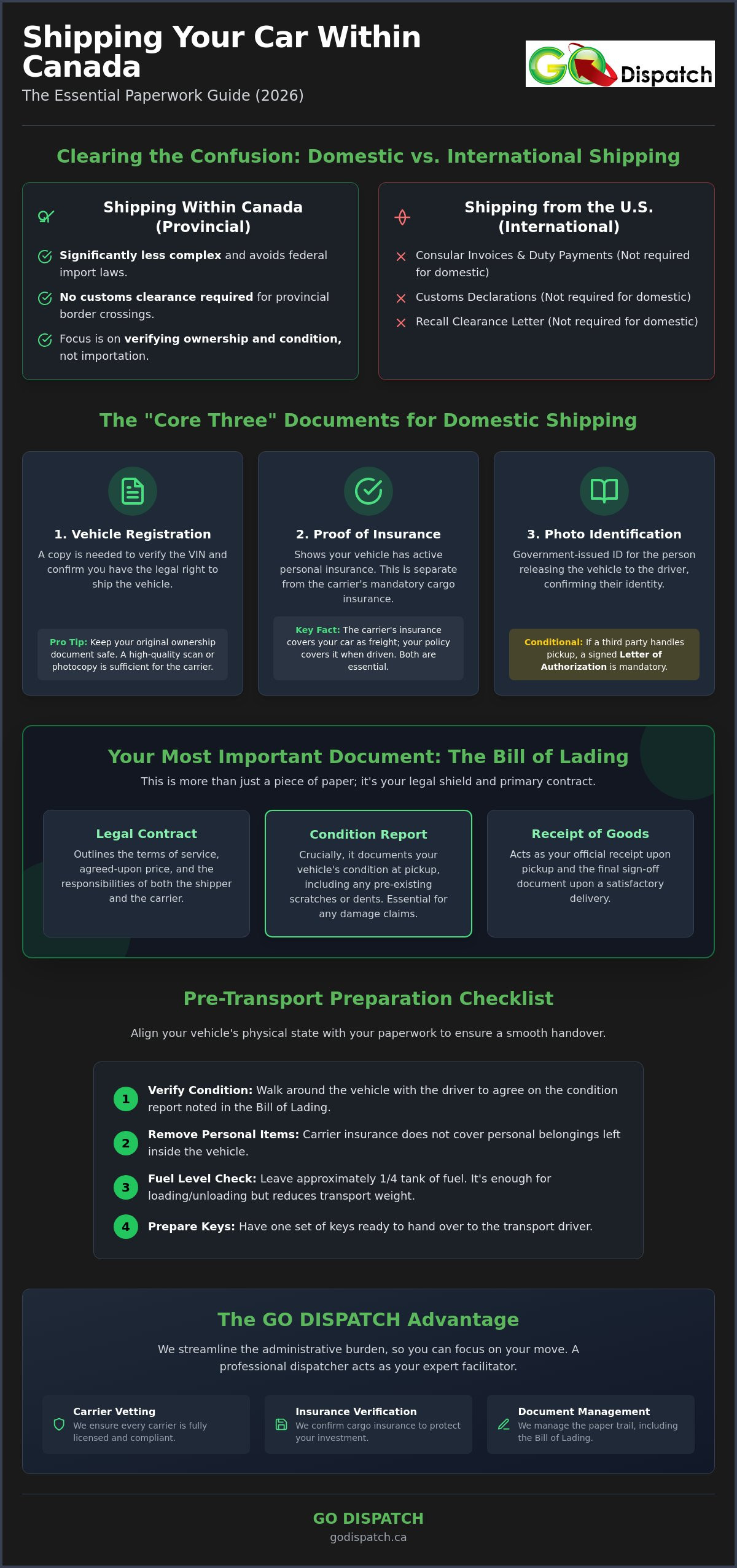
The “core three” documents are mandatory for every domestic move. These forms protect your investment and define the responsibilities of the transport company. Managing vehicle delivery logistics in Canada effectively means getting the paperwork right the first time. When the paper trail is clear, the physical transport becomes a routine, predictable process.
Domestic vs. International: Clearing the Confusion
Many shippers get caught up in the details of international importation. You might see guides mentioning consular invoices or duty payments, but these don’t apply to moves within Canada. Domestic shipping doesn’t require customs clearance. This distinction is vital because following the wrong guide can lead to a lot of wasted effort. When you research the documents needed to ship a car in canada, focus on provincial requirements rather than federal import laws. In a domestic move, the process involves three key players: the shipper, the carrier, and the dispatcher. Each of these parties relies on accurate paperwork to verify the vehicle’s identity and condition.
The Role of the Dispatcher in Document Management
A professional dispatch service simplifies the entire administrative burden. We realize that your time is valuable. Dealerships and private individuals shouldn’t have to spend hours vetting carrier insurance or checking operating authorities. A dispatcher acts as an efficient facilitator, handling the “behind the scenes” work to ensure all carriers are fully compliant. We provide a one-stop advantage where the paper trail is managed centrally. This includes the preparation of the Bill of Lading, which acts as your primary contract and condition report. By streamlining these requirements, a dispatcher removes the guesswork and provides a direct path to a successful vehicle delivery.
Core Documents Needed to Ship a Car Within Canada
Shipping a vehicle across Canada doesn’t require the same bureaucratic mountain as importing one from the States. You don’t need a Recall Clearance Letter or customs declarations. When you’re identifying the documents needed to ship a car in canada for a domestic move, the list is surprisingly short. Clear documentation protects you and the carrier. It ensures every provincial border crossing is routine. For a deeper look at the operational side of these moves, you can browse our professional car transport guide.
The mandatory documents for a domestic transport include:
- A clear copy of the current vehicle registration.
- Government-issued photo identification for the person releasing the car.
- Proof of active personal insurance.
- A Letter of Authorization or Power of Attorney if a third party is handling the pickup or delivery.
We always recommend keeping your original ownership documents safe at home. High-quality digital scans or physical copies are almost always sufficient for the carrier’s needs. If you aren’t personally available to hand over the keys, a signed Letter of Authorization is vital. This document gives the carrier legal permission to take possession of the vehicle from a friend, family member, or dealership representative. Without it, the carrier may refuse the load to avoid liability issues.
Vehicle Registration and Ownership
The carrier needs a copy of your registration to verify the Vehicle Identification Number (VIN) and ensure the car isn’t flagged as stolen. Registration formats vary by province, from specific provincial documents to general ownership slips. Regardless of the format, the carrier must confirm that the person shipping the car has the legal right to do so. You don’t need to leave the original title in the glovebox. Keeping it in your possession prevents it from being lost or damaged during the long haul across the country.
Insurance Certificates: Protecting Your Asset
There is a critical difference between your personal auto insurance and the carrier’s cargo insurance. Your policy typically covers the vehicle while it’s being driven. The carrier’s insurance covers the vehicle while it’s a piece of freight on their trailer. You should always request a Certificate of Insurance (COI) from the transport company. This certificate proves they have the coverage required by Canada’s Bills of Lading Act to protect your asset. We take pride in our rigorous vetting process. We verify that every carrier in our network maintains active, high-limit insurance before they ever touch your vehicle. If you want a stress-free experience, you can request a quote from our expert dispatch team today.
The Bill of Lading: Your Most Important Transport Document
The Bill of Lading (BOL) is the most critical piece of paper in the Canadian logistics industry. While we have already discussed the identification and documents needed to ship a car in canada, the BOL is the actual engine of the transaction. It serves three distinct purposes. It is a binding contract between you and the carrier. It functions as an official receipt of goods. It acts as a detailed condition report. You should never allow a carrier to load your vehicle without a signed BOL in hand. This document is the foundation of safe vehicle transport services. It provides the essential evidence required for any potential insurance claims or liability disputes.
A BOL is not just a formality; it is your shield. It defines the point where the carrier takes legal responsibility for your asset. Without it, you have no proof that the car was ever handed over in a specific condition. We ensure that every transport we coordinate begins and ends with a thorough inspection recorded on this document. This level of detail is what separates a professional move from a risky gamble. It’s a simple step that provides massive peace of mind.
Understanding the Condition Report
The BOL includes a standardized diagram of a vehicle. This is where the carrier records every existing dent, scratch, or chip before the car moves an inch. Carriers use a specific coded system to denote damage types. For instance, “SC” might indicate a scuff, while “CH” represents a stone chip. Be meticulous during this walk-around inspection. We recommend using a Car Shipping Documentation Checklist to ensure no panel is overlooked. Well-lit, high-resolution photos are mandatory for your protection. Take pictures of the vehicle from every angle, including the roof and lower bumpers, at the point of origin. These photos act as visual proof that supports the written report. If a new blemish appears upon delivery, the BOL is your only way to prove it wasn’t pre-existing.
Legal Protections and the Bill of Lading
Legally, the BOL dictates the terms of liability for the carrier. It outlines the specific responsibilities of the transport company while your vehicle is in their possession. If a delivery signature is missing or the BOL is left incomplete, you lose your primary legal leverage. Most modern carriers have transitioned to digital BOLs. These are usually signed on a tablet and emailed to you instantly. Always check your inbox before the driver leaves your driveway. Ensure the digital copy accurately reflects the physical state of the car. An incomplete BOL is a significant risk. It can lead to denied insurance claims and long disputes over responsibility. By ensuring the BOL is accurate and signed at both ends of the journey, you create a clear, legally binding record of a successful transport.
Preparation Checklist: Aligning Your Paperwork with Your Vehicle
Your paperwork is only as reliable as the vehicle it describes. If the physical car doesn’t match the details in the documents needed to ship a car in canada, your transport could be delayed or even rejected. Preparation is about more than just washing the exterior. It’s about ensuring every detail on the Bill of Lading is accurate and verifiable. When the carrier arrives, they will perform a final inspection. You need to be ready to walk them through it to finalize the paper trail.
Start by removing all personal belongings. Carriers are not licensed to transport household goods. Extra items also add weight. This can lead to an increase in your vehicle transport cost Canada. A lighter car is easier to move and often more cost-effective to ship. You should also disable your alarm system and remove any toll passes. These small steps prevent battery drainage and accidental charges while the vehicle is on the trailer. A triggered alarm is a major distraction for a driver on a long-haul route.
Photo Documentation for Insurance Purposes
Photos are your best secondary defence. Take clear shots of these five essential angles: the front, the rear, both sides, and the interior. Use a camera app that provides a digital timestamp. This serves as undeniable evidence of the vehicle’s condition at the point of origin. Don’t forget to photograph the odometer and the fuel gauge. This prevents any uncertainty regarding vehicle usage during transit. Accurate photos support the written condition report and speed up the resolution of any potential claims. If you’re ready to get started, you can book your transport service with our expert team today.
Winter-Specific Logistics for Canadian Transit
Shipping a car in a Canadian winter requires extra care. Ensure your antifreeze levels are rated for the coldest province on your route. A car moving from the mild coast of BC to the freezing prairies of Saskatchewan needs protection. You should also wash your vehicle thoroughly before the driver arrives. Road salt and grime can hide existing scratches or dents. A clean car allows for a fast, accurate inspection. Be aware of provincial winter tyre regulations. Some highways in British Columbia mandate winter tyres as early as October. These requirements can affect how and where your vehicle is picked up or delivered. We coordinate these details behind the scenes so you don’t have to worry about local compliance.
The GO DISPATCH Advantage: Streamlining Your National Move
Managing the documents needed to ship a car in canada shouldn’t be your full-time job. While the requirements for inter-provincial transport are straightforward, the verification of those documents is where the real work begins. Many self-service bidding platforms put the administrative burden on your shoulders. They expect you to vet carrier documents, check insurance limits, and verify operating authorities. We take a different approach. We act as your proactive problem-solver; we handle the complex logistics behind the scenes so you can focus on your core business or your move.
Our team specializes in dealership auto transport logistics for high-volume moves, but we bring that same level of professional rigour to every individual shipment. We don’t just connect you with a driver. We coordinate the entire document flow to ensure your vehicle is protected by a fully vetted carrier. This one-stop dispatching service provides immediate trust and reliability. You realize a stress-relief solution from the moment you request a quote until the final signature is placed on the Bill of Lading.
Expert Sourcing and Insurance Verification
We maintain a national network of vetted carriers across all Canadian provinces. This allows us to source the right equipment for any vehicle type, including heavy-duty trucks, family SUVs, and cargo vans. Our vetting process is rigorous. We verify that every carrier’s cargo insurance is active and sufficient for the value of your asset. We check their safety ratings and provincial operating authorities before they are ever assigned to your route. This level of scrutiny is how we maintain our position as a bold leader in the Canadian transport niche. You get the benefit of our high-capacity network with the personal touch of a human-centric support team.
How to Get Started with Your Shipment
Realizing a seamless transport experience starts with a simple enquiry. We move quickly to provide you with an accurate, all-inclusive quote. To ensure the process is as fast as possible, please have your vehicle details ready, including the year, make, model, and any modifications. Once you approve the quote, we take over the document management. We coordinate the pickup, verify the carrier’s paperwork, and ensure the documents needed to ship a car in canada are perfectly aligned with your specific route. Your vehicle is a major investment; we treat it with the respect it deserves. Reach out to our dispatch team today and experience the speed and ease of a professionally managed national move.
Secure Your Move with Expert Logistics
Shipping your vehicle across Canada doesn’t have to be a source of stress. You now have a clear understanding of the documents needed to ship a car in canada for a successful provincial crossing. By focusing on the core requirements like registration and the Bill of Lading, you protect your asset from the start. You’ve learned how to prep your car for winter transit and the vital importance of professional condition reports. These steps ensure your vehicle arrives exactly as it left.
We handle the heavy lifting so you don’t have to. Our team provides expert vetting of carrier insurance and authorities; we ensure every move is fully compliant. We offer national logistics coverage across all provinces for cars, trucks, SUVs, and vans. This one-stop approach saves you time and eliminates the confusion of self-service bidding. You get peace of mind through a streamlined process designed for efficiency and safety.
Simplify your vehicle transport-Contact GO DISPATCH today. We are ready to coordinate your next move with speed and reliability. Your vehicle is in safe hands, and we’re here to guide you every step of the way.
Frequently Asked Questions
What documents do I need to ship a car between provinces in Canada?
You must have a copy of your vehicle registration, a government-issued photo ID, and proof of insurance. These are the primary documents needed to ship a car in canada for any domestic move. While international shipping involves customs forms and duty payments, provincial transport is far simpler. Having these three items ready prevents delays at weigh stations or during carrier inspections. It ensures a smooth transition from your driveway to the carrier’s trailer.
Do I need to provide the original vehicle registration to the driver?
No, you don’t need to hand over your original vehicle registration to the driver. A clear photocopy or a high-quality digital scan is perfectly acceptable for the carrier’s records. We recommend keeping your original ownership documents in a safe place at home. This prevents the risk of them being lost or damaged during the long-haul journey. The carrier simply needs to verify the VIN and ownership details to remain compliant with provincial regulations.
Is my car insured by the carrier while it’s on the truck?
Yes, your vehicle is covered by the carrier’s cargo insurance while it is being transported on the truck. This policy is separate from your personal auto insurance and specifically covers the vehicle as freight. Before any carrier is assigned to your route, we verify that their insurance is active and has sufficient limits for your vehicle’s value. This vetting process provides the peace of mind that your investment is fully protected against transit-related damage.
Can I leave personal belongings in the car during transport?
No, you cannot leave personal belongings inside the vehicle during transport. Carriers are not licensed to transport household goods, and extra weight can lead to unexpected cost increases. Additionally, items left inside are not covered by the carrier’s cargo insurance policy. Removing all personal items ensures the safety of your belongings and prevents any logistical delays. It’s best to keep the car empty to allow for a thorough condition inspection.
What happens if I don’t have a Bill of Lading?
If you don’t have a signed Bill of Lading, you lack a legal contract and a formal record of your vehicle’s condition. This document is the most vital piece of paperwork in the logistics industry. Without it, you have no proof that the vehicle was ever handed over to the carrier. It serves as your primary evidence for any insurance claims. You should never allow a driver to load your car without completing and signing this form first.
Do I need a passport or ID to ship my car domestically?
You need a valid government-issued photo ID, such as a provincial driver’s licence, to release or receive your vehicle. While a passport is an acceptable form of identification, it isn’t mandatory for moves within Canada. The carrier needs to verify that the person handing over the keys has the authority to do so. Ensuring your ID is ready at the time of pickup helps avoid administrative delays and keeps the transport schedule on track.
Can you ship a car if the registration is expired?
Yes, you can ship a car with an expired registration, provided you can prove legal ownership with a bill of sale or the expired document. Since the vehicle is being transported as freight rather than driven on public roads, active registration isn’t a requirement for the carrier. However, you will need to renew the registration once the vehicle arrives if you plan to drive it in your new province. Always clarify ownership status before booking.
How do I document pre-existing damage for the insurance company?
You must document pre-existing damage by marking it clearly on the Bill of Lading diagram during the initial inspection. Supplement this written report with at least five high-resolution, timestamped photos from different angles. This dual-layered approach provides undeniable evidence for insurance companies if new damage occurs. Be meticulous during the walk-around with the driver. Clear documentation is your best defence and ensures a straightforward claims process if anything goes wrong during transit.