
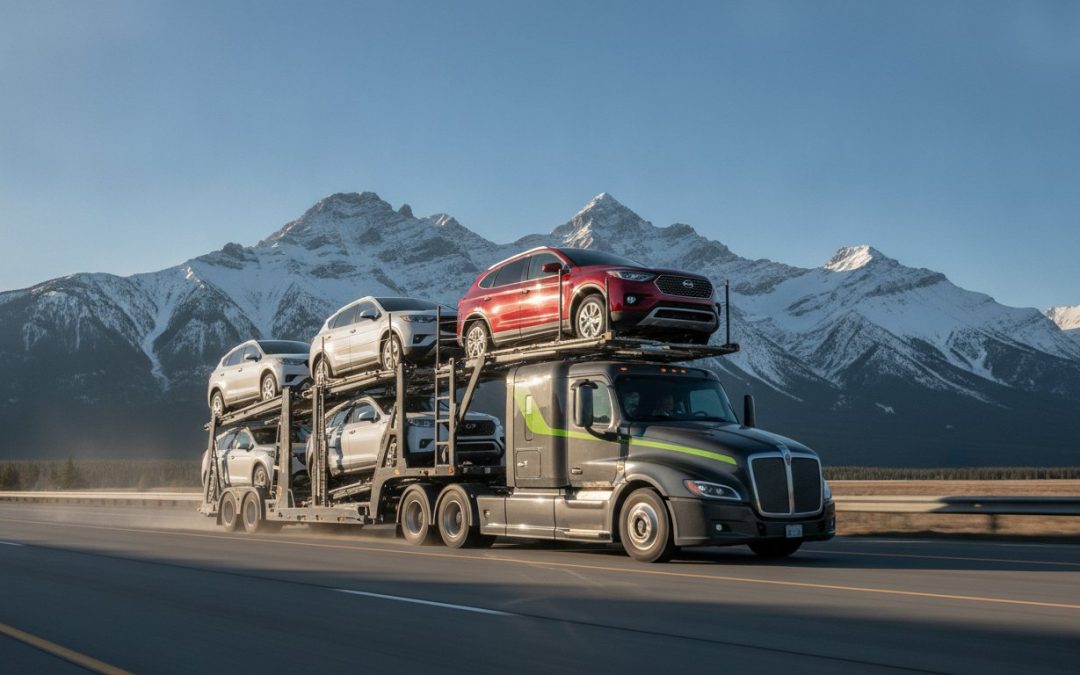
A single mistake in provincial paperwork can delay your vehicle shipment by weeks and add hundreds in unexpected costs. You likely feel a bit overwhelmed by the thought of handing over your keys to a stranger. You might worry about whether your SUV will arrive without a scratch. It’s natural to feel uncertain about carrier reliability and the maze of registration rules that change the moment you cross a border. We understand that your vehicle is a major investment. The logistics of cross province vehicle hauling should provide peace of mind, not a headache.
This guide helps you master the complexities of moving vehicles across Canada with expert insights on logistics and regulations. You will gain a clear understanding of the transport process. You will find the confidence to choose the right hauling method for your car, truck, or SUV. We also explain exactly how to prepare your vehicle for the journey to ensure it arrives safely. From Toronto to Calgary or Halifax to Montreal, we provide the practical knowledge you need to streamline your move.
Key Takeaways
- Understand how professional cross province vehicle hauling manages complex routes across thousands of kilometres of Canadian terrain.
- Compare open and enclosed transport methods to find the right balance between cost-effectiveness and vehicle protection.
- Learn the essential steps to prepare your vehicle, including thorough condition documentation and insurance compliance.
- Discover how a managed dispatch partner filters out unreliable carriers to ensure a secure and stress-free experience.
- Master the role of the Bill of Lading as your primary legal safeguard throughout the entire transport journey.
What is Cross Province Vehicle Hauling?
Cross province vehicle hauling is the professional transport of cars, trucks, SUVs, or vans across Canadian provincial borders. It is a high-capacity logistical service designed to move vehicles over thousands of kilometres. This is not a simple drive down the highway. It involves navigating the diverse terrains and strict regulations of the Canadian road transportation system. From the steep mountain passes of British Columbia to the vast, open stretches of the Prairies, this service connects the East and West coasts with precision.
Choosing a professional service beats driving the vehicle yourself for several reasons. You save a significant amount of time. You reduce mechanical wear and tear that can devalue your asset. You also avoid the safety risks associated with long-distance transit. Professional logistics ensure a vehicle from Halifax reaches Vancouver without adding 4,500 kilometres to the odometer. It is about efficiency, safety, and providing a stress-relief solution for a complex task.
The Difference Between Local and National Hauling
Local towing is a short-distance response to a breakdown or a quick move within a city. It uses basic equipment for immediate needs. In contrast, cross province vehicle hauling requires specialized long-haul equipment like multi-car carriers. These journeys demand advanced route planning and a deep understanding of provincial border requirements. National hauling is a managed process. It relies on a logistical infrastructure that keeps the vehicle secure over a five-day trek across multiple jurisdictions. Specialized carriers are essential to handle these provincial crossings legally and safely.
Why Businesses and Individuals Choose Professional Hauling
Professional dispatching serves a wide variety of clients. Dealerships often require inventory relocation between provinces to balance their stock. Corporations use these services to support employee relocations, ensuring a smooth transition for staff moving to a new office. We act as an efficient facilitator for these moves. Individuals also rely on professional hauling for specific needs:
- High-value vehicles: Protecting luxury or classic cars from road salt and debris.
- Non-operational cars: Moving vehicles that cannot be driven under their own power.
- Seasonal moves: Transporting vehicles for students or seasonal residents moving for the year.
We take pride in our ability to handle these complex tasks behind the scenes. This allows you to focus on your own core business or move. It’s a simple, active construction: we provide the service, and you get peace of mind. Our approach is direct and focused on delivering a dependable outcome every time.
The Logistics of Moving Vehicles Across Canada
Moving a vehicle across the country is a massive logistical puzzle. It requires more than just a truck and a driver. Professional dispatchers organize cross province vehicle hauling by calculating transit times, fuel stops, and driver rest periods. They manage these details to ensure your car or truck moves efficiently from point A to point B. This process relies on a network of vetted carriers who understand the unique challenges of the Canadian landscape. We take the burden of this coordination off your shoulders so you can focus on your move.
The Bill of Lading is your most important document during this journey. It acts as both a receipt and a legal contract between you and the carrier. It records the exact condition of your vehicle at pickup and delivery. You must review this document carefully to ensure every scratch or dent is noted before the journey begins. This transparency protects you and ensures accountability at every stage of the transit. It’s a simple, direct way to maintain security throughout the process.
Canadian seasonality plays a major role in hauling schedules. Winter storms in the Rockies or heavy spring rains in the Maritimes can impact delivery windows. Professional logistics teams monitor weather patterns daily to prioritize safety over speed. They ensure carriers comply with Transport Canada regulations regarding winter tires and load weights. Vetting carriers for these high security standards is non-negotiable. We only work with professionals who maintain rigorous safety records and proper insurance coverage.
Route Planning and Hub-and-Spoke Logistics
Vehicles typically move through major Canadian transport hubs like Toronto, Calgary, and Vancouver. This centralizes shipments to keep costs manageable for the client. Delivering to remote provincial areas requires additional planning and smaller secondary carriers. The hub-and-spoke model in Canadian auto transport centralizes vehicles at major city terminals before distributing them to final destinations across the province. This system ensures that even the most distant locations remain accessible through our network.
The Role of the Auto Transport Dispatcher
A dispatcher acts as the vital bridge between the client and the truck driver. They handle the complex communication needed to manage delivery windows across multiple time zones. Choosing a professional auto transport dispatch service canada streamlines the entire process by filtering out unreliable carriers. They proactively solve problems behind the scenes, such as mechanical delays or road closures. If you want a seamless experience, working with a reliable dispatch partner is the smartest way to protect your investment. We provide the human support you need to feel confident while your vehicle is in transit.
Comparing Your Hauling Options: Open vs. Enclosed Transport
Choosing the right transport method is a balance between your budget and your vehicle’s specific needs. The Canadian landscape presents unique challenges, from the wind-swept Prairies to the salt-covered roads of the Rockies. Your decision impacts both the final cost and the level of protection your vehicle receives during transit. We provide the expertise to help you make this choice with confidence. Whether you are moving a standard sedan or a custom SUV, the right equipment ensures a safe arrival.
When to Choose Open Multi-Car Carriers
Open carriers are the workhorse of the industry. You see them frequently on major highways, often carrying up to ten vehicles at a time. This method is the standard for dealership inventory and everyday commuter cars. By maximizing trailer capacity, carriers can lower the individual unit cost for every client. It is the most cost-effective way to manage cross province vehicle hauling for those on a budget.
Many clients worry about road debris or weather exposure. While the vehicle is open to the elements, professional carriers follow strict safety protocols. The Canadian Trucking Alliance supports these high standards for commercial transport across the country. Modern open trailers use advanced securement systems to keep vehicles steady, even on rougher provincial roads. It is a reliable, efficient solution for the majority of transport needs.
The Case for Enclosed Vehicle Hauling
Enclosed transport provides a premium level of security. It acts as a mobile garage, shielding your vehicle from road salt, gravel, and the harsh Canadian winter. This is the preferred choice for luxury cars, vintage collectibles, and brand-new electric vehicles. High-value SUVs often require this service to prevent rock chips during the long trek through mountain passes. It offers total peace of mind for owners who want their vehicle to arrive in showroom condition.
- Climate Protection: Shields the exterior from extreme temperature fluctuations.
- Debris Shielding: Eliminates the risk of damage from kicked-up stones on the highway.
- Discreet Transit: Keeps high-value assets out of public view during the journey.
Oversized trucks and vans often need specialized equipment that goes beyond standard trailers. Some large SUVs may not fit in a traditional enclosed space due to height or width restrictions. We assess the dimensions of your vehicle to ensure the carrier uses the correct rack or flatbed. This precision prevents loading accidents and ensures your asset is handled with the care it deserves. We take pride in matching the right tool to the job, allowing you to focus on the rest of your move.
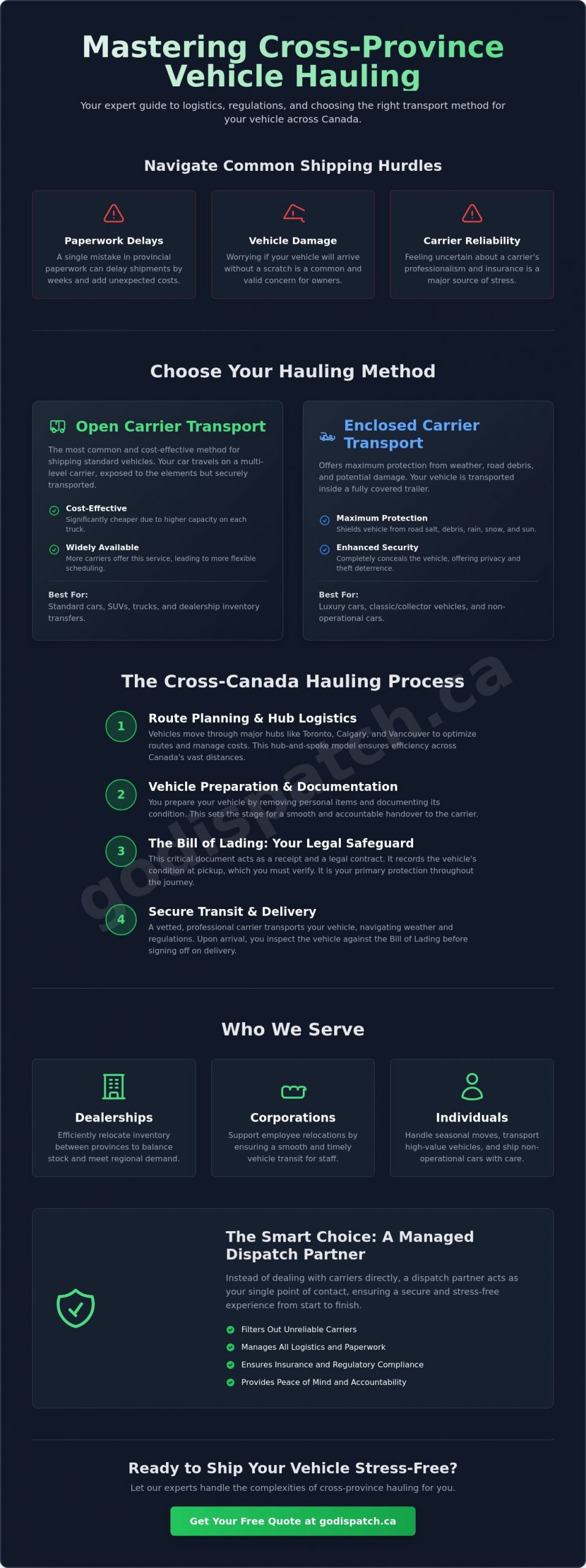
Preparing Your Vehicle for Cross-Province Transit
Preparation is the final step before your carrier arrives. It ensures a smooth transition and protects your investment from the moment of pickup. Proper preparation is essential for successful cross province vehicle hauling. You must act as your own quality control agent. This starts with a thorough cleaning of the exterior. A clean car allows for an accurate damage inspection when the driver arrives. You want to see every detail clearly to document the condition properly.
You must remove all personal items from the cabin and trunk. Transport insurance regulations are strict. Carriers are licensed to move vehicles, not household goods. Leaving items inside can lead to fines or damaged interiors during transit. It also adds unnecessary weight to the load. We recommend keeping the fuel tank at about a quarter full. This provides enough fuel for loading and unloading while keeping the total weight manageable for the carrier. It’s a simple, direct way to facilitate a faster process.
Physical Preparation Checklist
A safe vehicle is a transportable vehicle. Ensure your car is in good working order before the journey begins. We act as your proactive problem-solver by providing this clear path for action. Follow these steps to get ready:
- Check Battery and Fluids: Ensure the battery is secure and fluids are topped up to prevent leaks.
- Secure Loose Parts: Remove or retract antennas, roof racks, and specialized spoilers.
- Disable Alarms: Turn off any anti-theft systems to prevent the battery from draining if the alarm triggers during transit.
- Document Everything: Take high-resolution photos of the vehicle from all angles at the pickup location.
Navigating Provincial Regulations
The logistical move is only half the battle. You must also realize the importance of the paperwork waiting at your destination. Moving from one province to another involves a transition between different provincial licensing authorities. For example, car hauling services alberta are often the first step in a larger relocation plan that requires an out-of-province inspection. Alberta, like many other jurisdictions, requires this inspection before you can register your vehicle with local plates.
Insurance requirements also vary significantly across Canada. Provinces like British Columbia, Saskatchewan, and Manitoba operate through government-run insurance programs. Others rely on private providers. You must verify that your current policy remains valid during the transit period and understand how to switch to a local provider upon arrival. If you are ready to start your journey with a reliable transport partner, following these preparation steps will ensure your move is efficient and stress-free. We handle the complex tasks behind the scenes so you can focus on your new destination.
Why Professional Dispatching is the Smart Choice
Choosing a managed logistics partner is the most effective way to ensure a successful move. You gain immediate peace of mind by handing the heavy lifting to experts who understand the industry. DIY bidding platforms often lead to a race to the bottom where quality is sacrificed for price. We take a different approach. We act as a proactive problem-solver by filtering out unreliable or under-insured carriers before they ever see your vehicle. This vetting process is essential for secure cross province vehicle hauling.
A professional dispatcher centralizes all communication for your move. You don’t have to track down individual drivers or worry about missed calls across different time zones. We provide a single point of contact that manages every detail from the first quote to the final delivery. This allows you to focus on your core business or your family relocation while we handle the complex hauling tasks behind the scenes. It’s a simple, direct relationship built on reliability and efficiency.
Reducing the Administrative Burden
Managing a cross-country move involves a mountain of paperwork and negotiation. If you try to do it alone, you might find yourself negotiating with dozens of individual carriers. Professional dispatching standardizes this entire process. We handle the contracts, verify the insurance limits, and ensure all provincial requirements are met. Professional dispatching eliminates the chaos of managing multiple transport timelines, allowing dealerships to focus on sales rather than logistics. Dealerships that regularly source inventory at auction can further protect their margins by pairing this approach with a dedicated auto auction transport for dealers strategy that minimizes storage fees and accelerates inventory turnover. We take pride in our ability to streamline these operations so you don’t have to.
The GO DISPATCH Advantage
We project the image of a high-capacity partner that maintains a personal, human-centric approach. Our team leverages a national network of vetted professional auto carriers to find the best fit for your car, truck, or SUV. We don’t just find a trailer; we find a reliable professional who meets our high standards for safety and service. This commitment to quality is what sets us apart as a leader in the Canadian transport niche.
Our communication is rhythmic and clear. You receive regular updates so you always know where your vehicle is located. We understand the daily burdens of a major move and aim to reduce that stress through dependable service. You get a bold leader in your corner who takes pride in every successful delivery. If you are ready for a streamlined, all-encompassing process, Book your cross province vehicle hauling with the experts today.
Secure Your Vehicle’s Journey Today
You now have the knowledge to move your vehicle across Canada with total confidence. You understand the critical difference between open and enclosed transport for the Canadian climate. You know how to document your vehicle’s condition and prepare it for the road to protect your investment. Most importantly, you realize that cross province vehicle hauling doesn’t have to be a source of stress. A managed approach ensures your car, truck, or SUV arrives safely while you focus on your new destination.
We provide expert logistics management that has served Canadians since 2020. Our national network of vetted carriers ensures high security standards for every shipment we coordinate. We offer one-stop dispatching for all vehicle types, handling the complex paperwork and provincial rules so you don’t have to. It’s a simple, reliable solution designed to reduce your daily burdens and provide immediate peace of mind. We take pride in being the efficient facilitator for your move.
Get a Professional Quote for Your Cross-Province Move and let our team handle the logistics for you. We are ready to be your facilitator and expert guide for a smooth transition.
Frequently Asked Questions
How much does cross province vehicle hauling cost in Canada?
Cost is a major factor in cross province vehicle hauling decisions and depends on several variables. The total distance, the size of your vehicle, and your choice between open or enclosed transport all influence the rate. Long-distance routes across multiple provinces require more fuel and driver hours than shorter regional moves. Seasonal demand and current fuel prices also play a role in the final price. We provide a transparent process to identify the most efficient route for your car or truck.
How long does it take to ship a car from one province to another?
Transit times typically range from 5 to 14 days depending on the distance of the route. A move between Toronto and Montreal is much faster than a coast-to-coast journey from Halifax to Vancouver. Weather conditions and mandatory driver rest periods also impact the delivery window. We prioritize safe delivery and provide realistic timelines for every shipment. You receive regular updates so you can plan your schedule around the arrival of your vehicle.
Is my vehicle insured during cross-province transport?
Yes, commercial carriers are required by law to maintain minimum limits of third-party liability and cargo insurance. For general freight, the minimum third-party liability coverage is $1,000,000. Cargo insurance minimums are based on the weight of the load, ranging from $15,000 for vehicles up to 12,700 kilograms to $32,000 for loads exceeding 37,000 kilograms. We only work with vetted carriers who meet these strict regulatory requirements to ensure your asset is protected.
Can I leave personal belongings inside my car during hauling?
No, you should remove all personal items before the carrier arrives for pick-up. Transport insurance does not cover personal belongings, and carriers can face fines for moving household goods without specific permits. Items left inside also add unnecessary weight and can shift during transit, potentially causing damage to your interior. Keeping the vehicle empty ensures a safer journey and a much smoother inspection process at both ends of the trip.
What is the difference between an auto transport broker and a carrier?
A carrier owns the trucks and performs the actual physical transport of the vehicle. Finding the right partner for cross province vehicle hauling is easier with a dispatcher who acts as the bridge to a national network of vetted carriers. We serve as a one-stop dispatching partner to find the most reliable carrier for your specific route. This saves you the time of negotiating with individual companies while ensuring your carrier meets high safety standards.
Do I need to be present for the pick-up and delivery of my vehicle?
Yes, you or a designated representative must be present at both locations to sign the Bill of Lading. This document is a legal record of your vehicle’s condition before and after the journey. You need to walk around the vehicle with the driver to note any existing scratches or dents during the inspection. Being present ensures that you agree with the report and can receive the keys immediately upon delivery.
What happens if my vehicle is damaged during transport?
You must note any new damage on the Bill of Lading immediately upon delivery before the driver leaves the site. This document serves as the primary evidence for any insurance claim you may need to file. Take high-resolution photos of the damage and contact your dispatch partner right away to start the resolution process. Our vetted carriers maintain high safety standards to prevent these issues, but we provide the support you need if an incident occurs.
Can I ship a non-running vehicle to another province?
Yes, we can arrange transport for non-running vehicles that still roll, steer, and brake. These moves require specialized equipment like winches or lift gates to load the vehicle onto the trailer safely. You must inform us in advance if your vehicle is inoperable so we can secure a carrier with the correct tools for the job. This ensures a safe loading process and prevents any delays on the day of pick-up.