
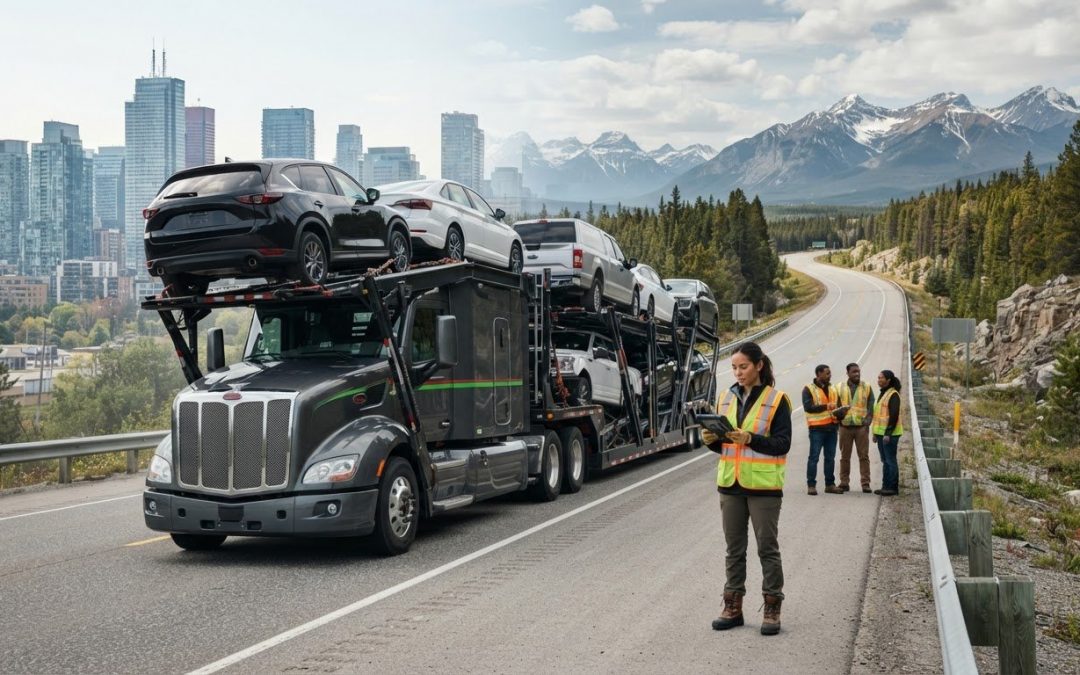
Canadian vehicle relocation company listings average 11.5 contacts per company as of September 22, 2026. The list includes 60 companies with 51-200 employees, giving businesses a starting point for finding corporate vehicle relocation services in Canada and reaching potential providers.
Coordinating a fleet move or employee vehicle relocation takes more than collecting names. To plan corporate vehicle relocation services in Canada, understand what affects per-vehicle costs, how remote routes are handled, and how a domestic or cross-border move fits into the wider employee relocation.
This guide explains how to find provider contact information, compare transport approaches, and assess the factors that shape a quote without confusing vehicle transport costs with the broader costs of relocating an employee. It also shows how dispatching can bring vehicle logistics together, helping you plan the move with clearer expectations and less administrative work.
Key Takeaways
- Use Canadian provider listings to find company contact details, then focus your search on firms suited to your fleet’s vehicle types and routes.
- For remote locations, plan around the pickup and delivery points, access conditions and transport method to understand how the route will be handled.
- Compare per-vehicle quotes by checking what transport method and vehicle requirements shape the total, especially for oversized or non-operational vehicles.
- Separate vehicle transport from the wider employee relocation budget so each cost and responsibility is easier to plan.
- For moves between Canada and the USA, coordinate vehicle transport alongside the employee’s relocation timeline and destination needs.
How many vehicle relocation services are there based in Canada?
Canadian vehicle relocation listings show companies across several employee-size groups, rather than one complete count of every service. As of September 22, 2026, the list contains 60 companies with 51-200 employees, 10 with 201-500, four with 501-1,000, six with 1,001-5,000, and one with 10,001 or more. These figures help frame the market, but company size alone doesn’t show which provider fits a particular move.
Vehicle relocation services coordinate transport for company fleets, employee vehicles, commercial trucks, vocational equipment, and vehicles that cannot operate under their own power. An auto transport carrier physically hauls vehicles, while a driving service moves them with a driver behind the wheel. A relocation service can coordinate the shipment, but the carrier or driver performs the physical move. Knowing the difference clarifies who organizes the shipment and who moves the vehicle.
Commercial and vocational moves require clear vehicle details. Record each vehicle’s type, dimensions, operating condition, pickup and delivery locations, and any access limits. A non-operational vehicle may need specialized loading, while oversized equipment can affect the suitable transport method. For a fleet, group vehicles by route and condition before arranging pickup. This creates a practical dispatch plan without treating every asset as a standard passenger car.
Some businesses operate their own transport fleet; others arrange moves through carriers. Fleet ownership describes who operates the trucks, not what tracking features are available. Real-time tracking reports a vehicle’s location during transport, so treat it as a separate operational capability. For a long route, identify who will receive status updates and who will accept delivery before dispatch begins.
For moves between Canadian provinces, gather registration details, the vehicle identification number, condition notes, pickup and delivery addresses, and authorized contacts. These details support scheduling and a clear handover. Provincial rules can affect registration, plates, insurance, and taxes when a vehicle is registered in its destination province. Cross-border moves between Canada and the USA also require customs planning, while provincial processes still apply at the Canadian destination.
Canadian Armed Forces relocation benefits also distinguish rental costs from local transportation. For eligible moves outside Canada or back to Canada, one rental vehicle may be reimbursed at both origin and destination while awaiting delivery.
Before pickup, remove personal items, secure loose accessories, and provide accurate information about the vehicle’s operating condition. At delivery, compare its condition with the pickup record and note any differences before completing the handover. For an employee move or multi-vehicle programme, assign one contact to coordinate dates, documents, and destination arrangements. This process supports smoother transport across provinces and US states.
Coverage in remote Canadian locations
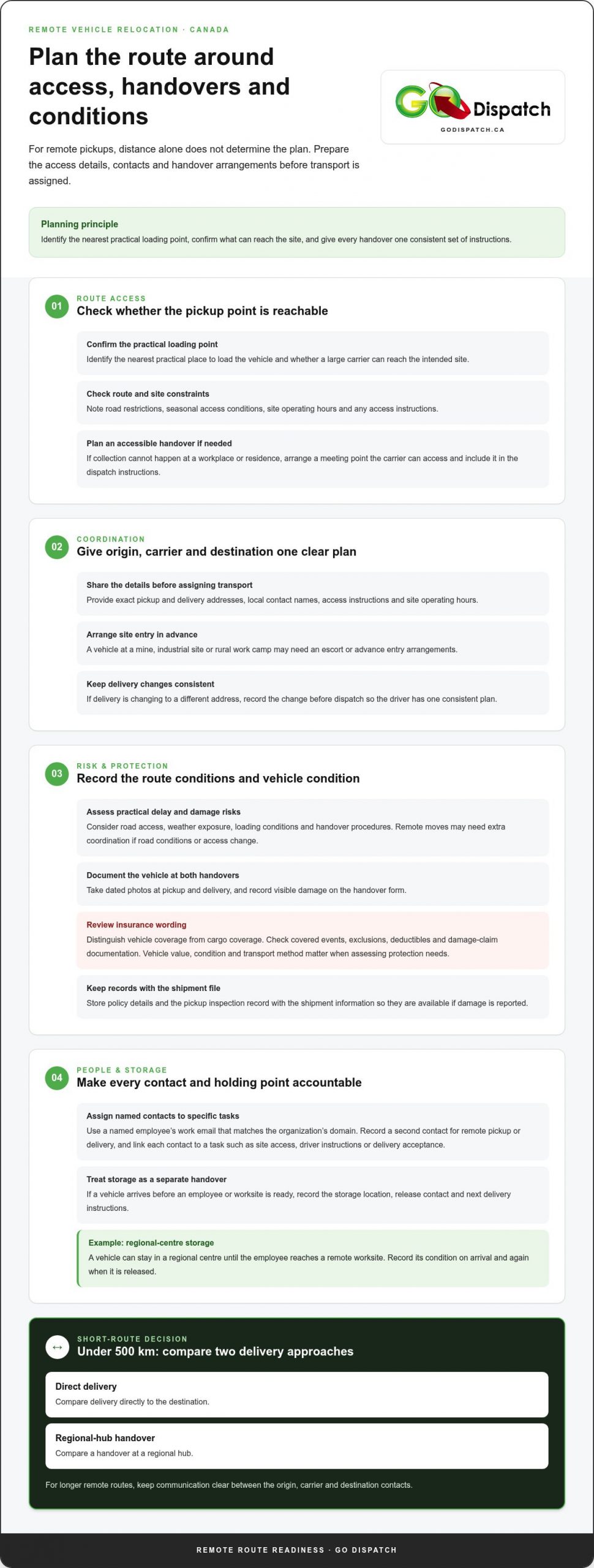
A remote pickup in an isolated northern territory or a coastal outport calls for a route plan based on access, not distance alone. Identify the nearest practical loading point, road restrictions, seasonal access conditions, and whether a large carrier can reach the site. If a vehicle cannot be collected at a workplace or residence, arrange a handover at an accessible meeting point and include that location in the dispatch instructions.
Allow extra coordination time for remote moves. Share the exact pickup and delivery addresses, local contact names, access instructions, and site operating hours before transport is assigned. A vehicle at a mine, industrial site, or rural work camp may require an escort or advance entry arrangements. If delivery is to a different address, record the change before dispatch so the driver has one consistent plan.
Assess delay and damage risks using practical route details: road access, weather exposure, loading conditions, and handover procedures. Remote locations may require extra coordination if road conditions or access change. Take dated photos of the vehicle’s condition at pickup and delivery, and record visible damage on the handover form.
Insurance needs attention too. Distinguish vehicle coverage from cargo coverage, then review the policy wording for covered events, exclusions, deductibles, and damage-claim documentation. The vehicle’s value, condition, and transport method matter when assessing the protection needed. Keep policy details and the pickup inspection record with the shipment file so you can communicate clearly if damage is reported.
Treat work email contacts as an operational detail. Use a named employee’s work address that matches the organization’s domain, and record a second contact for remote pickup or delivery. Link each email address in the dispatch record to a specific task, such as site access, driver instructions, or delivery acceptance. This makes follow-up easier if the primary contact is away.
Storage can help when a vehicle arrives before an employee or worksite is ready. Include the storage location, release contact, and next delivery instructions in the move plan. For example, a vehicle arriving in a regional centre can stay there until the employee reaches a remote worksite. Treat storage as a separate handover point, recording the vehicle’s condition on arrival and again at release.
For a route under 500 km, compare direct delivery with a handover at a regional hub. Longer remote routes need clear communication between the origin, carrier, and destination contacts. A single route sheet with the vehicle identification, access notes, insurance records, and delivery instructions keeps the operation organized across Canada.
Per-vehicle fleet relocation costs
For corporate vehicle moves, compare quotes by vehicle and route, not just by total shipment cost. Key cost factors include distance, vehicle size and condition, transport method, pickup access, delivery location, and timing. A working sedan travelling between major centres has different requirements from an oversized truck or a vehicle that cannot operate under its own power.
The price depends on the shipment and is provided after a quote request. Route length, vehicle dimensions and condition, transport method, access at both ends, and delivery timing all shape the estimate. Provide the same details for every vehicle when comparing per-vehicle quotes. This makes it easier to identify differences tied to routes or handling requirements.
Transport method also changes how a quote is structured. Open-carrier transport typically uses fixed lane rates, with fuel surcharges calculated into the quote. Driveaway relocation pricing is calculated per kilometre, with fuel costs passed through. Enclosed transport costs 30% to 60% more than open-carrier transport in Canada. Oversized commercial trucks, specialized vocational assets, or non-operational vehicles typically add 20% to 50% to the price.
Route details matter. A shipment to Vancouver may involve a long interprovincial journey, while a cross-border delivery also requires a border crossing and international planning. Compare pickup and destination points, requested timing, vehicle condition, and transport method together. A quote for a regional terminal may differ from one requiring delivery to a less accessible site.
Keep household goods costs separate from vehicle transport. That amount covers household moving services, not a corporate vehicle shipment, so do not use it as a per-vehicle budget.
Business relocation budgets can include much more than vehicles. Treat that figure as a broader employee relocation cost, not the price of moving a car or fleet.
For a clearer budget, list each vehicle’s type, operating condition, origin, destination, and preferred delivery timing. Then separate vehicle transport from household goods, temporary accommodation, and other employee expenses. This gives finance teams a clear per-vehicle comparison and prevents different shipment costs from being mixed into the overall relocation plan.
Canadian vehicle relocation for personal and business purposes
Personal vehicle relocation and business fleet transport may use the same carrier, but they involve different decision-makers and paperwork. An employee moving from Calgary to Ottawa may need one personal vehicle delivered alongside a household move. A company relocating several service vehicles must also coordinate asset records, operational needs, and delivery timing. Separate these workstreams early, even if they share transport logistics.
For a personal move, the vehicle owner typically provides vehicle details and arranges access at pickup and delivery. For a business shipment, assign a logistics contact who can authorize charges, coordinate multiple vehicles, and receive delivery updates. Keep a separate record for each vehicle, including its identification, condition, origin, destination, and authorized handover contact. This reduces confusion when employee vehicles and company assets travel similar routes.
Canadian Armed Forces relocation benefits offer specific examples of how personal vehicle decisions can affect reimbursement. A member shipping a privately owned motor vehicle may be reimbursed for one rental vehicle at both origin and destination while awaiting delivery when relocating outside Canada or returning to Canada. A member whose vehicle is sold or stored at origin may also be reimbursed for one rental vehicle at both locations.
There is also a separate local transportation option. These are distinct benefit situations, not a general allowance for every personal or corporate move.
Another Canadian Armed Forces incentive applies only to eligible members whose household goods and effects were packed before 19 April 2018. If they don’t ship or store an owned privately owned motor vehicle, they may transfer 80% of the savings to their Personalized Funding Formula. The maximum period used to calculate those savings is 24 months. This narrow eligibility condition makes the pack date important to the move record.
For employer-managed relocations, keep vehicle transport distinct from employee benefits and household moving charges. Employer-paid moving costs or reimbursements are generally taxable benefits included in the employee’s T4 income, with income tax, CPP, and EI withholding required. Record who pays each charge, what the expense covers, and which employee or business vehicle it relates to. That gives payroll and fleet teams a clearer audit trail.
Before booking, decide whether the shipment concerns an employee-owned vehicle, a company asset, or both. Then identify the payer, transport contact, recipient, and delivery address for each vehicle. This simple separation keeps personal reimbursements, business expenses, and carrier instructions from becoming one tangled file.
Corporate employee vehicle relocations in Canada and the USA
Employee moves combine vehicle transport with a broader relocation plan, especially when the destination is across the border. Keep the vehicle shipment separate from household moving and employee expenses so responsibilities stay clear.
Employee Vehicle Moves Across Borders
A cross-border move may involve an employee’s personal vehicle, a company vehicle, or both. Start with the origin, destination, vehicle ownership, operating condition, and required delivery timing. These details help shape the transport plan and identify where international documentation and customs steps apply.
Align the vehicle schedule with the employee’s arrival date. For example, an employee relocating from Toronto to a US worksite may need the vehicle delivered after arriving at the destination. Record the employee’s contact details, the delivery recipient, and the vehicle’s condition at handover. This keeps the transport file distinct from the wider relocation plan.
When reviewing overall expenses, remember that total relocation costs cover the broader corporate package, not vehicle transport alone. Budget owners should separate vehicle charges from household moving, temporary accommodation, and other employee costs.
Corporate Fleet and Employee Relocation Providers
Canadian providers include auto transport carriers that move vehicles, and transport dispatch services that coordinate shipments. To find contact information, use Canadian vehicle relocation company listings and review each entry for its service focus and business contact details. The Canadian Association of Movers has served Canada’s moving industry since 1969, though household moving and vehicle transport remain distinct needs.
Which providers offer corporate fleet and employee vehicle relocation? Canadian auto transport carriers and specialized partners like GO DISPATCH handle vehicle moves, while broader relocation providers may coordinate employee programmes. Match the provider’s role to your needs: physical transport, shipment coordination, or a wider employee relocation plan.
For a company fleet, prepare a route list with each vehicle’s origin, destination, type, condition, and delivery contact. For employee moves, identify whether the vehicle belongs to the employee or employer and who pays the charges. Keep cross-border documents separate from domestic shipment records. A consistent file helps relocation and fleet teams track responsibilities without mixing vehicle transport with other employee benefits.
Choose a plan based on the move itself: distance, vehicle ownership, destination access, and the employee’s timing. When a move spans Canada and the USA, assign one coordinator to maintain the vehicle schedule and documentation alongside the employee’s relocation timeline.
GO DISPATCH: Car Transport
GO DISPATCH coordinates vehicle moves through one-stop transport dispatching. For a company arranging employee vehicles or fleet shipments, this provides one point of contact for transport logistics instead of requiring you to manage each carrier connection separately.
GO DISPATCH offers car, truck, SUV, and van transport. Share the vehicle type, pickup and delivery locations, operating condition, and timing needs to help shape the transport plan. This service can support a single employee move or a business coordinating several vehicle types.
If you’re planning a vehicle move, contact GO DISPATCH to discuss your transport needs.
Turn your relocation plan into a clear next step
Before the next employee transfer or fleet change, prepare one transport brief that identifies each vehicle, its route, timing, and the person responsible for each handoff. This shared plan gives HR, operations, and finance teams a practical starting point for coordinating corporate vehicle relocation services in Canada and cross-border employee moves.
GO DISPATCH offers Car Transport, Truck Transport, and SUV and Van Transport, with One-Stop Transport Dispatching to coordinate vehicle moves. If you’re ready to discuss a vehicle relocation, contact GO DISPATCH about your transport needs.
A well-organized move starts with clear ownership and useful details. Contact GO DISPATCH to discuss your vehicle transport needs and plan the next step.
Frequently Asked Questions
How do I get contact information for these companies?
Use Canadian vehicle transport listings to identify companies, then visit each company’s official website for its current contact channels. Search by service type, such as fleet transport or employee vehicle moves, and note whether the business coordinates shipments or physically transports vehicles. Keep a shortlist with each company’s name, contact method, routes discussed, and enquiry date to make follow-up easier.
What does it cost to move a fleet of vehicles in Canada?
Fleet transport costs depend on route distance, vehicle size and condition, transport method, pickup access, delivery location, and timing. A fleet quote should show how the total relates to the vehicles and routes, rather than combining different requirements into one unexplained amount. For corporate vehicle relocation services in Canada, the price depends on the shipment and is provided after a quote request with these details.
How much does corporate vehicle relocation cost in Canada?
Corporate vehicle relocation costs vary with the scope of the move. A single employee vehicle shipment differs from a broader relocation package that may include household goods, temporary accommodation, or other employee expenses. Keep those budget lines separate. For a useful estimate, specify whether the request covers vehicle transport alone or a wider employee move, then provide the route, vehicle details, and timing for a tailored quote.
What steps are involved in arranging a corporate vehicle relocation in Canada?
Start by deciding which vehicles will move, who owns them, and who pays the transport charges. Create a shipment record for each vehicle, then provide its origin, destination, condition, access details, and preferred timing. Assign one coordinator to manage updates and delivery acceptance. Before pickup, prepare the vehicle and document its condition. At handover, record its condition and any visible differences.
What insurance coverage and liability apply during corporate vehicle transport in Canada?
Coverage and liability depend on the transport agreement and the insurance terms that apply to the shipment. Review the documents for covered damage, exclusions, deductibles, claim steps, and responsibility during loading and delivery. Keep vehicle condition photos, inspection records, and transport paperwork together. For a fleet, document each vehicle separately so any damage report can be matched to its shipment and handover record.
How long does vehicle relocation take between major Canadian cities and provinces?
Transit timing depends on distance, route, carrier schedule, pickup and delivery access, weather, and whether the shipment includes multiple vehicles. A direct move between major centres may involve fewer handovers than delivery to a remote destination. Set the required arrival date first, then plan transport around the route and employee’s start date. Keep a delivery contact available to receive updates and coordinate the handover.