
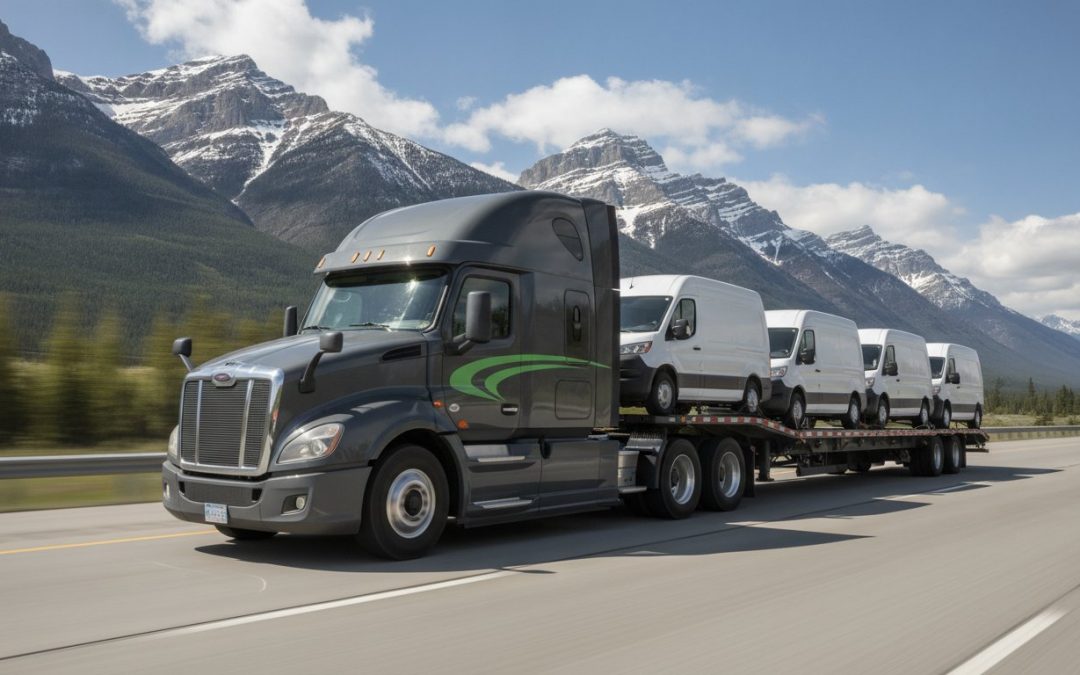
A single high-roof van hitting a low-clearance bridge on a standard trailer can instantly erase a year’s worth of logistics savings. It’s a nightmare scenario that keeps fleet managers awake at night. We know the pressure. Securing reliable commercial van transport canada services for oversized vehicles is inherently complex. You’re likely struggling with high costs, the fear of height-clearance damage, and the constant struggle to find available deck space. Coordinating these delivery schedules shouldn’t feel like a full-time job on its own.
This 2026 guide helps you master the logistics of moving your fleet by providing expert insights on equipment, new regulations, and cost-efficient dispatching. We’ll walk you through navigating the latest Motor Vehicle Safety Act updates and securing damage-free delivery for high-roof units while keeping your costs predictable. By the end, you’ll realize a more streamlined way to organize your fleet moves with total peace of mind.
Key Takeaways
- Professional hauling protects your fleet’s value by reducing wear and tear and avoiding unnecessary mileage.
- Learn why specialized equipment like step-decks is essential for moving high-roof units without risking clearance damage.
- Master the dimensions and surcharges that impact your commercial van transport canada budget for more predictable logistics.
- Stay compliant with Transport Canada safety standards by using a verified Bill of Lading for every shipment.
- A one-stop dispatching service simplifies your workload by managing carrier vetting and scheduling behind the scenes.
Understanding the Commercial Van Transport Landscape in Canada
commercial van transport canada involves the specialized relocation of light and medium-duty business vehicles across our vast road networks. Unlike standard car shipping, moving cargo vans, Sprinters, and Transits requires a deep understanding of Transportation in Canada and the specific infrastructure constraints of each province. Professional hauling ensures your fleet arrives at its destination without the mechanical wear or high mileage associated with manual driving. It’s the most efficient way to scale your operations across the country.
Choosing professional transport over driving is a strategic decision for fleet health. Every kilometre driven manually adds to the vehicle’s depreciation and increases the risk of accidents or mechanical failure on the highway. By prioritizing vehicle delivery logistics canada, businesses maintain the pristine condition of their assets while freeing up staff for more productive tasks. A professional dispatch service acts as your advocate. We navigate the complex carrier market to find the right equipment for these taller, heavier vehicles, ensuring compliance with 2026 safety standards.
The Types of Commercial Vans We Move
The Canadian market utilizes a diverse range of work vehicles, each with unique transport requirements. We manage the movement of several van categories to keep your business moving.
- Cargo and utility vans: We prioritize the safety of vehicles equipped with internal shelving and expensive tool kits. These assets are the lifeblood of service companies.
- Passenger and shuttle vans: Hospitality and transit fleets require vehicles to arrive clean and ready for immediate service. We find carriers who treat these high-capacity vehicles with care.
- High-roof and extended-wheelbase models: These oversized units present height-clearance challenges. We specialize in finding deck space that accommodates their specific dimensions.
Why National Businesses Outsource Van Logistics
Managing commercial van transport canada internally is often a logistical burden that distracts from core operations. Outsourcing to an expert dispatching partner provides immediate relief and tangible results.
- Administrative efficiency: Fleet managers save hours by letting a dispatch team handle the paperwork, carrier search, and delivery coordination.
- Risk mitigation: Professional dispatchers vet third-party carriers for valid insurance, safety ratings, and Transport Canada compliance.
- Optimized rates: Leveraging a wide network allows for better pricing. We identify backhaul opportunities and use established carrier relationships to keep your logistics costs predictable.
Specialized Equipment for Oversized Commercial Van Hauling
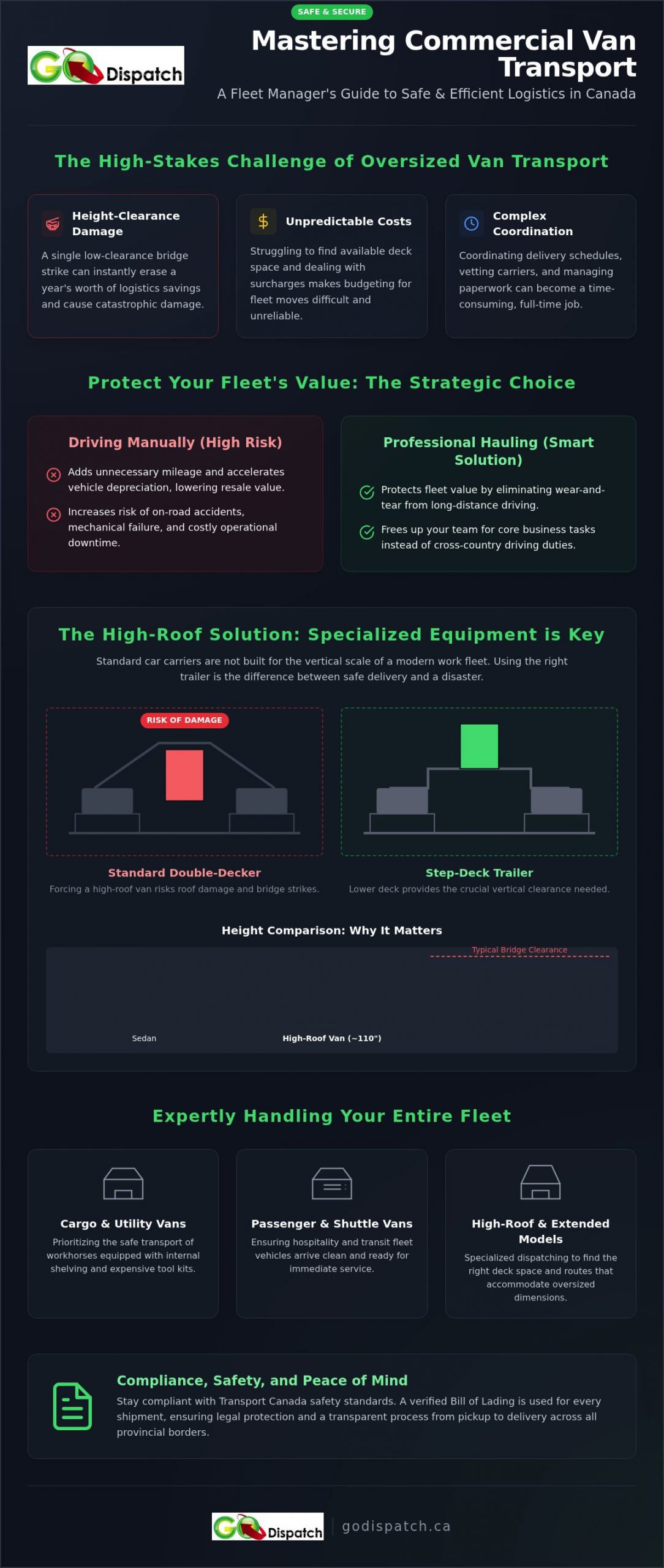
Standard multi-car carriers are designed for sedans and SUVs. They aren’t built for the vertical scale of a modern work fleet. When you need commercial van transport canada, the physical constraints of the trailer become your primary hurdle. High-roof vans often exceed the height limits of standard double-decker trailers. Forcing a high-roof Sprinter or Ford Transit into a standard spot risks catastrophic roof damage or bridge strikes. We solve this by matching your specific vehicle dimensions with specialized flatbeds or step-deck trailers.
Step-deck trailers are the gold standard for oversized van relocation. These trailers feature a lower deck height that provides the extra vertical clearance needed for tall vehicles. Managing deck space is about more than just fitting a vehicle on a truck. It’s about weight distribution and footprint. Heavier vans with internal shelving or heavy machinery require precise positioning to maintain trailer balance. We also ensure carriers utilize specialized loading ramps. These longer ramps prevent vans with low ground clearance from high-centring during the loading process. If you’re unsure which trailer fits your fleet, you can consult with a dispatch expert to secure the right equipment.
The High-Roof Challenge: Height Clearances and Routes
Route planning is a critical safety component. Expert dispatchers realize the importance of auditing every bridge and overpass along a journey. High-roof vans often require “bottom-load” positions on specialized haulers to keep the total height within legal limits. The Canadian Council of Motor Transport Administrators helps coordinate the standards that keep these oversized loads safe across provincial borders. A standard Ford Transit high-roof can stand nearly 110 inches tall. On a trailer, this pushes the limits of standard highway clearances. Precise route mapping ensures your vehicle avoids low-clearance obstacles that standard GPS might miss.
Open vs. Enclosed Transport for Commercial Fleets
Most utility fleets rely on open transport. It’s cost-efficient, widely available, and perfect for standard cargo vans. However, enclosed transport serves a specific niche for high-value assets. If your fleet includes mobile laboratories, specialized tech vans, or units with expensive exterior wraps, enclosed trailers offer the ultimate protection.
- Open Transport: Best for standard utility vans and bulk fleet moves.
- Enclosed Transport: Essential for protecting sensitive equipment from road debris and harsh weather.
- Graphics Protection: Enclosed shipping prevents stone chips from damaging high-cost vinyl wraps and branding.
Choosing the right method depends on your asset value and the sensitivity of the equipment inside. We help you weigh the costs against the protection requirements of your specific business tools.
Calculating the Cost of National Van Relocation in 2026
Budgeting for commercial van transport canada requires looking beyond the base rate. Carriers calculate costs based on weight, dimensions, and total distance. Because commercial vans are taller and heavier than standard vehicles, they often incur heavy vehicle or oversized surcharges. These fees reflect the fact that a high-roof van might take the space of two sedans on a trailer, creating dead space that the carrier must monetize. For a detailed breakdown of current market rates, check our vehicle transport cost canada guide. You also need to account for fuel surcharges, which typically add 15% to 25% to the base rate in 2026. Seasonal demand also plays a role. Rates often fluctuate during peak spring and autumn windows when carrier availability is tightest across the country.
Drive-Away vs. Professional Hauling: A Financial Analysis
Many fleet managers consider hiring drivers to move vehicles manually. This seems cheaper at first glance. However, a full financial analysis reveals significant hidden costs that quickly add up. You must factor in driver wages, airfare for the return trip, fuel, and hotel stays. More importantly, long-distance drives accelerate vehicle depreciation and increase wear and tear on tires and engines. These hidden expenses can easily exceed the cost of professional transport. Professional hauling eliminates these risks and provides a better ROI, especially for multi-vehicle moves where one trailer can move several units simultaneously without adding a single kilometre to their odometers.
How Dispatching Services Optimize Your Shipping Budget
A professional dispatching service acts as your financial advocate in a volatile market. We look for partial load opportunities where your van can fill an empty slot on a carrier’s existing route. This fills a gap for the carrier and lowers the rate for you. The One-Stop advantage also saves you money by reducing the administrative time spent chasing multiple quotes and managing individual carrier contracts. We negotiate brokerage fees that reflect the complexity of your specific move. Our proactive approach ensures you realize the best possible rate while maintaining the high safety standards your fleet requires. This streamlined process allows you to focus on your core business while we handle the logistical heavy lifting behind the scenes.
Compliance, Safety, and Transport Canada Standards
Safety isn’t just a legal requirement; it’s the foundation of every successful fleet move. When you arrange commercial van transport canada, you’re navigating a strict regulatory environment designed to protect drivers and assets alike. Transport Canada enforces the National Safety Code (NSC) to ensure that every carrier on the road meets rigorous standards for maintenance and safety ratings. For a busy fleet manager, verifying this compliance manually is a massive time sink. Our role as a dispatcher is to handle this vetting process behind the scenes. We ensure every carrier in our network is fully authorized to operate across provincial lines and stays current with the latest 2026 updates.
The Bill of Lading (BOL) serves as your primary protection during transit. It’s more than just a receipt; it’s a legal contract between the shipper and the carrier. It outlines the specific condition of the vehicle at the point of origin and establishes the terms of the haul. A properly executed BOL is your best defence if a dispute arises. Working with a vetted professional network provides the peace of mind that your assets are in the hands of operators who respect these legal frameworks. You can book a vetted carrier today to ensure your next move is fully compliant and stress-free.
Insurance Requirements for Commercial Vehicle Shipping
Your business assets deserve full protection. We meticulously verify cargo insurance limits to ensure they match the total value of your commercial vans. It’s vital to understand the distinction between carrier insurance and broker liability. The carrier’s policy covers the physical vehicle during transit, while the broker’s role is to ensure that coverage is active and sufficient. You should never allow a vehicle to be loaded without seeing a current certificate of insurance (COI). We proactively request these documents to confirm that the policy is in good standing before the truck even arrives at your facility. This proactive problem-solving prevents insurance gaps that could leave your business vulnerable.
The Inspection Process: Protecting Your Assets
A disciplined inspection process prevents headaches at the delivery centre. It starts with a thorough pre-trip walk-around where you document every existing scratch or dent with clear photos and notes on the BOL. The driver must sign this report at the point of origin to acknowledge the vehicle’s state. Once the van reaches its destination, perform a final walk-around before signing off. This is the moment to realize any transit damage and note it immediately. This three-step process ensures total accountability from pick-up to drop-off. It keeps the carrier responsible and protects your investment at every stage of the journey.
Streamlining Fleet Logistics with GO DISPATCH
GO DISPATCH is the authoritative expert you need for national van relocation. We simplify the complexities of commercial van transport canada by acting as your dedicated logistics partner. Our one-stop dispatching model removes the friction from your daily workload. We find the right carrier. We negotiate the best possible rate. We manage the entire schedule from pick-up to final delivery. This comprehensive approach ensures you can focus on your core business while we handle the heavy lifting of your fleet transport needs.
We don’t just rely on automated systems. Real people solve your complex logistical puzzles behind the scenes. Our team understands that every fleet move is unique. Whether you are moving a single cargo van or coordinating a massive national rollout, we provide the human-centric support you deserve. It’s professional logistics with a personal touch. We take pride in being the proactive problem-solvers who maintain your schedule and your peace of mind.
Why Businesses Trust Our Dispatching Expertise
Our team brings decades of experience to the Canadian auto transport industry. We’ve seen every challenge the road can offer and we know how to navigate them. This depth of knowledge allows us to take a proactive approach to communication. We keep you informed at every stage to reduce anxiety and build immediate trust. We specialize in high-capacity projects like multi-vehicle dealership trades and large-scale fleet refreshes. Our proven track record means you can rely on us for even the most complex moves. We realize that your time is valuable, so we work tirelessly to ensure every delivery is seamless and efficient.
How to Get Started with Your Van Transport Request
Starting your relocation process is simple and direct. We only need a few key details to provide an accurate and reliable quote. Please have your vehicle’s year, make, model, and specific dimensions ready. Because commercial vans vary so much in height and length, exact measurements are vital for matching you with the correct specialized equipment. Once you submit your request, our dispatchers begin the carrier matching phase immediately. We vet potential carriers for safety and insurance before presenting you with the best logistical option. It is a fast, efficient, and transparent process designed to get your vehicles moving without delay.
Contact GO DISPATCH today for a professional van transport quote and experience the difference that expert dispatching makes for your business fleet.
Secure Your Fleet’s Future with Expert Dispatching
Mastering the complexities of commercial van transport canada requires a blend of specialized equipment and rigorous compliance. You now realize that protecting your high-roof units starts with choosing the right trailer and a carrier that understands provincial height restrictions. By prioritizing professional vetting and accurate documentation, you eliminate the risks of damage and regulatory delays. These strategic choices ensure your vehicles arrive ready for work without the hidden costs of manual delivery.
GO DISPATCH provides the national Canadian coverage and comprehensive carrier vetting you need to maintain a competitive edge. Our expert dispatching for SUVs and vans takes the logistical burden off your shoulders. We handle the heavy lifting so you can focus on growing your core business with total peace of mind. Our team of proactive problem-solvers is ready to streamline your next move with reliability and efficiency.
Get a Professional Commercial Van Transport Quote today and experience a simplified relocation process built for your success.
Frequently Asked Questions
How much does it cost to ship a commercial van across Canada?
Shipping costs for commercial van transport canada are calculated based on the vehicle’s footprint and total weight. High-roof or extended-wheelbase models often require more deck space, which can lead to higher rates than standard cargo vans. Factors like current fuel surcharges and seasonal demand also influence the final quote. We recommend providing exact dimensions to ensure your pricing remains predictable and reflects the specialized equipment needed for your specific move.
Can I ship a commercial van that is loaded with tools or inventory?
Carriers generally require commercial vans to be empty of loose tools and inventory during transit. This rule exists because the carrier’s cargo insurance typically does not cover personal or business property left inside the vehicle. Excessive weight can also push the transport trailer over legal limits. If you must include internal shelving or fixed equipment, ensure these are securely bolted and disclosed during the initial dispatching phase.
What is the average transit time for national van transport?
National commercial van transport canada routes typically take between 7 and 14 days for long-haul journeys. Regional deliveries between major hubs are often completed much faster, sometimes within 3 to 5 business days. These timelines vary based on weather conditions and road construction. We provide proactive updates throughout the journey so you can organize your staff and operations around a reliable delivery window.
Are high-roof Sprinter vans more expensive to ship than standard vans?
High-roof Sprinter vans are indeed more expensive to ship because their height requires specialized trailer configurations. Standard multi-car haulers cannot accommodate their vertical dimensions without risking damage. These units often require a bottom-load position or a specialized step-deck trailer, which limits the total number of vehicles the carrier can move. This reduced capacity for the carrier is reflected in the specialized rate for oversized units.
Does GO DISPATCH provide insurance for the vehicles being transported?
GO DISPATCH manages the vetting of third-party auto carriers to ensure they maintain valid and sufficient cargo insurance. The carrier moving your vehicle provides the primary coverage for transit damage. We verify these certificates of insurance before any loading occurs to protect your investment. This process gives you the peace of mind that your commercial assets are covered by a professional policy that meets national safety standards.
Is door-to-door delivery available for commercial van fleets?
Door-to-door delivery is a standard option for most commercial fleets, provided the pick-up and delivery locations are accessible. Large transport trailers require significant room to manoeuvre and cannot always enter tight industrial parks or residential areas with low-hanging trees. If your location has restricted access, we can coordinate a nearby meeting point at a large parking centre to ensure a safe and damage-free loading process.
What documents do I need to prepare for provincial van transport?
You need to prepare a valid Bill of Lading, a copy of the vehicle registration, and a detailed condition report. The Bill of Lading acts as your legal contract and receipt for the vehicle. We also suggest having a set of keys ready and ensuring the vehicle is clean enough for a proper inspection. These documents are essential for maintaining compliance with Transport Canada regulations during inter-provincial moves.
How do you realize if a carrier is properly licensed for national hauling?
You can realize if a carrier is properly licensed by verifying their National Safety Code (NSC) number and operating authority. Every professional hauler must meet federal and provincial safety standards to move commercial loads legally. As a professional dispatch service, we handle this vetting process for you. We only connect our clients with carriers who have a proven track record of safety and full legal compliance across all provinces.