
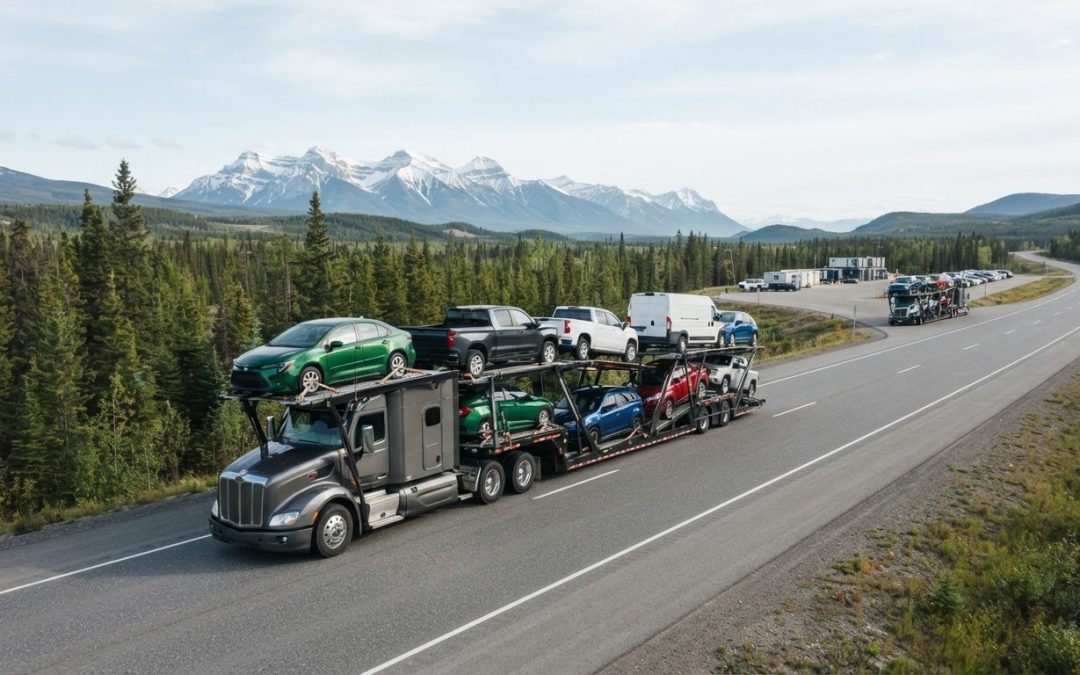
What if moving a fleet across Canada didn’t mean chasing every carrier, vehicle, and delivery update yourself? Coordinating commercial fleet vehicle transport canada-wide can take staff away from other work, especially when cars, trucks, SUVs, and vans have different destinations or schedules.
Each move requires clear vehicle details, delivery priorities, and handoffs. Gaps in communication can make timing and vehicle status harder to manage. One-stop dispatching brings carrier coordination and delivery scheduling together, reducing the follow-up your team handles internally.
This 2026 buying guide explains how to assess and arrange commercial vehicle moves across Canada with less administrative work. You’ll learn what information to gather, how vehicle requirements and delivery priorities shape coordination, and how a dispatch partner can manage logistics with third-party auto carriers. The goal is an organized process, from initial planning through delivery.
Key Takeaways
- Start with the vehicle mix, shipment volume, destinations, timing, and business contacts to shape a clear transport plan.
- Match single-vehicle moves and recurring or multi-vehicle shipments to the coordination each requires.
- Use a practical checklist to organize vehicle and route details before arranging delivery handoffs.
- Commercial fleet vehicle transport Canada planning is simpler when carrier selection, logistics, and delivery scheduling are coordinated in one process.
- GO DISPATCH coordinates professional third-party carriers for cars, trucks, SUVs, and vans, helping reduce internal follow-up.
Commercial fleet vehicle transport in Canada: what businesses are coordinating
Commercial fleet vehicle transport is the coordinated movement of business-owned or business-managed vehicles between locations. It can support dealership inventory transfers, fleet changes, or the relocation of work vehicles. The focus is arranging the move, not managing how vehicles are used day to day or buying and selling them.
A dispatch service coordinates the vehicle move; a carrier physically transports the vehicles. That distinction matters. Dispatch coordinates carrier selection, logistics, and delivery scheduling, while professional third-party carriers handle the transport itself.
For businesses researching commercial fleet vehicle transport canada, planning starts with practical details: vehicle type, number of units, origin, destination, and timing. These details shape how a move is organized and how many schedules and handoffs need to align. Canada’s extensive road and rail networks form part of Canada’s transportation system, but each vehicle shipment still needs a plan built around its route and delivery priorities.
Which business vehicle moves may need transport coordination?
Businesses may need to move cars, trucks, SUVs, or vans when transferring dealership inventory, changing a fleet, or redistributing vehicles between locations. A single-vehicle move has its own pickup and delivery details. Multiple vehicles add schedules, handoffs, and communications that need to stay aligned.
Connect each vehicle with its origin, destination, and delivery priority. This is especially useful when vehicles serve different business needs or are expected at separate locations. Treating the move as one coordinated process can reduce the need for staff to follow up on each arrangement independently.
What does a dispatch service coordinate?
A dispatch service organizes key parts of the transport process: selecting professional third-party carriers, coordinating logistics, and scheduling delivery. The carriers physically transport the vehicles. The dispatch role is to bring those moving parts together around the business’s vehicle requirements and priorities.
With one point of coordination, businesses can spend less time managing separate carrier and scheduling conversations. GO DISPATCH coordinates transport logistics for cars, trucks, SUVs, and vans, helping simplify a move from the initial arrangements through delivery scheduling.
How to evaluate a commercial fleet vehicle transport service
The right coordination approach depends on the move, not just the number of vehicles. For a one-off transfer, the priority may be aligning pickup and delivery details for a single unit. Recurring or multi-vehicle moves call for a clear view of shipment volume, destinations, timing, and who will manage communication across the business.
Use this checklist to prepare for a useful planning conversation:
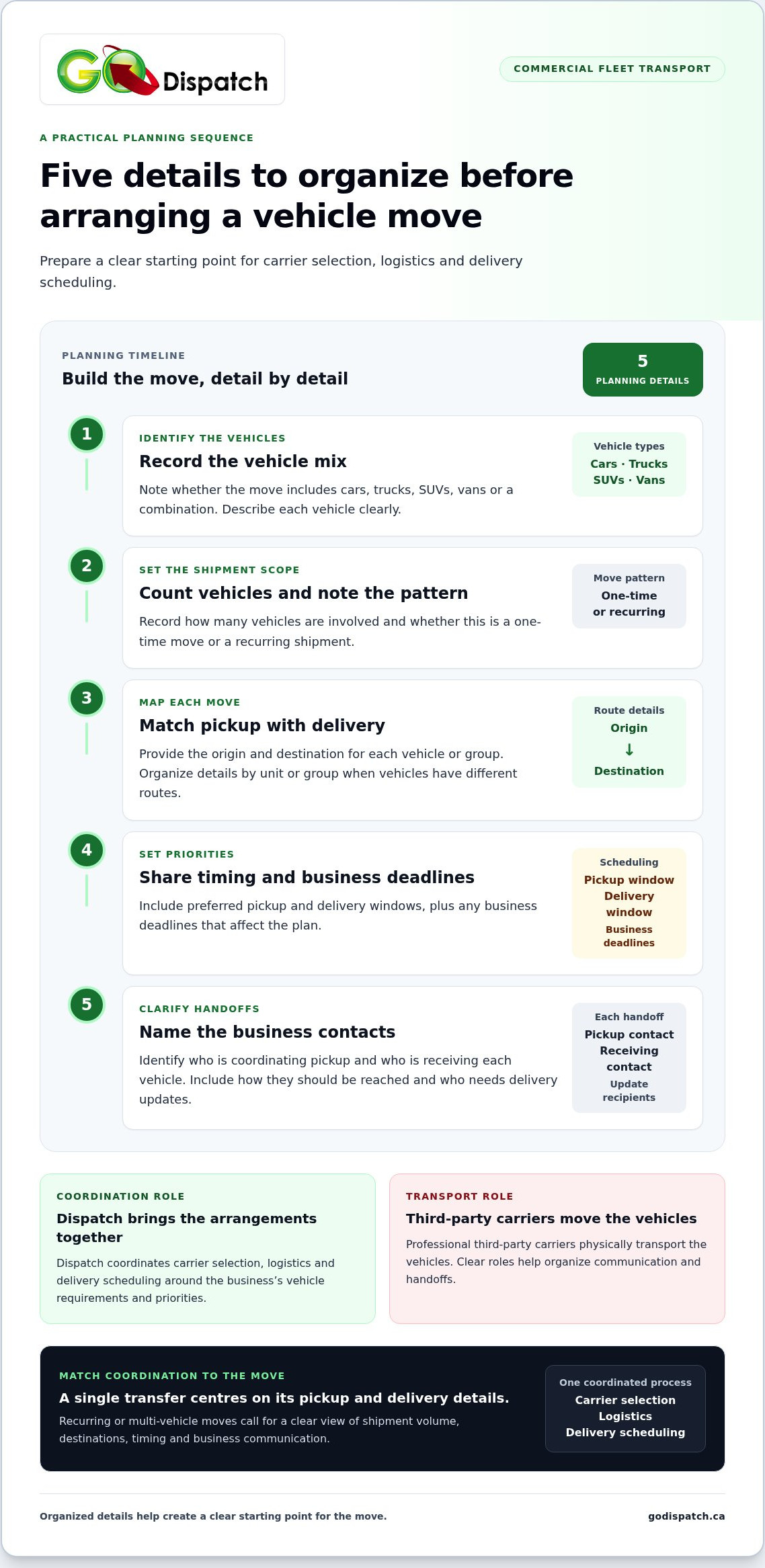
- Vehicle mix: Identify whether the move includes cars, trucks, SUVs, vans, or a combination.
- Shipment volume: Note how many vehicles are involved and whether the move is one-time or recurring.
- Pickup and delivery: Provide the origin and destination for each vehicle or group of vehicles.
- Timing: Share preferred pickup and delivery windows, along with business deadlines that affect the plan.
- Business contacts: Name the people coordinating pickup and receiving vehicles, including how they should be reached.
What details should a business prepare before requesting transport?
Accurate details help inform carrier selection and scheduling. Describe each vehicle clearly and match it to its pickup and delivery information. If a shipment includes different vehicle types or destinations, organize the details by unit or group. Identify a contact for each handoff so the right people know where to direct transport communications.
For commercial fleet vehicle transport canada, an organized request gives the coordination process a clear starting point. Transport Canada’s National Supply Chain Office describes a broader focus on supply chain efficiency and resilience, underscoring the value of clear planning across transport activities.
How should you assess coordination and communication?
Look for a defined coordination process: who manages carrier selection, how delivery scheduling is arranged, and which business contact handles each handoff. Clear roles help reduce internal back-and-forth. Discuss how delivery updates will be communicated and who needs to receive them, so relevant staff stay aligned without creating extra follow-up work.
GO DISPATCH’s one-stop service coordinates carrier selection, logistics, and delivery scheduling. Professional third-party carriers transport the vehicles. This distinction keeps responsibilities clear while centralizing key arrangements. Assess the process based on clarity, responsiveness, and how well it fits a single move or ongoing transport needs.
If you’re organizing a move or planning recurring shipments, discuss your fleet transport requirements with GO DISPATCH.
Commercial fleet transport options: match the move to the requirement
Choose a coordination approach based on how vehicles move through your business. A single transfer has different scheduling needs from recurring dealership transfers or a fleet change involving several destinations. The table below helps frame the planning conversation. Each move depends on its requirements, including the vehicle mix, route, and delivery priorities.
| Move type | Vehicle volume | Scheduling needs | Coordination complexity |
|---|---|---|---|
| One-time transfer | One vehicle | Align pickup and delivery around the move’s priorities | Fewer vehicle-specific details, with a clear handoff still needed |
| One-time group move | Several vehicles | Coordinate timing and destinations for each unit | More details and handoffs to keep organized |
| Recurring transfers | One or more vehicles per move | Discuss frequency, destination patterns, and changing priorities | Repeated planning makes a consistent coordination process valuable |
One vehicle move or multiple fleet vehicles?
For one vehicle, focus planning on its type, origin, destination, preferred timing, and delivery contact. For multiple units, organize those details by vehicle or destination. Include accurate information about each vehicle’s dimensions and condition, as these can affect transport planning and carrier selection. Consolidating requirements gives everyone a clearer view of the move and helps identify the details that need coordination.
Recurring transport needs or a one-time transfer?
A one-time transfer is scoped around a specific move. Recurring needs call for a broader conversation about how often vehicles move, whether destinations repeat, and how schedules may vary. A dealership shifting inventory between locations and a business relocating work vehicles during a fleet change may each have different patterns. For a closer look at dealership moves, read this guide to dealership auto transport logistics.
Commercial fleet vehicle transport canada can involve different arrangements depending on vehicle mix, volume, and move frequency. Dispatch coordination covers logistics, carrier selection, and delivery scheduling. Third-party carriers physically transport the vehicles. This differs from direct carrier operations and fleet-management platforms, which focus on managing vehicles and their use rather than arranging their movement. Matching the coordination conversation to the actual transport pattern helps keep requirements clear from the start.
Plan a commercial vehicle move across Canada with a clear checklist
A well-organized move starts with clear details and ends with a clear handoff. Use this sequence to prepare information, coordinate arrangements, and keep the relevant contacts aligned.
Before arranging transport: define the move
- Set the scope. Identify vehicle types and quantities, then note whether this is a one-time transfer or part of a recurring need.
- Map the route. Record the pickup and delivery locations for each vehicle or group of vehicles.
- Set timing priorities. Share preferred timing and any business deadlines that shape the delivery schedule.
- Describe the vehicles. Include accurate details and characteristics that may affect planning, such as dimensions or condition.
- Name the contacts. Identify who can coordinate access at pickup and who will receive the vehicle at delivery.
These basics give carrier selection and delivery scheduling a useful starting point. Keep the information together by vehicle or shipment so it is easy to share with the people coordinating the move. For broader planning context, see this guide to vehicle delivery logistics in Canada.
During coordination and delivery
Keep the agreed vehicle, route, timing, and contact details accessible to the staff involved. Clear information helps reduce missed messages and confusion at handoff. GO Dispatch coordinates logistics, carrier selection, and delivery scheduling, while professional third-party carriers physically transport the vehicles.
For commercial fleet vehicle transport canada, the sending and receiving contacts can use this simple handoff checklist:
- Confirm who is responsible for pickup and delivery communication.
- Make sure both contacts have the relevant vehicle and location details.
- Share agreed scheduling information with the staff who need it.
- Have the receiving contact communicate with the appropriate business team when the vehicle arrives, following the business’s own process.
Keep transport updates with the move details so staff can refer to the same information. Follow the agreed process for delivery confirmation and make sure the responsible contacts know what information to record. If regulatory or insurance questions arise, verify the specific claims before relying on them, since requirements can depend on the circumstances.
Ready to organize a move? Discuss your commercial vehicle transport needs with GO Dispatch.
How GO Dispatch coordinates commercial fleet vehicle transport
GO Dispatch brings the key arrangements for a vehicle move into one coordinated process. It handles carrier selection, logistics coordination, and delivery scheduling for Canadian businesses. Professional third-party carriers physically transport the vehicles; GO Dispatch coordinates the process rather than operating its own carrier fleet.
This approach supports business moves involving cars, trucks, SUVs, and vans. A move might involve one work vehicle or several units with different destinations and timing priorities. Sharing those requirements in one conversation helps establish the scope and organize the arrangements, without requiring your team to manage separate carrier and scheduling tasks independently.
What businesses can expect from one-stop dispatching
One-stop dispatching connects carrier selection and scheduling with the logistics details of the move. That gives the business a centralized way to coordinate transport and reduces the number of separate arrangements staff need to handle. Vehicle type, quantity, route, and preferred timing help shape the coordination.
For businesses planning commercial fleet vehicle transport canada-wide, GO Dispatch coordinates moves across Canada. The service is focused on arranging vehicle transport, not managing the fleet’s day-to-day operations. Clear requirements keep the planning conversation practical and centred on the move itself.
Prepare to discuss your fleet transport requirements
Before reaching out, gather the basics for each vehicle or shipment. A concise outline helps clarify what needs to move and where it needs to go. Include:
- Vehicle type and quantity: cars, trucks, SUVs, vans, and the number of units.
- Pickup and delivery details: the locations associated with each vehicle or group.
- Preferred timing: your requested timing and any business priorities that affect scheduling.
- Business contact: the person coordinating the move and communicating relevant details.
These details create a useful starting point for carrier selection, logistics coordination, and delivery scheduling. If multiple vehicles or destinations are involved, organize the information by unit or group to make the requirements easier to discuss. GO Dispatch coordinates the arrangements with professional third-party carriers, helping your team spend less time managing separate transport details.
Ready to plan a move? Arrange commercial vehicle transport with GO Dispatch and discuss your business’s vehicle, route, and timing requirements.
Make your next fleet move easier to coordinate
A smoother transport plan starts with the right details. Define the vehicle mix, quantity, route, timing, and delivery contacts, then match the coordination approach to a one-time move or recurring requirements. These steps help your team keep schedules and handoffs organized while staying focused on day-to-day work.
For commercial fleet vehicle transport canada-wide, GO Dispatch brings carrier selection, logistics coordination, and delivery scheduling together in one service. Professional third-party auto carriers transport the vehicles, while GO Dispatch coordinates the process for cars, trucks, SUVs, and vans. Your business can work through one coordinated process instead of managing each transport arrangement separately.
Have a move to plan? Arrange commercial vehicle transport with GO Dispatch. Gather your vehicle, route, quantity, and timing details to get started on a more organized fleet move. Your team can focus on the business while transport coordination moves forward.
Frequently Asked Questions
What is commercial fleet vehicle transport?
Commercial fleet vehicle transport is the coordinated movement of business-owned or business-managed vehicles between locations. It can support a one-time transfer, a dealership inventory move, or a business fleet change. For businesses planning commercial fleet vehicle transport canada-wide, the process involves defining vehicle requirements and route, coordinating carrier selection and delivery scheduling, and preparing clear handoffs. Dispatch coordinates the move; professional third-party carriers physically transport the vehicles.
How does commercial vehicle transport work in Canada?
Commercial vehicle transport starts with details about the vehicles, quantities, pickup and delivery locations, and preferred timing. A dispatch service uses those requirements to coordinate logistics, carrier selection, and delivery scheduling. A professional third-party carrier then transports the vehicles. Clear business contacts at both ends help keep handoffs organized. The plan depends on the shipment’s route, vehicle mix, and delivery priorities.
Can a dispatch service coordinate transport for multiple fleet vehicles?
Yes. A dispatch service can coordinate moves involving multiple vehicles by organizing requirements for each unit or group. Share vehicle types, quantities, destinations, and timing priorities together so the planning process has a clear overall view. This can help reduce separate scheduling and follow-up tasks for your staff. GO Dispatch coordinates professional third-party carriers for cars, trucks, SUVs, and vans.
What information do I need to arrange commercial fleet transport?
Prepare the vehicle type and quantity, pickup and delivery details, and preferred timing. Include relevant vehicle characteristics, such as dimensions or condition, and identify the business contacts responsible for pickup and delivery communication. For multiple vehicles, organize details by unit or destination. This information helps shape carrier selection and scheduling. Documentation requirements can depend on the move, so confirm what applies to your shipment.
How do I choose a commercial vehicle transport service?
Start by matching the coordination process to your shipment. Consider the vehicle mix, number of units, route, timing, and whether the move is one-time or recurring. Look for clear coordination of carrier selection, logistics, and delivery scheduling, with responsibilities understood by your business contacts. GO Dispatch provides one-stop transport dispatching and coordinates professional third-party carriers, giving your team a centralized process for arranging vehicle moves.
Does GO Dispatch physically transport fleet vehicles?
No. GO Dispatch coordinates and dispatches professional third-party auto carriers, which physically transport the vehicles. Its role is to manage carrier selection, logistics coordination, and delivery scheduling for business moves involving cars, trucks, SUVs, and vans. This distinction is useful when planning: GO Dispatch coordinates the transport process, while the carrier handles the physical transportation.
How are commercial vehicle transport costs determined?
Transport costs can depend on factors such as vehicle type, shipment quantity, route, timing, and the carrier arrangements for the move. Dispatching also involves fees for coordinating and dispatching professional auto carriers. Costs vary with the specific requirements, so a general figure may not reflect your shipment. Prepare accurate vehicle and route details to discuss the move and its cost with GO Dispatch.