
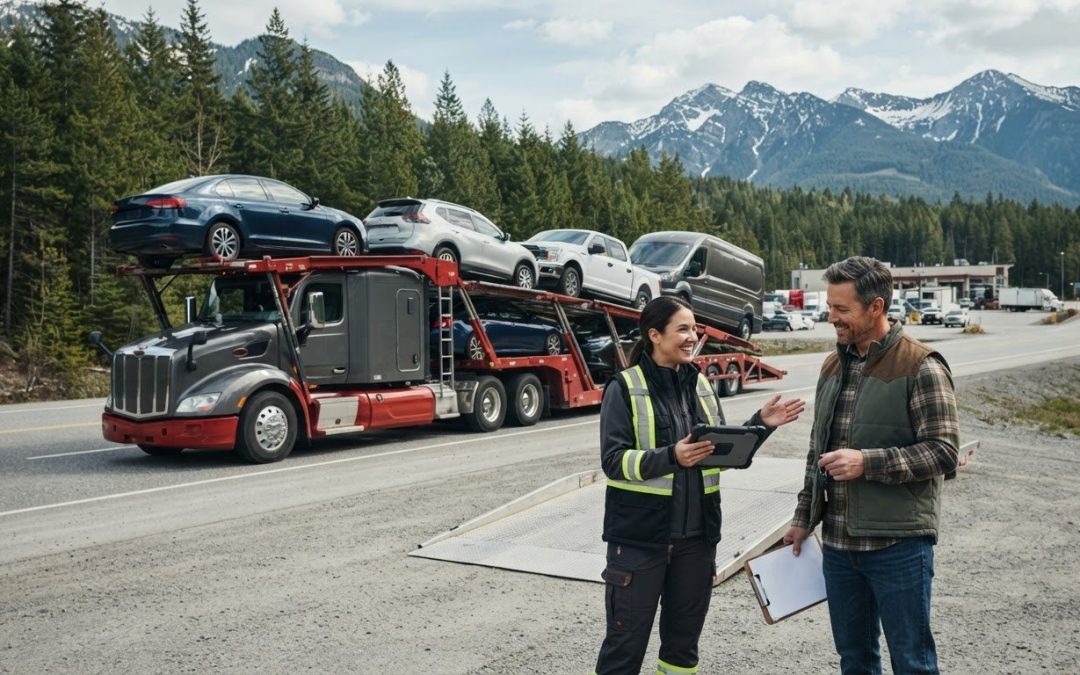
Arranging an auto delivery service is about coordinating the right carrier, schedule, and handoff, not finding a truck yourself. The process involves sharing the vehicle and route details, organizing carrier transport, and making sure the people at pickup and delivery understand the plan. Dispatch support brings those moving parts together so you’re not left managing every detail alone.
For individuals, dealerships, and businesses, clear coordination can make vehicle moves easier to manage alongside other priorities. GO DISPATCH coordinates third-party carrier transport for cars, trucks, SUVs, and vans across Canada. This guide explains how a move works, which details help with coordination, and what to prepare for the handoff, whether you’re moving one vehicle or arranging transport for your business.
Key Takeaways
- An auto delivery service coordinates vehicle transport from an agreed pickup point to a destination, while a carrier handles the physical hauling.
- Accurate vehicle, pickup, destination, and timing details help shape a practical transport plan.
- Personal moves, dealership transfers, and business logistics can call for different scheduling and handoff details.
- A clear delivery plan starts with organized information and an agreed handoff, helping reduce avoidable coordination issues.
- GO Dispatch coordinates third-party carriers and delivery scheduling for cars, trucks, SUVs, and vans across Canada.
What does an auto delivery service do?
An auto delivery service coordinates a vehicle’s transport from an agreed pickup point to a destination. You provide the vehicle, route, and scheduling requirements. A dispatch service uses that information to coordinate a carrier, and the carrier physically hauls the vehicle.
Dispatch is the planning and coordination role, not the physical transport. GO DISPATCH coordinates third-party carriers for cars, trucks, SUVs, and vans across Canada, connecting customer requirements with carrier transport.
The arrangement depends on practical details: where the vehicle will be collected, where it needs to go, what type of vehicle is moving, and your timing preferences. Sharing these details early helps clarify everyone’s role, from planning the move to completing the handoff.
How is auto delivery different from driving or towing a vehicle?
Driving means someone operates the vehicle on the road from one location to another. With carrier transport, the vehicle travels on a carrier instead, so you don’t need to drive it between destinations. This can be useful for a long-distance move, a vehicle purchase from another location, or a business coordinating several vehicles.
Planned vehicle hauling also differs from roadside towing, which generally moves a vehicle from a roadside or breakdown situation. The purpose of the move, vehicle type, pickup and destination, and route all help shape the transport arrangement. Dispatch coordination brings those requirements together before the move.
Who uses an auto delivery service?
Vehicle delivery can support personal moves as well as dealership and business operations. The information needed depends on the reason for the move and the number and types of vehicles involved.
- Personal moves: Someone relocating may arrange transport instead of driving a vehicle separately while managing other moving plans.
- Remote purchases: A buyer can coordinate transport from a seller’s location to an agreed destination.
- Dealership transfers: Dealerships may move vehicles between locations or arrange delivery to customers. Vehicle details, pickup arrangements, and delivery expectations help keep each handoff organized.
- Business logistics: Businesses moving cars, trucks, SUVs, or vans can share vehicle and route requirements so transport scheduling fits their operations.
For a single vehicle, focus on a clear pickup and delivery plan. For a dealership or business coordinating multiple moves, keep vehicle and destination details organized for each request. In either case, you provide the requirements, dispatch coordinates carrier transport, and the carrier completes the physical move.
How does an auto delivery service coordinate a vehicle move?
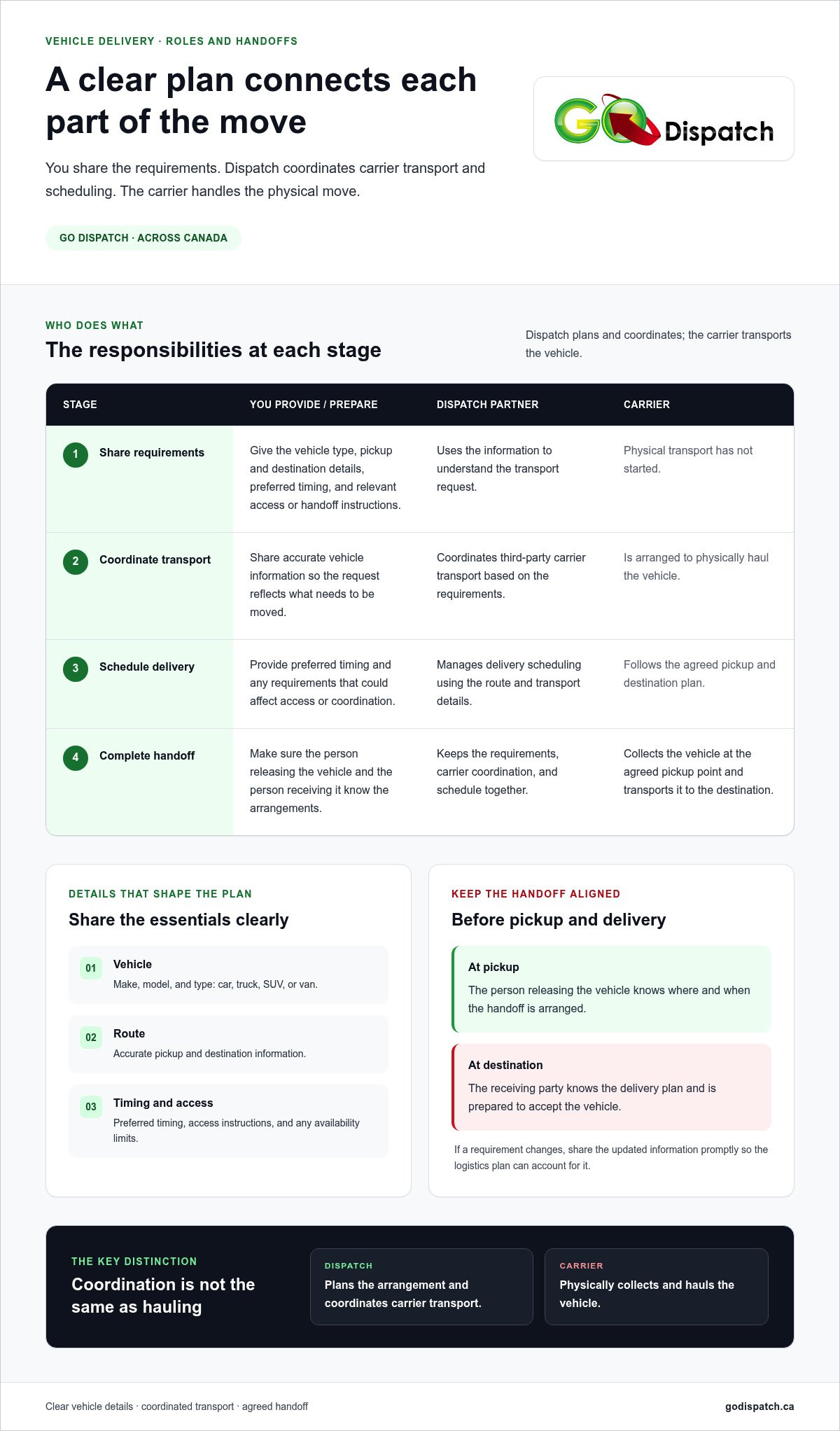
A vehicle move starts with a clear request, followed by carrier coordination, delivery scheduling, and a planned handoff. Each step depends on the information shared at the outset. Accurate details help a dispatch partner understand the job and coordinate third-party carrier transport.
GO DISPATCH manages logistics and delivery scheduling for cars, trucks, SUVs, and vans across Canada. It coordinates the transport arrangement, while the carrier physically collects and hauls the vehicle. The process generally follows these steps:
- Share the requirements. Provide the vehicle type, pickup and destination details, and preferred timing. Include access instructions or handoff considerations that could affect the plan.
- Coordinate carrier transport. The dispatch partner uses your requirements to coordinate third-party carrier transport for the move. Accurate vehicle information helps make clear what needs to be transported.
- Schedule delivery. Pickup and destination details help shape the delivery schedule and logistics. Preferred timing provides a planning target, while the route and transport requirements also inform coordination.
- Complete the handoff. The carrier collects the vehicle at the agreed pickup point and transports it to the destination. Make sure the person releasing the vehicle and the person receiving it understand the arrangements.
What details help organize vehicle delivery?
Start with the vehicle’s make, model, and type, then provide accurate pickup and destination information. Share your preferred timing and any delivery requirements that could affect access or coordination. For example, explain early if the pickup location has specific access instructions or the receiving party has limited availability.
Describe the vehicle accurately, whether it’s a car, truck, SUV, or van, so the request reflects what needs to be transported. Clear location and timing details also reduce guesswork. If a requirement changes, share the updated information promptly so the logistics plan can account for it.
What happens between scheduling and delivery?
Once the requirements are clear, the dispatch partner coordinates carrier transport and manages delivery scheduling. The carrier handles the physical move, including collection and transport. Knowing who coordinates the arrangement and who hauls the vehicle makes the process easier to follow.
Before pickup, make sure the person releasing the vehicle knows where and when the handoff is arranged. The receiving party should also know the destination plan and be prepared to accept delivery. Keep the agreed details accessible, especially if someone else is handling pickup or receipt. An auto transport dispatch service brings the requirements, carrier coordination, and scheduling together in one managed arrangement.
Will an auto delivery service suit your vehicle and situation?
An auto delivery service can support a one-time personal move or ongoing dealership and business transport. The right coordination approach depends on what’s moving, where it needs to go, and how the handoff fits your plans. Cars, trucks, SUVs, and vans can all be included in a transport request. A dispatch partner organizes logistics with a third-party carrier, so you don’t have to coordinate the hauling yourself.
Use this comparison to identify the details that matter most for your situation:
| Situation | Useful information | Coordination focus |
|---|---|---|
| Personal move or remote purchase | Vehicle type, pickup and destination, preferred timing, and who will hand over or receive the vehicle. | Fit the vehicle delivery plan around your move or purchase arrangements. |
| Dealership transfer or customer delivery | Vehicle details, collection and delivery locations, timing needs, and receiving contact. | Coordinate each transfer or delivery with dealership operations and customer handoff plans. |
| Business vehicle logistics | Vehicle types and destinations, timing preferences, and the person coordinating requests. | Keep transport requests organized across cars, trucks, SUVs, and vans. |
What should individuals consider when arranging delivery?
Think through both ends of the move. The pickup point needs to be clear, and the destination should be ready for the vehicle’s arrival. If another person is handling either handoff, include their role and availability in the plan. Preferred timing helps with logistics, but it is a planning input, not a guaranteed delivery commitment.
Route, vehicle details, and transport requirements can also affect the arrangement. If you’re comparing options, the vehicle transport cost guide explains factors that may affect transport costs. A complete request helps dispatch coordination account for the specifics of your move.
How can dealerships and businesses organize repeat vehicle moves?
For recurring requests, consistency helps. Keep a clear record for each vehicle, including its type, pickup and destination details, preferred timing, and handoff contacts. This gives the dispatch partner a practical picture of each move and makes separate requests easier to organize.
A consistent point of coordination can make it easier to manage multiple logistics requests alongside dealership or fleet operations. GO Dispatch coordinates third-party carriers and delivery scheduling for individual and business transport needs across Canada. For more on dealership workflows, explore dealership auto transport logistics.
A dispatch partner coordinates the transport requirements and scheduling, while the third-party carrier handles the physical hauling. This gives individuals and businesses one point of coordination for vehicle moves while keeping responsibilities clear.
How to prepare for a smooth auto delivery arrangement
A well-organized move starts before pickup. Give the dispatch partner a clear picture of the vehicle, route, access conditions, and timing preferences. These details help shape coordination and reduce avoidable confusion, especially when different people are handling pickup and delivery. An auto delivery service can manage logistics and scheduling, and accurate information helps the plan reflect your requirements.
Use this planning checklist to organize the handoff details:
- Identify the vehicle: Share its make, model, and type so the transport request is clear.
- Confirm both locations: Provide precise pickup and destination details, including relevant access instructions.
- Name the contacts: Identify who will coordinate or be present at each handoff.
- Share timing preferences: Explain any scheduling needs as planning information, not as a promised delivery date.
- Flag route considerations: Mention details that could affect access or scheduling along the planned route.
What should be agreed before pickup?
Make sure the pickup contact knows the agreed location and how the vehicle will be identified. If the pickup point has more than one entrance or a specific access process, explain it rather than relying on assumptions. Do the same for the destination. Clear instructions help everyone work from the same plan.
Confirm who is responsible for the handoff and share a preferred timing window as a scheduling reference. Route context and access requirements inform coordination, but they don’t establish a guaranteed arrival date. Keep this step focused on logistics. Vehicle cleaning, inspection, and loading instructions belong in a separate vehicle-preparation checklist.
How can businesses keep vehicle handoffs organized?
For dealership or fleet moves, assign a clear contact to coordinate pickup and delivery details. Keep a consistent record for each vehicle, including its identifying information, origin, destination, preferred timing, and handoff contacts. A shared format makes it easier to distinguish requests and gives the dispatch partner a clearer view of the workload.
Repeat moves can involve different vehicle types and destinations, so update the record whenever a requirement changes. For truck-specific planning, the truck transport guide offers additional logistics context. Clear records support coordination without adding unnecessary steps to day-to-day vehicle operations.
GO Dispatch coordinates third-party carriers and delivery scheduling across Canada for cars, trucks, SUVs, and vans. Arrange vehicle transport with GO Dispatch and bring the key details together in one dispatch arrangement.
Arrange vehicle delivery with GO Dispatch
Vehicle transport takes coordination, but you don’t have to manage every logistics detail alone. GO Dispatch provides one-stop dispatching, coordinating third-party carriers across Canada. It manages logistics and delivery scheduling for cars, trucks, SUVs, and vans, connecting your transport requirements with carrier transport while the carrier handles the physical hauling.
This approach can support an individual move, dealership transfers, and business vehicle logistics. Rather than organizing each part of the transport arrangement yourself, you have one dispatch partner to bring the request details and scheduling together. Clear information at the outset helps align the plan with what you need moved and where it needs to go.
What GO Dispatch coordinates for customers
GO Dispatch uses your requirements to coordinate third-party carrier transport. It manages the logistics and delivery schedule for the move, whether you’re arranging transport for one vehicle or coordinating business needs. Dispatch coordination and vehicle hauling are distinct roles: GO Dispatch organizes the arrangement, and the carrier physically transports the vehicle.
For businesses with multiple requests, a consistent coordination point can help keep vehicle moves organized alongside daily operations. For individuals, it provides a straightforward way to share the move’s essentials and have the logistics coordinated.
What to include in a transport enquiry
A useful enquiry gives the dispatch partner a clear starting point. Include:
- Vehicle type: Identify whether you’re moving a car, truck, SUV, or van.
- Pickup and destination: Share the locations and any relevant access or handoff details.
- Timing preferences: Explain your scheduling needs so they can inform delivery coordination.
- Request context: Note whether it’s a personal move, dealership transfer, or business transport requirement.
These details clarify the vehicle, route, and handoff. If you’re organizing several moves, keep each vehicle’s information distinct so its requirements are easy to understand. Delivery scheduling is part of the coordination process, but a preferred timing isn’t a guaranteed delivery date.
GO Dispatch coordinates vehicle delivery logistics with third-party carriers. Share your transport requirements to get started. Discuss your vehicle delivery needs with GO Dispatch.
Make your next vehicle move easier to manage
Make coordination easier by choosing a clear point of contact and gathering the details for the move before it’s arranged. Dispatch support can help organize the next steps, leaving you to focus on your relocation, customer commitments, or day-to-day operations rather than managing each transport detail yourself.
GO Dispatch provides one-stop transport dispatching across Canada, coordinating third-party carriers for cars, trucks, SUVs, and vans. Whether you’re arranging one vehicle or planning business transport, a well-prepared request gives the coordination process a practical starting point. An auto delivery service can make a complex move easier to organize when responsibilities and requirements are clear.
Have your pickup and destination details, vehicle type, and timing preferences ready. Discuss your vehicle delivery needs with GO Dispatch to organize your next move.
Frequently Asked Questions
What is an auto delivery service?
An auto delivery service arranges the transport of a vehicle between an agreed pickup point and destination. A dispatch company coordinates the requirements, while a third-party carrier performs the physical transport. This arrangement can suit someone buying a vehicle remotely, a household relocating, or a business planning a vehicle transfer.
How does an auto delivery service work in Canada?
The process starts with a transport request and the details needed to plan it. If a vehicle is being delivered to a dealership, for example, identify the business as the destination and include its receiving arrangements. A dispatch service coordinates the carrier and delivery schedule, while the carrier handles the move. Share any changes to the location, contact, or timing preference promptly so coordination can reflect them.
How long does auto delivery take?
There isn’t one delivery timeline for every vehicle move. Distance, route, scheduling, carrier availability, and travel conditions can all affect transport time. A longer route or a change to the receiving arrangements may influence planning. Share your preferred timing and route details when requesting transport, then treat any time estimate as a planning guide rather than a guaranteed arrival date.
Can an auto delivery service transport trucks, SUVs, and vans?
Yes. Vehicle delivery can be coordinated for trucks, SUVs, and vans as well as cars. GO Dispatch arranges third-party carrier transport for these vehicle types. Include the make, model, and body style in your request, along with any details that distinguish the vehicle from a standard configuration. Accurate identification helps the transport request reflect what needs to be moved.
Can a vehicle be delivered to a dealership instead of a home?
Yes, a dealership can be the delivery destination. Include its receiving contact, the correct delivery location, and any access or handoff instructions that will help the carrier reach the right person. This is useful for inventory transfers and vehicles being delivered on behalf of customers. GO Dispatch coordinates logistics and delivery scheduling for dealership transport needs.
What information should I have before arranging auto delivery?
Have the vehicle’s make, model, and type, along with the pickup and destination details and your preferred timing. If someone else is handling either handoff, identify them and include their contact information in the arrangement. For a business request, keep each vehicle’s details distinct. A vehicle list matched to destinations and receiving contacts can make a multi-vehicle request easier to understand.
Does an auto delivery service operate the truck that carries my vehicle?
A dispatch company coordinates third-party carrier transport, while the carrier physically hauls the vehicle. GO Dispatch coordinates the logistics and scheduling for the move, and the carrier completes the vehicle’s physical journey. Knowing the difference makes each party’s role clear.