

The best time of year to ship a car might be the season you’d least expect. Mid-January to March can bring lower demand on domestic Canadian routes, but winter weather may also disrupt roads and schedules. If you’re weighing cost, timing and peace of mind, the calendar is only one part of the decision.
Snow and ice may delay a shipment, while summer demand can leave fewer scheduling options. The right season depends on your route, how flexible your dates are and when you need the vehicle to arrive. A preferred delivery date may need to give way to changing road conditions or carrier schedules.
This guide compares Canada’s peak, shoulder and off-peak seasons so you can choose a practical shipping window. You’ll learn how seasonal demand and weather can affect scheduling, when to allow extra flexibility, and what details to prepare before arranging transport. GO DISPATCH coordinates carrier selection and logistics to help organize your seasonal plan around your route and delivery needs.
Key Takeaways
- The best time of year to ship a car depends on your route, deadline and flexibility, not just the season.
- Compare spring, summer, fall and winter for typical demand, route conditions and room to adjust your dates.
- Separate what you can control, such as date flexibility, from weather and carrier scheduling factors.
- Set a workable delivery window and share clear route and vehicle details when planning transport.
- GO DISPATCH coordinates third-party carriers, logistics and delivery scheduling to help organize a shipping plan around seasonal conditions.
Best time of year to ship a car: why there is no universal answer
The best season depends on your route, deadline and flexibility. If you have a firm arrival date, prioritize a workable schedule over a particular season. If your dates can shift, you can consider a broader range of options. Weather, seasonal demand and carrier schedules can all shape the plan, and their effects vary by route.
Think of “best” as the season that matches your priorities and the conditions along the vehicle’s full journey. A season that suits one route may be less practical for another. Canada’s transportation network spans long distances and varied conditions; the overview of Transport in Canada helps put that geographic scale in context.
The best shipping window is the period that fits your route and deadline while leaving enough flexibility to plan around seasonal conditions. This is more useful than looking for one ideal month for every shipment across Canada.
Choosing a season is different from securing a specific pickup or delivery date. A month can guide your planning, but it does not guarantee that a carrier can collect or deliver the vehicle on your preferred day. GO DISPATCH coordinates carrier selection, logistics and delivery scheduling around your shipment details.
What does “best time” mean for your shipment?
Start by identifying your priority. If flexibility matters most, consider a broader date range. If predictable route conditions are your main concern, compare the season with conditions expected along the full route. If you have a firm deadline, plan around it first and allow room for scheduling changes where possible.
Route length and shipment details matter, too. General seasonal advice may be less useful for a long journey or a route that crosses areas with different conditions. A preferred season can help frame the plan, but it can’t guarantee a particular pickup or arrival date.
Why Canadian conditions call for route-aware planning
Canada’s wide transport network means a shipment’s origin, destination and connecting roads can face different conditions at the same time. Winter weather may affect one stretch of a route while other parts remain less challenging. Road conditions can change, and carriers may need to adjust schedules in response.
That doesn’t mean every winter shipment will be disrupted. It means national rules of thumb can miss details that matter to your journey. Share the full route and your timing needs early so the logistics plan can account for conditions that may affect the trip.
Shipping a car in Canada by season: what changes through the year?
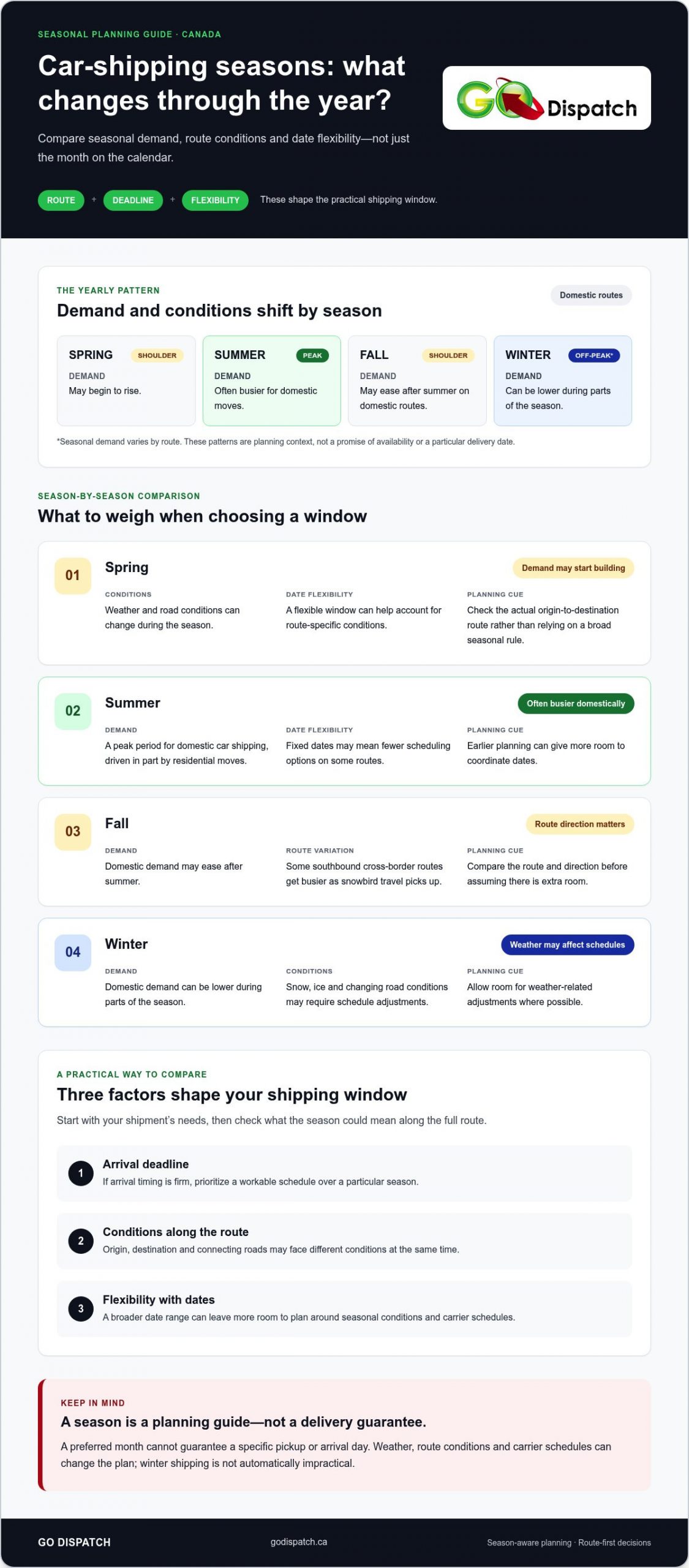
Each season brings different planning considerations, not a fixed nationwide rule. Domestic demand often rises in summer, while weather can be a bigger factor on some winter routes. Spring and fall may offer a useful middle ground, but the effect depends on where the vehicle is travelling, carrier schedules and the shipment’s requirements.
Seasonal conditions influence planning, but the route determines their relevance. Use this comparison to identify questions for your shipment, not to assume a particular month guarantees easy scheduling or a specific date.
| Season | Demand | Conditions to consider | Planning flexibility |
|---|---|---|---|
| Spring | May begin to rise | Weather and road conditions can change during the season. | A flexible window helps account for route-specific conditions. |
| Summer | Often busier for domestic moves | Travel and relocation activity may affect demand on some routes. | Earlier planning can give more room to coordinate dates. |
| Fall | Domestic demand may ease after summer; some southbound routes get busier | Conditions shift as the season progresses. | Compare the route and direction before assuming there’s extra room. |
| Winter | Domestic demand can be lower in parts of the season | Snow, ice and changing road conditions may affect schedules. | Allow room for weather-related adjustments where possible. |
Spring and fall: weigh changing conditions against flexibility
Spring demand can start to build, while domestic demand often eases after the summer rush in fall. These shoulder seasons may suit plans with some date flexibility, but they don’t guarantee lower demand or smoother conditions. Weather can shift, and a route may pass through areas experiencing different conditions. Compare your actual origin-to-destination route and timing instead of relying on the season alone.
Direction matters, too. Fall may be quieter for some domestic shipments, while southbound cross-border demand can increase as snowbird travel picks up. Broad seasonal advice can miss that distinction.
Summer and winter: balance demand with weather considerations
Summer is a peak period for domestic car shipping in Canada, driven in part by residential moves. That may affect scheduling options on some routes, especially if your dates are fixed. Winter, by contrast, can bring lower domestic demand during parts of the season, but snow, ice or other road conditions may require schedule adjustments. Winter shipping isn’t automatically impractical; the route and your deadline matter.
The best time of year to ship a car is the season that fits your route and priorities, with enough flexibility to plan around changing conditions. GO DISPATCH coordinates vehicle transport logistics, including carrier selection and delivery scheduling.
How to compare shipping seasons for your route and deadline
Compare seasons against three factors: when the vehicle needs to arrive, the conditions along the route, and how much you can adjust your dates. You control the deadline you set and the flexibility you offer. You can’t control weather or carrier schedules, so treat them as planning factors rather than assumptions. For broader scheduling context, see this vehicle delivery logistics guide.
Start with your deadline, then consider which seasonal windows could work for the full journey. A long route may cross areas with different conditions, so the season at your starting point won’t tell the whole story.
| Your situation | What to weigh | Practical approach |
|---|---|---|
| Fixed delivery deadline | Route conditions, seasonal demand and scheduling options | Begin coordination early and include a contingency if plans can’t shift. |
| Flexible move | Several workable pickup or delivery windows | Compare reasonable seasonal periods for your route instead of choosing by month alone. |
| Weather-sensitive route or timing | Conditions along the journey and potential schedule changes | Build date flexibility into the plan and discuss route-specific constraints. |
If your delivery date is fixed
Share the required arrival window as early as you can in the planning process. This gives carrier coordination a clear deadline to work around, although seasonal conditions and schedules may still limit the available options. Don’t treat a preferred season as a delivery commitment. If the date can’t move, plan a backup for receiving the vehicle or managing the days around its arrival.
If your dates are flexible
Flexibility can make it easier to work around carrier schedules or changing route conditions. Consider a few practical windows, then compare them against your preferred timing and the actual journey. A broad seasonal rule can’t tell you which period will suit your shipment best. Your route and willingness to adjust dates are more useful guides than selecting a month in isolation.
To compare your options, separate what you can set from what you need to plan around:
- You control: how early you start planning, the date range you can accept and how much contingency you build in.
- External factors: weather and road conditions along the route, seasonal demand and carrier scheduling.
Then identify the trade-off you’re willing to make. If the deadline is firm, prioritize a realistic delivery window and keep a contingency. If you have room to adjust, compare more than one season for your route. The best time of year to ship a car is the period that supports your deadline without ignoring conditions and scheduling factors that may affect the journey.
When to plan and what to prepare for a seasonal car shipment
A clear plan starts with dates and route details, then accounts for seasonal conditions before arrangements are confirmed. You don’t need to predict every change in weather or carrier schedules. You do need to share enough information for the shipment to be coordinated around your actual timing needs.
Use this sequence to get organized:
- Define your dates. Write down your ideal pickup and delivery dates, plus the latest acceptable arrival date.
- Share the route. Provide the vehicle’s origin and destination so planning reflects the full journey, not just conditions at either end.
- Discuss seasonal constraints. Explain any firm deadline and where you can adjust dates if route conditions or carrier schedules affect timing.
- Confirm arrangements. Review the agreed shipment details and scheduling plan so everyone is working from the same information.
Build flexibility into the window where you can, especially if the route may face winter weather. A few acceptable dates can give logistics coordination more room than one fixed pickup day. If your timing is firm, say so at the outset and consider a practical contingency for receiving the vehicle. The Canadian vehicle transport cost guide covers cost considerations separately, so you can assess that part of your planning without confusing it with seasonal scheduling.
Set a realistic pickup and delivery window
Separate your ideal dates from your latest acceptable delivery date. For example, you might prefer pickup early in the week but have room for it to happen later, while still needing the vehicle by a particular point. A workable range helps coordinate carrier schedules and changing conditions. Start the discussion early enough to plan around your needs, but don’t treat any season or window as a guaranteed date.
Share the details that shape seasonal coordination
Prepare the key facts before arrangements are made. Accurate information helps GO DISPATCH coordinate carrier selection, logistics and scheduling for your shipment.
- Vehicle origin and destination
- Vehicle type, such as a car, truck, SUV or van
- Preferred pickup and delivery dates
- Any firm deadline or dates you can accommodate instead
- Relevant shipment details that may affect coordination
For business inventory moves, dealership auto transport logistics can help frame planning around vehicle movements. Keep vehicle preparation focused on the shipment’s specific requirements, and have the relevant details ready to share.
The best time of year to ship a car is only one part of a workable plan. Clear dates, complete route information and room to adapt help turn seasonal considerations into practical scheduling decisions. GO DISPATCH coordinates vehicle transport with carrier selection and delivery scheduling organized around your shipment details.
Coordinate the right shipping window with GO Dispatch
There isn’t one ideal season for every shipment. Choose a workable window by weighing your route, delivery deadline and the seasonal conditions that may affect the journey. If your dates are flexible, that can give scheduling more room. If they’re fixed, sharing the deadline early helps shape a practical plan.
GO DISPATCH provides one-stop transport dispatching by coordinating third-party carriers, logistics and delivery scheduling. This coordination helps organize the moving parts of a seasonal shipment, but it can’t guarantee a specific pickup or delivery date. Weather, route conditions and carrier schedules can change, so plan with a realistic window rather than relying on a particular day.
What GO DISPATCH coordinates for your shipment
GO DISPATCH manages carrier selection and dispatch coordination for car, truck, SUV and van transport. The process brings your route, vehicle type and timing needs into the logistics plan. Seasonal demand and weather considerations can inform scheduling, while clear information about your requirements helps keep the arrangements focused on your shipment.
Turn your seasonal decision into a transport plan
Before making arrangements, gather your vehicle type, origin and destination, preferred dates and any firm deadline. If you can accept a range of pickup or arrival dates, share that too. A flexible window can help inform coordination around carrier schedules and changing conditions. Clear details make it easier to organise the plan.
Use this quick checklist to get started:
- Route: Note the vehicle’s origin and destination.
- Vehicle: Identify whether it’s a car, truck, SUV or van.
- Timing: Share your ideal dates, latest acceptable arrival and any dates you can adjust.
- Seasonal concerns: Mention route or weather considerations that affect your plans.
With those details ready, GO DISPATCH can coordinate carrier selection, logistics and delivery scheduling around your requirements. You don’t need to settle on a season based on a blanket rule. Focus on the window that fits your route and deadline, then allow room for factors that can shift along the way.
Ready to turn your seasonal choice into a practical transport plan? Plan your vehicle transport with GO DISPATCH.
Make your next move with a workable shipping window
The best time of year to ship a car is the time that supports your plans without forcing every detail into a single preferred date. Before you move ahead, decide which parts of your timeline are firm and where you could make room for adjustments. That distinction gives your transport plan a clear starting point.
Think beyond the calendar, too. Consider how the vehicle’s arrival fits into your next step, whether that’s starting a new job, preparing for a move or getting a vehicle ready for use. A realistic window can make those plans easier to coordinate, even when conditions along the route change.
GO Dispatch helps organize carrier selection, logistics and delivery scheduling for vehicle transport across Canada. Share your route, vehicle type and timing needs to begin shaping a plan around your shipment. Your dates can guide the coordination without turning a preferred arrival into a promise.
Plan your vehicle transport with GO Dispatch and take the next step with a clear, practical window in mind.
Frequently Asked Questions
Is there one best month to ship a car in Canada?
No, there isn’t one best month for every shipment. A month that suits a flexible move may be less suitable if you have a firm arrival deadline or your route faces challenging seasonal conditions. The best time of year to ship a car depends on what matters most to you. Compare a few possible windows against your route and timing needs instead of relying on a single national recommendation.
Can you ship a car in winter in Canada?
Yes, cars can be shipped in winter. The season alone isn’t a reason to rule out transport, but snow, ice and changing road conditions may affect the route or schedule. If you’re arranging a winter shipment, keep your pickup and arrival plans as adaptable as you can. Prepare the vehicle for cold conditions and make sure its battery, tire pressure and fluids are in suitable condition.
Does car shipping take longer in winter?
It can, but winter doesn’t automatically add time to every shipment. Snow, ice, poor visibility or road closures may slow travel or require a schedule adjustment. Conditions can differ across a long route, so a delay in one area may affect the overall journey. If you’re coordinating around an appointment or move-in date, leave a buffer rather than planning for the vehicle to arrive at the last possible moment.
Is summer a busy time to ship a car?
Yes. Summer, particularly June through August, is a peak period for domestic car shipping in Canada as residential moves increase. That seasonal demand may make scheduling more competitive on some routes. If your move falls in summer, share your preferred dates and any deadline as soon as you can. Having alternate dates can give the planning process more room than insisting on one specific pickup day.
How far in advance should I arrange car shipping?
There isn’t one advance-booking period that fits every Canadian route or season. Start planning once you know your likely move dates, especially if your timing is firm or falls during a busy period. Route, carrier schedules and shipment details all matter. If you’re still finalizing plans, share the dates you’re considering and note what can change, so timing can be discussed before your arrangements become fixed.
What happens if bad weather affects my car shipment?
Severe weather or unsafe road conditions may lead to a schedule change, a slower trip or a route adjustment. The specific effect depends on where conditions occur and how they relate to the shipment’s journey. Keep your own plans flexible where possible, particularly if you need to meet the vehicle at delivery. If you have a deadline, make it clear during coordination and plan for the possibility of a change.
Do seasonal changes affect car shipping availability?
They can. Demand often rises for domestic shipping in summer, while certain cross-border routes experience a seasonal increase in fall and winter. These patterns don’t mean every route has the same level of availability. Your timing, vehicle and route all influence planning. If you’re considering a popular travel or moving period, be ready to discuss alternate dates so the shipment can be coordinated around the schedule and conditions for that journey.