
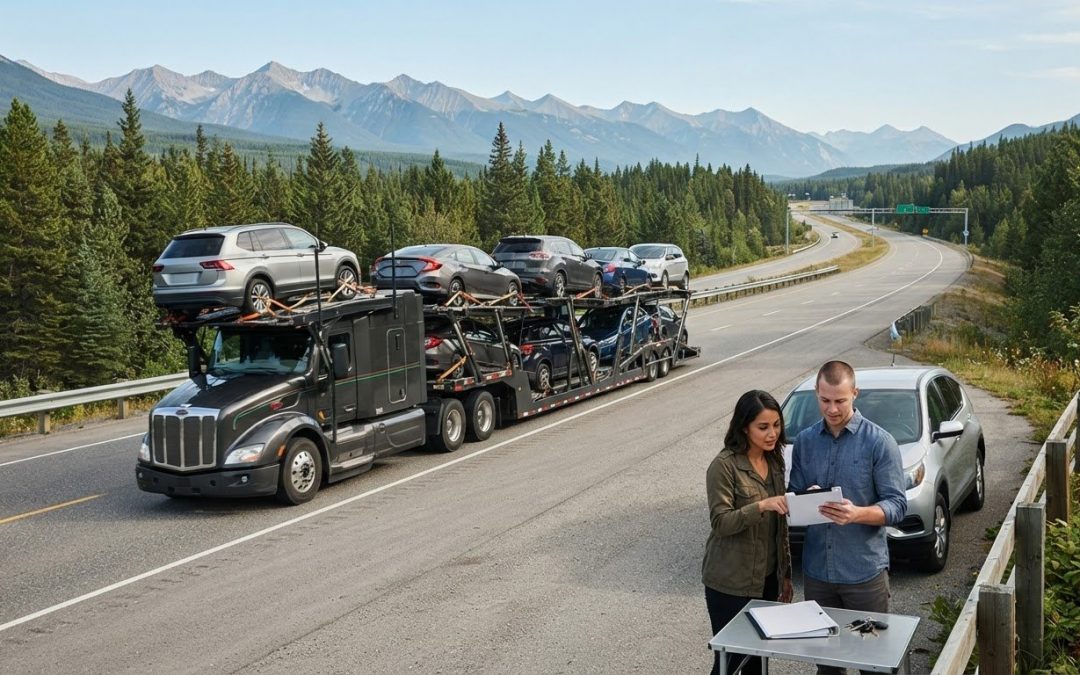
A financed vehicle can cross provincial borders, but review your lender paperwork before booking transport. Transporting a financed vehicle across provinces doesn’t automatically mean a lien will prevent shipment. However, your loan or lease agreement may include notice or approval requirements. Checking the terms first can help prevent a paperwork issue from disrupting your plans.
It’s reasonable to wonder whether your lender needs to be involved or whether a lien will complicate the shipment. You’ll also need to account for registration requirements in the destination province, which may include an out-of-province inspection.
This guide explains what to review in your financing agreement, what to ask your lender, and which vehicle and authorization details to prepare. You’ll also learn how to plan around provincial paperwork and keep your loan obligations on track. Once you’ve reviewed the requirements, GO DISPATCH coordinates carrier selection, logistics, and delivery scheduling to simplify the transport arrangements.
Key Takeaways
- Transporting a financed vehicle across provinces involves separate transport, financing, lien, registration, and insurance considerations.
- Review your loan or lease agreement for requirements related to the vehicle’s location, travel, lender notice, or approval before arranging shipment.
- Choose between driving and carrier transport based on distance, your availability, timing flexibility, and the vehicle’s condition.
- Prepare vehicle details and relevant documents, then verify registration and inspection requirements for your destination province.
- GO DISPATCH coordinates carrier selection, logistics, and delivery scheduling to reduce the work involved in arranging transport.
Can You Transport a Financed Vehicle Across Provinces?
In many cases, you can arrange to move a vehicle with an active loan. Financing alone doesn’t determine how to book the shipment or change your loan terms. Before setting a schedule, consider the transport arrangements separately from your finance agreement, any lien on the vehicle, destination registration, and insurance during the move.
The details depend on your agreement and the provinces involved. Check your loan or lease documents for rules about where the vehicle may be kept, travel, and notice to the lender. Then verify registration and inspection requirements with the relevant authority in the destination province. Canadian plates and registration systems vary by province. The Vehicle Registration Plates of Canada page offers general background, but it isn’t a substitute for current official requirements.
Transporting the vehicle moves the vehicle, not the loan: it doesn’t transfer, refinance, or pay off the debt. Booking a carrier doesn’t change ownership or remove a lender’s secured interest. Continue making payments as required by your agreement while you arrange the move.
What financing means for a vehicle move
An active vehicle loan may give the lender a secured interest in the vehicle until the debt is repaid. That interest can affect paperwork or a sale, but it doesn’t automatically mean every lender requires permission before transport. Read your agreement and contact the financing institution if its terms or notice requirements aren’t clear. Treat shipment and any change in ownership or financing as separate matters.
When to start planning the shipment
Start checking requirements as soon as you know the vehicle needs to move, whether you’re relocating, arranging a private sale, or coordinating delivery to a new owner. Confirm lender and document requirements before setting the transport schedule. Also check registration and insurance questions with the relevant provincial authority and your insurer. Requirements can vary by province and situation.
Organize these details early so you can make decisions without last-minute paperwork delays:
- Loan or lease terms: Locate clauses about the vehicle’s location, travel, lender notice, and contact procedures.
- Vehicle and lien records: Gather available registration and ownership documents, along with lender or lien information relevant to the move.
- Destination requirements: Check the province’s current registration process, deadlines, and any inspection rules that apply to your vehicle.
- Insurance questions: Confirm what coverage applies during transport and what changes, if any, are needed after the move.
With those checks underway, plan transport around the vehicle’s location, destination, and preferred schedule. GO DISPATCH coordinates carrier selection, logistics, and delivery scheduling with professional third-party carriers, helping simplify the transport step while you manage lender and provincial requirements.
What to Check With Your Lender Before Shipping a Financed Vehicle
Before arranging shipment, review your finance agreement and clarify any terms that could affect the move or your ongoing account. Lender requirements differ between agreements, so don’t assume every financed vehicle needs the same approval or notice. A focused review can help you plan transport without overlooking a condition tied to your loan or lease.
Questions to resolve in the finance agreement
Look for clauses about moving, keeping the vehicle outside your current province, an extended relocation, travel, and notifying the lender of an address change. Check how the lender records the vehicle’s location and your contact information. If a clause is unclear, ask the financing institution how it applies to your planned move. Keep its response and any instructions with your planning documents.
Use this checklist when reviewing the agreement or speaking with the lender:
- Notice or approval: Does the agreement require you to notify the lender or obtain approval before relocating the vehicle?
- Location and travel: Are there terms about where the vehicle may be kept or how long it can be away from your current address?
- Account details: Does the lender need your new address, updated contact information, or the vehicle’s destination?
- Written instructions: What records, forms, or confirmation should you keep, and who should you contact if plans change?
Record the date of your conversation, the department or representative you spoke with, and the instructions you received. Keep your account number and lender contact details accessible while arranging the move. If your pickup date, destination, or relocation plans change, you’ll have a record to refer to.
Lien, loan balance, and ownership details
A lender may have a secured interest in a vehicle while money is still owed. How that interest is recorded, and what steps apply to your situation, depend on the agreement and relevant rules. Check your loan documents and seek clarification from the lender or applicable official guidance rather than assuming a provincial move changes the lien or clears the debt.
Changing provinces isn’t the same as selling the vehicle or transferring a loan to another borrower. If your move involves a private sale, a new owner, or a request to change who is responsible for the financing, ask the lender what process applies before setting the transport plan. Keep your current loan balance, account status, and any written lender directions handy. Continue to follow the payment terms in your agreement.
Once you’ve addressed lender questions, prepare the route and shipment details. Vehicle size, pickup and delivery locations, timing, and transport arrangements can affect a quote. The vehicle transport cost guide explains factors to consider, but a tailored quote is specific to your move. For help coordinating transport, GO DISPATCH’s vehicle transport coordination brings carrier selection, logistics, and delivery scheduling together.
Compare Transport Options for a Financed Vehicle Moving Provinces
No single transport method suits every move. Choose based on distance, your availability, the vehicle’s condition, and how much flexibility you have around timing and pickup. Financing adds paperwork to consider, but it doesn’t determine whether you drive or arrange carrier transport. Review any travel or location terms in your agreement before finalizing plans.
Driving the vehicle versus carrier transport
Driving may suit you if you can make the trip, the vehicle is operable, and the timing works with your relocation or delivery plans. Consider how much time you can set aside and how you’ll coordinate your arrival. Carrier transport can be practical if you can’t make the journey yourself or need the vehicle moved separately. Neither approach is automatically faster, safer, or less costly in every situation.
What affects the transport plan
Think through the handoff at both ends. Is there suitable access at the pickup and delivery locations? Is the vehicle operable, and could any condition affect loading or coordination? How flexible are your dates if plans shift? Clear information about the vehicle and both locations helps GO DISPATCH coordinate carrier selection, logistics, and delivery scheduling around your move.
Use this comparison to see which arrangement better fits your circumstances:
| Consideration | Driving the vehicle | Carrier transport |
|---|---|---|
| Owner effort | You manage the trip and the vehicle’s travel. | You coordinate the vehicle handoff and delivery details. |
| Coordination needs | Plan around your own availability and arrival. | Share accurate vehicle, pickup, and destination details for carrier coordination. |
| Planning considerations | Assess distance, vehicle condition, and your schedule. | Consider location access, vehicle operability, and scheduling flexibility. |
For example, if work or relocation commitments make a long drive difficult, carrier transport may let you plan your own travel separately. If you have time, an operable vehicle, and a trip that fits your schedule, driving may be a workable choice. Compare the practical demands of each option rather than assuming one suits every owner.
Before deciding, list the vehicle’s condition, exact pickup and delivery locations, access considerations, and dates you can accommodate. Share relevant details early so they can inform the transport plan. If you’re transporting a financed vehicle across provinces, keep the transport decision separate from any requirements in your finance agreement.
For broader planning context, the Canadian vehicle delivery logistics guide covers considerations that can help organize a delivery across Canada.
How to Prepare a Financed Vehicle for an Interprovincial Shipment
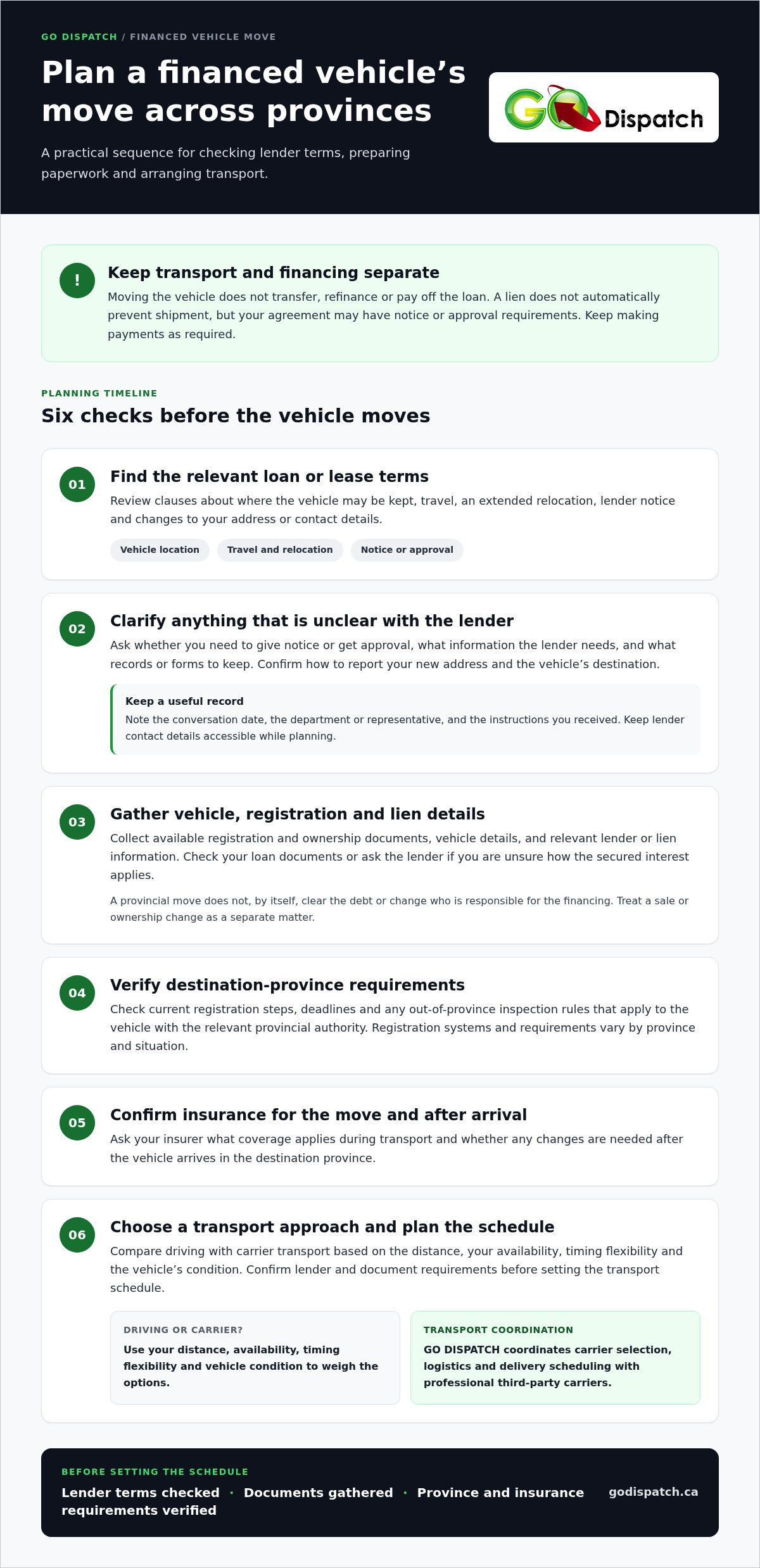
A clear sequence helps keep lender questions, provincial paperwork, and transport arrangements organized. For transporting a financed vehicle across provinces, complete these steps before setting the shipment schedule. Registration, insurance, and lien requirements can vary, so verify the details that apply to your agreement and destination province.
- Review your finance terms. Check for clauses about moving the vehicle, changing its location, notifying the lender, or updating your contact information. Keep the agreement and lender contact details accessible. If a term is unclear, request clarification from the financing institution and record its instructions.
- Check provincial requirements. Confirm the destination province’s current registration process, applicable deadlines, inspection requirements, and required documents with its relevant authority. Ask your insurer how coverage applies during transit and after arrival. Don’t assume your current registration or policy automatically meets every destination requirement.
- Prepare vehicle and shipment details. Gather the vehicle identification details, make and model, and a clear description of its condition and operability. Note anything that could affect loading or delivery. Record the pickup and delivery addresses, access details, preferred dates, and a reliable contact for each handoff.
- Schedule transport. Once you understand the lender and provincial steps, coordinate a shipment window that fits your plans. Share accurate vehicle and location details so carrier selection and delivery scheduling can account for the practical requirements of the move.
Documents and details to gather
Keep your loan agreement, lender contact information, and any written instructions together. Gather available registration and ownership records, along with relevant lien information. Verify which documents are required for your situation with the appropriate provincial authority. Having the vehicle identification, operability details, pickup and delivery information, and handoff contacts ready makes it easier to plan the shipment without searching for details later.
Align lender, insurance, and delivery timing
Ask your insurer whether your existing policy applies during the move and after the vehicle arrives, and whether any updates are needed. Then compare the planned shipment window with lender instructions and provincial administrative steps. If paperwork, an inspection, or an address update affects your plans, account for it before confirming dates. Requirements differ, so use your agreement and current official guidance for your situation.
For additional context on vehicle hauling and delivery planning across Canada, explore this professional vehicle transport overview. Once your details are ready, arrange coordinated vehicle transport with GO DISPATCH. GO DISPATCH manages carrier selection, logistics, and delivery scheduling with professional third-party carriers, reducing the coordination work on your end.
Coordinate Your Financed Vehicle’s Cross-Province Transport With GO DISPATCH
After reviewing your finance agreement and checking the requirements that apply to your move, you can plan the transport. GO DISPATCH connects customers with professional third-party auto carriers and coordinates carrier selection, logistics, and delivery scheduling for cars, trucks, SUVs, and vans. Having one point of coordination can reduce the time you spend organizing shipment details yourself.
Keep responsibilities clear: GO DISPATCH coordinates transport, while your lender determines the requirements of your financing agreement. Lender approval and loan servicing remain matters between you and your financing institution. Check provincial registration requirements with the relevant authority and confirm insurance questions with your insurer.
What dispatch coordination handles
Coordinating a move means bringing the vehicle, route, timing, and delivery details into a workable plan. GO DISPATCH manages carrier selection and delivery scheduling with professional third-party carriers, helping organize the transport arrangements through one coordination point. Sharing clear information at the start helps align logistics with your preferred timing and the practical details of the handoff.
Details to have ready when arranging transport
Prepare the basic shipment details before arranging transport. Accurate information helps clarify the route and coordinate logistics for your vehicle. Keep finance and insurance questions separate from the transport booking, and share anything that could affect pickup or delivery.
- Vehicle: Identify whether it’s a car, truck, SUV, or van, and describe its operability and relevant condition details.
- Route: Provide the pickup and delivery provinces, along with the specific locations needed to plan the handoff.
- Timing: Share your preferred shipment window and any flexibility around dates.
- Access: Note location restrictions, access considerations, or other delivery constraints that could affect coordination.
- Contacts: Provide reliable contact details for the person coordinating pickup and the person receiving the vehicle.
Before confirming arrangements, make sure lender and provincial requirements are being handled through the appropriate channels. Keep relevant instructions and documents accessible, and tell GO DISPATCH if your route, timing, or handoff details change. That gives transport coordination a clear starting point without confusing shipment planning with loan or registration decisions.
Ready to organize the move? Discuss your vehicle move with GO DISPATCH and share the pickup and delivery provinces, vehicle details, and preferred timing to start coordinating your cross-province transport.
Make Your Next Move Easier to Manage
A cross-province move involves enough moving parts without transport planning adding extra strain. Allow time to coordinate the vehicle’s route, handoff details, and preferred timing with the rest of your relocation. A clear plan helps everyone involved work from the same information.
For transporting a financed vehicle across provinces, focus transport arrangements on the shipment and handle loan, insurance, and registration questions through the appropriate channels. GO DISPATCH coordinates professional third-party auto carriers, bringing carrier selection, logistics, and delivery scheduling together in one dispatch process. This support can leave you with fewer transport details to manage while you focus on the move ahead.
Share your vehicle’s route and transport details with GO DISPATCH to get the coordination process moving. With the key details prepared, you can take the next step with a clearer plan.
Frequently Asked Questions
Can I transport a financed vehicle if I’m still making monthly payments?
Yes, in many cases owners arrange transport while continuing their regular payments. Your loan agreement still governs your obligations, and shipment doesn’t pause payments or transfer the loan. For transporting a financed vehicle across provinces, check whether your agreement mentions relocation or lender notification. If the wording is unclear, contact the lender before scheduling. Confirm destination registration and insurance requirements separately, especially if your current policy or registration details may change after the move.
Does moving a financed car to another province transfer the loan?
No. Moving the vehicle doesn’t transfer or refinance the loan. Continue following the existing agreement unless the lender formally changes it. If the move also involves a new owner, borrower, or primary vehicle location, clarify how the agreement applies before arranging shipment. A private sale, for example, is different from relocating a car you’ll continue to own. Keep any lender guidance with your account records as plans develop.
Can someone else arrange transport for my financed vehicle?
Yes, someone else can coordinate the shipment on your behalf if you authorize them and provide accurate details. Decide in advance who can approve pickup and who will receive the vehicle. Give that person the vehicle information, route, preferred timing, and contact details for both handoff points. If the lender, insurer, or transport arrangements require specific authorization or documents, confirm what’s needed with the relevant party before scheduling the shipment.
Will transporting my financed vehicle affect my loan payments?
Transport by itself doesn’t automatically change the payment schedule in your finance agreement. Keep making payments as required, even if the vehicle is in transit or you haven’t yet updated your address. If your payment details or contact information will change after relocating, use the lender’s regular account channels to update them. Treat shipment timing and loan servicing as separate tasks, and follow any relocation terms in your agreement.
Can I ship a financed vehicle if I’ve missed a payment?
A missed payment may have consequences under your finance agreement, and the effect depends on your circumstances and the lender’s terms. Don’t assume that booking transport resolves an overdue amount or changes your account status. Contact the lender about your account before scheduling the move, and keep any repayment discussion separate from transport coordination. This helps you understand your account position and plan the shipment without relying on assumptions.
How much does it cost to transport a financed vehicle across provinces?
The financing itself doesn’t determine the transport quote. The route, vehicle details, pickup and delivery access, and scheduling needs can all affect the assessment. When requesting a quote, share whether the vehicle is operable and note any access constraints at either location. For more detail on factors that influence Canadian transport pricing, review the vehicle transport cost guide.