

Could the lowest car-shipping quote be the hardest one to compare? All-inclusive car shipping quotes can show a single total while covering different services or assumptions. If the wording is vague, it’s difficult to tell what the price includes or why it might change when your vehicle, route, or timing changes.
That uncertainty can make planning feel like extra work. You need a clear picture of the shipment, not just a headline number with important details left unanswered. A useful quote identifies the vehicle and route, explains the service scope, and states the assumptions that could affect the total.
This guide explains what an all-inclusive quote should cover and how to compare the details, not just the totals. You’ll learn which shipment information matters, what conditions can affect the amount, and how to assess the coordination involved. GO DISPATCH brings carrier selection, logistics, and delivery scheduling together through one-stop transport dispatching.
Key Takeaways
- Read all-inclusive car shipping quotes as a defined shipment scope, not just a headline total.
- Check how vehicle details, route, timing, transport method, and pickup or delivery access affect the quote.
- Compare options using the same shipment assumptions, then review exclusions and conditions that could lead to repricing.
- Provide accurate vehicle and access information to help reduce avoidable quote revisions.
- GO DISPATCH coordinates carrier selection, logistics, and delivery scheduling through one process.
What Does an All-Inclusive Car Shipping Quote Actually Cover?
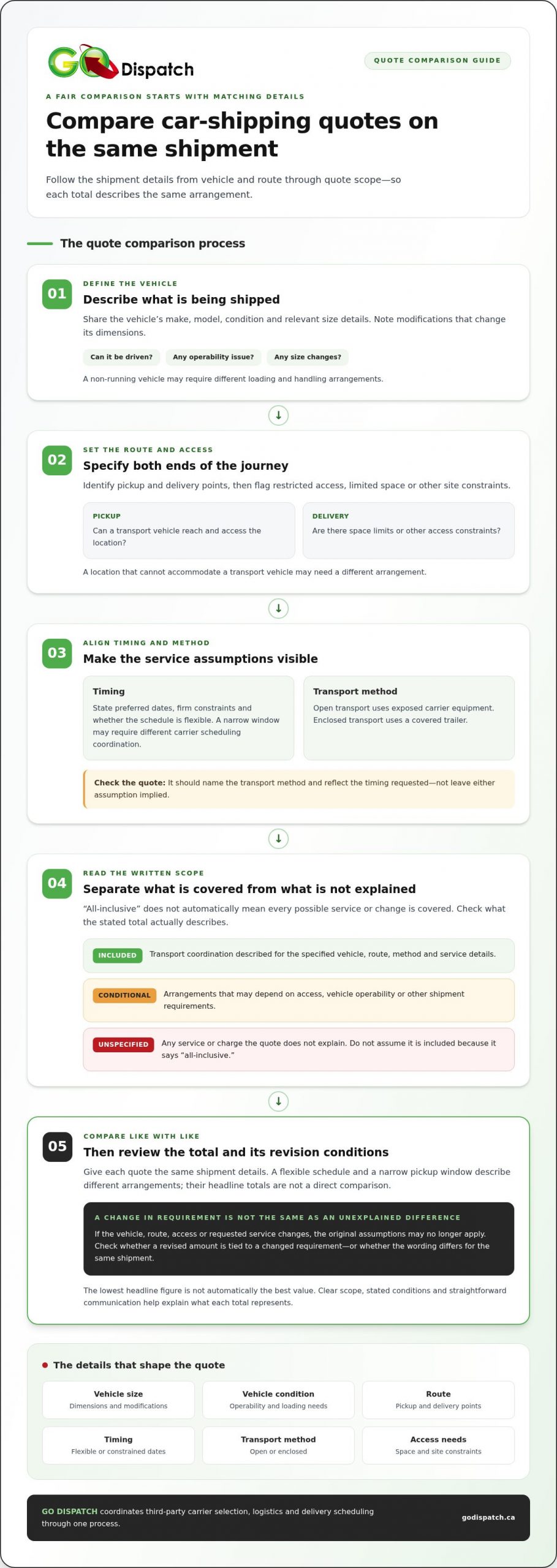
An all-inclusive quote should be a clearly scoped total for a specific shipment, not just a number labelled “all-in.” It should describe the vehicle, route, transport method, and service details the amount is based on. Without that context, you can’t tell whether two quotes cover the same job or assume different pickup and delivery arrangements.
“All-inclusive” doesn’t automatically mean every possible service or change is covered. Carrier transport coordination is one part of arranging a shipment. Optional requests or conditions, such as difficult pickup access or a change to the vehicle details, may affect the coordination required and the final amount. Read the stated scope and assumptions before treating the total as settled.
Which shipment details should the quote identify?
Start with the vehicle’s make, model, condition, and relevant size details. If it doesn’t run or has another operability issue, state that clearly because loading arrangements may differ. The quote should also identify the pickup and delivery points, along with access constraints such as limited space for a transport vehicle. These details define the shipment being coordinated.
Check the requested transport method and service expectations, too. Open and enclosed transport use different equipment. This overview of types of car carrier trailers explains how carrier designs are used to move vehicles. The quote should state which method its scope reflects instead of leaving you to infer it.
What does “all-inclusive” mean in practice?
A scoped quote ties its total to stated shipment details. An estimate may show a figure without explaining the assumptions behind it. For example, a quote for a running sedan with accessible pickup points and open transport isn’t directly comparable to one for a larger, non-running vehicle or a different transport method.
Use the written scope to understand what the total represents and what could prompt a revision. If the vehicle’s condition, route, access, or requested service changes, the original assumptions may no longer apply. That doesn’t make a quote useless; it makes clear wording essential.
- Included: The transport coordination described for the specified vehicle, route, method, and service details.
- Conditional: Arrangements that may depend on access, vehicle operability, or other shipment requirements.
- Unspecified: Any service or charge the quote doesn’t explain. Don’t assume it’s included simply because the quote says “all-inclusive.”
Compare all-inclusive car shipping quotes only after matching their shipment assumptions. GO DISPATCH coordinates third-party carriers and manages logistics and delivery scheduling, bringing key transport arrangements together in one process.
What Can Change a Car Shipping Quote in Canada?
A quote can change when shipment requirements change or when the original estimate relied on assumptions that weren’t clearly stated. Route, vehicle dimensions and condition, timing, transport method, and pickup or delivery access all affect the coordination required. A revised amount tied to a changed requirement is different from an unexplained difference in wording for the same shipment.
Route, vehicle size, condition, timing, transport method, and access needs are the main variables that shape a car-shipping quote.
How do vehicle and route details affect the quote?
A compact car, larger SUV, van, and truck can require different space and transport arrangements. Modifications that change a vehicle’s dimensions may matter, too. If a vehicle is inoperable, loading and handling requirements can differ from those for one that can be driven onto transport equipment. Share these details up front so the quote reflects the vehicle being shipped.
Route details matter as well. Pickup and delivery points define the journey, while restricted access, limited space, or other site constraints can require extra coordination. A location that can’t accommodate a transport vehicle may need a different arrangement than a straightforward pickup. Accurate details help distinguish a legitimate scope change from an unexplained difference in quote wording.
How can timing and transport method affect quote scope?
Requested timing can shape carrier scheduling. A narrow pickup or delivery window may require different coordination than a flexible schedule. State your preferred dates and any firm constraints clearly. If those requirements change, the original coordination assumptions may need to be reviewed.
Transport method also affects what the quote describes. Open transport moves vehicles on exposed carrier equipment; enclosed transport uses a covered trailer. The right option depends on the shipment’s requirements, and the quote should identify the method rather than leave it implied. Learn more about open versus enclosed car hauling to understand the distinction.
GO DISPATCH coordinates third-party carriers and manages logistics and delivery scheduling, bringing key transport arrangements together in one process. Explore GO DISPATCH vehicle transport coordination for a practical way to organize your shipment details. Clear information about the vehicle, route, timing, and access makes it easier to scope and compare all-inclusive car shipping quotes.
How to Compare All-Inclusive Car Shipping Quotes Fairly
A fair comparison starts with a fair test: give each quote the same shipment details. If one is based on flexible timing and another on a narrow pickup window, their totals describe different arrangements. The lowest headline figure isn’t automatically the best value. Clear scope, stated conditions, and straightforward communication help you understand what each total represents.
Which quote terms belong in a side-by-side comparison?
Use a simple table to expose gaps before weighing totals. Keep the shipment assumptions consistent, then record what each quote says and what it leaves unclear.
| Comparison point | Quote A | Quote B |
|---|---|---|
| Vehicle and condition | Make, model, size, operability | Make, model, size, operability |
| Route and access | Pickup and delivery points; access needs | Pickup and delivery points; access needs |
| Timing and transport | Requested dates or flexibility; open or enclosed | Requested dates or flexibility; open or enclosed |
| Service scope | Coordination, scheduling, requested services | Coordination, scheduling, requested services |
| Conditions and exclusions | Stated assumptions; possible repricing triggers | Stated assumptions; possible repricing triggers |
Fill in each cell using the quote’s actual wording. If coordination, scheduling, or a requested service isn’t addressed, mark it as unclear rather than assuming it’s included. Note any stated conditions that could change the amount, such as revised vehicle information or pickup requirements. A side-by-side comparison makes missing information visible without treating every difference as a hidden fee.
How can you spot a quote that is hard to compare?
Watch for missing route points, vague vehicle descriptions, unstated timing assumptions, or an unnamed transport method. An estimate based on incomplete shipment details may look lower because it doesn’t describe the same requirements as a more detailed quote. Before comparing totals, identify what each figure covers and which changes could lead to a revised amount.
Then assess the coordination behind the number. Does the quote explain its scope plainly? Is there a clear process for carrier selection, logistics, and delivery scheduling? Those details matter when you want fewer separate tasks to manage. For broader context on factors that can influence vehicle transport costs in Canada, read the 2026 vehicle transport cost guide.
Compare all-inclusive car shipping quotes only after the shipment assumptions line up. A well-explained total is easier to plan around than a lower figure with gaps you have to interpret.
How to Request a More Accurate Car Shipping Quote
A useful quote request starts with complete, consistent shipment details. The more clearly you describe the vehicle and delivery requirements, the easier it is to scope the work and reduce avoidable revisions. Use the same information when comparing all-inclusive car shipping quotes, and update it if anything changes.
What information should you have ready?
- Gather vehicle details. Note the year, make, model, condition, and whether the vehicle can be driven. Include relevant size details or modifications that could affect loading and transport arrangements.
- Describe the route and access. Provide pickup and delivery points, plus restrictions such as limited space or access that could affect where a carrier can meet you.
- Set out your timing and requirements. Share preferred dates or timing flexibility, your preferred transport method, and any special handling needs. Describe requests clearly, but don’t assume they’re automatically part of the quote.
- Review the quote scope. Check that the vehicle, route, timing, method, and requested services match the details you supplied. Note any assumptions or conditions that could change if shipment requirements are revised.
- Coordinate next steps. Once the shipment details are clear, transport coordination can move forward with fewer information gaps and less back-and-forth.
Small details matter. For example, “SUV” may not describe a modified vehicle’s dimensions, and “runs” doesn’t always tell the whole story if it can’t be driven onto transport equipment. Accurate information helps the quote reflect the actual shipment instead of an assumption.
What happens after you share your shipment details?
GO DISPATCH coordinates third-party carrier selection, logistics, and delivery scheduling. Having these arrangements managed through one point of coordination can reduce the separate tasks involved in organising vehicle transport. The carrier handles the physical transport; GO DISPATCH brings the planning and dispatch process together.
For a closer look at how delivery coordination fits into a vehicle shipment, read this guide to vehicle delivery logistics in Canada. It can help you understand the steps involved beyond gathering quote details.
Ready to organise your shipment details into a coordinated transport plan? Request vehicle transport coordination with GO DISPATCH and share the information needed to plan the next steps.
Get a Clearly Coordinated Car Shipping Quote with GO Dispatch
A clear quote starts with a clear shipment plan. GO Dispatch coordinates third-party auto carriers and manages logistics and delivery scheduling, bringing key arrangements into one process. You share the shipment requirements; GO Dispatch coordinates the dispatch work around them. This gives vehicle owners and businesses one point of coordination for transport arrangements.
How does GO Dispatch simplify vehicle transport coordination?
Carrier selection depends on the shipment details. A car, truck, SUV, or van may have different size, condition, route, and timing requirements. GO Dispatch uses those details to coordinate carrier selection, then manages logistics and delivery scheduling as part of its one-stop dispatching service. GO Dispatch coordinates the transport; it doesn’t operate the carrier trucks.
Keeping coordination together can make the process easier to follow. Rather than organizing carrier selection and scheduling as separate tasks, you work through one dispatch process. Businesses arranging multiple vehicle movements can explore dealership auto transport logistics for more context on dispatch coordination.
What is the next step toward arranging transport?
Share the details that define your shipment: vehicle type, pickup and delivery points, condition and operability, preferred timing, transport requirements, and access restrictions. Specific information helps align the coordination process with the job you need done. If a detail changes, keep it up to date so everyone is working from the same plan.
GO Dispatch coordinates the logistics process on your behalf, including carrier selection and delivery scheduling. This provides a coordinated point of support without implying that GO Dispatch directly transports the vehicle. Cars, trucks, SUVs, and vans can all be planned through this dispatch-led approach.
For all-inclusive car shipping quotes, clear shipment details make it easier to understand what the proposed coordination covers and compare the stated scope. Share your vehicle and route requirements to get the planning process moving.
Plan your vehicle shipment with GO Dispatch.
Plan Your Vehicle Shipment with Clearer Expectations
A useful quote is more than a headline total. It connects the amount to the vehicle, route, transport method, timing, and service details, so you can compare options on the same basis. Review the stated scope, exclusions, and conditions that could lead to a change. Clear shipment information helps you understand what you’re planning and reduce avoidable surprises.
GO Dispatch coordinates third-party auto carriers rather than operating its own carrier fleet. Its one-stop dispatching service brings carrier selection, transport logistics, and delivery scheduling together. Coordination is available for cars, trucks, SUVs, and vans across Canada.
Ready to put your shipment details into a coordinated plan? Plan your vehicle shipment with GO Dispatch. Share your vehicle and route requirements to take the next step with greater clarity and less administrative effort.
Frequently Asked Questions
What should an all-inclusive car shipping quote include?
An all-inclusive car shipping quote should state the total for a clearly described shipment and explain what that amount covers. Look for the vehicle, pickup and delivery points, transport method, timing assumptions, and any coordination or requested services included in the scope. It should also identify exclusions or conditions that could change the amount. The label “all-inclusive” alone doesn’t mean every optional service or change is covered.
Are car shipping quotes binding or estimates?
That depends on the quote’s written terms and the shipment details it’s based on. An estimate may rely on assumptions about the vehicle, route, timing, or access. If those details change, the amount may need to be reviewed. Read the quote for its stated conditions and any repricing triggers. Don’t treat a headline total as fixed unless its terms clearly explain how it applies to your shipment.
What details do I need to get a car shipping quote?
Prepare the vehicle’s year, make, model, condition, and whether it can be driven. Share the pickup and delivery points, preferred timing, and access restrictions that could affect carrier coordination. Include relevant size details or modifications, plus your requested transport method and special handling needs. Accurate, consistent information helps define the shipment and makes it easier to compare quotes based on the same requirements.
Why do car shipping quotes differ for the same route?
The route is only one part of the shipment. Quotes can differ if they assume different vehicle sizes or conditions, transport methods, timing flexibility, pickup or delivery access, or included services. One figure may be a broad estimate, while another describes a more specific scope. Compare the assumptions and exclusions alongside the totals. Differences are easier to understand when each quote clearly states what shipment it covers.
Can I get an all-inclusive quote for shipping an inoperable vehicle?
An inoperable vehicle can be part of a quote request, but its condition needs to be described accurately. State whether it starts, steers, or rolls if you know, and explain any issue that could affect loading. Carrier arrangements may differ from those for a vehicle that can be driven onto transport equipment. A useful quote should reflect the disclosed condition and identify assumptions tied to handling.
Does an all-inclusive quote cover vehicle transport insurance?
Not automatically. Coverage arrangements, limits, and deductibles can vary, so the quote’s wording matters. Review whether transport coverage is included in the stated scope and what terms apply. Don’t assume your personal auto insurance covers the vehicle while it’s in transit; policies can differ. For a clear comparison, consider coverage information separately from the transport total and note any details the quote leaves unspecified.
How can I compare car shipping quotes fairly?
Give each quote the same vehicle, route, timing, transport method, and access information. Then compare the stated service scope, exclusions, assumptions, and conditions that could lead to repricing. Mark unclear wording as a gap instead of assuming a service is included. The lowest headline figure may not represent the same shipment as a more detailed quote. Clear scope and communication help you judge value, not just totals.