
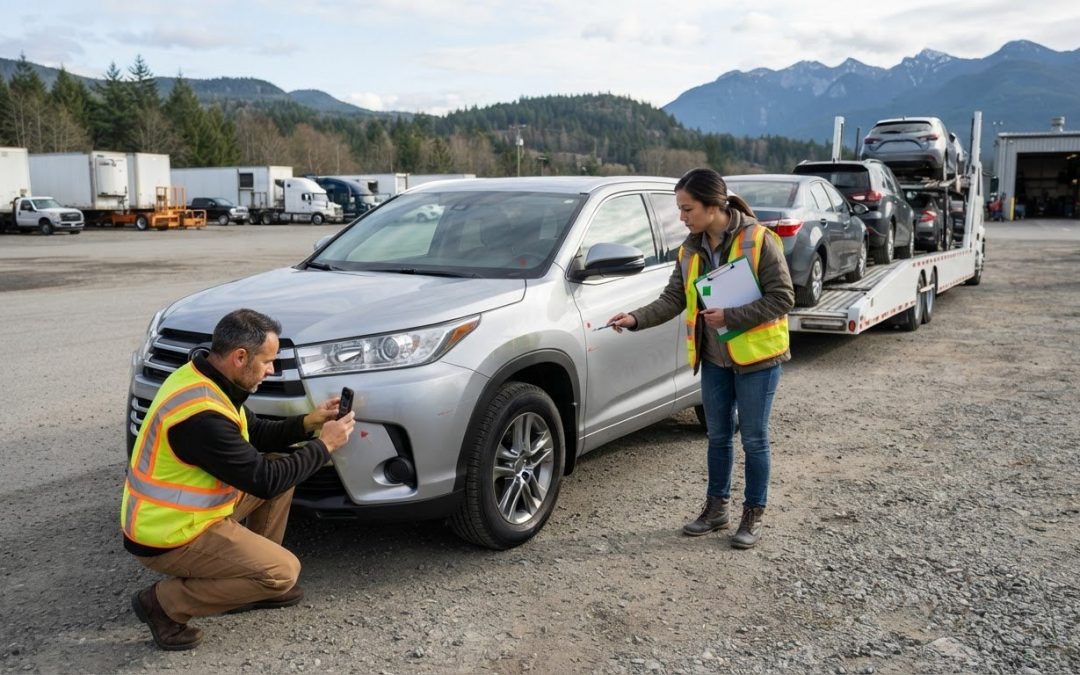
A vehicle handoff can take minutes, but a vague record can make a condition dispute harder to sort out later. An auto transport condition report is most useful when it captures clear, consistent observations at pickup and delivery, rather than a quick mark beside a checkbox.
If you’re arranging a shipment, you may wonder which details matter and how photos fit with the Bill of Lading (BOL). A careful walkaround helps you record visible marks such as scratches, dents, chips, and cracked glass. Consistent photos make those observations easier to compare. This guide explains what to inspect at each handoff, what to record, and how the condition report relates to the BOL and your photos.
You’ll also learn how to keep notes clear and useful if the vehicle’s condition is questioned after delivery. For businesses coordinating vehicle movements across Canada, organized dispatch helps keep shipment handoffs aligned. GO DISPATCH coordinates third-party carriers for cars, trucks, SUVs, and vans, helping businesses manage transport logistics while keeping handoff records connected to each shipment.
Key Takeaways
- Use an auto transport condition report to record the vehicle’s observable state at both handoffs, including its identity and visible marks.
- Compare pickup and delivery observations area by area to identify differences more easily.
- Use photos alongside written notes and the Bill of Lading, since each record serves a different purpose.
- Follow a consistent routine: inspect, document, photograph, review, and retain your records.
- Clear dispatch coordination helps businesses organize carrier logistics and vehicle handoffs across Canada.
What Is an Auto Transport Condition Report, and Why Does It Matter?
An auto transport condition report is a written snapshot of a vehicle’s observable state at a transport handoff. It records what an inspection reveals at that moment, not what caused a mark or whether there is a mechanical problem. Keep the wording factual: “scratch on left rear door” describes an observation; “scratch caused during transport” makes a claim about cause.
The report may be part of the Bill of Lading (BOL) or a separate document used alongside it. The BOL records shipment details and may include condition notes, but forms and processes can differ by carrier. For background on the broader document, see this explanation of the Bill of Lading. A condition record documents a handoff, but it doesn’t guarantee that damage won’t occur or settle a dispute on its own.
What Does an Auto Transport Inspection Record?
Depending on the form, identifying details may include the vehicle’s make, model, colour, and VIN. The inspection may also record the odometer reading if requested, along with visible exterior marks, glass condition, and other observable areas. A useful description gives the mark’s location and appearance, rather than simply labelling it “damage.” An inspection is not a mechanical diagnosis.
Why Are Pickup and Delivery Reports Compared?
Pickup and delivery records provide two points of comparison. At pickup, record existing marks rather than leaving them undocumented. At delivery, inspect the same areas and compare what you see with the earlier record. This makes it easier to distinguish a previously noted scratch from a difference that needs attention.
Keep the discussion grounded in what each inspection shows. If the records don’t match, identify the specific area and describe the difference plainly. Comparing the records gives the people involved a clearer basis for discussing the discrepancy than relying on memory alone. It helps document the conversation without assuming when or how a change occurred.
What Should an Auto Transport Condition Report Include?
Carrier forms can differ, so use the fields provided and make each observation specific. A useful auto transport condition report separates vehicle identification from visible condition notes and records when the inspection took place. This helps distinguish a pickup record from a delivery record later.
Look for fields or space to record:
- Vehicle identity: Make, model, colour, and VIN when requested on the form.
- Inspection details: Date and handoff stage, such as pickup or delivery.
- Odometer reading: Include it when the form or inspection process requests it.
- Visible condition: Marks on body panels, bumpers, wheels, mirrors, and other observable areas, plus the condition of windows and windshield.
- Supporting photos: Images that match written notes and show both the overall vehicle and specific marks.
Vehicle Details and Inspection Information
Check that the vehicle details identify the correct unit, especially when a business is coordinating several shipments. Record the date and whether the inspection took place at pickup or delivery. This simple distinction prevents observations from different handoffs getting mixed together. If you record an odometer reading, copy it accurately. It reflects the displayed reading, not a mechanical assessment.
Damage Notes, Photos, and Clear Descriptions
Replace broad labels such as “damage” with neutral, observable details. Note the location, type, and approximate size. For example, write “small chip near the lower passenger-side corner of the windshield” or “shallow dent on the rear bumper.” Describe what you see, not when you think it happened.
Take well-lit photos from close up and farther away. A close image can show the mark, while a wider view helps locate it on the vehicle. Match each image to its written note where possible. Photos add visual context, but they don’t replace written observations. Specific notes also give you a practical reference when inspecting the same area at the next handoff.
A Bill of Lading may contain shipment details and condition notes, though formats vary. Review the paperwork for your shipment to see where observations belong, and keep related records together. For businesses coordinating vehicle movements across Canada, GO DISPATCH’s vehicle transport dispatching helps organize carrier logistics around shipment handoffs.
Condition Report vs. Photos and Bill of Lading: What Is the Difference?
These records work best together, but they aren’t interchangeable. The auto transport condition report captures written observations at a handoff. Photos add visual context. The Bill of Lading (BOL) is a transport document whose contents and format can vary. Review the paperwork for your shipment to see where condition details appear and what each record covers.
| Record | Main purpose | What it helps you review |
|---|---|---|
| Condition report or condition notes | Records observable vehicle condition at a specific handoff. | Written descriptions of visible marks and the areas inspected. |
| Photographs | Show the appearance and location of a mark visually. | Whether an image supports a written note and identifies the relevant vehicle area. |
| Bill of Lading | Documents shipment information; it may include condition notes. | The transport details and records included in the specific document. |
How the Condition Report Differs from the Bill of Lading
A condition report focuses on what could be observed during an inspection. A BOL can cover broader shipment information. Some paperwork incorporates condition notes directly, while other processes use a separate record. Don’t assume every form has the same layout or role. Read the documents, note where condition observations are recorded, and keep related pages together.
The paperwork is the practical reference for your shipment. Review the documents supplied at pickup and delivery, and note where condition observations are recorded. If the records use different formats, retain them together so you can compare the notes and images for the same vehicle.
When Photos Add Useful Context
A photo can show the position and appearance of a mark, while a written note identifies it clearly in the inspection record. For example, an image may show a scuff on a door, but a note can identify which door and describe the mark. Photos alone don’t make written inspection notes unnecessary. An unlabeled image may be difficult to connect to a specific handoff or vehicle area.
Where conditions allow, use similar lighting and views at pickup and delivery. Pair each image with a dated note or clear label, and keep the files with the related paperwork. Together, these records document observations; they don’t by themselves determine responsibility, establish coverage, or guarantee a particular outcome if a discrepancy arises.
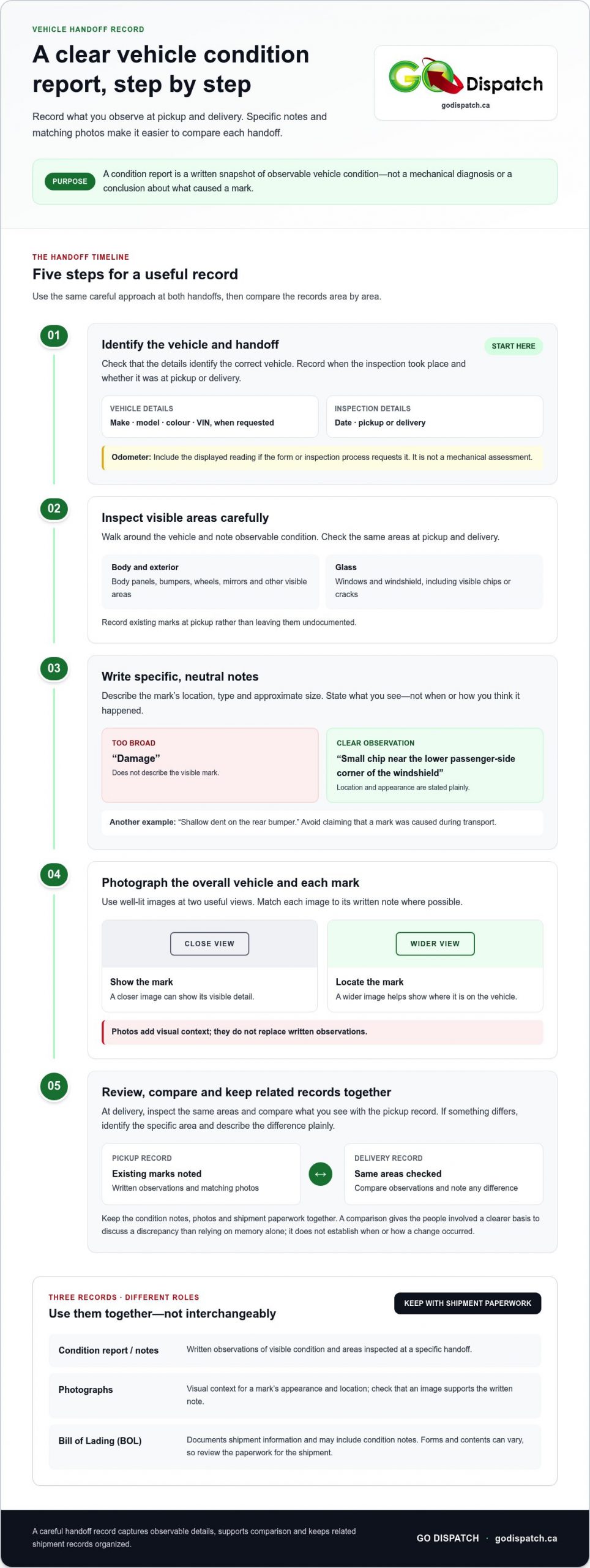
How to Complete and Compare a Vehicle Inspection at Pickup and Delivery
A consistent routine makes the handoff easier to manage: inspect, document, photograph, review, and retain your records. Use the same sequence at pickup and delivery. The auto transport condition report is most useful when each entry reflects what you could observe at that handoff, without guessing about the cause of a mark.
At Pickup: Record the Starting Condition
Choose a safe, well-lit place to inspect the vehicle when circumstances allow. Follow a consistent path around it so you don’t skip areas. Check the body panels, bumpers, glass, mirrors, wheels, and other visible surfaces. Record existing marks with their location and a plain description, then take photos that clearly match those notes.
Before the vehicle leaves, review the record for accuracy. If a note describes a scratch on a door, make sure the related photo shows both the scratch and which door it’s on. Keep a copy of the pickup documentation with the shipment records.
At Delivery: Compare Before Completing the Handoff
Repeat the visual inspection and compare the vehicle with the pickup record area by area. Start at the same point and follow the same route around the vehicle. Check whether recorded marks look consistent, then look for visible differences. Similar angles and lighting can make the comparison easier, though conditions may not always match.
If you notice a discrepancy, describe it clearly and promptly. Identify the vehicle area, state what you observed, and ask that the difference be reflected in the handoff paperwork. Review the completed notes before finishing the handoff, and follow the carrier’s documented process for recording or reporting a concern. There isn’t one universal deadline or claim outcome to assume, so keep the instructions provided for your shipment.
Retain copies of the pickup and delivery records, relevant photos, and related shipment paperwork together. For digital records, organize files by vehicle and handoff stage so the comparison is easy to follow later. Clear, consistent documentation supports a focused discussion if the inspections don’t match; it doesn’t determine responsibility on its own.
For businesses coordinating vehicle movements across Canada, organized dispatch helps keep handoff instructions aligned. Coordinate your vehicle transport logistics with GO DISPATCH.
How Dispatch Coordination Helps Keep Vehicle Condition Records Organized
For dealerships and fleet teams, the inspection is one part of a larger shipment handoff. Dispatch coordination organizes vehicle movements by aligning transport logistics with clear pickup and delivery instructions. When the people involved know which vehicles are moving and where handoff information should be recorded, it’s easier to keep each vehicle’s documents together.
Set a consistent internal routine before shipments begin. Use the same approach for cars, trucks, SUVs, and vans, even if carrier forms differ. A repeatable process helps staff capture comparable information without assuming every carrier uses the same report or paperwork workflow.
What Businesses Can Standardize Across Shipments
Create a checklist that identifies the vehicle, records visible condition and handoff timing, and explains where related photos and paperwork should be saved. Assign someone to review and retain records at pickup and delivery. For example, the person receiving a vehicle can check that the delivery notes and photos are filed with the matching pickup record, rather than saved in a general folder without a vehicle reference.
Keep the process simple and consistent:
- Identify: Match each report and photo set to the correct vehicle.
- Review: Check that pickup and delivery records are both present and legible.
- Organize: Store written notes, images, and shipment documents together using a consistent naming method.
- Assign: Make clear who reviews the records and where the final set is retained.
This routine gives teams a reliable way to locate records later and compare handoff observations. It also reduces the chance that a photo or report becomes separated from the vehicle it documents.
Where GO DISPATCH Fits in the Process
GO DISPATCH is a Canadian vehicle transport dispatch and brokerage company. It coordinates third-party carriers for cars, trucks, SUVs, and vans, and manages transport logistics for business clients across Canada. GO DISPATCH coordinates carrier movements rather than operating carrier trucks.
One-stop dispatching helps businesses organize transport arrangements across shipments, while a consistent internal record process keeps condition notes and photos connected to each vehicle. Clear handoff instructions and organized documentation make it easier for teams to track records from pickup through delivery. If your business is planning vehicle movements, Discuss your vehicle transport needs.
Make Every Vehicle Handoff Easier to Track
A reliable auto transport condition report starts with specific observations at pickup and delivery. Record visible marks clearly, compare the same areas at each handoff, and keep written notes, photos, and shipment paperwork together. These records support a clearer review if observations differ, but they don’t determine responsibility or guarantee a particular outcome.
For dealerships and fleet teams, a consistent process helps keep records organized across vehicles and shipments. Clear handoff instructions and coordinated transport logistics make the work easier to manage.
GO DISPATCH coordinates third-party auto carriers across Canada and provides one-stop dispatching for car, truck, SUV, and van transport. Discuss your vehicle transport needs and arrange support for coordinating your business shipments.
With a practical inspection routine and organized transport coordination, you can approach each handoff with greater clarity.
Frequently Asked Questions
What is an auto transport condition report?
An auto transport condition report is a written record of a vehicle’s observable condition at a transport handoff. It captures details noted during an inspection, such as visible marks, at pickup and delivery. Comparing both records can help identify differences between those observations. The report documents condition; it doesn’t guarantee that damage won’t occur, determine when a mark appeared, or establish responsibility for it.
What should be included in a vehicle inspection report before transport?
A vehicle inspection report should identify the vehicle using details such as make, model, and VIN where the form requests them. Record visible marks on areas such as the doors, bumpers, and glass, along with the inspection date and whether it’s at pickup or delivery. Include an odometer reading if the form or process calls for one. Clear written notes and matching photos make the observations easier to review.
Is a condition report the same as a Bill of Lading?
Not necessarily. A condition report focuses on observable vehicle condition at a handoff, while a Bill of Lading is a transport document that may also include shipment details and condition notes. The document’s format and how condition information is recorded can vary. Review the paperwork for your shipment to see where inspection observations belong, and keep related pages together for comparison at delivery.
Should I take photos for an auto transport condition report?
Yes, clear photos add useful visual context to the written notes in an auto transport condition report. Take close views that show a mark and wider views that identify its location on the vehicle. Use similar angles and lighting at pickup and delivery where conditions allow. Keep images with dated inspection records and label them by vehicle or area so they’re easy to match to the written observations.
What happens if I find new damage when my vehicle is delivered?
Document the difference promptly and compare the affected area with the pickup record and photos. Describe what you can see, including the location and type of mark, without guessing when or how it occurred. Ask that the observation be recorded in the delivery paperwork, and follow the carrier’s stated process for reporting a concern. Keep copies of the records and relevant photos. Documentation supports a clearer discussion, but it can’t guarantee a particular outcome.
Do I need to inspect my vehicle before signing delivery paperwork?
Inspecting the vehicle and reviewing the delivery paperwork during the handoff helps you compare its visible condition with the pickup record while the observations are current. If you notice a difference, describe it clearly and ask that it be reflected in the paperwork. Handoff steps can vary, so follow the process provided for your shipment and read the document before completing it. Keep a copy of the report and related records.
How can dealerships organize condition reports for multiple vehicle shipments?
Dealerships can use a repeatable checklist to capture each vehicle’s identity, visible condition, handoff timing, and related photos. Store files consistently by vehicle so pickup and delivery records stay together. Assign clear responsibility for reviewing and retaining documents at both ends of the shipment. A shared routine helps staff manage reports for cars, trucks, SUVs, and vans, even when carrier forms differ, and makes later comparisons easier to find.