
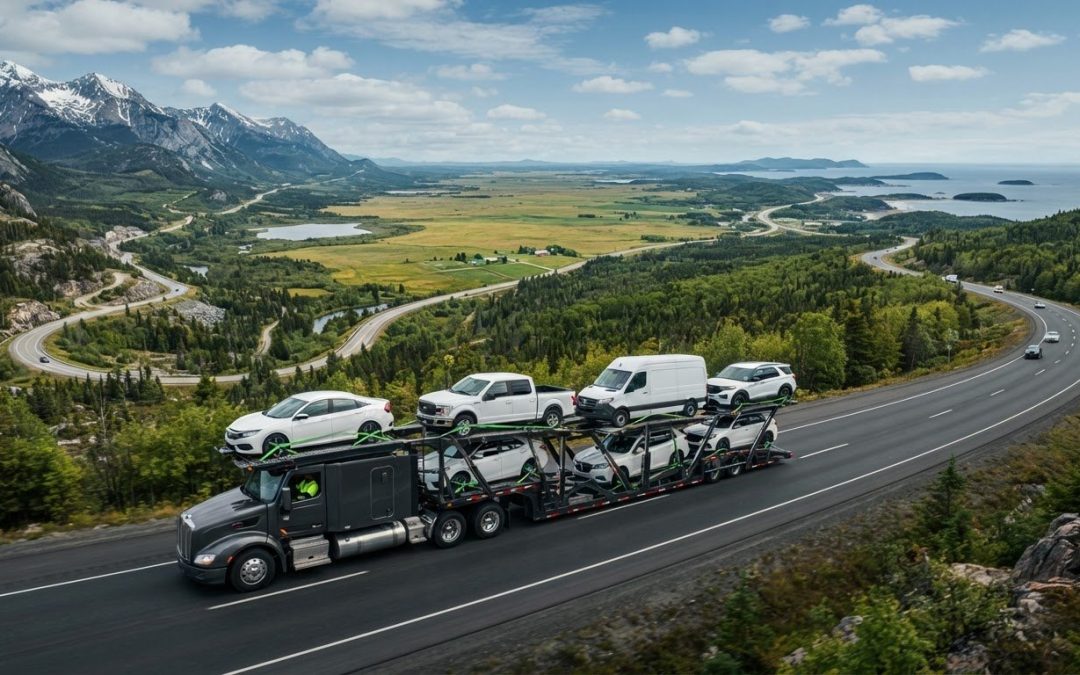
What if the hardest part of shipping a car across Canada isn’t the distance, but coordinating pickup, handoffs and delivery? With cross country car shipping canada, the route is only one part of the plan. Your vehicle, timing and delivery arrangements also need to line up, whether you’re moving personally or arranging transport for a business.
You can arrange transport without managing every detail yourself. This guide explains how a cross-country vehicle shipment is coordinated, what can shape the plan and which details to prepare. GO DISPATCH connects clients with third-party carriers and coordinates logistics and delivery scheduling for cars, trucks, SUVs and vans.
From planning the route to coordinating pickup and delivery, a clear dispatch plan can make a long-distance move easier to manage. Here’s what to expect at each stage.
Key Takeaways
- See how route planning, carrier scheduling and delivery coordination fit together in cross country car shipping canada.
- Learn how to shape a shipment plan around a personal move, dealership inventory or business vehicle needs.
- Use a practical checklist to prepare vehicle details and pickup and delivery requirements before arranging transport.
- Understand how dispatch coordination connects your shipment with a third-party auto carrier and manages key logistics.
- Find out how one coordination point can help organize transport for cars, trucks, SUVs and vans across Canada.
Cross-country car shipping in Canada: what the journey involves
Cross-country car shipping means arranging to move a vehicle between distant points in Canada. The journey is more than a line on a map. Route, pickup and delivery locations, carrier scheduling and handoffs all affect how a shipment is organized. Canada’s transportation network spans roads, railways and other modes, as outlined in Transportation in Canada. For a vehicle move, the practical task is to match the shipment details with a suitable route and coordinate the people and timing involved.
A search for cross country car shipping canada often starts with a practical question: how can you move a vehicle without arranging every detail yourself? A dispatch service coordinates the shipment, while a carrier handles the physical transport. GO DISPATCH connects clients with third-party auto carriers and manages transport logistics and delivery scheduling. This gives individuals and businesses one coordination point for the move.
What happens between arranging transport and delivery?
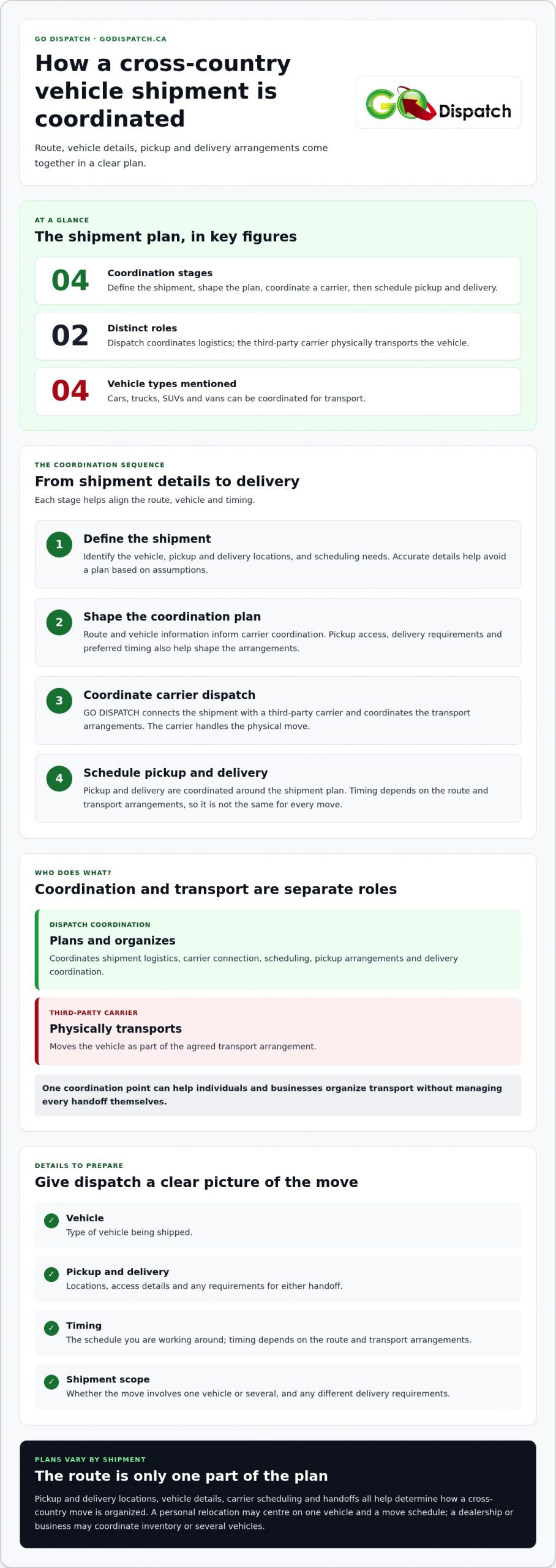
The process follows a sequence, but the plan should reflect the specific shipment. The main stages are:
- Share shipment details. Identify the vehicle and provide the pickup and delivery requirements.
- Coordinate a carrier. Dispatch connects the shipment with a third-party carrier suited to the transport arrangement.
- Schedule pickup. Pickup timing is coordinated around the route and the shipment arrangements.
- Plan delivery. Delivery scheduling helps align the arrival with the receiving location.
Timing depends on the route and transport arrangements, so don’t treat a long-distance move as a fixed, one-size-fits-all schedule. Pickup and delivery coordination matter as much as the distance. A clear plan helps everyone understand the next step without requiring you to manage every handoff alone.
Who uses cross-country car shipping?
Individuals may arrange transport when relocating, moving a vehicle to a new home or sending a car a long distance without driving it. The main consideration is how pickup and delivery fit around the move. Share those requirements early so the coordination plan reflects your schedule and destination.
Dealerships may move inventory between locations, while other businesses may arrange vehicle transport as part of their operations. A shipment might involve one car or several vehicles, including trucks, SUVs or vans. The route, vehicle details and scheduling needs help determine how dispatch coordinates with third-party carriers.
How cross-country car shipping coordination works across Canada
A well-organized shipment brings the route, vehicle and timing together in a workable plan. With cross country car shipping canada, details matter: a truck or van has different transport requirements from a car, while pickup and delivery arrangements can affect carrier scheduling. Dispatch coordination brings those details together before the vehicle is on the move.
Dispatch coordination is the planning and scheduling of a vehicle shipment with a third-party carrier, from pickup arrangements through delivery coordination. GO DISPATCH manages the logistics and connects clients with professional auto carriers. The carrier physically transports the vehicle. Understanding these separate roles gives you a clear coordination point while setting appropriate expectations about who handles the transport.
The process generally moves through these stages:
- Define the shipment. The vehicle type, pickup and delivery locations, and scheduling needs establish the basic requirements. Accurate details help avoid a plan based on assumptions.
- Shape the coordination plan. Route and vehicle information inform carrier coordination. Pickup access, delivery requirements and preferred timing also help determine how the transport can be scheduled.
- Coordinate carrier dispatch. GO DISPATCH connects the shipment with a third-party carrier and coordinates the transport arrangements. Dispatch organizes the logistics; the carrier moves the vehicle.
- Schedule pickup and delivery. Pickup and delivery arrangements are coordinated around the shipment plan. Since timing depends on the route and transport arrangements, it is considered as part of the plan rather than treated as identical for every move.
What information helps coordinate a vehicle shipment?
Start with the vehicle type, pickup and delivery details, and the timing you’re working around. Include requirements that could affect either handoff, such as where the vehicle needs to be collected or received. Accurate information gives dispatch a clearer picture of the shipment and helps avoid guesswork when coordinating the plan.
For example, a business moving several vehicles may need to organize details around different delivery requirements. A personal move may focus on aligning one vehicle’s pickup and arrival with a relocation schedule. In both cases, clear information helps bring the transport arrangements into focus.
How dispatch coordination differs from direct carrier transport
Dispatch handles the coordination: organizing shipment logistics, scheduling and connecting the client with a third-party carrier. The carrier physically transports the vehicle. This distinction matters for businesses managing inventory movements, where delivery scheduling and coordination may be part of a wider workflow. GO DISPATCH’s dealership auto transport logistics explains that business context.
For personal and business shipments, one coordination point can reduce the transport administration you handle yourself. GO DISPATCH coordinates arrangements for cars, trucks, SUVs and vans. Learn more about GO DISPATCH vehicle transport coordination and how carrier dispatch and delivery scheduling can be organized around your shipment.
How to match a cross-country car shipment to your situation
The right transport plan depends on what’s moving and why. A personal relocation may centre on fitting pickup and delivery around a move, while a dealership may need to coordinate inventory between locations. Business shipments can involve several vehicles or different delivery needs. Identify your priorities first, then share the context needed to organize cross country car shipping canada around your situation.
Use this comparison to decide what to address first:
| Situation | Key coordination priorities | Vehicle and shipment considerations |
|---|---|---|
| Individual relocation | Align pickup and delivery planning with the moving schedule; share preferred timing early. | Usually focused on one personal vehicle and its destination requirements. |
| Dealership inventory | Coordinate shipment timing with inventory movement between locations. | May involve more than one vehicle or separate shipment requirements. |
| Business vehicle move | Organize delivery scheduling around operational needs and reduce repeated coordination work. | Vehicle types and shipment volume can vary, including cars, trucks, SUVs and vans. |
These are planning differences, not separate transport products. GO DISPATCH coordinates logistics with third-party carriers, helping individuals and businesses manage shipment arrangements through one coordination point. For cost considerations, consult the vehicle transport cost guide, which covers factors that can affect transport costs.
Personal vehicle moves and relocation
For a personal move, start by considering how vehicle pickup and delivery fit into your relocation schedule. Share your preferred timing early, along with any important constraints at either end of the route. That context supports a practical coordination plan. It doesn’t create a fixed pickup window or transit promise, since timing depends on the route and transport arrangements.
Dealership and business vehicle shipments
Dealership inventory moves and other business shipments may involve multiple vehicles, locations or delivery requirements. Centralizing logistics coordination can reduce the administrative work of organizing each transport detail separately. Provide a clear overview of the vehicles and shipment requirements so dispatch coordination reflects the overall move. The same principle applies whether you’re moving one vehicle or several: organize the shipment around the business need.
Transport method can also factor into planning. Open transport is a common option, while enclosed transport is a more protective alternative. The appropriate arrangement depends on the shipment and vehicle; compare the method-specific trade-offs as part of choosing a plan for your use case.
Prepare the details before arranging cross-country car shipping
A clear shipment brief gives coordination a useful starting point. Before arranging cross country car shipping canada, gather the information that explains what needs to move, where it needs to go and how pickup and delivery should fit your schedule. These details help GO DISPATCH coordinate logistics with a third-party carrier around the actual shipment, rather than relying on assumptions.
Use this checklist to organize the essentials:
- Vehicle details: Identify each vehicle by type, such as a car, truck, SUV or van. For multiple vehicles, record each one separately.
- Pickup information: Provide the pickup location and any requirements for arranging the handoff.
- Delivery information: Note the destination and requirements for receiving the vehicle.
- Scheduling preferences: Share your preferred timing and any important dates or constraints at either end of the route.
- Coordination contact: Identify who will manage pickup and delivery arrangements, especially if different people handle each handoff.
Specific details make the plan easier to organize. For a shipment involving several vehicles, distinguish each vehicle’s destination and timing needs. A personal move may have one person coordinating both ends, while a business shipment may have separate pickup and receiving contacts. Being clear helps keep arrangements aligned as the shipment progresses.
Create a clear shipment brief
Put the vehicle type, pickup and delivery details, and scheduling preferences in one concise brief. State what’s known and flag any requirement that could affect either handoff. If you’re arranging multiple vehicles, create a separate entry for each one so destinations and timing don’t get mixed up. A consistent summary makes it easier to coordinate the shipment accurately.
Plan for scheduling and handoffs
For a long-distance move, plan around a coordinated delivery window rather than assuming an exact arrival date. The route and transport arrangements affect scheduling. Make sure the person responsible for pickup knows the plan, and identify who will receive the vehicle at delivery. Clear responsibility at both ends helps prevent avoidable confusion during handoffs.
Vehicle preparation is separate from coordinating the route and schedule. For this step, focus on providing accurate shipment details and clear pickup and delivery requirements. For a wider view of how delivery planning fits into transport logistics, explore vehicle delivery logistics in Canada.
Once your shipment brief is ready, arrange vehicle transport coordination with GO DISPATCH. One coordination point can help organize carrier dispatch and delivery scheduling around your move.
Arrange cross-country car shipping with GO DISPATCH
A long-distance vehicle move has several moving parts. GO DISPATCH brings the coordination together by connecting clients with third-party auto carriers and managing transport logistics and delivery scheduling. This service supports personal moves and businesses coordinating vehicle transport as part of their operations.
GO DISPATCH coordinates the shipment, while a third-party carrier hauls your vehicle. The dispatch service organizes the transport arrangements, and the carrier performs the physical move. With one coordination point, you can reduce the administration involved in organizing cross country car shipping canada and focus on the other parts of your move or business.
What GO DISPATCH coordinates for your vehicle move
Coordination starts with understanding the shipment and connecting it with a suitable third-party carrier. Route details, vehicle type and pickup and delivery requirements inform the transport plan. GO DISPATCH manages logistics and delivery scheduling, helping keep arrangements organized from pickup planning through delivery coordination.
The same coordination approach supports a personal car shipment or a business move involving different vehicle types. GO DISPATCH arranges transport for cars, trucks, SUVs and vans. For businesses, a central coordination point can help organize multiple shipment requirements rather than managing each detail in isolation. For individuals, it provides a way to arrange transport while handling other relocation tasks.
The carrier’s role remains distinct: the carrier physically transports the vehicle. GO DISPATCH handles the planning and dispatch side, connecting the shipment with a carrier and coordinating the logistics around the move. Clear roles help everyone understand how the arrangement works.
Take the next step with a clear shipment request
To discuss a vehicle move, prepare the vehicle type, pickup and delivery route, and the scheduling needs that matter to you. If you’re arranging transport for more than one vehicle, outline the requirements for each so your request gives a useful picture of the shipment. A clear starting point helps define the coordination needed for your route.
Whether you’re planning a personal relocation or coordinating business transport, GO DISPATCH can organize carrier dispatch and delivery scheduling around your shipment details. Contact GO DISPATCH to coordinate your vehicle transport.
Make your next vehicle move easier to plan
A cross-country move can take enough attention without adding transport coordination to your to-do list. Start with your route, timing preferences and vehicle details. For cross country car shipping canada, having those essentials ready helps make the next planning conversation more focused.
GO DISPATCH coordinates and dispatches professional third-party auto carriers for transport arrangements involving cars, trucks, SUVs and vans across Canada. The carrier handles the physical transport; GO DISPATCH coordinates logistics and delivery scheduling. This support can reduce transport administration for a personal move or business shipment.
Gather your shipment details and contact GO DISPATCH to coordinate your cross-country vehicle transport.
Frequently Asked Questions
How long does it take to ship a car across Canada?
Transit time depends on the route and transport arrangement, so cross-country shipments don’t have one standard duration. Rail Auto Canada estimates rail transport generally takes 2 to 4 weeks, with coast-to-coast rail journeys often taking 3 to 4 weeks. Truck transport varies by route. For a practical schedule, plan around the specific route and handoffs, and leave flexibility rather than relying on an assumed arrival day.
What information do I need to arrange cross-country car shipping?
Prepare the vehicle type, pickup and delivery locations, and your preferred timing. It can also help to say whether the vehicle can be driven, as that may affect how the shipment is planned. If you’re coordinating several vehicles, keep each vehicle’s destination and scheduling needs separate. A concise, accurate shipment brief helps avoid confusion as transport arrangements are coordinated.
Can I ship a car across Canada if I am not present at pickup?
You can plan a shipment without attending pickup by arranging for a trusted person to be there. Include their name and contact details, along with clear handoff instructions, in the coordination plan. Make sure the person handling pickup knows when and where to meet the carrier. Also identify who will manage delivery, especially if you’ll be unavailable at the destination.
What affects the cost of shipping a car across Canada?
Cost can vary with the route, vehicle size and weight, transport method, and pickup and delivery arrangements. Seasonal demand and the volume of carrier traffic on a route may also influence the plan. For example, a larger vehicle or an enclosed option can involve different transport requirements from a standard car on open transport. The right combination depends on your vehicle and route.
Is a car carrier or enclosed transport better for a cross-country move?
An open carrier is a common choice for standard vehicle transport, while enclosed transport offers more protection from exposure during the journey. The better fit depends on the vehicle and the level of protection you want. Consider the vehicle’s value, condition and transport priorities when comparing options. Share your preference early so it can be considered as the shipment plan is coordinated.
How does an auto transport dispatch service work?
An auto transport dispatch service coordinates the logistics of a vehicle move and connects the shipment with a third-party carrier. GO DISPATCH organizes carrier dispatch and delivery scheduling for cars, trucks, SUVs and vans. The carrier physically transports the vehicle; the dispatch service manages coordination. This can simplify cross country car shipping canada for an individual move or a business shipment by reducing the transport administration you handle yourself. To discuss your shipment, contact GO DISPATCH.