
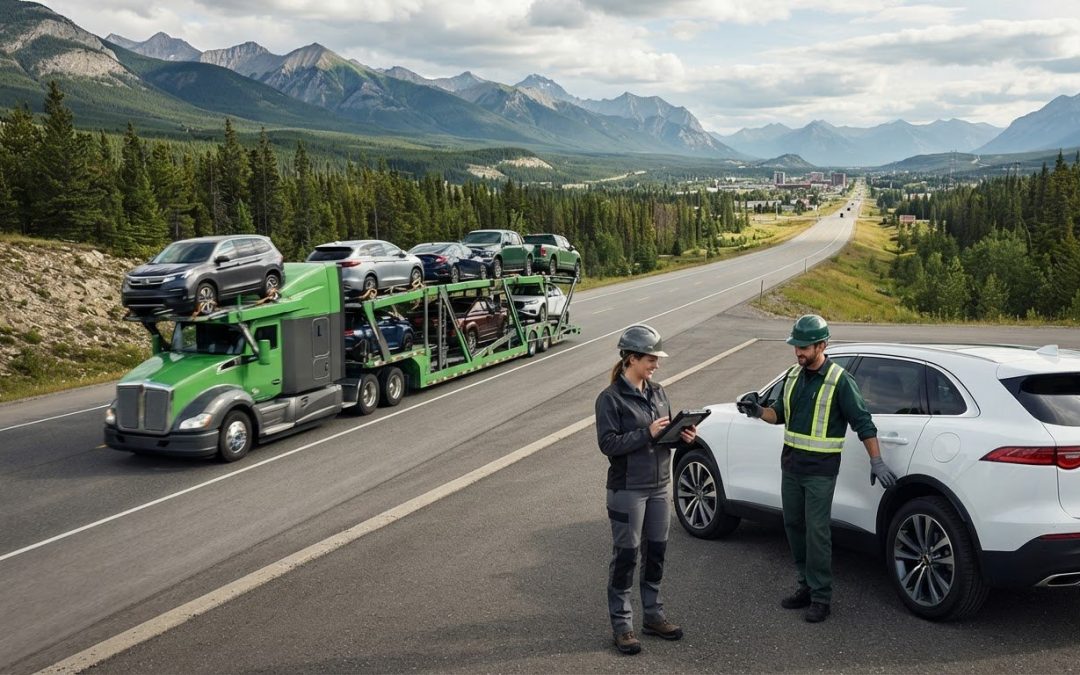
Shipping a car to another province is easier to organize when you plan the handoffs before pickup. The route, vehicle, pickup access, delivery details, and timing all shape how the shipment is arranged.
It’s understandable to be unsure what information to provide or how to keep pickup, the carrier, and delivery aligned. Start by gathering the vehicle details, pickup and delivery locations, preferred dates, and any access notes that could affect loading or unloading. The more specific the request, the easier it is to plan around the actual shipment.
This guide walks you through the process from shipment request to vehicle handoff. You’ll learn which route and transport details can affect scheduling, what to have ready, and how carrier selection and delivery planning can reduce your coordination work. With the key information in place, you can arrange the move with fewer loose ends.
Key Takeaways
- Understand what shipping a car to another province involves, from personal relocations to dealership and business vehicle transfers.
- See how a shipment moves from request through carrier coordination, scheduling, pickup, and delivery.
- Compare route, vehicle, timing, and handoff needs to shape a transport plan, including whether open or enclosed transport suits the shipment.
- Prepare a useful shipment brief with the vehicle’s make, model, type, condition, origin, destination, and preferred timing.
- Learn how GO Dispatch coordinates third-party carriers and manages logistics, carrier selection, and delivery scheduling.
Shipping a Car to Another Province: What the Move Involves
Interprovincial car shipping means arranging for a carrier to transport a vehicle from one Canadian province to another. The shipment involves several connected details: the route, accurate vehicle information, a workable pickup and delivery window, and clear handoff arrangements. A plan that covers each of these points helps prevent avoidable confusion, whether you’re moving one personal vehicle or coordinating several vehicles for a business.
People arrange transport for different reasons. You might be relocating and need your car at your new home, buying a vehicle from a seller in another province, or transferring inventory between dealerships or business locations. For multiple vehicles, keeping the shipment details and schedules together can make coordination more manageable than organizing each move separately.
Shipping is an alternative to driving, but it isn’t automatically the right choice for everyone. Driving gives you direct control over the journey, but requires time for the distance, route planning, fuel, and stops. Carrier transport makes the vehicle’s movement part of a coordinated shipment while you manage other parts of your move. Canada’s broad transportation network provides context for these routes; the overview of Transport in Canada describes the country’s transportation systems. Your priorities, schedule, and vehicle needs help determine which approach makes sense.
When does shipping a car between provinces make sense?
Consider carrier transport when a long drive would compete with work, family, or relocation plans, or when the vehicle isn’t conveniently available where you’re headed. It can also help when a recently purchased vehicle needs to reach its new owner, or when a dealership or business needs to transfer vehicles between locations. Coordination is especially useful for several vehicles: each one may have different details and handoffs, but a shared plan can keep the overall movement organized.
What information shapes an interprovincial shipment?
Start with the origin and destination provinces, preferred dates, and vehicle type. Then provide the make and model, approximate size, and condition. These details help shape carrier planning. A larger vehicle can affect loading arrangements, while a vehicle that doesn’t run or has another condition affecting movement may need different handling from a standard operable car. Be specific about pickup and delivery access, too. Clear handoff locations and timing give the shipment plan practical boundaries.
Interprovincial vehicle transport is the coordinated movement of a vehicle by carrier from an origin in one province to a destination in another. To help plan the move, gather the details that answer these key questions:
- Route: Which provinces is the vehicle leaving from and travelling to?
- Timing: What pickup and delivery dates work, and how flexible are they?
- Vehicle: What type, size, make, and model is it, and what is its condition?
- Handoffs: Where can the vehicle be accessed at pickup and delivery?
These basics help identify whether a shipment is straightforward or needs additional coordination. They also give dispatch a practical starting point, whether the move involves one vehicle or business inventory.
How Interprovincial Car Shipping Moves from Request to Delivery
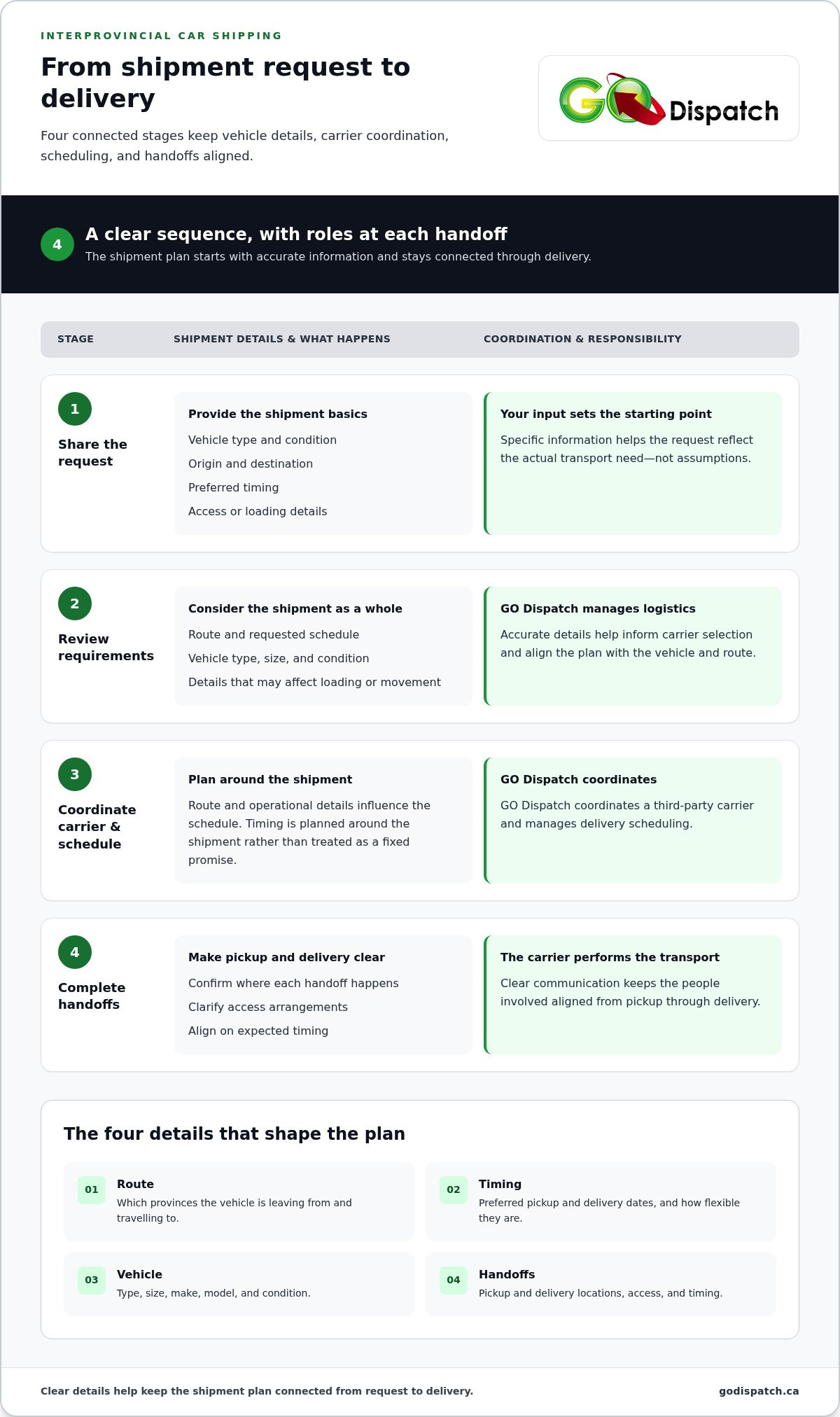
A well-organized shipment follows a clear sequence. Vehicle and route details shape the plan, dispatch coordination connects the shipment with a third-party carrier, and agreed pickup and delivery arrangements guide the handoffs. For shipping a car to another province, keeping these stages connected helps reduce back-and-forth and makes responsibilities easier to understand.
- Share the shipment request. Provide the vehicle type and condition, origin, destination, and preferred timing. Include details that could affect access or loading so the request reflects the actual transport need.
- Review the transport requirements. GO Dispatch considers the route, vehicle information, and requested schedule while managing the logistics. Accurate details help inform carrier selection and align the plan with the vehicle.
- Coordinate the carrier and schedule. GO Dispatch coordinates a third-party carrier and manages delivery scheduling. The route and operational details influence the schedule, so timing is planned around the shipment rather than treated as a fixed promise.
- Complete the pickup and delivery handoffs. The carrier transports the vehicle, and the pickup and delivery arrangements set out where the handoffs happen and when they’re expected. Clear communication keeps everyone involved aligned.
What happens after you provide shipment details?
The dispatch process brings the vehicle, route, and requested timing into one shipment plan. A car, van, SUV, or truck may require different carrier planning based on its size and condition. GO Dispatch coordinates carrier selection and scheduling, while the third-party carrier performs the transport. Clear information at the start helps match the coordination to the shipment’s needs.
An incomplete request can leave practical questions unresolved. If the vehicle has a condition that affects movement, or pickup access has specific limits, share that information early. It gives the plan a more accurate starting point and keeps the route and schedule tied to the actual shipment rather than assumptions.
How do pickup and delivery handoffs fit together?
Before transport begins, make sure the pickup and delivery locations, access arrangements, and timing are clear to the people involved. You provide shipment information and coordinate access at each end. GO Dispatch manages logistics and delivery scheduling, and the third-party carrier moves the vehicle between the agreed handoffs. A shipment moves from request to delivery through clear details, coordinated carrier scheduling, and aligned pickup and delivery arrangements.
Schedules depend on the route and operational details, so don’t treat a general estimate as a guaranteed arrival time. If your preferred dates are firm, include them in the original request and explain any flexibility. This gives scheduling a clearer target and helps surface timing considerations before pickup is arranged.
For a move involving several vehicles, keep each vehicle’s route, condition, and timing details organized. GO Dispatch’s transport coordination brings carrier selection, logistics, and delivery scheduling into one process, reducing the number of separate moving parts you need to manage.
Choosing a Transport Plan for Your Route and Vehicle
A practical transport plan matches the route and vehicle to your timing and handoff needs. For shipping a car to another province, no single option suits every shipment. A flexible schedule can give coordination more room, while firm dates or specific pickup conditions need to be part of the plan from the start.
Use these factors to organize your priorities before transport is coordinated:
| Factor | What to consider |
|---|---|
| Route | Origin, destination, access at each location, and the route’s operational requirements. |
| Timing | Preferred dates, schedule flexibility, and how pickup and delivery fit your plans. |
| Vehicle | Type, dimensions, condition, and any unusual features that may affect carrier planning. |
| Handoffs | Who will provide access at pickup and receive the vehicle at delivery. |
| Transport style | Whether open or enclosed transport better fits the vehicle and your preferences. |
Which route and timing details affect the plan?
Start with the origin and destination, then identify your preferred pickup and delivery dates. Flexibility gives scheduling more room; with a firm date, share your timing needs early. Route conditions and operational details can also affect coordination, so don’t assume every province-to-province move follows the same schedule. A clear route and realistic date range give dispatch a useful basis for planning.
For example, a vehicle going to a business location with limited access may need different handoff planning from one going to a private driveway. Note access restrictions and identify who can be present at each end. These details connect the route to the practical arrangements surrounding the shipment.
How should vehicle type influence transport planning?
Cars, trucks, SUVs, and vans can all be part of a transport plan, but their dimensions and characteristics matter. Share accurate vehicle details, including anything that makes it larger or different from a standard model. That information helps GO Dispatch coordinate carrier selection around the shipment rather than relying on assumptions. For a truck, provide details such as its configuration or unusual dimensions early.
Open transport carries vehicles on an open carrier, while enclosed transport places them inside a covered trailer. The right fit depends on the vehicle, your preferences, and the shipment requirements. Neither option is universally best. Consider how much exposure you’re comfortable with alongside practical details such as the route, timing, and handoffs.
GO Dispatch manages logistics, carrier selection, and delivery scheduling with third-party carriers. Sharing your priorities together helps bring route, vehicle, and handoff requirements into one coordinated plan, whether the shipment is for a personal move or a business transfer.
Prepare a Clear Shipment Brief Before Booking
A concise shipment brief gives dispatch the facts needed to coordinate carrier selection and scheduling. Before arranging shipping a car to another province, gather details in four groups: the vehicle, route, timing, and people responsible for each handoff. A complete brief can reduce follow-up questions and give everyone a shared reference for the move.
What should a shipment brief include?
Use this checklist to organize the information before requesting transport coordination. Be precise, especially about locations and vehicle condition. A general destination or incomplete address can leave uncertainty about where the carrier should go and how pickup or delivery fits the schedule.
- Vehicle: Make, model, type, condition, and any unusual features or dimensions that could affect handling.
- Route: Origin and destination, with clear pickup and delivery locations and any access constraints.
- Timing: Preferred pickup and delivery dates, plus any flexibility around those dates.
- Contacts: Names and contact details for the people coordinating access at pickup and delivery.
- Business shipments: Number of vehicles and any sequencing needs, such as a preferred order for moving units.
Accurate route details matter. A province name alone may not identify the pickup or delivery point, particularly for business locations with multiple entrances or specific access arrangements. Note relevant instructions in plain language. If a vehicle is modified, unusually large, or has a condition that affects movement, include that information rather than assuming it’s obvious from the make and model.
For a dealership or business transfer, list each vehicle separately and indicate any order or timing dependencies. This gives the coordination process a clearer picture of the overall shipment instead of treating several vehicles as one indistinct request.
What should be ready for the handoff?
Before the scheduled move, agree on where the vehicle will be available, who will provide access, and who will receive it at the destination. Share any changes promptly so the plan stays aligned. At handoff, notes or photos documenting the vehicle’s visible condition can create a useful reference for the people involved. This is a practical record, not a substitute for any carrier-specific paperwork.
Keep shipment planning separate from vehicle preparation. The brief helps coordinate the route, schedule, vehicle, and contacts. Preparing the vehicle itself is a different task, so follow the applicable instructions for that process rather than crowding operational details into the shipment request.
Paperwork requirements can vary by province and situation. Check current official provincial sources for registration or other documentation requirements that may apply to your vehicle or move. Don’t assume requirements are identical across provinces, and avoid relying on outdated guidance.
Once the brief is ready, request coordinated vehicle transport through GO Dispatch. Accurate details help GO Dispatch coordinate third-party carriers and manage logistics and delivery scheduling around the shipment.
Coordinate Your Province-to-Province Move with GO Dispatch
Shipping a car to another province involves coordinating the vehicle, route, carrier, schedule, and handoffs. GO Dispatch brings these logistics together by coordinating third-party auto carriers. It doesn’t operate as the carrier. Instead, it manages carrier selection and delivery scheduling, giving you a central point for organizing the transport plan.
What does GO Dispatch coordinate?
GO Dispatch’s one-stop dispatch service connects a shipment with a third-party carrier and coordinates the logistics around it. The service supports cars, trucks, SUVs, and vans, including personal shipments and dealership or business transport needs. A central coordination point can make it easier for a business to organize vehicle movements without handling each logistics detail in isolation.
This structure is useful when a shipment is part of a larger operation. A business may need to move several vehicles, align a transfer with other work, or keep shipment details organized across teams. GO Dispatch coordinates carrier selection and scheduling, while you provide the shipment requirements and organize the agreed pickup and delivery arrangements. Clear communication keeps the plan connected from request through handoff.
Coordination starts with the shipment’s specific needs, not a one-size-fits-all schedule. Route, vehicle details, preferred timing, and handoff arrangements all inform carrier selection and logistics. A sedan going to a personal destination and several commercial vehicles moving as business inventory can involve different planning considerations. GO Dispatch uses those details to organize the transport plan.
How to take the next step
Before submitting an enquiry, gather the origin and destination, vehicle type and condition, and preferred timing. For a business move, include the number of vehicles and any sequence or scheduling priorities. Note access constraints and identify who will coordinate pickup and delivery. A well-prepared request gives dispatch a clear starting point and can reduce avoidable follow-up.
With the shipment details in hand, GO Dispatch coordinates the third-party carrier, logistics, and delivery schedule for a Canadian vehicle move. This arrangement reduces the coordination work you manage yourself, whether you’re moving one vehicle or planning a business transfer. The transport arrangements can then be organized around the priorities and information you provide.
Ready to plan your shipment? Discuss your vehicle transport needs with GO Dispatch and share the route, vehicle details, and timing you have in mind.
Set Your Vehicle Move in Motion
A province-to-province move is easier to manage when transport planning has a clear starting point. Use the details you’ve gathered to set priorities for the shipment, including what needs to happen at each handoff and how the vehicle move fits your wider plans. This gives you a practical foundation for shipping a car to another province without leaving key decisions until the last minute.
GO Dispatch is a Canadian dispatch company that coordinates third-party auto carriers. Its team manages logistics, carrier selection, and delivery scheduling, bringing the moving parts into one coordinated plan. You can focus on your relocation, vehicle purchase, or business priorities while the shipment is organized around the information you provide.
Ready to take the next step? Plan your vehicle shipment with GO Dispatch. Start with your route, vehicle details, and preferred timing to move ahead with a clearer plan and less coordination to manage yourself.
Frequently Asked Questions
Can I ship a car I just bought to another province?
Yes, a newly purchased car can be included in an interprovincial transport plan. For a dealership purchase, coordinate the collection window with the seller and make sure the recipient knows when and where delivery is planned. If the seller has limited access hours or requires advance notice, include that information early. The same approach works for private purchases and business transfers, with arrangements shaped around the vehicle and the people involved.
How far in advance should I arrange shipping a car to another province?
Start planning once you know the route and have an approximate date range. The schedule depends on the route, carrier availability, and shipment requirements, so there isn’t one lead time that applies to every move. If your plans can shift, share the range of dates that works rather than only one preferred day. For business shipments, account for the vehicle count and any order in which vehicles need to move.
Can I ship more than one car to another province at the same time?
Yes, multiple vehicles can be part of one coordinated transport request. For example, a dealership arranging inventory transfers can provide a vehicle list and note which units have priority or need to move together. Include each vehicle’s type and location, as well as the destination and timing considerations. Keeping those details in one request gives the coordination process a clearer view of the full shipment than submitting unrelated, incomplete requests.
Is open transport suitable for shipping a car between provinces?
Open transport may suit a vehicle if you’re comfortable with exposure to outdoor conditions during the trip. Enclosed transport provides a covered option that may be a better fit for some specialty vehicles or particular preferences. Consider the vehicle’s needs and your comfort with exposure rather than treating either method as the right choice for every shipment. The transport plan should reflect your priorities and the vehicle being moved.
What information do I need to arrange an interprovincial car shipment?
Prepare the vehicle’s make, model, type, and condition, along with its origin, destination, preferred dates, and a contact for each handoff. Mention unusual features or access constraints that could affect transport arrangements. For a business move, include the vehicle count and any sequencing requirements. Paperwork can vary by province and situation, so consult current official provincial sources for requirements relevant to your vehicle and move.
Do I need to be present when the car is picked up or delivered?
Plan who will coordinate pickup and delivery, and make sure each person understands the arrangements before the scheduled move. If you can’t attend, identify someone who can provide access or receive the vehicle, and share their contact details with the relevant people. Agree on where the vehicle will be made available at each end. Check current official sources for any province-specific identification or documentation requirements that may apply.