
The lowest quote isn’t always the cheapest way to ship a car in canada. An open carrier, flexible pickup dates and terminal-to-terminal delivery can reduce costs, but the right mix depends on your route, vehicle and delivery needs. A low price may also mean trade-offs in convenience or timing.
It’s understandable to want a clear number before arranging transport. Quotes can vary with distance, vehicle size, season, transport method, and pickup and delivery locations, so comparing them takes more than looking at the total. This guide explains which choices may lower your costs and what to weigh before you decide.
You’ll compare open and enclosed carriers, rail for long-distance routes, and door-to-door versus terminal-to-terminal delivery. You’ll also learn how flexible scheduling can affect your options and how to compare quotes with fewer surprises. GO DISPATCH coordinates carrier selection and delivery scheduling for vehicle transport across Canada, bringing the planning process together in one place.
Key Takeaways
- The cheapest way to ship a car in canada depends on how your vehicle, route and delivery needs fit together, not on one method alone.
- Compare open carrier, enclosed transport and rail by handling, protection and access to see which best suits your shipment.
- Prepare accurate vehicle, pickup, delivery and timing details to make transport options easier to compare.
- Separate the choices you control, such as scheduling flexibility, from route and carrier capacity factors you’ll need to plan around.
- GO DISPATCH coordinates carrier selection and delivery scheduling across Canada, helping reduce the work involved in arranging vehicle transport.
What determines the cheapest way to ship a car in Canada?
The lowest suitable option depends on the shipment, not on one method that works for every vehicle and route. A cross-country move, a shorter domestic trip and a delivery to a location with limited access can call for different arrangements. Distance matters, but so do where a transport vehicle can safely collect and deliver the car, how flexible your dates are, and what equipment the vehicle needs.
Before comparing options, gather the details that shape the transport plan:
- Route: Share the pickup and delivery locations. Distance and access along the route help define the shipment.
- Vehicle: Include the make, model and approximate dimensions. A larger vehicle takes up different space than a compact car.
- Condition: Say whether the car starts, steers and rolls. Its condition can affect loading arrangements and suitable equipment.
- Access: Note any limits at either location, such as a narrow road, restricted entry or a pickup point where a transport vehicle can’t safely manoeuvre.
- Timing: Provide your preferred dates and say whether you can adjust them.
Which shipment details can influence a car shipping quote?
Each detail helps determine what kind of transport arrangement fits. A vehicle that doesn’t run, for example, may need a different loading plan from one that can be driven onto transport equipment. Larger dimensions can affect how the vehicle is accommodated. Pickup and delivery access matter too: if a large transport vehicle can’t reach an address, you may need to arrange another meeting point. Sharing clear information early helps you compare plans based on the same assumptions.
Why can the lowest quote fail to be the best fit?
A headline quote can hide important differences in pickup, delivery or handling. One option may assume terminal access and flexible dates; another may be arranged around specific addresses or tighter timing. Neither is automatically right for every shipment. Consider how much flexibility you have, whether you can reach a terminal, and what handling your vehicle requires. The cheapest way to ship a car in canada is the lowest-cost arrangement that still suits your actual needs.
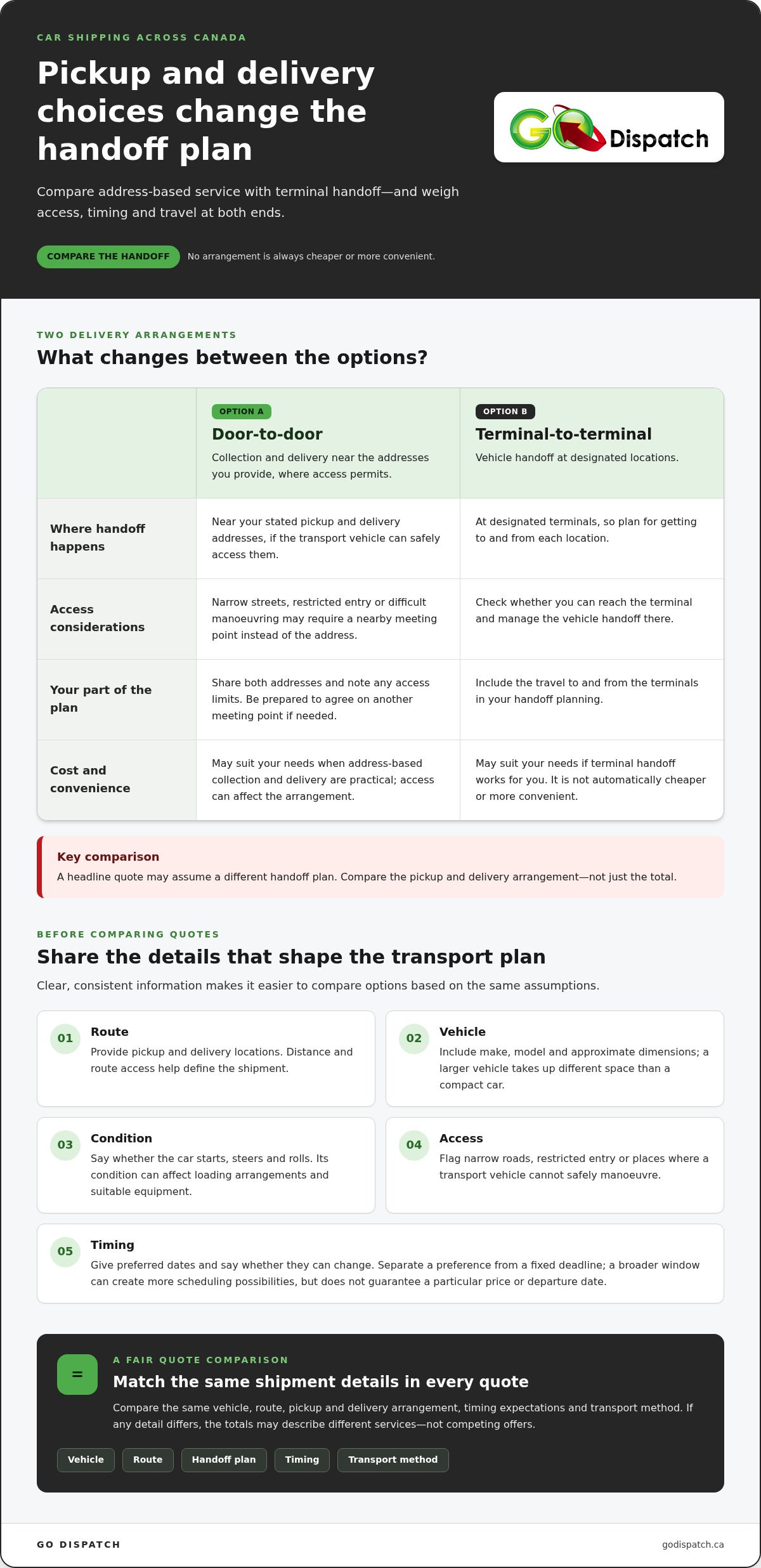
A like-for-like comparison means comparing quotes for the same vehicle, route, pickup and delivery arrangement, timing expectations and transport method. If any of those details differ, the totals may describe different services rather than competing offers. Before deciding, confirm that you understand what each arrangement includes and that it fits your delivery needs. Accurate details make it easier to compare options without letting a low headline figure make the decision for you.
How route, timing, and carrier capacity shape car shipping costs
A route is more than the distance between two points. Road access, pickup and delivery locations, and shipment timing all affect how transport can be coordinated. Carrier capacity means the available space and suitable equipment for scheduled vehicle shipments. A carrier may have room for a car but not the equipment needed for a vehicle that can’t be driven, so matching the shipment to a suitable arrangement matters.
Capacity also changes over time. A shipment that fits into an existing schedule may have different coordination options from one tied to a single date or a specific equipment need. Flexibility doesn’t guarantee a lower cost, but it can widen the range of possible arrangements. For a fuller overview of cost factors, see this 2026 vehicle transport cost guide.
How can flexible timing help with transport planning?
Separate your preferred dates from any fixed deadline. If a move-in date or other commitment makes the shipment date non-negotiable, say so. If you can accept a broader window, share its earliest and latest dates. This distinction helps the transport plan account for your needs without treating a preference as a hard limit. A clear window can create more scheduling possibilities, though it doesn’t promise a particular price or departure date.
Be specific about what “flexible” means. For example, say whether pickup could happen on any day within a particular week, or whether delivery must be completed before a set date. A useful window makes it easier to consider scheduling alongside route, vehicle condition and equipment requirements. Don’t assume your preferred date is available simply because it works for your plans.
How do pickup and delivery arrangements affect the move?
Door-to-door arrangements aim to collect and deliver the vehicle near the addresses you provide, where access permits. A narrow street, restricted entry or difficult manoeuvring space may mean choosing a nearby meeting point instead. Terminal-based arrangements use designated locations for vehicle handoff, so you’ll need to account for getting to and from them. Neither arrangement is always cheaper or more convenient. The right fit depends on access and your ability to manage each handoff.
Include both ends of the journey in your comparison. A terminal option may require separate travel to reach the vehicle, while a location-based pickup may need an alternate point if transport equipment can’t reach the address. Those practical steps are part of the overall arrangement, even if they don’t appear in a headline quote. Delivery details belong in every comparison because the handoff plan affects both convenience and coordination.
The cheapest way to ship a car in canada is easier to assess when you consider route, timing, equipment and handoff needs together. GO DISPATCH coordinates carrier selection and delivery scheduling for vehicle shipments across Canada. Explore vehicle transport coordination to get support organizing those moving parts.
Open carrier, enclosed transport, or rail: which option suits your car?
Compare how each method handles your vehicle, the protection it provides, and what pickup and delivery involve. The right fit depends on your car’s value and condition, your schedule, and how much flexibility you have at either end of the trip. No method is automatically the cheapest way to ship a car in canada for every shipment.
| Method | Handling | Protection | Access | Suitable shipment needs |
|---|---|---|---|---|
| Open carrier | Vehicles share space on an open transport carrier and are loaded for the trip. | Exposed to normal road and weather conditions during transport. | Pickup and delivery depend on suitable access for the carrier; an alternate meeting point may be needed. | Owners comfortable with standard open-carrier handling and road exposure. |
| Enclosed transport | Vehicle travels inside an enclosed carrier. | Offers added shielding from outside exposure compared with open transport. | Arrangements still depend on route and access at pickup and delivery. | Vehicles or owners where added protection is a priority. |
| Rail | Vehicle moves by rail, with handoffs as part of the transport arrangement. | Protection depends on the specific handling and transfer plan. | Often involves terminal access and coordinating how the vehicle reaches or leaves the terminal. | Shipments where rail routing and terminal-based handoffs suit the schedule and delivery plan. |
When might an open auto carrier be a practical fit?
An open carrier transports multiple vehicles together. Cars are driven or otherwise loaded onto the carrier and secured for the journey. This shared-load arrangement is common, but vehicles remain exposed to ordinary road conditions, including weather and road debris. For a regularly driven car, that trade-off may be acceptable. If you’re shipping a special vehicle or want more shielding, compare other arrangements too.
When should you compare enclosed transport or rail?
Enclosed transport may suit a vehicle when limiting outside exposure matters more than using an open carrier. Rail may be worth comparing for a long-distance move, but consider the full handoff: terminal access, getting the vehicle to and from each terminal, and any delivery coordination required. Neither method suits every route or schedule, so weigh the whole arrangement rather than one feature.
Consider a realistic example before choosing. If you’re shipping a daily-use car and can reach a suitable pickup point, open transport may meet your needs. If added shielding is a priority, compare enclosed transport. If rail is an option for your route, include terminal travel and handoffs in your plan. GO DISPATCH coordinates carrier selection and delivery scheduling, helping connect shipment needs with a suitable transport arrangement. Explore vehicle transport coordination to simplify planning.
Five practical ways to make car shipping across Canada more economical
You can control the quality of the information you provide, your date flexibility and some pickup or delivery choices. You can’t control route conditions or carrier capacity, but you can plan around them. These steps help you compare suitable arrangements instead of choosing based on a headline figure alone. They won’t guarantee a lower quote, but they can clarify your options and reduce avoidable coordination.
- Prepare accurate vehicle details. Note the vehicle type, condition, approximate dimensions if known, and whether it starts, steers and rolls. Clear details help match the shipment with suitable transport and loading arrangements. Don’t assume a non-running vehicle can be handled like one that drives.
- Separate flexible dates from deadlines. Identify any fixed pickup or delivery date, then set the broadest realistic window around it. A wider window may allow more scheduling options, although it doesn’t promise a lower cost or a particular date.
- Choose practical handoff locations. Provide the actual pickup and delivery addresses, then flag access limits such as restricted entry or a road that may not suit large transport equipment. If an address isn’t practical, consider whether you can use a nearby meeting point or terminal.
- Match the method to the vehicle and your priorities. Compare open transport, enclosed transport or rail based on the vehicle’s condition, your protection preferences, terminal access and delivery needs. Don’t choose a method based on an assumed price advantage; consider the full arrangement.
- Compare equivalent options in writing. Record what each option assumes for route, handling, pickup, delivery and timing. Include any extra travel or handoff steps you would need to manage. This makes differences easier to spot and helps keep the cheapest way to ship a car in canada aligned with your actual requirements.
What information should you prepare before comparing options?
Make one shipment note with the vehicle details, both locations, known access limits and your timing window. Mark which dates are fixed and which are preferences. If you’re unsure of a dimension, say so rather than guessing. Accurate information keeps comparisons grounded in the same shipment and reduces the chance that a quote rests on assumptions that don’t fit your car.
How can you compare transport options fairly?
Check that each comparison uses the same pickup and delivery plan, transport method, handling needs and timing expectations. Note what you’d need to coordinate yourself, including terminal travel or an alternate handoff point. A written comparison helps reveal whether a lower headline quote reflects a different arrangement, so you can weigh convenience alongside the service details.
GO DISPATCH coordinates carrier selection and delivery scheduling for vehicle shipments across Canada, bringing the logistics together. Explore coordinated vehicle transport for support organizing your shipment details and transport plan.
How GO Dispatch helps coordinate car transport across Canada
Arranging a vehicle shipment involves more than choosing a transport method. The vehicle’s condition, origin, destination, access needs and timing all help shape the plan. GO DISPATCH coordinates and dispatches third-party carriers, managing carrier selection, transport logistics and delivery scheduling for cars, trucks, SUVs and vans across Canada. The carrier transports the vehicle; GO DISPATCH coordinates the arrangements.
This one-stop dispatching service brings shipment details together to reduce the planning work involved. Carrier selection and delivery scheduling are coordinated around the needs of the shipment, making the options easier to understand. The service doesn’t promise a particular price, carrier availability or timeline. For national vehicle delivery, consider how route, access and handoffs fit into the transport plan.
What does a dispatch service coordinate?
Dispatch coordination connects shipment requirements with carrier selection and delivery scheduling. Accurate details help inform which carrier arrangement is suitable, including equipment needs related to the vehicle’s size or condition. Dispatching a third-party carrier is different from operating the transport vehicle: GO DISPATCH manages logistics and scheduling, while the carrier handles the vehicle’s transport. For dealerships arranging multiple vehicle movements, dealership auto transport logistics also depends on coordinating carrier and delivery requirements.
That coordination can help whether you’re arranging one car or managing a broader vehicle transport need. It keeps the practical details connected: the vehicle being shipped, where it needs to go, how it can be loaded, and the delivery arrangement. The cheapest way to ship a car in canada still depends on the shipment and suitable options, but clear logistics make it easier to make an informed decision.
What details help start a transport request?
Prepare a concise shipment summary before discussing arrangements. Include:
- Vehicle: Type, make and model, condition, and whether it can be driven.
- Route: Origin and destination, with pickup and delivery addresses or preferred handoff locations.
- Access: Any restrictions that could affect a transport vehicle reaching either location.
- Timing: Preferred dates, fixed deadlines and any acceptable scheduling window.
These details give the coordination process a practical starting point. Clear access information helps shape pickup and delivery planning, while honest timing preferences distinguish a firm deadline from a date that can move. Shipment requirements then guide carrier selection and scheduling. Accurate information about the vehicle and handoff helps build a clearer plan.
Ready to discuss your shipment? Get in touch with GO DISPATCH to start coordinating your vehicle transport.
Take the next step with a clear transport plan
Before arranging your shipment, decide what matters most: staying within a budget, protecting a particular vehicle, meeting a firm date or keeping pickup and delivery simple. Knowing your priorities makes it easier to recognize a suitable option rather than choosing based on one headline figure. The cheapest way to ship a car in canada is the arrangement that fits your needs and gives you a clear path from planning to delivery.
You don’t have to manage every logistics detail on your own. Bring your shipment requirements into one conversation and use them to shape the next steps. GO DISPATCH can organize transport planning around your vehicle and delivery needs, so you can move forward with a clearer sense of the arrangement.
Discuss your car transport needs with GO DISPATCH and take the next step with confidence. A well-planned shipment starts with clear priorities, and you’re ready to set yours.
Frequently Asked Questions
What is the cheapest way to ship a car in Canada?
For many standard shipments, open carrier transport with terminal handoffs and flexible dates is often the lowest-cost starting point, but it isn’t automatically right for every car. Include the effort and expense of getting to and from terminals in your decision. If you can’t easily reach them, another delivery arrangement may suit you better. The cheapest way to ship a car in canada is the option whose full handoff plan fits your vehicle and circumstances.
Is rail cheaper than shipping a car by truck in Canada?
Not always. Rail can be a cost-effective option on some long-distance routes, while truck transport may better suit a shipment that needs more direct pickup or delivery arrangements. Compare the complete plan, including terminal travel and extra handoffs, rather than just the main transport method. A route with convenient terminals may make rail more practical than one where reaching them adds substantial travel or coordination.
Can I save money by being flexible with my car shipping dates?
Flexible dates can create more scheduling possibilities, but they don’t guarantee a lower quote. Share your earliest acceptable pickup date, latest acceptable date and any firm delivery deadline. For example, if you need the car before starting a new job, make that deadline clear while identifying any flexibility beforehand. A defined window is more useful for planning than saying you’re “pretty flexible” without dates.
Does terminal-to-terminal car shipping cost less than door-to-door?
It can cost less, but the total value depends on your terminal access and onward travel. Consider who will take you to the terminal, how you’ll get home afterward and how you’ll reach the vehicle at delivery. If those steps require extra time or transportation, a door-to-door arrangement may be more convenient overall. Compare the complete handoff plan, not only the transport quote.
Can I ship a car that does not run?
Often, yes, but a non-running vehicle may need different loading arrangements from one that can be driven. Be clear about whether it starts, steers and rolls, and mention any known issues that could affect loading. A car that starts but can’t move under its own power, for example, is different from one that can’t steer. Accurate condition details help plan suitable equipment and handling.
Can I leave personal belongings inside a car being shipped?
Usually, no. Most carriers don’t allow personal belongings in the vehicle during transport. If items are permitted, the limit is typically 100 lbs, and those belongings aren’t insured. Don’t treat the car as extra moving space. Remove loose items before handoff, and make separate arrangements for anything you need to transport. This helps avoid misunderstandings about what’s included in the vehicle shipment.
Does the season affect the cheapest way to ship a car in Canada?
Yes. Demand can rise during peak seasons, which may affect scheduling options, and transport pricing can change over time. If your move falls in a busy period, planning ahead may give you more room to arrange the shipment. Keep your acceptable dates clear and compare current options rather than relying on an old quote. Seasonal conditions can also influence route planning, so build some flexibility into your expectations.