
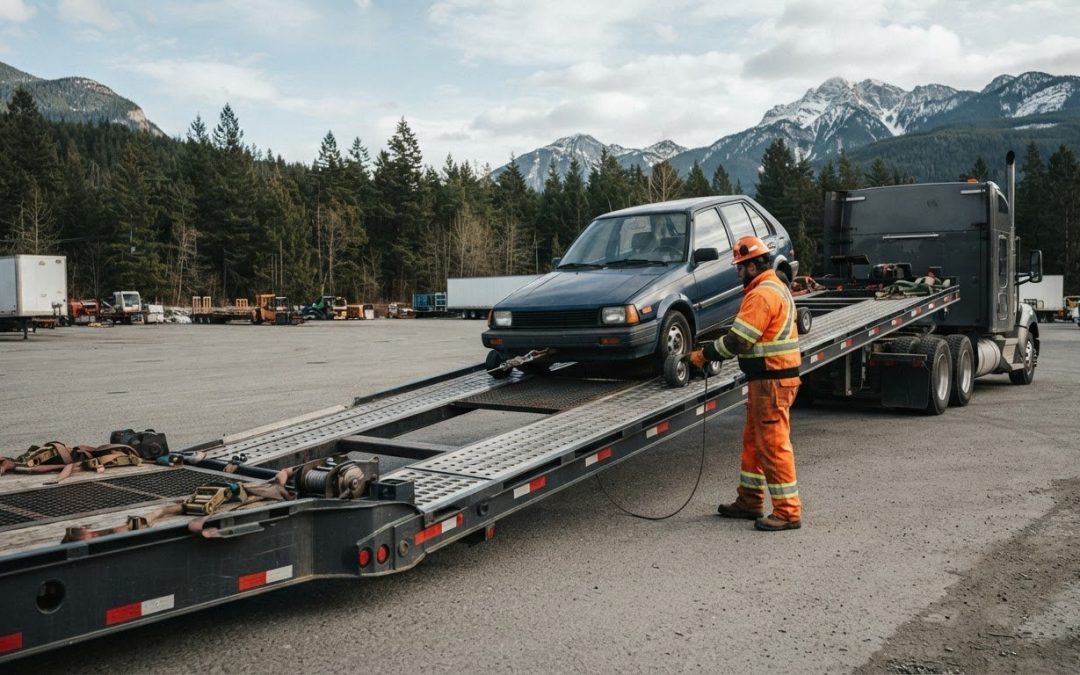
Can a vehicle that won’t start still make the trip across Canada? Yes, but shipping a non-running vehicle takes more planning than transporting one that drives. A vehicle may be considered inoperable if it can’t start, steer or brake. Even a car that starts can be difficult to load if its steering is locked. Describe the vehicle’s condition clearly so the transport plan can reflect what it can do and what pickup may require.
This guide explains what “non-running” means for transport, which details to share before dispatch, and how a vehicle’s ability to roll, steer and brake can affect loading. You’ll also learn how to prepare the pickup location and arrange a clear handoff. GO DISPATCH coordinates carrier selection and delivery scheduling across Canada, organizing transport logistics around the vehicle’s condition. Accurate details upfront help make the next steps more straightforward.
Key Takeaways
- Separate whether the vehicle starts from whether it can roll, steer and brake. These details shape the loading plan.
- For shipping a non-running vehicle, describe its condition and pickup access accurately before dispatch.
- Compare transport plans based on the vehicle’s mobility and how easily it can be accessed for loading.
- Prepare for pickup by clearing personal items, securing loose parts and photographing visible damage.
- GO Dispatch coordinates carrier selection and delivery scheduling using the vehicle and shipment details you provide.
What Does Shipping a Non-Running Vehicle Actually Involve?
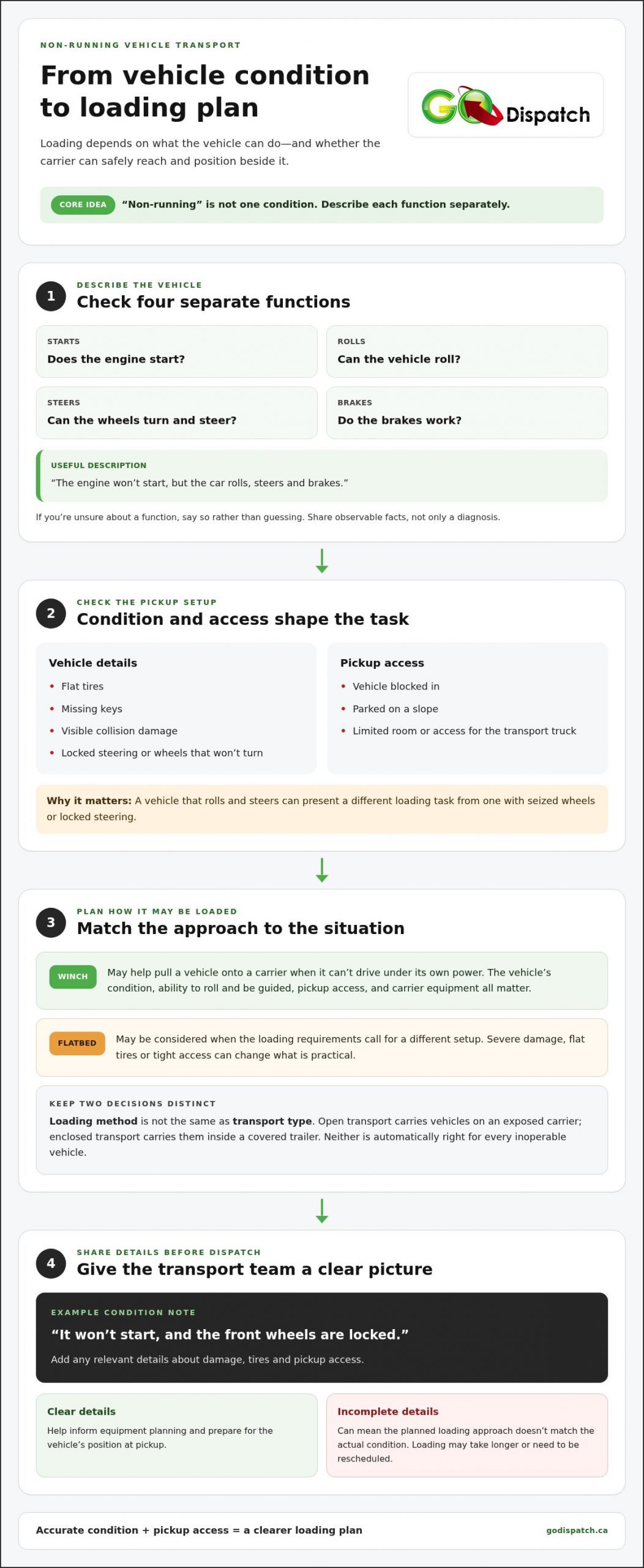
“Non-running” covers a range of conditions, not one specific mechanical fault. A vehicle might fail to start but still roll, steer and brake. Another may start but have a locked steering column or wheels that won’t turn. These differences affect how the vehicle can be moved into position and loaded for transport.
Featured snippet definition: An inoperable vehicle is one that can’t start, move, steer or brake normally, or can’t be safely positioned for loading without assistance.
When arranging shipping for a non-running vehicle, explain each function separately instead of relying on a general label. That gives dispatchers a more useful picture and helps guide carrier selection and pickup planning.
Which vehicle conditions matter before transport?
Describe what the vehicle can and can’t do. For example: “The engine won’t start, but the car rolls, steers and brakes,” or “It starts, but the front wheels won’t turn.” If you’re unsure about a function, say so rather than guessing.
Include anything that could affect movement or access, such as flat tires, missing keys or visible collision damage. Note whether the vehicle is blocked in, parked on a slope or positioned where a transport truck may have limited access. One fault doesn’t automatically prevent transport. The combination of the vehicle’s condition and the pickup setup helps determine a workable plan.
Why a precise condition description makes a difference
Condition details help inform equipment planning and prepare for the vehicle’s position at pickup. A vehicle that rolls and steers may present a different loading task from one with seized wheels or locked steering. A winch may be one possible loading aid, depending on the vehicle and access conditions.
Incomplete information can lead to a mismatch between the planned loading approach and the vehicle’s actual condition. If the carrier expects a vehicle that rolls but the wheels are locked or the tires are flat, loading may take longer or need to be rescheduled. Clear details upfront help reduce avoidable complications during dispatch and at pickup.
Share observable facts, not just a diagnosis. “The battery is dead; the wheels turn and the brakes work” is more useful than “the car doesn’t run.” If you don’t know whether it steers or brakes, state that plainly. A factual description gives the transport team a clearer basis for planning without overstating what the vehicle can do.
How Are Non-Running Vehicles Loaded for Transport?
Loading depends on more than whether the engine starts. The key questions are whether the vehicle rolls, steers and brakes, and whether the transport truck can reach and position beside it. A car that rolls and steers may be easier to move into loading position than one with locked wheels or severe damage. The pickup surface and available space also shape the plan.
A winch is one possible loading aid. It can pull a vehicle onto a carrier when the vehicle can’t drive under its own power, but the right setup depends on the vehicle’s condition and the carrier’s equipment. A flatbed may suit particular loading needs. Open and enclosed transport describe broader ways vehicles are carried, and neither is automatically the right choice for every inoperable vehicle.
When might winch loading or a flatbed be considered?
A winch may help move a vehicle that won’t start but can roll and be guided into position. A flatbed may be considered when the loading requirements call for a different setup. Severe collision damage, flat tires or tight access can change what’s practical. Describe these conditions before dispatch so the plan can account for the vehicle and pickup location.
What changes when a vehicle cannot roll or steer?
If the wheels are locked or the vehicle can’t be steered, it may not move into position in the usual way. That calls for more planning around access, safe positioning and the loading approach. Share whether it rolls, steers and brakes, and mention obstacles around it. Clear details help avoid a mismatch between the planned setup and conditions at pickup.
Transport type and loading method aren’t the same thing. Open transport carries vehicles on an exposed carrier; enclosed transport carries them inside a covered trailer. Either may involve loading arrangements suited to the vehicle. The choice depends on shipment requirements, vehicle condition and the available plan, not simply on whether the engine runs. For general road safety information, consult Transport Canada road safety regulations. Loading arrangements are a separate transport-planning consideration.
Before dispatch, give a practical account of the situation: “It doesn’t start, rolls freely, steers and brakes,” or “It won’t start, and the front wheels are locked.” Add details about damage, tires and access. These specifics help coordinate carrier selection and pickup preparation for shipping a non-running vehicle. GO DISPATCH coordinates transport logistics and connects clients with carriers, helping organize the shipment around the vehicle’s condition. Learn about GO DISPATCH transport coordination.
How to Choose a Transport Plan for a Non-Running Vehicle
A vehicle doesn’t have to run under its own power to be transported. The practical questions are how it can be moved and loaded, and what the transport plan must account for. A car that won’t start but rolls freely presents a different loading task from one with locked wheels, collision damage or limited access.
Use the comparison below to organize the details. These are planning cues, not fixed rules. The right setup depends on the vehicle’s full condition, pickup access and shipment requirements.
Mobility: Rolls, steers and brakes
Condition: The engine won’t start, but the vehicle can be moved and guided.
Access: The pickup area allows room to position a carrier.
Plan to assess: A loading approach suited to a vehicle that can roll, with carrier selection based on the disclosed condition.
Mobility: Rolls, but doesn’t steer or brake normally
Condition: The vehicle can move, but control is limited.
Access: Space and positioning become especially important.
Plan to assess: A loading arrangement that accounts for reduced control and the need to manage the vehicle’s movement.
Mobility: Cannot roll
Condition: Locked wheels, flat tires or other faults prevent rolling.
Access: Room to approach and position for loading may affect what’s practical.
Plan to assess: A setup suited to moving an immobile vehicle. A winch may be one possible loading aid.
Mobility: Significant damage or restricted access
Condition: Collision damage or the vehicle’s position may affect safe movement.
Access: Narrow spaces, obstructions or difficult positioning can complicate pickup.
Plan to assess: A carrier and loading plan matched to the damage and access conditions, rather than a trailer type chosen by default.
Match the vehicle’s mobility to the loading approach
Start by separating “won’t start” from “can’t roll.” A vehicle that rolls but won’t start may be easier to position than one that can’t move at all. Steering and braking add essential context: a vehicle that rolls but can’t steer needs a different plan from one that can be guided and stopped. Carrier selection should reflect all these details, not just the engine status.
How damage, access, and shipment needs affect the plan
Collision damage can affect which parts of a vehicle can be safely approached or used during loading. Share what’s damaged and where the vehicle is parked, including any obstacles or tight clearances. Also consider shipment needs, such as whether enclosed transport is preferred. No single trailer type suits every vehicle or move.
For cross-border moves, requirements can differ from domestic transport. The U.S. National Highway Traffic Safety Administration provides vehicle importation guidelines for U.S. importation and certification. Use that information for its stated context, not as a substitute for Canadian requirements.
Transport costs can also depend on the route, vehicle and shipment details. The Canada vehicle transport cost guide covers broader factors to consider. Clear condition and access details help GO Dispatch coordinate carrier selection and delivery scheduling around the vehicle’s needs.
How to Prepare a Non-Running Vehicle for Pickup
A clear pickup starts before the carrier arrives. For shipping a non-running vehicle, prepare by sharing practical details, making the vehicle and surrounding area accessible, and arranging a straightforward handoff. You don’t need a perfect mechanical diagnosis. Focus on what you can observe and what could affect loading.
Use this checklist to get the vehicle ready:
- Describe its condition. Record whether it starts, rolls, steers and brakes. Note flat tires, missing keys, collision damage, incomplete parts or anything else that could affect movement.
- Explain the pickup access. Describe where the vehicle is parked and any tight turns, obstructions, limited clearance or other constraints that could affect a transport truck’s approach and positioning.
- Clear the vehicle. Remove personal items and secure loose parts so they don’t shift or obstruct loading. Point out any parts that can’t be secured.
- Identify known hazards. Share visible leaks, unstable components or other concerns that may affect safe access. Stick to what you know, and don’t guess at the cause.
- Take dated photos. Photograph the vehicle from several angles and capture visible damage, including close-ups where useful. Keep the images with your shipment notes.
- Plan the handoff. Keep the keys available if you have them, and arrange for someone who can release the vehicle to be present or ready to coordinate the handoff.
Information to share before the carrier arrives
Give a clear, factual update if the vehicle’s condition or pickup arrangements change. For example, mention if a tire has gone flat, the vehicle has been moved behind another car, or a part has come loose. Updates help keep dispatch and pickup planning aligned with the actual situation.
For broader vehicle preparation beyond inoperable-specific details, review this guide to professional vehicle transport preparation. For this pickup, focus on access, accurate condition details and a clear release plan.
Make the pickup handoff clearer
Before the handoff, make sure the person releasing the vehicle knows where the keys are, if available, and can describe any issues already reported. Keep your dated photos and notes accessible so you can refer to them if needed. Avoid leaving important information only inside the vehicle, especially if it’s locked or the keys are missing.
Clear communication helps coordinate carrier selection and delivery scheduling around the vehicle’s actual condition. GO DISPATCH manages transport logistics and connects clients with carriers for vehicle delivery. Plan your non-running vehicle transport with GO DISPATCH by having the condition and pickup details ready to share.
How GO DISPATCH Coordinates Non-Running Vehicle Shipping
Shipping a non-running vehicle involves more than finding space on a transport truck. The loading plan, vehicle condition and pickup arrangements all need to line up. GO DISPATCH coordinates transport logistics and connects clients with third-party carriers for vehicle delivery. It manages carrier selection and delivery scheduling, while the carrier handles the vehicle’s transport.
Clear information makes that coordination more practical. A vehicle that won’t start but rolls and steers is different from one with locked wheels, missing keys or collision damage. Specific details help inform carrier selection and pickup planning, so the shipment is organized around the vehicle’s actual condition rather than a vague “does not run” description.
What dispatch coordination can take off your plate
GO DISPATCH brings the logistics together, including carrier selection and delivery scheduling. You share the shipment details, which help shape a transport plan that accounts for the vehicle and pickup. GO DISPATCH coordinates with third-party carriers rather than operating the transport vehicles directly. This provides one point of coordination for the shipment without requiring you to organize each transport detail on your own.
The process moves from enquiry to a planned shipment:
- Share the vehicle, route and preferred timing.
- Describe its condition and pickup access so carrier selection can reflect the loading needs.
- Coordinate the transport plan and delivery scheduling.
- Prepare for the agreed pickup and handoff, then receive the vehicle at the destination.
Each step depends on accurate information. If the vehicle’s steering or rolling status changes, or pickup access differs from what you first described, updated details help keep planning aligned.
What to include in a shipment enquiry
Make your enquiry useful from the start. Include the vehicle type, pickup and delivery details, and preferred timing. Then describe whether it starts, rolls, steers and brakes. Mention visible damage, flat tires, missing keys, loose or incomplete parts, and access limits around the vehicle. If you’re unsure about a detail, say so instead of assuming.
For example, “The SUV won’t start, but it rolls and steers; the keys are available, and the driveway has limited turning space” gives a clearer planning picture than “SUV doesn’t run.” Add any loading considerations you already know, such as whether the vehicle is blocked in or positioned on uneven ground. You don’t need to determine the equipment yourself. A clear report helps the coordination process account for the situation.
Once you’ve gathered the vehicle details, start coordinating your vehicle transport through GO DISPATCH. Prepare your vehicle, route and condition information for the shipment enquiry.
Set Your Shipment in Motion
The next step in shipping a non-running vehicle is turning what you know about its condition into a clear shipment plan. You don’t need a perfect mechanical diagnosis. A practical account of what works, what doesn’t and what the pickup area allows gives dispatch coordination a useful place to start.
GO Dispatch provides one-stop coordination for carrier selection, transport logistics and delivery scheduling, with dispatching for cars, trucks, SUVs and vans across Canada. You can move from gathering vehicle details to organizing the shipment with a clear point of coordination.
Have your vehicle type, pickup and delivery details, preferred timing and condition notes ready. Share your vehicle’s condition and shipment details with GO Dispatch to begin coordinating transport.
A well-planned handoff starts with honest details. You’re ready to move forward with a clearer picture of what the shipment involves.
Frequently Asked Questions
Can a non-running vehicle be shipped?
Yes, a vehicle that can’t drive itself may still be transportable by carrier. A failed starter is different from a vehicle with a seized drivetrain or immobilized wheels, so describe the symptom and any known cause without guessing. When shipping a non-running vehicle, also mention whether its condition has changed since you arranged the move. Updated details help keep the loading plan aligned with the vehicle at pickup.
Can you ship a non-running vehicle without keys?
A vehicle without keys may still be transportable, but disclose this before pickup. Without keys, the vehicle may be inaccessible or difficult to put into position for loading. Explain whether the doors are unlocked, whether the steering can move and whether the vehicle can roll. If you have a spare key or a safe way to provide access, include that information in your shipment details.
How much does shipping a non-running vehicle cost?
The price depends on the route, vehicle size, condition, loading needs and pickup access. For example, a vehicle that rolls freely may require a different loading plan from one with locked wheels or significant damage. Share those details along with the pickup and delivery locations when requesting a quote. A general estimate may not reflect the requirements of your vehicle and shipment.
Can a collision-damaged vehicle be transported?
It may be transportable, depending on the damage and how it affects loading. Describe which areas are damaged, whether parts are loose or missing, and whether any wheels appear affected. If the vehicle has shifted or become less stable since the incident, include that too. Don’t try to move damaged components for inspection. Clear, current details help the transport plan account for the vehicle as it is.
Does a non-running vehicle need to be empty before shipping?
Remove personal belongings and loose items where possible, and tell the transport coordinator about anything that will remain inside. For example, a detached part in the cabin or trunk could shift during handling, so secure it if appropriate and describe it in advance. Keep the vehicle easy to inspect at pickup. Don’t assume personal contents are accepted as part of the vehicle shipment.
Can a vehicle with flat tires be shipped?
Possibly, but flat tires can affect how the vehicle is positioned and loaded. Tell the transport team how many tires are flat and whether the vehicle sits level or has been moved onto supports. Also mention any wheel or suspension damage you know about. One flat tire and several immobile wheels create different planning considerations, so include the full picture rather than only noting “flat tires.”
Should I disconnect the battery before shipping a non-running vehicle?
Don’t disconnect the battery automatically. Preparation can depend on the vehicle and shipment instructions. Tell the transport coordinator whether the battery is installed, discharged, damaged or already disconnected. If the vehicle has an electrical fault or warning lights, mention what you know without attempting a repair just before pickup. Follow the guidance for your shipment so the handoff reflects the vehicle’s actual condition.