

A car-shipping broker in Canada can be legitimate if it is transparent about its role and follows applicable requirements. When avoiding car shipping scams in Canada, confirm whether you’re dealing with a broker, a carrier or both, and get the price and insurance details in writing. A broker should explain its role and provide driver details before pickup.
A suspiciously low quote can become a bigger problem if new charges appear after your vehicle is collected. Before booking, compare three quotes for the same route and vehicle, review the contract, and ask how the price could change. This guide explains how to check insurance and broker details, recognize fake-driver warning signs, and respond to unexpected fees so you can make a more informed decision.
Key Takeaways
- Get written proof of cargo insurance and understand what the coverage protects before your vehicle is picked up.
- Check who you’re booking with: a broker, a carrier or both, and make sure driver details match the agreed arrangement.
- Compare three quotes for the same route and vehicle, then look closely at any unusually low offer.
- Read deposit and refund terms before paying, and avoid payment methods that are difficult to trace or recover.
- Keep a written record of the agreed price and clarify how possible extra charges are handled before booking.
1. How do I confirm insurance coverage before shipping my car?
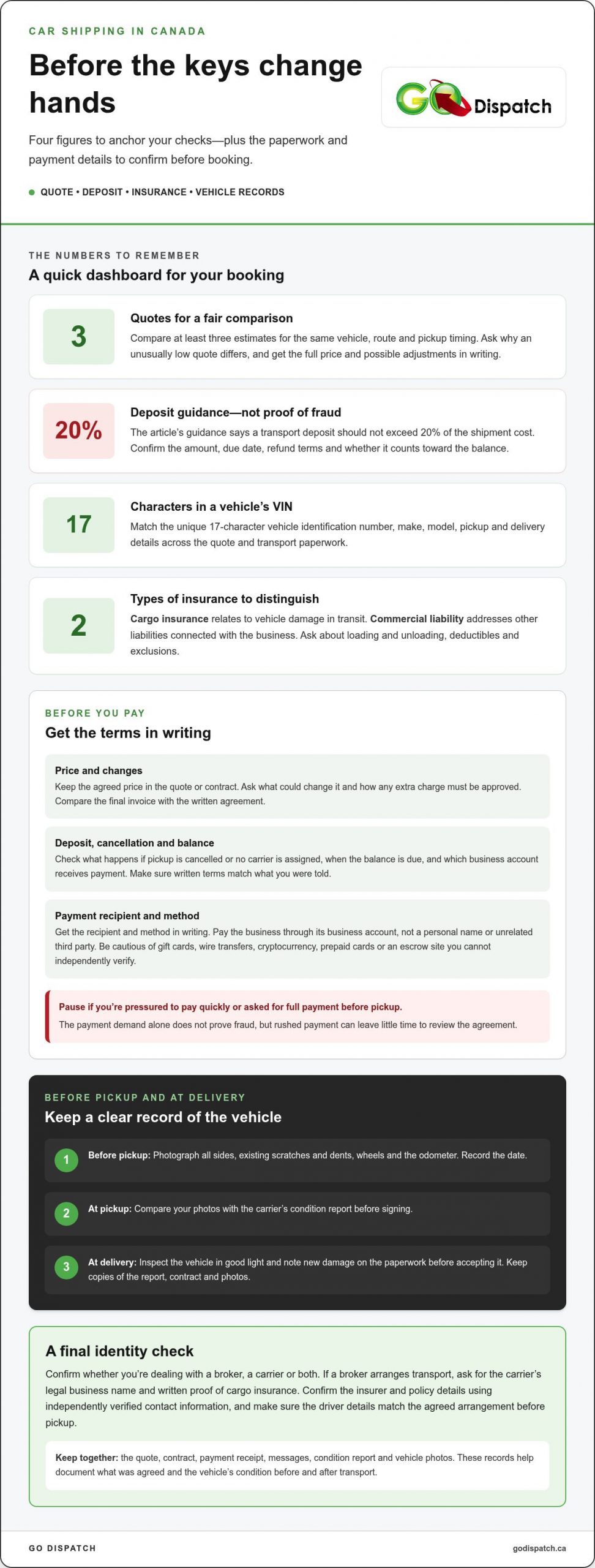
To avoid car shipping scams in Canada, first identify who will carry the vehicle and whose insurance applies. A broker may arrange transport through a carrier, so ask for the carrier’s legal business name and written proof of cargo insurance. Request the insurer’s name, policy details, coverage limits, exclusions, and claims process. Contact the insurer using independently verified details and confirm the policy covers your vehicle during transport.
Check commercial liability insurance separately from cargo insurance. Cargo coverage relates to damage to the vehicle in transit, while commercial liability coverage addresses other liabilities connected with the business. Ask what happens if damage occurs during loading or unloading, and whether deductibles or exclusions affect a claim. Keep the answers with your quote and contract. Across the country, issuing an insurance policy or collecting a premium without an insurer’s licence is an offence. Verify who provides any insurance offered.
Review the carrier’s business presence before handing over the keys. The Better Business Bureau can provide information about complaints, contact details, time in business, and membership history. Compare these details with the company’s website and paperwork. Look for mismatched names, missing phone numbers, typos, or contact details that don’t work. Search the company name and phone number with terms such as “scam” and “review” to spot possible reuse by other businesses. Read Google and Facebook reviews for specific accounts of pickups, delivery, damage handling, and communication, not just star ratings.
For anyone focused on avoiding car shipping scams in Canada, matching vehicle details across documents is a practical safeguard. A vehicle identification number (VIN) is a unique 17-character code assigned to each vehicle. Check that the VIN, make, model, and pickup and delivery details match across the quote and transport paperwork. Official vehicle information packages or registration documents are often required for verification during transport. Keep vehicle records secure and share personal information only when needed for the transport arrangement.
Before pickup, photograph the vehicle from all sides, including close-ups of existing scratches, dents, wheels, and the odometer. Record the date and compare your photos with the carrier’s condition report before signing. At delivery, inspect the vehicle again in good light and note any new damage on the paperwork before accepting it. Keep copies of the report, contract, and photos. These records document the vehicle’s condition before and after transport.
2. What is the most common car shipping scam in Canada?
A common warning sign is a price change after the vehicle has been collected or loaded. A low initial quote may secure your booking, then an unexpected charge appears when your car is harder to retrieve. A legitimate shipping company should provide written pricing and explain possible changes before pickup. Compare the final invoice with the quote and contract, not just a text message or phone promise.
Be cautious with deposits and requests for upfront payment. A deposit should be tied to clear terms, including what happens if the shipment doesn’t proceed. The research-backed guidance for this topic advises that a transport deposit should not exceed 20% of the shipment cost. Treat demands for full payment before pickup as a reason to pause and review the agreement. The amount alone doesn’t prove fraud, but pressure to pay quickly can leave little time to assess the terms.
Before sending money, get the payment method and recipient in writing. Pay a business through its business account, not a personal name or unrelated third party. Avoid gift cards, wire transfers, cryptocurrency, prepaid cards, or an escrow site you can’t independently verify. These methods can be difficult to trace or recover funds from. If the shipper requests an e-Transfer, confirm the recipient’s identity and deposit terms before authorizing it.
- Deposit: Confirm the amount, due date, and whether it counts toward the transport balance.
- Cancellation: Get the refund conditions in writing if pickup is cancelled or no carrier is assigned.
- Balance: Check when payment is due and which business account receives it.
- Extra charges: Ask what could change the agreed price and how approval is handled.
A written contract or invoice should identify the shipping company, vehicle, route, price, payment schedule, and cancellation terms. Read every condition before paying. If a salesperson says a deposit is refundable but the document says otherwise, ask for corrected paperwork before transferring funds. Keep the quote, contract, payment receipt, and messages together. These records can help establish what was agreed if the shipper stops responding or disputes your payment.
If the company damages your vehicle, misses delivery, or disappears, preserve the contract, payment records, messages, and condition photos. Contact the company in writing, then report suspected fraud to local police and the Canadian Anti-Fraud Centre. If you paid by e-Transfer and suspect a scam, contact your bank immediately because speed matters.
Clear payment terms make a vehicle move easier to manage. If you’re organizing a shipment, explore vehicle transport dispatching as one way to coordinate the logistics.
3. How can I tell if a car shipping quote is too good to be true?
Compare at least three estimates for the same vehicle, route, and pickup timing. Transport prices depend on distance, fuel costs, route demand, and vehicle size. If one quote sits far below the others, ask what assumptions explain the difference. A low figure can omit services or reflect an estimate that changes once a carrier is assigned. Get the full price and any possible adjustments in writing before booking.
Check the business behind the quote, not just its website. Search its legal name through Corporations Canada if it’s a federal corporation, or the relevant provincial registry. Match the registered name against the quote, invoice, and payment recipient. A different name may have a legitimate explanation, but ask for it before paying. Look for a real business address and working contact details, then compare them with the registry information.
The Better Business Bureau can show a company’s complaints, contact details, time in business, and membership history. Read complaint descriptions and responses rather than treating a rating as a complete record. Search the company name and phone number with terms such as “review” or “scam.” Google and Facebook reviews can add details about communication, pickup arrangements, and delivery. Repeated complaints about surprise charges or unanswered calls deserve attention.
Ask who will physically transport your vehicle. A broker may arrange the job with an independent carrier, including an owner-operator, rather than using company-operated trucks. That arrangement alone isn’t proof of a scam. The broker should explain its role and provide driver details before pickup. Compare the driver’s and carrier’s names with the booking information; a last-minute change without a clear explanation is a red flag.
For licences and insurance, request the carrier’s applicable registration details and written proof of cargo and commercial liability insurance. Confirm the coverage with the insurer and check that the carrier named in the documents matches the assigned transport provider. Requirements can depend on the operation and route, so don’t assume one identifier proves every qualification. A broker should also be transparent about its role and any licensing that applies to its business.
Check complaint options based on the problem and where the transaction occurred. For a service or contract dispute, contact the consumer affairs office serving your province or territory; for suspected fraud, contact local police and report it to the Canadian Anti-Fraud Centre. Keep the quote, contract, payment records, messages, and inspection photos together to support your complaint. A dated record makes it easier to explain what was promised and what happened.
4. Fake drivers and broker impersonation
A broker can arrange a shipment with an independent owner-operator who bids for the job through a load board. That’s different from a scammer pretending to represent the broker or carrier you booked. Before pickup, the broker should explain its role and provide the driver’s details. Compare the driver’s name, carrier, truck information, and pickup location with your booking records. If anything changes, pause and verify it through a contact method you already trust.
Impersonators may copy a real company’s name, logo, or booking details to appear credible. A text claiming “your driver is here” can pressure you to hand over your keys quickly. Call the broker or carrier using the number on your original documents, not a number sent in the message. Ask them to confirm the driver and assigned carrier. Don’t let urgency replace a clear match between the person, vehicle, and shipment.
At pickup, compare the driver’s identification and truck details with the information you received. Check that the transport paperwork names the correct carrier and vehicle. Record any difference before signing or releasing the car. If a different driver arrives, ask the broker to confirm the reassignment directly. A legitimate operational change can be explained and documented; an unexplained switch, refusal to provide details, or demand for immediate payment is a warning sign.
Fake bank drafts and unverifiable escrow services can also put a vehicle or payment at risk. If you’re selling a car and a buyer offers a bank draft, confirm its authenticity with your financial institution before handing over the keys or ownership documents. Don’t rely on a screenshot or email saying funds are available. Avoid an escrow site supplied by the other party if you can’t independently verify who operates it. A legitimate transaction doesn’t require you to accept pressure to use an unfamiliar payment channel.
Fake buyers may claim they’ve arranged transport, then send a false payment confirmation or ask you to refund an “overpayment.” Never return money based on a screenshot or pending transfer. Confirm the funds through your bank first. Decline Western Union for a private vehicle sale. If a seller or buyer changes the pickup plan at a border handoff, verify the new carrier and paperwork directly before releasing the vehicle.
Keep the quote, contract, driver details, messages, and payment records together. If someone impersonates a broker or carrier, don’t share extra personal or banking information. Contact the real company using its original contact details, and report suspected fraud to local police and the Canadian Anti-Fraud Centre.
5. Lowball quotes and price increases after pickup
A practical way to avoid car shipping scams in Canada is to watch for an unusually low quote followed by new charges after pickup. Scammers may use a low estimate to secure a booking, then claim the original price no longer applies. Before pickup, compare the written quote with the contract and ask which changes could affect the total. Don’t assume a new charge is valid simply because your vehicle is already in transit.
Compare at least three quotes for the same route, vehicle, and pickup timing. Transport prices depend on distance, fuel costs, route demand, and vehicle size. A common car travelling a busy route may receive different estimates from a larger vehicle or a less-serviced route. Look for a quote that explains its assumptions, rather than choosing the lowest figure without checking what it covers. A large gap between comparable estimates is a reason to request a written breakdown.
Ask the shipping company to confirm the full transport price in writing before booking. The document should identify the vehicle, pickup and delivery locations, included services, payment schedule, and circumstances that could change the price. Clarify how the company handles delays, changes to pickup details, or a vehicle that differs from the information supplied. If a representative describes an extra charge by phone, request written confirmation before agreeing or paying.
Check exclusions line by line. A quote should identify whether destination duty and taxes, terminal handling, or local clearing are excluded, where those charges apply. These items can affect the final amount, so don’t assume “all-inclusive” means the same thing in every quote. Ask who would collect each excluded charge and when it would be due. Keep the written answer beside the estimate so you can compare a later invoice with the original terms.
When avoiding car shipping scams in Canada, watch for pressure at pickup. If a driver says the vehicle won’t be released unless you pay a new fee, compare the demand with your contract. Contact the booking company using the number on your original paperwork. Save messages, invoices, and payment records. If the explanation changes, note who said what and when. These records can support a claim about an unapproved price increase.
Clear pricing starts with a clear route and vehicle description. Provide accurate pickup details and vehicle information, then ask how each variable affects the quote. For help coordinating a car shipment, plan your car transport with a clear written arrangement before pickup.
GO DISPATCH: Car Transport
GO DISPATCH coordinates vehicle transport by connecting your shipment with an appropriate auto carrier. Its One-Stop Transport Dispatching service manages the logistics process, giving you a single point of coordination as you arrange a move. Turn to GO DISPATCH when you need help organizing car transport and keeping carrier arrangements and shipment details aligned. The company also handles truck, SUV, and van transport.
Keep using the checks in this guide: review the written terms, confirm carrier details, and document your vehicle’s condition at pickup and delivery. Clear information helps you stay organized throughout the process. To discuss arranging vehicle transport, visit godispatch.ca.
Make your next transport decision with confidence
A practical way to avoid car shipping scams in Canada is to set your booking conditions before arranging transport. Make time to review the paperwork, keep your records together, and avoid deciding while someone is pressuring you. Pausing gives you room to compare what you were promised with what’s written before your vehicle becomes part of the shipment.
Treat the next step as an organized handoff, not just a pickup date. Keep your transport documents accessible, know who is coordinating the shipment, and leave time to resolve questions before releasing your keys. Clear coordination can make the process easier to manage, whether you’re moving a car, truck, SUV, or van.
For help arranging vehicle transport, contact GO DISPATCH about car shipping. Take the next step at your pace, with your transport details in hand.
Frequently Asked Questions
Are car shipping brokers in Canada legitimate?
Yes. A car-shipping broker can legitimately arrange transport without operating the truck itself. Brokers may post a job on a load board for independent owner-operators to bid on. Before booking, establish the broker’s role, the carrier responsible for pickup, and how the handoff will be documented. A transparent broker provides carrier and driver details before pickup and explains who handles communication if plans change.
How can I tell if a car shipping quote is too good to be true?
Compare quotes that use the same route, vehicle details, and pickup timing. A quote may look unusually low if it assumes flexible dates or excludes services included in another estimate. Ask the company to explain the assumptions behind its figure and what could change it. Be cautious if the low offer comes with pressure to book immediately or the representative won’t provide pricing terms in writing.
How do I confirm insurance coverage before shipping my car?
Ask for the insurer’s name and written policy details, then contact the insurer using independently verified information. Confirm the named carrier, vehicle, transport period, coverage limits, exclusions, and claims process. Ask specifically whether loading and unloading are covered. In Ontario, issuing an insurance policy or collecting a premium without an insurer’s licence is an offence. Keep the written coverage details with your transport agreement.
Is it safe to accept an e-Transfer for a car?
Accept an e-Transfer only after you verify the payment in your own banking account, not from an email, text, or screenshot. Don’t refund an alleged overpayment or release the vehicle while a transfer is pending. Standard Interac e-Transfer limits are often C$3,000 per day, so this method may not suit a full vehicle payment. If you suspect fraud, contact your bank immediately.
Should I pay for car shipping upfront?
Avoid paying the full transport amount before the shipment proceeds. Guidance for car transport deposits advises keeping a deposit at or below 20% of the shipment cost. Before paying, get the deposit amount, balance due date, and refund conditions in writing. Confirm that payment goes to the shipping company’s business account, and don’t send funds to an unrelated person because they claim to represent the carrier.
Should you accept cash, cheque, or bank draft?
For a vehicle sale, verify payment before handing over the keys or ownership documents. With a bank draft, contact the issuing financial institution using independently verified details. Don’t rely on a photo or a buyer’s claim that funds are available. If you accept cash, document the amount and provide a receipt. Avoid Western Union for private vehicle payments, and never return an apparent overpayment before your bank confirms it.
What is the most common car shipping scam in Canada?
A key warning sign is a company raising the agreed price after collecting or loading the vehicle. The extra charge may be presented as necessary to continue or release the shipment. Compare the demand with your written agreement and contact the company through its original contact details. Save messages and payment records. Don’t treat a verbal explanation as approval of a new charge; ask for the reason in writing.
How can you verify a car shipping company is legitimate in Canada?
Match the company’s legal name and contact details across its paperwork, website, and relevant federal or provincial business registry. Review complaint history and look for consistent, detailed feedback rather than relying on a rating alone. Confirm whether the company is a broker or carrier. GO DISPATCH is a Canadian auto transport dispatch company that connects customers with auto carriers, so clarify who will physically transport your vehicle and coordinate the shipment.