
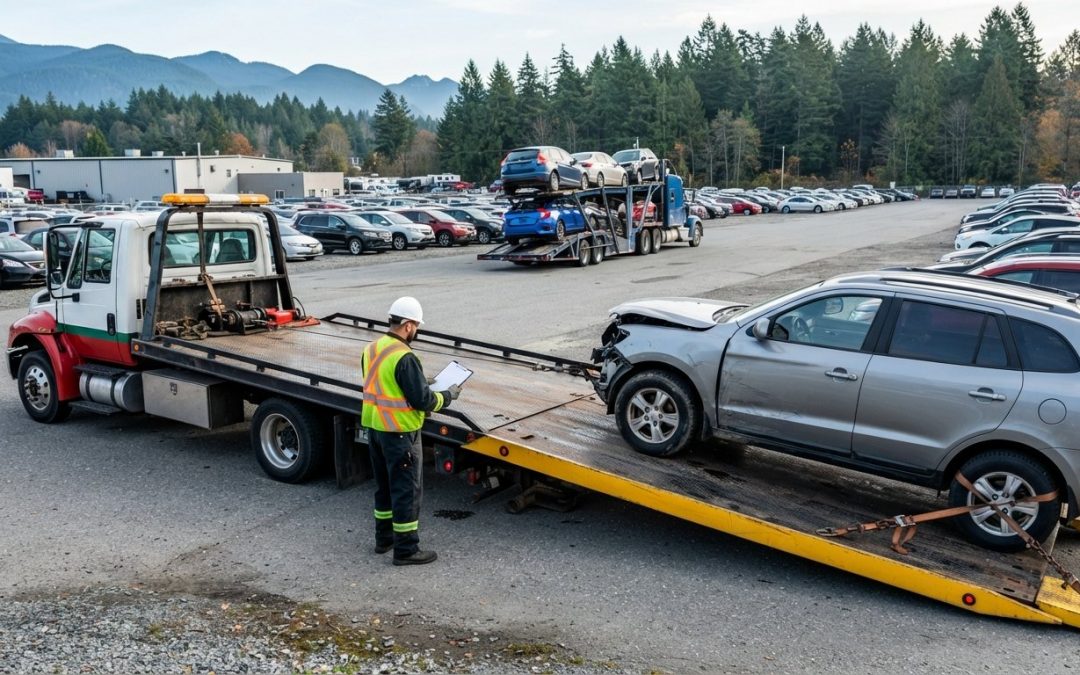
A non-running car from Copart or IAAI can be shipped, but it may require special loading equipment or a tow truck. When shipping a car from an auction, plan pickup around the vehicle’s condition and the auction’s release requirements.
Arranging transport involves more than booking a vehicle move. Confirm the auction has cleared the car for release, provide the lot number and other identifying details, and explain whether the car can roll, steer and brake. Getting these details in order early helps avoid preventable pickup delays.
This guide covers the process, from confirming payment and release to choosing a transport approach and coordinating pickup. Learn what information to gather, what to consider for a damaged or inoperable vehicle, and how to plan around the auction’s removal window. A clear sequence makes the next steps easier to manage and helps get your purchase on its way.
Key Takeaways
- Compare transport options by vehicle condition, size, distance and the level of protection you need.
- Confirm payment, release approval, pickup hours and the auction’s removal deadline before scheduling collection.
- For a non-running vehicle, share its condition and loading needs so the pickup plan accounts for suitable equipment.
- Record the vehicle’s condition and key details before transport, and understand what transit insurance covers.
- Book promptly after your auction win, then coordinate the pickup date and delivery route to keep the move organized.
HOW MUCH DOES AUTO AUCTION TRANSPORT COST?
Transport costs depend on the auction location, destination, vehicle size and condition, and loading requirements. Open transport is generally the lower-cost option; enclosed transport costs more and provides added protection for high-value vehicles. Trucks usually cost more to move than smaller cars, while inoperable vehicles may require extra equipment or a tow truck.
To compare quotes, give each company the same pickup details and vehicle information. Request an itemized written quote that lists included services and possible extra charges, such as special loading or storage. Compare pickup and delivery arrangements, not just the total price.
For transport between Canadian provinces, plan for provincial tax, registration and inspection requirements separately. These may depend on the destination and the vehicle’s status. A vehicle bought at a U.S. auction also needs import clearance before it can be registered for Canadian roads.
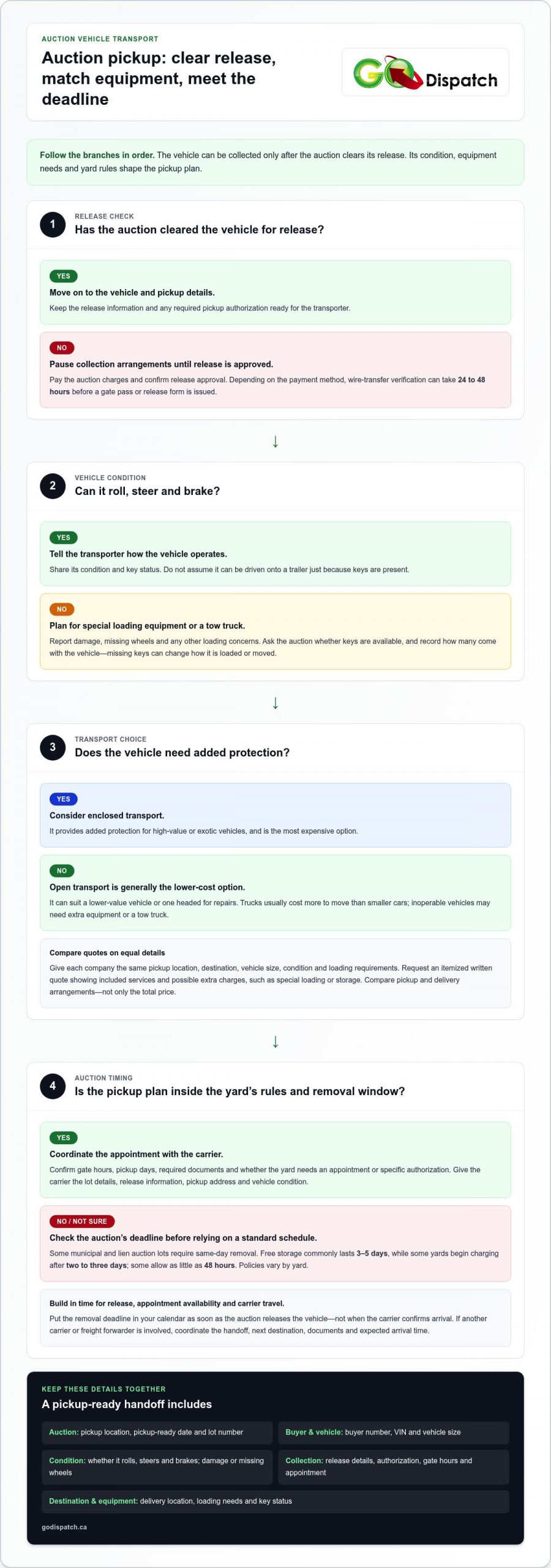
- Gather the auction and vehicle details. For Mecum, IAA and Copart, provide the pickup location, pickup-ready date, lot number, buyer number and VIN. These details help the auction identify the vehicle and connect the transporter’s collection with the correct release. Include the destination and vehicle size when requesting a quote. Report damage, missing wheels or other conditions that may affect loading.
- Confirm payment and release authorization. Pay the auction charges and obtain approval before arranging collection. Depending on the auction’s payment method, wire-transfer verification can take 24 to 48 hours before a gate pass or release form is issued. Give the transporter the release information and any required pickup authorization. A vehicle cannot be collected until the auction has cleared its release.
- Choose equipment for the vehicle’s value and condition. Compare open and enclosed transport based on the car’s value, condition and intended use. Open transport is the cheaper option and can suit a lower-value vehicle or one headed for repairs. For a high-value or exotic car, enclosed transport offers more protection and is the most expensive option. A non-running vehicle may need a tow truck or specialized loading equipment.
- Check the keys before pickup. Ask the auction whether keys are available, then record how many come with the vehicle. Keys can be lost or stolen at salvage yards, and a missing key can change how the transporter loads or moves the car. For a Copart or IAA purchase, include the key status with the vehicle condition details rather than assuming the car can be driven onto a trailer.
- Match the quote to the pickup plan. Check that the quote identifies the correct VIN, auction location, vehicle condition and destination. Confirm who handles release documents and whether loading equipment is included. An inoperable car, a larger truck or an enclosed trailer can change the transport requirements. For delivery, keep the auction release details and vehicle identification available so the handoff matches the purchased lot.
Auction removal windows, gate hours, and pickup requirements
Plan collection around the auction’s release rules, yard hours and removal deadline. These details determine when a carrier can collect the vehicle and whether storage fees may apply.
-
Confirm auction pickup requirements
Check the auction’s pickup requirements, gate hours and removal window before booking. Find out which release documents the driver needs and whether the yard requires an appointment or specific authorization. Note any limits on pickup days or gate access. Some municipal and lien auction lots require removal on the sale day, so don’t assume the standard schedule applies.
-
Schedule the pickup appointment
Coordinate the appointment with the carrier’s arrival plan and the auction’s gate hours. Give the carrier the lot details, release information, pickup address and vehicle condition. Ask how they’ll communicate timing changes, then notify the auction if its process requires it. A timing mismatch can mean a missed appointment and another pickup arrangement.
- Arrange any freight-forwarding handoff. If the vehicle will travel beyond the auction pickup, coordinate the first carrier’s collection with the freight forwarder’s receiving arrangements. Confirm the next destination and which documents should travel with the vehicle. Share the release details and expected arrival time with both parties. Clear handoff instructions help avoid confusion between collection and onward transport.
-
Meet the pickup deadline
Compare the auction’s removal deadline with its free-storage period, since policies vary by yard. Free storage commonly lasts 3-5 days, while some yards begin charging after two to three days. Some yards allow as little as 48 hours for removal. Put the deadline in your calendar as soon as the auction releases the vehicle, not when the carrier confirms arrival.
- Build a practical timing buffer. Leave room for release processing, appointment availability and carrier travel to the auction. Some municipal or lien sales require same-day removal, while other yards provide a longer window. If timing is tight, arrange the pickup plan promptly and keep the carrier’s contact details and gate instructions together. For help coordinating vehicle moves, consider a coordinated transport plan.
Transit insurance and condition documentation
Protect the vehicle and document its condition before transport. Choose a trailer, insurance and loading plan that suit the car’s value and operability.
-
Confirm transit insurance
Arrange suitable insurance before the vehicle travels on an open trailer. Check what the policy covers during loading, transit and delivery, and note exclusions that could affect a damaged auction vehicle. Open transport is generally cheaper, but road debris such as rocks and tar can cause damage. Don’t assume an existing policy covers every stage of transport.
-
Document the vehicle’s condition
Document the car’s condition before loading. Photograph each side, the roof, wheels, visible damage and interior, then save the images with the VIN and auction lot number. Note whether the vehicle starts, rolls, steers and brakes. At delivery, compare its condition with the original record and promptly document any new damage.
- Choose open or enclosed transport. Match the trailer to the vehicle’s value, condition and intended use. Open transport is generally the cheapest option and can suit a lower-value car or one bound for repairs. Enclosed transport is the safest and most expensive option, and costs a 30% to 50% premium over open transport. Exotic cars may need an enclosed single-car hauler.
Distance and vehicle size also affect the quote. Longer routes generally cost more, and trucks usually cost more to transport than smaller cars. Inoperable vehicles may need extra equipment, changing both the loading plan and transport cost.
- Clear the auction balance before dispatch. Pay all auction charges and obtain approval before planning transport. Buyer, internet bid and gate fees typically add 10-15% to the vehicle’s hammer price. Include those charges in your purchase budget, separate from the carrier’s transport quote. Unpaid balances or storage charges can delay release and disrupt the pickup plan.
- Plan transport for dealer inventory. Dealers moving multiple auction vehicles should organize pickup details by lot, destination and vehicle condition. Auction-organized shipping may add a separate per-vehicle expense, so compare that arrangement with your transport plan. Track each vehicle’s release status and equipment needs separately. A clear inventory list helps prevent a drivable car and a salvage vehicle from being assigned the same loading plan.
For each vehicle, share the VIN, auction lot number, operability and destination with the transport coordinator. These details help align the carrier, insurance and condition record before pickup.
Booking shipping after winning an auction
Start organizing transport as soon as you win, while timing the booking around the auction’s release process. A salvage vehicle may need a different loading plan from a running car.
- Collect the sale and vehicle details. Keep the auction receipt, lot number, VIN, pickup location and destination together. Add the vehicle’s condition, key status, and whether it rolls, steers and brakes. For a Copart or IAAI salvage vehicle, include visible damage and missing parts. These details help the carrier plan suitable equipment and identify the correct vehicle once the auction authorizes its release.
- Start payment and release steps promptly. Auction buyers are generally expected to pay within 2-3 business days. Copart and IAAI may charge late-payment fees after day 3 and may relist an unpaid vehicle after day 7. An instant payment receipt doesn’t necessarily mean the vehicle is ready for pickup. Arrange transport around payment approval and the auction’s release notice, not the sale confirmation alone.
- Describe loading needs before booking. Tell the carrier if the vehicle is inoperable, has damaged wheels or lacks keys. Copart and IAAI use forklifts to move and load salvage vehicles, even when they’re drivable. Forklift loading can risk undercarriage damage, and the auctions won’t accept responsibility if damage occurs. Share any known undercarriage concerns and agree on a suitable loading plan before collection.
- Match the booking to the vehicle’s next destination. For a domestic Canadian move, provide the delivery address and confirm who will receive the vehicle. If the auction purchase is headed for container loading, allow for the longer sequence: a vehicle typically takes 1-2 weeks to move from auction win to container loading. That timing covers the auction-to-loading process, not a promised delivery date. Keep the domestic pickup plan distinct from onward shipping arrangements.
- Keep the booking record accessible. Save the carrier’s collection details, auction release information and delivery instructions together. Report any change in release status or vehicle condition as soon as you learn about it. For example, if an inspection reveals a missing wheel, update the loading plan before the carrier arrives. Clear records link the auction lot, assigned vehicle and delivery destination throughout the move.
How long does auction car shipping take between Canadian cities and provinces?
Transit time depends on the route and the vehicle’s readiness for collection. Plan around the auction’s official release, then allow for carrier scheduling and the distance between pickup and delivery.
- Start the timeline at release. A sale confirmation doesn’t mean the vehicle is ready to move. Payment approval and release documents must be in place before collection can proceed. Auction vehicles are usually picked up within 2 to 5 business days after official release. Treat that as a pickup-planning reference, not the full journey time between provinces.
- Map the route before setting expectations. Compare the auction yard’s location with the delivery address. A move between nearby cities differs from transport across several provinces. Longer routes generally mean more time on the road. Provide both addresses early so the transport plan reflects the actual origin and destination.
- Build in the auction’s removal window. Some auction yards give buyers as little as 48 hours to remove a vehicle. Free storage windows commonly run 3-5 days, and some yards begin charging after two to three days. These deadlines affect how quickly pickup must be arranged, but they don’t predict transit time. Keep the collection deadline separate from the delivery estimate.
- Account for vehicle condition and dispatch timing. A running car may be easier to load than a salvage vehicle with damaged wheels or missing parts. Inoperable vehicles may need extra loading equipment, affecting pickup coordination. Carrier timing also depends on the route and the vehicle’s readiness. Provide accurate condition details when arranging transport so the pickup plan suits the car.
- Plan for delivery at the destination. Confirm who can receive the vehicle and where the carrier should deliver it. Share access instructions for a residence, business or storage facility before the journey begins. Keep the VIN, lot number and release details available for the handoff. For help coordinating a vehicle move between Canadian cities, arrange your car transport.
GO DISPATCH: Car Transport
GO DISPATCH coordinates auction vehicle moves through its one-stop transport dispatching service. It connects your transport needs with suitable auto carriers and manages the logistics process. This can help when you’ve won a vehicle and need to arrange transport from auction pickup to delivery.
Share the vehicle type, auction location, destination and condition so the transport plan fits the job. GO DISPATCH handles car, truck, SUV and van transport. For an inoperable auction vehicle, include its condition and loading requirements when discussing the move. Clear details help organize pickup and delivery.
Contact GO DISPATCH to discuss transporting your auction vehicle, or visit godispatch.ca.
Make your auction win your next move
Once bidding ends, turn your attention to getting the vehicle where it needs to go. A clear transport plan lets you focus on what comes next, whether you’re preparing a car for repair, adding a truck to your inventory or receiving an SUV at home. Shipping a car from an auction is easier to manage when transport is part of the purchase plan, not an afterthought.
GO DISPATCH coordinates car, truck, SUV and van transport through its one-stop transport dispatching service. Share the auction location, destination and vehicle details to start planning the move around your needs.
Contact GO DISPATCH to plan shipping. Your auction purchase is ready for its next chapter.
Frequently Asked Questions
Can I ship a non-running car from Copart or IAAI?
Yes. A non-running vehicle can be transported with equipment suited to its condition. Tell the carrier whether it rolls, steers and has wheels, and disclose any undercarriage damage before pickup. Copart and IAAI use forklifts to load salvage vehicles, including drivable ones, so loading method matters. For IAA, the loader weight limit is 11,000 lbs. Share the vehicle’s weight and condition when arranging collection.
How fast do I need to move the car off the auction yard?
Follow the removal deadline attached to your specific auction purchase. Some yards require removal within 24 to 72 hours, and certain municipal or lien auction lots require same-day pickup. Free storage windows can be short, and daily storage fees may start once they expire. For example, a Friday win with a Monday removal deadline needs a pickup plan that accounts for weekend gate hours.
What happens with the title?
The title process is separate from the auction’s pickup release, so handle both parts of the purchase. Ask the auction about its title process and delivery method, then keep title paperwork with your sale records. The carrier needs information to identify and release the vehicle, such as its VIN and lot number. A gate pass or release form does not replace ownership paperwork.
How much does it cost to ship a car from an auction in Canada?
The price depends on the move and is provided after a quote request. Key cost factors include route distance, vehicle size, whether it runs, loading requirements and transport type. A non-running truck that needs special equipment, for example, differs from a compact car that rolls and steers. Provide the auction location, destination and vehicle details to receive a quote based on the move.
How are car shipping costs calculated by distance, vehicle size, and transport type?
Distance affects the route, while vehicle size affects the space and capacity needed on the trailer. Trucks generally cost more to move than smaller cars. Transport type matters too: enclosed transport costs a 30% to 50% premium over open transport. A vehicle that can’t move under its own power may also need additional loading equipment, changing the transport plan and quote.
What documents are required to ship an auction car in Canada?
Prepare the auction release paperwork, pickup authorization and vehicle identifiers needed to match the carrier with the sale. Keep the lot number, buyer number and VIN together, along with the date the vehicle will be ready for pickup. The auction may issue a gate pass or release form after payment approval. For a vehicle crossing provincial borders, keep purchase and ownership documents separate from the carrier’s collection paperwork.
How do I arrange pickup and delivery for a car bought at auction?
Start by matching the auction’s release status and yard hours with the pickup plan. Give the carrier the lot number, VIN, pickup address, destination and vehicle condition. Share access instructions for the delivery location, including where the driver can unload safely. If the car is headed to a repair shop, confirm the shop can receive it before dispatch. Keep the release details accessible during the handoff.
What are the differences between open and enclosed car transport?
Open transport carries vehicles on an uncovered trailer and is generally the cheaper option. It can suit lower-value cars or vehicles destined for repair, but road debris such as rocks and tar can reach the vehicle. Enclosed transport shields the car inside a trailer and is the most expensive option. It may suit a high-value or exotic vehicle that needs added protection during transit.